Glock: Company History and Where Glocks Are Made
This article covers Glock’s origins in Deutsch-Wagram, Austria, its transition from manufacturing company to pistol maker through the Austrian P80 program, and the development of Safe Action pistols. It also explains Glock generations and factory locations in Austria, Slovakia, and Smyrna, Georgia.
By RaiS. Reviewed by RaiS. Published . 5 min read.
Research and drafting were assisted by AI. RaiS checked the facts against the sources below and approved this page.
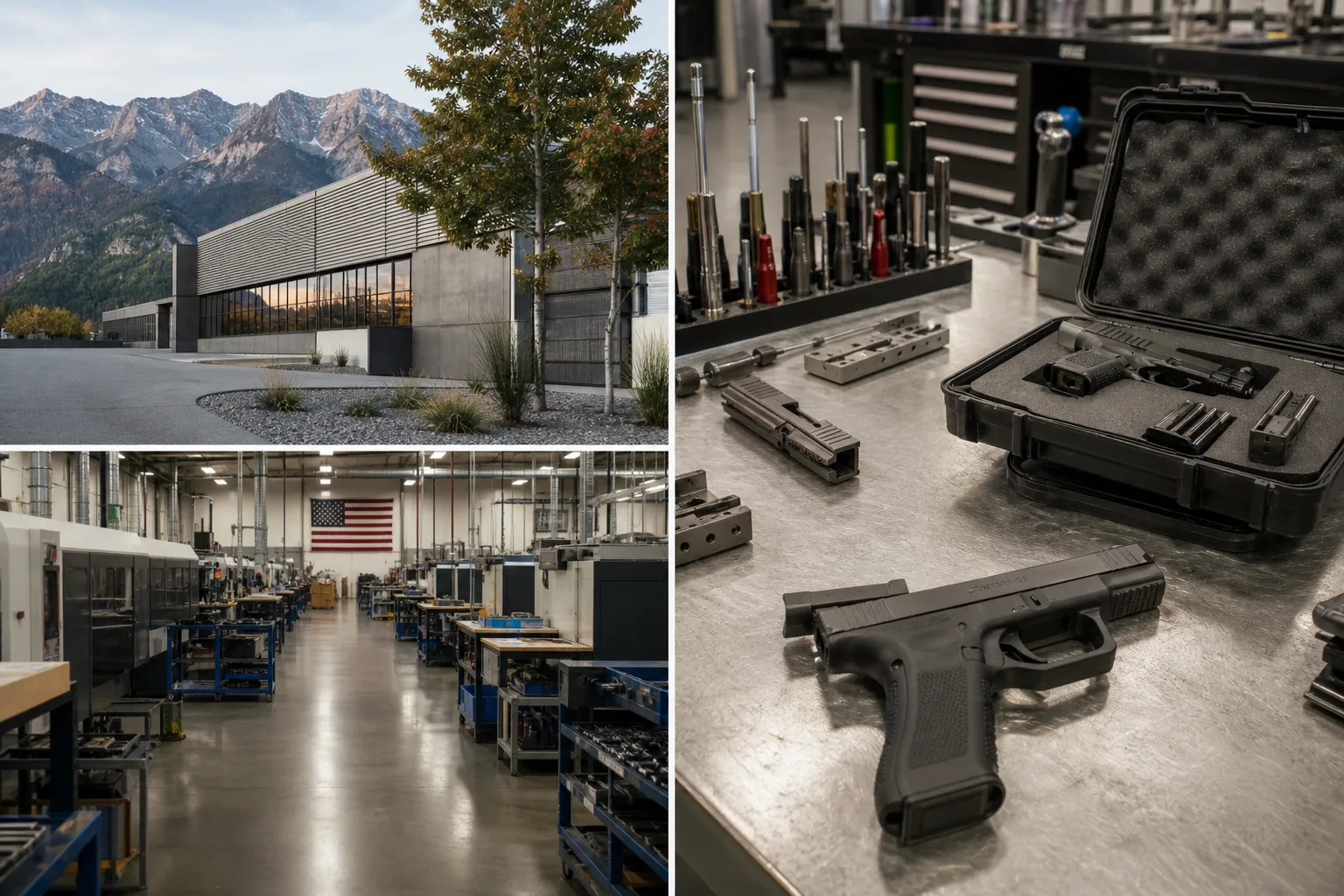
Glock started in Deutsch-Wagram, Austria, in 1963, when Gaston Glock founded Glock KG. The company became known for pistols after the Austrian Ministry of Defense’s Pistole 80 tender in the early 1980s, and Glock’s official pages now list company facilities in Deutsch-Wagram and Ferlach in Austria, Bratislava in Slovakia, and Smyrna, Georgia, in the United States.
From Glock KG to a military supplier
Glock’s official history says Gaston Glock founded Glock KG in the Austrian town of Deutsch-Wagram in 1963. The company did not begin as a pistol maker. Glock says the early business produced a wide variety of products made from wood, polymer, and metal.
By the mid 1970s, Glock was making military products. Glock’s official history lists field knives, components for fragmentation and training grenades, and machine gun belt links among those early military items. That background matters because the later Glock pistol project drew on the company’s experience with polymer and metal manufacturing, rather than starting as a traditional firearms firm.
Glock still lists outdoor equipment outside its pistol line. Its official product pages list two field knife models, the FM 78 and FM 81, and describe the Glock entrenching tool as three tools in one: spade, shovel, and saw.
The P80 tender and the first Glock pistol
Glock’s pistol history begins with the Austrian Ministry of Defense’s search for a new service pistol in the early 1980s. Glock says the tender was designated “Pistole 80” or “P80,” and that the required pistol had to have reduced weight, high reliability, and safe, simple operation.
Glock says Gaston Glock founded Glock GmbH in 1980 for this pistol project. Glock’s official history also places Glock GmbH in Deutsch-Wagram, Austria, in 1980.
The P80 was a sharp shift from older, all metal service pistol patterns. Glock identifies injection molded polymer construction as a key innovation, saying the P80 used a receiver produced through injection molded polymer. Glock also says the design used only 33 parts.
In March 1982, Glock says Gaston Glock submitted prototypes B1 to B5 to the Austrian Armed Forces. Glock describes those prototypes as 9 mm Safe Action semi-automatic pistols with a polymer frame, Browning tilting barrel action, a pretensioned firing pin, and a double stack magazine with a seventeen round capacity.
Glock says the prototypes achieved the highest point score after a comprehensive range of technical tests. According to Glock, more than 25,000 Generation 1 pistols were delivered to the Austrian Armed Forces from 1982 to 1984.
The Austrian Armed Forces equipment page lists the magazine as holding 17 cartridges.
Why the P80 became the Glock 17
Glock says the P80 later became known as the Glock 17, and that the number corresponded to its magazine capacity. That matches Glock’s description of the 1982 prototypes as using a seventeen round magazine.
The name can be confusing for new readers because “P80” is the Austrian service pistol designation, while “Glock 17” became the commercial model name. In Glock’s own history, these are connected: the P80 program led to the pistol that became known as the Glock 17.
Polymer frame and Safe Action design
Two ideas sit at the center of Glock’s early pistol identity: an injection molded polymer receiver and the Safe Action System. Glock identifies the polymer receiver as a key part of the P80 project, and says Gaston Glock coined the pistol’s safety concept as the “Safe Action System.”
Glock describes the Safe Action System as three independently operating, automatic, mechanical safeties built into the pistol’s fire control system. Glock’s current Safe Action page identifies those three safeties as the trigger safety, firing pin safety, and drop safety.
For a new owner or curious reader, the important historical point is that Glock presented these as internal, automatic mechanical safeties built into the fire control system. This was part of the company’s P80 submission, along with the polymer frame and the other design features Glock lists for the 1982 prototypes.
Glock generations at a glance
Glock uses “generations” to describe major design updates over time. Glock’s Glock 17 evolution page lists production periods and selected features for each generation.
| Generation | Glock’s listed production period | Glock listed features |
|---|---|---|
| Generation 1 | 1981 to 1988 | Safe Action, no finger grooves, pebble texture, polygonal barrel profile, and no mounting rail |
| Generation 2 | 1988 to 1998 | Glock lists this as the second production generation |
| Generation 3 | 1998 to ongoing | Finger grooves and a mounting rail among its features |
| Generation 4 | 2009 to ongoing | Rough textured frame, reversible magazine catch, beavertail backstraps, and dual recoil spring among its features |
| Generation 5 | 2017 to ongoing | nDLC finish, Glock Marksman Barrel, ambidextrous slide stop lever, front serrations, enlarged magazine floor plate, and flared magwell among its features |
Glock’s official history also lists a 2026 Gen6 launch. Glock describes that sixth generation as introducing enhanced ergonomics, a flat faced trigger, and a refined optic ready system.
This timeline is useful because many Glock references use generation labels as shorthand. A reference to “Gen3,” “Gen4,” or “Gen5” is usually pointing to a set of factory design characteristics from Glock’s own generation sequence, not to an aftermarket change.
Where Glocks are made
Glock official pages list company facilities in Deutsch-Wagram and Ferlach in Austria, Bratislava in Slovakia, and Smyrna, Georgia, in the United States.
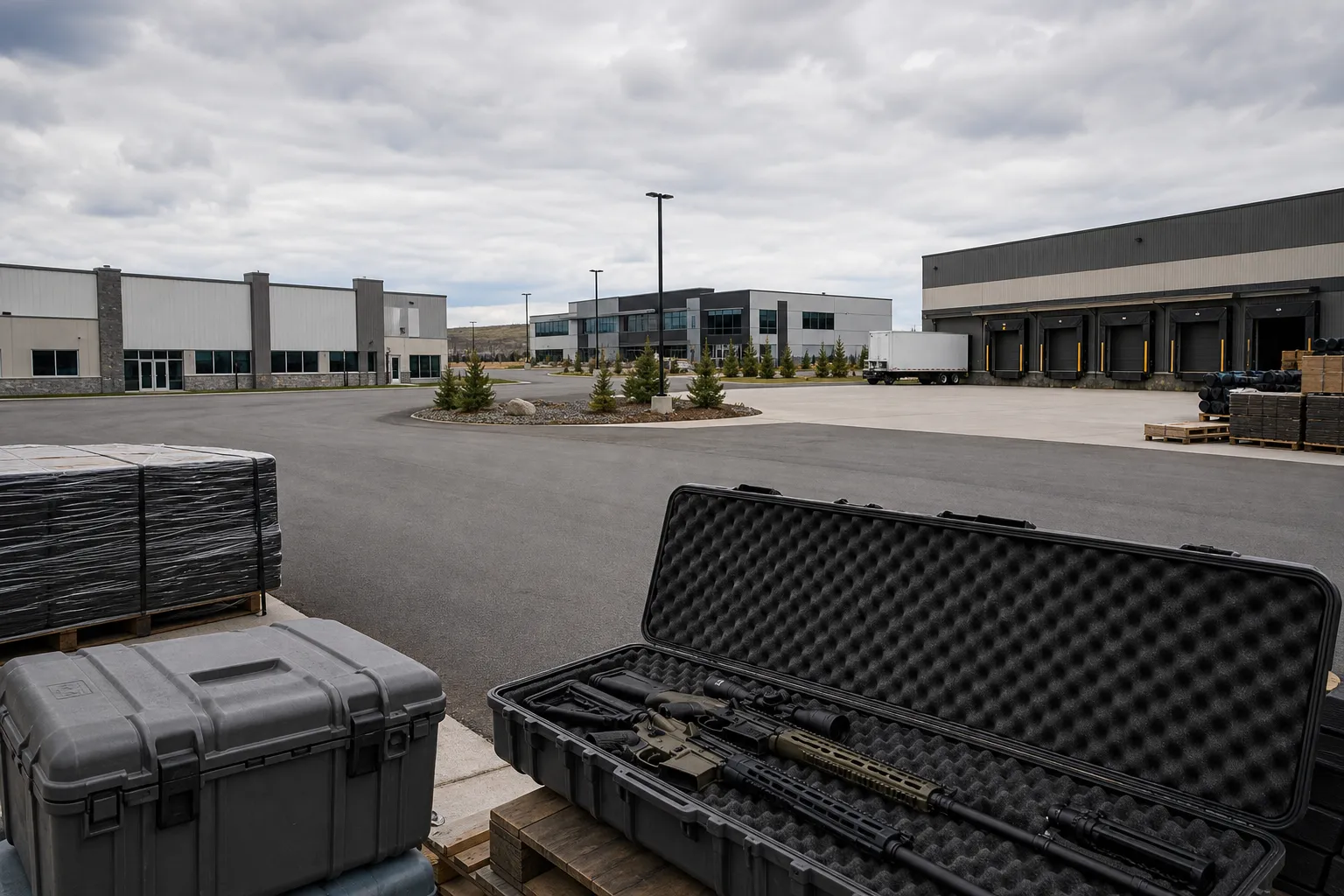
Glock says the new production facility in Deutsch-Wagram, north of Vienna, was finished in 1999. Glock describes that facility as including injection molding, full assembly, and test firing facilities.
Glock says production in the Ferlach factory, in the southern region of Austria, started in 1987. The company also lists a Bratislava, Slovakia, site located a short distance from the Deutsch-Wagram factory.
In the United States, Glock says Glock, Inc. was founded in Smyrna, Georgia, in 1985 as the first subsidiary of Glock Ges.m.b.H. Glock says the Smyrna facility began full production operations in 2013 and follows the same production standards and procedures as the Austrian facilities.
That means “where Glocks are made” is not a one city answer. Glock’s own company pages identify multiple facilities, with Austrian operations in Deutsch-Wagram and Ferlach, a site in Bratislava, and U.S. operations in Smyrna.
Ownership and company status
Glock’s official history describes the business as privately run and independent. The same official history says Kathrin Glock continues Gaston Glock’s life work.
For readers interested in the brand, this means Glock presents itself as an independent private company rather than a public corporation. The company’s official history gives its current corporate wording, because ownership and company structure can change over time.
The short version
Glock began in 1963 in Deutsch-Wagram, Austria, as Gaston Glock’s manufacturing company. Its pistol reputation came from the Austrian P80 program, where Glock submitted 9 mm polymer frame Safe Action prototypes in 1982 and later delivered more than 25,000 Generation 1 pistols to the Austrian Armed Forces from 1982 to 1984.
Today, Glock’s official pages list facilities in Austria, Slovakia, and Smyrna, Georgia. Glock says Smyrna began full production operations in 2013 and follows the same production standards and procedures as the Austrian facilities.
Glock’s official corporate pages provide current wording on factory locations, generation details, and company ownership.
Frequently asked questions
Who founded Glock?
Glock’s official history says Gaston Glock founded Glock KG in Deutsch-Wagram, Austria, in 1963.
Did Glock start as a pistol company?
No. Glock says its early business made products from wood, polymer, and metal. Its official history lists field knives, grenade components, and machine gun belt links among its first military products in the mid 1970s.
What was the Austrian P80?
Glock says the Austrian Ministry of Defense sought a new service pistol in the early 1980s under the name Pistole 80 or P80.
What is Glock’s Safe Action System?
Glock describes the Safe Action System as three independently operating automatic mechanical safeties built into the fire control system. Glock identifies them as the trigger safety, firing pin safety, and drop safety.
Where are Glock facilities located?
Glock official pages list facilities in Deutsch-Wagram and Ferlach in Austria, Bratislava in Slovakia, and Smyrna, Georgia, in the United States.
When did Glock’s Smyrna, Georgia, facility begin full production?
Glock says the Smyrna facility began full production operations in 2013 and follows the same production standards and procedures as the Austrian facilities.
Sources
- Pistole 80, Austrian Armed Forces, BundesheerOfficial source. Accessed October 22, 2026.
- Evolution of GLOCK17, GLOCK Ges.m.b.H.Official source. Accessed October 22, 2026.
- GLOCK history, GLOCK Ges.m.b.H.Official source. Accessed October 22, 2026.
- GLOCK P80 History, GLOCK Ges.m.b.H.Official source. Accessed October 22, 2026.
- Safe Action System, GLOCK, Inc.Official source. Accessed October 22, 2026.
- GLOCK: The Standard in Firearms, GLOCK, Inc.Official source. Accessed October 22, 2026.
- Field Knives, GLOCK Ges.m.b.H.Official source. Accessed October 22, 2026.
- Entrenching Tool, GLOCK Ges.m.b.H.Official source. Accessed October 22, 2026.