How Trail Cameras Work, Including Cellular Models
Trail cameras are unattended cameras that can record wildlife photos or video. Cellular models work the same way at the camera, but can send images over a cellular network when service and settings allow.
By RaiS. Reviewed by RaiS. Published . 6 min read.
Research and drafting were assisted by AI. RaiS checked the facts against the sources below and approved this page.
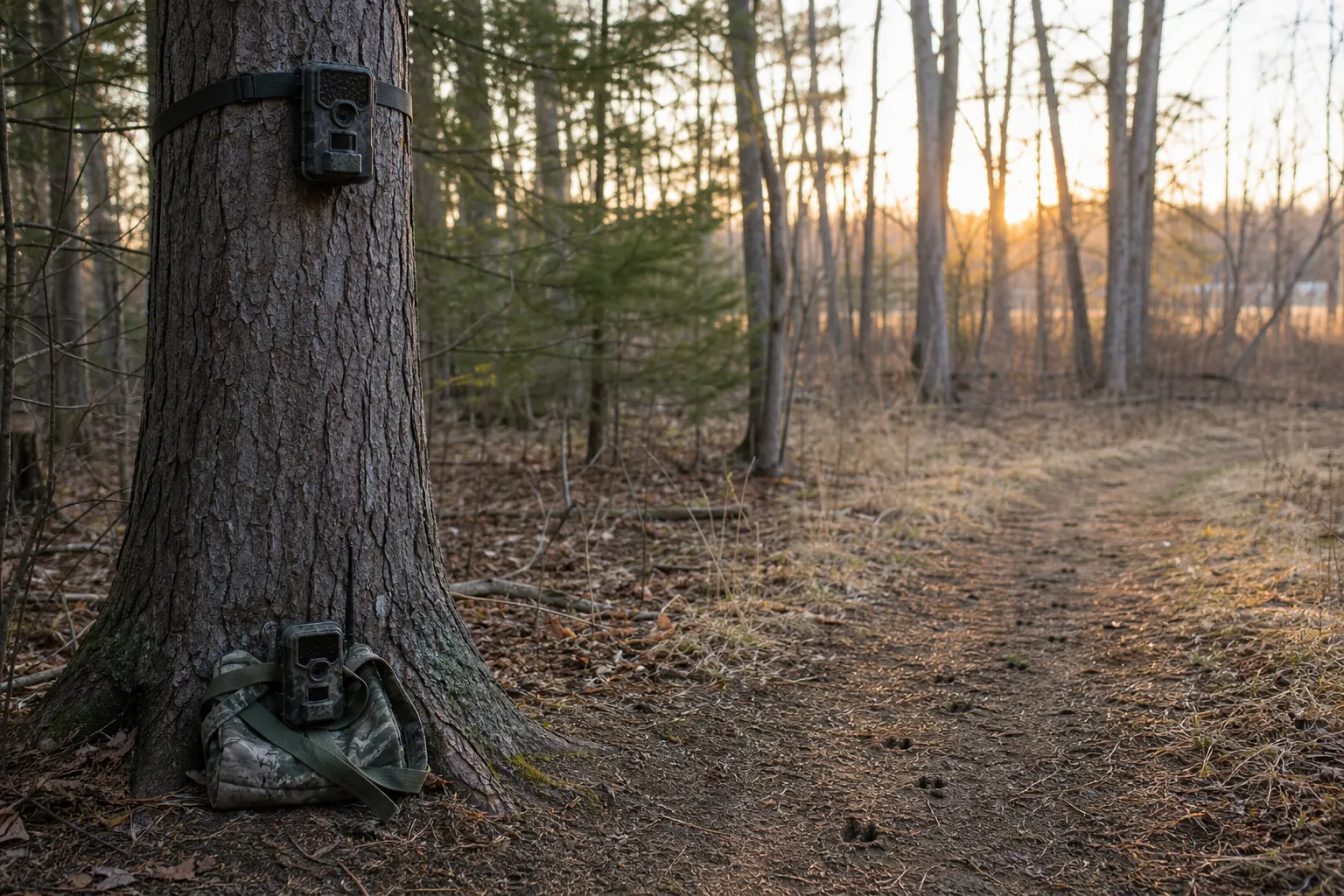
Trail cameras are unattended cameras used to record wildlife photos or video. Many sit in standby to save power, then trigger when their sensor is activated. A cellular trail camera does the same basic job as a standard SD card camera, but it can also send images or video through a cellular network instead of requiring every image to be checked by pulling the card.
What a trail camera does
In everyday hunting and wildlife watching, a camera can monitor an area while you are not there.
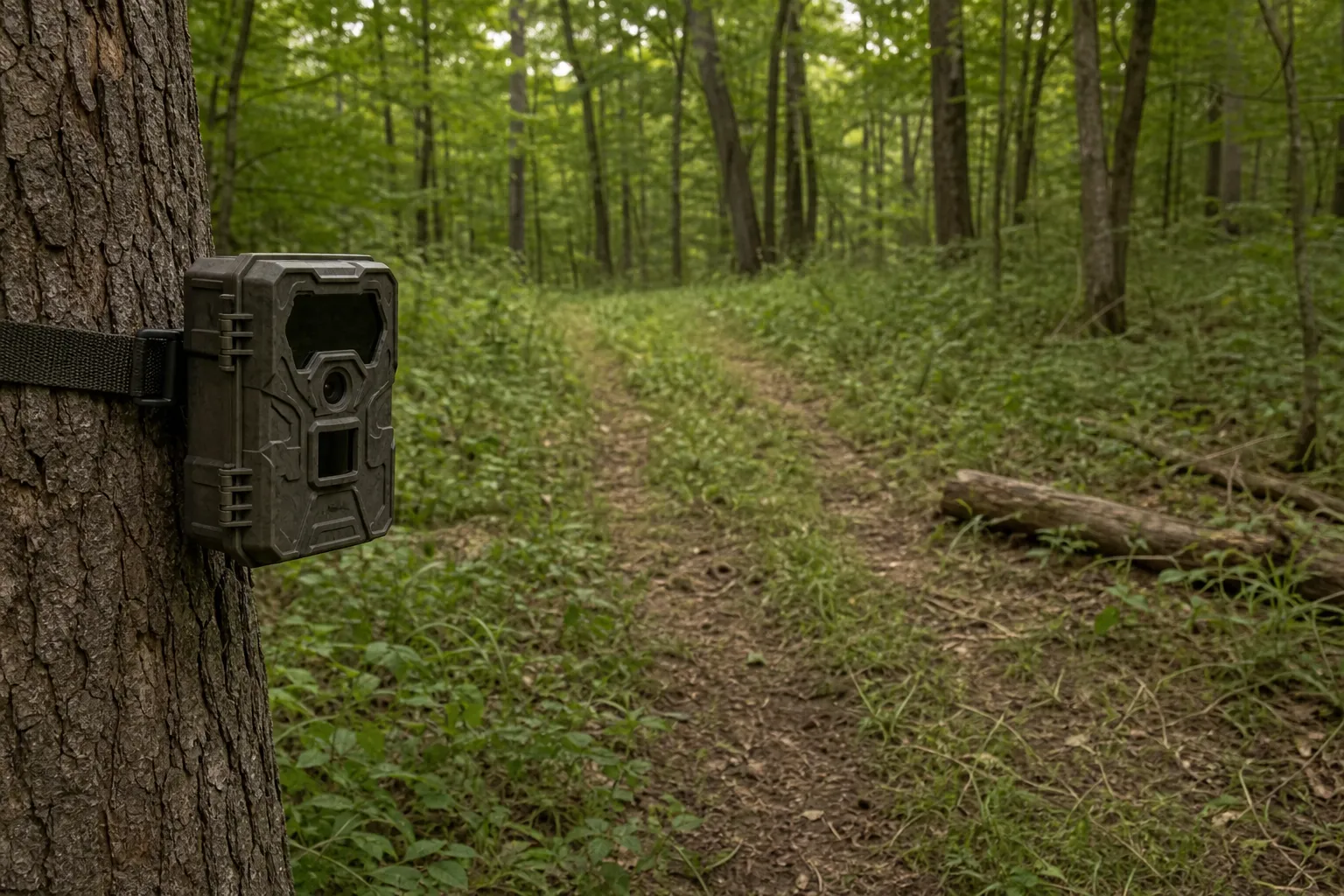
Many modern trail cameras are built around a standby and trigger cycle. A cellular trail camera is usually in standby mode to conserve battery life. When an animal or person enters the detection zone, the sensor can trigger the camera to take a photo or record video.
A standard model usually saves photos or video to an SD card. A cellular model still captures images like a regular trail camera, but cellular models can send images or videos through a cellular network to a phone or email. Mobile optimized and full resolution photos may also be saved to the SD card even when photos are sent through an app.
How PIR motion and heat triggering works
PIR stands for passive infrared. In a trail camera, a PIR sensor is part of the trigger system that helps decide when the camera should wake and record.
A PIR trail camera is not simply watching for shape or color. Placement, aim, and settings can affect how well the camera captures a passing animal.
That is why a deer, elk, coyote, bear, person, or other subject moving through the camera’s view may trigger a photo or video. The detection zone is the area in front of the camera monitored by the trigger system.
Why some triggers are missed or false
Trigger success depends on the subject, the background, and how the animal moves through the detection zone. A fast animal crossing only the edge of the zone may be harder to capture than an animal walking across the center of the camera’s view.
In plain terms, very warm days, shifting sun patches, wind moved vegetation, and nearby objects can all make the camera’s job harder.
Trigger speed and recovery time
Trigger speed is the time between camera activation and taking a picture. A quick trigger speed gives the camera a better opportunity to record an animal moving through the detection area.
This matters most on travel corridors. If a camera is aimed straight across a narrow trail and a deer walks quickly through the detection zone, a slow trigger may capture only the back half of the animal or miss it. A faster trigger gives the camera a better chance to record the animal while it is still in frame.
Recovery speed is the time between successive pictures. Recovery speed can vary by model and settings. Faster recovery can help capture multiple images of one animal or animals moving in a group.
The best performance is not just one number. Trigger speed, recovery time, placement, aim, and camera settings all affect the final result.
Night photos and infrared flash types
Trail cameras need some way to record at night. The main options discussed in wildlife camera guidance are visible flash, low glow infrared, and no glow infrared.
A visible or white flash lights the scene in a way animals and people may notice. Infrared flash is different.
Low glow infrared can produce a visibly faint red glow when taking pictures. The glow can be seen when looking directly at the camera.
No glow, sometimes called black flash, is designed to avoid visible light at night. No glow cameras are designed so that subjects are less likely to notice a flash at nighttime.
There is a tradeoff. Night image quality and appearance can vary by flash type, camera model, distance, and settings.
Do deer notice trail cameras?
There is not one universal answer for every deer, camera, flash type, and setup. The best wording is cautious: deer may react to some cameras or flashes in some situations, but a simple rule that all trail cameras spook deer or that none of them do is too broad.
There is little evidence to suggest that flash cameras always deter deer. Infrared cameras are often used for preseason scouting or monitoring scrape activity, and they can be useful where a more discreet nighttime setup is preferred.
For a new hunter or wildlife watcher, the practical takeaway is simple. If you are worried about drawing attention at night, low glow infrared reduces visible light compared with white flash, and no glow models are designed to avoid visible light. Placement still matters, because animals may also notice a camera’s position, scent, or the disturbance from setting it up.
How cellular trail cameras transmit images
A cellular trail camera is still a trail camera first. It has a camera sensor, motion detector, power source, and storage. Common cellular trail camera components include a camera sensor, motion detector, cellular connectivity, antenna, power source, and SD card.
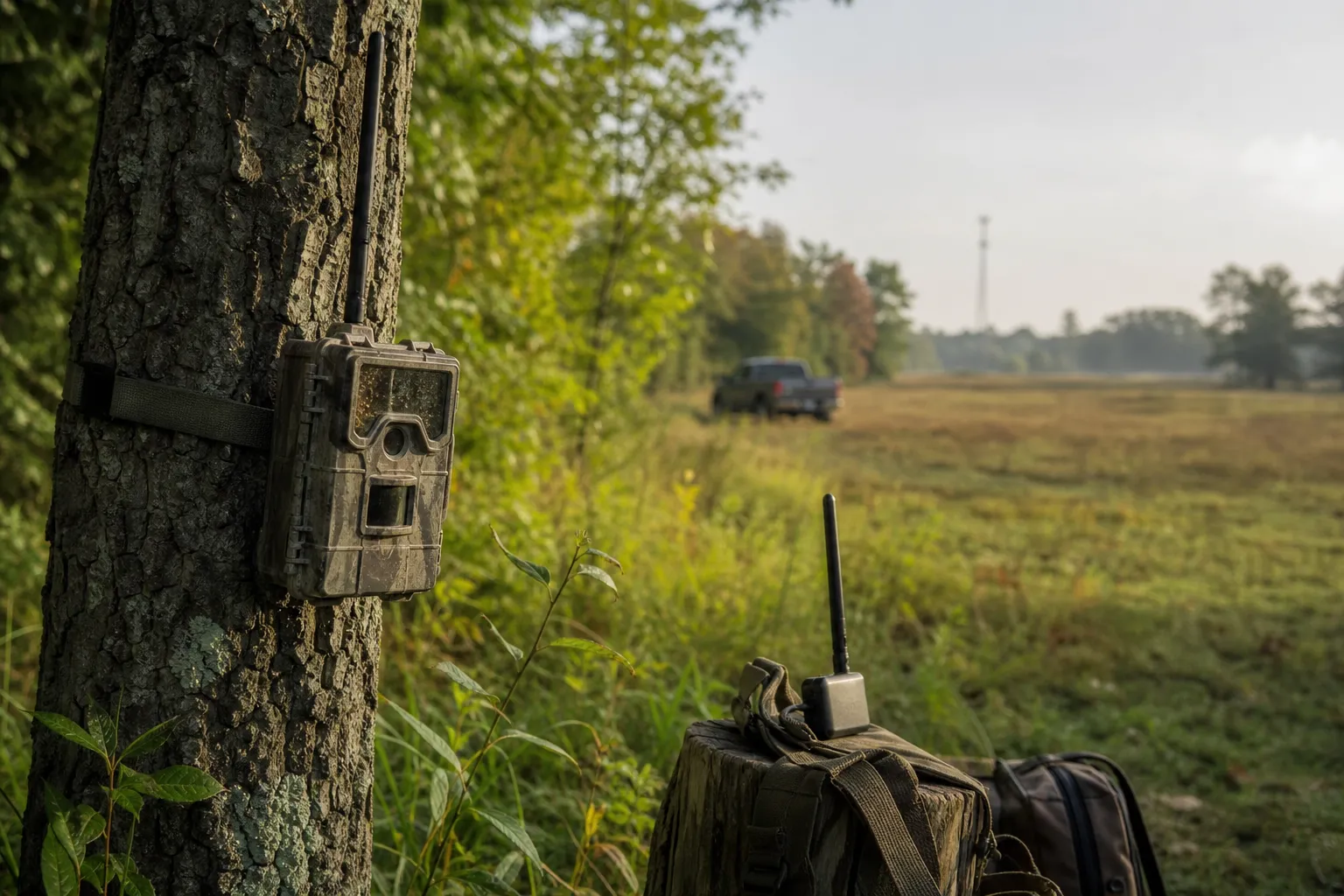
After the sensor triggers the camera and an image or video is captured, the cellular part can send the file through a cellular network. Cellular trail cameras can send images and videos directly to a phone or email using a cellular network, unlike traditional cameras that require manual retrieval from SD cards.
Cell service is essential for remote transfer. Cell service is needed for a trail camera to send images to a smartphone.
Upload timing and data use depend on the model, plan, settings, and network conditions. Some cellular cameras offer configurable transfer modes, including fast, low volume, and batch sending.
In practical terms, a cellular camera placed outside service may still take pictures, but remote delivery may not work. A camera set to send larger files or send more often can also use more data than one using smaller files or batch transfer settings.
Placement fundamentals
Good placement helps the sensor trigger and helps the camera capture a useful image. Mount a camera on a solid post or tree that is not affected by wind or animal contact. Avoid a direct east or west aim when possible, because sunrise and sunset glare can affect the camera.
At least 4 to 5 feet of clear space in front of a camera trap is a useful target. That clear space helps provide a clean view of passing animals and can reduce nighttime flash reflection from nearby objects.
Remove tall grass and branches in front of the camera. That advice matters because nearby vegetation can block the subject or reflect flash at night.
For height, a simple rule of thumb for a broad range of North American wildlife is to place the camera about 20 inches, or 50 cm, off the ground. Adjust height for the species and scene you are trying to photograph.
Aim also matters. A camera pointed along a trail or travel route can keep an animal in the detection zone longer than a camera pointed straight across a narrow crossing. The camera needs enough time to activate and record the image.
For hunting use, always check the local wildlife agency’s rules before using any bait, attractant, or camera setup connected to taking game.
Regulations and hunting use
Trail camera rules are not the same everywhere. Some jurisdictions restrict trail camera or wireless camera use for hunting, especially cellular or transmitting models. Confirm current rules with the wildlife agency where you hunt before placing or using a camera for hunting.
In Utah, as of April 8, 2026, all trail cameras are prohibited on public land from July 31 to Dec. 31, with listed exceptions. Trail cameras capable of transmitting data are also not permitted on private lands for the purposes of taking protected wildlife.
British Columbia rules define a wireless camera as a camera that obtains an image by remote or infrared sensor and can send the image remotely to an electronic device. The rules restrict using a wireless camera for hunting in Region 1 at any time, and in Regions 2 to 8 from August 1 to December 10.
Before relying on a trail camera for hunting, check the current rulebook, emergency orders, and agency pages for the state, province, territory, wildlife management unit, and land type where you plan to hunt. Rules can depend on date, location, species, land ownership, and whether the camera transmits images remotely.
Frequently asked questions
What is trigger speed on a trail camera?
Trigger speed is the time between camera activation and taking a picture. A faster trigger speed improves the chance of photographing an animal moving through the detection area.
What is recovery time?
Recovery time, or recovery speed, is the time between successive pictures. Faster recovery helps when one animal stays in view or when several animals pass through together.
What is the difference between low glow and no glow infrared?
Low glow infrared can show a faint red or orange glow when looking directly at the camera. No glow infrared is designed to avoid visible light while taking night photos.
Do deer notice trail camera flash?
There is no single answer for every deer and camera setup. Deer may react to some cameras or flashes in some situations, but a simple rule for all setups is too broad.
Do cellular trail cameras still save photos on a card?
Many cellular models still use local storage. Mobile optimized and full resolution photos may also be saved to the SD card, even when photos are sent through an app.
Sources
- The Basics of Using Remote Cameras to Monitor Wildlife, Ohio State University Extension, hosted by Wildlife Leadership Academy. Accessed October 22, 2026.
- Bushnell Trail Scout Instruction Manual, BushnellOfficial source. Accessed October 22, 2026.
- Wildlife cameras: A snapshot of what you need to know, Oregon State University Extension Service. Accessed October 22, 2026.
- Conducting Camera Surveys to Estimate Population Characteristics of White-Tailed Deer, Mississippi State University Extension Service. Accessed October 22, 2026.
- The influence of camera-trap flash type on the behavioural response, detection rate and individual recognition of Eld’s deer, Wildlife Research, ConnectSci. Accessed October 22, 2026.
- How Wireless Cellular Trail Cameras Work: A Comprehensive Guide, Tactacam REVEALOfficial source. Accessed October 22, 2026.
- HyperFire2 Cellular Scouting Instruction Manual, RECONYXOfficial source. Accessed October 22, 2026.
- Trail Cameras, University of California Cooperative Extension. Accessed October 22, 2026.
- Camera Trapping for Wildlife, University of Florida IFAS Extension. Accessed October 22, 2026.
- Trail camera regulations, Utah Division of Wildlife ResourcesOfficial source. Accessed October 22, 2026.
- Wildlife Act, Hunting Regulation, B.C. Reg. 190/84, Government of British Columbia, BC LawsOfficial source. Accessed October 22, 2026.
- Camera Trap Set-Up. Accessed October 22, 2026.
- Camera Trap Set-Up. Accessed October 22, 2026.
- Camera Trap Set-Up. Accessed October 22, 2026.
- Remote Cameras. Accessed October 22, 2026.