The .22 Creedmoor: Specs, Ballistics and Origins
The .22 Creedmoor is a SAAMI standardized .224 inch centerfire rifle cartridge from Hornady, with wildcat roots in the 6.5 Creedmoor family. It is built around fast twist barrels, heavy low drag bullets, high velocity, and roles that include predators, varmints, match shooting, and long range target work.
By RaiS. Reviewed by RaiS. Published . 6 min read.
Research and drafting were assisted by AI. RaiS checked the facts against the sources below and approved this page.
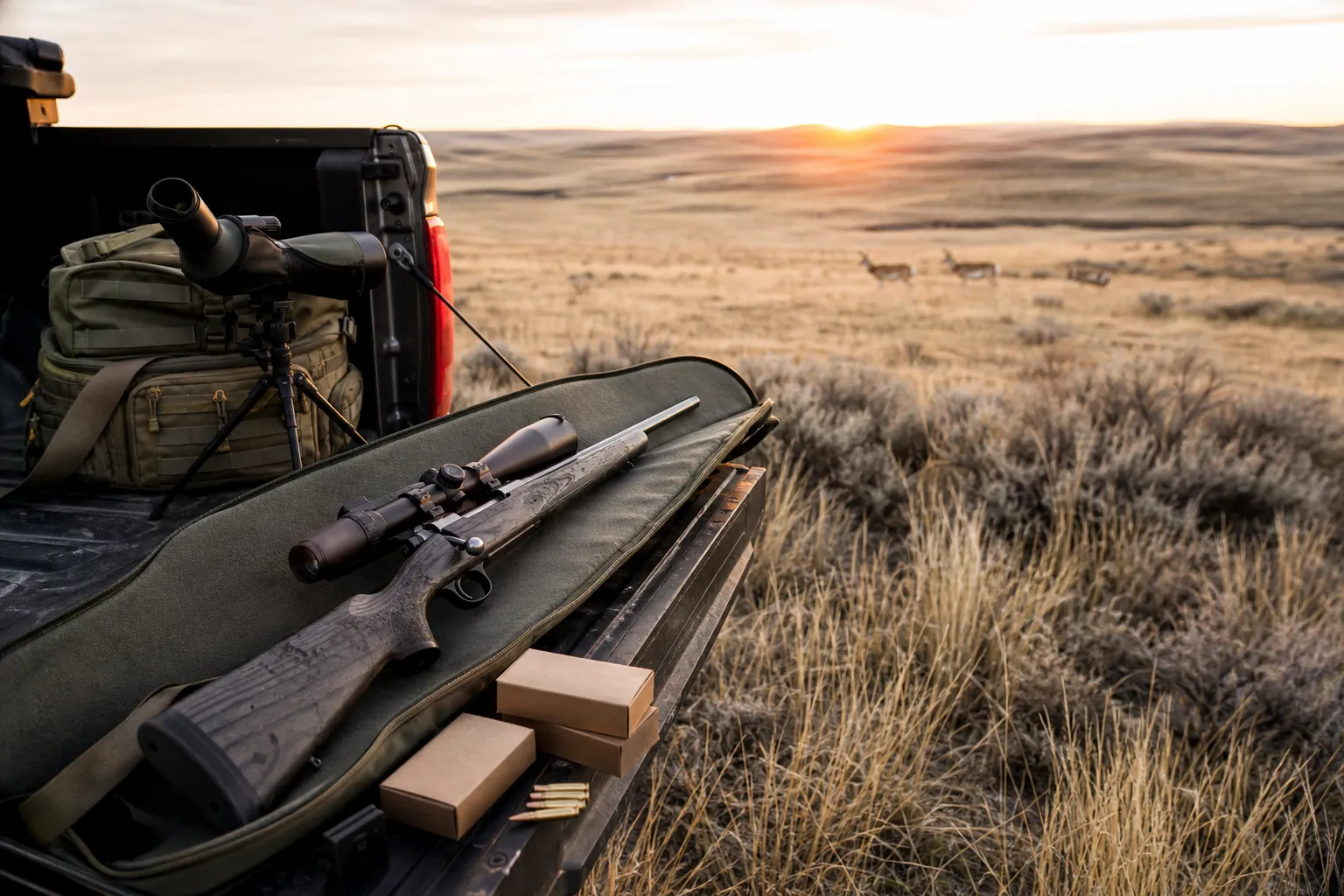
The .22 Creedmoor is a modern .224-inch centerfire rifle cartridge that grew out of the 6.5 Creedmoor wildcat family and was later standardized by SAAMI after submission by Hornady. Its basic appeal is simple: it pairs high velocity with a fast-twist .22-caliber setup intended for sleek, low-drag bullets, including Hornady’s 80 grain ELD Match and 80 grain ELD-X bullets.
What is the .22 Creedmoor?
SAAMI announced acceptance of the .22 Creedmoor for standardization on February 7, 2024. In that announcement, SAAMI said the cartridge was introduced by Hornady with an 80 grain bullet at 3,250 fps and a Maximum Average Pressure of 62,000 psi.
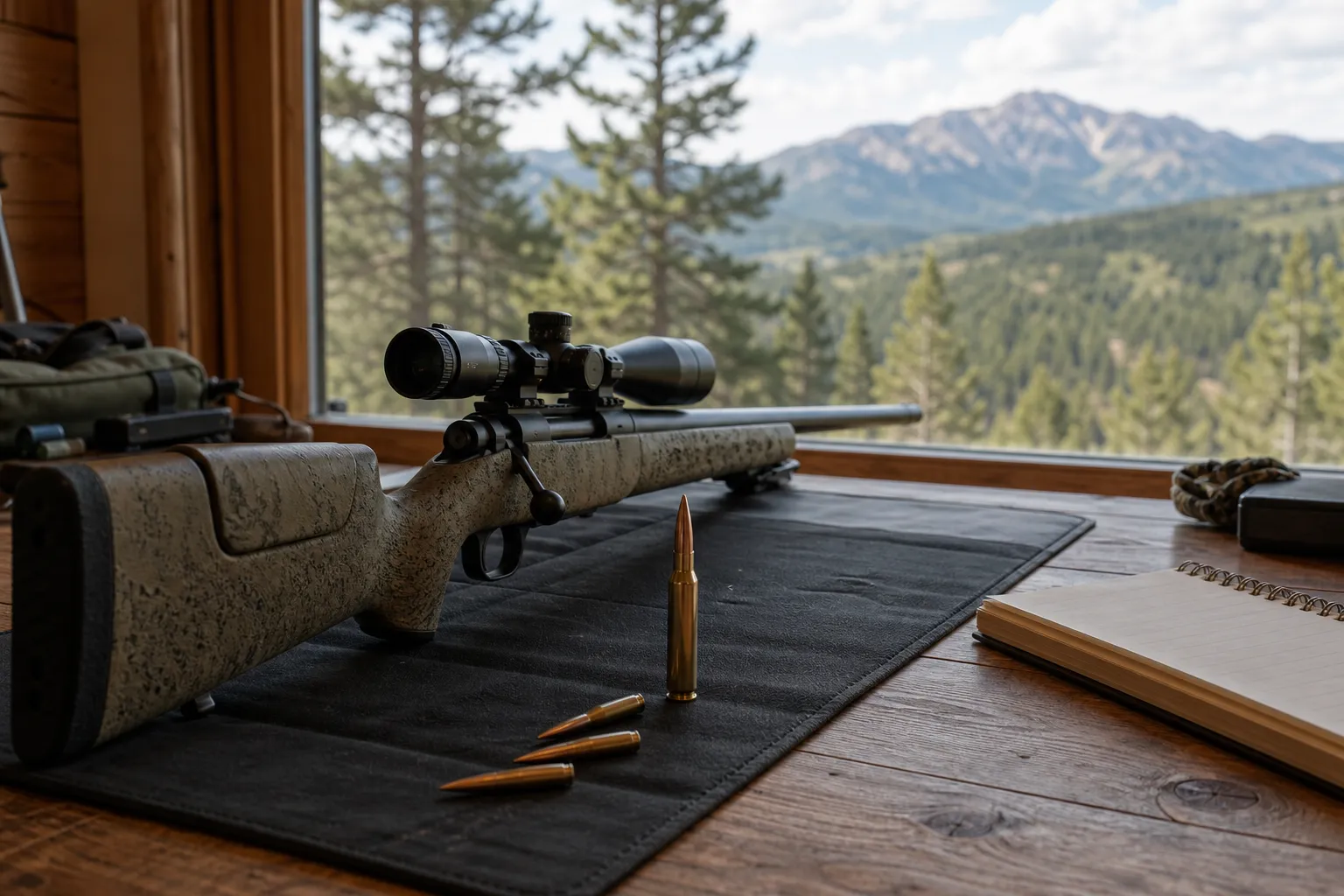
Hornady describes the .22 Creedmoor as a cartridge that began as a wildcat. Hornady’s load-data notes say that after the 6.5 Creedmoor was announced in 2008, many new wildcats emerged from that cartridge, and the .22 Creedmoor existed in the wildcat space for more than a decade before a Horizon Firearms and Hornady joint venture led to SAAMI submission.
That history matters because the .22 Creedmoor is not just another older .22 varmint cartridge with a new label. Hornady identifies its major advantages as modern case design coupled with the twist rate needed to shoot sleek, low-drag bullets.
SAAMI and Hornady specifications
SAAMI Z299.4-2025 includes the .22 Creedmoor in its centerfire rifle cartridge and chamber drawings.
| Specification | Published figure |
|---|---|
| Bullet diameter | .224 inch, per Hornady load data |
| Bore diameter | .219 inch, per SAAMI |
| Groove diameter | .224 inch, per SAAMI |
| Maximum Average Pressure | 62,000 psi, per SAAMI acceptance notice |
| Maximum cartridge overall length | 2.700 inches, per Hornady load data |
| Maximum case length | 1.920 inches, per Hornady load data |
| Case trim length | 1.910 inches, per Hornady load data |
| Groove count | 6 grooves, per SAAMI |
| Twist | 1:8 inch right-hand optional, per SAAMI |
Hornady’s .22 Creedmoor load-data PDF lists a .224 inch bullet diameter, 2.700 inch maximum cartridge overall length, 1.920 inch maximum case length, and 1.910 inch case trim length. Hornady’s test rifle for that load data was a Horizon Firearms rifle with a 24 inch barrel and 1:8 inch twist.
Hornady also lists .22 Creedmoor unprimed rifle cases as item 8619 in 50 count packages.
Factory ballistics and bullet weights
Hornady publishes .22 Creedmoor data for heavy .224 caliber bullets, including 80 grain ELD Match and 80 grain ELD-X bullets. Those bullets show the cartridge’s focus on heavier, more aerodynamic projectiles.
Hornady lists both the 80 grain ELD Match and 80 grain ELD-X .22-caliber bullets used in its .22 Creedmoor data with a G1 ballistic coefficient of .485 and a G7 ballistic coefficient of .244.
Those ballistic coefficient figures help explain the cartridge’s identity. The .22 Creedmoor is not only about pushing very light .22-caliber bullets fast. Its standardized form is also built around heavier .224-inch bullets that need enough twist to stabilize and enough case capacity to reach high listed velocities.
Published velocity figures should still be treated as reference numbers, not guaranteed numbers in every rifle. Hornady says its ammunition velocity data is derived from SAAMI specification test barrels, and that most rifle test barrels are 24 inches long. Hornady also cautions that individual firearm chambers and barrels can produce velocities faster or slower than its published figures.
Twist rate and the fast-twist .22 idea
SAAMI lists the .22 Creedmoor with an optional 1:8 inch right-hand twist, and Hornady used a 24 inch, 1:8 inch twist rifle for its published load data. Hornady says the 1:8 inch twist was selected to help reduce excessive bullet RPM with lighter bullets at higher velocities.
That makes the .22 Creedmoor different in concept from traditional .22 centerfires that were often associated with lighter bullets and slower twists. In Hornady’s description, the advantage is the combination of modern case design and a twist rate suited to sleek, low-drag bullets.
For a shooter looking at the cartridge, twist is not a side detail. It is central to what the .22 Creedmoor was standardized to do. A fast 1:8 inch twist context is part of both the SAAMI drawing and Hornady’s load-development information.
Barrel life and bullet-speed cautions
The .22 Creedmoor’s high listed velocities are part of its appeal, but speed has tradeoffs. Peterson Cartridge warns that pushing .22 Creedmoor bullets faster increases the likelihood of bullet disintegration in flight and generally shortens barrel life.
That caution is especially relevant for high-volume varmint shooting, frequent match practice, or any use where a shooter may fire many rounds in a short period. The available data does not give a round-count estimate for barrel life, so a precise lifespan number should not be assumed.
The practical takeaway is that the .22 Creedmoor is a high-performance .224-inch cartridge. Its performance is tied to high velocity, and high velocity is also the area where Peterson specifically urges caution about bullet integrity and barrel life.
Common uses
Hornady positions the .22 Creedmoor for predator hunting, small and medium game, and long-range target shooting. Hornady’s load-data PDF also describes it as suitable for varminting, match shooting, and pursuing antelope, deer, and pigs.

That range of uses reflects the cartridge’s split personality. With suitable lighter .224 inch bullets, it can fit the fast .22 centerfire role often associated with varmints and predators. With the 80 grain ELD Match and 80 grain ELD-X, it moves into the heavy-for-caliber, low-drag .224-inch category that appeals to target shooters and hunters looking for retained efficiency at distance.
Game laws vary by state, province, season, species, and bullet type. Before using the .22 Creedmoor for hunting, review the current regulations from the wildlife agency that governs the exact place and season you plan to hunt.
How it contrasts with .22-250 Remington and .22 ARC
The .22 Creedmoor.22-250 Remington, and .22 ARC are all .22-caliber centerfire rifle cartridges in SAAMI’s centerfire rifle standards, but the published specifications show different design contexts.
The .22 Creedmoor is often discussed in terms of fast twist and heavier low-drag bullets because SAAMI lists it with a 1:8 inch right-hand twist option and SAAMI’s acceptance notice described it with an 80 grain bullet at 3,250 fps.
That design context helps explain why the .22 Creedmoor is often discussed in terms of fast twist and heavier low-drag bullets.
SAAMI lists the .22 ARC with a 75 grain bullet at 3,075 fps and a transducer Maximum Average Pressure of 520 psi/100, equivalent to 52,000 psi.
Compared with .22 ARC in these SAAMI figures, the .22 Creedmoor is described with a higher listed Maximum Average Pressure, and SAAMI’s acceptance notice described it with an 80 grain bullet at 3,250 fps. That does not make one cartridge universally better than the other. It does show that they occupy different specification envelopes.
Bottom line
The .22 Creedmoor is best understood as a standardized version of a once-wildcat .224-inch cartridge from the 6.5 Creedmoor family. SAAMI accepted it in 2024, Hornady introduced it for standardization, and the published specifications center on a 62,000 psi Maximum Average Pressure.224-inch bullets, a 2.700 inch maximum overall length, and a fast 1:8 inch twist context.
Its strongest identity is heavy, efficient .22-caliber bullets at high listed velocities. Hornady’s published data includes 80 grain ELD Match and 80 grain ELD-X bullets carrying listed G1 BCs of .485 and G7 BCs of .244.
Before buying a rifle or ammunition, review the current SAAMI drawing, the ammunition maker’s current specifications, and the rifle maker’s chamber and twist information. For hunting, also review the current state or provincial wildlife regulations for the exact species, season, location, and projectile requirements.
Frequently asked questions
Is the .22 Creedmoor a SAAMI cartridge?
Yes. SAAMI announced acceptance of the .22 Creedmoor for standardization on February 7, 2024, and its centerfire rifle cartridge and chamber drawings include the .22 Creedmoor.
What bullet diameter does the .22 Creedmoor use?
Hornady lists the .22 Creedmoor bullet diameter as .224 inch. SAAMI lists a .219 inch bore diameter and .224 inch groove diameter.
What twist rate is associated with the .22 Creedmoor?
SAAMI lists an optional 1:8 inch right hand twist for the .22 Creedmoor. Hornady’s published load data used a 24 inch barrel with a 1:8 inch twist.
Does the .22 Creedmoor have barrel-life concerns?
Peterson Cartridge warns that pushing .22 Creedmoor bullets faster increases the likelihood of bullet disintegration in flight and generally shortens barrel life. The available data does not provide a specific round count estimate.
Sources
- SAAMI Announces Acceptance of Two New Cartridges, Sporting Arms and Ammunition Manufacturers’ InstituteOfficial source. Accessed October 23, 2026.
- SAAMI Z299.4-2025, Voluntary Industry Performance Standards for Pressure and Velocity of Centerfire Rifle Ammunition, Sporting Arms and Ammunition Manufacturers’ InstituteOfficial source. Accessed October 23, 2026.
- 22 Creedmoor Rifle Data, Hornady ManufacturingOfficial source. Accessed October 23, 2026.
- 22 Creedmoor, Hornady ManufacturingOfficial source. Accessed October 23, 2026.
- Why does velocity differ from what’s listed on the ammo box?, Hornady ManufacturingOfficial source. Accessed October 23, 2026.
- Cartridge Cases, Hornady ManufacturingOfficial source. Accessed October 23, 2026.
- 22 Creedmoor Load Data, Peterson Cartridge. Accessed October 23, 2026.