9mm vs .45 ACP: Objective Handgun Caliber Comparison
The article now avoids the unconfirmed SAAMI naming, dimension, pressure, velocity and recoil claims. It also removes the specific unconfirmed manufacturer capacity claims, the Federal target shooting marketing claim, and the Naval History and Heritage Command production statement.
By RaiS. Reviewed by RaiS. Published . 4 min read.
Research and drafting were assisted by AI. RaiS checked the facts against the sources below and approved this page.
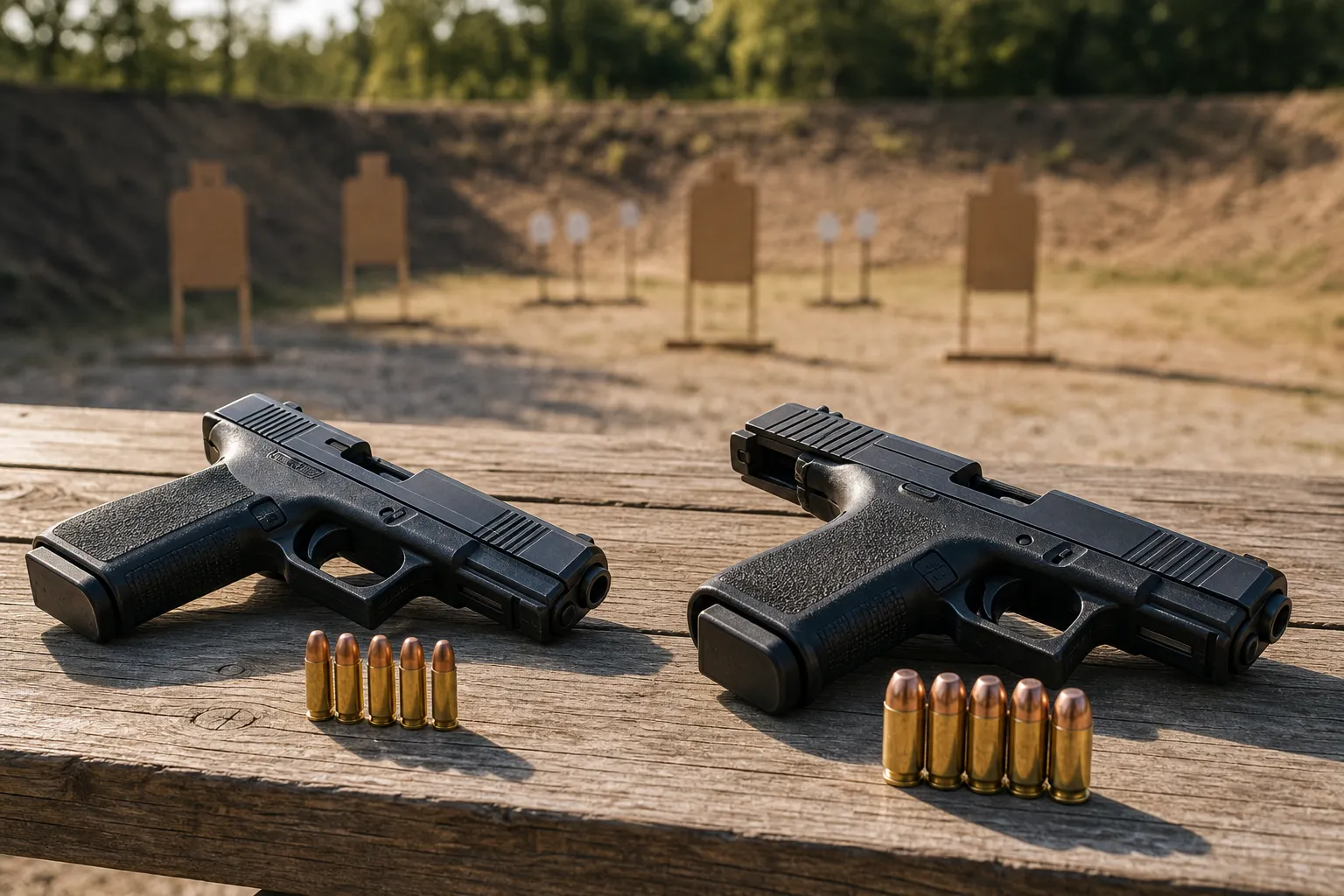
9mm vs 45 is often compared through ammunition cost, load data and firearm choice. Using the sources below, 9mm Luger costs less in the sampled Federal American Eagle listing. .45 ACP uses heavier bullets in the sampled Federal load. Always confirm ammunition compatibility with the firearm maker and current laws with the relevant agency.
Names and short history
The 9mm cartridge is also historically tied to the Luger pistol. NRA Museums states that Lugers were produced in 9mm Parabellum caliber beginning in 1904, followed by German Navy acceptance. NRA Museums
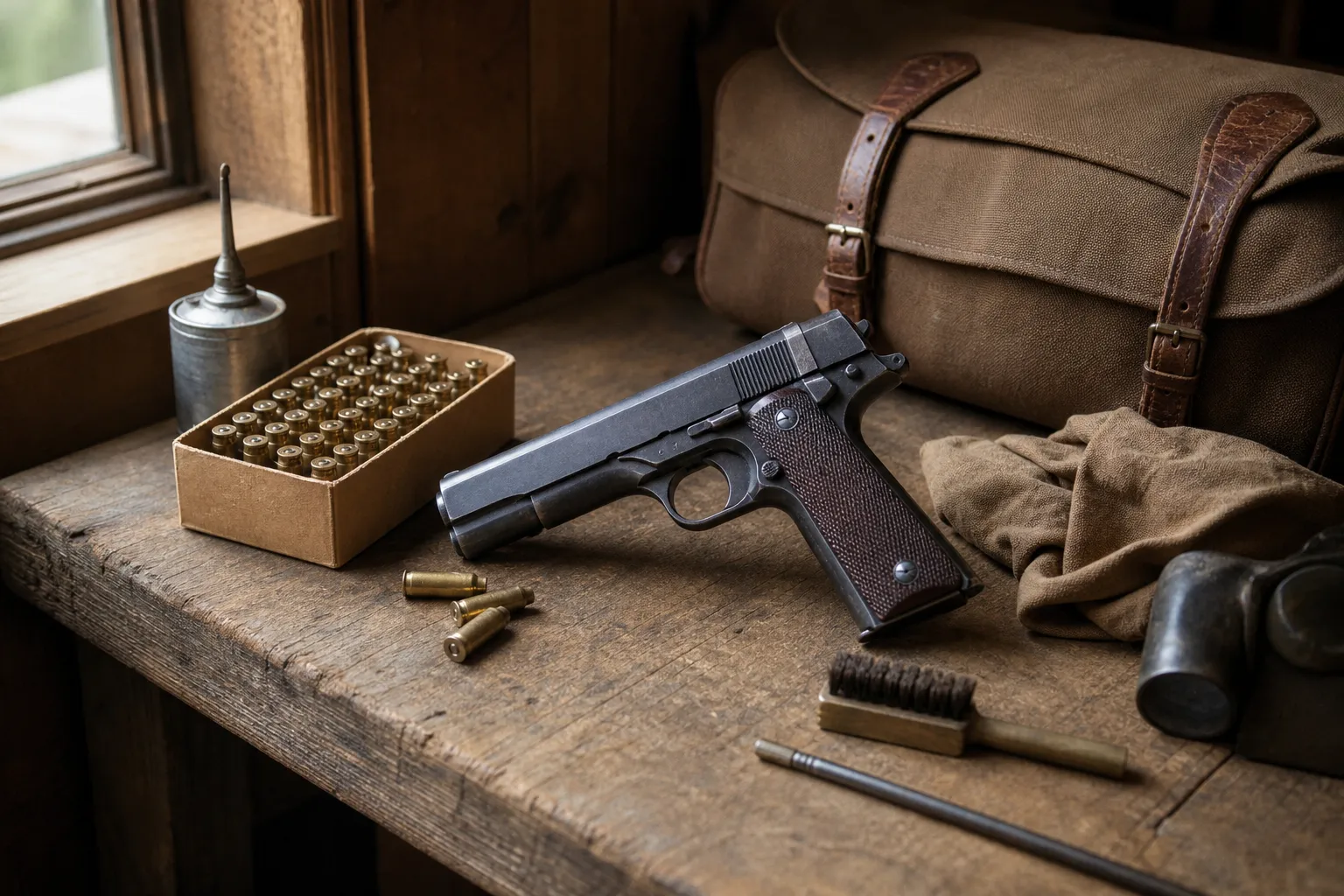
The .45 cartridge is historically tied to the Browning designed M1911. Browning states that the U.S. military began evaluating pistol designs and a new cartridge designated .45 Automatic Colt Pistol in 1906, and that the Browning pistol design was adopted by the U.S. Army on March 29, 1911. Browning
In everyday use, many shooters say “.45 ACP.”
Dimensions and pressure
This comparison does not repeat the prior SAAMI dimension and pressure entries. Always use ammunition that matches the firearm maker’s markings and instructions.
Published bullet weights and velocities
The two Federal sample loads differ in bullet weight and listed velocity.
Federal American Eagle 9mm Luger sample load: 115 grain FMJ at 1,180 fps from a 4 inch test barrel, 50 round package.
Federal American Eagle .45 Auto sample load: 230 grain FMJ at 890 fps from a 5 inch test barrel, 50 round package.
Sources: Federal product pages for the American Eagle sample loads. Federal 9mm American Eagle, Federal .45 Auto American Eagle
The Federal examples make the contrast clear. In those two American Eagle loads, the 9mm uses a 115 grain full metal jacket bullet at 1,180 fps, while the .45 Auto uses a 230 grain full metal jacket bullet at 890 fps. Federal lists both in 50 round packages. Federal 9mm American Eagle, Federal .45 Auto American Eagle
Recoil comparison
A fair recoil comparison needs more than caliber name. SAAMI’s recoil formula sheet uses firearm weight, ejecta weight, ejecta velocity, propellant gas weight and propellant gas velocity as inputs, and states that for pistols and revolvers, propellant gas velocity is treated as 1.50 times ejecta velocity. SAAMI recoil formulae
That means the sampled 9mm and .45 Auto loads cannot be reduced to one universal recoil statement without also knowing the firearm and load details. The Federal 9mm sample uses a 115 grain bullet at 1,180 fps from a 4 inch test barrel. The Federal .45 Auto sample uses a 230 grain bullet at 890 fps from a 5 inch test barrel. Those bullet weights and velocities are important recoil inputs, but SAAMI’s recoil framework also requires firearm weight and propellant gas inputs. Federal 9mm American Eagle, Federal .45 Auto American Eagle, SAAMI recoil formulae
For a beginner comparing pistols at a range, the practical lesson is to compare complete pistol and ammunition combinations, not just cartridge names.
Magazine capacity in example pistols
Capacity can be affected by the exact model and by law. If capacity matters to your purchase decision, verify the current manufacturer specification and the current rules where you live before buying.
Cost and availability from the sampled Federal listings
In the Federal American Eagle listings captured for this ledger, the sampled 9mm load was lower in direct listed price than the sampled .45 Auto load. Federal listed the American Eagle 9mm Luger 115 grain FMJ load at $19.99 and available. Federal listed the American Eagle .45 Auto 230 grain FMJ load at $38.99 and available. Both were 50 round packages. Federal 9mm American Eagle, Federal .45 Auto American Eagle
That works out to about $0.40 per round for the listed 9mm load and about $0.78 per round for the listed .45 Auto load. This is only a snapshot from one manufacturer’s direct product pages. Current prices and availability can change, and local sellers may differ.
Target shooting and training use
The two sample loads used here are both American Eagle full metal jacket handgun loads. Federal 9mm American Eagle, Federal .45 Auto American Eagle
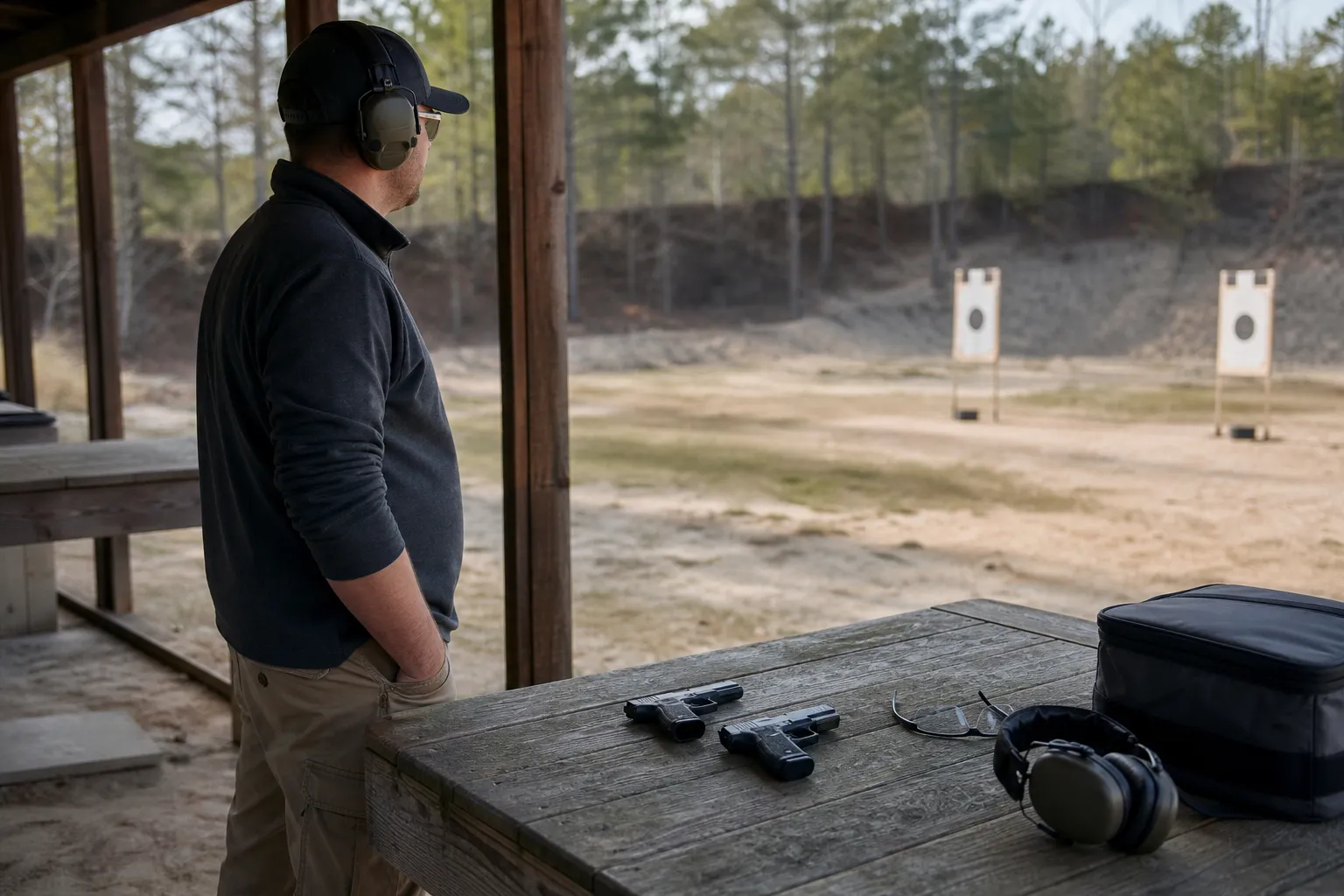
For target shooting and training, the comparison often comes down to the whole system: ammunition cost, the pistol’s capacity, the shooter’s comfort with recoil, and the firearm’s fit. Based on this ledger, the 9mm sample load is less expensive on Federal’s listed direct price. The .45 Auto sample load uses a heavier bullet and is tied historically to the M1911 story.
Legal and ownership notes for the United States and Canada
For the United States, ATF states that a federal firearms licensee may not sell or deliver a firearm other than a shotgun or rifle to a person the licensee knows or has reasonable cause to believe is under 21 years of age. This is a federal dealer rule stated by ATF. Buyers also need to check current federal, state and local rules with official sources. ATF
For Canada, the RCMP states that a national freeze on the sale, purchase or transfer of handguns by individuals within Canada, and on bringing newly acquired handguns into Canada, was imposed by regulatory changes that came into force on October 21, 2022, with identified exemptions. Canadian readers should confirm the current rule and any exemption directly with the RCMP Canadian Firearms Program and the appropriate provincial or territorial authority. RCMP
Bottom line
For most new handgun shooters comparing these two cartridges for target practice, the sampled Federal listing showed a lower direct price for the 9mm load. .45 ACP has a deep historical connection to the Browning designed M1911, and the sampled .45 Auto load uses a heavier bullet.
Before buying a handgun or ammunition, check the exact firearm manual, the ammunition maker’s current product page, current prices from sellers, and the current firearm laws from ATF, RCMP, and your state, provincial, territorial or local authority.
Frequently asked questions
Is .45 ACP the same as .45 Auto?
Many shooters say .45 ACP in everyday use. This article uses the terms that appear in the cited history and product pages.
Which costs less in the sampled ammunition listings?
In the Federal American Eagle listings captured for the ledger, the 9mm 115 grain FMJ 50 round package was listed at $19.99, while the .45 Auto 230 grain FMJ 50 round package was listed at $38.99. Current prices should be checked before purchase.
Can I compare recoil by caliber alone?
No. The sampled loads differ in bullet weight and listed velocity, and a useful recoil comparison also depends on the firearm and load details.
Sources
- SAAMI Z299.3-2022, Centerfire Pistol and Revolver Ammunition, Sporting Arms and Ammunition Manufacturers’ InstituteOfficial source. Accessed October 20, 2026.
- Gun Recoil, Technical, Free Recoil Energy, Sporting Arms and Ammunition Manufacturers’ InstituteOfficial source. Accessed October 20, 2026.
- American Eagle Handgun, 9mm Luger, 115 Grain, Full Metal Jacket, 1180 fps, Federal AmmunitionOfficial source. Accessed October 20, 2026.
- American Eagle Handgun, 45 Auto, 230 Grain, Full Metal Jacket, 890 fps, Federal AmmunitionOfficial source. Accessed October 20, 2026.
- GLOCK 17 Gen5 MOS, GlockOfficial source. Accessed October 20, 2026.
- GLOCK 21 Gen5 MOS, GlockOfficial source. Accessed October 20, 2026.
- M&P 9 M2.0 Spec Sheet, Smith & WessonOfficial source. Accessed October 20, 2026.
- Smith & Wesson M&P M2.0 Compact .45 Auto Press Release, Smith & WessonOfficial source. Accessed October 20, 2026.
- History of the 1911 Pistol, BrowningOfficial source. Accessed October 20, 2026.
- Colt M1911 Navy Pistol, Naval History and Heritage CommandOfficial source. Accessed October 20, 2026.
- DWM Model 1902 Luger Semi Automatic Carbine, NRA Museums. Accessed October 20, 2026.
- ATF eRegulations, federal firearms licensee age rule excerpt, Bureau of Alcohol, Tobacco, Firearms and ExplosivesOfficial source. Accessed October 20, 2026.
- Classes of firearms in Canada, Royal Canadian Mounted Police, Canadian Firearms ProgramOfficial source. Accessed October 20, 2026.
- Recoil Formulae, SAAMI. Accessed October 20, 2026.