.380 ACP vs 9mm: Dimensions, Pressure, Ballistics, and Pistol Size
.380 ACP and 9mm Luger are different pistol cartridges and are not interchangeable. SAAMI lists 9mm Luger at a higher transducer MAP than 380 Automatic.
By RaiS. Reviewed by RaiS. Published . 4 min read.
Research and drafting were assisted by AI. RaiS checked the facts against the sources below and approved this page.
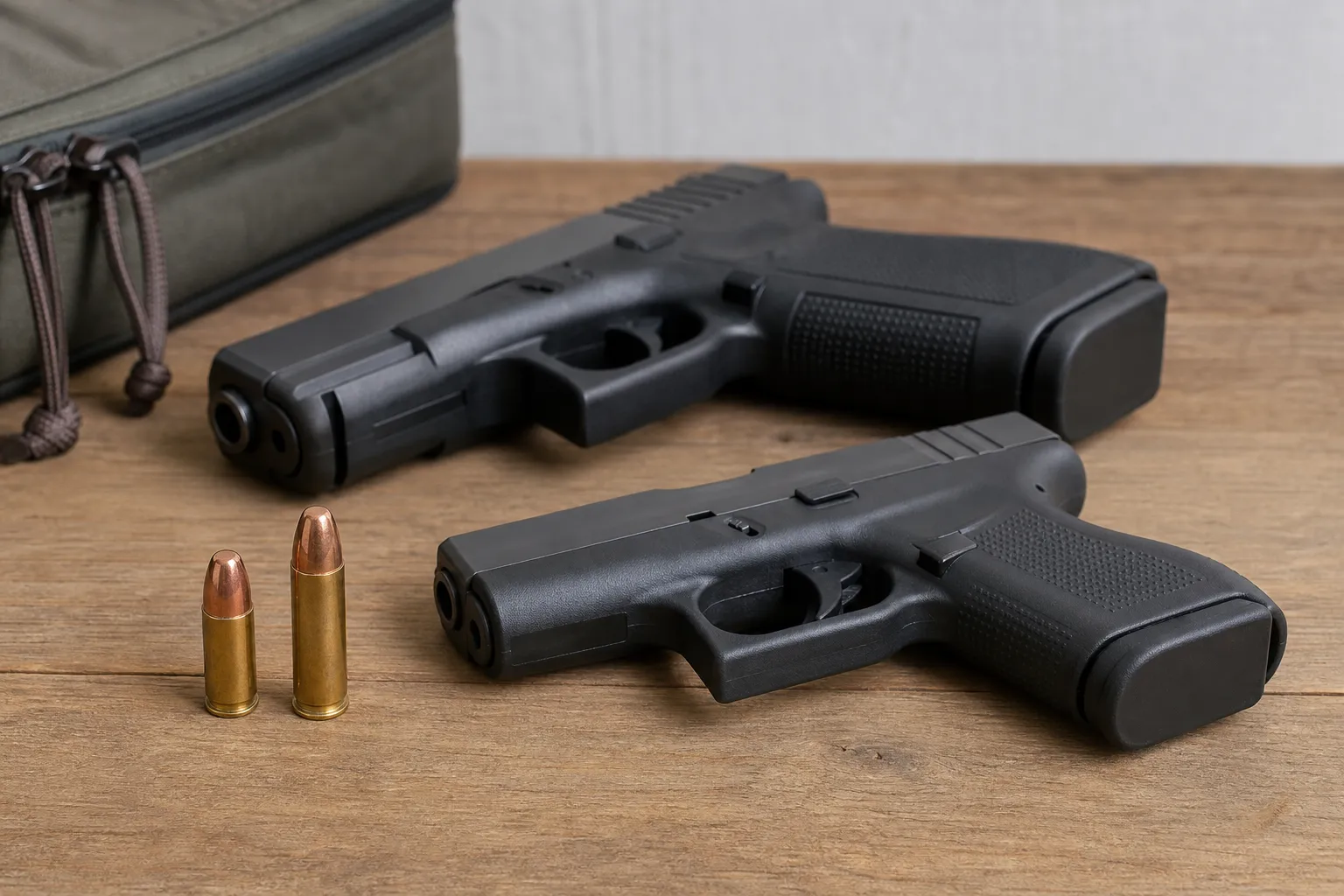
.380 ACP and 9mm Luger are different pistol cartridges, not two names for the same ammunition. C.I.P. lists .380 ACP among the alternate names for 9 mm Browning court, while it lists 9 mm Parabellum and 9 x 19 mm as alternate names for 9 mm Luger. Match the ammunition marking to the firearm marking, because SAAMI says full or abbreviated cartridge and chamber names should be used on headstamps and firearm markings to identify caliber.
Quick comparison
SAAMI Z299.3 to 2022 is the centerfire pistol and revolver standard that contains dimensional and performance information for these cartridges.
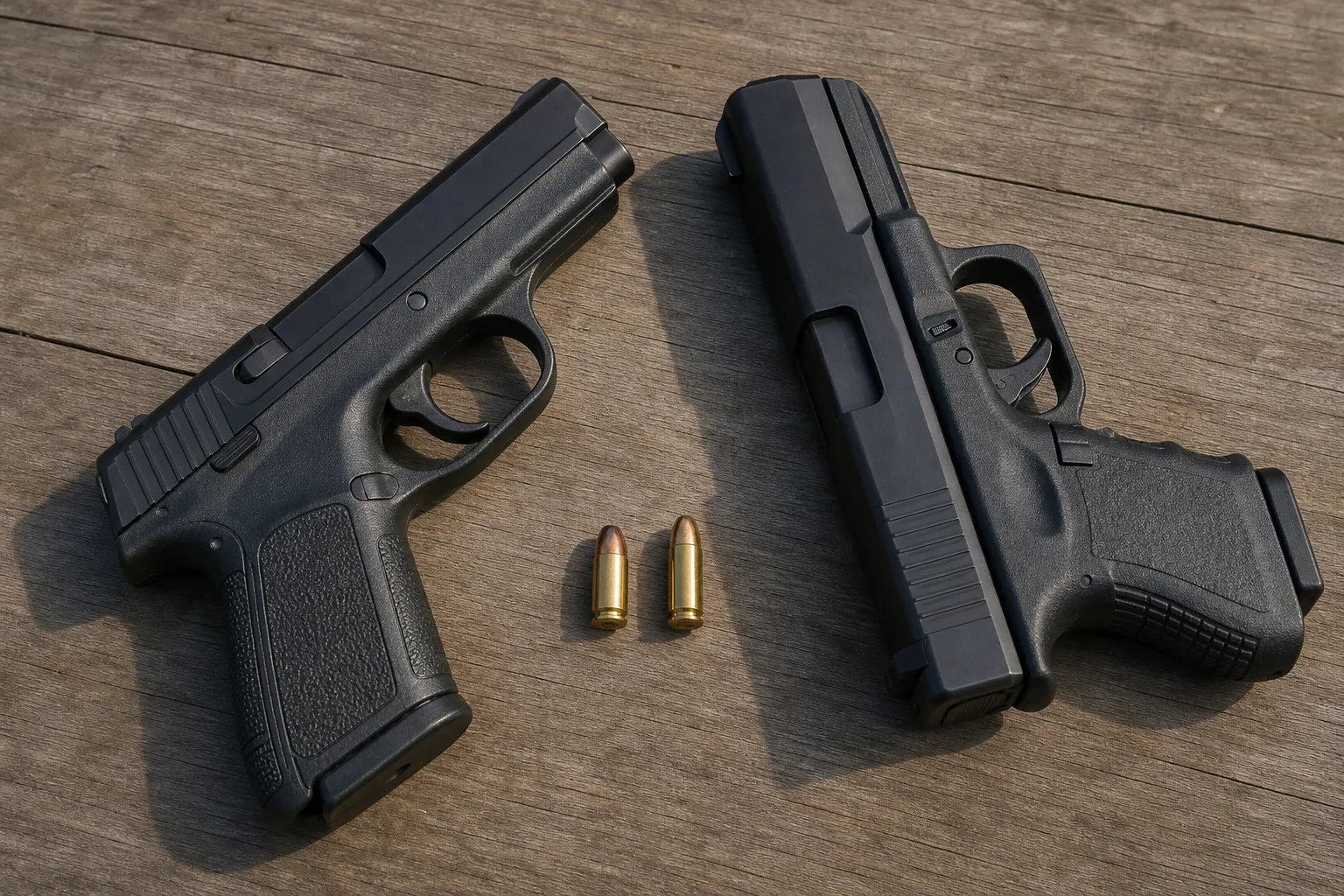
| Category | .380 ACP, 380 Auto | 9mm Luger, 9 x 19, 9mm Parabellum |
|---|---|---|
| C.I.P. naming note | 9 mm Browning court, with alternative names including 9mm Browning Kurz, 9 mm kurz, 380 ACP, and 380 Auto(matic) | 9 mm Luger, with alternative names including 9 mm Parabellum and 9 x 19 mm |
| SAAMI transducer MAP | 21,500 psi | 35,000 psi |
Names: .380 ACP, 9mm Short, Kurz, Luger, and Parabellum
The naming can be confusing because both cartridges use “9mm” in some naming systems. C.I.P. lists 9 mm Browning court with alternative names including 9mm Browning Kurz, 9 mm kurz, 380 ACP, and 380 Auto(matic). “Kurz” means short in the naming shown by C.I.P., and the listed alternatives connect .380 ACP with the shorter 9 mm Browning court family of names.
C.I.P. separately lists 9 mm Luger with alternative names including 9 mm Parabellum and 9 x 19 mm.
The practical takeaway is simple: do not treat .380 ACP, 380 Auto, 9mm Kurz, or 9mm Short as interchangeable with 9mm Luger, 9mm Parabellum, or 9 x 19 mm. SAAMI says cartridge and chamber names should be used on headstamps and firearm markings to properly identify caliber, so the marking on the ammunition should match the marking on the firearm.
Dimensions: both are small 9mm class pistol cartridges, but not the same size
SAAMI’s barrel dimensions are also close but listed separately. The 380 Automatic drawing lists bore diameter as .348 inch and groove diameter as .355 inch. The 9mm Luger drawing lists bore diameter as .346 inch and groove diameter as .355 inch.
Those close barrel measurements are not a reason to mix ammunition. SAAMI’s guidance on firearm and headstamp markings is the safer way to think about the two.
Pressure: 9mm Luger is listed at a higher SAAMI transducer MAP
SAAMI states that its piezoelectric transducer pressure system uses pounds per square inch, abbreviated psi. In SAAMI’s velocity and pressure table, 380 Automatic is listed with a transducer MAP of 21,500 psi. The same SAAMI table lists 9mm Luger with a transducer MAP of 35,000 psi.
That is one of the clearest specification differences between the two. It does not mean every 9mm pistol feels the same, and it does not describe terminal performance. It means SAAMI’s listed transducer MAP for 9mm Luger is higher than the listed value for 380 Automatic.
Bullet weights and published velocity ranges
SAAMI’s table shows 380 Automatic bullet weights from 65 to 100 grains. Listed nominal instrumental velocities include 80 grain at 980 and 1,100 fps, 85 grain at 990 and 1,060 fps, 95 grain at 945 and 990 fps, and 100 grain at 910 fps.
For 9mm Luger, SAAMI’s table shows standard bullet weights from 88 to 150 grains. Listed nominal instrumental velocities include 115 grain at 1,135 and 1,210 fps, 124 grain at 1,030, 1,090, 1,130, and 1,170 fps, 147 grain at 985 fps, and 150 grain at 900 fps.
Federal American Eagle FMJ examples
Manufacturer ballistics tables are useful because they show complete published load examples.
Recoil in principle
Recoil is tied to momentum, firearm weight, and how the firearm operates.
Actual felt recoil also depends on the pistol’s weight, action design, grip shape, springs, and the specific ammunition.
For a real pistol purchase, the cartridge is only one part of the recoil picture.
Typical pistol size: .380 can be smaller, but models overlap
One reason new handgun owners compare these cartridges is pistol size.
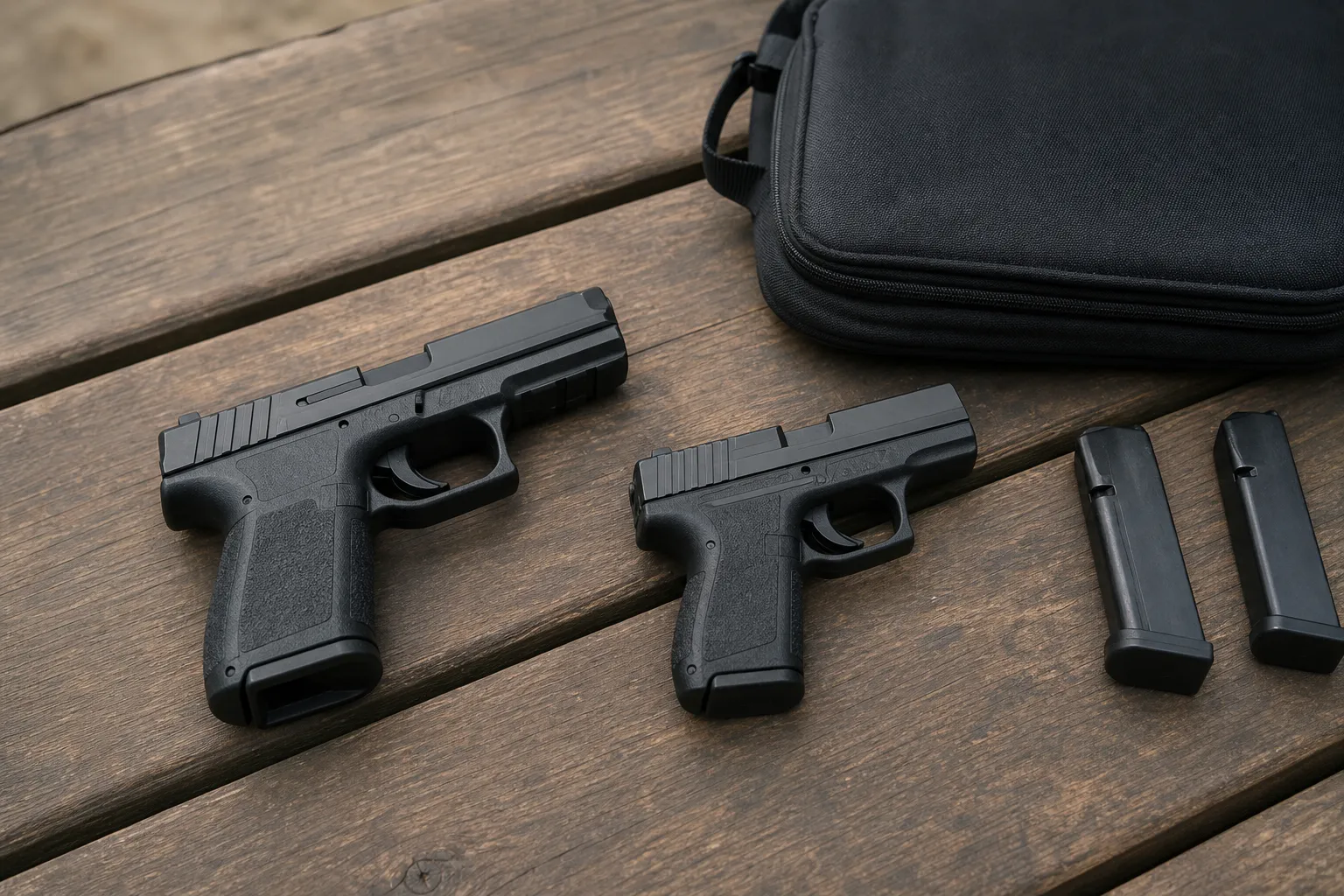
Pistol size overlaps by model.
What this comparison does not decide
This comparison uses cartridge naming and SAAMI specifications. It does not make a best for self-defense claim. It also does not compare expansion, penetration, or gelatin test results.
For a new handgun owner, the most reliable starting points are the firearm’s caliber marking, the ammunition headstamp and box marking, the owner’s manual, and current manufacturer specifications. If anything is unclear, confirm the correct ammunition with the firearm manufacturer or a qualified safety instructor before use.
Frequently asked questions
Are .380 ACP and 9mm Luger interchangeable?
No. C.I.P. lists .380 ACP among the alternative names for 9 mm Browning court, while it lists 9 mm Parabellum and 9 x 19 mm as alternative names for 9 mm Luger. Match the ammunition marking to the firearm marking.
Is .380 ACP the same as 9mm Kurz or 9mm Short?
C.I.P. lists 9 mm Browning court with alternative names including 9mm Browning Kurz, 9 mm kurz, 380 ACP, and 380 Auto(matic). Those names refer to the .380 family, not to 9mm Luger.
Is 9mm Luger the same as 9mm Parabellum or 9 x 19?
C.I.P. lists 9 mm Luger with alternative names including 9 mm Parabellum and 9 x 19 mm. SAAMI lists the cartridge as 9mm Luger.
Which has higher SAAMI pressure.380 Auto or 9mm Luger?
SAAMI lists 380 Automatic with a transducer MAP of 21,500 psi and 9mm Luger with a transducer MAP of 35,000 psi.
Sources
- SAAMI Standards, Sporting Arms and Ammunition Manufacturers' InstituteOfficial source. Accessed October 22, 2026.
- SAAMI Z299.3-2022, Voluntary Industry Performance Standards for Pressure and Velocity of Centerfire Pistol and Revolver Ammunition for the Use of Commercial Manufacturers, Sporting Arms and Ammunition Manufacturers' InstituteOfficial source. Accessed October 22, 2026.
- C.I.P. 9 mm Browning court TDCC, Commission Internationale Permanente pour l'Epreuve des Armes à Feu PortativesOfficial source. Accessed October 22, 2026.
- C.I.P. 9 mm Luger TDCC, Commission Internationale Permanente pour l'Epreuve des Armes à Feu PortativesOfficial source. Accessed October 22, 2026.
- Federal Premium Catalog 2023, Federal Premium AmmunitionOfficial source. Accessed October 22, 2026.
- GLOCK 2022 Buyer's Guide, GLOCKOfficial source. Accessed October 22, 2026.
- GLOCK Buyer's Guide 2026, GLOCKOfficial source. Accessed October 22, 2026.