5.7x28mm: History, Dimensions, Ballistics and Firearms
The 5.7x28mm is a small, high velocity cartridge developed by FN in the late 1980s for the P90 and Five-seveN family. Today it is standardized by NATO, listed by SAAMI and C.I.P., and used in several pistols and carbines.
By RaiS. Reviewed by RaiS. Published . 6 min read.
Research and drafting were assisted by AI. RaiS checked the facts against the sources below and approved this page.
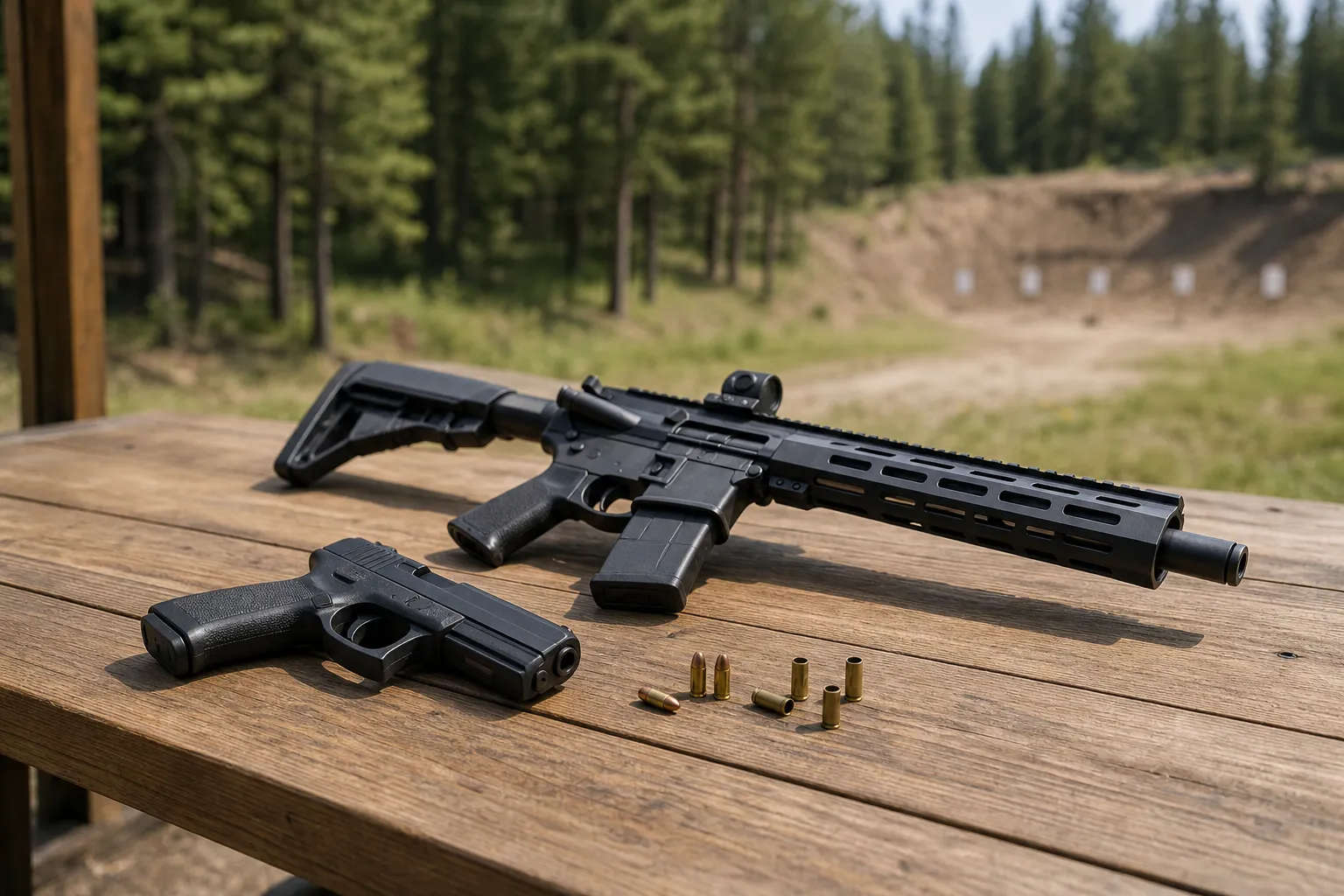
The 5.7x28mm is a small caliber cartridge designed by FN in the late 1980s for the FN P90 and FN Five-seveN system. In current reference terms, it is a standardized cartridge with SAAMI and C.I.P. pressure data, commercial loads commonly using 27 to 40 grain bullets, and published pistol velocities in the roughly 1,700 to 1,894 fps range for the listed FN commercial examples. Carbine figures from FN’s PS90 listings are higher, roughly 2,034 to 2,240 fps in the listed FN commercial loads.
Origin and standardization
FN says the 5.7x28mm caliber was designed in the late 1980s for the FN P90 and FN Five-seveN pistol. FN America also describes the development of the cartridge and P90 as beginning in the late 1980s in anticipation of a potential NATO personal defense weapon contract that would later be called Project 90.

The cartridge’s early history is closely tied to that firearm system. FN America says the Five-seveN pistol was developed in the mid to late 1990s, and that the Five-seveN and PS90 carbine entered the U.S. commercial market in the mid 2000s.
NATO standardization came later. FN says NATO finalized standardization of the FN designed 5.7x28mm caliber by approving STANAG 4509. FN also says the caliber was integrated into NATO AEP-97, the Multi-Caliber Manual of Proof and Inspection, alongside 9x19mm, 5.56x45mm, 7.62x51mm, and 12.7x99mm NATO.
For civilian readers, the practical takeaway is simple: 5.7x28mm began as an FN system cartridge, then expanded into a broader commercial and standards recognized cartridge. It is still strongly associated with FN’s Five-seveN pistol and PS90 carbine, but current production firearms from other makers also use it.
Basic cartridge dimensions
SAAMI’s public introduction identifies the cartridge as 5.7 X 28 FN, also called 5.7 FN, with the drawing issued July 11, 2024. C.I.P. lists the 5,7 x 28 country of origin as Belgium, with a table date of October 19, 1993 and a revision date of May 15, 2002.
The name describes a small diameter projectile and a case length around 28 mm.
| Item | Published figure |
|---|---|
| SAAMI designation | 5.7 X 28 FN, also called 5.7 FN |
| SAAMI optional chamber drawing twist | 8 grooves, 228.6 mm, 9.00 inch, right hand twist |
The 5.7x28mm uses a small bore projectile, but cartridge dimensions, pressures, chambers, and firearm designs are not interchangeable between cartridges. For a broader explanation of how bullet diameter and cartridge names relate, see our bullet sizes and caliber chart.
Pressure standards
SAAMI lists the 5.7 X 28 FN maximum average pressure as 48,500 psi. SAAMI also states that crusher pressure limits are not established.
C.I.P. lists Pmax for the 5,7 x 28 as 3450 bar by the transducer method. The SAAMI and C.I.P. figures are not simply two ways of writing the same test, because pressure standards depend on the test method and equipment used by each organization.
SAAMI also lists an instrumental velocity reference of a 40 grain bullet at 1,750 fps. That figure is a standards reference, not a guarantee that every factory load or firearm will produce the same velocity.
One unusual note in the SAAMI public introduction is case surface treatment. SAAMI notes that the design may require a lubricant or other surface treatment on the cartridge case by the ammunition manufacturer to ensure proper gun functioning, and that some cartridge and chamber relationships may differ from conventional designs. This is a manufacturing and design note, not a reason to alter ammunition.
Bullet weights and factory load examples
Published 5.7x28mm factory loads cover several bullet types and weights. The examples below are not recommendations. They are a snapshot of manufacturer published specifications.
| Manufacturer or source | Load or bullet style | Bullet weight | Published velocity |
|---|---|---|---|
| FN America | SS197SR, Hornady V-MAX sporting cartridge | 40 grains | 1,738 fps from Five-seveN, 2,034 fps from PS90 |
| FN America | SS195LF, jacketed aluminum core hollow point, lead-free primer | 27 grains | 1,890 fps from Five-seveN, 2,132 fps from PS90 |
| FN America | GUNR SS201, full metal jacket | 40 grains | 1,700 fps from Five-seveN, 2,040 fps from PS90 |
| FN America | DFNS SS200, jacketed hollow point | 30 grains | 1,894 fps from Five-seveN, 2,240 fps from PS90 |
| Speer 2024 catalog | Gold Dot hollow point, part number 25728GD | 40 grains | 1,800 fps from a 5 inch test barrel |
FN’s commercial data shows why barrel length matters. The same listed FN loads are faster from the PS90 than from the Five-seveN pistol. For the listed FN commercial examples, the Five-seveN figures range from 1,700 fps to 1,894 fps, while the PS90 figures range from 2,034 fps to 2,240 fps.
Muzzle velocity is always tied to the load, test barrel, and firearm. For a general explanation of what velocity numbers mean, see How Fast Does a Bullet Travel?.
Bullet construction also varies. FN lists full metal jacket, jacketed hollow point, and V-MAX examples. Speer lists a Gold Dot hollow point example. For a general explanation of common handgun bullet styles, see FMJ vs Hollow Point Bullets.
FN technical load families
FN Herstal’s technical data sheet lists several 5.7x28mm projectile weights, including SS190 Ball at about 31.2 grains, SB193 Subsonic at about 60.2 grains, and FR199 Frangible at about 35.5 grains.
FN Herstal lists muzzle velocity examples from the FN P90 of about 715 m/s for SS190 Ball, 300 m/s for SB193 Subsonic, and 630 m/s for FR199 Frangible. From the FN Five-seveN Mk2, FN Herstal lists about 615 m/s for SS190 Ball, 300 m/s for SB193 Subsonic, and 515 m/s for FR199 Frangible.
Those figures show two important points. First, P90 and pistol velocities should not be treated as the same number. Second, FN’s own technical data includes both high velocity and subsonic examples. Ruger’s LC Carbine manual also warns that most 5.7x28mm ammunition is supersonic and emphasizes eye and hearing protection when using suppressors.
Common firearm platforms
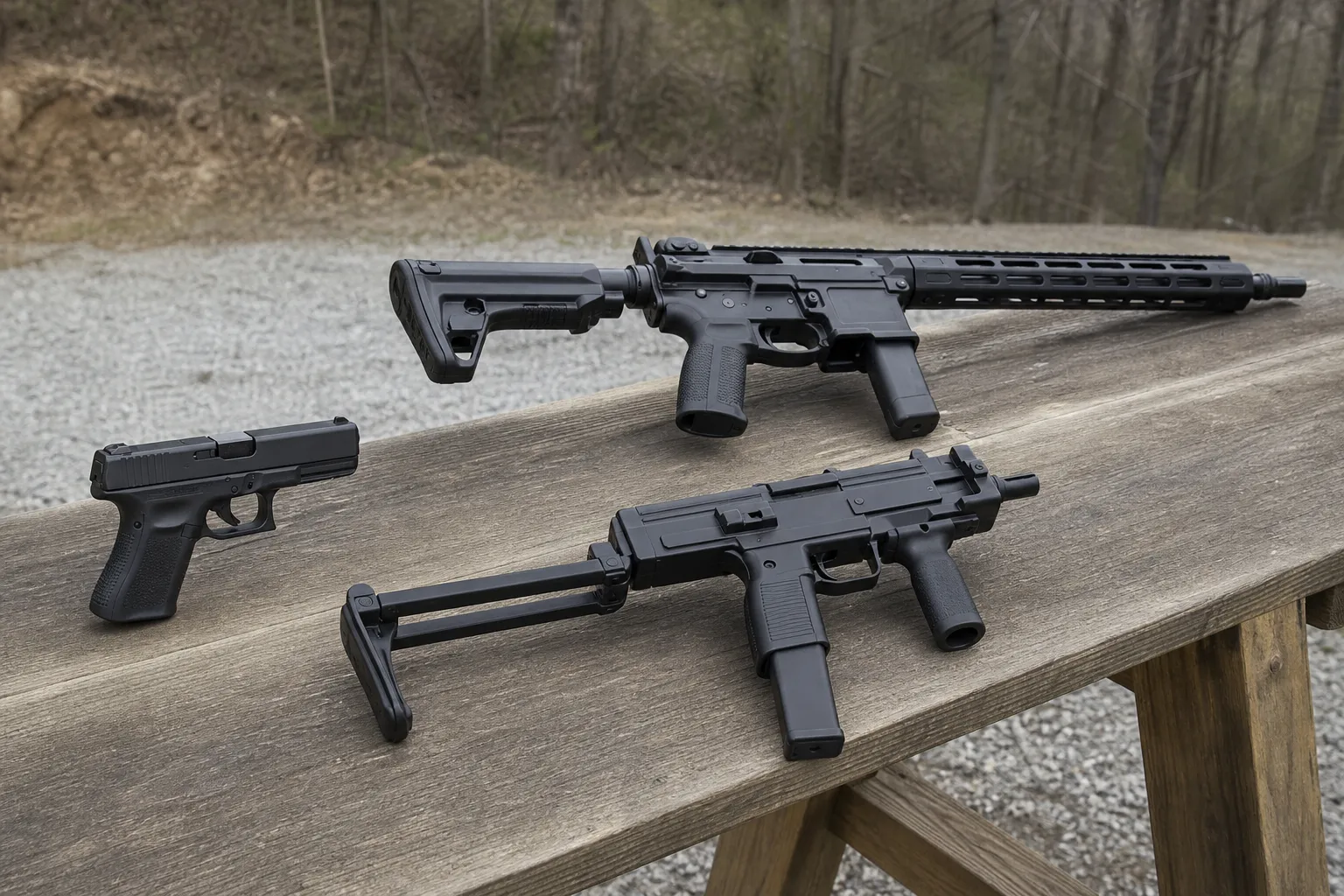
FN America says 5.7x28mm ammunition is compatible with a wide variety of FN firearms, including Five-seveN pistols, PS90 carbines, and P90 submachine guns. The cartridge is also used beyond FN firearms.
| Firearm | Type | Published operating system and basic specs |
|---|---|---|
| FN Five-seveN MRD | Pistol | 5.7x28mm delayed blowback, single-action-only pistol with 10 or 20 round magazine capacity and a 4.8 inch barrel |
| FN PS90 | Carbine | 5.7x28mm closed-bolt blowback carbine with a 16 inch barrel and 10 or 30 round magazine capacity |
These platforms are not mechanically identical. FN lists the Five-seveN MRD as delayed blowback and single-action-only. FN lists the PS90 as closed-bolt blowback. That matters because ammunition function depends on the firearm design, magazine, chamber, and manufacturer specifications.
How to read 5.7x28mm ballistics numbers
The most common mistake with 5.7x28mm is treating one velocity number as universal. Published examples show large differences between pistol and carbine figures.
FN America lists SS197SR at 1,738 fps from a Five-seveN pistol and 2,034 fps from a PS90. It lists SS195LF at 1,890 fps from a Five-seveN and 2,132 fps from a PS90. It lists SS201 at 1,700 fps from a Five-seveN and 2,040 fps from a PS90. It lists SS200 at 1,894 fps from a Five-seveN and 2,240 fps from a PS90.
Speer’s 2024 catalog lists a 40 grain Gold Dot hollow point load at 1,800 fps from a 5 inch test barrel.
Those numbers are best read as manufacturer specific data. They can help compare published loads, but they do not replace the ammunition maker’s current product data or the firearm maker’s manual.
Practical context for civilian readers
In the U.S. commercial market, FN says the Five-seveN pistol and PS90 carbine arrived in the mid 2000s. Later, additional commercial platforms broadened the cartridge beyond its original FN commercial firearms.
The cartridge is commonly discussed because it is small, fast, and used in both pistols and carbines. The reliable way to understand it is to separate three things: the standards data, the ammunition maker’s load data, and the firearm maker’s specifications. SAAMI and C.I.P. define pressure and dimensional references. Ammunition companies publish bullet weights and velocities for specific loads. Firearm makers publish barrel length, capacity, operating system, and compatibility information.
Before using any 5.7x28mm ammunition, check the current firearm manual and the current ammunition maker’s data. Also confirm current federal, state, provincial, and local rules where they apply, especially for magazine capacity, firearm classification, hunting use, transport, and storage.
Frequently asked questions
Who designed the 5.7x28mm cartridge?
FN says the 5.7x28mm caliber was designed in the late 1980s for use with the FN P90 and FN Five-seveN pistol.
What is the SAAMI pressure for 5.7x28mm?
SAAMI lists the 5.7 X 28 FN maximum average pressure as 48,500 psi and says crusher pressure limits are not established.
How fast is 5.7x28mm ammunition?
Published figures vary by load and firearm. FN America lists several commercial loads from 1,700 to 1,894 fps in a Five-seveN pistol and from 2,034 to 2,240 fps in a PS90 carbine. Speer lists a 40 grain Gold Dot hollow point at 1,800 fps from a 5 inch test barrel.
What firearms commonly use 5.7x28mm?
Published FN platforms include the FN Five-seveN MRD pistol and FN PS90 carbine.
Is most 5.7x28mm ammunition supersonic?
Ruger’s LC Carbine manual warns that most 5.7x28mm ammunition is supersonic and emphasizes eye and hearing protection when using suppressors.
Sources
- FN DFNS SS200 5.7x28mm, FN AmericaOfficial source. Accessed November 16, 2026.
- Public Introduction: 5.7 X 28 FN, Sporting Arms and Ammunition Manufacturers’ InstituteOfficial source. Accessed November 16, 2026.
- C.I.P. TDCC: 5,7 x 28, Commission Internationale PermanenteOfficial source. Accessed November 16, 2026.
- NATO Standardizes FN’s 5.7x28mm Caliber, FN AmericaOfficial source. Accessed November 16, 2026.
- New FN 5.7x28mm Ammunition Available Now, FN AmericaOfficial source. Accessed November 16, 2026.
- FN 5.7x28mm Cartridges Technical Data, FN HerstalOfficial source. Accessed November 16, 2026.
- 5.7x28mm Ammunition, FN AmericaOfficial source. Accessed November 16, 2026.
- FN SS197SR 5.7x28mm, FN AmericaOfficial source. Accessed November 16, 2026.
- FN SS195LF 5.7x28mm, FN AmericaOfficial source. Accessed November 16, 2026.
- FN GUNR SS201 5.7x28mm, FN AmericaOfficial source. Accessed November 16, 2026.
- 2025 Federal Catalog, Federal Premium AmmunitionOfficial source. Accessed November 16, 2026.
- 2024 Speer Catalog, Speer AmmunitionOfficial source. Accessed November 16, 2026.
- Hornady Announces 2024 New Products, Hornady ManufacturingOfficial source. Accessed November 16, 2026.
- FN Five-seveN MRD, FN AmericaOfficial source. Accessed November 16, 2026.
- FN PS90, FN AmericaOfficial source. Accessed November 16, 2026.
- Ruger-5.7 Centerfire Pistol Model 16401, Sturm, Ruger & Co.Official source. Accessed November 16, 2026.
- Ruger LC Carbine Model 19300, Sturm, Ruger & Co.Official source. Accessed November 16, 2026.
- M&P 5.7 Spec Sheet, Smith & WessonOfficial source. Accessed November 16, 2026.
- Instruction Manual for Ruger LC Carbine, Sturm, Ruger & Co.Official source. Accessed November 16, 2026.