FMJ vs Hollow Point Bullets: What Is the Difference?
FMJ bullets are jacketed bullets that usually do not expand and are commonly used for training, plinking, competition, and other target work. Hollow point and other expanding bullets are designed with features that help the bullet open on impact, which is why they are common in hunting and defensive handgun ammunition, but range rules and laws vary widely.
By RaiS. Reviewed by RaiS. Published . 9 min read.
Research and drafting were assisted by AI. RaiS checked the facts against the sources below and approved this page.
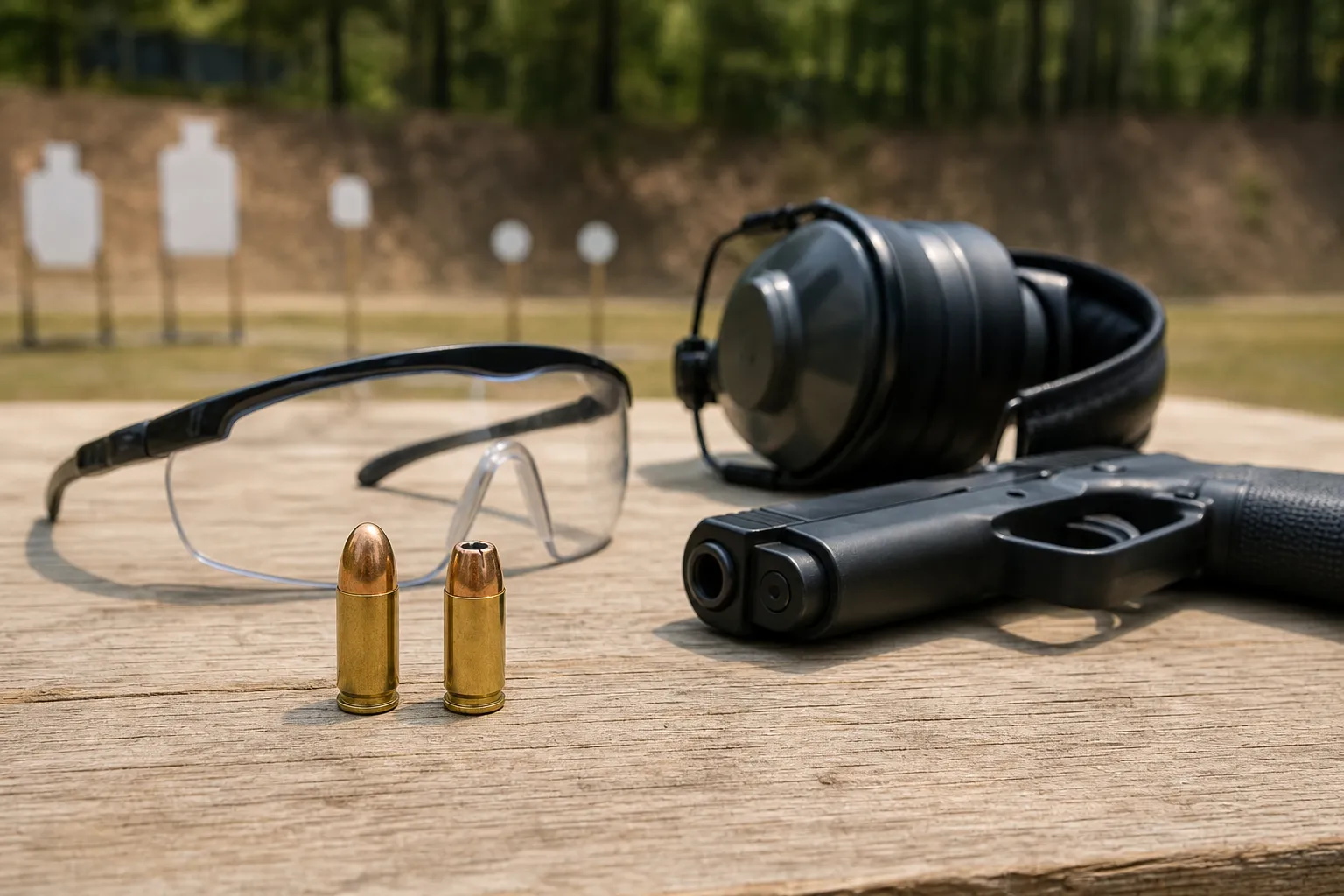
FMJ vs hollow point is mainly a difference in bullet construction and impact behavior. SAAMI defines a full metal jacket bullet as a projectile whose jacket encloses most of the core except the base, while SAAMI defines a hollow point bullet as one with a cavity in the nose to facilitate expansion. In general, FMJ bullets are used for training and target shooting because they are reliable and economical, while hollow point and other expanding bullets are used when expansion is desired, such as many hunting and defensive handgun loads. Always confirm current rules with your range, wildlife agency, and local law enforcement or legal counsel before buying, carrying, hunting with, or using any ammunition type.
Quick comparison
| Topic | Full metal jacket, FMJ | Hollow point and expanding bullets | |, -|, -|, -| | Basic design | SAAMI says the jacket encloses most of the core, except the base. Also called full-jacketed, full patch, or full metal case. Source: SAAMI | SAAMI says the bullet has a cavity in the nose to facilitate expansion. Source: SAAMI | | Typical impact behavior | Federal and Speer say FMJ handgun bullets do not expand when they hit targets. Sources: Federal, Speer | Federal says soft tissue entering the hollow nose creates forces that open the bullet, increasing wound channel diameter and reducing over-penetration risk. Source: Federal | | Common uses | Federal lists training, plinking, and competition for FMJ handgun ammunition, and says FMJ rifle bullets are useful for sighting in, practice, and competition. Sources: Federal handgun basics, Federal rifle bullet selection | Federal says hunting bullets are generally built to expand on impact. Speer says most hunting handgun bullets are designed to expand and deliver energy to the animal. Sources: Federal rifle basics, Speer ammo basics | | Cost language from manufacturers | Federal calls FMJ accurate and affordable, and says FMJ bullets are useful for high-volume shooting because of their inexpensive nature. Sources: Federal handgun basics, Federal rifle bullet selection | Speer says top self-defense ammunition costs more than target ammunition. Winchester contrasts premium personal defense ammunition with FMJ practice loads. Sources: Speer, Winchester |
What FMJ means
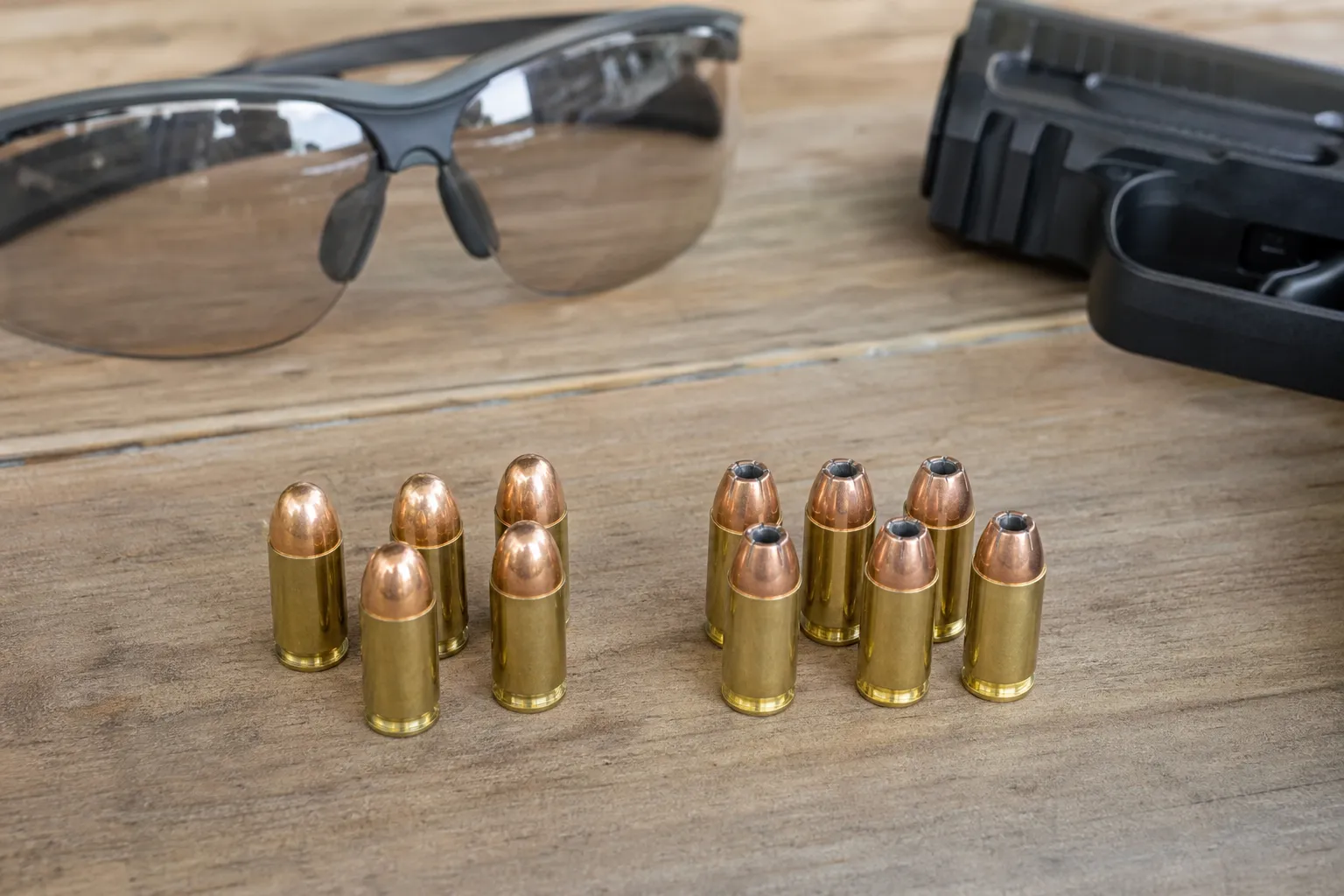
FMJ stands for full metal jacket. SAAMI defines a full metal jacket bullet as “a projectile in which the bullet jacket encloses most of the core with the exception of the base.” SAAMI also says the same bullet type may be called full-jacketed, full patch, or full metal case. Source: SAAMI full metal jacket bullet glossary.
For jacketed bullets, SAAMI defines the core as the inner section of the bullet, usually lead. Source: SAAMI bullet core glossary. Hornady describes FMJ as a traditional way of forming economical projectiles that provide reliable feeding in semi-automatic and fully automatic platforms. Source: Hornady Anatomy of a Bullet.
Federal says FMJ handgun ammunition is often called ball ammunition and is designed to feed reliably in semi-automatic handguns, but the bullets do not expand when they hit targets. Source: Federal handgun ammo basics. Speer uses the same “ball ammunition” description and also says FMJ ammunition feeds reliably in semi-automatic handguns and does not expand when it hits targets. Source: Speer ammo basics.
Winchester adds a practical feeding note for handguns. It says FMJ ammunition generally feeds reliably in a wide range of semi-automatic handguns because the round-nose bullet design and FMJ construction are slick, while some hollow point and flat-nosed bullets may fail to feed in certain guns. Source: Winchester, The Importance of Training with Personal Defense Ammo.
What hollow point means
SAAMI defines a hollow point bullet as “a bullet with a cavity in the nose to facilitate expansion.” Source: SAAMI hollow point bullet glossary. That cavity is the feature most beginners notice first, but bullet makers use more than one design method to control expansion.
Federal explains the basic handgun hollow point mechanism this way: the hollow nose of an expanding bullet allows soft tissue into the cavity and creates the forces needed to open the bullet. Federal says this increases wound channel diameter and reduces the risk of over-penetration. Source: Federal handgun ammo basics.
Speer describes a similar process. It says force imparted within the nose of a hollow point bullet causes the jacket and core to expand, and that skiving, meaning thin cuts in the bullet’s jacket, can help initiate that expansion. Source: Speer, Choosing the Right Self-Defense Bullet.
Hornady describes other construction features that can affect expansion. Hornady says jacket thickness can be controlled for optimum controlled expansion, and that a polymer tip can increase ballistic coefficient and initiate dramatic expansion upon impact. Source: Hornady Anatomy of a Bullet.
Not every open tip is a hunting hollow point
A small opening at the tip does not always mean the bullet is designed for controlled expansion in game. Hornady says a hollow point can also be a traditional way to finish an ogive for smaller, tighter points and aerodynamic efficiency. Source: Hornady Anatomy of a Bullet.
Federal makes the same distinction for open tip match rifle bullets. Federal says open tip match bullets are typically target bullets, with a copper-alloy jacket and a hole at the nose through which the lead core is poured during manufacturing. Federal says OTMs are not designed to offer controlled expansion, penetration, or retained weight, which makes them a poor choice for hunting. Source: Federal FAQ.
How they behave on impact
The short version is simple: FMJ bullets are generally associated with non-expansion, while hollow point and other expanding bullets are built to open to a larger diameter.
Federal says FMJ handgun bullets do not expand and do not stop within the target, instead penetrating additional barriers such as walls and posing a serious threat to bystanders. Source: Federal handgun ammo basics. Speer says full metal jacket bullets are not suitable for defense because the jacket, usually made of copper, prevents expansion and causes the bullet to over-penetrate in a straight line. Source: Speer, Choosing the Right Self-Defense Bullet.
For hollow points, Federal says expansion increases wound channel diameter and reduces the risk of over-penetration. Source: Federal handgun ammo basics. Speer says jacketed hollow point bullets expand in gel tests, create a larger wound channel, and are less likely to over-penetrate. Source: Speer, Choosing the Right Self-Defense Bullet.
For hunting rifle bullets, Federal says important terminal performance factors include penetration, expansion, and weight retention. Federal also says hunting bullets are generally built to expand on impact, creating a larger wound channel in the animal and transferring more energy. Source: Federal rifle ammo basics.
Federal gives an example of all-copper monolithic hunting bullets that use a hollow point design. Federal says that design peels back with hydrostatic pressure in game animals to expand the frontal diameter and penetrate deeply. Source: Federal rifle ammo basics.
Typical uses: target shooting, hunting, and defense
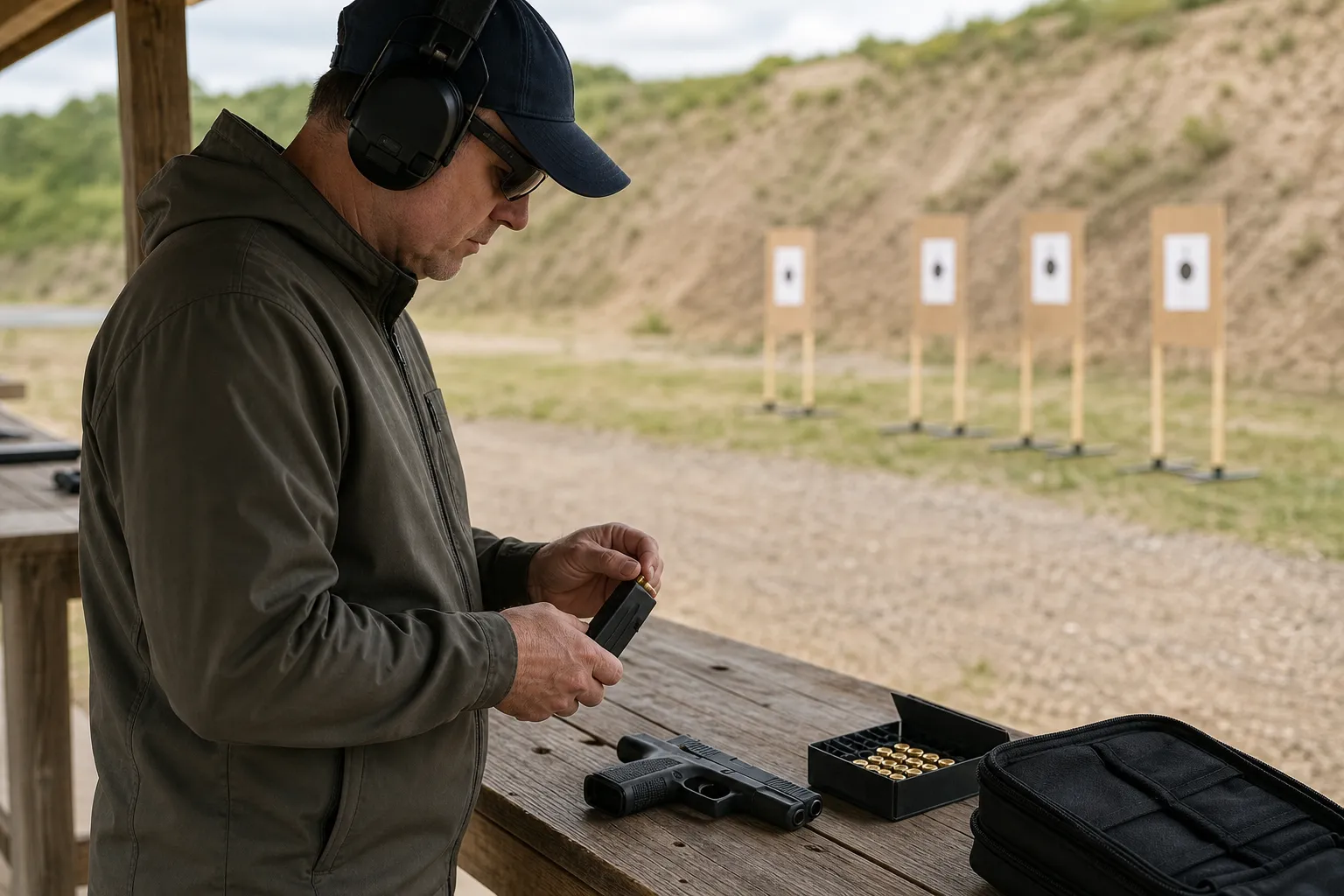
FMJ ammunition is commonly described by manufacturers as a target and training choice. Federal says FMJ handgun ammunition is accurate and affordable, and is perfect for training, plinking, and competition. Source: Federal handgun ammo basics. Federal also says FMJ rifle bullets are good options for sighting in, honing shooting skills, or competing, and that their inexpensive nature makes them useful for high-volume shooting. Source: Federal rifle bullet selection.
For hunting, expanding bullet construction matters. Federal says target bullets are designed to be accurate or inexpensive, but generally do not expand reliably for use on game. Federal identifies FMJ as a military and target application bullet with poor expansion. Source: Federal rifle ammo basics. Federal also warns that FMJs are not suitable for big game hunting because their metal shell prevents expansion on impact and they may pass straight through without expanding. Source: Federal rifle bullet selection.
Speer says most hunting handgun bullets are designed to expand and deliver energy to the animal, and says jacketed hollow point is a popular hunting bullet in magnum calibers. Source: Speer ammo basics.
For defensive handgun ammunition, the cited manufacturers describe hollow point performance in terms of expansion, penetration, and reduced over-penetration risk. Speer describes an FBI test protocol using calibrated 10 percent ballistic gelatin and says bullets are evaluated for expansion, penetration, and weight retention. Speer lists the FBI protocol penetration range as 12 to 18 inches and says expanded diameter should be 1.5 times original bullet diameter. Source: Speer ammo basics.
Why some ranges restrict certain ammunition
Do not assume that every FMJ load is allowed at every range. Some restrictions are about the projectile material, not simply whether the bullet is FMJ or hollow point.
NC Wildlife’s Wake County Firearms Education and Training Center says steel is much harder than lead and does not expand on impact, which can allow steel core, steel plated, and bi-metal jacket rounds to damage steel plates, bullet traps, baffles, and concrete structures. The same FAQ says those rounds are more prone to sparking, increasing fire danger. Source: NC Wildlife Wake County range FAQ.
The Bureau of Land Management’s recreational shooting guidance tells shooters not to use plastic pellets, tracer rounds, exploding rounds, or steel-core rounds on public lands. Source: BLM recreational shooting.
Before going to a range or public shooting area, check that location’s current ammunition rules. The relevant question may be whether the ammunition is steel core, steel plated, bi-metal jacketed, tracer, incendiary, or explosive, not simply whether the nose profile is FMJ or hollow point.
Hunting and legal restrictions vary by place
Ammunition rules for hunting and possession vary widely. The examples below are only examples from official sources in the fact ledger. They are not a complete legal guide.
British Columbia’s Hunting Regulation states that a person commits an offence where the person hunts with a rifle using a full metal jacketed non-expanding bullet. Source: British Columbia Hunting Regulation. British Columbia’s 2024 to 2026 Hunting and Trapping Regulations Synopsis also states that it is unlawful to hunt or trap with a rifle using a full metal jacketed non-expanding bullet, or a tracer, incendiary, or explosive bullet. Source: B.C. 2024 to 2026 Hunting and Trapping Regulations Synopsis.
New Jersey has statutory restrictions involving hollow nose or dum-dum bullets, with exceptions stated in the statute. A 2018 New Jersey law source says the restriction applies to a person, other than a law enforcement officer or persons engaged in activities pursuant to subsection f. of N.J.S.2C:39-6, who knowingly has in possession any hollow nose or dum-dum bullet. The same source includes an exception for keeping such ammunition at one’s dwelling, premises, or other owned or possessed land, and for carrying it from purchase to that place. Source: New Jersey P.L. 2018, c.138.
Because laws and hunting regulations change, confirm the current rule with the wildlife agency, range, local law enforcement, or qualified legal counsel before relying on any summary.
Cost: why FMJ is often cheaper
The fact ledger does not include dated retail prices, and ammunition prices change. What it does include is consistent manufacturer language about cost categories.
Federal calls FMJ handgun ammunition accurate and affordable. Source: Federal handgun ammo basics. Federal also says FMJ bullets are useful for high-volume shooting because of their inexpensive nature. Source: Federal rifle bullet selection.
Speer says FMJ bullets are often sold in bulk and reasonably priced. Source: Speer, Choosing the Right Self-Defense Bullet. Speer also says top self-defense ammunition costs more than target ammunition. Source: Speer, Choosing the Right Self-Defense Bullet.
Winchester contrasts premium personal defense ammunition with FMJ practice loads. Source: Winchester, The Importance of Training with Personal Defense Ammo. For a buyer, the safe takeaway is to compare current, dated prices for the exact caliber and load, rather than assuming all hollow points or all FMJ loads cost the same.
Bottom line
Choose the bullet type by matching its construction to the intended use, then confirm the rules. FMJ is widely described by manufacturers as economical, reliable-feeding ammunition for training, plinking, competition, sighting in, and other target uses. Hollow point and other expanding bullets are designed to open on impact, and manufacturers describe them in terms of expansion, penetration, weight retention, and reduced over-penetration risk.
Before you buy, carry, hunt with, or use any ammunition, check the current rules from the range, the wildlife agency for the exact place and species, and the applicable firearms laws in your jurisdiction.
Frequently asked questions
What is the main difference between FMJ and hollow point bullets?
SAAMI defines a full metal jacket bullet as one whose jacket encloses most of the core except the base. SAAMI defines a hollow point bullet as one with a cavity in the nose to facilitate expansion.
Do FMJ bullets expand?
Federal and Speer both say FMJ handgun bullets do not expand when they hit targets. Federal also identifies FMJ rifle bullets as target or military application bullets with poor expansion.
Are hollow points only for hunting or defense?
No. SAAMI defines a hollow point by the nose cavity, but Hornady says a hollow point can also be used to finish an ogive for aerodynamic efficiency. Federal says open tip match rifle bullets are typically target bullets and are not designed for controlled expansion, penetration, or retained weight.
Why do some ranges ban certain FMJ ammunition?
Some range restrictions are about projectile material. NC Wildlife’s Wake County range FAQ says steel core, steel plated, and bi-metal jacket rounds can damage range structures and are more prone to sparking, increasing fire danger. BLM guidance also tells shooters not to use tracer, exploding, or steel-core rounds on public lands.
Can I hunt with FMJ bullets?
Do not assume so. Federal warns that FMJs are not suitable for big game hunting because their metal shell prevents expansion and they may pass straight through without expanding. Some official hunting rules also prohibit full metal jacketed non-expanding bullets, so confirm the current rule with the wildlife agency for your exact location and species.
Are hollow point bullets restricted anywhere?
Rules vary by jurisdiction. New Jersey has statutory restrictions involving hollow nose or dum-dum bullets, with exceptions stated in the statute. Check current law with local law enforcement or qualified legal counsel before buying, carrying, or possessing ammunition.
Sources
- Full Metal Jacket Bullet, Sporting Arms and Ammunition Manufacturers’ InstituteOfficial source. Accessed October 20, 2026.
- Hollow Point Bullet, Sporting Arms and Ammunition Manufacturers’ InstituteOfficial source. Accessed October 20, 2026.
- Bullet Core, Sporting Arms and Ammunition Manufacturers’ InstituteOfficial source. Accessed October 20, 2026.
- The Anatomy of a Bullet, Hornady Manufacturing, Inc.. Accessed October 20, 2026.
- Ammo Basics, Handgun, Federal Premium Ammunition. Accessed October 20, 2026.
- Ammo Basics, Rifle, Federal Premium Ammunition. Accessed October 20, 2026.
- How To Select The Right Rifle Bullet, Federal Premium Ammunition. Accessed October 20, 2026.
- FAQ, Federal Premium Ammunition. Accessed October 20, 2026.
- Speer Ammo Basics, Speer Ammunition. Accessed October 20, 2026.
- Choosing The Right Self-Defense Bullet, Speer Ammunition. Accessed October 20, 2026.
- The Importance of Training with Personal Defense Ammo, Winchester Ammunition. Accessed October 20, 2026.
- Wake County Firearms Education and Training Center Frequently Asked Questions, North Carolina Wildlife Resources CommissionOfficial source. Accessed October 20, 2026.
- Recreational Shooting, Bureau of Land ManagementOfficial source. Accessed October 20, 2026.
- Weapons and Ammunition, General Hunting Regulations, Wisconsin Department of Natural ResourcesOfficial source. Accessed October 20, 2026.
- 2026 Big Game Hunting Brochure, Colorado Parks and WildlifeOfficial source. Accessed October 20, 2026.
- Hunting Regulation, BC Laws, Province of British ColumbiaOfficial source. Accessed October 20, 2026.
- 2024-2026 Hunting and Trapping Regulations Synopsis, Government of British ColumbiaOfficial source. Accessed October 20, 2026.
- P.L. 2018, c.0138, New Jersey LegislatureOfficial source. Accessed October 20, 2026.