Hare vs Rabbit: Key Differences for Hunters and Nature Readers
Hares and rabbits are related leporids, but they differ most clearly at birth. Hares, including snowshoe hares and jackrabbits, are born furred and open-eyed, while rabbits such as cottontails are born naked, blind, and dependent on the mother.
By RaiS. Reviewed by RaiS. Published . 6 min read.
Research and drafting were assisted by AI. RaiS checked the facts against the sources below and approved this page.
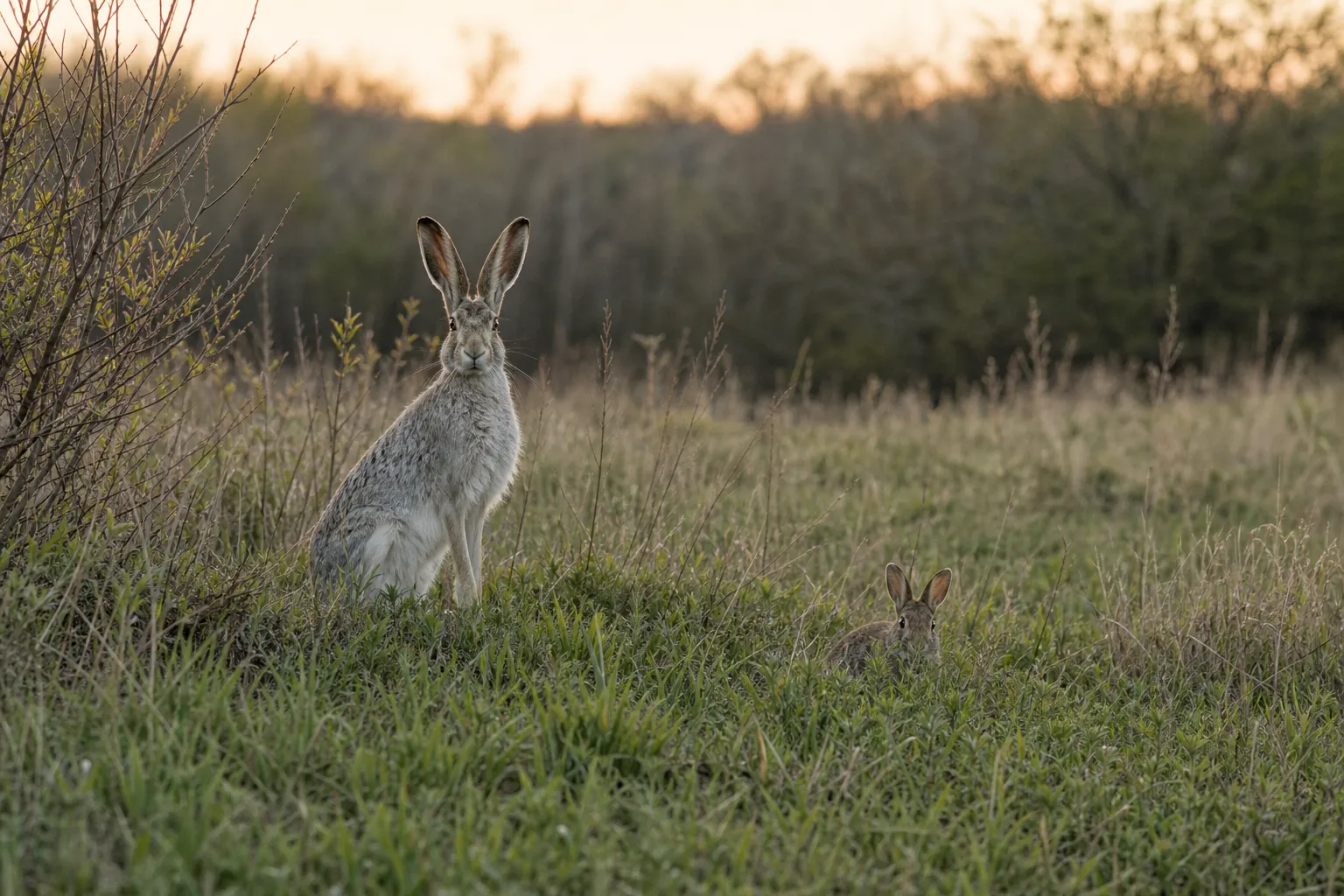
Hares and rabbits are related animals in the family Leporidae, but they are not the same. The clearest difference is how their young are born: hare young are furred, open-eyed, and able to move soon after birth, while rabbit young are born naked, blind, and dependent. In North America, snowshoe hares and jackrabbits are hares, while cottontails are rabbits.
Hare vs rabbit at a glance
For hunters and nature readers, the most useful comparison is a mix of life history and field marks. Texas Parks and Wildlife says the type of nest differs between hares and rabbits, and that this difference is tied to the condition of the young at birth.
| Feature | Hares | Rabbits |
|---|---|---|
| Family | Leporidae, the same family as rabbits | Leporidae, the same family as hares |
| Young at birth | Born furred, open-eyed, and able to move soon after birth, according to Alaska Department of Fish and Game | Born blind and hairless, and their eyes do not open for about a week, according to Alaska Department of Fish and Game |
| North American examples | Snowshoe hare, black-tailed jackrabbit, white-tailed jackrabbit | Eastern cottontail, desert cottontail, mountain cottontail, brush rabbit, New England cottontail |
| General proportions | Colorado Parks and Wildlife says hares have longer feet than rabbits and usually longer ears | Utah Division of Wildlife Resources says cottontails are smaller overall than jackrabbits or hares, with shorter ears and smaller hind feet |
| Nesting | Jackrabbits may use little more than a shallow depression, and snowshoe hares use shelters and depressions rather than digging burrows or building nests | Cottontails build more sheltered nests, often lined with plant material and fur |
The biggest difference: how the young are born
The birth condition of the young is the easiest way to separate hares from rabbits as groups. Alaska Department of Fish and Game describes hare young as fully furred, open-eyed, and able to hop around. The same agency describes newborn rabbits as blind and hairless, with eyes that do not open for about a week.
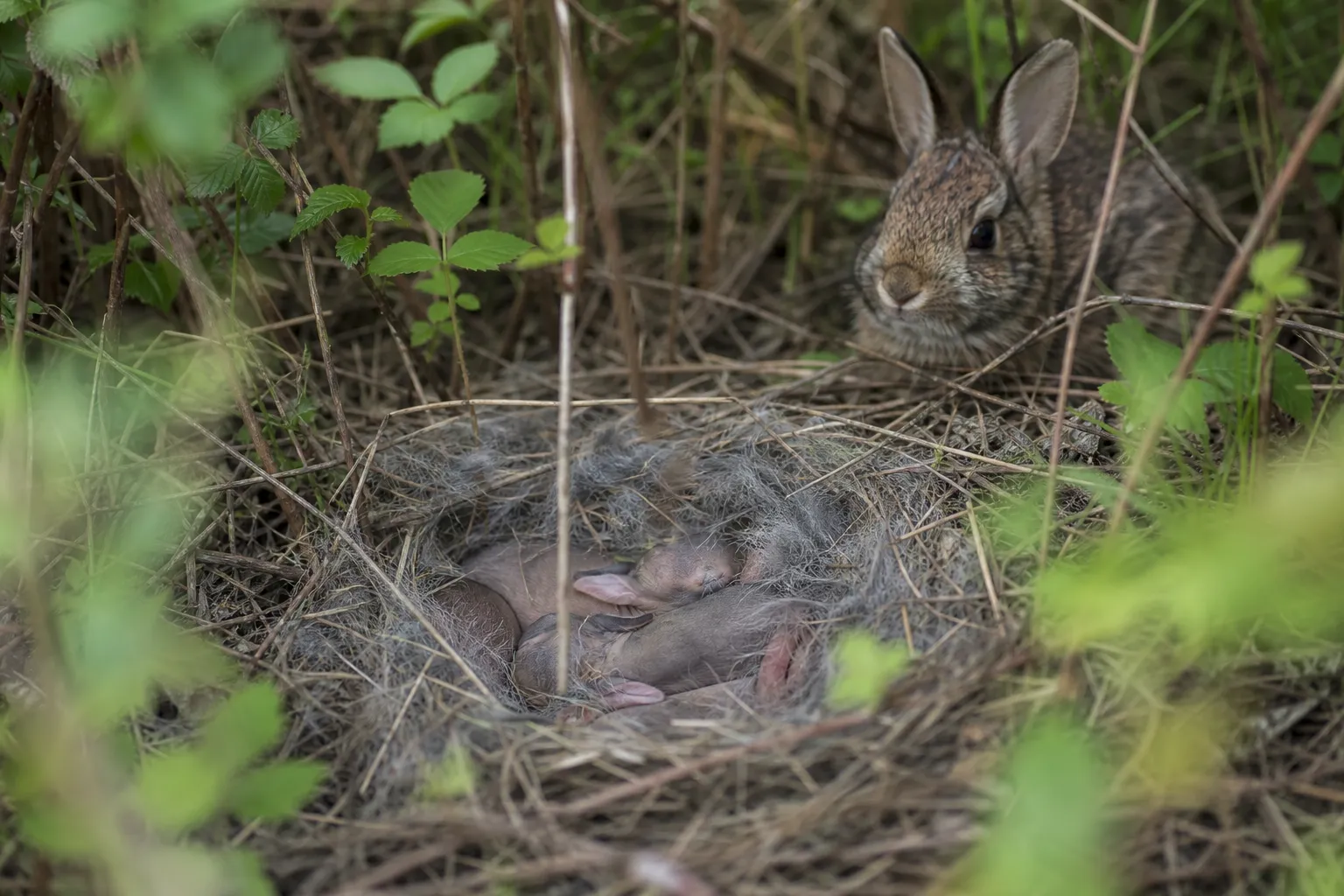
Texas Parks and Wildlife gives the same contrast using jackrabbits and cottontails. Young jackrabbits are born with open eyes, full fur, and the ability to hop around soon after birth. Cottontails are born naked, blind, and completely dependent on their mother’s care.
Missouri Extension describes newborn cottontails as blind, deaf, and helpless. That detail matters in the field because it helps explain why cottontail nests are more sheltered than the places where hares rest or give birth.
Biologists often describe hare young as precocial and rabbit young as altricial. For a practical reader, that means hare young are relatively developed at birth, while rabbit young are much less developed and need a protected nest.
Nesting and cover
Nesting habits follow the same basic pattern as birth condition. Texas Parks and Wildlife says one difference between hares and rabbits is the type of nest they build, and that this is determined by the condition of the young at birth.
For jackrabbits, Texas Parks and Wildlife says the mother builds no nest at all. A shallow depression in the ground or in vegetation can be enough.
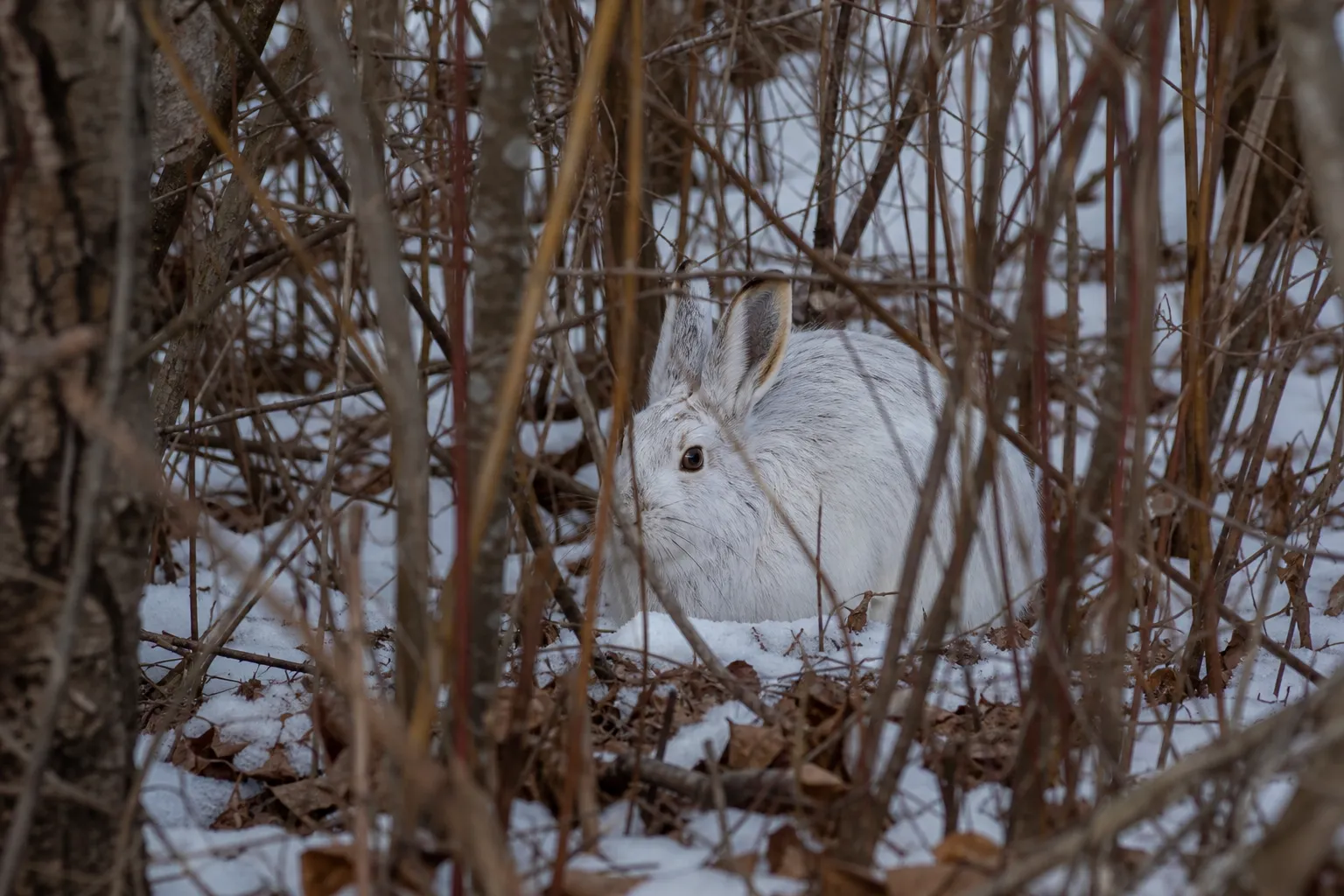
Snowshoe hares are similar in that they do not build the kind of nest people often associate with rabbits. Alaska Department of Fish and Game says snowshoe hares do not dig burrows or build nests. Instead, they use natural shelters and depressions, and they rest under branches or bushes.
Cottontails are different. Texas Parks and Wildlife describes an eastern cottontail nest as a saucerlike depression. Missouri Extension says a cottontail doe scrapes a shallow nest cavity and lines it with grass, leaves, or small roots, later topping it with fur pulled from her underside.
Body size, ears, legs, and feet
Hares tend to look longer-legged and longer-footed than cottontails, but exact size depends on species. Colorado Parks and Wildlife says hares, including snowshoe hares and jackrabbits, have longer feet than rabbits and usually have longer ears. Utah Division of Wildlife Resources says cottontail rabbits are smaller overall than jackrabbits or hares, with shorter ears and noticeably smaller hind feet.
Snowshoe hares show that pattern well. California Department of Fish and Wildlife says adult snowshoe hares weigh about 2 to 5 pounds and are larger, longer-legged, and longer-eared than cottontail and brush rabbits. Colorado Parks and Wildlife lists snowshoe hares at 16.3 to 20.4 inches long and usually 3.15 to 3.42 pounds. Alaska Department of Fish and Game gives a similar general size, saying snowshoe hares average about 18 to 20 inches in total length and weigh 3 to 4 pounds.
Their feet are also important. Alaska Department of Fish and Game says snowshoe hares have large, well-furred hind feet that help them move through deep snow. That feature is part of the reason they are called snowshoe hares.
Jackrabbits can be larger than many cottontails. The National Park Service says black-tailed jackrabbits can grow up to about two feet long and weigh 3 to 8 pounds. The agency also says black-tailed jackrabbits can be identified by large, long, black-tipped ears.
North American examples
Hares: snowshoe hares and jackrabbits
Snowshoe hares are true hares. The National Park Service says they occur through most of Alaska, Canada, parts of the Appalachian and Rocky Mountain states, and northern parts of the Upper Midwest. Colorado Parks and Wildlife also groups snowshoe hares with hares rather than rabbits.
Jackrabbits can be confusing because of the name. Texas Parks and Wildlife says the jackrabbit is not a rabbit at all, but a hare. The National Park Service says the black-tailed jackrabbit is a hare despite being called a rabbit, and identifies it as Lepus californicus. The same agency says black-tailed jackrabbits are found in the southwestern United States and parts of Mexico.
White-tailed jackrabbits are also hares. The Canadian Wildlife Federation specifically describes the white-tailed jackrabbit as a hare. Utah Division of Wildlife Resources groups white-tailed jackrabbit, black-tailed jackrabbit, and snowshoe hare as hares in Utah.
Rabbits: cottontails
Cottontails are rabbits. Utah Division of Wildlife Resources groups pygmy rabbit, mountain cottontail, and desert cottontail as rabbits in Utah. The Smithsonian eMammal guide says eastern cottontails are the most common cottontail in the United States.
In Canada, the Canadian Wildlife Federation lists native rabbits and hares that include eastern cottontail, mountain cottontail, snowshoe hare, Arctic hare, and white-tailed jackrabbit. That list is a useful reminder that both hares and rabbits occur in northern North America.
Regional identity can matter. Maine Department of Inland Fisheries and Wildlife says the New England cottontail is Maine’s only true native rabbit, and that the similar eastern cottontail and the larger snowshoe hare are also found in Maine.
Field identification cautions
Field identification is not always as simple as seeing a small brown animal run from cover. Snowshoe hares can look rabbit-like, especially outside winter, so size, hind feet, ears, winter color, and local range all matter.
The Smithsonian eMammal guide says snowshoe hares can be distinguished from cottontails by larger body size, longer ears, longer feet, and white winter coloration where the species overlap. The same guide says eastern cottontails can be distinguished from snowshoe hares by smaller size, shorter ears, smaller hind legs, and brown winter fur.
That winter color clue is useful where it applies, but it should not be the only detail a hunter or observer uses. Body size, ear length, hind foot size, and the species known from the area should all be considered together.
Similar species can also occur in the same state. Maine Department of Inland Fisheries and Wildlife notes that New England cottontail, eastern cottontail, and snowshoe hare are all found in Maine, with the New England cottontail and eastern cottontail described as similar and the snowshoe hare described as larger.
What this means for hunters
For small-game hunters, the practical takeaway is identification. A jackrabbit may be called a rabbit in everyday speech, but state and federal wildlife agencies describe jackrabbits as hares. A cottontail is a rabbit. A snowshoe hare is a hare.
That distinction can matter when reading wildlife agency materials, season tables, species descriptions, and identification guides. Before hunting, confirm the current rules with the state, provincial, territorial, or federal agency that manages the species in that location. Also confirm the exact species, open area, season dates, license requirements, and any special identification guidance the agency provides.
Frequently asked questions
Are hares and rabbits in the same family?
Yes. The Canadian Wildlife Federation says rabbits and hares all belong to the family Leporidae.
What is the easiest difference between a hare and a rabbit?
The clearest difference is the condition of the young at birth. Alaska Department of Fish and Game says hares are born fully furred, able to hop, and open-eyed, while newborn rabbits are blind and hairless.
Are jackrabbits rabbits or hares?
Jackrabbits are hares. Texas Parks and Wildlife says the jackrabbit is not a rabbit at all, but a hare, and the National Park Service says the black-tailed jackrabbit is a hare despite its name.
Are cottontails rabbits?
Yes. Texas Parks and Wildlife contrasts cottontails with jackrabbits and describes cottontail young as naked, blind, and dependent. Utah Division of Wildlife Resources groups mountain cottontail and desert cottontail with rabbits.
How can you tell a snowshoe hare from a cottontail?
The Smithsonian eMammal guide says snowshoe hares can be distinguished by larger body size, longer ears, longer feet, and white winter coloration where they overlap. Eastern cottontails are smaller, shorter-eared, and brown in winter.
Do hares and rabbits build the same kind of nest?
No. Texas Parks and Wildlife says jackrabbit mothers build no nest, while Missouri Extension says cottontail does scrape a shallow nest cavity and line it with plant material and fur.
Sources
- Rabbits and Hares, Texas Parks and Wildlife DepartmentOfficial source. Accessed October 23, 2026.
- Snowshoe Hare, Colorado Parks and WildlifeOfficial source. Accessed October 23, 2026.
- Snowshoe Hare Species Profile, Alaska Department of Fish and GameOfficial source. Accessed October 23, 2026.
- Snowshoe Hare, California Department of Fish and WildlifeOfficial source. Accessed October 23, 2026.
- Biology and ecology of rabbits and hares, Utah Division of Wildlife ResourcesOfficial source. Accessed October 23, 2026.
- Snapshot USA Common Species Identification Guide, Smithsonian eMammalOfficial source. Accessed October 23, 2026.
- Ecology and Management of Cottontail Rabbits in Missouri, University of Missouri ExtensionOfficial source. Accessed October 23, 2026.
- Snowshoe Hare, National Park Service, Kobuk Valley National ParkOfficial source. Accessed October 23, 2026.
- Black-tailed Jackrabbit, National Park Service, White Sands National ParkOfficial source. Accessed October 23, 2026.
- What’s the difference between rabbits, jackrabbits and hares?, Canadian Wildlife Federation. Accessed October 23, 2026.
- Rabbit Sightings: New England Cottontail and Snowshoe Hare, Maine Department of Inland Fisheries and WildlifeOfficial source. Accessed October 23, 2026.