Red Dot vs Rifle Scope: What Is the Difference?
A red dot is commonly a 1x illuminated aiming sight, while a rifle scope is a magnifying optical sight with defined optical specifications. The main differences are magnification, field of view, eye relief, reticle style, parallax expectations, and battery dependence.
By RaiS. Reviewed by RaiS. Published . 7 min read.
Research and drafting were assisted by AI. RaiS checked the facts against the sources below and approved this page.
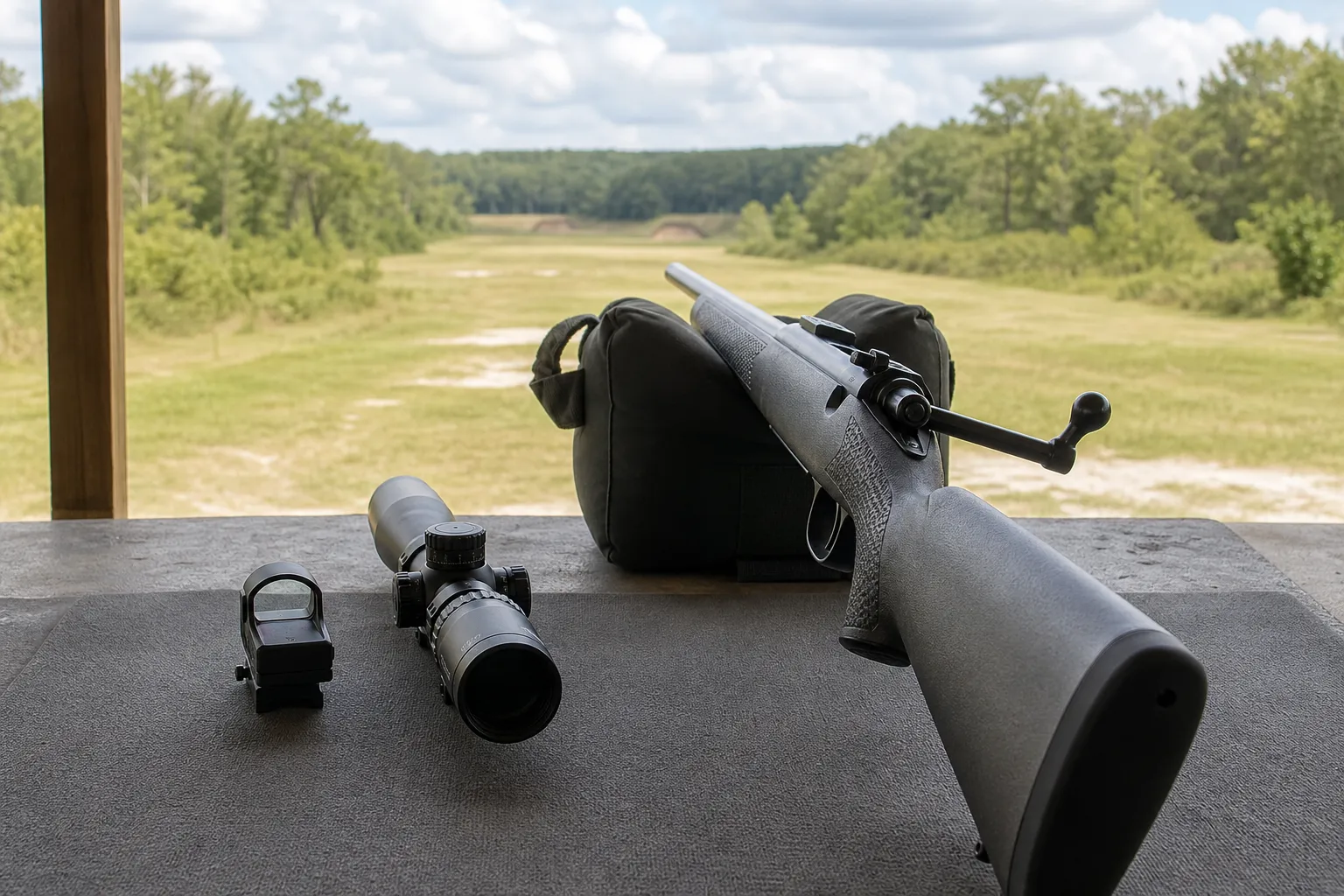
A red dot sight is usually a 1x sight with an illuminated dot and manufacturer stated parallax expectations such as “parallax free.” A rifle scope is a magnifying optical sight, either fixed power or variable power, with a defined eye relief distance, a specified field of view, a reticle, and model specific parallax behavior. There is no universal distance line where one becomes “right” and the other becomes “wrong.” Aimpoint states that red dot usable range has no defined limit, and scope usefulness depends on the magnification range, reticle, parallax setup, target size, eyesight, and the specific optic.
Red dot vs rifle scope at a glance
| Feature | Red dot sight | Rifle scope |
|---|---|---|
| Magnification | Commonly 1x. Vortex lists the SPARC II red dot as 1x. | Fixed or variable power. Leupold states that variable-power scopes let the shooter select a range of magnifications. |
| Field of view | Manufacturers often describe red dots as having an unlimited field of view. | Specified at a distance, with values that vary by model. |
| Eye relief | Often presented differently from rifle scope eye relief specifications. | A defined distance behind the ocular lens. |
| Reticle | Usually an illuminated dot or dot-based reticle. Aimpoint lists a 3.5 MOA dot on the Acro C-2, and Vortex lists a 2 MOA dot reticle on the SPARC II. | A reticle inside the scope. |
| Parallax | Often marketed as parallax free. Vortex lists the SPARC II parallax setting as parallax free. | Fixed at a distance or adjustable by model. Leupold states that a fixed-focus optical system can be parallax free at only one distance. Vortex lists one 3 to 15x riflescope with parallax adjustment from 20 yards to infinity. |
| Battery dependence | The illuminated aiming dot needs a battery. Aimpoint lists the Acro C-2 battery type as CR2032, 3V lithium. | A non-illuminated scope reticle does not depend on a battery for the reticle image. Leupold states that an illuminated reticle can still function like a standard scope reticle when not illuminated. |
| Distance use | No universal cutoff. Aimpoint says red dot usable range has no defined limit. | No universal cutoff. Magnification, field of view, eye relief, reticle, parallax, target size, and the optic’s specifications all matter. |
What a red dot sight is
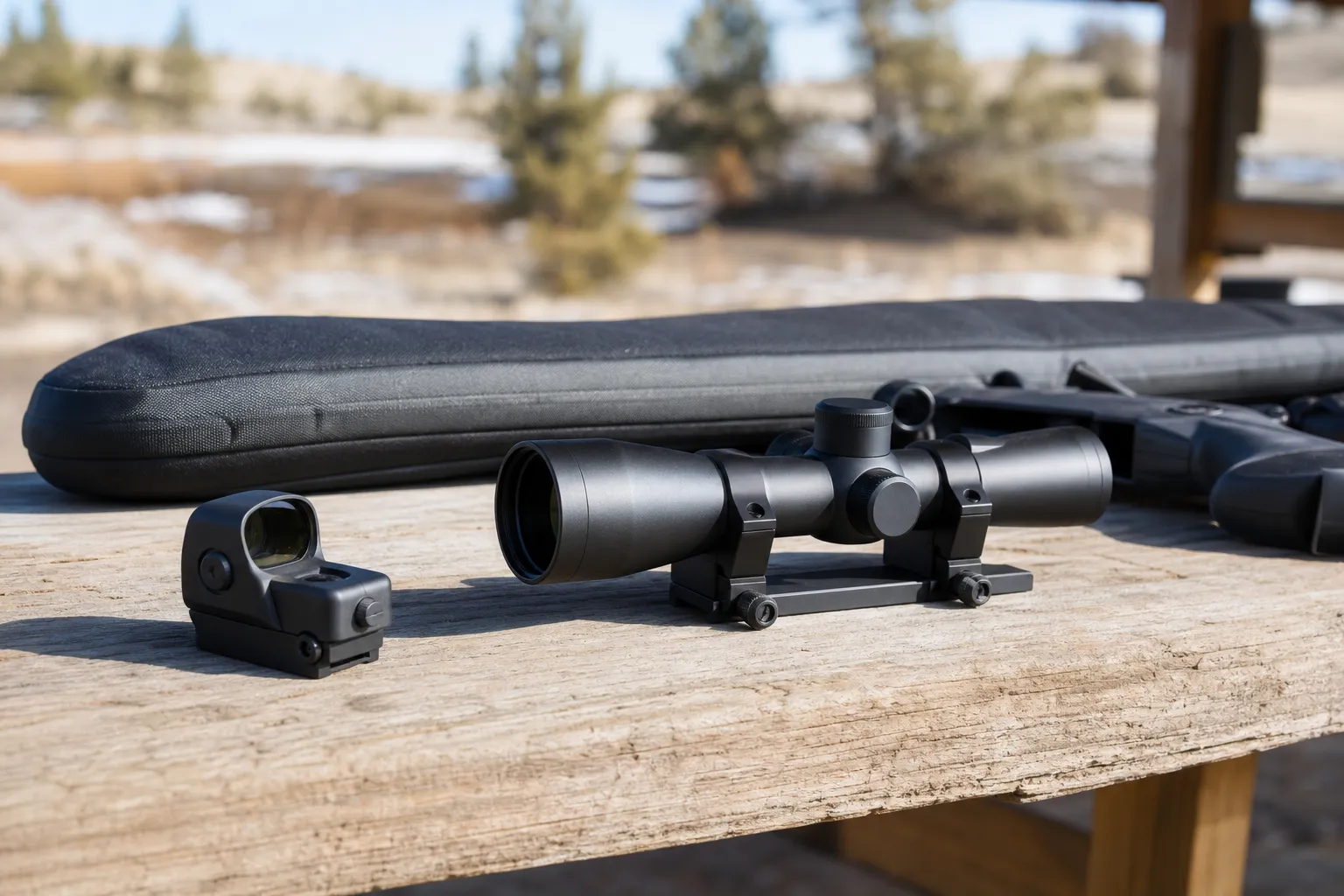
Vortex lists the SPARC II red dot as 1x. In plain terms, a common red dot is not being used like a magnifying rifle scope.
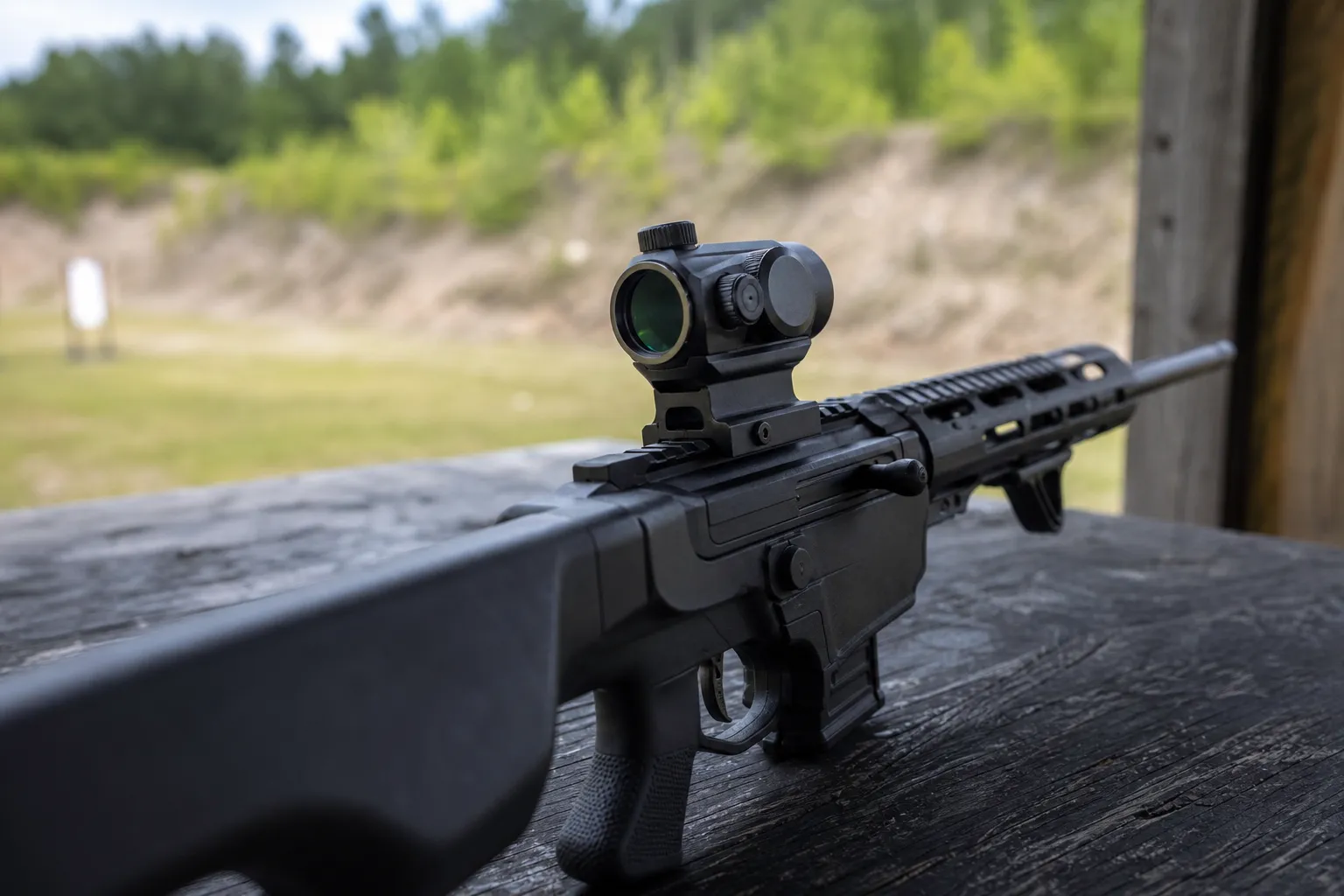
A red dot sight’s aiming reference is illuminated. Aimpoint lists a 3.5 MOA dot size for the Acro C-2, while Vortex lists the SPARC II with a 2 MOA dot reticle and ten variable illumination settings. SAAMI defines one minute of angle as one sixtieth of a degree and states that one MOA subtends 1.047 inches at 100 yards. That is why dot size is often given in MOA.
Aimpoint also states that a red dot is not projected onto the target. The dot is an aiming reference seen through the optic, not a visible mark placed downrange.
For setup details, see our guide to how to zero a red dot sight. If the dot appears distorted to your eye, our guide to red dots and astigmatism covers that separate issue.
What a rifle scope is
A rifle scope is a magnifying optical sight. Leupold states that variable-power scopes let the shooter select a range of magnifications, and Vortex lists the Viper PST Gen II 3-15x44 SFP riflescope with 3 to 15x magnification.
That magnification is one of the clearest differences between a red dot and a scope. A 1x red dot is not intended to enlarge the view. A scope may offer a fixed magnification or, in a variable-power model, a selectable magnification range.
Rifle scopes also have defined optical specifications that matter when choosing and mounting the optic. For example, Vortex lists the Viper PST Gen II 3-15x44 SFP with 3 to 15x magnification and a parallax setting range from 20 yards to infinity.
For more on scope setup, see how to sight in a rifle scope.
Magnification and field of view
Magnification is the simplest dividing line. Vortex lists the SPARC II red dot as 1x. By contrast, Leupold describes variable-power scopes as optics that let the shooter select a range of magnifications.
Field of view is different too. Rifle scope specifications commonly present field of view at a stated distance.
Manufacturers often describe red dot sights as having unlimited field of view. That does not make every red dot identical, but it is a different way of presenting the viewing experience than a riflescope’s feet-at-100-yards field-of-view specification.
Eye relief and head position
Eye relief is another major difference. On a riflescope, that distance is part of the optic’s published specification.
Red dot specifications often present eye relief differently from rifle scope specifications. That is one reason red dot specifications read very differently from scope specifications.
If you want a deeper explanation of this term, see eye relief explained.
Reticles: dot versus scope patterns
A red dot sight normally uses an illuminated dot or dot-based aiming reference. Aimpoint lists the Acro C-2 with a 3.5 MOA dot. Vortex lists the SPARC II with a 2 MOA dot reticle.
A riflescope uses a reticle inside the scope. Some rifle scope reticles are illuminated, but illumination is not the same thing as the reticle itself disappearing without power. Leupold states that an illuminated reticle can still function like a standard scope reticle when not illuminated.
MOA markings and dot sizes are angular measurements. SAAMI defines one minute of angle as one sixtieth of a degree and states that one MOA subtends 1.047 inches at 100 yards. For a broader comparison of angular adjustment systems, see MOA vs MIL. For scope pattern terms, see rifle scope reticles explained.
Parallax expectations
Parallax descriptions should be read exactly as the manufacturer states them. Vortex lists the SPARC II parallax setting as parallax free.
Rifle scopes are more model-specific. Leupold states that a fixed-focus optical system can be parallax free at only one distance, and says most Leupold scopes are parallax free at 150 yards, with listed exceptions. Leupold also describes proper parallax adjustment as the point where the reticle does not move in relation to the target.
Some scopes have adjustable parallax. Vortex lists the Viper PST Gen II 3-15x44 SFP parallax setting range as 20 yards to infinity. For a full explanation of the concept, see rifle scope parallax explained.
Batteries and illumination
A red dot depends on power for the visible dot. Aimpoint lists the Acro C-2 battery as a CR2032, 3V lithium battery, and lists battery life as 50,000 hours at daylight setting 6. Vortex describes the SPARC II dot illumination as having ten variable settings.
Rifle scopes vary. Some rifle scopes have illuminated reticles. Leupold states that an illuminated reticle can still function like a standard scope reticle when not illuminated. That makes battery dependence a model-by-model issue for scopes, while the illuminated dot is central to a red dot sight.
Typical distance use without a hard cutoff
It is tempting to say that red dots are for one distance and scopes are for another, but manufacturer information does not support a universal cutoff. Aimpoint says red dot usable range has no defined limit and depends on multiple variables.
A more careful comparison is this: a red dot is commonly a 1x sight with an illuminated dot and model specific parallax wording. A rifle scope offers magnification, a specified field of view, defined eye relief, a reticle, and fixed or adjustable parallax behavior depending on the model.
For a new shooter, that means the choice should start with the published specifications, not with a single distance rule. Look at magnification, field of view, eye relief, reticle design, parallax setting or adjustment range, and whether the aiming reference depends on a battery.
Important limits and exceptions
Not every optic fits neatly into only these two categories. This page compares common non-magnified red dot sights with magnified rifle scopes. Other optic types may combine features in different ways.
Some red dots can be used with a separate magnifier. Some scope reticles are illuminated. Some scopes are fixed power, while others are variable power. Some scopes have fixed parallax settings, while others have adjustable parallax over a listed range.
Before buying or mounting any optic, check the current manufacturer manual or specification sheet for the exact model. Confirm magnification, eye relief, field of view, reticle type, parallax setting or adjustment range, battery type, and illumination behavior from the official product information.
Frequently asked questions
Is a red dot the same as a rifle scope?
No. In this comparison, a red dot is commonly a 1x sight with an illuminated dot, while a rifle scope is a magnifying optical sight with defined specifications such as eye relief, field of view, reticle, and parallax behavior.
Do red dot sights have magnification?
Common red dots are often 1x. Vortex lists the SPARC II red dot as 1x.
Do rifle scopes need batteries?
Not always for the reticle image. Some rifle scopes have illuminated reticles, and Leupold states that an illuminated reticle can still function like a standard scope reticle when not illuminated.
Are red dots parallax free?
Read the manufacturer wording for the specific model. Vortex lists the SPARC II parallax setting as parallax free.
Is there a fixed distance where a scope becomes better than a red dot?
Manufacturer information does not support one universal cutoff. Aimpoint says red dot usable range has no defined limit, and practical optic choice depends on the specific optic’s magnification, reticle, field of view, eye relief, parallax behavior, and battery setup.
Sources
- Acro C-2 3.5 MOA red dot reflex sight, AimpointOfficial source. Accessed November 15, 2026.
- FAQ, AimpointOfficial source. Accessed November 15, 2026.
- SPARC II Red Dot, Vortex OpticsOfficial source. Accessed November 15, 2026.
- Viper PST Gen II 3-15x44 SFP Riflescope, Vortex OpticsOfficial source. Accessed November 15, 2026.
- R5 1-6x24 Riflescope Owner’s Guide, BushnellOfficial source. Accessed November 15, 2026.
- Riflescope Owner’s Manual, LeupoldOfficial source. Accessed November 15, 2026.
- Minute of Angle (M.O.A.), Sporting Arms and Ammunition Manufacturers’ InstituteOfficial source. Accessed November 15, 2026.