Eye Relief Explained: Scopes, Binoculars and Recoil Safety
Eye relief is the distance from an optic’s eyepiece where your eye can see the full image. It matters because the wrong distance can reduce the visible field, create black rings or vignetting, and on riflescopes can let recoil drive the scope back toward your eye.
By RaiS. Reviewed by RaiS. Published . 6 min read.
Research and drafting were assisted by AI. RaiS checked the facts against the sources below and approved this page.
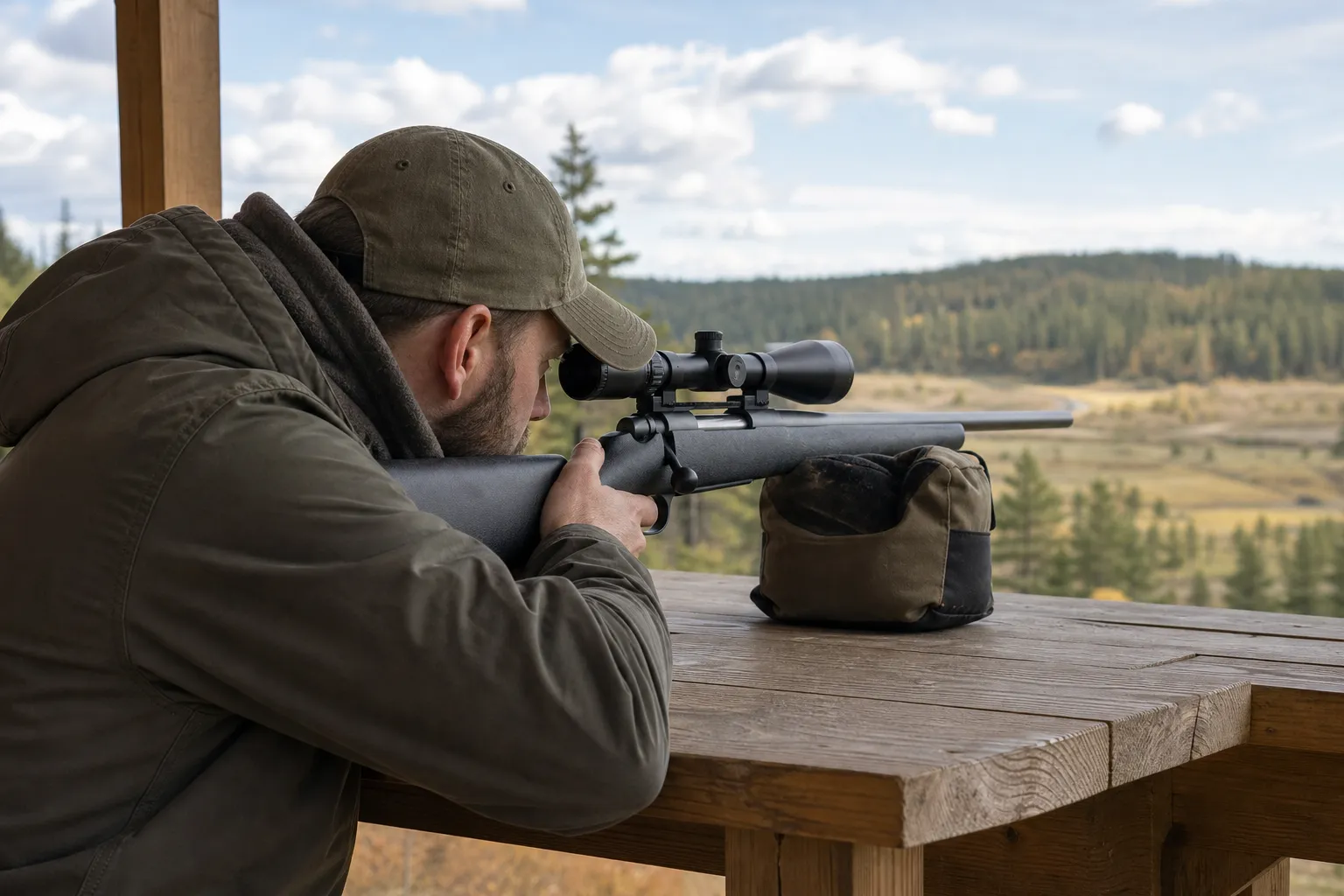
Eye relief is the distance from the eyepiece of an optic where your eye sees the full image. Leupold defines it that way for optics generally, and Nikon describes the binocular version as the distance from the outer surface of the eyepiece lens to the eyepoint, where the exit pupil is formed. In plain English, it is the viewing distance where the image looks complete instead of cut off, shadowed or ringed in black.
For hunters and shooters, eye relief matters for two big reasons. First, proper eye relief helps you see the full field of view. Second, on a riflescope, it helps maintain distance between the scope and the shooter’s eye during recoil.
Eye relief, eyepoint, exit pupil and field of view
Several optic terms are connected to eye relief. The eyepoint is the position where the eye receives the full view. Nikon says that when you look through binoculars from the eyepoint, you can obtain the whole field of view without vignetting.
The exit pupil is also part of the same idea. Leupold defines exit pupil diameter as the width of the beam of light between the ocular lens and the user’s eye. Nikon describes binocular eye relief as the distance to the position where the exit pupil is formed.
Field of view is what you can see through the optic at one time. Leupold defines field of view as the amount visible through an optic at any given moment, measured either as length at a distance or as an angle. Nikon defines binocular real field of view as the angle of the visible field seen without moving the binoculars, and field of view at 1,000 meters as the width of the visible area at that distance.
The practical takeaway is simple: the listed eye relief tells you where your eye needs to be to see the whole usable image. If your eye is not in the right place, the view may be partly blocked, narrowed or shadowed.
Why eye relief matters on riflescopes
On a riflescope, proper eye relief is about both vision and safety. A full sight picture requires the eye to be at the right distance behind the optic, and recoil clearance matters on riflescopes.
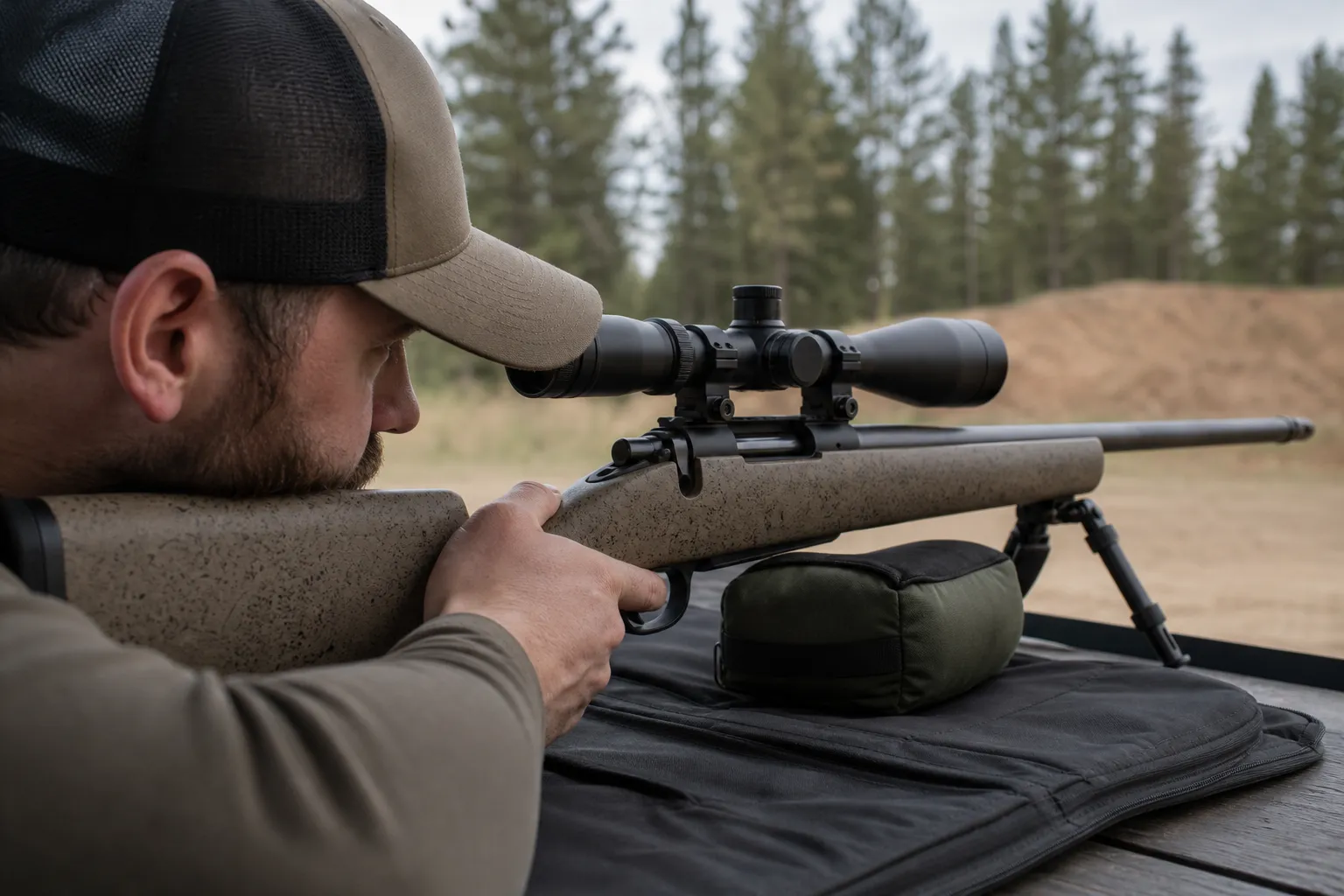
Texas Parks and Wildlife hunter education gives a clear safety warning for telescopic sights: keep the eye at least 3 inches behind the eyepiece so that when the rifle fires, the shooter is not struck by the scope. ZEISS states that, to avoid eye injuries from shot recoil, riflescope eye relief should be at least 80 mm.
Eye relief also shows up in the sight picture. Leupold says that if you see a black ring around the image in a riflescope, you are either too close to or too far from the scope. Leupold’s glossary also defines the eyebox as the space behind a riflescope where the eye can still maintain a full field of view. A forgiving eyebox gives the eye more usable space behind the scope, while a more critical view demands a more exact head position.
Magnification can make these effects more obvious. Leupold says field of view is influenced mainly by optic length and magnification. Leupold also says high magnification makes eye relief especially important, and that maximum magnification is usually the shortest and most critical eye relief setting. EOTECH’s Vudu 1-10x28 FFP specifications show how a scope’s stated eye relief can be listed as a range and can differ by magnification setting: 3.27 to 3.90 inches at 1x, and 3.35 to 3.62 inches at 10x. The same EOTECH specifications show the field of view shrinking from 116.6 feet at 100 yards on 1x to 11.7 feet at 100 yards on 10x.
Shooting position can matter too. Leupold’s tactical riflescope manual says users should confirm eye relief from several positions and notes that aiming uphill typically reduces eye relief.
Conventional, scout and handgun scopes
Not all scopes are meant to be used at the same distance from the eye. The correct eye relief depends on the optic type and model.
A conventional riflescope is viewed from close behind the eyepiece, with enough distance to see the full sight picture and maintain recoil clearance. The exact number is model specific, so the manufacturer’s specifications and manual matter.
Leupold describes handgun or EER scopes as extended eye relief optics intended for handguns held at arm’s length. Leupold says these normally have 16 inches of eye relief.
Leupold describes scout or IER scopes as intermediate eye relief optics intended for forward mounting on long guns ahead of the receiver. Leupold says these normally have 6 to 9 inches of eye relief.
Those categories explain why a scope that works on one firearm layout may not be comfortable or usable on another. A handgun scope, scout scope and conventional riflescope are designed around different viewing distances.
Binocular eye relief and eyeglasses
With binoculars, eye relief is mostly about comfort and seeing the full field. Nikon defines binocular eye relief as the distance from the eyepiece lens surface to the eyepoint, where the exit pupil is formed. Nikon says that viewing from the eyepoint lets you obtain the whole field of view without vignetting.

This is especially important for eyeglass wearers. Nikon recommends longer eye relief binoculars, also called high eyepoint binoculars, for eyeglass wearers. Nikon’s sport optics icon guide defines long eye relief binoculars as high eyepoint models with 15 mm or longer eye relief.
Eyecups help position the eye. Swarovski Optik states that twist-in eyecups can be used as a mechanical aid to adjust individual eye position for eye relief.
Magnification and field of view still matter. Swarovski Optik gives a useful rule of thumb: higher magnification generally means a smaller field of view, and binoculars usually have a larger field of view than a spotting scope.
Spotting scopes and fieldscopes
Nikon describes fieldscopes as terrestrial telescopes used with an eyepiece, with the eyepiece choice determining magnification. Nikon also says fieldscopes generally have higher magnification than binoculars and are usually used on a tripod.
Because the eyepiece determines magnification, the viewing feel can change with the eyepiece. Swarovski Optik’s general rule also applies at a high level: higher magnification generally means a smaller field of view, and binoculars usually have a larger field of view than a spotting scope.
For a spotting scope or fieldscope, eye relief is usually about comfort, avoiding vignetting and being able to see the whole image through the chosen eyepiece. If you wear glasses, the same general concern applies: compare the manufacturer’s listed eye relief for the eyepiece or model you plan to use.
Red dots and unlimited eye relief
Magnified scopes and binoculars depend on a specific eye position for the full image. Some red dot sights are different. Aimpoint’s Micro sight manual says Aimpoint red dot sights allow unlimited eye relief, and the same manual lists optical magnification as 1x with unlimited eye relief.
That does not make every sight identical. It does show why red dots are often discussed differently from magnified scopes when eye relief is the topic. For a red dot, check the manufacturer’s manual for that exact model rather than assuming it behaves like a riflescope.
How to choose with eye relief in mind
Start with the manufacturer’s stated eye relief for the exact optic. Product specifications may give a single number, a range or values at different magnifications. EOTECH’s Vudu 1-10x28 FFP is one example of a scope where the listed eye relief changes by magnification setting.
For riflescopes, consider recoil clearance and the full sight picture together. Texas Parks and Wildlife warns telescopic sight users to keep the eye at least 3 inches behind the eyepiece to avoid being struck when the rifle fires. ZEISS states that riflescope eye relief should be at least 80 mm to avoid eye injuries caused by shot recoil.
Before live fire, confirm that the optic gives a full sight picture in normal field positions. Leupold’s manual ties proper eye relief to safety considerations and says a full sight picture is the cue during general scope positioning. Leupold also says eye relief should be confirmed from several positions, and notes that uphill aiming typically reduces eye relief.
Use eye protection, follow the optic and firearm manuals, and get qualified help if you are not sure the setup gives both a full sight picture and safe recoil clearance. Check the manufacturer’s current specifications and manual for your exact optic, and for live fire practice also follow the safety guidance from your hunter education program or shooting range.
Frequently asked questions
What is eye relief?
Leupold defines eye relief as the distance from an optic eyepiece where a full image is presented to your eye. Nikon describes binocular eye relief as the distance from the eyepiece lens surface to the eyepoint, where the exit pupil is formed.
Why does eye relief matter on a riflescope?
On a riflescope, eye relief matters for seeing a full sight picture and maintaining recoil clearance. Texas Parks and Wildlife warns telescopic sight users to keep the eye at least 3 inches behind the eyepiece to avoid being struck when the rifle fires.
What does a black ring in a scope mean?
Leupold says a black ring around the riflescope image means the shooter is either too close to or too far from the scope.
Do eyeglass wearers need longer binocular eye relief?
Nikon recommends longer eye relief, or high eyepoint, binoculars for eyeglass wearers. Nikon defines long eye relief binoculars as high eyepoint models with 15 mm or longer eye relief.
Do red dot sights have eye relief?
Some red dot sights are listed differently from magnified scopes. Aimpoint’s Micro sight manual says Aimpoint red dot sights allow unlimited eye relief and lists the Micro sight as 1x with unlimited eye relief.
Does magnification affect eye relief and field of view?
Leupold says high magnification makes eye relief especially important, and maximum magnification is usually the shortest and most critical eye relief setting. Leupold also says field of view is influenced mainly by optic length and magnification.
Sources
- What is a Fieldscope?, Nikon Sport OpticsOfficial source. Accessed October 23, 2026.
- Glossary, LeupoldOfficial source. Accessed October 23, 2026.
- Tactical Riflescope User's Manual, LeupoldOfficial source. Accessed October 23, 2026.
- Troubleshooting: Riflescopes, LeupoldOfficial source. Accessed October 23, 2026.
- Chapter 3, Shooting Skills, Texas Parks and Wildlife DepartmentOfficial source. Accessed October 23, 2026.
- Eye Relief, SIG SauerOfficial source. Accessed October 23, 2026.
- EOTECH Vudu 1-10x28 FFP, EOTECHOfficial source. Accessed October 23, 2026.
- About Targeting Optics, ZEISS HuntingOfficial source. Accessed October 23, 2026.
- Eye Relief, Basic Information about Binoculars, Nikon Sport OpticsOfficial source. Accessed October 23, 2026.
- Field of View, Basic Information about Binoculars, Nikon Sport OpticsOfficial source. Accessed October 23, 2026.
- Feature/Application Icons, Nikon Sport OpticsOfficial source. Accessed October 23, 2026.
- Insights into Observation Optics, Swarovski OptikOfficial source. Accessed October 23, 2026.
- User’s Manual for Aimpoint Micro Sights, AimpointOfficial source. Accessed October 23, 2026.