First Focal Plane vs Second Focal Plane Scopes
First focal plane scopes keep reticle measurements usable across the magnification range because the reticle and image scale together. Second focal plane scopes keep the reticle the same apparent size, so reticle holds and ranging marks generally apply at a designated magnification listed by the maker.
By RaiS. Reviewed by RaiS. Published . 6 min read.
Research and drafting were assisted by AI. RaiS checked the facts against the sources below and approved this page.
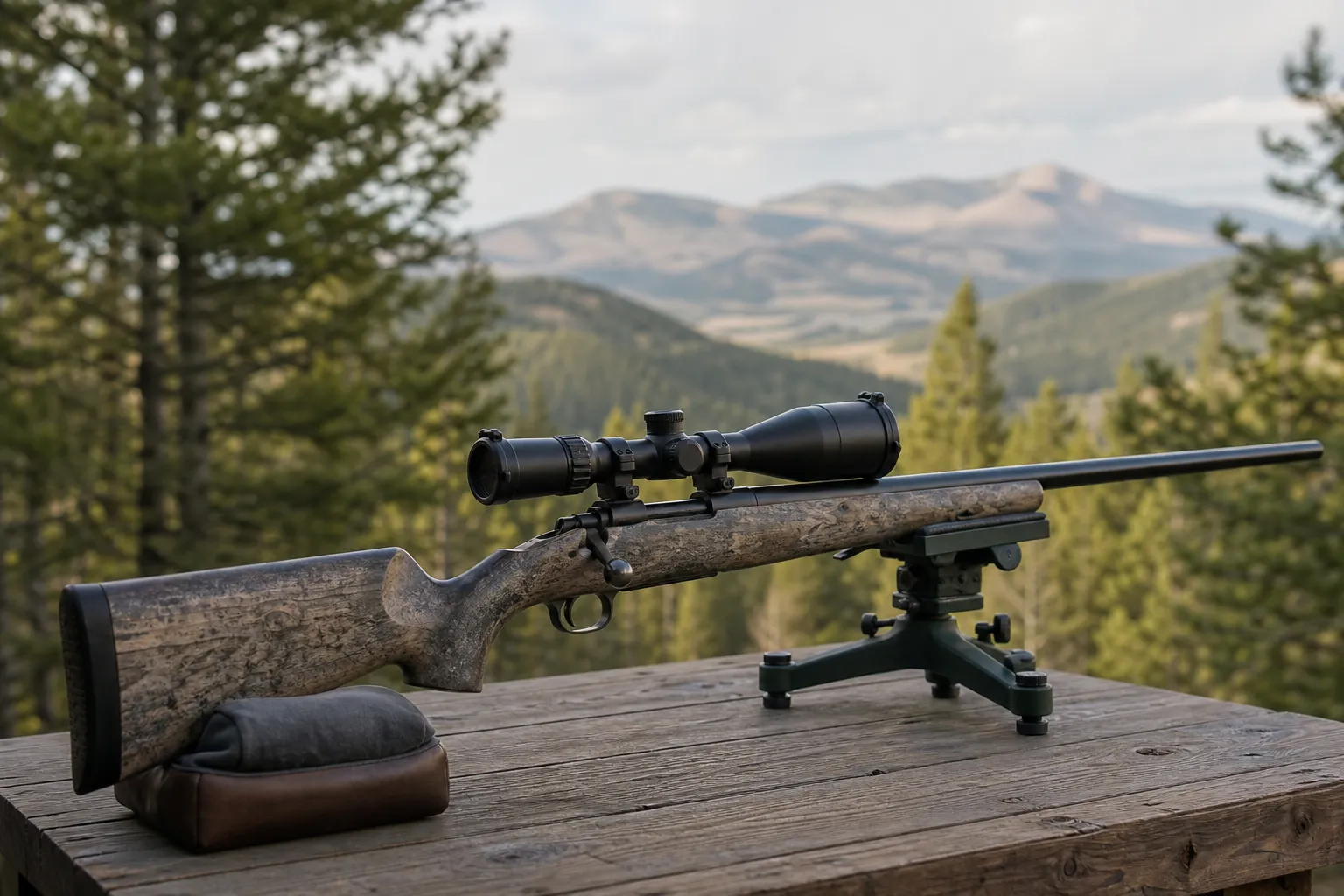
First focal plane vs second focal plane is about where the reticle sits inside a variable-power riflescope. In a first focal plane, also called front focal plane or FFP, the reticle appears to grow and shrink with the image as you change magnification, so its measured marks stay usable across the magnification range. In a second focal plane, also called rear focal plane or SFP, the reticle appears the same size while the image changes size, so holdover, milling, and ranging marks generally require a specific magnification setting. Vortex and ZEISS describe this same basic visual difference, while Leupold describes the focal plane locations and reticle measurement implications.
Quick comparison
| Question | First focal plane, FFP | Second focal plane, SFP | |, -|, -|, -| | Where is the reticle? | Leupold describes front focal plane reticles as in front of the magnification system and closer to the objective lens. | Leupold describes rear focal plane reticles as behind the magnification system and closer to the ocular lens. | | What happens when magnification changes? | Vortex says the image and reticle get larger and smaller together while maintaining the same scale to one another. | Vortex says the image grows and shrinks with magnification, but the reticle does not. | | Reticle holds and measurements | Leupold says FFP reticle measurements can be used accurately at any magnification setting. | Leupold says SFP holdovers or milling marks require a specific magnification. On Leupold scopes this is normally highest power. | | Ranging with a scaled reticle | ZEISS says FFP subtension is the same at all magnification levels, which helps estimate range. | ZEISS says the subtension of second focal plane reticles depends on the magnification setting. | | Common advantage | Fast use of measured reticle marks across the magnification range. | Consistent reticle appearance. ZEISS says SFP can remain fine with minimal target coverage at high magnification. | | Common tradeoff | Leupold says the reticle will not be as visible on low magnifications. | Reticle subtension depends on magnification, according to ZEISS. |
What FFP and SFP mean
Leupold says every riflescope has two locations where a reticle can be installed. The location closer to the objective lens is the front focal plane, and the location closer to the ocular lens is the rear focal plane. Leupold’s glossary also describes front focal plane reticles as located in front of the magnification system, and rear focal plane reticles as located behind the magnification system.
The terms first focal plane and front focal plane refer to the same general reticle position. The terms second focal plane and rear focal plane refer to the other position. Some product pages may shorten these to FFP and SFP.
For a beginner, the key idea is simple: the reticle’s location determines whether it visually scales with the target image when magnification changes.
What changes when you turn the magnification ring
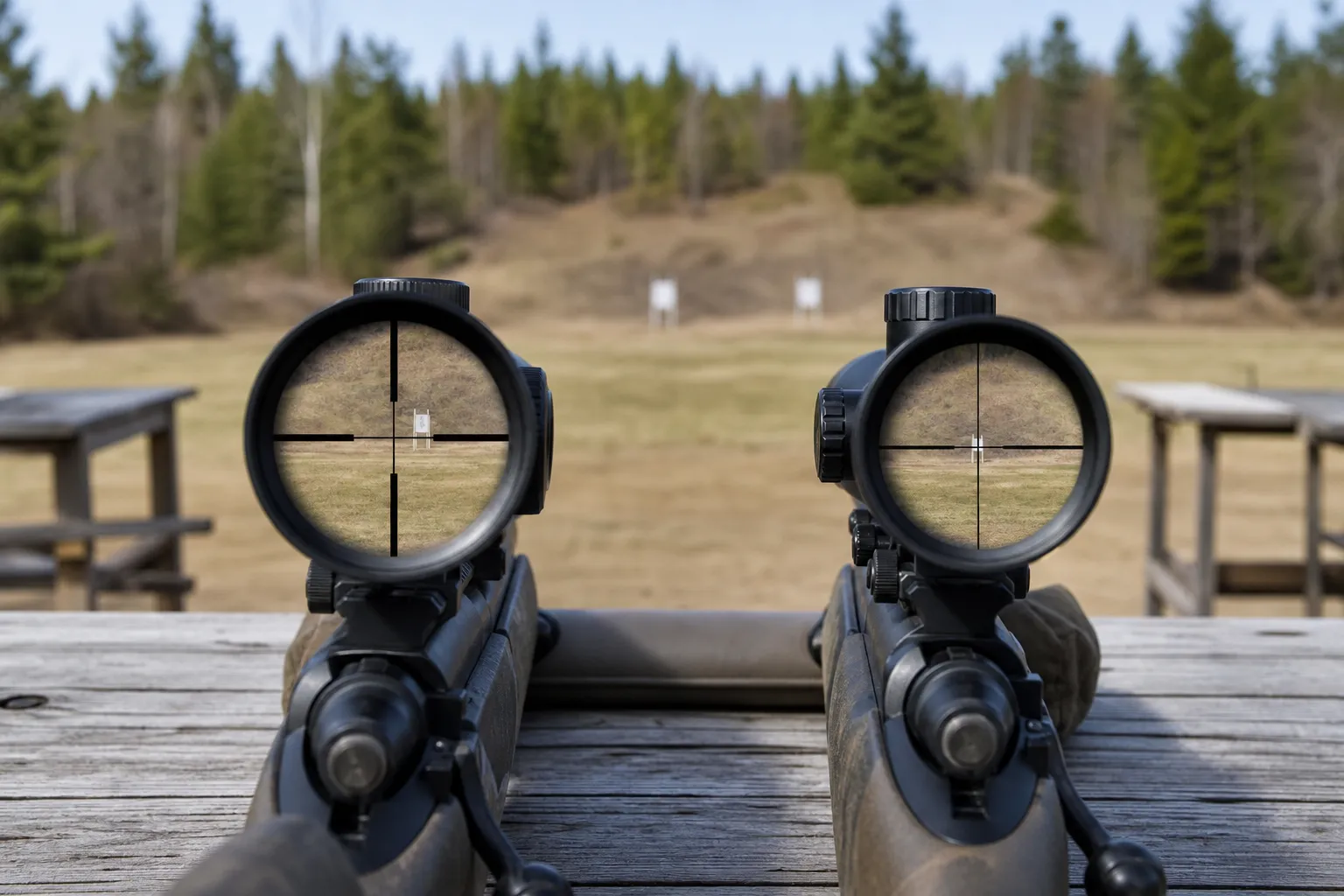
In an FFP scope, the reticle and target image scale together. Vortex says the image and reticle get larger and smaller together while maintaining the same scale to one another, regardless of magnification. ZEISS describes the reticle and image as a single unit, with both increasing or decreasing in size.
In an SFP scope, the target image changes size, but the reticle does not appear to change size. Vortex says the image will grow and shrink with magnification, but the reticle will not.
This matters because reticle marks cover an angular amount of the target. Manufacturers often call that subtension. If a scope has holdover, milling, Mil, or MOA marks, focal plane determines whether those marks keep the same intended angular value as you change power.
Holdovers, wind references, and ranging
For reticle holds and measurements, FFP is the more flexible design. Leupold says front focal plane reticle measurements can be used accurately at any magnification setting. Leupold also says Mil or MOA lines on an FFP reticle are accurate throughout the entire magnification range, which allows accurate holdovers at any point in that range.
For SFP, the reticle may look simpler because it stays the same apparent size, but the measured marks do not stay valid at every magnification. Leupold says SFP off-center reticle measurements, including holdovers or milling marks, require a specific magnification. Leupold also says rear focal plane subtensions are accurate at one specific magnification, typically maximum magnification. Its glossary adds that, on Leupold riflescopes, this is normally the highest power.
For range estimation, the same focal-plane difference applies. ZEISS says FFP subtension is the same at all magnification levels, which helps estimate range.
With SFP, confirm the calibrated setting in the manual. ZEISS says the subtension of second focal plane reticles depends on the magnification setting.
Pros and cons for hunting
For many ordinary hunting situations, SFP remains a common recommendation from optics makers. Vortex says most hunters will be better served by a second focal plane reticle. Leupold says a rear focal plane optic can offer a bold, usable reticle at low magnifications for thick country or close-range target engagement.
The main hunting advantage of SFP is that the reticle appearance is consistent. Vortex says the reticle does not grow or shrink as the image changes size. For a hunter who wants a reticle that looks familiar at every power, that is the appeal.
FFP can be useful when the distance or situation changes quickly. Vortex says FFP can outperform SFP for hunters when game appears suddenly at distance and there is no time to dial turrets.
The FFP tradeoff is reticle visibility at low magnification. Leupold says the downside of FFP is that the reticle will not be as visible on low magnifications. That matters most when a hunter values a bold, easy-to-see reticle at the lower end of the magnification range.
Pros and cons for long range and precision shooting
FFP is often favored when the shooter wants reticle measurements to remain valid across the magnification range. Leupold says FFP Mil or MOA reticle lines are accurate throughout the magnification range.
That makes FFP straightforward when the reticle is being used as a measured reference. If the shooter changes magnification, the relationship between the reticle scale and the viewed image stays the same, according to Vortex and ZEISS.
SFP also has a long-range advantage in some designs. ZEISS says an SFP reticle remains constantly fine with minimal target coverage, and calls that a key benefit on long-distance shots at high magnification. The tradeoff is that ZEISS also says SFP reticle subtension depends on the magnification setting.
The practical choice depends on what you need the reticle to do. If you want measured holds available at any power, the cited makers describe FFP as the simpler match. If you value a reticle that stays visually fine and consistent, SFP may fit better, as long as you know the designated magnification for any measured reticle use.
How to tell which one a scope is
Start with the scope maker’s product page, specification table, reticle sheet, or manual. Look for terms such as FFP, SFP, front focal plane, rear focal plane, first focal plane, or second focal plane. Leupold uses front focal plane and rear focal plane in its technical material, while other makers also use FFP and SFP.
For any SFP scope with measured reticle marks, do not assume the correct power setting. Leupold says rear focal plane measurements require a specific magnification and that, on Leupold riflescopes, this is normally the highest power. The exact setting should come from the manual for that exact scope.
Which should you choose?
Choose FFP if your priority is using reticle measurements across the magnification range. The strongest reason is consistency: Leupold says FFP reticle measurements can be used accurately at any magnification, and Vortex says the reticle and image maintain the same scale to one another.
Choose SFP if your priority is a reticle that looks the same at all magnifications. Vortex says the SFP reticle does not grow or shrink with the image. ZEISS also notes the benefit of a fine reticle with minimal target coverage at high magnification.
For hunting, Vortex says most hunters will be better served by SFP, while also noting that FFP can outperform SFP when game appears suddenly at distance and there is no time to dial turrets.
Before relying on reticle marks, check the official manual for your exact scope. Confirm whether the reticle is FFP or SFP, confirm the designated magnification for SFP reticle measurements, and confirm how the maker describes that reticle’s intended use.
Frequently asked questions
What is the main difference between first focal plane and second focal plane scopes?
In an FFP scope, the reticle and image appear to grow or shrink together as magnification changes. In an SFP scope, the image changes size but the reticle appears the same size.
Are FFP reticle marks accurate at every magnification?
Leupold says front focal plane reticle measurements can be used accurately at any magnification setting.
Do SFP scopes work for holdovers and ranging?
Yes, but the measured reticle marks generally require a specific magnification. Leupold says SFP holdovers or milling marks require a specific magnification, and its scopes are normally calibrated at the highest power.
Which is better for hunting, FFP or SFP?
Vortex says most hunters will be better served by a second focal plane reticle. Vortex also says FFP can outperform SFP when game appears suddenly at distance and there is no time to dial turrets.
Why do some long-range shooters choose FFP?
FFP keeps measured reticle marks usable across the magnification range.
How can I tell if my scope is FFP or SFP?
Check the product page, specification table, reticle sheet, or manual.
Sources
- Glossary, LeupoldOfficial source. Accessed October 20, 2026.
- Front Focal Plane Optics vs. Rear Focal Plane Optics, LeupoldOfficial source. Accessed October 20, 2026.
- Tactical Milling Reticle Manual, LeupoldOfficial source. Accessed October 20, 2026.
- FAQS, Vortex OpticsOfficial source. Accessed October 20, 2026.
- What’s the Best Riflescope Reticle for Hunting?, Vortex OpticsOfficial source. Accessed October 20, 2026.
- How to choose the right riflescope for long-range hunting?, ZEISS HuntingOfficial source. Accessed October 20, 2026.
- Elite Tactical Hunting Riflescope Manual, BushnellOfficial source. Accessed October 20, 2026.
- Focal Plane, SIG SauerOfficial source. Accessed October 20, 2026.
- Front Focal Plane Riflescopes, SIG SauerOfficial source. Accessed October 20, 2026.