MOA vs MIL: Scope Adjustments Explained
MOA and MIL are two angular systems used for scope reticles and turret adjustments. Neither is automatically more accurate, so the best choice is usually the one that matches your reticle, turrets, ballistic data, and shooting partners.
By RaiS. Reviewed by RaiS. Published . 5 min read.
Research and drafting were assisted by AI. RaiS checked the facts against the sources below and approved this page.
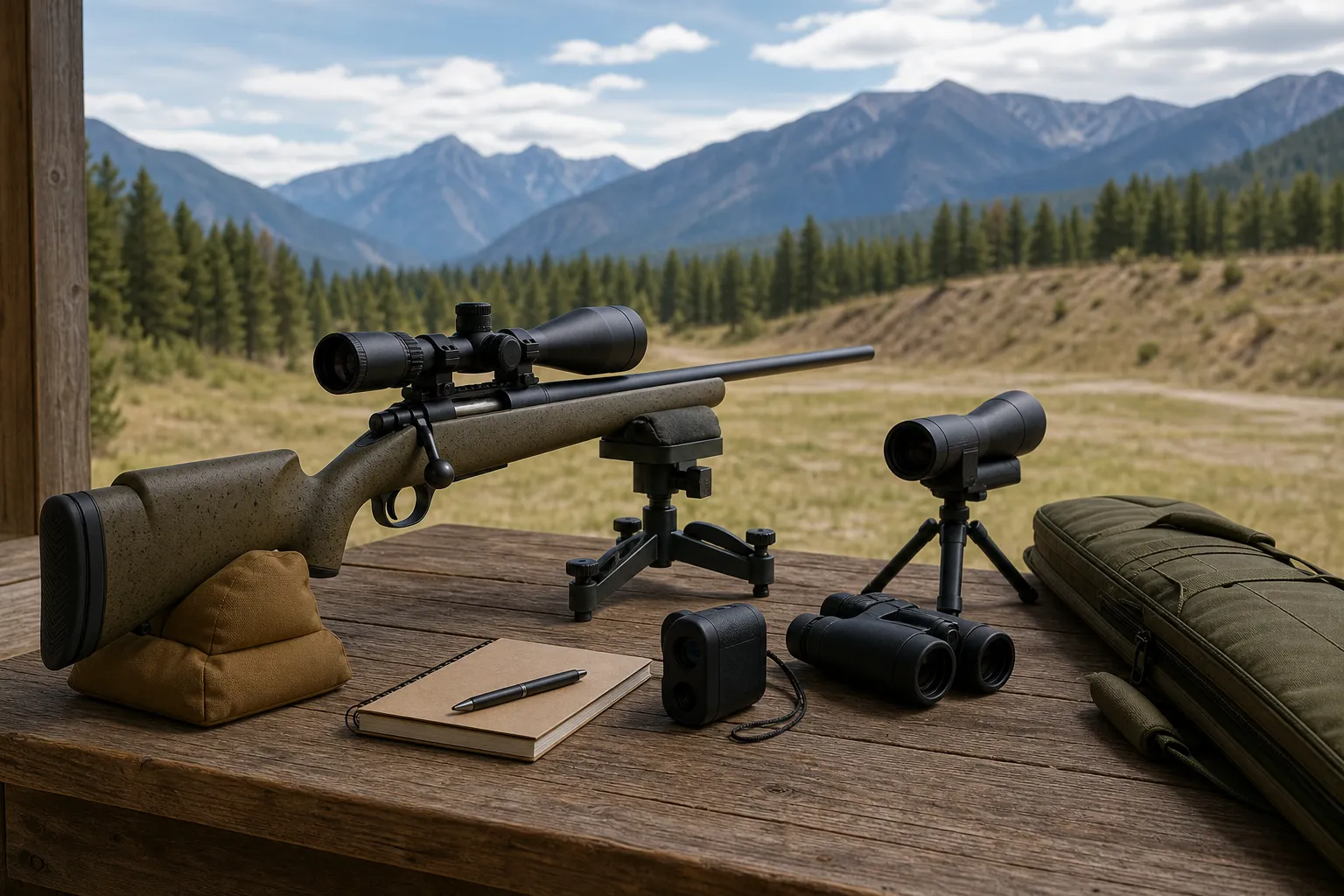
MOA and MIL are angular units used in rifle scope reticles and turret adjustments, not fixed inch or centimeter measurements. MOA means minute of angle, MIL means milliradian or MRAD, and optics makers describe both as ways to measure an angle through the scope rather than a straight line on the target. Neither system is inherently more accurate, according to Athlon Optics, and Leupold says both work equally well for most applications. The practical rule is simple: use the system you can read, dial, and communicate consistently. Athlon, Vortex, Leupold
Quick comparison
MOA and MIL both describe angle. The inch or centimeter value grows as distance grows, because the same angle covers more target area farther away.
| Feature | MOA | MIL, also called MRAD | |, -|, -:|, -:| | Full name | Minute of angle | Milliradian | | Basic definition | 1/60 of one degree | 1/1000 of the distance to the target | | At 100 yards | 1.047 inches | Check your scope manual | | At 100 meters | Not listed in the ledger | Check your scope manual | | Common turret click | 0.25 MOA | Check your scope manual | | Practical conversion | 1 MOA is about 0.291 MIL | 1 MIL is about 3.438 MOA |
Sources: Athlon and Leupold. Athlon, Leupold glossary
What MOA means
MOA stands for minute of angle. One MOA is 1/60 of one degree, according to Athlon. Leupold lists 1 MOA as 1.047 inches at 100 yards. Athlon, Leupold glossary
That exact value is why shooters often say that 1 MOA is “about 1 inch at 100 yards.” Leupold describes MOA as roughly 1 inch at 100 yards and 3 inches at 300 yards, which is a useful field approximation. Leupold glossary
For more exact work, the difference matters more as distance increases. Athlon gives this formula for MOA span in inches: MOA times 1.0472 times distance in yards divided by 100. Athlon
| Distance | 1 MOA spans about | |, -:|, -:| | 100 yards | 1.047 inches | | 200 yards | 2.094 inches | | 300 yards | 3.141 inches | | 500 yards | 5.236 inches | | 1,000 yards | 10.472 inches |
These values follow Athlon’s MOA formula. Athlon
What MIL or MRAD means
MIL is short for milliradian, also written MRAD in modern scope terminology. Athlon states that MIL and MRAD refer to milliradians. Athlon
Leupold defines one milliradian as 1/1000 of the distance to the target. Leupold gives examples of 1 MIL equaling 36 inches at 1,000 yards or 1 meter at 1,000 meters. Leupold glossary
| Distance | 1 MIL spans about | |, -:|, -:| | 1,000 yards | 36 inches | | 1,000 meters | 1 meter |
Athlon gives this formula for MIL span in inches: MIL times 3.6 times distance in yards divided by 100. Athlon gives this formula for MIL span in centimeters: MIL times distance in meters divided by 10. Athlon
Typical click values
Many MOA scopes use 0.25 MOA clicks. Athlon lists 0.25 MOA as a common MOA turret click value. Using Leupold’s 1.047 inch value, 0.25 MOA is about 0.262 inch at 100 yards. Athlon, Leupold glossary
Click values are not universal values. Check the turret markings and the manual for the exact scope.
Reticles, turrets, and focal plane
Matching reticle and turret units keeps corrections simple. Athlon says matching reticle and turret units lets the shooter measure an error through the scope and dial that correction directly. Athlon
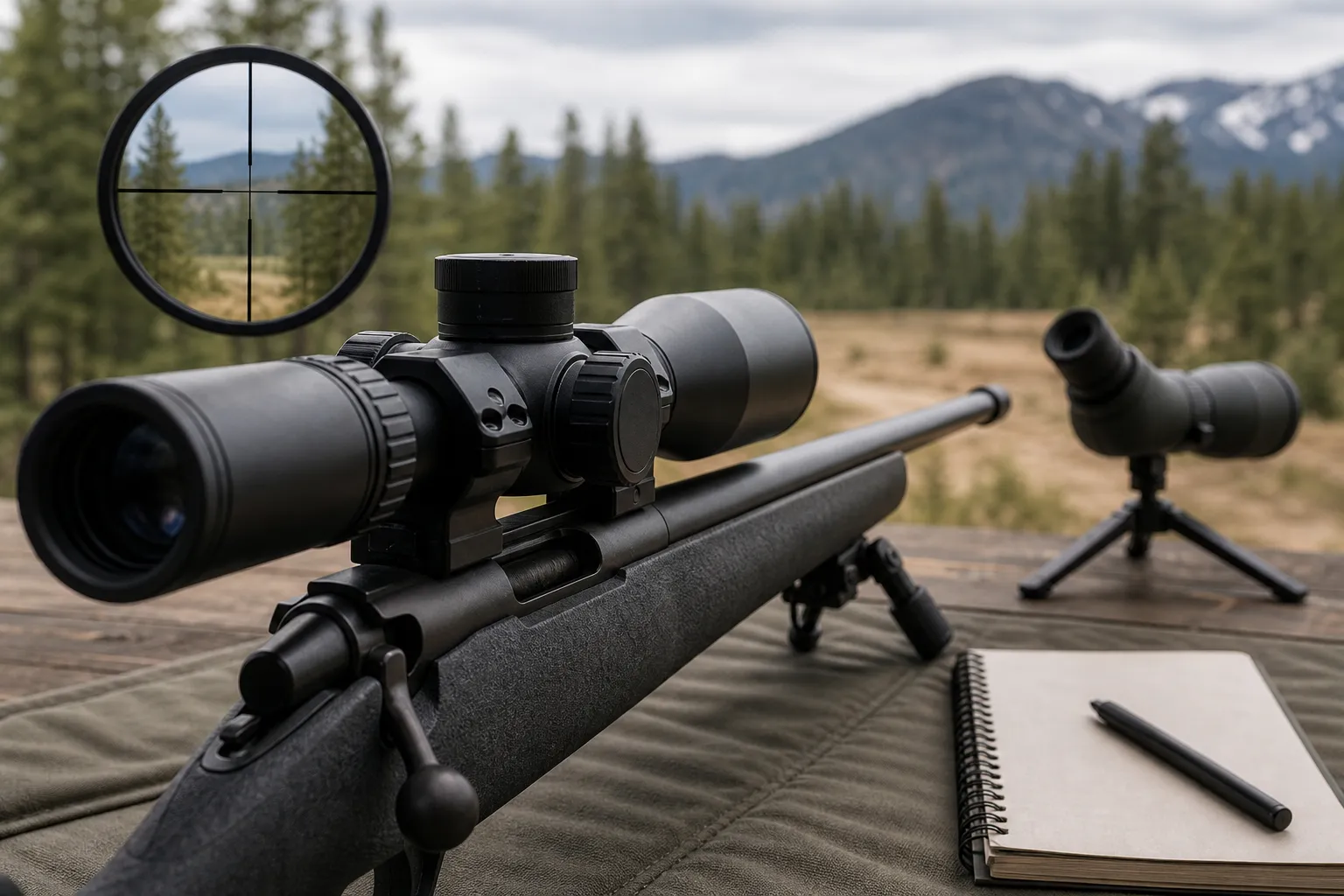
For example, if the reticle shows the group is 2 MOA low, an MOA turret can be dialed 2 MOA up. If the reticle shows the group is 0.7 MIL low, a MIL turret can be dialed 0.7 MIL up. Those examples come from Athlon. Athlon
A reticle can also be used to hold instead of dialing. Athlon says a correction can be applied with the reticle instead of dialing the turret. Athlon also warns not to apply the same elevation correction twice by both dialing and holding the full amount. Athlon
Focal plane affects when reticle marks are true. Leupold says that in a front focal plane scope, MIL or MOA reticle lines are accurate throughout the magnification range. Leupold front focal plane article
Leupold says rear focal plane reticle subtensions are accurate on one specific magnification, typically maximum magnification. Leupold front focal plane article
Worked examples
MOA correction example
Athlon gives a matched MOA example: if the group measures 2 MOA low, dial 2 MOA up. On a 0.25 MOA turret, that is 8 clicks. Athlon
MIL correction example
Athlon gives a matched MIL example: if the group measures 0.7 MIL low, dial 0.7 MIL up. On a turret with 0.1 MIL clicks, that is 7 clicks. Athlon
Check the manual for the exact click value on your scope.
Mixed unit example
A mixed system can work, but Athlon says it adds conversion. Athlon lists 1 MIL as about 3.438 MOA and 1 MOA as about 0.291 MIL. Athlon
Using that conversion, 0.7 MIL is about 2.41 MOA. Athlon notes that converted values may fall between turret click increments, so the shooter must round to an available setting and verify. Athlon
Holdover example
A reticle can be used to hold instead of dialing. Athlon’s warning applies here: do not dial the full correction and also hold the full correction, because that applies the same elevation correction twice. Athlon
Which should you choose?
Choose MOA if you already use MOA confidently, already own MOA scopes, or prefer working in yards and inches. Choose MIL if your ballistic data, shooting partners, instructor, or spotter uses MIL. Athlon recommends starting with the system the shooter already uses confidently, considering partners or instructors, and matching reticle, turrets, and ballistic app units. Athlon
Do not choose based on the idea that one unit automatically reaches farther. Athlon says the measurement unit does not determine range, and that usable adjustment, rifle and ammunition performance, conditions, and shooter ability matter more. Athlon
Also remember that advertised elevation travel may not be the amount you can dial upward after zeroing. Leupold says internal adjustment range is usually listed as total travel, so a scope with 100 MOA elevation adjustment has about 50 MOA up and down from mechanical center. Athlon says advertised elevation travel is usually total adjustment range, not the amount you can dial upward after zeroing. Leupold glossary, Athlon
Bottom line
MOA and MIL are different angular languages for doing the same job. Pick one system, match the reticle and turrets when possible, keep your ballistic data in the same unit, and confirm the actual clicks and subtensions in your scope manual before relying on them.
Frequently asked questions
Is MOA or MIL more accurate?
Neither angular system is inherently more accurate, according to Athlon. Leupold also says both MOA and MIL work equally well for most applications.
How many inches is 1 MOA at 100 yards?
Leupold lists 1 MOA as 1.047 inches at 100 yards. It is often treated as roughly 1 inch at 100 yards as a field approximation.
How many inches is 1 MIL at 100 yards?
Leupold lists 1 MIL as 36 inches at 1,000 yards. MIL values scale with distance, so check your scope manual or ballistic data for the distance you are using.
What are common scope click values?
Athlon lists 0.25 MOA as a common MOA turret click value. Click values vary, so check your own turret markings and manual.
Should my reticle and turrets match?
Yes, when possible. Athlon says matching reticle and turret units lets the shooter measure an error through the scope and dial that correction directly.
Do first focal plane reticles change the MOA or MIL values?
Leupold says front focal plane MIL or MOA reticle lines are accurate throughout the magnification range. Leupold says rear focal plane subtensions are accurate on one specific magnification, typically maximum magnification.
Sources
- MOA vs MIL: Which Rifle Scope System Should You Choose?, Athlon OpticsOfficial source. Accessed October 20, 2026.
- Glossary, LeupoldOfficial source. Accessed October 20, 2026.
- Understanding The Numbers on Your Riflescope, LeupoldOfficial source. Accessed October 20, 2026.
- Front Focal Plane Optics vs. Rear Focal Plane Optics, LeupoldOfficial source. Accessed October 20, 2026.
- FAQs, Vortex OpticsOfficial source. Accessed October 20, 2026.
- SHV Riflescope Owner’s Manual, Nightforce OpticsOfficial source. Accessed October 20, 2026.
- SLx 4 to 16x44 First Focal Plane Scope Manual, Primary Arms OpticsOfficial source. Accessed October 20, 2026.
- First Focal Plane Reticle Manual, ACSS Griffin MIL, Primary Arms OpticsOfficial source. Accessed October 20, 2026.
- First Focal Plane Reticle Manual, ARC 2 MOA, Primary Arms OpticsOfficial source. Accessed October 20, 2026.
- Second Focal Plane ACSS Nova Reticle Manual, Primary Arms OpticsOfficial source. Accessed October 20, 2026.
- AR Optics All Riflescopes Owner’s Guide, BushnellOfficial source. Accessed October 20, 2026.
- R3 Riflescope Owner’s Guide, BushnellOfficial source. Accessed October 20, 2026.