What the Numbers on Binoculars Mean
The numbers on binoculars tell you magnification and objective lens diameter. For most handheld hunting and wildlife watching, 8x42 and 10x42 are the first sizes to compare because they balance reach, brightness, field of view, and steadiness.
By RaiS. Reviewed by RaiS. Published . 7 min read.
Research and drafting were assisted by AI. RaiS checked the facts against the sources below and approved this page.
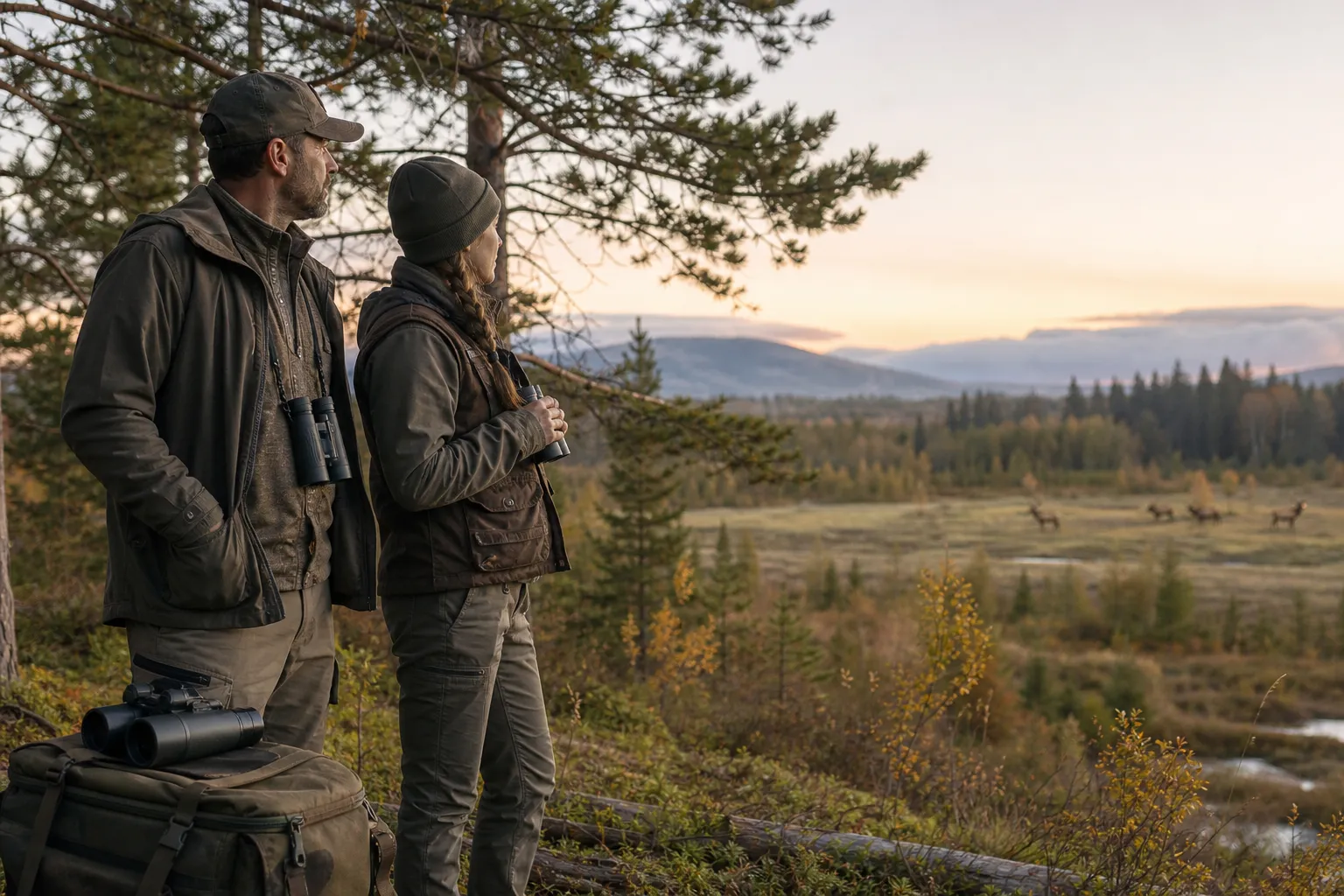
The numbers on binoculars, such as 8x42 or 10x50, mean magnification first and objective lens diameter second. Vortex explains that the first number is the binocular’s magnification, so 10x binoculars magnify the image 10 times, and the second number is the objective lens diameter in millimeters. In plain terms, 8x42 means 8 power magnification with 42 mm front lenses, while 10x42 means 10 power magnification with the same 42 mm objective size. Vortex
What 8x42, 10x42, and 10x50 mean
The first number is magnification. Nikon defines magnification as the ratio of the apparent size of an object compared with what a viewer sees with the naked eye. Nikon
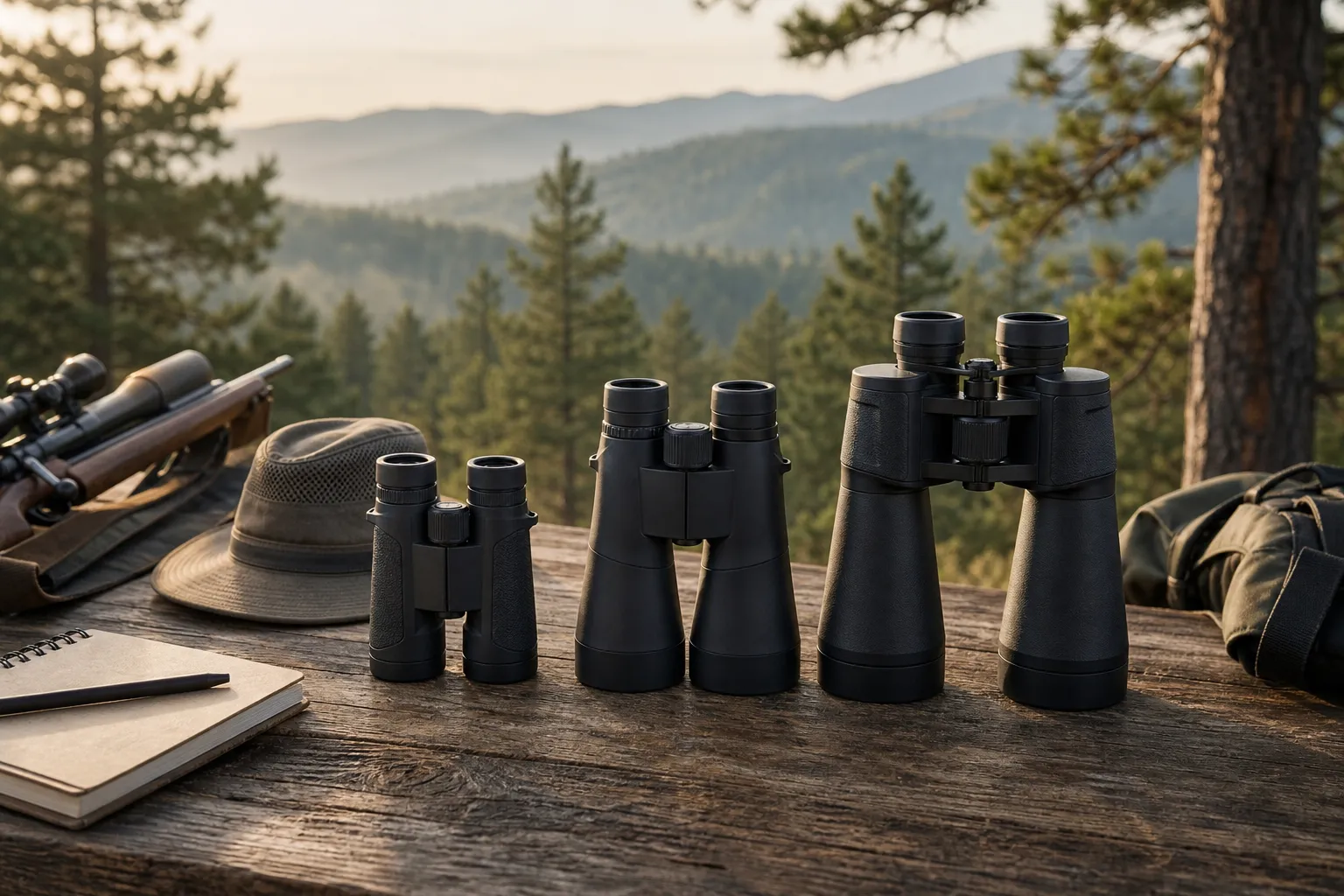
The second number is the objective lens diameter in millimeters. The objective lenses are the front lenses. In a 10x50 binocular, the “50” is the objective lens diameter in millimeters, according to Vortex. Vortex
So the basic code is:
| Marking | Meaning | |, -|, -| | 8x42 | 8x magnification, 42 mm objective lenses | | 10x42 | 10x magnification, 42 mm objective lenses | | 10x50 | 10x magnification, 50 mm objective lenses |
Objective size matters because, when magnification is the same, Nikon says a larger objective diameter provides greater light gathering power, higher resolution, and a brighter image. Nikon also notes the tradeoff: larger objective lenses increase size and weight. Nikon
Magnification: more reach, but more tradeoffs
Higher magnification makes the subject appear larger. Vortex gives the simple example that 10x binoculars magnify the image 10 times. Vortex
That does not mean more power is always better. Nikon says higher magnification also results in a narrower field of view and lower brightness. Nikon also recommends binoculars with magnifications up to 12x for general use. Nikon
For many hunters and wildlife watchers, 8x to 10x is the beginner friendly handheld range to compare first. Nikon’s handbook recommends 8x to 10x for woods and forests, and 8x to 12x for lakes, marshes, and tidelands. Nikon handbook PDF
Vortex gives a similar field use example. It describes 8x42 as ideal for thick timber hunting because of wider field of view, brighter image, and reduced shakiness from hand holding. Vortex also describes 10x42 as a good middle ground overall, while noting that situations vary. Vortex
Objective diameter and low light
The objective diameter is the second number, such as 42 in 8x42 or 50 in 10x50. If magnification is the same, a larger objective can provide a brighter image, higher resolution, and greater light gathering power, according to Nikon. Nikon
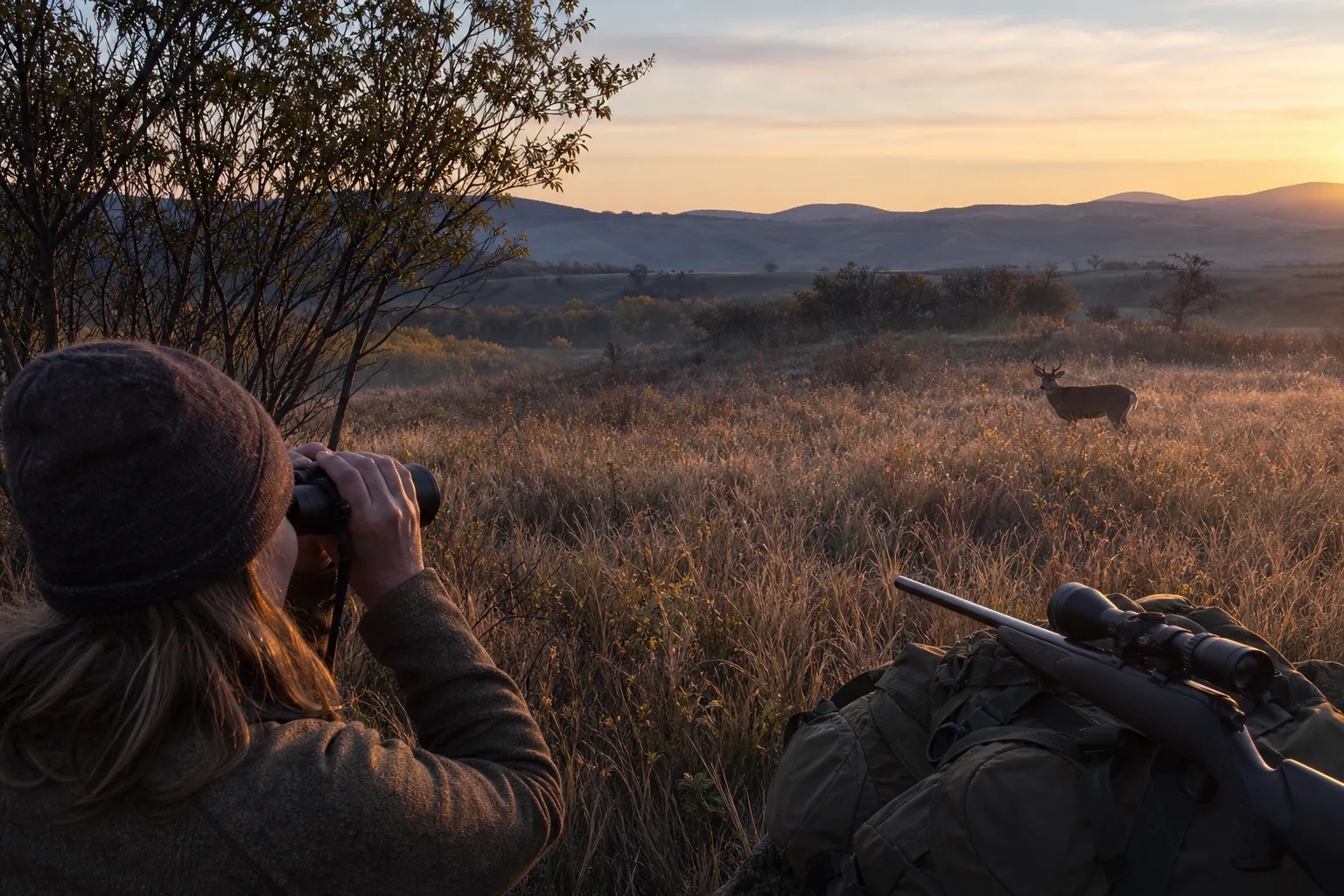
That is why 42 mm and 50 mm objective sizes are common comparisons for hunting and wildlife watching. A 42 mm binocular can be easier to keep in the general handheld category, while a 50 mm objective can offer more objective size at the cost of more size and weight. The exact balance depends on the binocular’s magnification and design.
Objective diameter is not the whole low light story. Vortex says optical design and the quality of lenses and coatings are most important for low light performance. Vortex
Exit pupil: the quick brightness number
Exit pupil is the objective lens diameter divided by magnification. Nikon gives the formula as: exit pupil equals effective diameter of the objective lens divided by magnification. Nikon
Examples:
| Binocular | Exit pupil calculation | Exit pupil | |, -|, -:|, -:| | 8x42 | 42 divided by 8 | about 5.3 mm | | 10x42 | 42 divided by 10 | about 4.2 mm | | 10x50 | 50 divided by 10 | 5.0 mm |
Nikon’s handbook gives the 8x42 example as 42 divided by 8 equals 5.3. Nikon handbook PDF
Exit pupil matters because Nikon says the bigger the diameter of the exit pupil is, the brighter the viewfield image will be. Nikon also lists human eye pupil diameter as about 2 mm in bright light and up to about 7 mm in total darkness. Nikon, Nikon handbook PDF
ZEISS gives the same exit pupil formula as lens diameter divided by magnification. ZEISS also notes that a larger exit pupil can give the observer more freedom of movement when the binoculars shift in the hands. ZEISS
Field of view: how much area you see
Real field of view is the angle of the visible field seen without moving the binoculars, according to Nikon. Nikon also defines field of view at 1,000 meters as the width of the visible area at that distance. Nikon
A wider field of view helps when you are trying to find or follow a moving subject. Nikon says a wider field of view is advantageous for locating fast moving wild birds within the viewfield. Nikon
ZEISS says field of view generally decreases as magnification increases. ZEISS also says field of view cannot be calculated from the type designation alone, such as 10x42. ZEISS
That means two 10x42 binoculars can have different fields of view. To compare them, look at the maker’s field of view specification, not only the 10x42 marking.
Eye relief: especially important with glasses
Eye relief is the distance from the outer surface of the eyepiece lens to the eyepoint, according to Nikon. Proper eye relief lets you obtain the whole field of view without vignetting. Nikon
Vignetting means you do not see the full view. Nikon says eyeglass wearers can use high eyepoint binoculars with eye relief of 15 mm or longer without removing glasses, while still obtaining a field of view with no vignetting. Nikon
If you wear glasses while glassing, eye relief should be one of the first specifications you check.
Close focus: useful for nearby details
Close focusing distance is the nearest point the binocular can focus, according to Nikon. Nikon
For hunting and general wildlife watching, close focus may not be the first number you compare. It becomes more important when you also want to view nearby subjects. Nikon notes that a shorter close focus distance lets you see more details on close subjects such as art, plants, and insects. Nikon
Twilight factor: useful, but limited
ZEISS defines twilight factor as the square root of lens diameter multiplied by magnification. ZEISS
Using that formula:
| Binocular | Twilight factor formula | Result | |, -|, -:|, -:| | 8x42 | square root of 8 times 42 | about 18.3 | | 10x42 | square root of 10 times 42 | about 20.5 | | 10x50 | square root of 10 times 50 | about 22.4 |
Do not treat twilight factor as a complete low light score. ZEISS cautions that twilight factor is only a mathematical parameter and does not include image quality, contrast, transmission, or color rendition. ZEISS
ZEISS also says a large exit pupil is decisive for twilight use, and that anything with an exit pupil smaller than 4 mm is unsuitable in waning light. ZEISS
Which binocular numbers suit hunting and wildlife watching?
Start by comparing 8x42 and 10x42. They are easy numbers to understand, and they show the main tradeoffs clearly.
Woods, forests, and thick timber
For woods and forests, Nikon recommends 8x to 10x. Vortex describes 8x42 as ideal for thick timber hunting because of wider field of view, brighter image, and reduced shakiness from hand holding. Nikon handbook PDF, Vortex
An 8x42 gives about a 5.3 mm exit pupil. It also fits the lower magnification side of the 8x to 10x range, where field of view and steadiness are often easier to manage.
General all around use
Vortex describes 10x42 as a good middle ground all around, while noting that situations vary. Vortex
A 10x42 gives more magnification than 8x42, with about a 4.2 mm exit pupil. It is a common comparison point when you want more apparent size than 8x but still want a handheld binocular.
Lakes, marshes, tidelands, and open country
Nikon recommends 8x to 12x for lakes, marshes, and tidelands in nature watching. Nikon handbook PDF
Vortex says open country hunters may choose larger binoculars such as 12x50 or 18x56, knowing they will be using them on a tripod. Vortex
That is the key point with higher magnification: more power can make sense when the viewing situation supports it, especially when a tripod is part of the plan.
Simple comparison checklist
When you compare binoculars, read the numbers in this order:
- Magnification: the first number, such as 8x or 10x.
- Objective diameter: the second number, such as 42 mm or 50 mm.
- Exit pupil: objective diameter divided by magnification.
- Field of view: check the maker’s spec, because it cannot be calculated from 8x42 or 10x42 alone.
- Eye relief: check especially if you wear glasses, with 15 mm or longer matching Nikon’s high eyepoint reference.
- Close focus: check if you want to view nearby plants, insects, or close wildlife.
- Twilight factor: use it only as a rough mathematical comparison, not a full low light rating.
Before buying or relying on any specific binocular, check the current manufacturer specification sheet for that exact model. The same basic numbers, such as 10x42, do not tell you field of view, eye relief, close focus, coatings, glass quality, or optical design.
Frequently asked questions
What do 8x42 binoculars mean?
8x42 means 8x magnification and 42 mm objective lenses. The first number is magnification, and the second number is objective lens diameter in millimeters, according to Vortex.
Are 8x42 or 10x42 binoculars better for hunting?
It depends on the setting. Vortex describes 8x42 as ideal for thick timber hunting because of wider field of view, brighter image, and reduced shakiness from hand holding. Vortex describes 10x42 as a good middle ground all around.
How do you calculate exit pupil?
Divide objective lens diameter by magnification. An 8x42 binocular has an exit pupil of about 5.3 mm, and a 10x42 binocular has an exit pupil of about 4.2 mm.
Can I calculate field of view from 10x42?
No. ZEISS says field of view cannot be calculated from the type designation alone, such as 10x42. Check the manufacturer’s field of view specification for the exact model.
What eye relief should I look for if I wear glasses?
Nikon says eyeglass wearers can use high eyepoint binoculars with eye relief of 15 mm or longer without removing glasses, while obtaining a field of view with no vignetting.
Is twilight factor the best low light rating?
No. ZEISS defines twilight factor as the square root of lens diameter times magnification, but cautions that it is only a mathematical parameter and does not include image quality, contrast, transmission, or color rendition.
Sources
- Magnification, Basic Information about Binoculars, Nikon ConsumerOfficial source. Accessed October 20, 2026.
- Choose by specifications, How to Choose Binoculars, Nikon ConsumerOfficial source. Accessed October 20, 2026.
- Glossary of binocular terms, Nikon ConsumerOfficial source. Accessed October 20, 2026.
- Nikon Binocular Handbook 2023, NikonOfficial source. Accessed October 20, 2026.
- Binoculars for Bird or Wildlife Watching, Nikon USAOfficial source. Accessed October 20, 2026.
- The viewing behavior of binoculars, ZEISS HuntingOfficial source. Accessed October 20, 2026.
- Twilight factor, ZEISS HuntingOfficial source. Accessed October 20, 2026.
- Field of View, ZEISS HuntingOfficial source. Accessed October 20, 2026.
- FAQs, Vortex OpticsOfficial source. Accessed October 20, 2026.
- How to Find a Great Binocular on a Budget, Vortex OpticsOfficial source. Accessed October 20, 2026.
- What Makes Great Low-Light Performance, Vortex OpticsOfficial source. Accessed October 20, 2026.
- Understanding the Numbers on Your Binoculars, LeupoldOfficial source. Accessed October 20, 2026.