Controlled-Round Feed vs Push-Feed Rifles: What Is the Difference?
Controlled-round feed and push-feed describe when a bolt-action rifle’s extractor takes control of the cartridge. Controlled-round feed grips the rim as the round leaves the magazine, while push-feed pushes the round into the chamber before the extractor engages it.
By RaiS. Reviewed by RaiS. Published . 8 min read.
Research and drafting were assisted by AI. RaiS checked the facts against the sources below and approved this page.
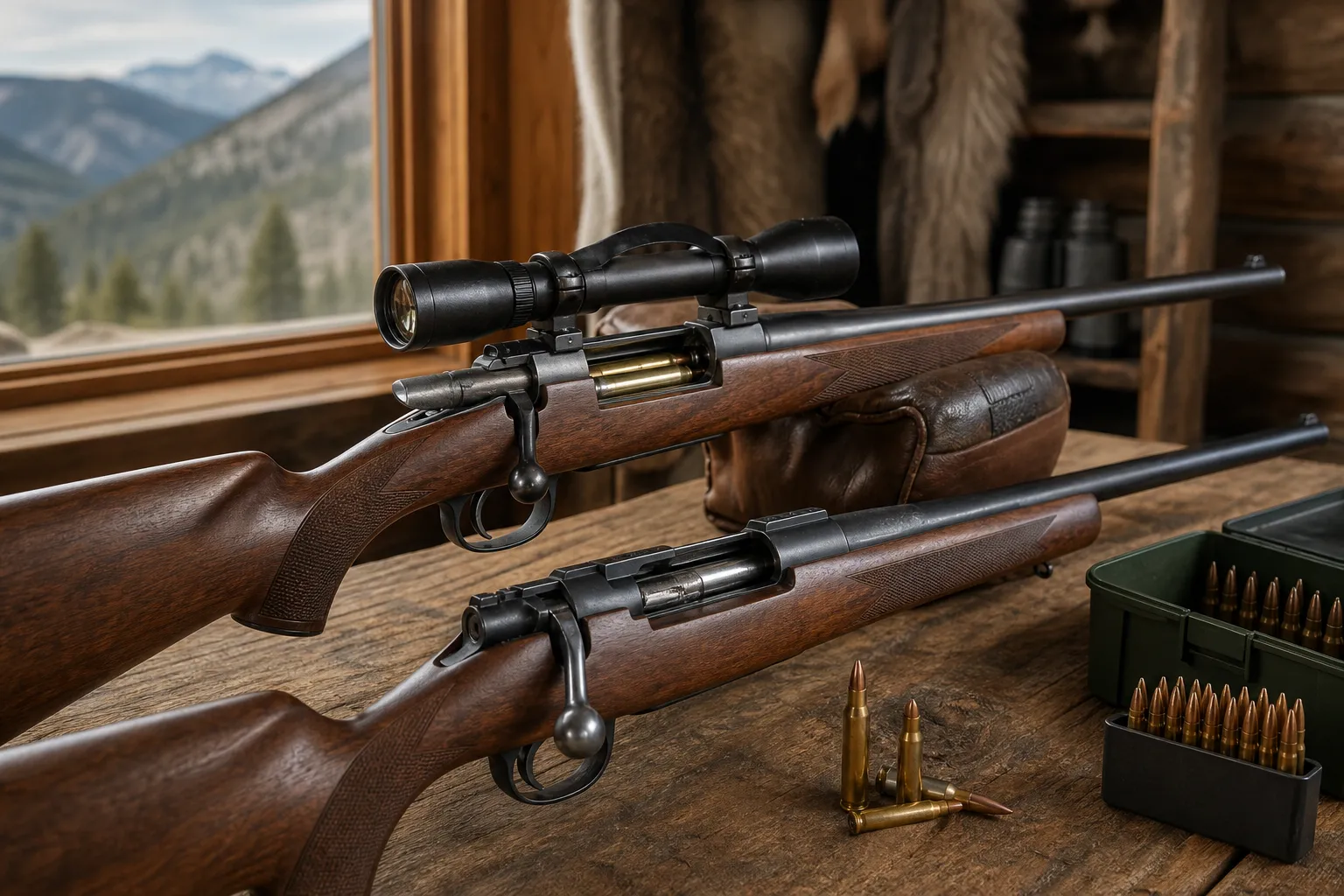
Controlled-round feed and push-feed are two ways a bolt-action rifle handles a cartridge during feeding, extraction and ejection. In a controlled-round feed system, the extractor grips the cartridge rim as the cartridge leaves the magazine and controls it into the chamber. In a push-feed system, the bolt pushes the cartridge forward into the chamber, and the extractor engages the case rim or groove after the round is seated or as the bolt closes.
The difference is mechanical, not a simple ranking. Both systems have been used in well-known hunting rifles. The useful question for a shopper is not “which name sounds better,” but “when does the extractor control the cartridge, and how does this particular rifle extract and eject?”
The basic terms: feeding, extraction and ejection
SAAMI defines extraction as withdrawing a cartridge or fired case from the chamber. SAAMI defines an extractor as the device that withdraws the cartridge or fired case from the chamber.
SAAMI defines ejection as expelling a cartridge or fired case from a firearm. SAAMI defines an ejector as the device that expels cartridges or fired cases from a firearm.
Those definitions matter because “controlled-round feed” and “push-feed” are mostly about the handoff between feeding and extraction. The cartridge starts in the magazine, moves toward the chamber, is fired or removed, then the case is extracted and ejected.
How a bolt-action cycle fits in
Winchester describes the Model 70 as a bolt-action rifle that loads by drawing the bolt rearward, sliding it forward and rotating the bolt handle down. Winchester says this process takes a cartridge from the magazine and loads it into the chamber for firing.
That same broad cycle applies to both controlled-round feed and push-feed rifles. The difference is what happens to the cartridge rim while the bolt moves forward.
In controlled-round feed, the key event happens early. Winchester’s FAQ defines a Model 70 controlled-round feed bolt as one that grips the cartridge rim as it leaves the magazine. Winchester’s Model 70 manual says the controlled-round-feed bolt uses a claw extractor that secures about one quarter of the cartridge base and controls the cartridge as it enters the chamber.
In push-feed, the key event happens later. Winchester’s Model 70 manual describes a push-feed design as using a recessed bolt face and plunger-style ejector. Winchester says that design pushes the cartridge forward until it is seated in the chamber, then snaps over the rim of the cartridge, ready for extraction.
Sako describes the Sako 90 in similar push-feed terms. Sako says the bolt pushes the cartridge forward, and once the round is in the chamber the extractor claw is pushed to the groove of the casing.
Controlled-round feed: what it means in practice
A controlled-round feed rifle is defined by early extractor control. As the bolt strips the cartridge from the magazine, the cartridge rim comes under the extractor and remains controlled as the round moves toward the chamber.
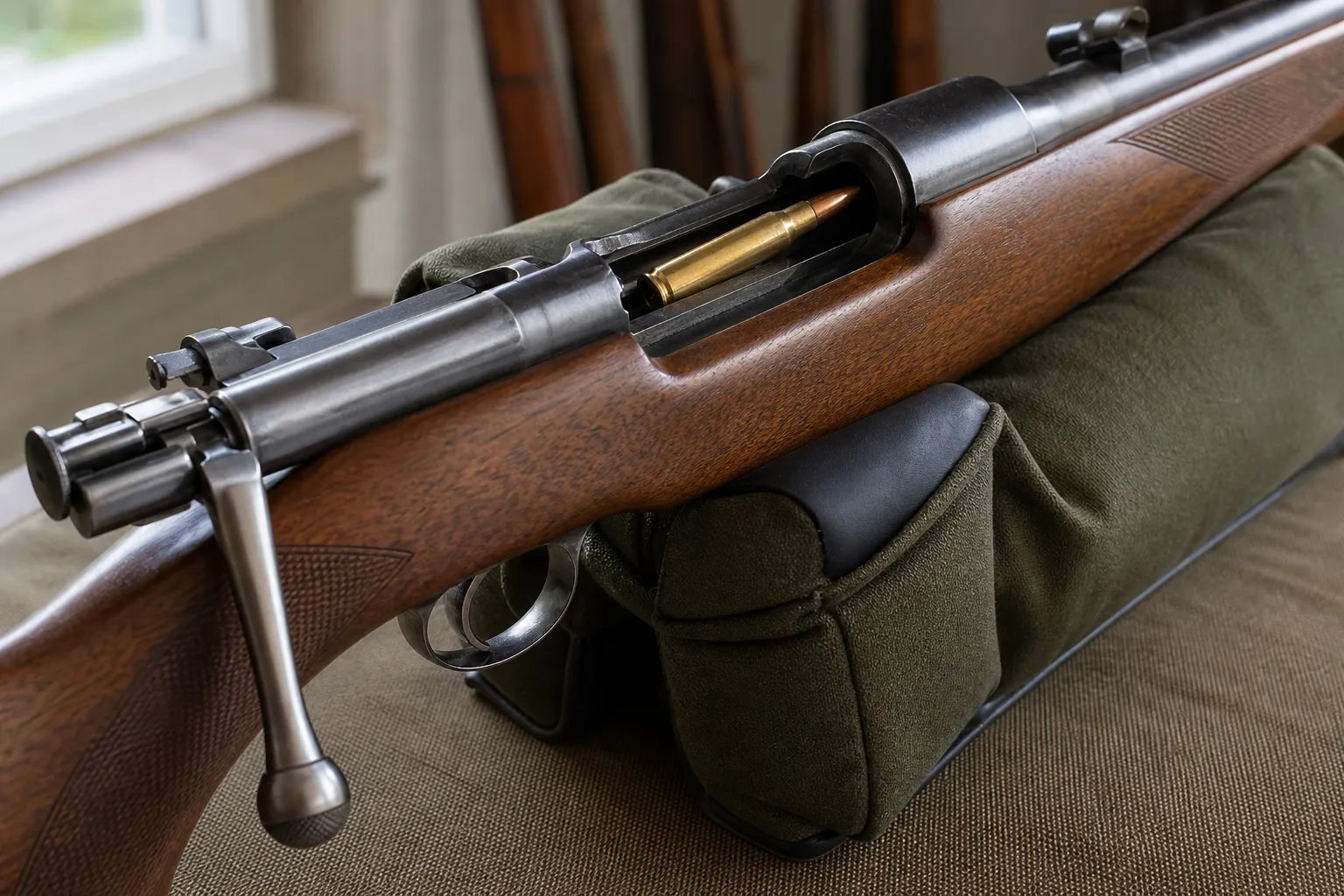
The classic example is the Mauser 98. American Rifleman describes the Mauser 98 as having a non-rotating claw extractor and a spring-loaded blade-type ejector. It explains the controlled-feed action this way: as a cartridge is stripped from the magazine, the rim slides under the extractor and is restrained by the bolt face.
American Rifleman states that the Mauser 98 was patented by Paul Mauser in 1895 and became the German military Gewehr 98 three years later. Paul Mauser’s 1892 U.S. patent described a shell extractor for bolt guns and said the improvement was intended to make extractors stronger and more reliable. The patent also described an extractor held from rotation relative to the cartridge or shell while the bolt itself could turn to lock and unlock.
Winchester’s Model 70 is another major controlled-round feed reference point, although its history needs care. Winchester says all current production Model 70 rifles use controlled-round feed. Winchester also warns in the Model 70 manual that 1992-present Model 70 rifles may have a controlled round feed bolt, a controlled round push feed bolt or a push feed bolt. NRA Museums says the post-1964 Model 70 used a newer push-feed bolt, and that the Model 70 Classic introduced during the mid-1990s marked a return to a controlled-feed large-claw extractor.
Other manufacturer examples include Ruger. Ruger says the M77 Hawkeye retained Mauser-type controlled feeding and a claw extractor from the M77 Mark II.
Push-feed: what it means in practice
A push-feed rifle is defined by later extractor engagement. The bolt face pushes the cartridge from the magazine toward the chamber. The extractor engages the case after chambering or as the bolt closes, depending on the design.
Winchester’s Model 70 manual gives a concise definition: a push-feed design with a recessed bolt face and plunger-style ejector pushes the cartridge forward until it is seated in the chamber, then snaps over the rim for extraction.
Sako’s description of the Sako 90 is another manufacturer example. Sako calls the Sako 90 a push-feed rifle and says the extractor claw is pushed to the casing groove once the round is in the chamber. Sako also says Sako 90 rifles use a double plunger arrangement for ejection.
The Remington Model 700 is a common push-feed reference, but the wording should be precise. American Rifleman describes the Model 700 extractor as horseshoe-shaped and contained in the counterbored bolt head. It also describes the Model 700 ejector as a spring-loaded plunger in the bolt head.
Single loading is one area where model-specific manuals matter. Browning’s X-Bolt manual says there are two methods to load a cartridge into the chamber of the X-Bolt rifle: loading through the ejection port and loading from the magazine. That example shows why loading procedure should be checked in the manual for the exact rifle, rather than assumed from the words “push-feed” or “controlled-round feed” alone.
Extraction and ejection differences
The extractor and ejector are related, but they are not the same part. SAAMI’s definitions keep the jobs separate: extraction withdraws the cartridge or fired case from the chamber, while ejection expels it from the firearm.
In a controlled-round feed design like the current Model 70 described by Winchester, the claw extractor has already taken control of the cartridge as it enters the chamber. Winchester says this design also allows the cartridge to be extracted even if it is not fully chambered.
Many classic Mauser-type controlled-feed rifles use a blade ejector. American Rifleman describes the Mauser 98 as having a spring-loaded blade-type ejector. Winchester’s Model 70 manual describes its Pre-64 type design as using a blade system that lets the shooter vary ejection force by how sharply the bolt is pulled rearward.
Many push-feed rifles use a plunger ejector in the bolt face. Winchester’s Model 70 manual describes push-feed operation with a plunger-style ejector. American Rifleman describes the Remington Model 700 ejector as a spring-loaded plunger in the bolt head. Sako says the Sako 90 uses a double plunger arrangement for ejection.
Side-by-side comparison
| Feature | Controlled-round feed | Push-feed |
|---|---|---|
| When the extractor takes control | As the cartridge leaves the magazine, according to Winchester’s Model 70 FAQ | After the round is seated in the chamber or as the bolt closes, according to Winchester and Sako descriptions |
| Common extractor example | Large claw extractor, as described by Winchester for the Model 70 and by American Rifleman for the Mauser 98 | Extractor in the bolt head or extractor claw engaging later, as described for the Remington Model 700 and Sako 90 |
| Common ejector example | Blade ejector in classic Mauser-type examples | Spring-loaded plunger ejector in many examples |
| Example rifles named in manufacturer or reference material | Mauser 98, current Winchester Model 70, Ruger M77 Hawkeye | Remington Model 700, Sako 90, Winchester XPR |
| Important caution | Older or transitional Model 70 rifles should be checked by exact model because Winchester says 1992-present rifles may have different bolt styles | Loading and extraction details still vary by rifle model, so the manual matters |
Hybrids and labels can overlap
The Winchester Model 70 name also shows why historical labels need dates and model details. Winchester says current production Model 70 rifles use controlled-round feed, while its own manual notes that 1992-present Model 70 rifles may have controlled round feed, controlled round push feed or push feed bolts. NRA Museums adds that the post-1964 Model 70 used a push-feed bolt, and that the Model 70 Classic returned to a controlled-feed large-claw extractor during the mid-1990s.
Common claims to treat carefully
Controlled-round feed is often discussed in connection with hunting and dangerous-game rifles.
Push-feed rifles also include respected hunting and sporting designs. Winchester identifies the XPR as a push-feed, three-lug bolt rifle. Sako describes the Sako 90 as a push-feed rifle with extractor engagement after the round is in the chamber and double-plunger ejection. Remington’s Model 700, a major sporting rifle design, uses the extractor and plunger-ejector arrangement described by American Rifleman.
The careful way to compare them is to ask specific mechanical questions:
- When does the extractor engage the case rim or groove?
- Does the rifle use a claw extractor, a bolt-head extractor or another design?
- Does it use a fixed or blade ejector, or a spring-loaded plunger ejector?
- What does the exact owner’s manual say about loading from the magazine and single loading?
- Is the rifle a current model, an older version or a transitional version with a different bolt style?
Bottom line for hunters and rifle shoppers
Controlled-round feed means the cartridge rim comes under extractor control as the round leaves the magazine. Push-feed means the bolt pushes the cartridge into the chamber first, and the extractor engages the case later, after chambering or as the bolt closes.
Both terms describe function, not a complete verdict on a rifle. For a fair comparison, look at the exact action, extractor, ejector, magazine system and manual for the rifle in front of you. If you are comparing older Model 70 rifles, confirm the specific bolt style, because Winchester’s own manual says different 1992-present Model 70 rifles may use different bolt types.
Frequently asked questions
What is controlled-round feed?
Controlled-round feed means the extractor grips the cartridge rim as the round leaves the magazine and controls it into the chamber. Winchester uses this definition for the Model 70 controlled-round-feed action.
What is push-feed?
Push-feed means the bolt pushes the cartridge into the chamber first, and the extractor engages the case rim or groove after the round is seated or as the bolt closes. Winchester and Sako both describe push-feed operation this way.
Is the Winchester Model 70 always controlled-round feed?
Winchester says all current production Model 70 rifles use controlled-round feed. For older rifles, check the exact model, because Winchester’s Model 70 manual says 1992-present rifles may have controlled round feed, controlled round push feed or push feed bolts.
Is the Remington Model 700 a push-feed design?
The Remington Model 700 is commonly discussed as a push-feed rifle. American Rifleman describes the Model 700 extractor as contained in the counterbored bolt head and the ejector as a spring-loaded plunger in the bolt head.
Do controlled-round feed rifles eject cases differently?
Many classic Mauser-type controlled-feed examples use a blade ejector. Winchester says the Model 70 Pre-64 type blade system lets the shooter vary ejection force by bolt speed.
Sources
- SAAMI Glossary, E, Sporting Arms and Ammunition Manufacturers’ InstituteOfficial source. Accessed November 1, 2026.
- Model 70 Owner’s Manual, Winchester Repeating ArmsOfficial source. Accessed November 1, 2026.
- Frequently Asked Questions, Winchester Repeating ArmsOfficial source. Accessed November 1, 2026.
- The Legendary SAKO Bolt Action Experience, SakoOfficial source. Accessed November 1, 2026.
- A Look Back at the Mauser Model 1898 Rifle, American Rifleman. Accessed November 1, 2026.
- A Study Of The Mauser 98, American Rifleman. Accessed November 1, 2026.
- US Patent No. 467,180, Shell-Extractor for Bolt Guns, United States Patent Office, via Google Patents storage. Accessed November 1, 2026.
- Model 700, Seven & 673 Instruction Book, RemingtonOfficial source. Accessed November 1, 2026.
- Exploded View: Remington Model 700, American Rifleman. Accessed November 1, 2026.
- Ruger Announces M77 Hawkeye Rifles, Sturm, Ruger & Co.Official source. Accessed November 1, 2026.
- CZ-USA 2020 Product Catalog, CZ-USAOfficial source. Accessed November 1, 2026.
- CZ-USA 2024 Product Catalog, CZ-USAOfficial source. Accessed November 1, 2026.
- Winchester Model 70 Featherweight Bolt Action Rifle, NRA National Firearms Museum. Accessed November 1, 2026.
- X-Bolt Rifle Owner’s Manual, BrowningOfficial source. Accessed November 1, 2026.