Bolt-action rifles: how they work and why hunters use them
A bolt-action rifle is a manually operated rifle action with a bolt in line with the bore. Hunters often consider bolt actions because manufacturer sources emphasize accuracy, strength, carrying weight, scope clearance and chambering variety, though those are design claims rather than universal guarantees.
Reviewed by RaiS. Published . 8 min read.
Research and drafting were assisted by AI. RaiS checked the facts against the sources below and approved this page.

A bolt-action rifle is a manually operated firearm action in which the breech closure is in line with the bore and is locked by bolt lugs engaging matching abutments, according to the National Institute of Justice glossary. In a typical turnbolt rifle, the shooter lifts the bolt handle, pulls the bolt rearward, pushes it forward and turns it down to lock the action, a motion described by NIJ and in the Browning X-Bolt owner’s manual. That simple manual cycle is one reason many hunters and rifle makers still focus on bolt actions for hunting rifles.
What “bolt action” means
NIJ defines a bolt action as an action with the breech closure in line with the bore, manually reciprocating and locked by bolt lugs and engaging abutments. In plain terms, the bolt moves back and forth in line with the barrel, and the shooter operates it by hand rather than relying on gas, recoil or a lever system. Source: NIJ glossary.
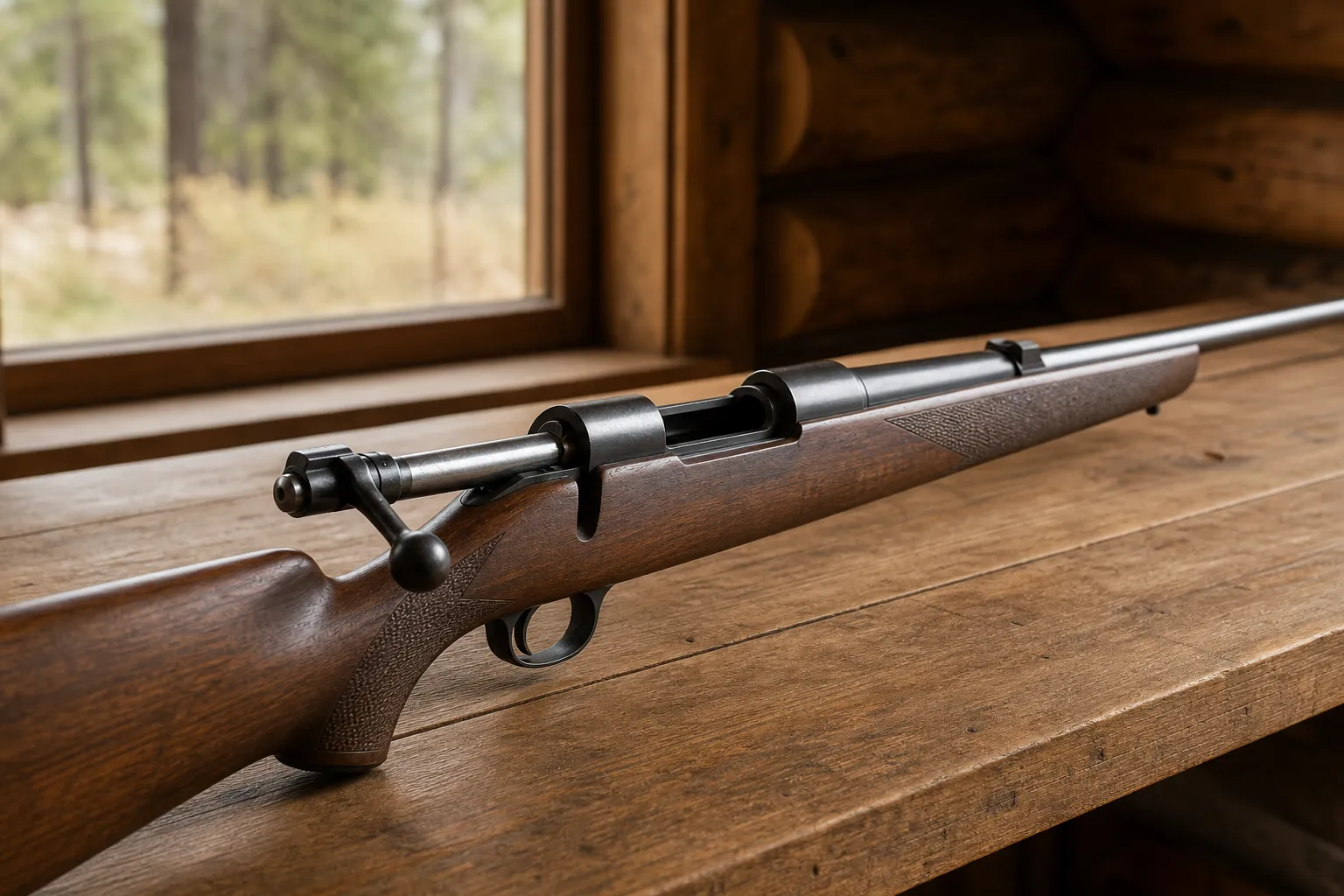
In a turnbolt action, NIJ says the shooter rotates the bolt handle upward before pulling the bolt rearward, then rotates it downward after closing to lock the firearm. Browning describes the same basic motion for the X-Bolt: lift the bolt handle, draw it rearward, slide it forward and rotate it downward. Sources: NIJ glossary, Browning X-Bolt manual.
The basic operating cycle
A bolt-action rifle follows the same broad cycle of operation used to describe firearms generally. NIJ describes feeding as the insertion of a cartridge into the chamber, with the breech bolt pushing the cartridge into final position. In the Browning X-Bolt manual, the forward and downward movement of the bolt takes a cartridge from the magazine and loads it into the chamber. Sources: NIJ cycle of fire, Browning X-Bolt manual.
At a beginner level, the cycle can be described this way:
| Step | What happens | |, -|, -| | Feed | The bolt moves a cartridge toward the chamber. NIJ describes the breech bolt as pushing the cartridge into final position. | | Chamber | The cartridge is seated in the chamber. | | Lock | Turning the bolt down rotates one or more lugs into machined slots or against a receiver shoulder, according to NIJ. | | Fire | The rifle fires when its firing system releases, subject to the rifle’s design and safe handling rules in its manual. | | Unlock | The shooter lifts the bolt handle to begin opening the action in a turnbolt rifle, as described by NIJ. | | Extract | The extractor withdraws the cartridge case from the chamber, using NIJ’s definition of extractor. | | Eject | The ejector expels the cartridge or fired case from the firearm, using SAAMI’s definition. | | Cock | Some bolt actions cock the firing mechanism during part of bolt movement. The Mauser 98 is a cited example of cocking on opening. |
Sources: NIJ cycle of fire, NIJ glossary, SAAMI glossary, E, National Firearms Museum history.
Main bolt parts and what they do
A few parts explain most of what is happening.
Bolt handle
SAAMI defines the bolt handle as a protrusion from the bolt used to manually actuate the mechanism. On a turnbolt rifle, that handle is what the shooter lifts, pulls, pushes and turns down during the cycle. Sources: SAAMI glossary, B, NIJ glossary.
Bolt head and bolt face
SAAMI defines the bolt head as the forward end of the bolt that contains the bolt face or breech face. This is the front portion of the bolt that supports the cartridge case head when the action is closed. Source: SAAMI glossary, B.
Locking lugs
SAAMI defines bolt locking lugs as protrusions on the bolt body that lock into mating recesses and resist rearward thrust from chamber pressure. NIJ describes a bolt-action rifle as locking when one or more lugs rotate into machined slots or against a receiver shoulder. Sources: SAAMI glossary, B, NIJ cycle of fire.
Extractor
NIJ defines an extractor as the mechanism for withdrawing a cartridge or cartridge case from the chamber. NIJ also explains that cartridge cases have a rim or groove so an extractor claw can grasp the edge for extraction. Sources: NIJ glossary, NIJ cycle of fire.
Ejector
SAAMI defines an ejector as a device that expels cartridges or fired cases from a firearm, and defines ejection as the act of expelling a cartridge or fired case from a firearm. NIJ describes one ejection process as the case encountering a projection, where the ejector contacts the case base and flips it out of the mechanism. Sources: SAAMI glossary, E, NIJ cycle of fire.
Cock-on-opening and cocking systems
“Cocking” refers to the rifle’s firing mechanism being prepared as part of the action cycle. The National Firearms Museum identifies the Mauser 98, introduced in 1898, as including cocking on opening, an added safety lug and a larger chamber ring. Source: National Firearms Museum history.
For a new shooter, the important point is that cocking behavior is part of the specific rifle design. Winchester states in the Model 70 owner’s manual that many bolt-action rifles require the firing pin to be cocked before the safety can be placed in the on-safe position. That is a reminder to read the manual for the exact rifle rather than assuming every bolt action works the same way. Source: Winchester Model 70 manual.
This guide does not name a cock-on-closing example because the supplied fact ledger did not include a citable manufacturer, museum or reference source for one.
Major bolt-action families and examples
Bolt-action rifles are often discussed by action style. The labels below are useful for orientation, but individual rifles should be checked against their own maker’s description and manual.
Mauser 98 style actions
The Mauser 98 is one of the key reference points for bolt-action design. The National Firearms Museum says the Mauser 98 was introduced in 1898 and included cocking on opening, an added safety lug and a larger chamber ring. The museum also says the Model 98 added a third locking lug, gas shield and improved firing pin compared with earlier Mauser designs. Sources: National Firearms Museum history, National Firearms Museum Mauser 98 page.
The National Firearms Museum says the Mauser 98 design became the basis for many later bolt-action military and sporting rifles. It also says the Model 98 was adopted by nations around the world and that many former military models were sporterized. Sources: National Firearms Museum history, National Firearms Museum Mauser 98 page.
Controlled-round feed actions
Winchester describes the Model 70’s controlled-round-feed claw extractor as controlling the cartridge from magazine to chamber to ejection. Winchester also states that the Model 70 claw extractor secures about one-quarter of the cartridge base and holds it until ejection. Source: Winchester Model 70 overview.
Ruger states that Hawkeye Alaskan rifles feature a non-rotating, Mauser-type controlled-round-feed extractor. Source: Ruger Hawkeye Alaskan news release.
Remington 700 style features
The supplied ledger does not include a current Remington manufacturer page that explicitly uses the term “push feed” for the Model 700, so this guide does not label it that way as an official Remington claim.
An American Rifleman reference article describes the Remington Model 700 as using a counterbored bolt head, dual-opposed front locking lugs, a contained extractor and a spring-loaded plunger ejector. The same reference notes that the Model 700 has been offered in many chamberings, two action lengths and right- and left-hand versions. Source: American Rifleman, Exploded View: Remington Model 700.
Modern three-lug and two-lug examples
Browning states that the X-Bolt uses a short 60 degree bolt lift and a strong three-lug bolt. Source: Browning X-Bolt manual.
Tikka states that the T3x action has a two-locking-lug bolt, a spring-loaded plunger ejector and a 70 degree opening angle. Tikka also says T3x rifles are made to meet the demands of hunters and sports shooters. Source: Tikka T3x page.
Why hunters often consider bolt actions
The strongest citable reasons in this ledger come from rifle makers’ own hunting rifle pages and manuals. They should be read as manufacturer descriptions and marketing claims, not as guarantees for every rifle, every shooter or every hunt.
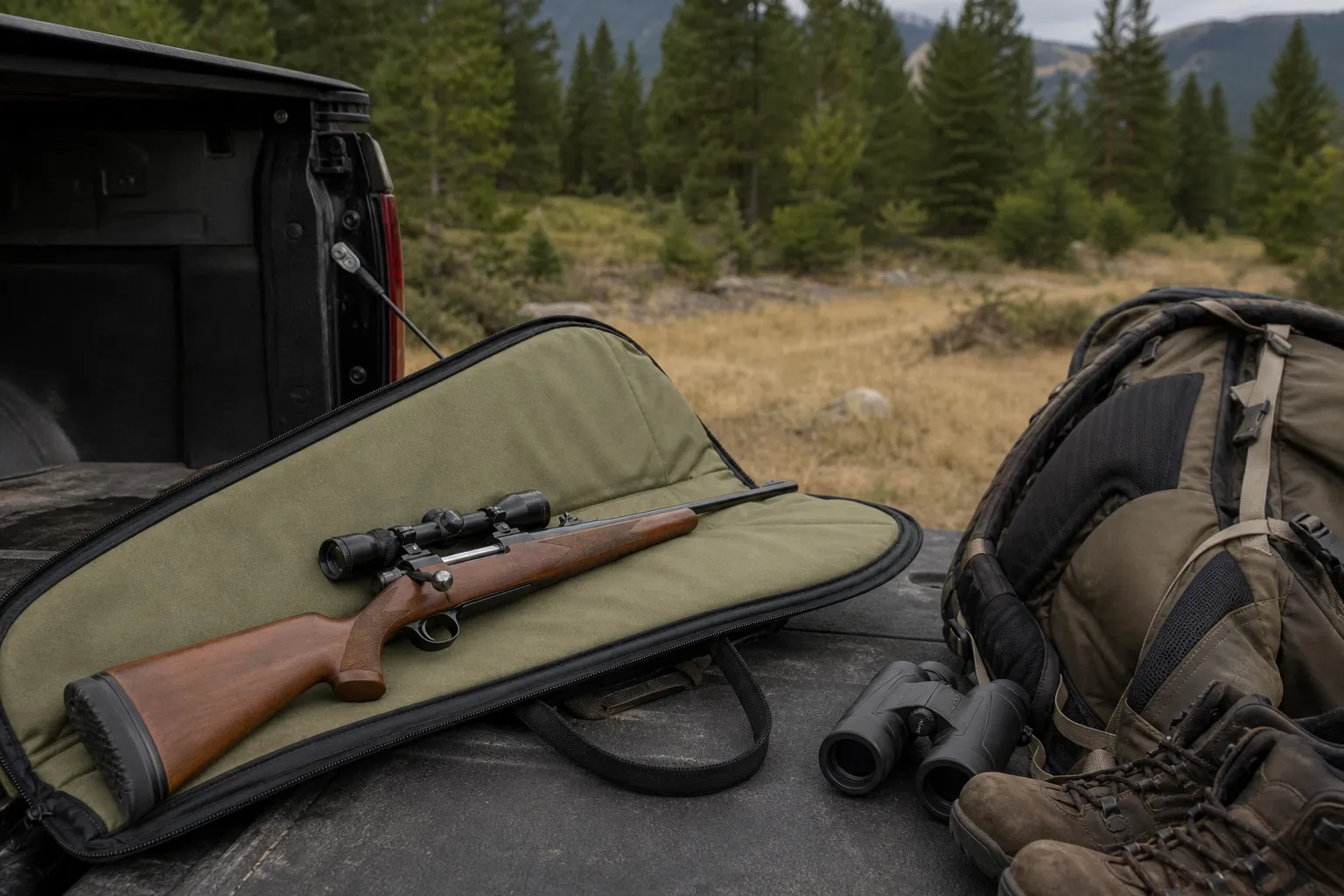
Accuracy claims
Browning markets the X-Bolt around accuracy and says its free-floating barrel and hand-reamed chamber are intended to support precision accuracy. Savage states that the Model 110 is engineered for accuracy with a button-rifled barrel and precision-machined action. Savage also states that its Model 110 can produce sub-MOA three-shot groups at 100 yards under controlled conditions with appropriate ammunition and optic setup. Sources: Browning X-Bolt overview, Savage Accuracy Assurance.
Carrying weight and handling
Browning says the X-Bolt’s trim lines mean less weight and easier carrying. That is directly relevant to hunting use because a hunting rifle is often carried before it is fired, but the exact weight and feel depend on the specific model. Source: Browning X-Bolt overview.
Locking strength and action design
SAAMI’s definition of bolt locking lugs explains why lugs matter: they lock into mating recesses and resist rearward thrust from chamber pressure. Browning describes the X-Bolt as having a strong three-lug bolt. Sources: SAAMI glossary, B, Browning X-Bolt manual.
Cartridge control and ejection systems
Some hunters compare rifles by how the extractor and ejector work. Winchester describes the Model 70 controlled-round-feed claw extractor as controlling the cartridge from magazine to chamber to ejection. Tikka states that the T3x uses a spring-loaded plunger ejector. Sources: Winchester Model 70 overview, Tikka T3x page.
Chambering and configuration variety
The American Rifleman reference article notes that the Remington Model 700 has been offered in many chamberings, two action lengths and right- and left-hand versions. That is one documented example of how a major bolt-action platform has been produced in many configurations. Source: American Rifleman, Exploded View: Remington Model 700.
Safety and what to check next
Use the owner’s manual for the exact rifle in front of you. The Winchester Model 70 manual notes that many bolt-action rifles require the firing pin to be cocked before the safety can be placed on safe, which shows why procedures can vary by design. Source: Winchester Model 70 manual.
Before buying, borrowing or using a bolt-action rifle, check the manufacturer’s current manual for operation, safety positions, loading and unloading procedures, approved ammunition and model-specific warnings. For hunting in the United States or Canada, also confirm current seasons, methods of take, caliber or cartridge rules and licensing requirements with the wildlife agency for the exact state, province, territory or management unit.
Frequently asked questions
What is a bolt-action rifle?
NIJ defines a bolt action as an action with the breech closure in line with the bore, manually reciprocating and locked by bolt lugs and engaging abutments.
What does the bolt handle do?
SAAMI defines the bolt handle as a protrusion from the bolt used to manually actuate the mechanism. In a turnbolt rifle, the shooter lifts, pulls, pushes and turns the handle to cycle the action.
What is controlled-round feed?
Winchester describes the Model 70 controlled-round-feed claw extractor as controlling the cartridge from magazine to chamber to ejection. Ruger also describes Hawkeye Alaskan rifles as having a Mauser-type controlled-round-feed extractor.
Was the Mauser 98 important to later bolt-action rifles?
Yes. The National Firearms Museum says the Mauser 98, introduced in 1898, became the basis for many later bolt-action military and sporting rifles.
Why do hunters consider bolt-action rifles?
Manufacturer sources emphasize traits such as accuracy, carrying characteristics, locking strength, cartridge control systems and chambering variety. These are model-specific claims, so compare the exact rifle and read its manual.
Does every bolt-action rifle cock the same way?
No. The National Firearms Museum identifies the Mauser 98 as cocking on opening, and Winchester notes that many bolt-action rifles require the firing pin to be cocked before the safety can be placed on safe. Check the manual for the exact rifle.
Sources
- Firearms Examiner Training, Glossary, National Institute of JusticeOfficial source. Accessed October 20, 2026.
- Firearms Examiner Training, Cycle of Fire Steps, National Institute of JusticeOfficial source. Accessed October 20, 2026.
- SAAMI Glossary, Letter B, Sporting Arms and Ammunition Manufacturers' InstituteOfficial source. Accessed October 20, 2026.
- SAAMI Glossary, Letter E, Sporting Arms and Ammunition Manufacturers' InstituteOfficial source. Accessed October 20, 2026.
- Browning X-Bolt Owner’s Manual, BrowningOfficial source. Accessed October 20, 2026.
- X-Bolt Rifle Overview, BrowningOfficial source. Accessed October 20, 2026.
- Winchester Model 70 Overview, Winchester Repeating ArmsOfficial source. Accessed October 20, 2026.
- Winchester Model 70 Owner’s Manual, Winchester Repeating ArmsOfficial source. Accessed October 20, 2026.
- A Brief History of Firearms, NRA National Firearms Museum. Accessed October 20, 2026.
- Mauser Model 98 Single Shot Bolt Action Target Rifle, NRA National Firearms Museum. Accessed October 20, 2026.
- 1915 Mauser Gewehr 98 Bolt Action Rifle, Smithsonian Institution. Accessed October 20, 2026.
- Mauser 98 Standard Instruction Manual, Mauser, Blaser GroupOfficial source. Accessed October 20, 2026.
- Ruger Reintroduces the Hawkeye Alaskan Rifle, Sturm, Ruger & CompanyOfficial source. Accessed October 20, 2026.
- Sako 85 Grizzly Technical Specification, Sako Ltd.Official source. Accessed October 20, 2026.
- Tikka T3x Rifles Series, TikkaOfficial source. Accessed October 20, 2026.
- Model 110 Accuracy Expectations, Savage ArmsOfficial source. Accessed October 20, 2026.
- Exploded View: Remington Model 700, American Rifleman. Accessed October 20, 2026.