Straight-Pull Rifles Explained: How They Work and Where They Came From
A straight-pull rifle is a bolt-action rifle that lets the shooter cycle the bolt mostly straight rearward and forward. The locking still happens, but cams, sleeves, bolt heads, collars or wedges do the turning or locking work inside the action.
By RaiS. Reviewed by RaiS. Published . 8 min read.
Research and drafting were assisted by AI. RaiS checked the facts against the sources below and approved this page.
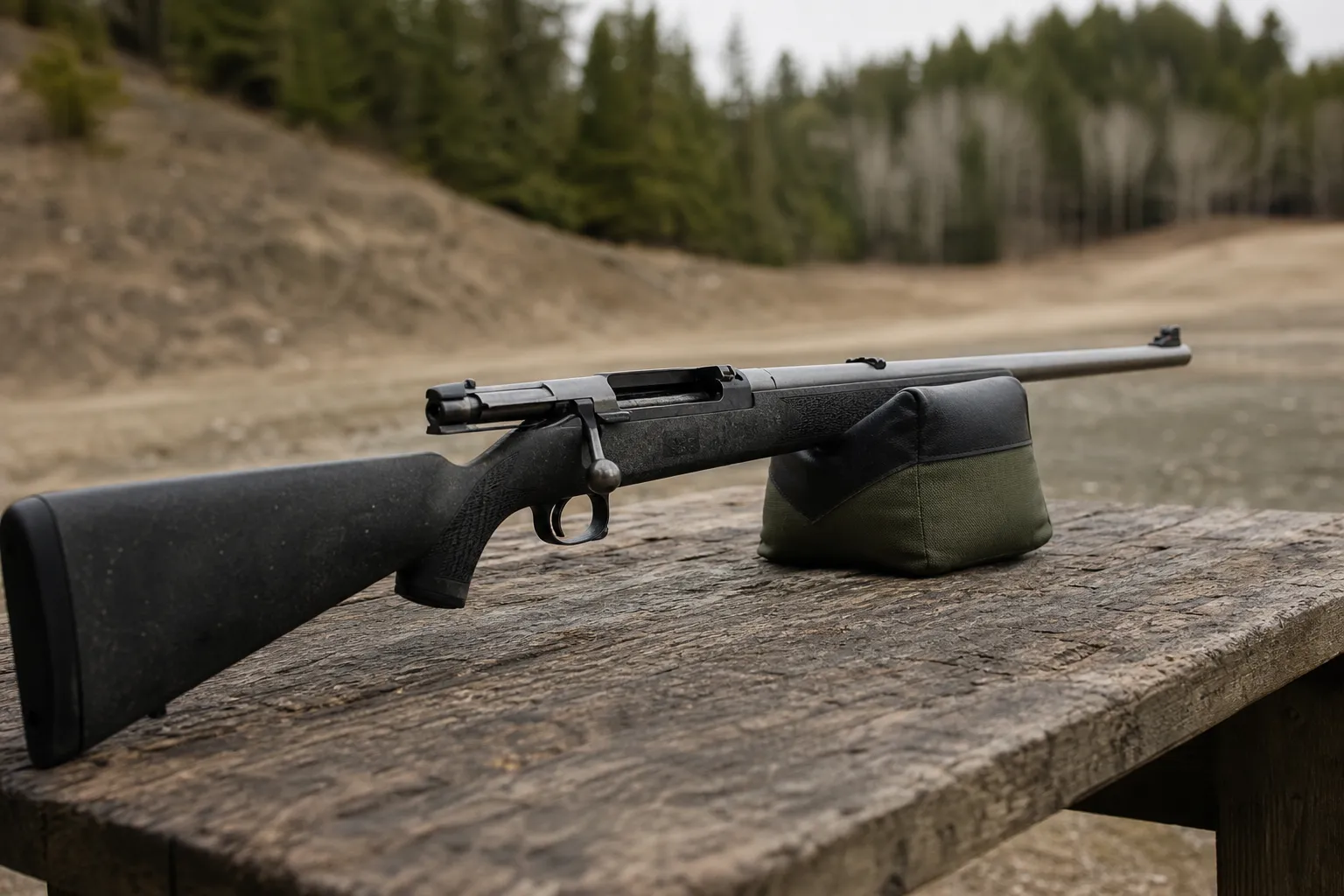
A straight-pull rifle is a bolt-action rifle in which the shooter cycles the bolt mostly straight back and straight forward, instead of lifting or rotating the bolt handle before pulling it rearward. The important point is that locking does not disappear. In a straight-pull design, the locking and unlocking work is handled inside the action by parts such as cams, helical grooves, sleeves, rotating bolt heads or radial collars.
Straight-pull versus turn-bolt actions
The National Institute of Justice describes a turn-bolt action as one in which the bolt handle is rotated before the bolt is drawn rearward. NIJ gives the example of rotating the bolt handle 90 degrees, and Royal Armouries describes conventional bolt actions as requiring the handle to be rotated 60 or 90 degrees before pulling back.
That rotation matters because modern bolt actions commonly lock by rotating lugs into matching recesses when the bolt is closed, according to NIJ. NIJ describes the Mauser Model 1898, a classic turn-bolt pattern, as having two forward locking lugs and a rear safety lug.
A straight-pull action changes what the shooter has to do with the handle. Instead of the shooter visibly turning the bolt handle and then pulling, the shooter pulls rearward and pushes forward. The action still has to unlock, extract, eject, feed and lock, but the mechanism converts that straight motion into the required internal movement.
If you are new to rifle action terms, it helps to start with the basic parts of a rifle and how a conventional bolt-action rifle works. A straight-pull rifle is not a different category from bolt action in the broad sense. It is a different way of operating a bolt-action mechanism.
How a straight-pull action locks
Royal Armouries explains the core idea using the Mannlicher system: the shooter’s forward and backward motion is converted into internal rotary motion to lock the bolt. In other words, the shooter sees a straight movement, while the parts inside the action do the turning or locking.
Different straight-pull rifles solve that problem in different ways. The broad families below are useful for beginners, but they are not instructions for working on any rifle. Always use the manufacturer’s manual for a specific model.
Rotating lugs moved by cams, sleeves or grooves
Some straight-pull rifles still use rotating lugs, but the rotation is produced inside the action. Royal Armouries says Mannlicher’s straight-pull system converted forward and backward motion into rotary motion, and it says the Steyr-Mannlicher M1895 used two large front locking lugs.
Small Arms Review describes the Schmidt-Rubin system as using an actuating rod and a helical groove in the bolt sleeve to unlock twin lugs. It also says the Schmidt-Rubin unlocks when the bolt is pulled straight to the rear.
That is the key concept: straight-pull does not mean the bolt never rotates internally. It means the shooter does not have to perform the usual turn-bolt handle rotation as a separate visible step.
Locking balls and radial collar systems
Modern sporting and competition rifles may use other locking methods.
Blaser’s R8 manual lists the operating principle as a straight-pull repeater and the breech type as radial collar closure. That is another example of a straight-pull rifle using an internal lock-up system rather than a visible turn-bolt handle lift.
Savage describes the Impulse as a straight-pull bolt-action rifle. Savage identifies its locking system as Hexlock with a free-floating, interchangeable bolt head.
Linear rifles with rotating bolt heads
Some current rifles are described by their makers as linear reloading systems with rotating bolt heads. Beretta’s 2024 catalog describes the BRX1 as a linear reloading rifle with a rotating bolt head. Beretta lists the BRX1 locking system as an eight-lug rotating bolt head, or sixteen lugs for magnum calibers.
Browning’s Maral manual describes that rifle as a manual linear bolt-action with a Quick Reloading System. Browning’s T-Bolt manual says the T-Bolt is cycled by pulling straight rearward and pushing fully forward.
Historical straight-pull examples
Straight-pull rifles are often associated with European military rifles, but the pattern also appears in U.S. and Canadian service history. The examples below show how the same basic idea was used in several different designs.
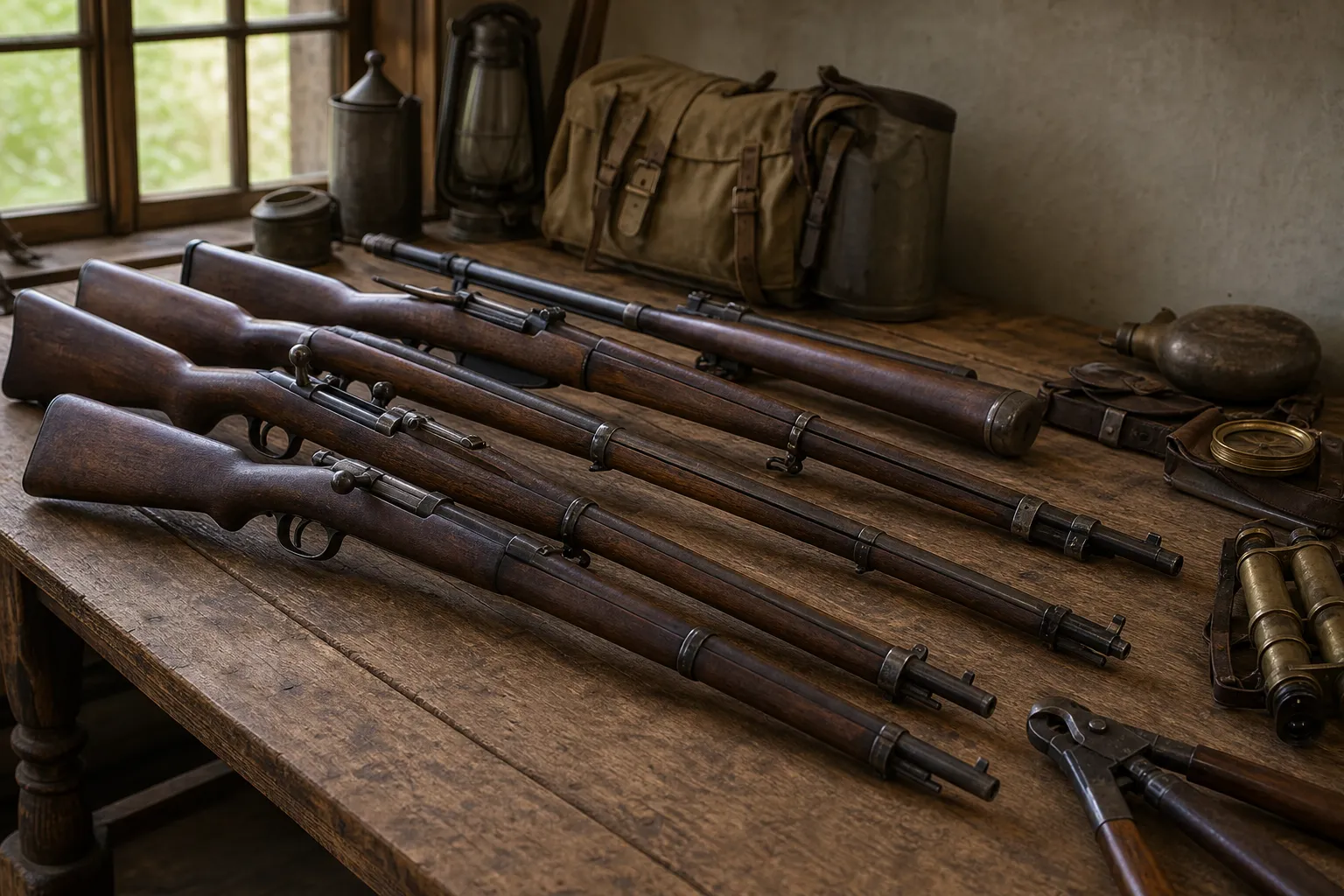
| Rifle or family | What the references say | Why it matters |
|---|---|---|
| Steyr-Mannlicher M1895 | Royal Armouries says Mannlicher’s system converted straight forward and backward motion into internal rotary motion. For the M1895, Royal Armouries says Mannlicher used two large front locking lugs. | A classic Austro-Hungarian military straight-pull example. |
| Schmidt-Rubin | Small Arms Review describes it as using an actuating rod and helical groove to unlock twin lugs when the bolt is pulled rearward. | A major Swiss straight-pull pattern built around internal bolt movement. |
| K31 | Small Arms Review identifies a key K31 change as moving the locking lugs to the bolt head. | A later Swiss development with an important change in lug location. |
| Lee Navy Model 1895 | A U.S. Marine Corps history monograph describes it as a straight-pull bolt-action weapon with an internal five-round magazine. NRA Museums says the Navy adopted the Lee straight-pull as the U.S. Navy Rifle Model 1895 in May 1895. | A U.S. Navy straight-pull service example. |
| Ross Mk III | Royal Armouries describes it as fast but complex. | A Canadian service example often discussed for both speed and sensitivity to field conditions. |
The Mannlicher M1895
Royal Armouries says Mannlicher’s system converted straight forward and backward motion into internal rotary motion. For the M1895, Royal Armouries says Mannlicher used two large front locking lugs.
NIJ notes that Mannlicher military actions use retaining clips that remain in the rifle and become part of the feed system.
The M1895 also shows a common straight-pull theme: speed came with tradeoffs. Royal Armouries describes the M1895 as faster to operate, but notes that heat, friction and dirt could make rearward bolt movement difficult.
Swiss straight-pulls: Schmidt-Rubin and K31
Small Arms Review describes the Schmidt-Rubin as using an actuating rod and a helical groove in the bolt sleeve to unlock twin lugs. It says the rifle unlocks when the bolt is pulled straight to the rear.
That system illustrates why straight-pull rifles can look simple to operate while being mechanically involved inside. The shooter’s motion is simple, but the action still has to unlock and lock securely.
Small Arms Review lists several tradeoffs for the Schmidt-Rubin: poor initial extraction power and a long receiver, balanced by resistance to debris. It also identifies a key K31 change as moving the locking lugs to the bolt head.
Lee Navy and Ross Mk III
The Lee Navy Model 1895 is an American example. A U.S. Marine Corps history monograph describes it as a straight-pull bolt-action weapon with an internal five-round magazine, and the same monograph lists its action as a straight-pull bolt. NRA Museums says the Navy adopted the Lee straight-pull as the U.S. Navy Rifle Model 1895 in May 1895.
The Ross Mk III is a Canadian example. Royal Armouries describes the Ross Mk III as fast but complex, and says it was too sensitive for the mud and dirt of the trenches as an infantry rifle.
Together, the Lee and Ross examples show that these design questions were not limited to one country or one mechanism. They also show why the idea is usually discussed together with reliability, complexity and field conditions.
Modern straight-pull rifles
Straight-pull rifles are still made in sporting, hunting and biathlon forms. Browning says the T-Bolt straight-pull design allows fast cycling, and its manual says the bolt is cycled by pulling straight rearward and pushing fully forward.
Browning’s Maral manual describes the Maral as a manual linear bolt-action with a Quick Reloading System. Blaser’s R8 manual lists the R8 as a straight-pull repeater with radial collar closure.
Anschütz’s biathlon brochure says the Fortner straight-pull action enables rapid repeating from a stable firing position.
Savage describes the Impulse as a straight-pull bolt-action rifle with a Hexlock system and a free-floating, interchangeable bolt head. Beretta describes the BRX1 as a linear reloading rifle with a rotating bolt head, and lists the locking system as an eight-lug rotating bolt head or sixteen lugs for magnum calibers.
Advantages of a straight-pull rifle
The main advantage is simpler visible motion. In a turn-bolt rifle, NIJ and Royal Armouries describe the handle rotation that comes before the rearward pull. In a straight-pull rifle, the shooter generally pulls rearward and pushes forward.
Several references connect that motion with speed. Royal Armouries describes the M1895 as faster to operate. Browning says the T-Bolt straight-pull design allows fast cycling. Royal Armouries describes the Ross Mk III as fast, though also complex.
Another advantage can be reduced disruption of the shooting position in certain designs. Anschütz’s biathlon brochure says the Fortner straight-pull action enables rapid repeating from a stable firing position.
Those benefits are design-specific. A straight-pull label alone does not tell you how a rifle locks, how it feeds, or how it handles dirt, heat or extraction.
Tradeoffs to understand
Extraction can also vary by design. Small Arms Review says the Schmidt-Rubin had poor initial extraction power, while also noting resistance to debris. Royal Armouries says heat, friction and dirt could make rearward bolt movement difficult in the M1895.
Field sensitivity also depends on the particular rifle. Royal Armouries says the Ross Mk III was too sensitive for the mud and dirt of the trenches as an infantry rifle. That does not mean every straight-pull rifle has the same weakness. It means the exact design and its intended conditions matter.
What to check on a specific rifle
When comparing straight-pull rifles, look for the maker’s description of the locking system, not just the action label. A rifle might use rotating lugs, a radial collar closure, a multi-lug rotating bolt head or another system described by the manufacturer.
Also check the official manual for operation, loading, unloading, maintenance and safety information. Manufacturer terms vary: Browning uses manual linear bolt-action for the Maral, Blaser lists the R8 as a straight-pull repeater, Beretta calls the BRX1 a linear reloading rifle, and Savage calls the Impulse a straight-pull bolt-action rifle.
For any actual firearm, confirm details with the current manufacturer manual or the relevant museum, military or reference material for that exact model. Straight-pull rifles share a visible operating idea, but their internal mechanisms and tradeoffs are not all the same.
Frequently asked questions
What is a straight-pull rifle?
A straight-pull rifle is a bolt-action rifle in which the shooter cycles the bolt mostly straight rearward and forward. The locking and unlocking work still happens, but it is handled inside the action by the rifle’s mechanism.
How is a straight-pull different from a regular bolt action?
NIJ describes a turn-bolt action as requiring the bolt handle to rotate before the bolt is drawn rearward. In a straight-pull rifle, the shooter generally pulls back and pushes forward while internal parts perform the locking and unlocking work.
Do straight-pull rifles still lock securely?
Yes. The references describe several lock-up methods, including Mannlicher front locking lugs, Schmidt-Rubin twin lugs moved by a helical groove, Blaser radial collar closure and Beretta rotating bolt heads.
Are straight-pull rifles faster?
They can be. Royal Armouries describes the M1895 as faster to operate, Browning says the T-Bolt design allows fast cycling, and Anschütz says its Fortner straight-pull action enables rapid repeating from a stable firing position.
What are the tradeoffs of straight-pull rifles?
Tradeoffs depend on the design. Small Arms Review says the Schmidt-Rubin had poor initial extraction power, and Royal Armouries says the Ross Mk III was too sensitive for trench mud and dirt.
Name some straight-pull rifle examples.
Historical examples include the Steyr-Mannlicher M1895, Schmidt-Rubin rifles, the K31, the Lee Navy Model 1895 and the Ross Mk III. Modern examples in the references include the Browning T-Bolt, Browning Maral, Blaser R8, Anschütz 1727 F, Savage Impulse and Beretta BRX1.
Sources
- Firearms Examiner Training: Bolt Actions, National Institute of JusticeOfficial source. Accessed November 1, 2026.
- Arms of the First World War, Royal ArmouriesOfficial source. Accessed November 1, 2026.
- Schmidt Ruben Rifle, Small Arms Review. Accessed November 1, 2026.
- Lee Navy Model 1895 Rifle, in a U.S. Marine Corps history monograph, U.S. Government Publishing OfficeOfficial source. Accessed November 1, 2026.
- Winchester Lee Straight Pull US Navy Rifle, NRA Museums. Accessed November 1, 2026.
- T-Bolt Rifle Owners Manual, BrowningOfficial source. Accessed November 1, 2026.
- Browning Maral SF Owner’s Manual, Browning InternationalOfficial source. Accessed November 1, 2026.
- Blaser R8 Manual, Blaser GroupOfficial source. Accessed November 1, 2026.
- Anschütz Hunting Catalog 2021, Anschütz North AmericaOfficial source. Accessed November 1, 2026.
- Anschütz Biathlon Brochure 2024, Anschütz North AmericaOfficial source. Accessed November 1, 2026.
- Impulse Straight Pull Bolt Action Rifle, Savage ArmsOfficial source. Accessed November 1, 2026.
- Beretta Firearms Catalog 2024, BerettaOfficial source. Accessed November 1, 2026.