Bullpup Rifles Explained: Layout, Pros and Tradeoffs
A bullpup rifle places the action, firing mechanism or magazine behind the trigger, usually in the buttstock area. That layout can shorten overall length for a given barrel length, but it also changes balance, controls, trigger linkage and ejection placement.
By RaiS. Reviewed by RaiS. Published . 7 min read.
Research and drafting were assisted by AI. RaiS checked the facts against the sources below and approved this page.
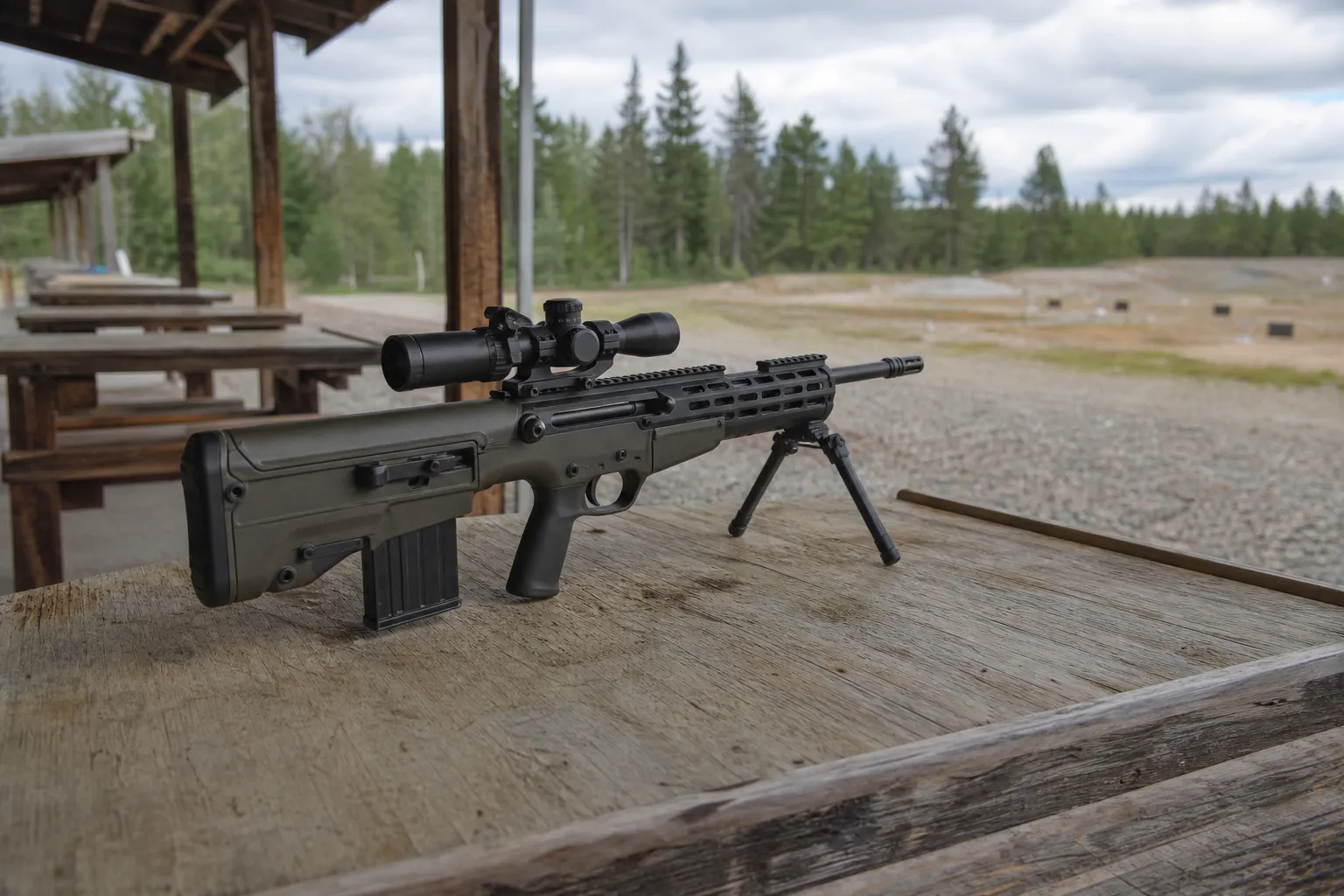
A bullpup rifle is a rifle layout that places the action, firing mechanism or magazine behind the trigger, usually in the buttstock area. That is the key difference from a more conventional long gun, where the action and magazine sit forward of the trigger group. The result is a rifle that can keep useful barrel length inside a shorter overall package, with tradeoffs in balance, trigger feel, control placement and ejection.
What makes a rifle a bullpup?
Springfield Armory describes the bullpup system as a layout that locates the action and magazine behind the trigger and into the buttstock area. Jonathan Ferguson’s published history of bullpup rifles describes the broader idea as weapons with the firing mechanism positioned behind the trigger.
Modern Firearms describes the traditional bullpup configuration as one in which the trigger and firing-hand grip are in front of the breech area. It also states that the bolt, magazine and other necessary mechanisms are usually behind the trigger, often in or above the shoulder stock.
In plain English, the shooter’s trigger hand is moved forward relative to the chamber, bolt and magazine. The stock and receiver area overlap more than they do on many conventional rifles. If you are new to rifle anatomy, the basic terms are covered in our guide to the parts of a rifle.
This definition is about layout, not about one specific operating system. A bullpup can still be described by its action type, chambering, service history and manufacturer design. For example, Steyr Arms lists the AUG A3 as gas-operated with a rotary bolt, while also describing its bullpup design as a way to keep short overall length without affecting barrel length.
Why bullpups can be shorter overall
The main design idea is simple: move the action and magazine rearward, then keep more barrel length inside a shorter overall rifle. Springfield Armory states that the bullpup layout reduces overall length while still allowing a barrel long enough for downrange performance.
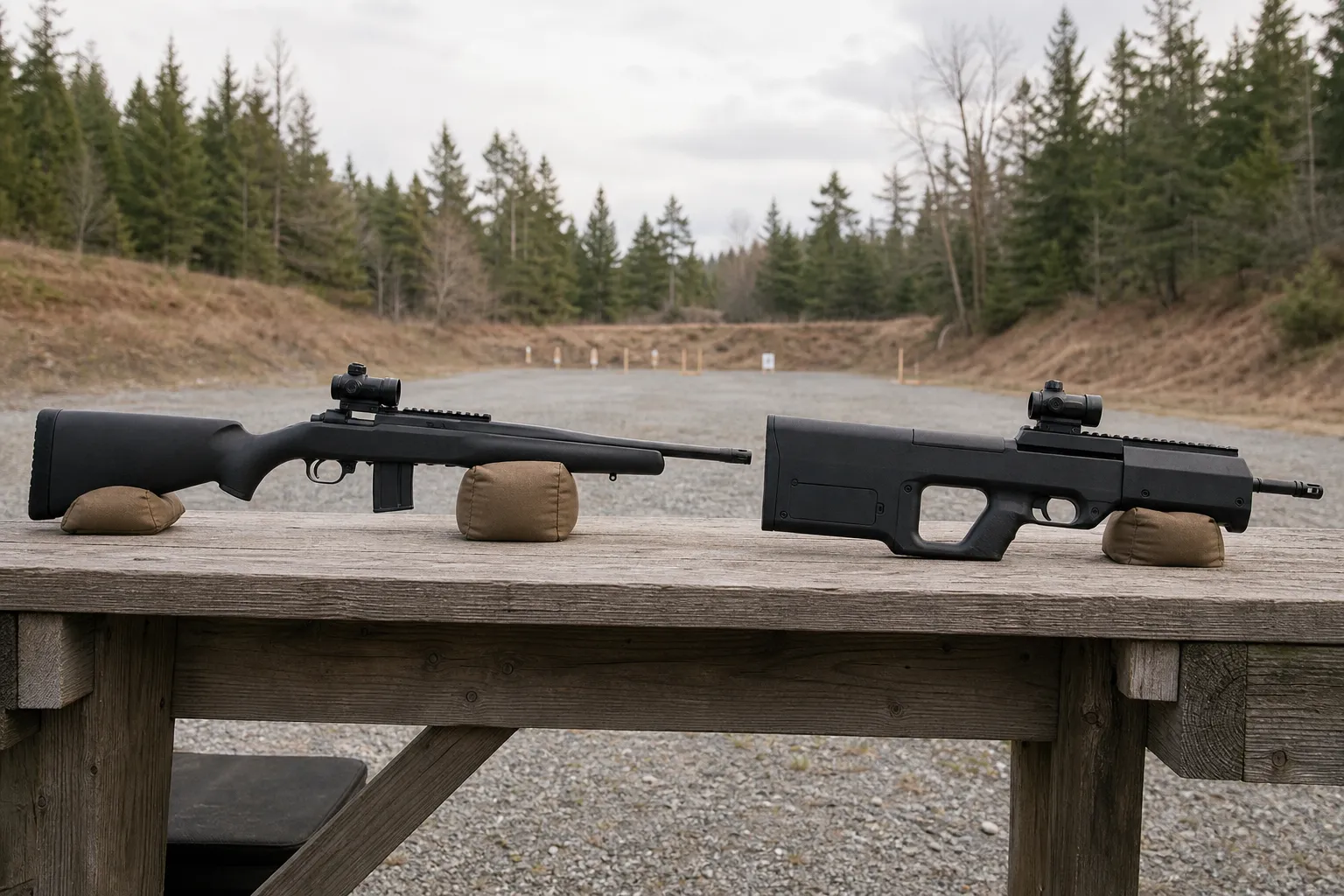
This does not mean every bullpup is shorter than every conventional rifle. Barrel length, muzzle devices, stock design and model configuration still matter. The safer way to say it is that the bullpup layout gives designers a way to reduce overall length while retaining barrel length.
Manufacturer and official specifications show the idea in real rifles:
| Rifle | Published barrel and length information | Context |
|---|---|---|
| IWI Tavor X95 | IWI US lists 13 inch, 16.5 inch and 18.5 inch barrel options and an overall length of 26.125 inches. | IWI US lists the stock type as reinforced polymer bullpup configuration. |
| Springfield Hellion | Springfield Armory lists the Hellion as 28.25 inches overall with a 16 inch barrel. | Springfield Armory describes it as a 5.56 mm bullpup. |
| Steyr AUG A3 | Steyr Arms lists the AUG A3 with a 508 mm barrel as 790 mm overall length. | Steyr Arms says the bullpup design gives short overall length without influencing barrel length. |
The theme is consistent across these examples: the working parts sit farther back, so the rifle can have a relatively long barrel without the same overall length that a more conventional layout would typically require.
Balance and handling feel
Because the action, magazine and related parts are moved rearward, a bullpup changes how the rifle’s weight sits in the shooter’s hands and shoulder.
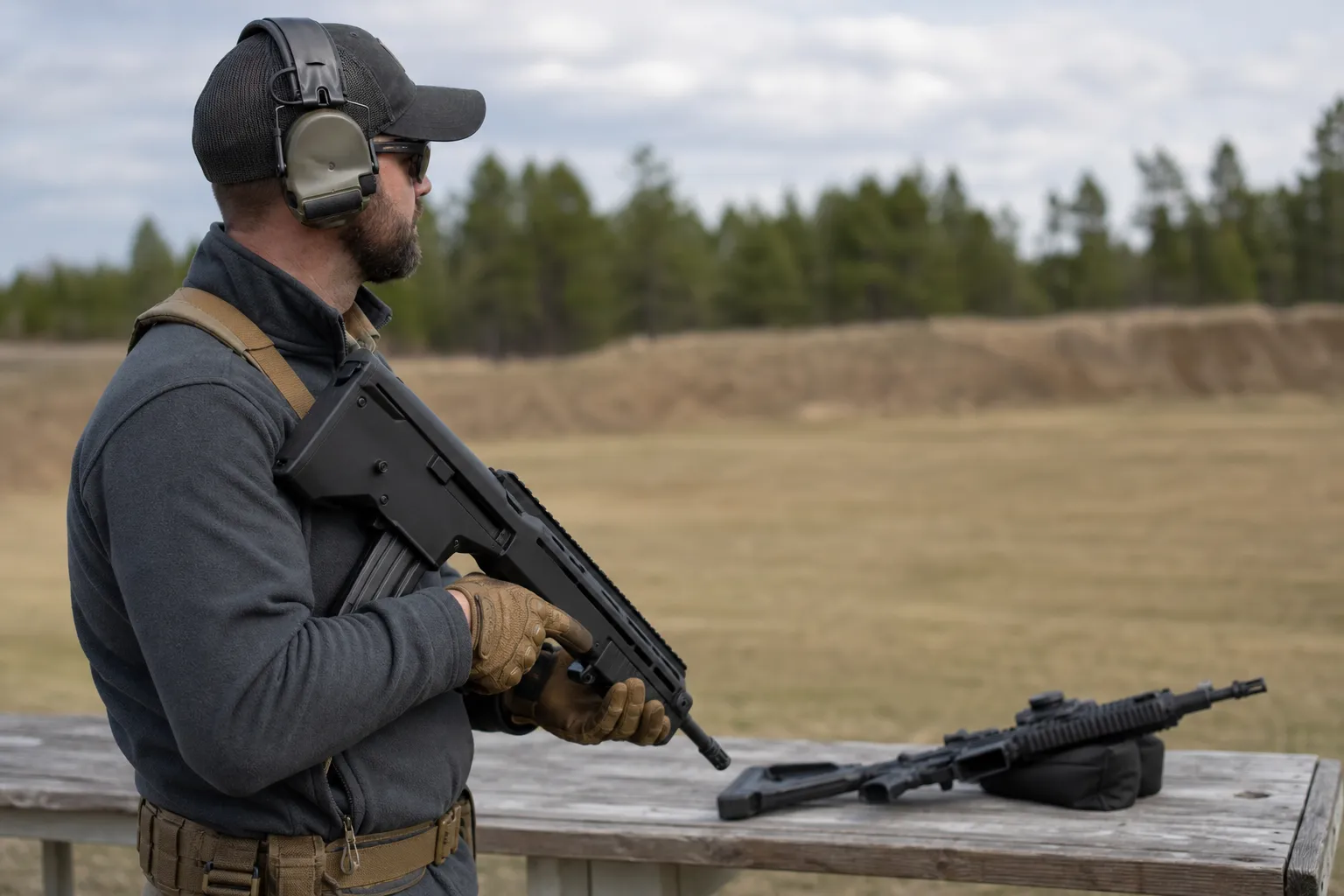
Modern Firearms summarizes one bullpup advantage as better balance, paired with the shorter overall length advantage. That rearward mass can make a rifle feel compact, especially compared with a rifle where more length extends forward of the support hand.
The tradeoff is that the rifle may not handle like a conventional design. The magazine, chamber and controls are in different places. The center of gravity is different. Readers who are used to conventional rifle layouts may notice the difference immediately, even before considering the trigger or ejection system.
Trigger linkage: why the trigger is different
In a conventional layout, the trigger is closer to the action parts it operates. In a bullpup, the trigger is forward of the breech, action or firing mechanism. That often requires a mechanical linkage between the trigger and the sear or other firing parts.
Modern Firearms notes that the early Thorneycroft bullpup moved the action and magazine into the shoulder stock and put the trigger in front of the magazine. It also notes that this layout required a long link between trigger and sear.
This guide is not a gunsmithing or modification guide. The important reference point is the design tradeoff: placing the trigger forward of the action can require linkage that a conventional rifle does not need in the same way.
Controls and reloads
Moving the magazine behind the trigger also moves some controls away from the places many shooters expect. Modern Firearms lists more awkward magazine reload procedures among the disadvantages of the bullpup layout.
Manufacturers have addressed control placement in different ways. IWI US describes the Tavor X95 as a next-generation bullpup with a relocated, non-reciprocating charging handle, trigger improvements and a relocated magazine release. Springfield Armory states that the Hellion has fully ambidextrous controls, including the safety, charging handle, magazine release and bolt release.
These examples show that “bullpup controls” are not one universal arrangement. The magazine release, charging handle, safety, bolt catch or bolt release may be placed differently depending on the model. Some modern bullpups emphasize ambidextrous or relocated controls as part of the design.
For a reader comparing layouts, the key point is not whether one arrangement is automatically better. It is that a bullpup changes the physical map of the rifle. The magazine is behind the trigger, the action is closer to the shoulder and controls may move with those parts.
Ejection and left-handed use
A bullpup places the chamber and ejection area closer to the shooter’s face than many conventional rifles. Modern Firearms identifies left-hand issues and a chamber close to the shooter’s face as disadvantages associated with bullpup layouts.
Some designs address this with reversible, ambidextrous or alternate ejection systems. Springfield Armory states that the Hellion has reversible ejection and fully ambidextrous controls.
Historic designs also show that ejection direction was a known design concern. Modern Firearms describes forward ejection on the TKB-022 as a way to allow safe firing from the left shoulder or inside an armored personnel carrier.
The exact answer depends on the rifle. Some bullpups have a reversible ejection setup, some have manufacturer-supported ambidextrous controls and some use other approaches. A left-handed shooter, or anyone who may shoulder the rifle from either side, should check the current manufacturer manual and specifications for that exact model.
Well-known bullpup examples
Bullpup rifles are not a single family from one country or company. They are a layout idea that has appeared in several military and commercial designs.
Steyr AUG A3
Steyr Arms describes the AUG A3 bullpup design as providing short overall length without influencing barrel length. Steyr also lists the AUG A3 as gas-operated with a rotary bolt and seven locking lugs. In one listed configuration, Steyr gives a 508 mm barrel and a 790 mm overall length.
IWI Tavor family
IWI US describes the Tavor X95 as a next-generation bullpup and lists features including a relocated non-reciprocating charging handle, trigger improvements and a relocated magazine release. IWI US also lists the Tavor X95 stock type as reinforced polymer bullpup configuration.
Springfield Hellion
Springfield Armory describes the Hellion as a 5.56 mm bullpup and explains the general bullpup system as placing the action and magazine behind the trigger and into the buttstock area. Springfield lists the Hellion as 28.25 inches overall with a 16 inch barrel and states that it has reversible ejection plus fully ambidextrous controls.
British SA80 and L85 family
The National Army Museum states that versions of the SA80 have been the British Army’s standard combat weapon since 1985.
Modern Firearms also notes an earlier British bullpup milestone: the EM-2 was officially adopted in 1951 as Rifle, Automatic, caliber .280, Number 9 Mark 1. That adoption history is separate from the later SA80 family, but it shows how long the bullpup concept has been explored in British rifle development.
FAMAS F1
The BICC SALW Guide identifies the FAMAS F1 as a bullpup rifle.
Why militaries explored the layout
Modern Firearms states that requirements from mechanized troops in armored personnel carriers and helicopters helped drive bullpup development. That fits the general appeal of the layout: a shorter overall rifle is easier to fit into confined spaces while still allowing meaningful barrel length.
That does not make the layout automatically ideal for every role. Modern Firearms summarizes the bullpup tradeoff as shorter overall length and better balance on one side, with more awkward reloads, left-hand issues and the chamber being close to the shooter’s face on the other.
A bullpup is best understood as a packaging solution. It moves the action and magazine rearward. That can shorten the rifle and shift balance rearward. It also changes trigger linkage, control placement and ejection concerns.
What to check on a specific bullpup rifle
If you are reading about a particular bullpup, check the current manufacturer specifications and manual for that exact model. Pay close attention to barrel length, overall length, ejection setup, control layout and any manufacturer instructions for left-handed or alternate-shoulder use.
Also confirm current federal, state, provincial and local rules before relying on any rifle configuration. Overall length, barrel length and model configuration can have legal significance, and the rules depend on place and time.
Frequently asked questions
What is a bullpup rifle?
A bullpup rifle is a layout that places the action, firing mechanism or magazine behind the trigger, usually in the buttstock area. Springfield Armory describes the system as locating the action and magazine behind the trigger and into the buttstock area.
Why are bullpup rifles often shorter overall?
The action and magazine are moved rearward, so more of the barrel can fit inside a shorter overall rifle. Springfield Armory describes the bullpup layout as reducing overall length while retaining barrel length.
Do bullpups have different balance than conventional rifles?
Yes. Moving the action and magazine rearward changes the center of gravity. Modern Firearms summarizes one bullpup advantage as better balance, paired with the shorter overall length advantage.
Why do bullpups often have trigger linkage?
Because the trigger is forward of the action or firing mechanism, a bullpup often needs a mechanical linkage. Modern Firearms notes that the early Thorneycroft bullpup required a long link between the trigger and sear.
Are bullpups harder for left-handed shooters?
They can be, depending on the design, because the chamber and ejection port are closer to the shooter’s face. Some modern examples address this with reversible or ambidextrous systems, such as the Springfield Hellion.
Is a bullpup an action type?
No. Bullpup describes the layout of the action, magazine, trigger and stock area. A rifle can be a bullpup and still be described separately by its operating system, such as the Steyr AUG A3, which Steyr Arms lists as gas-operated with a rotary bolt.
Sources
- Springfield Armory Releases the Hellion 5.56mm Bullpup, Springfield ArmoryOfficial source. Accessed October 31, 2026.
- Springfield Armory Hellion Awarded NRA’s American Rifleman Tactical Gun of the Year Award, Springfield ArmoryOfficial source. Accessed October 31, 2026.
- Thorneycroft to SA80: British Bullpup Firearms, 1901 to 2020, Headstamp Publishing. Accessed October 31, 2026.
- Bullpup history, part 1, Modern Firearms. Accessed October 31, 2026.
- Bullpup 1945 to 1970: history of experiments, Modern Firearms. Accessed October 31, 2026.
- Guns Magazine, November 1961, Guns Magazine. Accessed October 31, 2026.
- Tavor 7, Israel Weapon IndustriesOfficial source. Accessed October 31, 2026.
- Tavor X95 firearm specs, IWI USOfficial source. Accessed October 31, 2026.
- AUG A3, Steyr ArmsOfficial source. Accessed October 31, 2026.
- SA80 Individual Weapon, The British ArmyOfficial source. Accessed October 31, 2026.
- L85A1 SA80 5.56 mm individual weapon, with Trilux sight, 1990 (c), National Army MuseumOfficial source. Accessed October 31, 2026.
- Soldier Magazine, April to June 2018, The British ArmyOfficial source. Accessed October 31, 2026.
- FAMAS F1 fact sheet, BICC SALW Guide. Accessed October 31, 2026.