Parts of a Rifle: Barrel, Action, Stock, Magazine and Sights
A modern rifle is easiest to understand as three main groups: action, barrel and stock. This guide explains the basic rifle parts a new shooter, hunter or student is likely to see in manuals and hunter education materials.
By RaiS. Reviewed by RaiS. Published . 6 min read.
Research and drafting were assisted by AI. RaiS checked the facts against the sources below and approved this page.
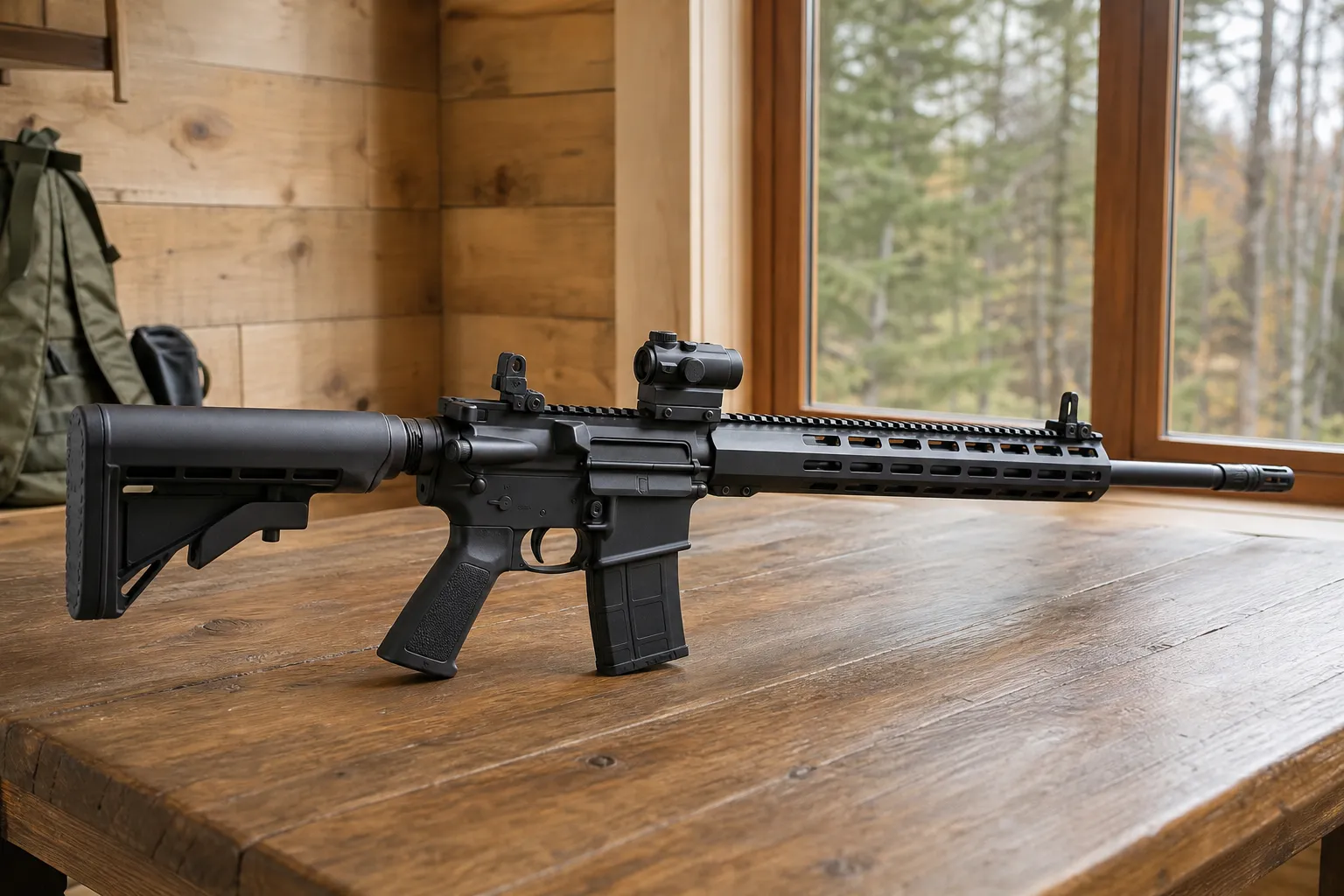
For a beginner, the simplest way to learn rifle terminology is to group the main parts into the action, barrel and stock, the three basic groups listed by Texas Parks and Wildlife and Hunter Ed, then add the controls, magazine and sighting parts around them.
Different rifles do not all look the same. A bolt action, lever action, semiautomatic or falling block rifle may place parts and controls in different places. Not every rifle has every accessory shown in a diagram or manual, so always use the manual for the exact rifle in front of you.
The three big groups: action, barrel and stock
Texas Parks and Wildlife lists the action, barrel and stock as the three basic parts of a modern firearm. Hunter Ed uses the same three groups: action, stock and barrel.
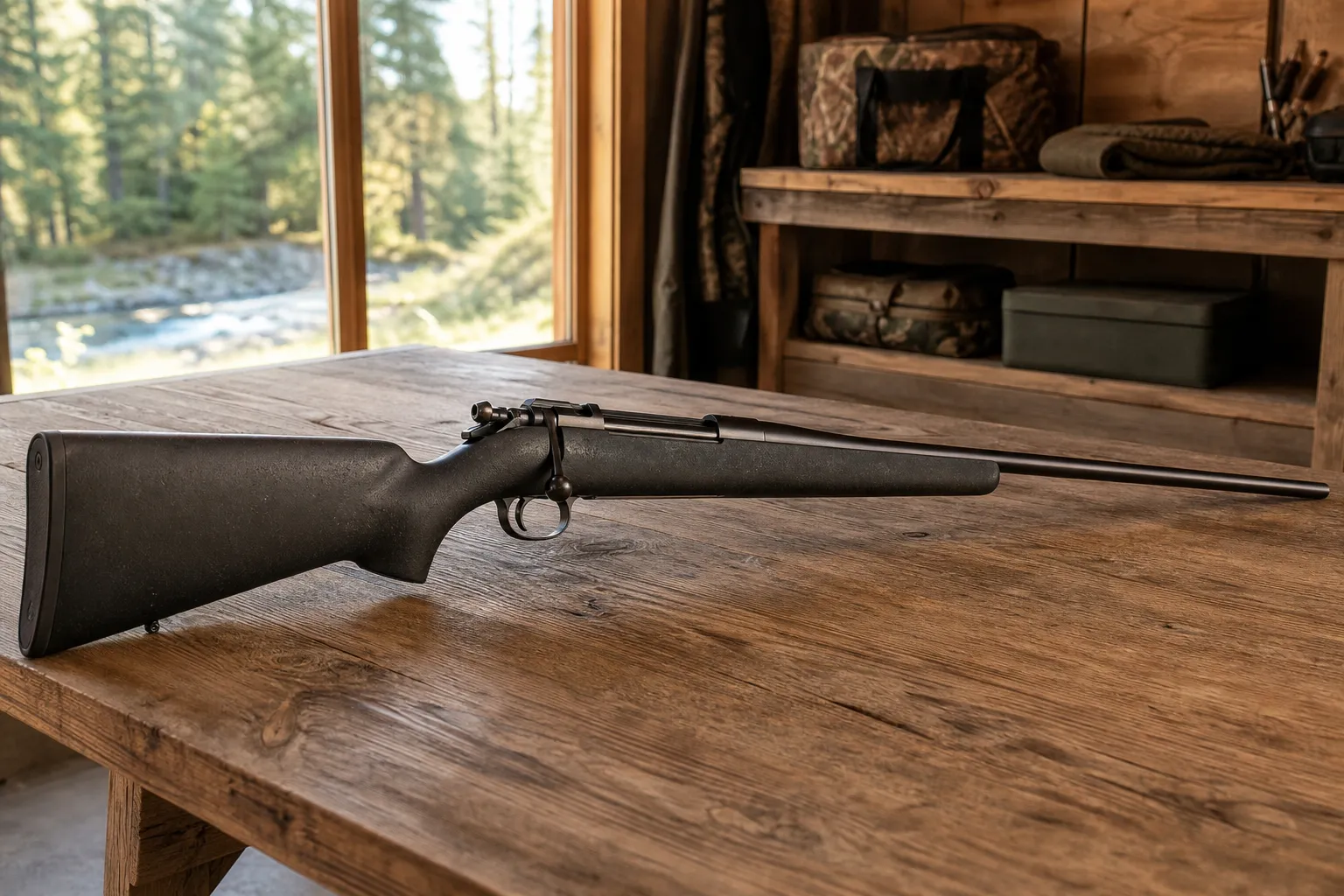
That three part model is useful because most rifle terms fit under one of those headings:
Action: Receiver, chamber area, loading and firing mechanism, unloading or ejection mechanism.
Barrel: Bore, rifling, chamber end and muzzle end.
Stock: The part held at the shoulder, including the butt and often the forearm area.
A rifle may also have a magazine, sights, an optical sight, or a rail for mounting equipment. Those parts are important, but the action, barrel and stock are the foundation for understanding the rest of the terms.
Action, receiver and chamber
SAAMI defines the action as the receiver or frame plus the mechanism by which a firearm is loaded, fired and unloaded. The Winchester XPR manual uses action to mean the mechanism that loads and secures cartridges in the chamber.
In plain English, the action is the working part of the rifle. It is the part that handles ammunition as the rifle is loaded, fired and unloaded. At a basic terminology level, common rifle action types include bolt, lever, semiautomatic and falling block. Those names describe different designs, but the basic job is still connected to loading, firing and unloading.
Receiver
The Alaska Hunter Education Instructors Manual describes the receiver as the metal frame to which the barrel and stock are attached.
That means the receiver is a central structure in many rifle descriptions. When a manual points to the receiver, it is usually identifying the frame associated with major groups of the rifle.
Chamber
The Alaska Hunter Education Instructors Manual describes the rear part of the barrel as the breech or chamber.
The chamber matters because it is where a cartridge sits when the rifle is ready to fire. For safety and correct terminology, it is not enough to look only at the magazine. Winchester warns that a rifle can still fire with the magazine removed if a cartridge remains in the chamber.
Barrel, bore, rifling and muzzle
The barrel is the tube through which the projectile travels. Texas Parks and Wildlife defines the bore as the interior channel of the barrel through which fired projectiles travel.
Rifling refers to features inside the bore.
The muzzle is the front end of the barrel. Texas Parks and Wildlife defines the muzzle as the front end of the barrel where fired projectiles exit. The Alaska Hunter Education Instructors Manual also says the front of the barrel is called the muzzle.
A simple way to keep the barrel terms straight is this:
Barrel: The tube the projectile travels through.
Bore: The interior channel of the barrel.
Rifling: Features inside the bore.
Chamber: The rear part of the barrel.
Muzzle: The front end of the barrel where the projectile exits.
Stock, butt and forearm
The stock gives the rifle its shoulder fired form.
Texas Parks and Wildlife defines the butt as the end of the stock held against the shoulder. On a basic rifle diagram, the butt is usually the rear end of the rifle.
Some modern rifles may use separate grip, forearm or handguard parts instead of a one piece traditional stock shape. The important beginner idea is the same: these are the parts the shooter holds and shoulders, and they relate to the main action and barrel group. For any adjustment, replacement or service question, use the manufacturer manual or a qualified source for that exact rifle.
Trigger, trigger guard and safety
The trigger is the control moved by the finger as part of firing the rifle.
The trigger guard is the protective ring around the trigger. Texas Parks and Wildlife defines it as a protective ring that deters accidental contact with the trigger.
A safety is a mechanical feature, not a substitute for safe handling. Texas Parks and Wildlife warns that a safety should never be used as an alternative to safe firearm handling. Winchester also tells users not to depend only on the red safety indicator to determine a safety’s status.
For a new shooter, the key lesson is simple: learn where the trigger, trigger guard and safety are on the specific rifle, but do not treat any mechanical safety as the only thing preventing a discharge. Follow the safety rules and the manual for the exact firearm.
Magazine
SAAMI defines a magazine as a cartridge or shell receptacle under spring pressure, and says it may be fixed or removable. Texas Parks and Wildlife says a magazine holds ammunition for the action to load into the chamber.
Magazines can appear in different forms. SAAMI’s definition covers fixed and removable magazines, and the editor terms for this guide include box, tube, rotary and drum forms. The shared function is that the magazine holds ammunition for feeding into the action.
The most important beginner safety point is that removing a magazine does not necessarily empty the rifle. Winchester warns that a rifle can still fire with the magazine removed if a cartridge remains in the chamber. Always follow the manufacturer’s unloading procedure for the exact rifle.
Sights, optics and rails
Sights help a shooter aim the rifle, according to the Scouting rifle shooting pamphlet. That pamphlet groups common rifle sights into optical, open and aperture categories.
Open sights use a rear notch and a front sight near the muzzle. The Scouting pamphlet describes the front sight as a post or bead. A beginner will often hear the terms “front sight” and “rear sight” because many rifle sighting systems use a front aiming reference and a rear reference.
Optical sights are another category listed by the Scouting pamphlet. A rifle may also have a rail for mounting sighting equipment or accessories. The Ruger Scout Rifle manual identifies a Picatinny rail among common rifle components, along with rear sight, stock, magazine, trigger, trigger guard and front sight.
MIL STD 1913 is identified by DLA ASSIST as the military standard for dimensioning accessory mounting rails for small arms weapons. MIL STD 1913 defines an accessory mounting rail as a grooved dovetail feature that serves as a mounting platform.
This guide is only identifying parts and functions. It is not an installation guide. For any optic, sight or rail question on a specific rifle, use the manufacturer’s manual and confirm that the parts and procedures match that rifle.
Quick reference: main rifle parts and their jobs
Action: Loads, fires and unloads the firearm, using SAAMI’s action definition.
Receiver: Metal frame to which the barrel and stock are attached, according to Alaska hunter education material.
Chamber: Rear part of the barrel described as the breech or chamber, according to Alaska hunter education material.
Barrel: Tube that contains the bore the projectile travels through.
Bore: Interior channel of the barrel, as Texas Parks and Wildlife defines it.
Rifling: Features inside the bore.
Muzzle: Front end of the barrel where fired projectiles exit, according to Texas Parks and Wildlife.
Stock: Part the shooter holds or shoulders.
Butt: End of the stock held against the shoulder, according to Texas Parks and Wildlife.
Trigger: Control moved by the finger as part of firing the rifle.
Trigger guard: Protective ring around the trigger, according to Texas Parks and Wildlife.
Safety: Mechanical safety feature, not a substitute for safe handling.
Magazine: Holds ammunition for the action to load into the chamber.
Sights: Help the shooter aim the rifle.
Rail: Mounting platform for optics or accessories.
What to check in the manual
Rifle terminology is more useful when it is matched to the exact firearm. Before handling, loading, unloading, cleaning or transporting any rifle, check the manufacturer’s manual for that specific model.
Pay special attention to the manual’s names for the action, safety, magazine, chamber, sights and any rail or mounting surface. Also confirm the manufacturer’s instructions for confirming the chamber condition, because Winchester warns that a rifle may still fire with the magazine removed if a cartridge remains in the chamber.
Frequently asked questions
What are the three basic parts of a rifle?
Texas Parks and Wildlife and Hunter Ed group a modern firearm into three basic parts: the action, barrel and stock.
What does the action do on a rifle?
SAAMI defines the action as the receiver or frame plus the mechanism by which a firearm is loaded, fired and unloaded. Winchester also describes the action as the mechanism that loads and secures cartridges in the chamber.
What is the difference between the chamber and the muzzle?
The Alaska Hunter Education Instructors Manual describes the rear part of the barrel as the breech or chamber. Texas Parks and Wildlife defines the muzzle as the front end of the barrel where fired projectiles exit.
Is removing the magazine the same as unloading a rifle?
No. Winchester warns that a rifle can still fire with the magazine removed if a cartridge remains in the chamber. Always follow the manufacturer’s unloading procedure for the exact rifle.
What are rifle sights for?
The Scouting rifle shooting pamphlet says sights help a shooter aim the rifle, and it groups common sights into optical, open and aperture categories.
Sources
- Properly Identify a Firearm for the Purpose of Tracing, Bureau of Alcohol, Tobacco, Firearms and ExplosivesOfficial source. Accessed October 23, 2026.
- SAAMI Glossary, Sporting Arms and Ammunition Manufacturers' InstituteOfficial source. Accessed October 23, 2026.
- Chapter 2, Firearms and Ammunition, Texas Parks and Wildlife DepartmentOfficial source. Accessed October 23, 2026.
- Basic Parts of a Firearm, Hunter Ed. Accessed October 23, 2026.
- Hunter Education and Firearms Safety Manual, Minnesota Department of Natural ResourcesOfficial source. Accessed October 23, 2026.
- Hunter Education Instructors Manual, Alaska Department of Fish and GameOfficial source. Accessed October 23, 2026.
- XPR Owner's Manual, Winchester Repeating ArmsOfficial source. Accessed October 23, 2026.
- Model 70 Owner's Manual, Winchester Repeating ArmsOfficial source. Accessed October 23, 2026.
- Rifle Shooting Merit Badge Pamphlet, Boy Scouts of America. Accessed October 23, 2026.
- Ruger Scout Rifle Instruction Manual, Sturm, Ruger & Co.Official source. Accessed October 23, 2026.
- ASSIST QuickSearch Document Details, MIL-STD-1913, Defense Logistics AgencyOfficial source. Accessed October 23, 2026.
- MIL-STD-1913, Dimensioning of Accessory Mounting Rail for Small Arms Weapons, U.S. military standard, reproduced PDF. Accessed October 23, 2026.