Pistol Magazines Explained: Single-Stack, Double-Stack and Magazine Parts
A pistol magazine is the spring-fed part that holds cartridges and presents them for feeding into the chamber. This guide explains the basic parts, how cartridges move through a magazine, and what single-stack, double-stack and staggered-column terms mean.
By RaiS. Reviewed by RaiS. Published . 7 min read.
Research and drafting were assisted by AI. RaiS checked the facts against the sources below and approved this page.
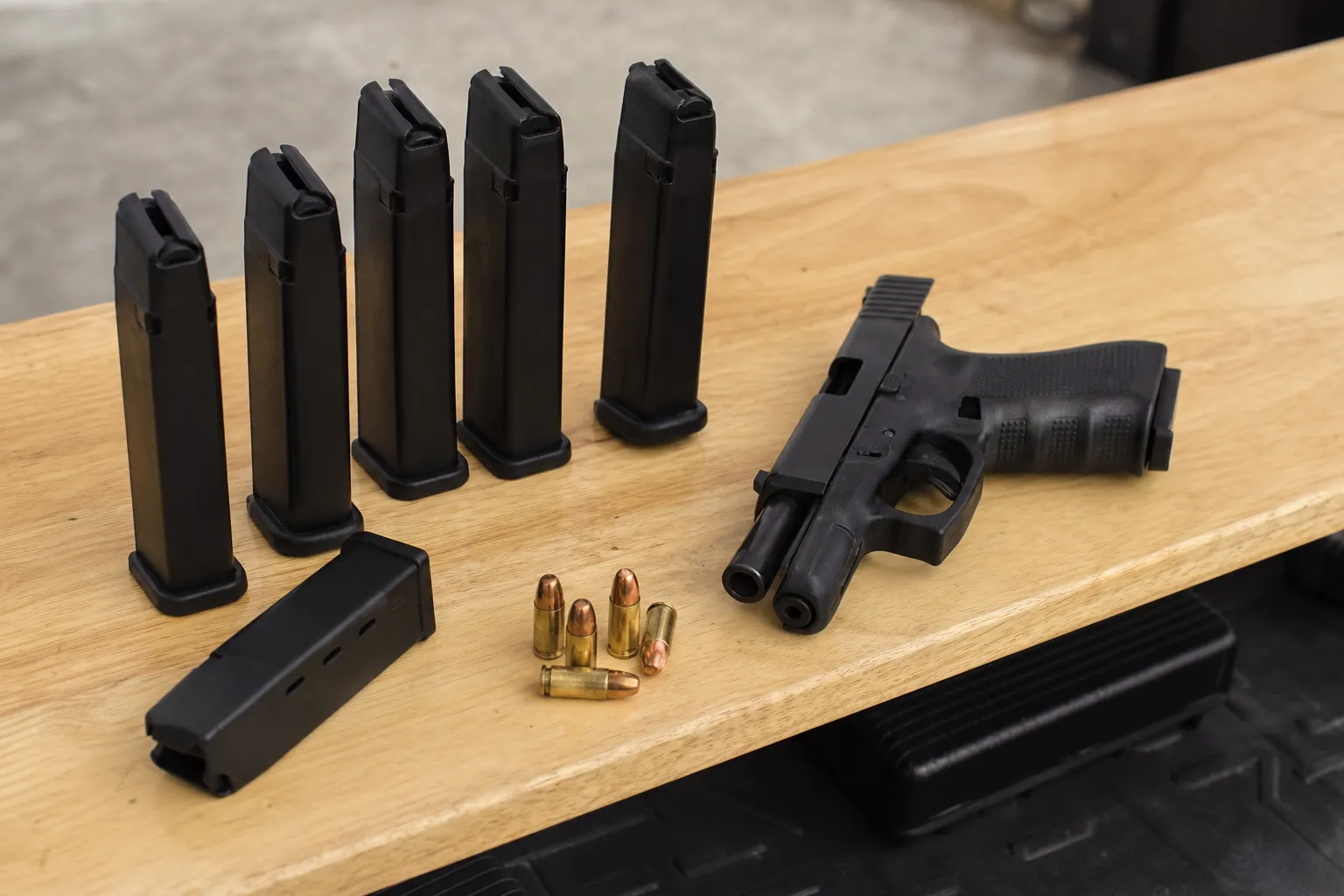
A pistol magazine is a spring-fed cartridge holder. SAAMI defines a firearm magazine as a receptacle that holds multiple cartridges or shells under spring pressure before they feed into the chamber. In a semiautomatic pistol, the magazine presents cartridges at the top of the magazine so the slide can feed them into the chamber during the loading and firing cycle.
This guide focuses on removable pistol magazines like those described in current Beretta, GLOCK, Smith & Wesson and SIG Sauer pistol manuals. It explains the terms new handgun owners usually see first: body, spring, follower, feed lips, floor plate or baseplate, single-stack, double-stack and staggered-column.
Magazine, not clip
SAAMI says magazines may be fixed or removable and may take forms such as box, drum, rotary and tubular designs. The pistol magazines covered here are the removable box-style magazines commonly shown in modern handgun owner manuals.
A magazine is different from a clip. SAAMI defines a cartridge clip as a magazine charger and says that, unlike a magazine, it does not contain a feeding spring. In plain terms, the spring is one of the key features that makes a magazine a magazine.
A semiautomatic pistol is also not the same thing as a fully automatic firearm. SAAMI defines semiautomatic action as a self-loading, magazine-fed firearm in which each pull of the trigger results in one complete firing cycle, from firing through loading. For broader handgun terminology, see Revolver vs Pistol.
How a pistol magazine feeds cartridges
The magazine holds cartridges under spring pressure. The spring pushes the follower upward, and the follower pushes the cartridges toward the feeding position at the top of the magazine.
Beretta’s 92X manual describes loading a magazine by placing a cartridge on the follower in front of the lips at the top of the magazine, pressing the cartridge down onto the follower, and sliding it under the lips until it is inside the magazine body. Beretta’s APX A1 Carry manual uses the term feed lips and describes the cartridge as being seated fully inside the magazine body under those feed lips.
Once a loaded magazine is in the pistol, the slide is the part that strips the top cartridge from the magazine. Beretta’s APX A1 Carry manual says that when the slide is pulled back and released, the slide automatically picks up a cartridge from the top of the magazine and feeds it into the chamber.
During firing, the same general relationship continues. Beretta’s APX A1 Carry manual states that a loaded and fired pistol will pick up the next round and feed it into the firing chamber as long as ammunition remains in the magazine. The same manual also describes the slide closing and feeding the next cartridge from the magazine into the chamber during the firing cycle.
For a new owner, the important idea is simple: the magazine does not fire the cartridge. It holds cartridges in position under spring pressure so the pistol can feed them into the chamber.
Main parts of a pistol magazine
Manufacturers use slightly different part names, but current pistol manuals show the same basic group of parts. Beretta’s APX A1 manual lists a magazine tube, follower, magazine spring, inner plate and bottom plate. SIG Sauer’s Classic Line Pistols manual also uses the terms magazine follower, magazine spring, magazine tube, magazine floor plate and magazine insert.
Body, tube or magazine tube
The body is the outer shell of the magazine. Manufacturer manuals often call it the magazine tube or simply the tube.
The body contains the cartridges and the internal magazine parts. Beretta’s 92X and APX A1 Carry manuals describe cartridges being slid under the lips until they are inside the magazine body.
Follower
The follower is the platform that sits under the cartridges. AFTE defines a magazine follower as a spring-actuated device that pushes cartridges in a magazine to the feeding position.
SIG Sauer’s Classic Line Pistols manual describes the follower as positioned on the magazine spring and inserted into the magazine tube.
Spring
The magazine spring supplies the upward pressure. SAAMI’s definition of a magazine includes cartridges or shells being held under spring pressure before feeding into the chamber.
Feed lips
The feed lips are the retaining features at the top of the magazine that hold and position the top cartridge for feeding.
Beretta’s APX A1 Carry manual tells the user to slide a cartridge under the feed lips until it is seated inside the magazine body.
Feed lips matter because they help control how the top cartridge is presented. A U.S. patent publication describing double-stack, single-feed design states that both feed lips retain a single cartridge in the center position at the top of the magazine.
Baseplate, floor plate or bottom plate
The bottom closure of the magazine may be called a baseplate, floor plate or bottom plate. AFTE defines a magazine floorplate as the bottom of a magazine.
Beretta’s APX A1 manual uses bottom plate. SIG Sauer’s Classic Line Pistols manual describes the magazine floor plate as sliding onto the magazine tube lips and being locked in place by the magazine insert.
For a beginner, the exact name is less important than recognizing that this part closes the bottom of the magazine and helps retain the internal parts.
Single-stack magazines
A single-stack magazine arranges cartridges in one vertical stack inside the magazine body. U.S. patent publication US20200011625A1 describes a single-stack, single-feed magazine as having cartridges arranged in a single vertical stack within the magazine body.
The same patent publication states that a single-stack, single-feed magazine is generally thinner than a comparable double-stack, double-feed magazine of similar length and caliber, but holds fewer cartridges.
That is the neutral tradeoff most new owners need to understand: a single-stack layout is commonly discussed in terms of a thinner magazine, while a double-stack layout is commonly discussed in terms of a wider arrangement of cartridges. Actual pistol size and magazine design are model-specific.
Double-stack and staggered-column magazines
AFTE defines a staggered box magazine as a box magazine with two zigzagged columns of cartridges and says it is also known as a double stack magazine. The AFTE definition also states that this increases capacity without lengthening the magazine.
A U.S. patent publication similarly describes a double-stack magazine body as having a width that accommodates cartridges in a zigzag pattern.
In everyday handgun language, “double-stack” and “staggered-column” are often used for the same general cartridge arrangement: two offset columns rather than one straight vertical column. The important detail is that the cartridges are not simply side by side in a loose pile. They are controlled by the magazine body, follower, spring and feed lips.
Single-feed and double-feed terms
“Single-stack” and “double-stack” describe how cartridges are arranged in the magazine body. “Single-feed” and “double-feed” describe how cartridges are presented at the top.
The patent publication cited above describes a double-stack, single-feed design as using one set of feed lips to position one cartridge at the center top of the magazine. In that layout, both feed lips retain a single centered top cartridge.
The same patent text also discusses double-stack, double-feed magazines as a comparison point when explaining that single-stack, single-feed magazines are generally thinner than comparable double-stack, double-feed magazines. For a beginner, the key distinction is that stack terms describe the column arrangement, while feed terms describe the presentation of the top cartridge.
Safety reminders for new handgun owners
Removing a magazine is not the same as unloading a pistol. Beretta’s APX A1 Carry manual warns that removing or unloading the magazine does not guarantee that a firearm is unloaded or cannot fire.
Beretta also warns that a pistol can fire with the magazine empty or removed if a live round is in the chamber. That is why the magazine and the chamber must be treated as separate things when checking a pistol’s condition.
Always follow the owner’s manual for the specific pistol and magazine in front of you. Manufacturer manuals may use slightly different part names. For the broader safety rules, see The Basic Rules of Firearm Safety.
Quick comparison
| Term | What it describes | Plain meaning |
|---|---|---|
| Magazine | SAAMI’s spring-fed receptacle for cartridges or shells | Holds cartridges under spring pressure before feeding |
| Clip | SAAMI’s magazine charger without a feeding spring | Not the same thing as a magazine |
| Follower | AFTE’s spring-actuated device that pushes cartridges to feeding position | Platform under the cartridges |
| Feed lips | Top retaining features of a magazine | Hold and position the top cartridge |
| Floor plate or bottom plate | AFTE’s bottom of a magazine, with manufacturer names varying | Bottom closure of the magazine |
| Single-stack | One vertical stack, as described in patent terminology | Usually thinner than comparable double-stack designs |
| Staggered or double-stack | AFTE’s two zigzagged columns | Two offset cartridge columns |
| Single-feed | Top cartridge presented in one centered position | Both feed lips retain one centered cartridge in the patent example |
What to check in your own manual
Before using or maintaining any pistol magazine, check the owner’s manual for that exact firearm and magazine. Look for the manufacturer’s names for the magazine parts, the loading instructions, the unloading instructions and the safety warnings about the chamber and magazine.
Also confirm current magazine rules through official federal, state, provincial, territorial or local authorities before buying, possessing or traveling with magazines. Rules can depend on place and time, and this terminology guide is not a legal guide.
Frequently asked questions
What is a pistol magazine?
SAAMI defines a magazine as a receptacle that holds multiple cartridges or shells under spring pressure before they feed into the chamber. In a semiautomatic pistol, the magazine presents cartridges so the slide can feed them into the chamber.
What is the difference between a magazine and a clip?
SAAMI says a cartridge clip is a magazine charger and, unlike a magazine, does not contain a feeding spring. A magazine has its own spring that helps feed cartridges.
What are the main parts of a pistol magazine?
Manufacturer manuals may use names such as magazine tube or body, follower, magazine spring, bottom plate or floor plate, and related retaining parts such as an inner plate or insert. Some manuals also use the term feed lips for the top retaining features.
What does single-stack mean?
A single-stack magazine arranges cartridges in one vertical stack inside the magazine body. Patent terminology states that a single-stack, single-feed magazine is generally thinner than a comparable double-stack, double-feed magazine of similar length and caliber, but holds fewer cartridges.
What does double-stack or staggered-column mean?
AFTE defines a staggered box magazine as a box magazine with two zigzagged columns of cartridges and says it is also known as a double stack magazine.
Does removing the magazine unload a pistol?
No. Beretta warns that removing or unloading the magazine does not guarantee that a firearm is unloaded or cannot fire, and that a pistol can fire with the magazine empty or removed if a live round is in the chamber.
Sources
- MAGAZINE, Sporting Arms and Ammunition Manufacturers’ InstituteOfficial source. Accessed October 31, 2026.
- CARTRIDGE CLIP, Sporting Arms and Ammunition Manufacturers’ InstituteOfficial source. Accessed October 31, 2026.
- SEMIAUTOMATIC ACTION, Sporting Arms and Ammunition Manufacturers’ InstituteOfficial source. Accessed October 31, 2026.
- 92X Performance User Manual, BerettaOfficial source. Accessed October 31, 2026.
- APX A1 Carry User Manual, BerettaOfficial source. Accessed October 31, 2026.
- APX A1 Pistol User Manual, BerettaOfficial source. Accessed October 31, 2026.
- GLOCK Instructions for Use, Gen5 and X Models, GLOCKOfficial source. Accessed October 31, 2026.
- M&P9 M2.0 Metal Frame Pistol Manual, Smith & WessonOfficial source. Accessed October 31, 2026.
- Operator’s Manual, Classic Line Pistols, SIG SauerOfficial source. Accessed October 31, 2026.
- AFTE Glossary, Version 6, Association of Firearm and Tool Mark Examiners. Accessed October 31, 2026.
- US20200011625A1, Bolt Carrier for Semi-Automatic and Automatic Firearm, Google Patents. Accessed October 31, 2026.