The Basic Rules of Firearm Safety
The basic gun safety rules are simple to say and important every time a firearm is handled: treat every firearm as loaded, control the muzzle, keep your finger off the trigger until ready to shoot, and know your target and what is beyond it. Official and safety sources also stress secure storage, safe transport, avoiding alcohol or mind altering drugs, and hearing and eye protection.
By RaiS. Reviewed by RaiS. Published . 7 min read.
Research and drafting were assisted by AI. RaiS checked the facts against the sources below and approved this page.
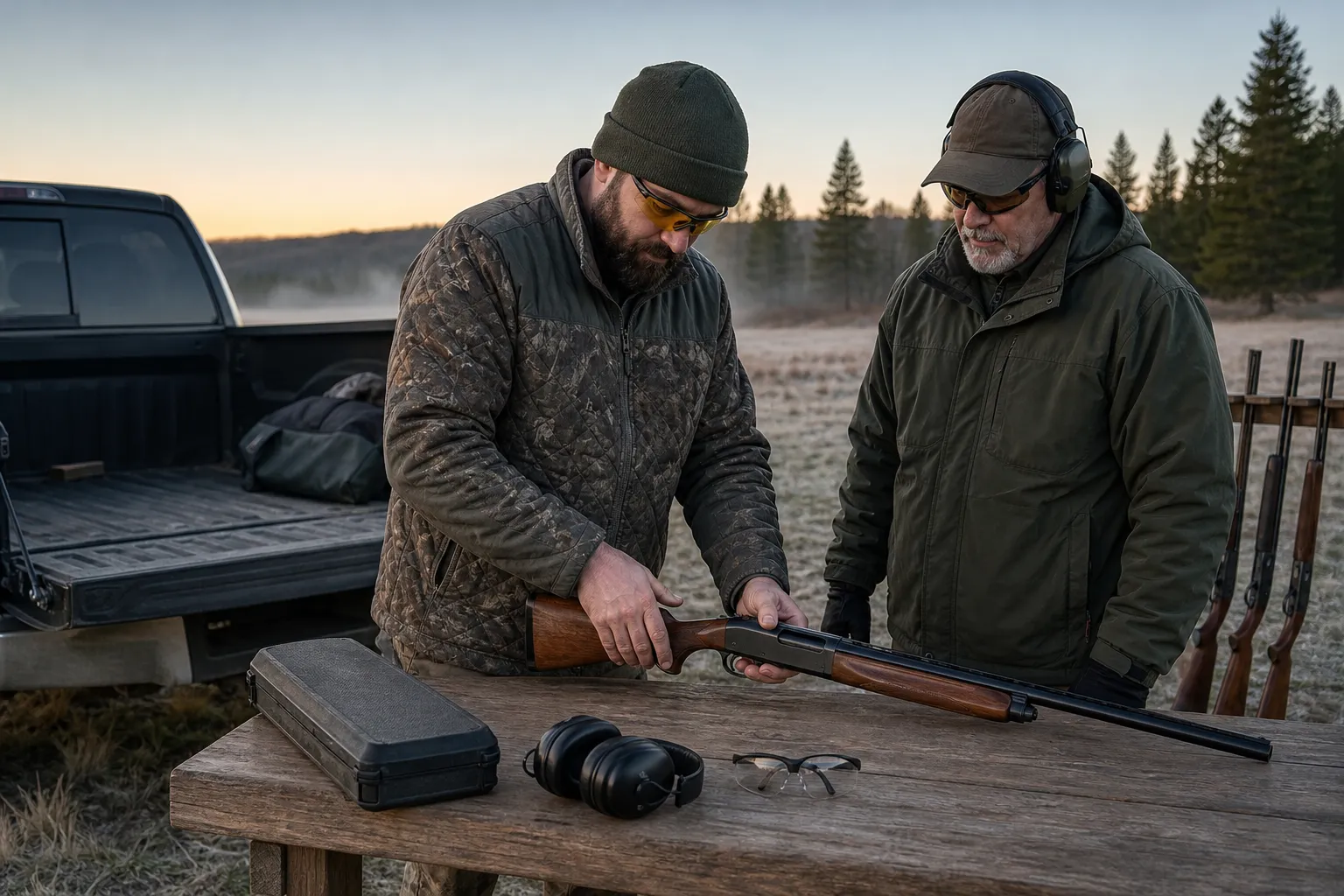
The basic gun safety rules commonly taught by major safety programs are consistent: treat every firearm as loaded, keep the muzzle pointed in a safe direction, keep your finger off the trigger until you are ready to shoot, and be sure of your target and what is beyond it. NSSF says safety comes first “at the shooting range or anywhere you handle a firearm,” and says the first four rules in its ten rules are “the big ones” (NSSF).
Why the same rules show up in many programs
Firearm safety programs use slightly different wording, but the central ideas repeat. NSSF, Minnesota DNR hunter safety, and California Hunter Education all include the same beginner level principles: treat firearms as loaded, control muzzle direction, keep the trigger finger off the trigger until ready, and identify the target and what is beyond it (NSSF, Minnesota DNR, California Hunter Education FAQ).
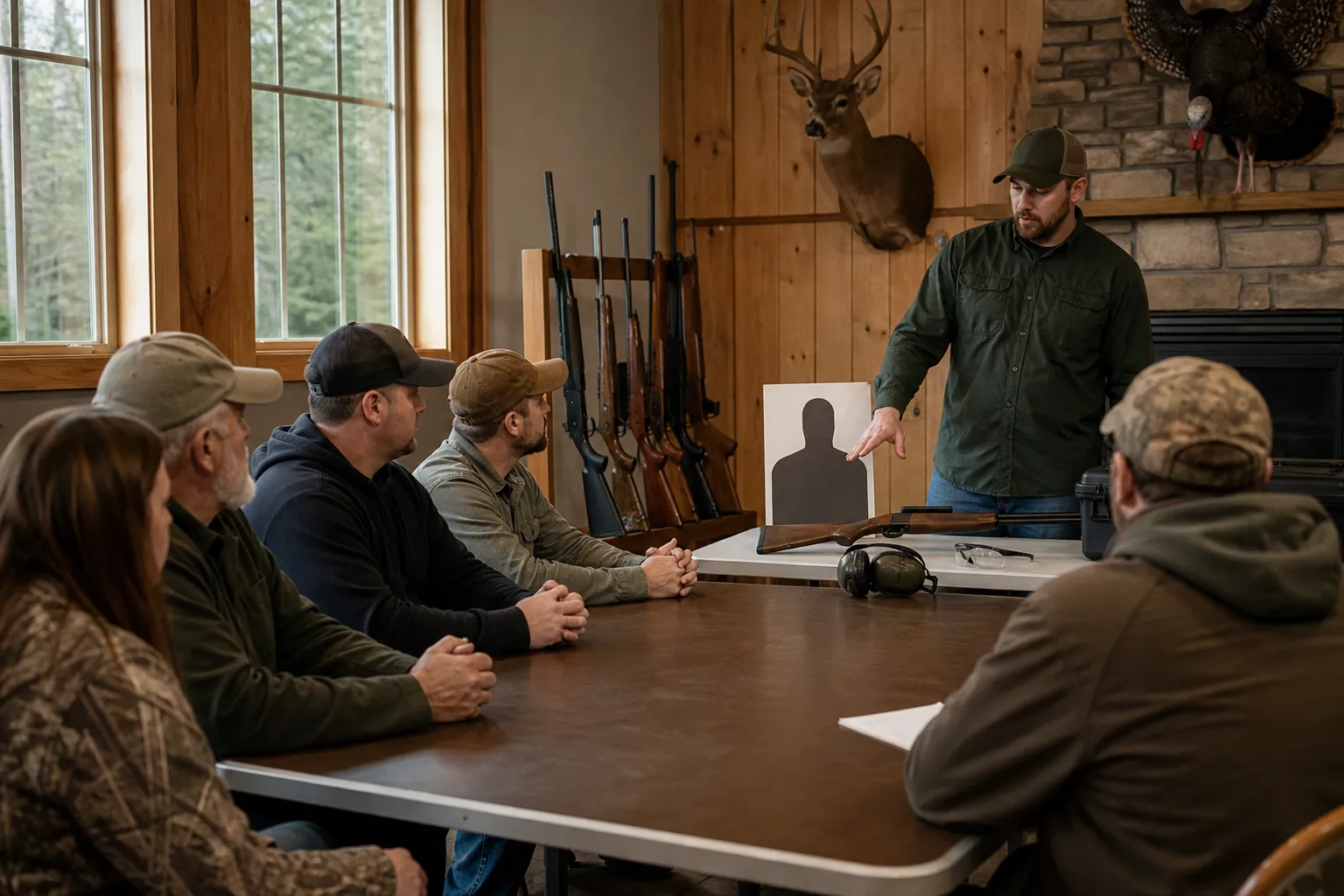
In the United States, the U.S. Fish and Wildlife Service says hunter education includes firearm and archery safety, wildlife management, conservation, ethics, game laws, outdoor survival, and wilderness first aid. It also says more than 1 million people receive hunter education each year through the Hunter Education Program (U.S. Fish and Wildlife Service).
In Canada, the RCMP says the Canadian Firearms Program maintains national firearm safety training standards. The RCMP also says first time Canadian firearms licence applicants must pass the Canadian Firearms Safety Course before applying for a Possession and Acquisition Licence, and lists basic firearm safety practices, safe handling, safe carry, firing techniques, and safe storage, display, transportation, and handling as course topics (RCMP, RCMP safety courses).
Rule 1: Treat every firearm as loaded
Minnesota DNR gives the beginner wording clearly: “Treat every firearm as if it is loaded” (Minnesota DNR). California Hunter Education uses the same idea: “Treat every gun as if it were loaded” (California Hunter Education FAQ).
This rule is the starting point because it applies before anyone talks about the firearm’s condition. NSSF says every handler should personally check, not assume: “Never assume a gun is unloaded, check for yourself!” (NSSF).
Rule 2: Keep the muzzle pointed in a safe direction
NSSF’s first rule is: “Always Keep the Muzzle Pointed in a Safe Direction” (NSSF).
NSSF defines a safe direction by considering people, possible ricochets, and the fact that bullets can penetrate walls and ceilings (NSSF). That wording matters because “safe direction” is not just where the muzzle is pointing. It also includes what a shot could strike after impact or after passing through something.
Muzzle control applies when loading, unloading, carrying, storing, transporting, cleaning, or handing a firearm to another person. NSSF’s safety page frames the rules as applying at the range and anywhere a firearm is handled (NSSF).
Rule 3: Keep your finger off the trigger until ready to shoot
NSSF states: “Never touch the trigger on a firearm until you actually intend to shoot” (NSSF). Minnesota DNR says the finger should be outside the trigger guard until ready to shoot (Minnesota DNR).
This rule is separate from using a mechanical safety. NSSF warns that a safety is only a supplement to proper gun handling and is not a substitute for common sense (NSSF).
Rule 4: Know your target and what is beyond it
NSSF’s target rule is: “Be Sure of Your Target and What's Beyond It” (NSSF). Minnesota DNR puts it in hunting terms: “You’re responsible for knowing what’s in front of your target, near your target and beyond your target” (Minnesota DNR).
NSSF explains why this rule is critical: once a gun fires, the shooter has given up control of where the shot will go or what it strikes (NSSF). The rule is not only about identifying the object you intend to hit. It also includes the surrounding area and what lies beyond.
Load only when appropriate, and learn the firearm you are using
NSSF says firearms should be loaded only when the shooter is in the field, at the target range, or in a shooting area, and ready to shoot (NSSF). California Hunter Education includes unloading when not in use among its “Ten Commandments” of firearm safety (California Hunter Education FAQ).
NSSF also says users should learn the specific mechanical and handling characteristics of the firearm they use, because “Not all firearms are the same” (NSSF). For a beginner, that means safety is not just a memorized list. It also includes understanding the particular firearm being handled.
Safe storage and access control
Project ChildSafe recommends storing firearms in a locked cabinet, safe, gun vault, or storage case when not in use, and recommends storage that is inaccessible to children and unauthorized users (Project ChildSafe firearm safety brochure). NSSF’s safety rules also say firearms and ammunition should be secured in safe places, separate from each other, when not in use (NSSF).
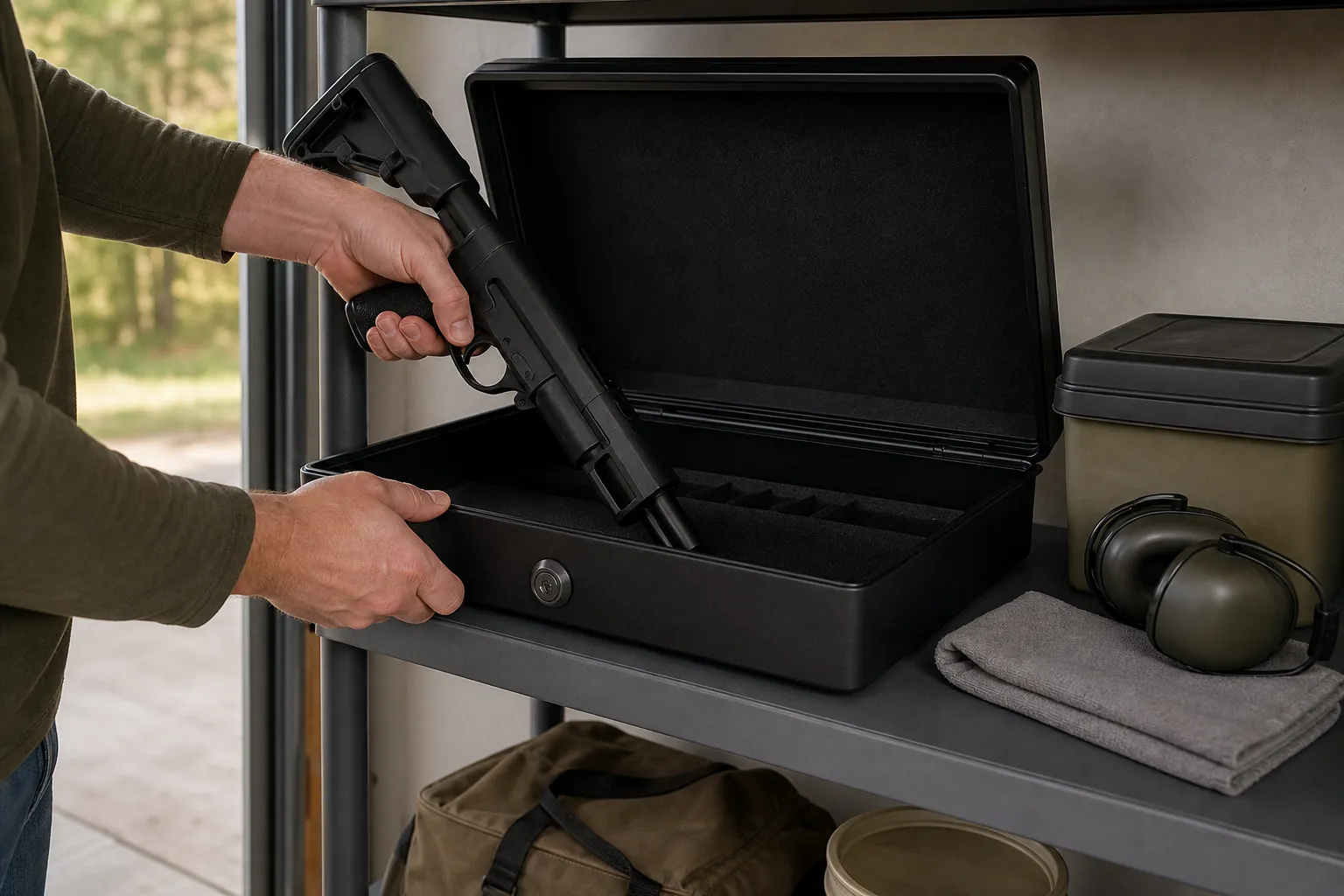
Project ChildSafe recommends storing ammunition in a locked location separate from firearms. It also says a gun lock is an added safety precaution, not a substitute for secure storage (Project ChildSafe firearm safety brochure).
California Hunter Education similarly says guns and ammunition should be stored separately, beyond the reach of children and careless adults (California Hunter Education FAQ).
Project ChildSafe also advises unloading, cleaning, and returning firearms to secure storage immediately after returning from a range day or hunting trip (Project ChildSafe firearm safety brochure).
Exact legal storage requirements can vary by jurisdiction and by class of firearm. For Canada, the RCMP storage and transport page says safe storage, transport, and display help “prevent accidents and deter loss or theft.” That RCMP page is dated as modified November 12, 2024 (RCMP storage, transport and display).
Transport safety
The safety principle for transport is to keep firearms unloaded and secured according to the official rules that apply where you are. In Canada, the RCMP states that non restricted firearms must be unloaded during transportation. On the same page, the RCMP states that restricted and prohibited firearms must be unloaded, locked with secure locking devices, and locked in a sturdy, non transparent container for transport, along with other requirements. The RCMP page is dated as modified November 12, 2024 (RCMP storage, transport and display).
This guide does not summarize U.S. interstate transport law because the provided fact ledger did not include the federal ATF or statutory text needed to cite it accurately. U.S. readers should confirm current federal, state, and local transport requirements with the responsible official agencies before traveling with a firearm.
Range and field safety
NSSF says all shooters should wear protective shooting glasses and some form of hearing protectors while shooting (NSSF).
NIOSH says the peak sound pressure from any firearm is usually enough to require hearing protection, even for one shot. NIOSH recommends that hunters and shooters use double hearing protection every time a weapon is fired (NIOSH).
Alcohol and drugs are also part of safety. California Hunter Education includes avoiding alcohol or mind altering drugs among its firearm safety commandments (California Hunter Education FAQ).
Field and range safety also tie back to the core rules. NSSF’s safe direction rule includes ricochets and penetration through walls and ceilings. NSSF’s target rule includes knowing what is beyond the target (NSSF). Minnesota DNR says hunters are responsible for what is in front of, near, and beyond the target (Minnesota DNR).
A simple safety checklist
Use this as a plain language review of the rules above:
- Treat every firearm as loaded, using the wording taught by Minnesota DNR and California Hunter Education (Minnesota DNR, California Hunter Education FAQ).
- Control the muzzle direction at all times, as taught by NSSF (NSSF).
- Keep your finger off the trigger and outside the trigger guard until ready to shoot, as taught by NSSF and Minnesota DNR (NSSF, Minnesota DNR).
- Be sure of your target and what is beyond it, as taught by NSSF and Minnesota DNR (NSSF, Minnesota DNR).
- Store firearms locked and inaccessible to children and unauthorized users, with ammunition stored separately, as recommended by Project ChildSafe (Project ChildSafe firearm safety brochure).
- Wear eye and hearing protection while shooting, as stated by NSSF, and consider NIOSH’s recommendation for double hearing protection whenever a weapon is fired (NSSF, NIOSH).
- Avoid alcohol or mind altering drugs when following firearm safety commandments, as taught by California Hunter Education (California Hunter Education FAQ).
What to check with official sources
Before handling, storing, transporting, hunting with, or traveling with a firearm, check the current official rules for your location. In Canada, check the RCMP Canadian Firearms Program and the current Canadian Firearms Safety Course material. In the United States, check the appropriate federal, state, and local agencies, and the hunter education authority for the state where you hunt or shoot. Hunting and transport rules can change, and official agencies are the source to rely on for current requirements.
Frequently asked questions
What are the basic gun safety rules?
The common core rules are: treat every firearm as loaded, keep the muzzle pointed in a safe direction, keep your finger off the trigger until ready to shoot, and be sure of your target and what is beyond it. These ideas appear in NSSF guidance, Minnesota DNR hunter safety, and California Hunter Education.
Does a mechanical safety replace safe handling?
No. NSSF says a firearm’s safety is a supplement to proper gun handling and cannot substitute for safe handling and common sense.
How should firearms and ammunition be stored?
Project ChildSafe recommends storing firearms in a locked cabinet, safe, gun vault, or storage case when not in use, and storing ammunition in a locked location separate from firearms.
Do I need eye and hearing protection when shooting?
NSSF says all shooters should wear protective shooting glasses and hearing protection while shooting. NIOSH recommends double hearing protection every time a weapon is fired.
What does Canada require for firearm transport?
The RCMP page dated as modified November 12, 2024 says non restricted firearms must be unloaded during transportation. It says restricted and prohibited firearms must be unloaded, locked with secure locking devices, and locked in a sturdy, non transparent container, along with other requirements. Confirm current requirements with the RCMP.
Can alcohol or drugs be used before handling firearms?
California Hunter Education includes avoiding alcohol or mind altering drugs in its firearm safety commandments.
Sources
- Firearm Safety, 10 Rules of Safe Gun Handling, NSSFOfficial source. Accessed October 20, 2026.
- NSSF Project ChildSafe Firearms Safety Tips, Project ChildSafe, NSSFOfficial source. Accessed October 20, 2026.
- Firearms, Royal Canadian Mounted Police, Canadian Firearms ProgramOfficial source. Accessed October 20, 2026.
- Safety courses, Royal Canadian Mounted Police, Canadian Firearms ProgramOfficial source. Accessed October 20, 2026.
- Storing, transporting and displaying firearms, Royal Canadian Mounted Police, Canadian Firearms ProgramOfficial source. Accessed October 20, 2026.
- Canadian Firearms Safety Course 2008, Government of Canada Publications, RCMPOfficial source. Accessed October 20, 2026.
- Hunter Education, U.S. Fish and Wildlife ServiceOfficial source. Accessed October 20, 2026.
- Basic rules of hunter and firearms safety, Minnesota Department of Natural ResourcesOfficial source. Accessed October 20, 2026.
- Chapter 6, Hunting Safety, Texas Parks and Wildlife DepartmentOfficial source. Accessed October 20, 2026.
- Frequently Asked Questions about California Hunter Education, California Department of Fish and WildlifeOfficial source. Accessed October 20, 2026.
- Firearms and Hearing Protection, CDC Stacks, NIOSH. Accessed October 20, 2026.
- 27 CFR § 478.38, Transportation of firearms, Bureau of Alcohol, Tobacco, Firearms and Explosives eRegulationsOfficial source. Accessed October 20, 2026.
- Storage, Display, Transportation and Handling of Firearms by Individuals Regulations, SOR/98-209, Justice Laws Website, Government of CanadaOfficial source. Accessed October 20, 2026.