Ammunition Storage Safety: Heat, Moisture, Containers and Separation from Firearms
Store ammunition cool, dry, labeled, and protected from heat, water, chemicals, and unauthorized access. Use original or ammunition specific packaging, and keep ammunition inaccessible to unauthorized people.
By RaiS. Reviewed by RaiS. Published . 8 min read.
Research and drafting were assisted by AI. RaiS checked the facts against the sources below and approved this page.
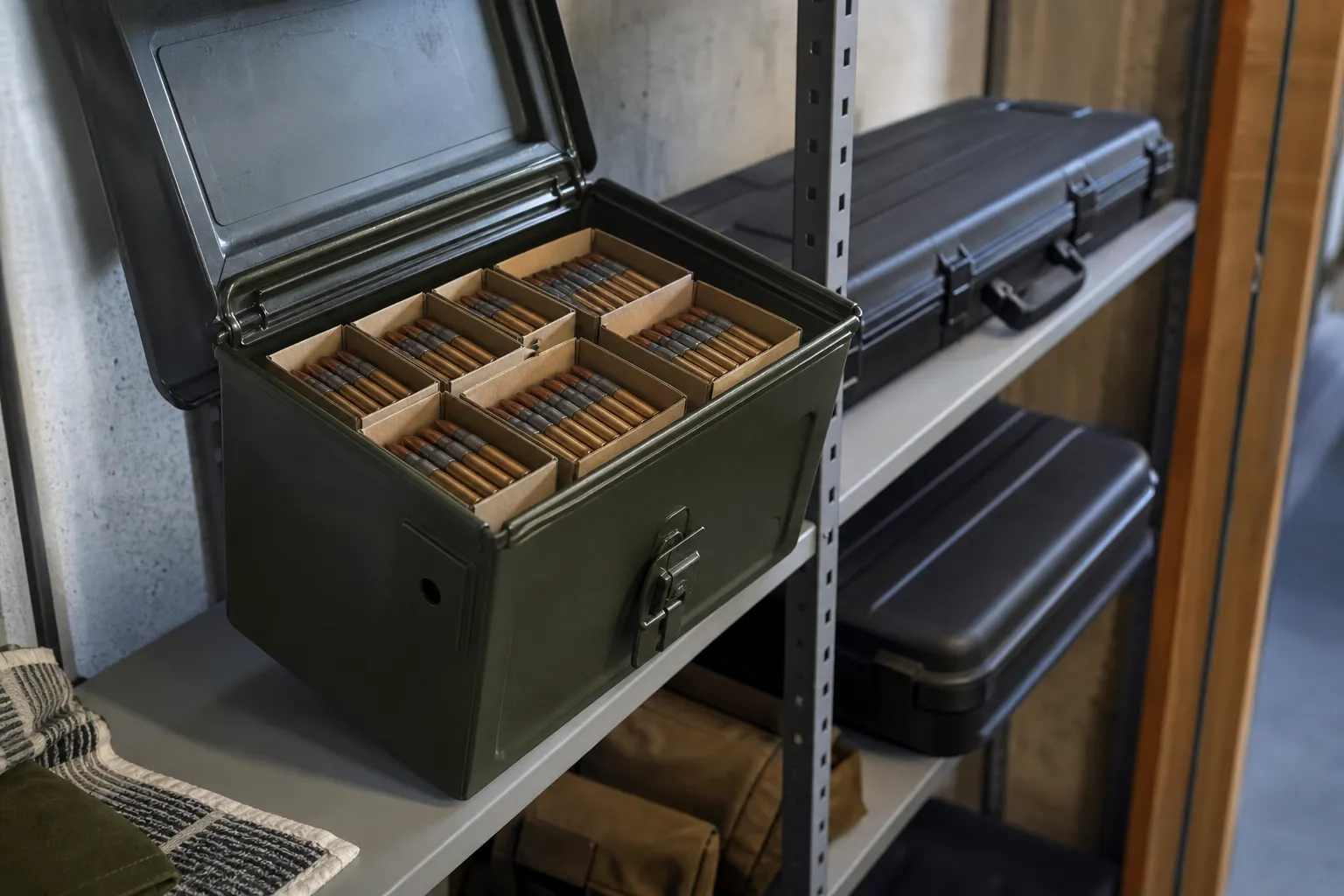
Store ammunition in its original packaging or other ammunition-specific packaging, in a cool, dry place away from heat, flame, direct sun, water, solvents, oils, and incompatible chemicals. SAAMI, Project ChildSafe, CDC, and the RCMP also point to restricted access as a core safety practice, which usually means locked storage and, in many recommendations, separation from firearms when not in use.
This guide focuses on safe home storage conditions and access control. It is not a guide to ammunition shelf-life claims, reloading-component storage, or local quantity limits. For shelf-life basics, see Does Ammo Expire? Ammunition Shelf Life and Storage.
The basic storage goal
SAAMI describes its ammunition storage pamphlet as basic safety guidance for sporting and law-enforcement ammunition. SAAMI also states that the pamphlet applies to ammunition loaded with smokeless powder only, and that storage and handling guidance for non-smokeless propellant may be different.
For typical sporting ammunition, the practical goal is simple:
| Storage issue | Safer practice |
|---|---|
| Heat and flame | Keep ammunition away from heat sources and open flames. |
| Moisture | Store ammunition in a dry location and do not use ammunition that has been submerged. |
| Chemicals | Keep ammunition away from solvents, oils, petroleum products, acids, ammonia, and other damaging chemicals. |
| Containers | Keep ammunition in factory packaging or other packaging designed for ammunition. |
| Identification | Keep original labels intact so the ammunition can be matched to the firearm it is intended for. |
| Access | Store ammunition where children, unauthorized adults, and other unauthorized persons cannot access it. |
The same ideas appear in manufacturer guidance. Federal recommends storing ammunition in a cool, dry place protected from direct sunlight. Winchester tells new gun owners to store ammunition in a cool, dry place without large temperature fluctuations. CCI’s safety data sheet for Clean-Fire rifle and pistol ammunition says to keep ammunition in the original container and away from oils, lubricants, ignition sources, direct sunlight, and extremely high or low temperatures.
Heat, direct sun, and vehicles
SAAMI says ammunition should be stored in a cool, dry location away from heat sources or open flames. Federal’s safety data sheet similarly says to store centerfire rifle and pistol ammunition in a dry, cool, well-ventilated place and away from heat sources and ignition sources.
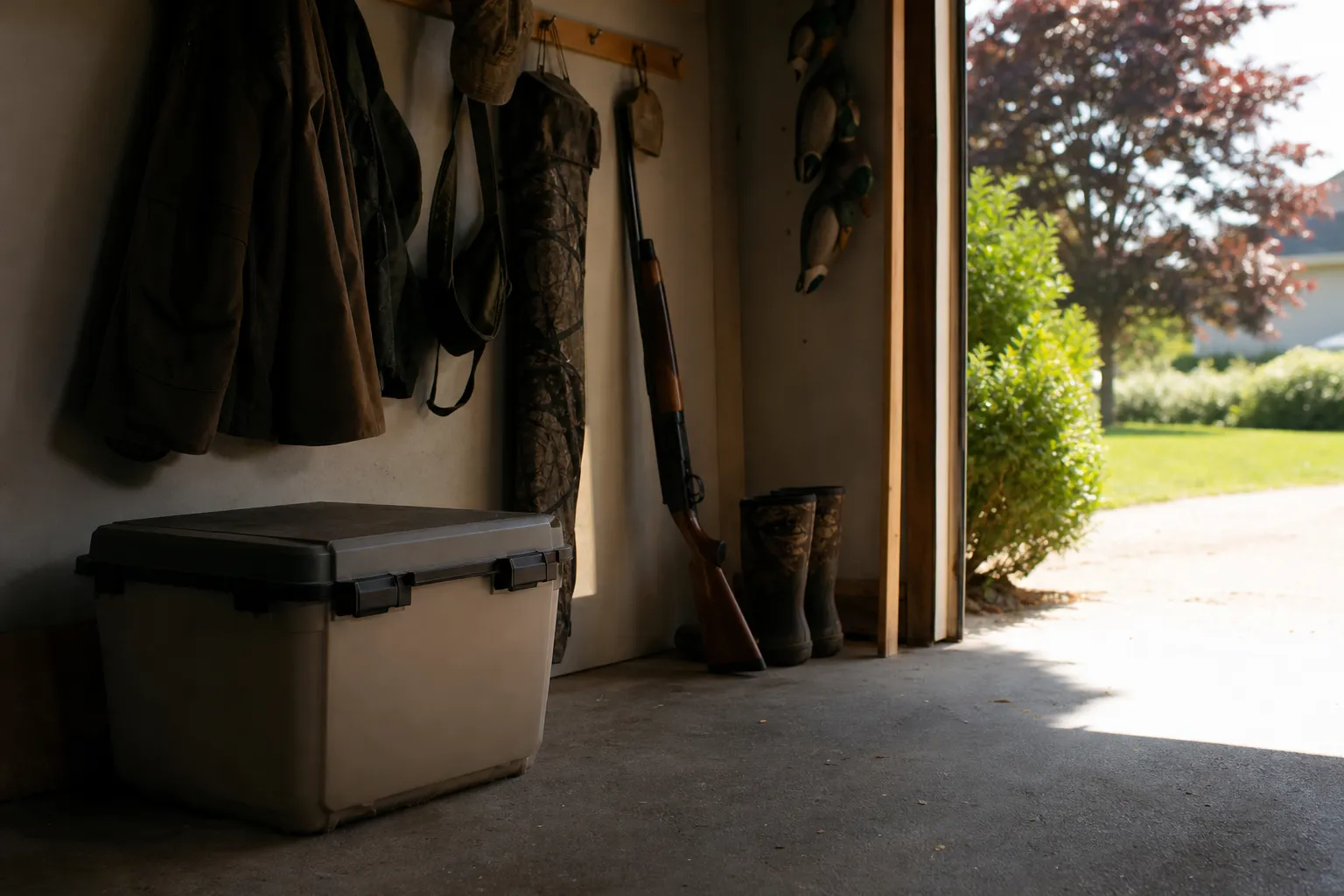
High heat is not just a comfort issue. SAAMI says extended exposure to high temperatures or high humidity may damage ammunition, and that damage may result in increased or decreased chamber pressure, incomplete propellant burning, or failure to fire.
Vehicles deserve special caution. SAAMI says it is not advisable to leave ammunition inside a vehicle, including the trunk, for extended periods in direct sunlight or at elevated temperatures because this can accelerate propellant deterioration.
SAAMI’s fire-exposure guidance also says ammunition can be permanently degraded by excessive heat even if it did not ignite. If ammunition, propellant, or primers may have been exposed to excessive temperatures above about 200°F, SAAMI says it should be safely disposed of in accordance with applicable local, state, and federal regulations.
Moisture, submersion, and wet ammunition
SAAMI says water can damage ammunition. Its older Small Arms Ammunition leaflet says ammunition should not be immersed in water, and Winchester warns new gun owners never to use ammunition that has been underwater because it can cause a misfire or hangfire and create a dangerous situation.
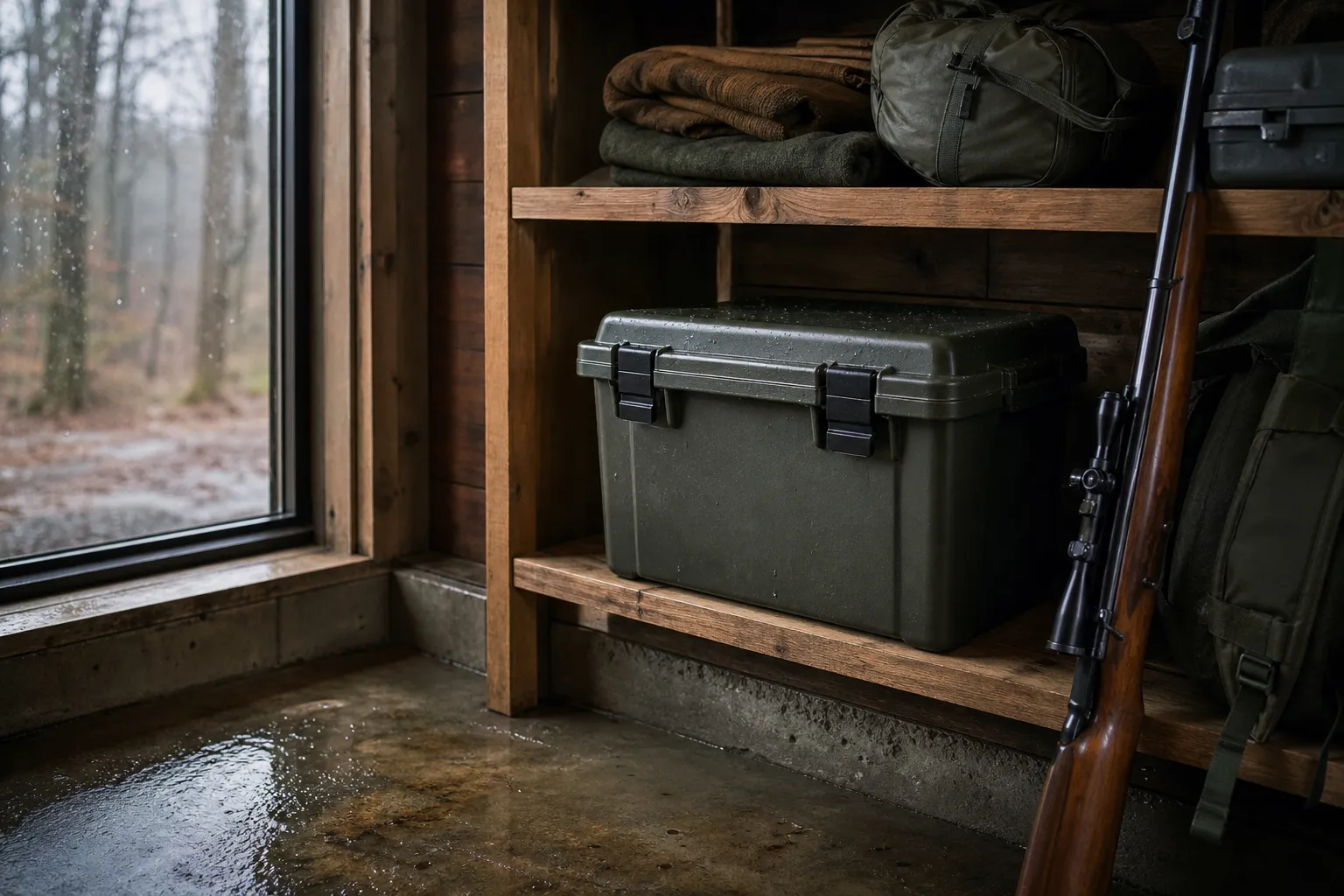
SAAMI’s submerged-ammunition guidance distinguishes limited exposure from submersion. SAAMI says centerfire rifle, handgun, and shotshell ammunition is reasonably tolerant of light rain, snow, or being dropped on damp ground if the exposure is limited and the cartridges are wiped dry immediately.
Rimfire ammunition is different. SAAMI says rimfire ammunition is much more susceptible than other ammunition types to moisture damage from exposure to the elements because of its cartridge construction. For background on cartridge ignition types, see Rimfire vs Centerfire Ammunition.
For ammunition that has actually been submerged, SAAMI’s answer is direct: do not attempt to salvage or use it. SAAMI also warns against trying to dry submerged cartridges with direct heat, because direct heat can degrade the smokeless propellant inside the case and make the round unsafe to fire. SAAMI says submerged ammunition should be disposed of safely under applicable laws, and that owners should contact local law enforcement for disposal guidance.
Chemicals, oils, and incompatible materials
Ammunition should not be stored where it can be exposed to cleaning solvents, oils, petroleum products, acids, ammonia, or similar chemicals. SAAMI says exposure to water, solvents, petroleum products, acids, ammonia, and other chemicals can damage ammunition.
SAAMI’s older leaflet also warns against exposing ammunition to organic solvent, paint thinner, petroleum product, ammonia, and similar materials. Federal’s safety data sheet identifies strong acids, strong bases, and strong oxidizers as incompatible materials for its centerfire rifle and pistol ammunition. CCI says to keep ammunition away from oils and lubricants.
That guidance matters in ordinary storage. If ammunition is stored near gun-cleaning products, lubricants, or household chemicals, the container and location should prevent contact with those materials. If ammunition is known or suspected to be damaged, SAAMI says not to use it.
Containers and labels
SAAMI recommends storing ammunition in its original packaging or other packaging designed for ammunition. SAAMI’s Small Arms Ammunition leaflet says ammunition should be stored in the factory carton or package because the labeling and identification on the original container help assure future use in the gun for which the ammunition is intended.
That is especially important when several cartridges look similar or when different loads are stored in the same home. The safe practice is to keep the label with the ammunition rather than relying on memory.
Federal’s safety data sheet says to keep the container closed when not in use. CCI’s safety data sheet says to keep ammunition only in the original container.
Inspect ammunition before use
Storage safety continues when ammunition comes out of storage. SAAMI recommends inspecting cartridges or shotshells before use and properly disposing of those that show physical damage, such as corrosion, deep dents, or scratches.
SAAMI’s rule of thumb is clear: if in doubt, do not chamber or fire the ammunition. SAAMI also says damaged or suspected-damaged ammunition should not be used.
This is a storage guide, not a troubleshooting guide. If ammunition appears damaged, has been submerged, or may have been exposed to excessive heat, follow manufacturer guidance and official disposal guidance rather than trying to repair, dry, or alter it.
Separation from firearms and locked access
SAAMI recommends storing ammunition separately from firearms and making it inaccessible to unauthorized persons. SAAMI also says firearms should be secured to prevent access by unauthorized individuals, such as children and others who do not have permission to handle or use them.
Project ChildSafe recommends that unloaded firearms be stored, when not in use, in a locked cabinet, safe, gun vault, or storage case, and that ammunition be stored in a locked location separate from firearms. Project ChildSafe and the American Foundation for Suicide Prevention also recommend storing firearms unloaded and storing ammunition separately in locked storage when not in use, especially where someone may be at risk.
CDC says putting a firearm out of sight or out of reach is not safe storage and is not enough to prevent use by children or unauthorized adults. CDC describes secure storage in a safe or lock box as a way to help prevent unauthorized firearm access and use, including by children and people at risk of harming themselves or others. CDC also summarizes Project ChildSafe’s message as storing firearms unloaded and locked, with ammunition secured separately.
For more on locks and locked containers, see Gun Locks Explained: Trigger Locks, Cable Locks and Lock Boxes. For broader handling principles, see The Basic Rules of Firearm Safety.
Canada and official storage rules
For Canadian readers, the RCMP Canadian Firearms Program says safe storage, transport, and display help prevent accidents and deter loss or theft. The RCMP page says to store ammunition separately or lock it up, and that ammunition can be stored in the same locked container as firearms.
That sentence is a good example of why readers should check the current official rule for their location rather than relying on general summaries. U.S. public safety sources often recommend separate locked ammunition storage as a safety practice. Canadian federal guidance, as stated by the RCMP, includes the option of storing ammunition in the same locked container as firearms if it is locked up.
This page does not cover local quantity limits, transport rules, or every state, provincial, territorial, or municipal requirement. Confirm current requirements with the relevant agency where you live.
Fire exposure and why chambered ammunition is different
SAAMI’s firefighter material says sporting ammunition outside a firearm is unlikely to ignite under extreme impact, will not propagate in a chain reaction from one cartridge or shell to another, and does not mass explode.
That does not mean ammunition belongs near heat or fire. SAAMI still recommends keeping ammunition away from heat sources and open flames, and its fire-exposure guidance says excessive heat can permanently degrade ammunition.
SAAMI also points out an important difference: if a cartridge is chambered in a firearm and ignited by the heat of a fire, it will send the projectile down the barrel with the same velocity and energy as if the trigger were pulled. That is one reason safe-storage programs emphasize unloaded firearms, locked firearm storage, and ammunition secured away from firearms when not in use.
A practical home storage checklist
Use this checklist to evaluate a home ammunition storage area:
- Is the ammunition in its original packaging or other packaging designed for ammunition?
- Are the labels intact so the cartridge and intended firearm can be identified later?
- Is the location cool, dry, and protected from direct sunlight?
- Is it away from heat sources, ignition sources, and open flames?
- Is it protected from water, high humidity, and submersion risk?
- Is it separated from solvents, oils, lubricants, petroleum products, acids, ammonia, strong bases, and strong oxidizers?
- Is it inaccessible to children and other unauthorized persons?
- Are firearms unloaded and secured according to official guidance for your location?
- Are keys and combinations kept away from children and other unauthorized persons?
- Is there a plan to contact local law enforcement or the appropriate agency for disposal guidance if ammunition is submerged, heat-damaged, or physically damaged?
What to check next
Before choosing a final storage setup, check the current guidance from SAAMI, the ammunition manufacturer, and the public safety or firearms authority for your jurisdiction. The RCMP Canadian Firearms Program publishes federal storage guidance for Canada. If ammunition has been submerged, exposed to excessive heat, or appears damaged, follow official disposal guidance and do not attempt to salvage it.
Frequently asked questions
Should ammunition be stored in the original box?
Yes. SAAMI recommends original packaging or other packaging designed for ammunition, and its Small Arms Ammunition leaflet says the original label helps ensure the ammunition is later used in the firearm for which it is intended.
Is it safe to store ammunition in a vehicle?
SAAMI says it is not advisable to leave ammunition inside a vehicle, including the trunk, for extended periods in direct sunlight or elevated temperatures because it can accelerate propellant deterioration.
Can I use ammunition that got wet?
SAAMI says limited light rain, snow, or damp-ground exposure is different from submersion if the exposure is limited and the cartridges are wiped dry immediately. SAAMI says previously submerged ammunition should not be salvaged or used.
Should ammunition be locked separately from firearms?
SAAMI recommends storing ammunition separately from firearms and making it inaccessible to unauthorized persons. Project ChildSafe recommends locked ammunition storage away from firearms. The RCMP Canadian Firearms Program says ammunition in Canada should be stored separately or locked up, and can be stored in the same locked container as firearms.
What should I do with damaged ammunition?
SAAMI says not to use ammunition that is damaged or suspected to be damaged. It recommends inspecting cartridges or shotshells before use and not chambering or firing ammunition with corrosion, deep dents, scratches, or other physical damage.
Does ammunition outside a firearm explode in a fire?
SAAMI’s firefighter material says sporting ammunition outside a firearm does not mass explode and does not propagate in a chain reaction. SAAMI still says ammunition should be stored away from heat and flame, and a chambered round ignited by fire can send the projectile down the barrel as if the trigger were pulled.
Sources
- Recommendations for Safe Ammunition Storage and Handling, Sporting Arms and Ammunition Manufacturers’ Institute. Accessed November 16, 2026.
- Small Arms Ammunition: Properties & Recommendations for Storage & Handling, Sporting Arms and Ammunition Manufacturers’ Institute. Accessed November 16, 2026.
- Guidance on Ammunition That Has Been Submerged in Water, Sporting Arms and Ammunition Manufacturers’ Institute. Accessed November 16, 2026.
- Guidance on Firearms, Ammunition and Smokeless Propellant Exposed to Fire or Extreme Temperatures, Sporting Arms and Ammunition Manufacturers’ Institute. Accessed November 16, 2026.
- Sporting Ammunition and the Firefighter, Sporting Arms and Ammunition Manufacturers’ Institute. Accessed November 16, 2026.
- Federal Premium FAQ, Federal Premium AmmunitionOfficial source. Accessed November 16, 2026.
- Small Arms Ammunition: Centerfire Rifle & Pistol Ammunition Safety Data Sheet, Federal Premium AmmunitionOfficial source. Accessed November 16, 2026.
- What Ammo do I Buy for My Firearm, Winchester AmmunitionOfficial source. Accessed November 16, 2026.
- Clean-Fire Rifle & Pistol Ammunition Safety Data Sheet, CCI AmmunitionOfficial source. Accessed November 16, 2026.
- Safety and Security for Firearm Owners, Bureau of Alcohol, Tobacco, Firearms and ExplosivesOfficial source. Accessed November 16, 2026.
- Own It? Respect It. Secure It. Community Brochure, Project ChildSafe, National Shooting Sports FoundationOfficial source. Accessed November 16, 2026.
- A Guide for Parents, Project ChildSafe and American Foundation for Suicide PreventionOfficial source. Accessed November 16, 2026.
- Preventing Firearm Injury and Death, Centers for Disease Control and PreventionOfficial source. Accessed November 16, 2026.
- Storing, Transporting and Displaying Firearms, Royal Canadian Mounted Police, Canadian Firearms ProgramOfficial source. Accessed November 16, 2026.