Rimfire vs Centerfire Ammunition
Rimfire ammunition carries its priming mix in the rim of the cartridge case, while centerfire ammunition uses a primer seated in the center of the case head. The practical differences show up in primer location, component layout, reloading context, cost and beginner use.
By RaiS. Reviewed by RaiS. Published . 5 min read.
Research and drafting were assisted by AI. RaiS checked the facts against the sources below and approved this page.
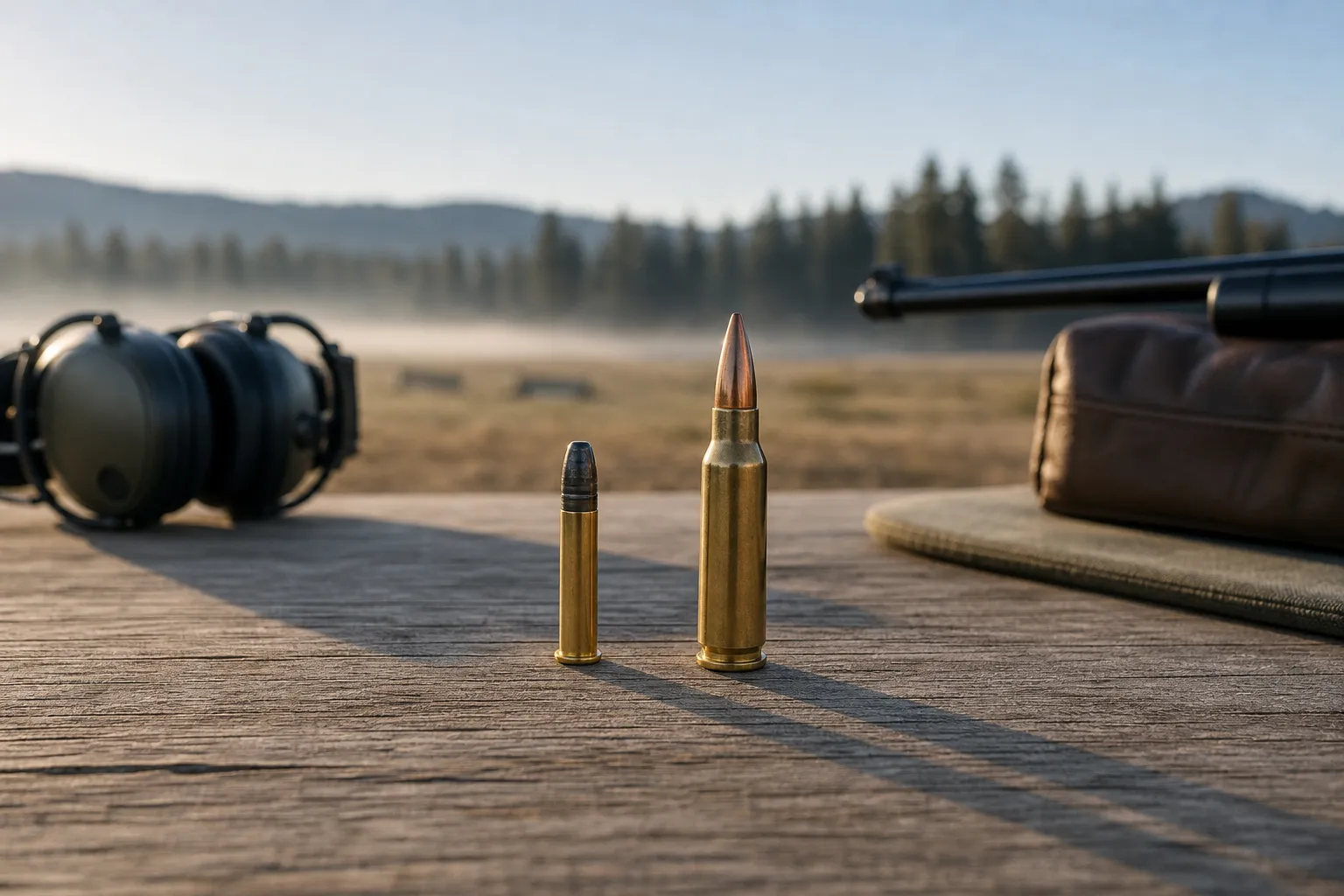
Rimfire vs centerfire comes down to primer location. In a rimfire cartridge, the rim of the case contains the priming mix, and the firing pin strikes the rim. In a centerfire cartridge, a separate primer is seated in the center of the case head, and the firing pin strikes that primer. Sources: SAAMI rimfire glossary, SAAMI centerfire primer glossary, SAAMI primer glossary.
Quick comparison
| Feature | Rimfire | Centerfire | |, -|, -|, -| | Primer location | Priming mix is in the rim cavity of the case. SAAMI defines a rimfire cartridge as a rimmed design whose rim has a cavity for the priming mix. | Primer is central to the axis of the cartridge case head. SAAMI defines a centerfire primer as assembled central to the head axis. | | Firing pin strike | The firing pin blow is applied at the rim. | The firing pin strikes the primer in the center of the case head, according to SAAMI. | | Reloading fit | Rimfire priming mix is in the rim cavity, not in a replaceable center primer pocket. | Centerfire cartridges use a primer assembly seated in the case head. | | Pressure examples from SAAMI standards | SAAMI pressure tables use specific units and table conventions. | SAAMI rifle standards include pressure data for rifle cartridges. | | Common examples | NSSF describes .22 LR as the dominant rimfire rifle cartridge. | Centerfire cartridge examples vary by handgun and rifle category. | | Common uses | NSSF says general purpose .22 LR rifles are affordable and that shooters can often shoot the caliber for as little as a nickel per round. | Centerfire becomes important when the discussion moves to primer assemblies and broader rifle and handgun cartridge categories. |
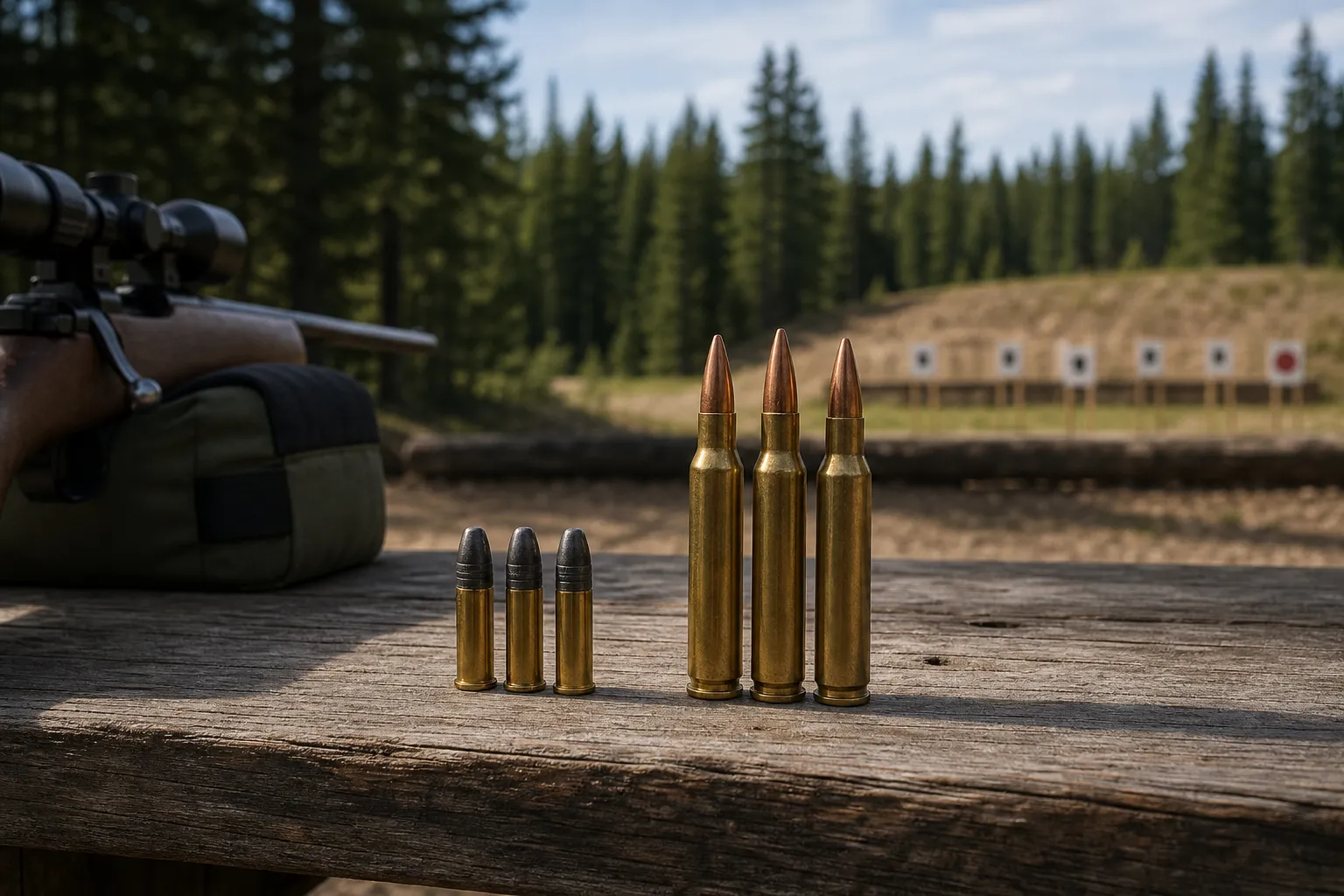
Sources: SAAMI glossary, SAAMI centerfire primer glossary, SAAMI Z299.1 rimfire standard, SAAMI Z299.4 centerfire rifle standard, NSSF rifle shooting fundamentals.
How rimfire ignition works
SAAMI defines a rimfire cartridge as “a rimmed cartridge design in which the rim is formed with a cavity to contain the priming mix.” SAAMI also defines a rimfire primer as primer material in the circumferential cavity or rim of rimfire ammunition. In another glossary entry, SAAMI says the rim of a rimfire cartridge provides the cavity into which priming mixture is charged. Sources: SAAMI rimfire glossary, SAAMI glossary, P terms.
How centerfire ignition works
SAAMI defines a centerfire primer as an initiator assembled central to the axis of the head of the cartridge case. SAAMI also distinguishes the two systems by the strike location: a centerfire primer is actuated by a blow to the center of its axis, as opposed to a rimfire primer. Source: SAAMI centerfire primer glossary.
Primer location is the main design difference
A primer is the ignition component. SAAMI defines it as a component containing an explosive mixture in a metallic cup that provides heat and flame when initiated. Source: SAAMI primer glossary.
That means the names are literal. “Rimfire” refers to ignition at the rim. “Centerfire” refers to ignition at the center of the case head. SAAMI’s glossary entries make that distinction by where the priming mix is located and where the firing pin blow is applied. Sources: SAAMI rimfire glossary, SAAMI centerfire primer glossary.
Reloadability and components
SAAMI defines reloading as “the process of reassembling a fired cartridge case with a new primer, propellant and bullet or wads and shot.” That definition matters because centerfire cartridges use a primer assembly seated in the case head, while rimfire cartridges use priming mix in the rim cavity. Sources: SAAMI reloading glossary, SAAMI centerfire primer glossary, SAAMI rimfire glossary.
For a beginner, the practical takeaway is simple: rimfire cartridges use priming mix in the rim cavity, while centerfire cartridges use a separate primer assembly in the case head. Sources: SAAMI reloading glossary, SAAMI glossary, P terms.
Pressure and performance
SAAMI says its standards provide safety, reliability and interchangeability standards for commercial manufacturers of firearms, ammunition and components. Source: SAAMI ANSI and SAAMI standards.
SAAMI pressure tables use specific units and table conventions. In the 2026 rimfire standard, SAAMI states that pressure limit columns are in “psi/100,” so a table value must be read with that convention. Source: SAAMI Z299.1 rimfire standard, 2026.
SAAMI rifle standards include pressure data for rifle cartridges. Source: SAAMI Z299.4 centerfire rifle standard, approved 2025.
These tables are commercial ammunition standards, not handloading instructions. They are useful for understanding how pressure data is presented in SAAMI materials. Sources: SAAMI ANSI and SAAMI standards, SAAMI Z299.1 rimfire standard, SAAMI Z299.4 centerfire rifle standard.
Common rimfire cartridges
NSSF describes .22 LR as the dominant rimfire rifle cartridge, saying “The .22 Long Rifle (LR) reigns here.” Source: NSSF rifle shooting fundamentals.
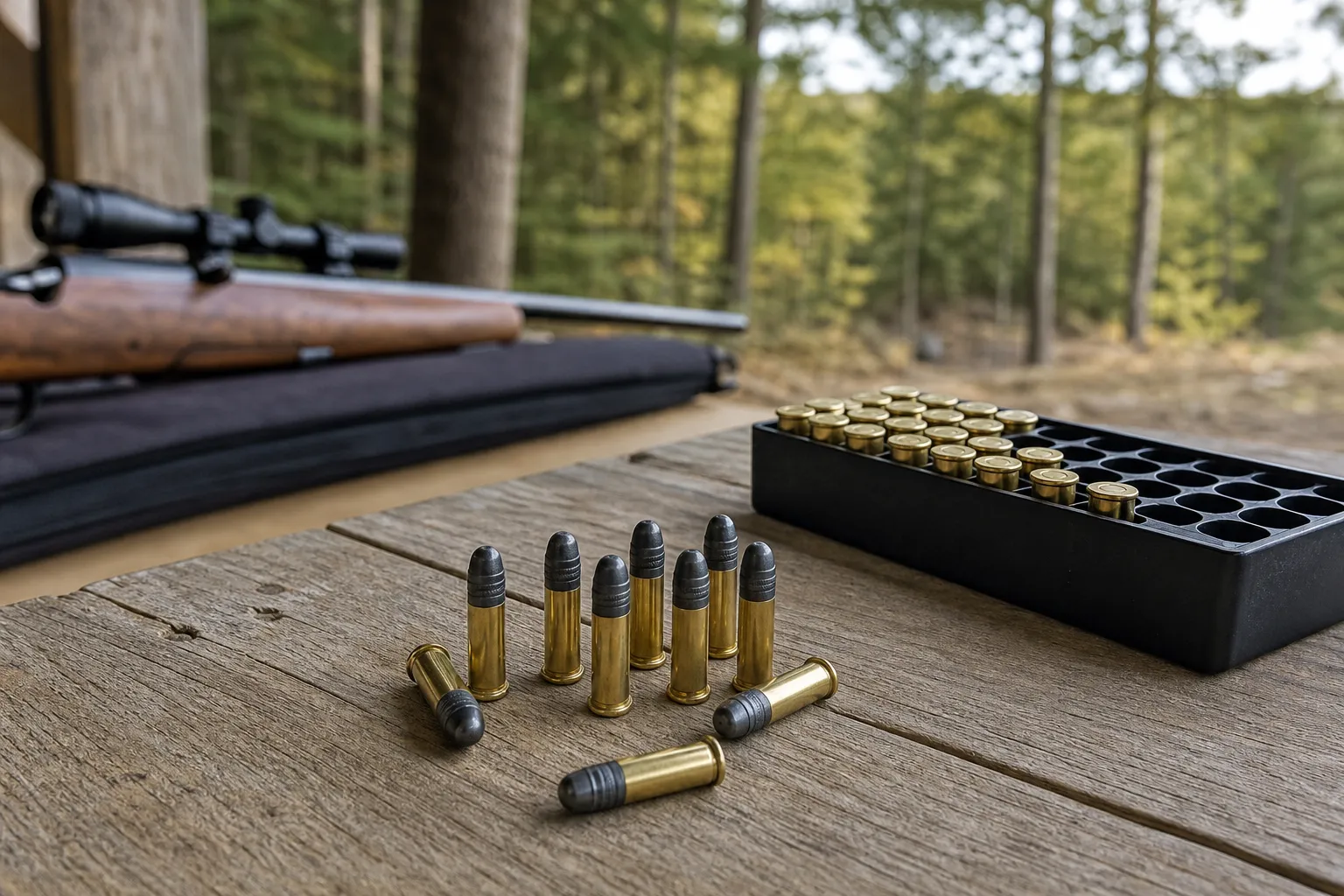
Winchester also calls .17 WSM the world’s fastest rimfire cartridge in its educational sheet. Source: Winchester Rimfire Ammo 101.
Common centerfire cartridges
Centerfire cartridge examples vary by handgun and rifle category. Sources: SAAMI Z299.3 centerfire pistol and revolver standard, approved 2022, SAAMI Z299.4 centerfire rifle standard, approved 2025.
Cost and common uses
NSSF describes .22 LR as the dominant rimfire rifle cartridge, saying “The .22 Long Rifle (LR) reigns here.” NSSF also says general purpose .22 LR rifles are affordable and that shooters can often shoot the caliber for as little as a nickel per round. Source: NSSF rifle shooting fundamentals.
Which one should a beginner understand first?
For a new shooter.22 LR may be an accessible starting point because NSSF describes general purpose .22 LR rifles as affordable and says shooters can often shoot the caliber for as little as a nickel per round. Source: NSSF rifle shooting fundamentals.
Centerfire becomes important as soon as the discussion moves to primer assemblies, broader rifle and handgun cartridge categories and reloading definitions. Those points are reflected in SAAMI’s centerfire primer glossary, SAAMI cartridge materials and SAAMI’s reloading glossary. Sources: SAAMI centerfire primer glossary, SAAMI reloading glossary, SAAMI ANSI and SAAMI standards.
Official sources to check
For cartridge dimensions, pressure and velocity standards, check the current SAAMI materials for the cartridge and category. SAAMI states that its standards provide safety, reliability and interchangeability standards for commercial manufacturers. Source: SAAMI ANSI and SAAMI standards.
For hunting, confirm the current rule with the wildlife agency for the exact state, province, territory, species and season.
Frequently asked questions
What is the main difference between rimfire and centerfire ammunition?
The main difference is primer location. Rimfire ammunition has priming mix in the rim area, while a centerfire primer is assembled central to the axis of the cartridge case head.
How does rimfire ammunition ignite?
Rimfire ignition is associated with the rim, where the priming mix is located in a rimfire cartridge.
How does centerfire ammunition ignite?
SAAMI says a centerfire primer is actuated by a blow to the center of its axis.
Which type is normally associated with reloading?
SAAMI defines reloading as reassembling a fired cartridge case with a new primer, propellant and bullet or wads and shot. Centerfire cartridges use a separate primer assembly in the case head, while rimfire cartridges use priming mix in the rim cavity.
Sources
- SAAMI Standards, Sporting Arms and Ammunition Manufacturers' InstituteOfficial source. Accessed October 20, 2026.
- SAAMI Glossary, R terms, Sporting Arms and Ammunition Manufacturers' InstituteOfficial source. Accessed October 20, 2026.
- Centerfire Primer, Sporting Arms and Ammunition Manufacturers' InstituteOfficial source. Accessed October 20, 2026.
- Primer, Sporting Arms and Ammunition Manufacturers' InstituteOfficial source. Accessed October 20, 2026.
- Primer Seating, Sporting Arms and Ammunition Manufacturers' InstituteOfficial source. Accessed October 20, 2026.
- Reloading, Sporting Arms and Ammunition Manufacturers' InstituteOfficial source. Accessed October 20, 2026.
- SAAMI Z299.1, 2019, R2026, Rimfire Sporting Ammunition, Sporting Arms and Ammunition Manufacturers' InstituteOfficial source. Accessed October 20, 2026.
- SAAMI Z299.3, 2022, Centerfire Pistol and Revolver Ammunition, Sporting Arms and Ammunition Manufacturers' InstituteOfficial source. Accessed October 20, 2026.
- SAAMI Z299.4, 2025, Centerfire Rifle Ammunition, Sporting Arms and Ammunition Manufacturers' InstituteOfficial source. Accessed October 20, 2026.
- Ammo 101, Rimfire, Winchester AmmunitionOfficial source. Accessed October 20, 2026.
- Ammo 101, Centerfire Rifle, Winchester AmmunitionOfficial source. Accessed October 20, 2026.
- Introduction to Handloading, RCBSOfficial source. Accessed October 20, 2026.
- Rifle Basics, NSSF Let's Go Shooting. Accessed October 20, 2026.
- Faqs, SAAMI. Accessed October 20, 2026.
- Faqs, SAAMI. Accessed October 20, 2026.