Gun Locks Explained: Trigger Locks, Cable Locks and Lock Boxes
Gun locks help reduce unauthorized access, but they do not replace safe handling or secure storage. The main choices are cable locks, trigger locks, lock boxes and gun safes, each with different strengths and limits.
By RaiS. Reviewed by RaiS. Published . 7 min read.
Research and drafting were assisted by AI. RaiS checked the facts against the sources below and approved this page.
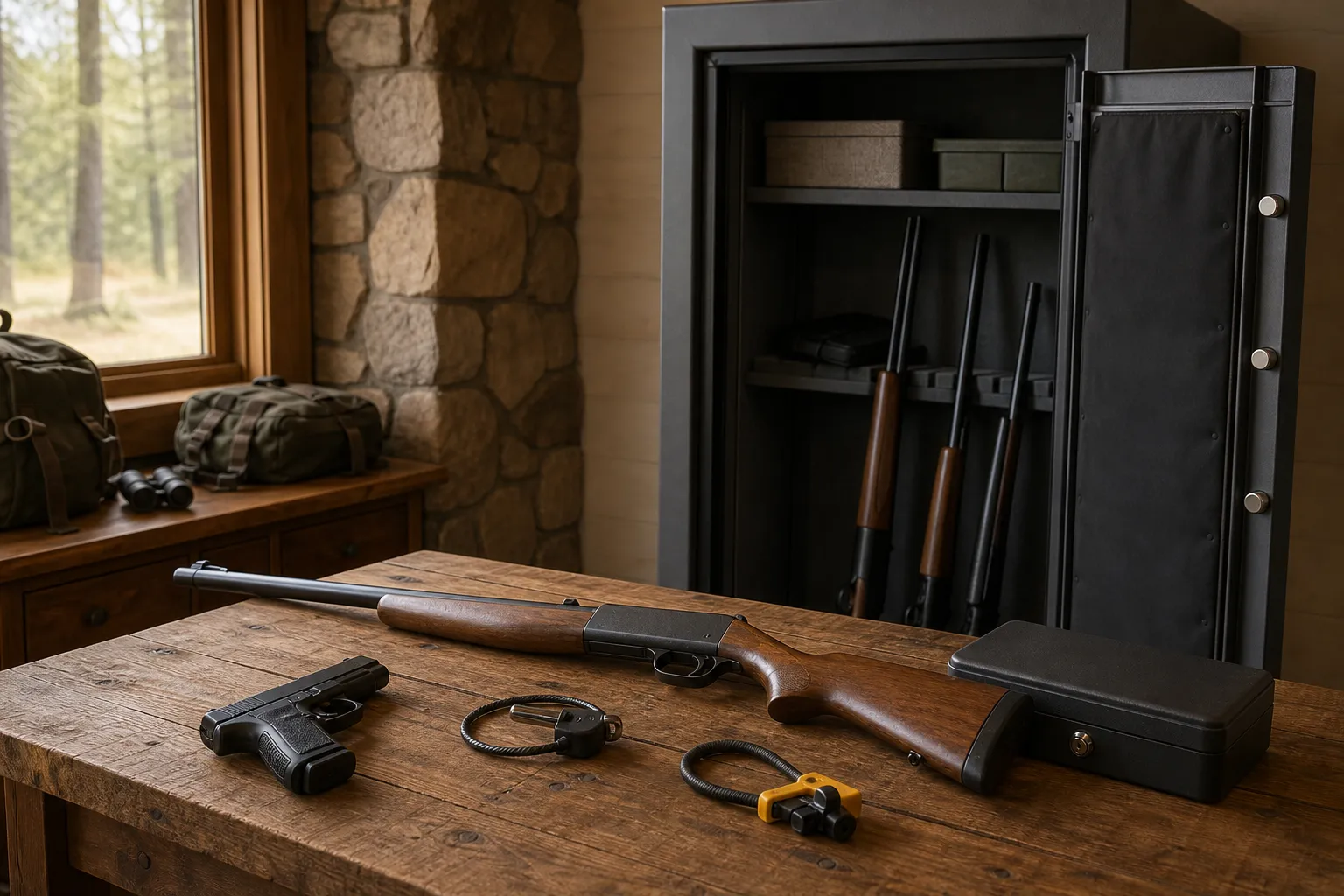
Gun locks are devices that help keep an unauthorized person from using a firearm, but no lock is a substitute for safe handling, secure storage and careful control of keys or combinations. A simple public safety baseline is to store firearms unloaded and locked when not in use.
If you are new to firearms, start with the live Firearm Safety Rules guide before choosing a lock. A lock can reduce risk, but it cannot make careless handling safe.
What gun locks do and do not do
Gun locks are meant to add a barrier between a firearm and unauthorized use. Depending on the device, that barrier may keep the action from closing, block the trigger, place the firearm inside a locked container or place multiple firearms inside a safe.
The COPS Office defines safe storage as keeping guns unloaded and locked up when not in use. CDC adds that simply putting a firearm out of sight or out of reach is not safe storage and is not enough to prevent access by children or unauthorized adults.
That difference matters. Hiding a firearm is not the same as locking it. A drawer or closet shelf may keep a gun out of view, but it does not provide the kind of locked barrier described by public safety guidance.
Locks also have limits. Project ChildSafe says its cable style lock should be used in addition to safe handling and storage, not as a substitute. Master Lock states that no gun lock can offer complete protection against accidental or intentional misuse. Project ChildSafe also warns that a lock may be defeated by a determined person using tools or aggressive means.
A practical way to think about locks is this:
| Device | What it is meant to do | Key limits |
|---|---|---|
| Cable lock | Passes through the firearm so the action cannot close on many firearms | No single lock fits every firearm, and it may be defeated with tools |
| Trigger lock | Blocks or covers the trigger area | Does not prevent loading and must never be used on a loaded gun |
| Lock box | Conceals and protects a firearm inside a locked container | No lock box is entirely secure, and key control matters |
| Gun safe | Stores multiple firearms in a stronger locked container | Still depends on correct use and control of keys or combinations |
Cable locks
A cable lock uses a flexible cable and lock body. Project ChildSafe explains that when its cable lock is properly installed on an unloaded firearm, it prevents the firearm's action from closing.
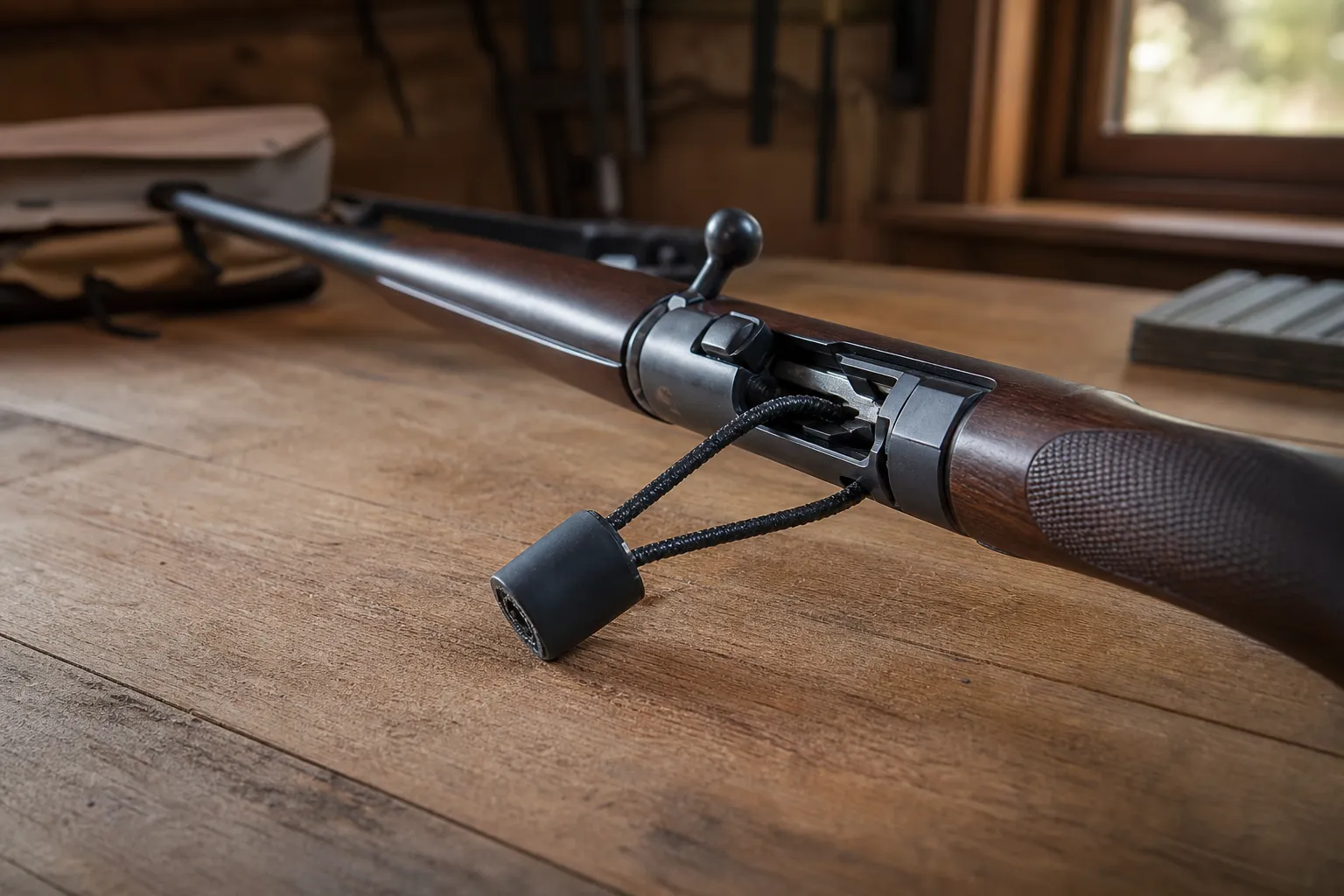
On many firearms, that means the cable passes through the action or barrel area so the firearm cannot be made ready to fire in the normal way while the cable is in place. NSSF describes cable locks as widely available, usable on most firearms and usable to lock a gun to a solid object.
Cable locks are common because they are simple and can work with many types of firearms. Project ChildSafe safety kits include a cable style gun locking device and safety literature, and NSSF says Project ChildSafe is a program that distributes free firearm safety kits.
Cable locks are not universal. Project ChildSafe warns that no single lock fits every firearm. The lock instructions and the firearm owner's manual matter because the correct routing can vary by firearm type.
There is one important placement rule from Project ChildSafe: keep the cable and lock outside the trigger guard. The purpose is to block firearm operation, not to place anything near the trigger.
Cable locks also have security limits. The COPS Office says cable locks can be defeated with tools and are more effective against accidents than deliberate misuse. Project ChildSafe makes a similar point by warning that a lock may be defeated by a determined person using tools or aggressive means.
Use a cable lock as one layer of storage, not as the whole plan.
Trigger locks
A trigger lock is a device that covers or blocks the trigger area. NSSF's secure storage chart says a trigger lock can block the trigger, but does not prevent loading. The COPS Office gives the same basic description: trigger locks block the trigger but do not prevent a gun from being loaded.
The most important rule is that a trigger lock must never be used on a loaded firearm. NSSF warns that a trigger lock should never be used on a loaded gun because it can cause the gun to fire under some circumstances. Master Lock's trigger lock instructions also warn not to use the lock on a loaded gun because attempts to do so may result in accidental discharge.
That is why the order matters. Project ChildSafe instructs users to make sure the firearm is completely unloaded before installing any gun lock. With trigger locks, that warning is especially important because the device is fitted at the trigger area.
Trigger locks also do not fit every firearm. Master Lock says its trigger lock may not effectively lock some lever action rifles, firearms without trigger guards and firearms with certain trigger shapes or attachments.
A trigger lock is best understood as a limited access device, not a complete storage system. It may block the trigger on a compatible unloaded firearm, but it does not keep someone from loading the firearm, moving it or trying to defeat the lock.
Lock boxes
A lock box is a locked container for a firearm or other valuables. NSSF describes a lock box as a device that conceals and protects guns. Hornady's lock box instructions describe a lock box as secure storage for handguns and valuables at home, in a car or while traveling.
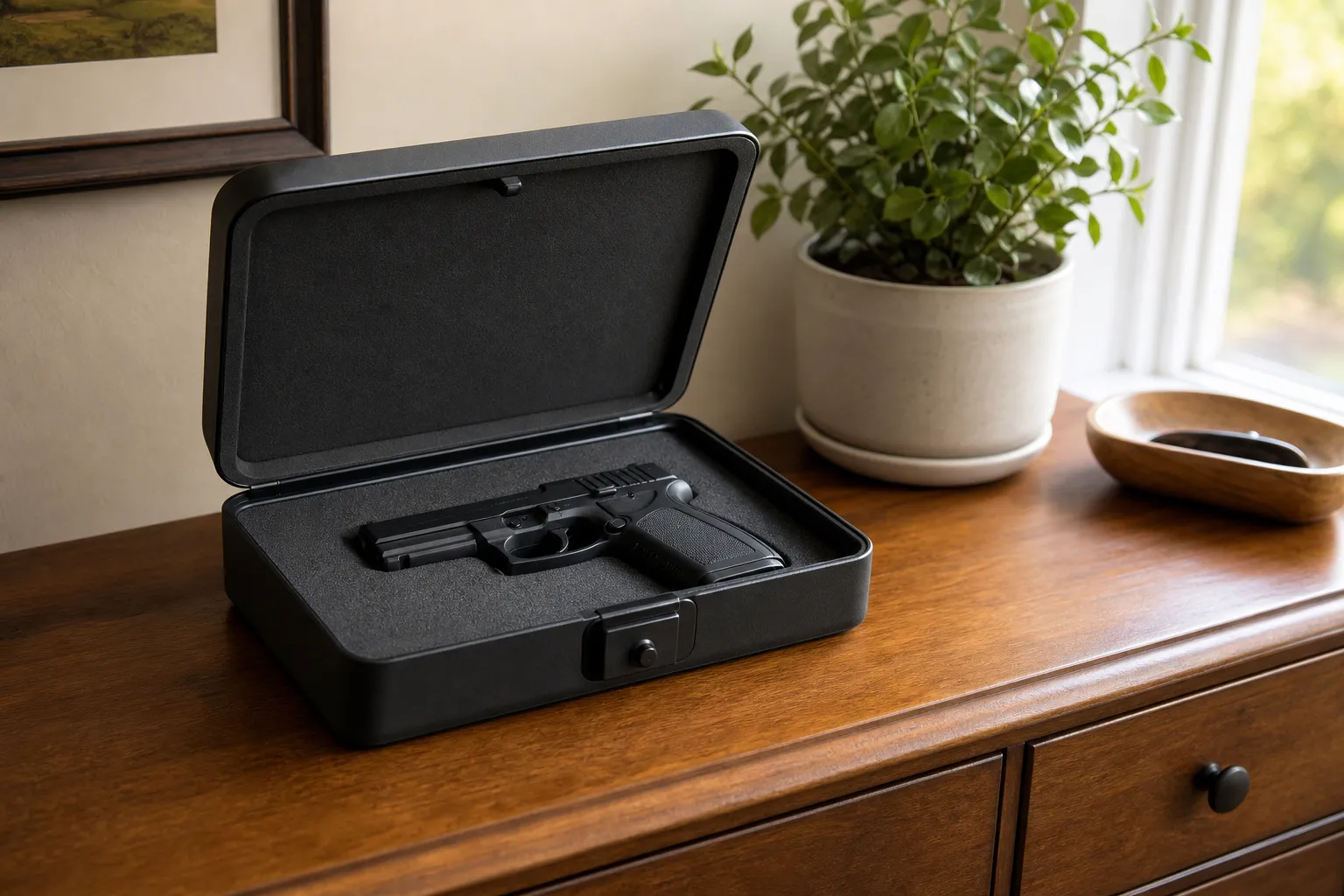
Lock boxes may be useful when a full size safe is not the storage method being used. They create a physical container around the firearm rather than only blocking one part of the firearm.
Some lock boxes include a cable for securing the box itself. Hornady's lock box instructions say the included cable secures the box to a stationary object such as a vehicle seat or heavy furniture. That can help keep the box with the object it is attached to, depending on the product and how it is used.
A lock box is still not perfect security. Hornady warns that no safe or lock box is entirely secure and that key control matters. If the key is left where a child or unauthorized adult can find it, the lock box loses much of its value.
Hornady's lock box instructions also warn users never to store loaded firearms in that lock box.
Gun safes
A gun safe is the stronger storage option in NSSF's comparison chart for multiple firearms. NSSF describes a gun safe as the most secure storage method for multiple guns in that chart.
A safe can store more than one firearm behind a locked door, rather than locking each firearm individually with a smaller device. For households with multiple firearms, that can make secure storage more consistent because the storage method is centralized.
A safe still depends on the human part of the system. Keys, combinations and electronic access methods must be controlled.
A safe also does not replace the basic storage rules. The COPS Office says gun locks are not a substitute for safe storage, but may be an additional precaution. The same idea applies in reverse: a safe is not a substitute for safe handling.
Free cable locks and public programs
Project ChildSafe is an NSSF program that distributes free firearm safety kits. NSSF says the kits include a cable style gun locking device and safety literature.
Project ChildSafe says more than 15,000 law enforcement agencies have helped distribute more than 42 million kits since 1999. Availability can vary by area, so the practical first step is to check with local law enforcement agencies or Project ChildSafe partners that participate in the program.
Free locks are helpful, but the same limits still apply. Project ChildSafe says its cable style lock should be used in addition to safe handling and storage, not as a substitute. It also says no single lock fits every firearm.
Practical safety reminders
Before using any firearm lock, confirm that the firearm is completely unloaded. Project ChildSafe gives that instruction for any gun lock, and trigger lock instructions from NSSF and Master Lock are especially clear that trigger locks must never be used on loaded guns.
Keep these points in mind:
- Read the firearm owner's manual and the lock instructions before using the device.
- Store firearms unloaded and locked when not in use, following the COPS Office safe storage framing.
- Control keys and combinations.
- Do not treat hiding a firearm as safe storage. CDC says out of sight or out of reach is not enough.
- Use locks as one layer, not as a replacement for safe handling.
The right device depends on the firearm, the household and the storage situation. A cable lock can stop the action from closing on many unloaded firearms. A trigger lock can block the trigger on compatible unloaded firearms, but must never be fitted to a loaded gun. A lock box can conceal and protect a handgun or other firearm inside a container. A safe is the stronger option for multiple firearms in NSSF's comparison chart.
Before relying on any lock, check the firearm owner's manual, the lock manufacturer's instructions and current requirements from the appropriate authority for your location and situation.
Frequently asked questions
Is a gun lock a substitute for safe storage?
No. Project ChildSafe and the COPS Office both state that gun locks are not a substitute for safe handling and safe storage. Public safety guidance frames safer storage as firearms unloaded and locked when not in use.
Why should a trigger lock never be used on a loaded firearm?
NSSF warns that a trigger lock should never be used on a loaded gun because it can cause the gun to fire under some circumstances. Master Lock also warns that attempts to use a trigger lock on a loaded gun may result in accidental discharge.
What does a cable lock do?
Project ChildSafe explains that when its cable lock is properly installed on an unloaded firearm, it prevents the firearm's action from closing. Project ChildSafe also instructs users to keep the cable and lock outside the trigger guard.
Do trigger locks prevent a firearm from being loaded?
No. NSSF's secure storage chart says a trigger lock can block the trigger but does not prevent loading. The COPS Office states the same limit.
Where can I get a free gun lock?
Project ChildSafe, an NSSF program, distributes free firearm safety kits that include a cable style gun locking device and safety literature. The program works through law enforcement agencies and partners, and availability can vary by area.
Are lock boxes and safes completely secure?
No. Hornady warns that no safe or lock box is entirely secure and that key control matters.
Sources
- Project ChildSafe Program Handbook, Project ChildSafe, NSSFOfficial source. Accessed October 26, 2026.
- Project ChildSafe, NSSFOfficial source. Accessed October 26, 2026.
- A Guide to Responsible Gun Ownership, Safe Handling and Secure Storage, Project ChildSafe, NSSFOfficial source. Accessed October 26, 2026.
- 90 Gun Lock Instructions, Master Lock. Accessed October 26, 2026.
- Hornady Security Lock Box Instructions, Hornady. Accessed October 26, 2026.
- A Firearm Owner's Quick Reference Card, Office of Community Oriented Policing Services, U.S. Department of JusticeOfficial source. Accessed October 26, 2026.
- Preventing Firearm Injury and Death, Centers for Disease Control and PreventionOfficial source. Accessed October 26, 2026.
- Safety and Security for Firearm Owners, Bureau of Alcohol, Tobacco, Firearms and ExplosivesOfficial source. Accessed October 26, 2026.
- Securely Store Firearms to Prevent Suicide, U.S. Department of Veterans AffairsOfficial source. Accessed October 26, 2026.