How to Remove Rust from a Gun and Prevent It
Light surface rust on a firearm can sometimes be addressed gently after the gun is fully unloaded. Use firearm oil or rust protectant and soft wiping, then clean, dry, protect, and store the firearm where moisture cannot build up.
By RaiS. Reviewed by RaiS. Published . 6 min read.
Research and drafting were assisted by AI. RaiS checked the facts against the sources below and approved this page.
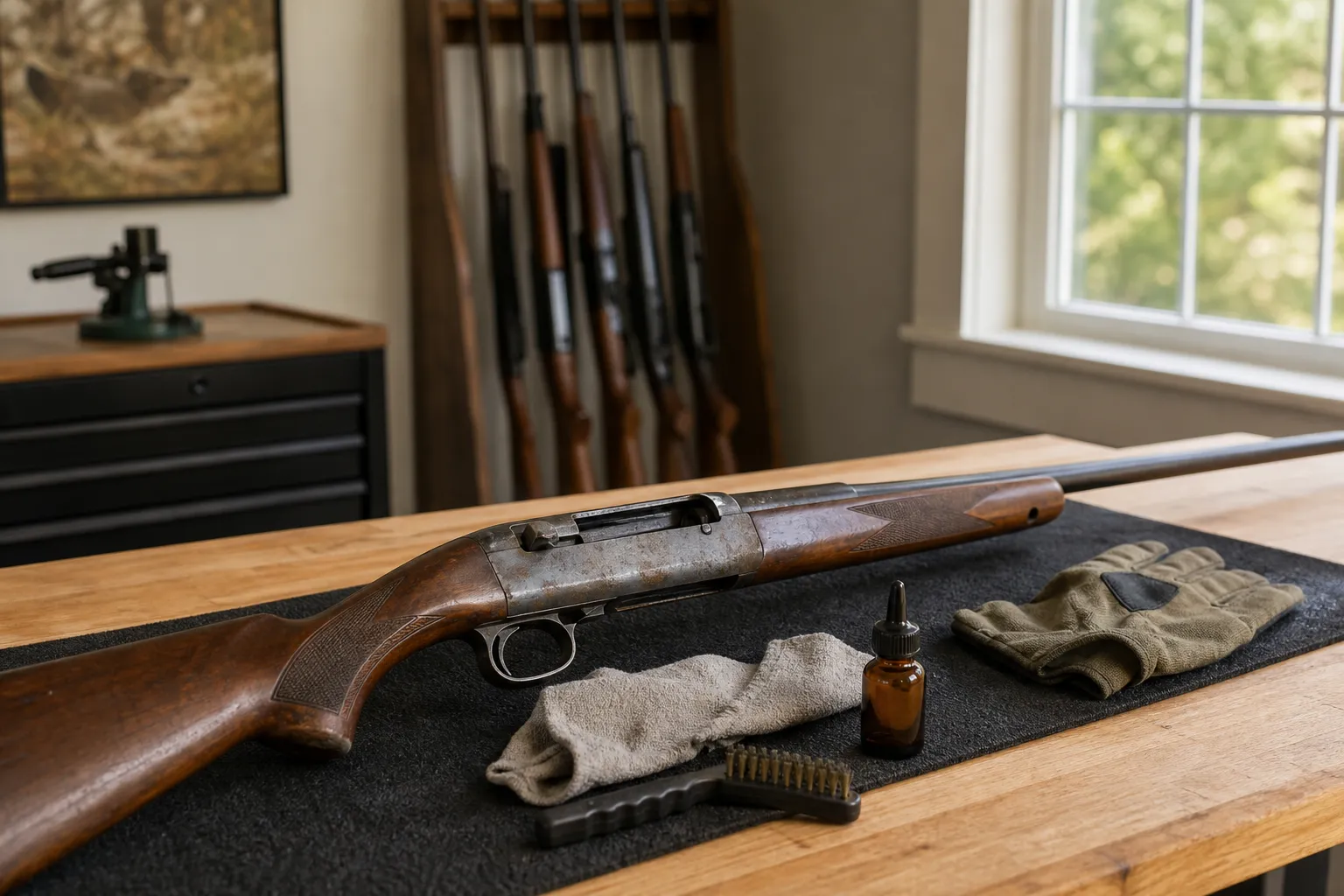
If you find light orange or brown surface rust on a gun, start by making the firearm safe, then treat the spot gently with gun oil or a firearm rust protectant. Use a soft cloth first. Stop if you see pitting, heavy scale, a stuck action, damaged parts, or anything you are unsure about.
Safety first: clear the firearm before you touch the rust
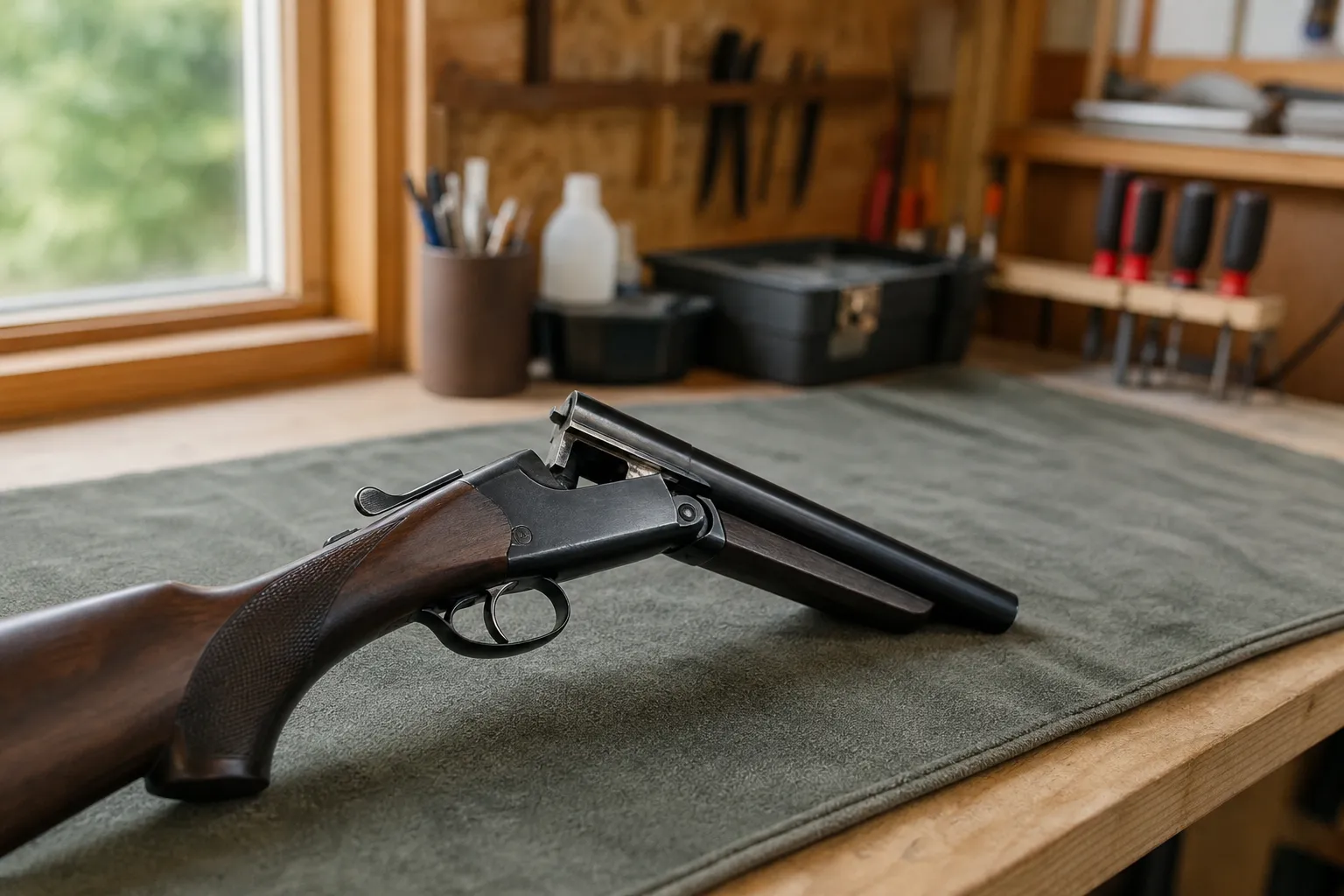
Winchester’s cleaning guidance for its Model 1895 also starts with the firearm on safe, the action open, the rifle completely unloaded, and the muzzle pointed in a safe direction. Winchester instructs owners to keep all ammunition away from the cleaning area and never test mechanical function with live ammunition.
Texas Parks and Wildlife Department hunter education guidance says cleaning should be done with no ammunition in the cleaning area, in a well ventilated space, and without distractions. If your firearm needs field stripping before you can reach the rusty area, follow the owner’s manual for that exact firearm. Winchester warns owners not to take a firearm apart farther than the owner’s manual explains, and to use a qualified gunsmith or service facility if further disassembly is required.
Why guns rust
Moisture matters. Ruger lists moisture, salt air, chemicals, perspiration, and firearm cases as causes of discoloration or rusting. Common situations that deserve extra attention include wet hunting trips, rainy range days, sweaty handling, storage in a damp case, salt air exposure, and contact with strong chemicals.
Bluing helps, but it is not a magic rustproof shield. Coating Technologies describes black oxide, also called gun bluing, as a very thin chemical conversion coating on ferrous metal. The same finish guidance says post treatment oils improve black oxide corrosion resistance. In plain terms, blued steel still needs a light oil or protectant film, especially after handling or weather exposure.
Dirt and trapped moisture also matter. NASA corrosion guidance explains that corrosion conditions can occur under deposits such as dirt on a metal surface, and that corrosion severity can be reduced by keeping surfaces clean and avoiding materials that wick moisture. For firearms, that supports the basic habit of cleaning and drying the gun before it goes back into storage.
What counts as light surface rust
This guide is for light surface rust: an orange or brown film, small freckles, or staining that has not progressed into deep pitting, heavy scale, stuck parts, or mechanical damage.
If rust has eaten into the metal, the action is stuck, the firearm was immersed in water, parts appear damaged, or you are not sure what you are seeing, stop. Use the firearm manufacturer’s service department or a qualified gunsmith. Do not try to refinish, re blue, sand, polish aggressively, or repair parts based on a general cleaning guide.
A gentle process for removing light surface rust
Start with the least aggressive method that may work. TPWD tells readers to use commercial solvents and gun oils made specifically for firearms. After the gun is unloaded and the work area is clear of ammunition, apply a gun oil or firearm rust protectant to the rusty area and let the oil do some of the work.
- Wipe first with a soft cloth. Many light rust stains or fresh freckles will come off with oil and gentle wiping.
- If rust remains, keep the area wet with oil. Continue gentle wiping and check the area often.
- Wipe away residue. After the rust is removed, wipe the area clean, clean the firearm as appropriate, dry the metal, and apply a light protective film.
Ruger cautions against caustic or acetone based cleaners because they may harm finished surfaces, and Ruger instructs owners to test any cleaning agent in an inconspicuous area before cleaning to make sure it will not harm the finish.
For a full cleaning routine after the rust is removed, see our How to Clean a Gun guide.
Finish-specific cautions
Blued steel
Blued steel is vulnerable when the protective film is gone. Coating Technologies describes black oxide or gun bluing as a very thin conversion coating, and says post treatment oils improve corrosion resistance.
After handling, rain, sweat, or storage in a case, follow Ruger’s basic care direction for rust prone exterior surfaces: clean them, wipe them dry, and protect them before storage.
Stainless steel
Stainless steel is more corrosion resistant than blued steel, but it is not maintenance free. Ruger states that stainless steel firearm components are relatively more resistant to corrosion than blued steel, but still need inspection, cleaning, lubrication, and rust preventative.
Treat stainless firearms as firearms that still need care. Inspect them after wet use, clean and dry them before storage, and apply rust preventative where the owner’s manual calls for it.
Cerakote and similar coated finishes
Coated finishes need a softer approach. Ruger says Cerakote can be cleaned with a soft brush or rag and mild solvent or detergent to remove soil and fouling. Ruger also says not to use hard metallic brushes or aggressive solvents on Cerakote because they may damage the finish or the underlying material.
If you see rust near a scratch, worn edge, sight, screw, or other break in a coating, keep the cleaning gentle and stop if the finish appears damaged. For damage beyond light surface rust, use the manufacturer or a qualified gunsmith.
Preventing rust from coming back
Rust prevention is mostly moisture control, clean surfaces, and a thin protective film. Ruger says exterior surfaces most subject to rusting from handling or exposure to the elements should be cleaned and wiped dry after use or adverse conditions. Browning says not to leave a firearm in its case after hunting or range trips, and to unload and clean it as soon as possible.
Use a light touch with oil. Ruger’s LC Carbine manual says only a light application is needed to lubricate moving parts and prevent rust, while excess oil can attract dust and dirt and interfere with function.
A simple prevention routine looks like this:
- After handling, wipe exterior metal with a lightly oiled cloth or firearm protectant.
- After rain, snow, perspiration, or wet range conditions, unload, clean, dry, and protect the firearm before storage.
- Keep dirt and deposits off metal surfaces, because NASA corrosion guidance identifies deposits such as dirt as places where corrosion conditions can develop.
- Do not leave the gun in a damp hunting case, range case, or tightly sealed case.
- Inspect stored firearms periodically.
Browning’s storage FAQ recommends unloading the firearm, storing ammunition away from firearms in a secure area, and wiping the gun with a very light coat of light gun oil. Browning also warns not to store a firearm in a tightly sealed case because condensed moisture could cause rust.
Storage and humidity control
Safe storage has two jobs: preventing unauthorized access and preventing damage from moisture. NSSF says unloaded firearms should be stored in a locked cabinet, safe, gun vault, or storage case, and ammunition should be locked separately.
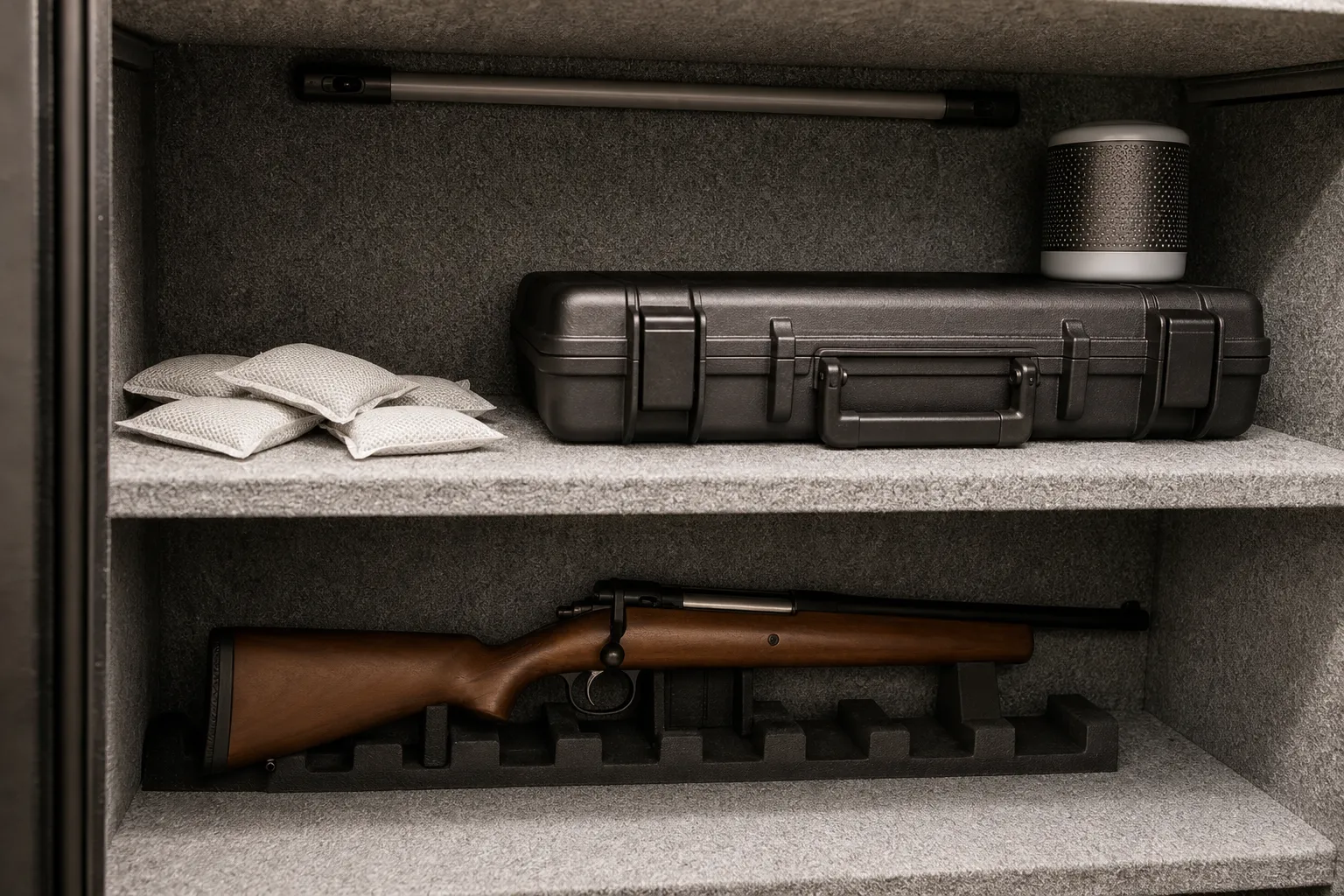
For rust prevention, the storage space should not trap damp air. Browning’s safe manual warns that air must circulate through a safe or condensation will form on firearms and cause rust. Browning also says a gun safe dehumidifier helps prevent moisture from collecting on firearms and causing rust.
If you are choosing secure storage, see our queued gun safe ratings guide for safe types and rating terms. Whatever storage you use, Browning recommends periodic inspection of stored firearms to make certain they are not loaded, check for rust, check bore and barrel condition, and wipe them down again with a slightly oily cloth.
When to stop and get help
Stop the cleaning project if the rust is more than a light surface film, if metal is pitted, if screws or parts are damaged, if the action does not move normally, or if you cannot reach the rust without disassembly beyond the owner’s manual. Winchester says not to disassemble a firearm beyond the owner’s manual and to use a qualified gunsmith or service facility when further disassembly is required.
Before using any cleaner, oil, protectant, or storage method, check the owner’s manual for your exact firearm and the finish maker’s care instructions where available. For storage and transport rules, confirm the current requirements with the official agency for your state, province, or locality.
Frequently asked questions
Can I remove rust from a gun myself?
You can address light surface rust after the firearm is fully unloaded and made safe. Use gun oil or a firearm rust protectant and start with a soft cloth. Stop and use a qualified gunsmith or manufacturer service if there is pitting, heavy rust, damaged parts, a stuck action, or uncertainty.
Will bluing stop a gun from rusting?
No. Black oxide or gun bluing is a very thin chemical conversion coating on ferrous metal. Finish guidance says post treatment oils improve corrosion resistance, so blued steel still benefits from a light oil or protectant film.
Can stainless steel guns rust?
Ruger states that stainless steel firearm components are more corrosion resistant than blued steel, but they still need inspection, cleaning, lubrication, and rust preventative.
Should I store a gun in its case to prevent rust?
Browning warns not to store a firearm in a tightly sealed case because condensed moisture could cause rust. Browning also says not to leave a firearm in its case after hunting or range trips, and to unload and clean it as soon as possible.
How much oil should be left on the gun?
Use a light protective film. Ruger says only a light application is needed to prevent rust, while excess oil can attract dust and dirt and interfere with function.
Sources
- Learn About Firearms Safety and Security, Bureau of Alcohol, Tobacco, Firearms and ExplosivesOfficial source. Accessed October 27, 2026.
- How should I store my firearm?, BrowningOfficial source. Accessed October 27, 2026.
- What does the de-humidifier do?, BrowningOfficial source. Accessed October 27, 2026.
- Browning Safe Owner’s Manual, BrowningOfficial source. Accessed October 27, 2026.
- Ruger American Rifle Generation II Instruction Manual, Sturm, Ruger & Co.Official source. Accessed October 27, 2026.
- Ruger Wrangler Instruction Manual, Sturm, Ruger & Co.Official source. Accessed October 27, 2026.
- Ruger LC Carbine Instruction Manual, Sturm, Ruger & Co.Official source. Accessed October 27, 2026.
- Model 1895 Owner’s Manual, Winchester Repeating ArmsOfficial source. Accessed October 27, 2026.
- Gun Cleaning And Care Guide, Birchwood CaseyOfficial source. Accessed October 27, 2026.
- Tech Tip: Getting a New Old Gun, Brownells. Accessed October 27, 2026.
- Storing Firearms in a Safe Manner, National Shooting Sports FoundationOfficial source. Accessed October 27, 2026.
- Firearms Cleaning and Maintenance, Texas Parks and Wildlife DepartmentOfficial source. Accessed October 27, 2026.
- 11.7: Corrosion, Chemistry LibreTexts. Accessed October 27, 2026.
- Forms of Corrosion, NASA Kennedy Space Center Corrosion Technology LaboratoryOfficial source. Accessed October 27, 2026.
- Black Oxide Process Data, Coating Technologies LLCOfficial source. Accessed October 27, 2026.