How to Score a Deer: Boone and Crockett and Pope and Young Basics
Learn how to score a whitetail or Coues’ deer rack using Boone and Crockett and Pope and Young measurement concepts, including typical and non-typical scores, spread credit, gross score, net score, and the 60-day drying period.
By RaiS. Reviewed by RaiS. Published . 8 min read.
Research and drafting were assisted by AI. RaiS checked the facts against the sources below and approved this page.
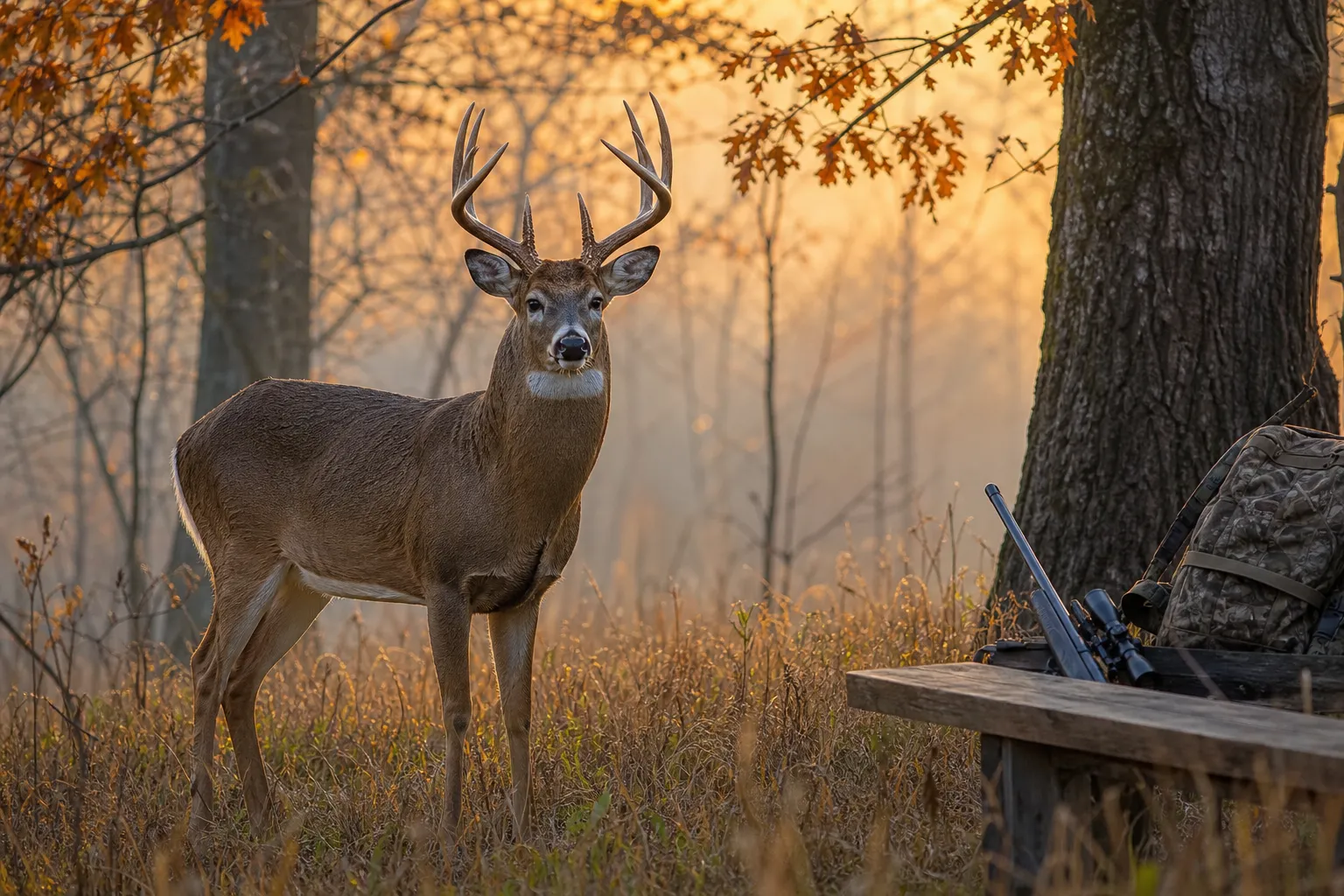
Hunters often ask how to score a buck or how to estimate a Boone and Crockett score. The short answer is that official scoring follows the score sheets and rules of Boone and Crockett Club or Pope and Young Club, not a quick field guess. A home score can help you understand the rack, but both clubs state that a score is not official until the chart is verified and the trophy is accepted by the club.
This guide focuses on whitetail and Coues’ deer because those are the official score sheet materials covered here. It explains the parts of the score, how typical and non-typical scoring differ, what gross and net mean, and how a simple worked example comes together.
Boone and Crockett vs Pope and Young in plain English
Boone and Crockett Club materials describe the general scoring and records program language used for big game trophies. Pope and Young Club materials describe an official scoring system for bowhunting North American big game trophies.
Pope and Young describes its score sheet category minimums as using the Boone and Crockett / Pope and Young scoring system. For a deer hunter measuring antlers at home, the basic worksheet ideas look familiar across the whitetail and Coues’ deer sheets: count points, record spreads, measure main beams, measure normal points, measure abnormal points, record four circumference measurements, then apply the worksheet math.
The important limit is official status. Boone and Crockett Club states that no scores are official Boone and Crockett scores until verified and the trophy is accepted by the club. Pope and Young Club states the same principle for Pope and Young scores.
Before you measure: drying period, tools, and units
Boone and Crockett Club requires antlers to air dry at habitable room temperature for at least 60 days after the animal was killed before official measurements can be taken. Pope and Young Club also requires a 60-day drying period before an entry can be officially measured.
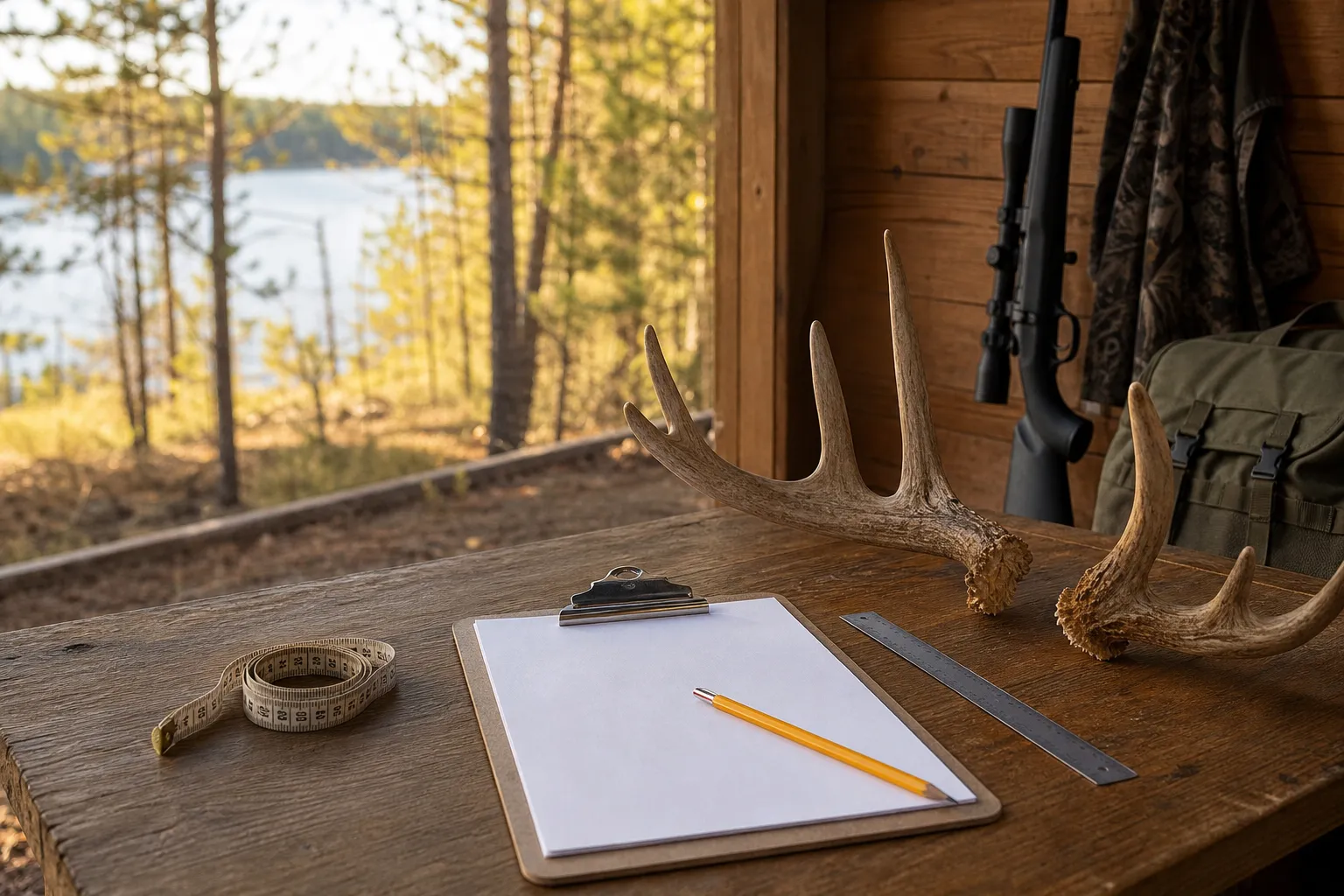
Boone and Crockett defines a green score as a score completed before the required 60-day drying period. Boone and Crockett also states that green scores are not official scores.
For whitetail and Coues’ deer, Boone and Crockett instructions require all measurements to be made with a quarter-inch wide flexible steel tape and recorded to the nearest one-eighth inch. Boone and Crockett allows a flexible steel cable for points and main beams only.
For practice at home, the same measurement discipline matters. Record fractions carefully. If a measurement falls between eighths, do not turn it into a decimal if you are trying to follow the worksheet style.
What counts as a point
Boone and Crockett’s whitetail and Coues’ deer instructions define a point as a projection that is at least one inch long, with length exceeding width at one inch or more of length.
The beam tip is counted as a point, but Boone and Crockett states that it is not measured as a point. Boone and Crockett also states that point totals do not add into the final score. In other words, the point count describes the rack, but the score comes from the measured lengths, spread credit, circumferences, and deductions or additions required by the worksheet.
The measurements on a deer score sheet
A whitetail or Coues’ deer score sheet records several measurements. Some help identify the rack but do not add into the final score. Others are part of the score math.
Point count
Count the points on each antler using the official point definition. The beam tip counts as a point, but is not measured as a point. The point total itself does not add into the final score.
Tip-to-tip spread
Boone and Crockett measures tip-to-tip spread between the tips of the main beams. The score sheet records it, but Boone and Crockett states that tip-to-tip spread does not add into the final score.
Greatest spread
Boone and Crockett measures greatest spread between perpendiculars at a right angle to the skull centerline at the widest part, whether that widest part is across the main beams or points. This is also recorded, but does not add into the final score.
Inside spread and spread credit
Boone and Crockett measures inside spread of main beams at a right angle to the skull centerline at the widest point between the main beams.
Inside spread becomes the spread credit if it is less than or equal to the length of the longer main beam. If the inside spread is greater than the longer main beam, Boone and Crockett instructions say to enter the longer main beam length as the spread credit.
Main beams
Boone and Crockett measures main beam length from the center of the lowest outside edge of the burr, over the outer side, to the most distant point of the main beam.
Each side is recorded separately. These beam lengths become part of the typical frame.
Normal points
Boone and Crockett says normal points project from the top of the main beam. They are measured from the nearest edge of the main beam, over the outer curve, to the tip.
On a typical whitetail frame, these are the regular tines used in the side-by-side comparison of right and left antlers.
Abnormal points
Boone and Crockett describes abnormal points as those non-typical in location, such as points originating from a point or from the bottom or sides of the main beam, or extra points beyond the normal pattern of points.
Abnormal points matter differently depending on whether the rack is being scored as typical or non-typical. In a typical score, abnormal point length is deducted.
Circumferences
The whitetail and Coues’ deer score sheets include four circumference measurements for each antler. Pope and Young’s typical whitetail score sheet shows the same measurement rows for inside spread, abnormal points, main beam, normal points, and four circumference measurements.
Boone and Crockett’s whitetail and Coues’ deer instructions include special guidance for missing points. If the brow point is missing, H1 and H2 are taken at the smallest place between the burr and G2. If G4 is missing, H4 is taken halfway between G3 and the main beam tip.
Typical vs non-typical deer scoring
Typical and non-typical scoring use the same physical rack, but the worksheet treats abnormal points differently.
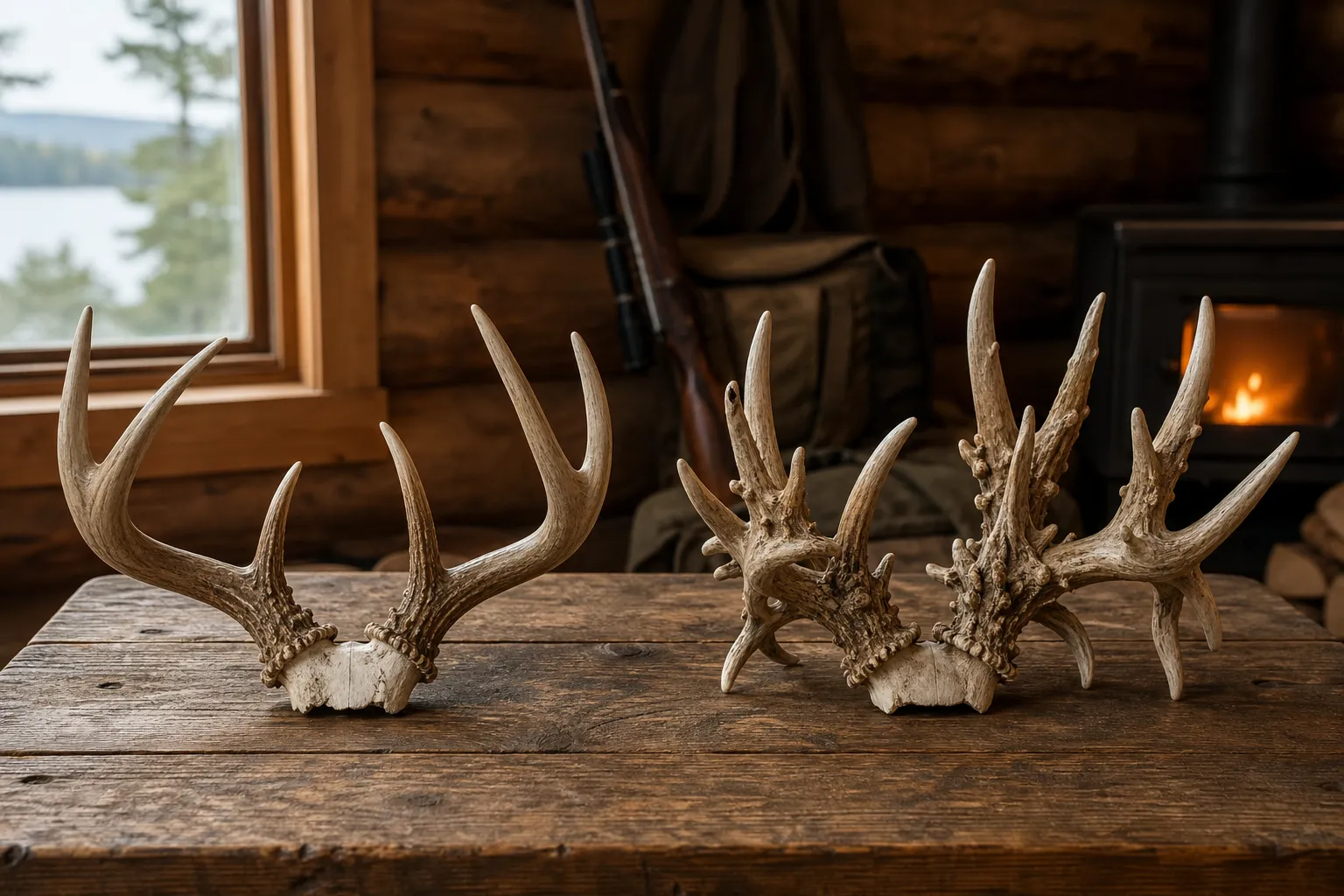
A typical score is built around the typical frame. That frame includes the main beams, normal points, four circumferences on each side, and spread credit. The worksheet then accounts for side-to-side differences, and abnormal point length is deducted.
A non-typical score still compares the typical frame for side-to-side differences.
That is why the same rack can have a different typical result and non-typical worksheet result. The antlers did not change. The scoring category changed how the abnormal inches were handled.
Gross score, net score, green score, and final score
Boone and Crockett’s records program policy defines gross score for antlered animals as the typical frame without deductions for lack of symmetry, plus the total of the lengths of all abnormal points, plus the inside spread.
Net score is the result after the worksheet applies the relevant deductions and additions. Boone and Crockett states that B&C/P&Y net score is referred to in publications as the final score.
A green score is different. Boone and Crockett says a green score is completed before the required 60-day drying period. It is useful as an estimate, but Boone and Crockett states that green scores are not official scores.
Worked example: a hypothetical 8-point typical whitetail
Here is a simple practice example using a hypothetical 8-point typical whitetail with one 1-inch abnormal point. The numbers are chosen only to show the worksheet math.
| Item | Measurement |
|---|---|
| Right normal total | 59 2/8 |
| Left normal total | 56 2/8 |
| Inside spread credit | 17 |
| Typical frame subtotal | 132 4/8 |
| Side-to-side symmetry differences | 3 |
| Abnormal point length | 1 |
| Gross score | 133 4/8 |
| Typical final score | 128 4/8 |
The right normal total and left normal total represent the typical frame measurements on each side, including the relevant beam, normal point, and circumference measurements for this example. Add those two side totals to the inside spread credit:
59 2/8 + 56 2/8 + 17 = 132 4/8 typical frame subtotal.
For a gross score under Boone and Crockett’s policy definition, use the typical frame without symmetry deductions, then add abnormal point length and inside spread as part of that total. In this example, the typical frame subtotal is 132 4/8, and the abnormal point adds 1 inch:
132 4/8 + 1 = 133 4/8 gross score.
For the typical final score, deduct the side-to-side differences and deduct the abnormal point length:
132 4/8, 3, 1 = 128 4/8 typical final score.
This example shows the key idea. On a typical score, abnormal inches reduce the final score.
Common mistakes to avoid
Do not treat the point count as the score. Boone and Crockett states that point totals do not add into the final score.
Do not add tip-to-tip spread or greatest spread to the final score. Boone and Crockett states that tip-to-tip spread does not add into the final score, and the greatest spread measurement is recorded separately.
Do not call a green score official. Boone and Crockett says a green score is completed before the required 60-day drying period and is not an official score.
Do not ignore the spread credit cap. Boone and Crockett instructions say that if inside spread is greater than the longer main beam, the longer main beam length is entered as the spread credit.
Do not mix typical and non-typical math. A typical score deducts abnormal point length.
What to check before using a score
Before submitting or relying on a score, check the current Boone and Crockett Club or Pope and Young Club score sheet for the exact species and category. Confirm the current drying-period policy, measurement instructions, entry process, and verification requirements with the club that will evaluate the trophy.
A careful home score is good practice. An official Boone and Crockett or Pope and Young score depends on the club’s verification and acceptance process.
Frequently asked questions
Is a Boone and Crockett score official if I measure it myself?
No. Boone and Crockett Club states that no scores are official Boone and Crockett scores until verified and the trophy is accepted by the club.
How long must deer antlers dry before official scoring?
Boone and Crockett requires antlers to air dry at habitable room temperature for at least 60 days after the animal was killed before official measurements can be taken. Pope and Young also requires a 60-day drying period before an entry can be officially measured.
What is a green score?
Boone and Crockett says a green score is a score completed before the required 60-day drying period. Boone and Crockett also states that green scores are not official scores.
Does tip-to-tip spread count in the final score?
No. Boone and Crockett measures tip-to-tip spread between the tips of the main beams, but states that tip-to-tip spread does not add into the final score.
What is the difference between typical and non-typical scoring?
A typical score uses the typical frame and deducts side-to-side differences and abnormal point length. A non-typical score treats abnormal point length differently.
What counts as a point on a whitetail or Coues’ deer rack?
Boone and Crockett’s whitetail and Coues’ deer instructions say a projection must be at least one inch long, with the length exceeding width at one inch or more of length. The beam tip is counted as a point but is not measured as a point.
Sources
- Non-Typical Whitetail and Coues’ Deer Score Chart, Boone and Crockett ClubOfficial source. Accessed October 23, 2026.
- Typical Whitetail and Coues’ Deer Score Chart, Boone and Crockett ClubOfficial source. Accessed October 23, 2026.
- Tips on Scoring a Whitetail Deer, Boone and Crockett ClubOfficial source. Accessed October 23, 2026.
- Policies of the B&C Big Game Records Program, Boone and Crockett ClubOfficial source. Accessed October 23, 2026.
- Score Sheets, Pope and Young ClubOfficial source. Accessed October 23, 2026.
- Interactive Whitetail Deer Typical Score Sheet, Pope and Young ClubOfficial source. Accessed October 23, 2026.
- Interactive Whitetail Deer Non-Typical Score Sheet, Pope and Young ClubOfficial source. Accessed October 23, 2026.
- Policies, Pope and Young ClubOfficial source. Accessed October 23, 2026.
- Entry Requirements, Pope and Young ClubOfficial source. Accessed October 23, 2026.