How to Field Dress a Deer, Step by Step
Field dressing means opening the body cavity and removing the internal organs after harvest. Complete any tag or reporting step required where you hunted before moving the animal. Work cleanly, avoid puncturing organs, remove the entrails, and follow CWD and carcass transport rules for the exact state or province.
By RaiS. Reviewed by RaiS. Published . 5 min read.
Research and drafting were assisted by AI. RaiS checked the facts against the sources below and approved this page.
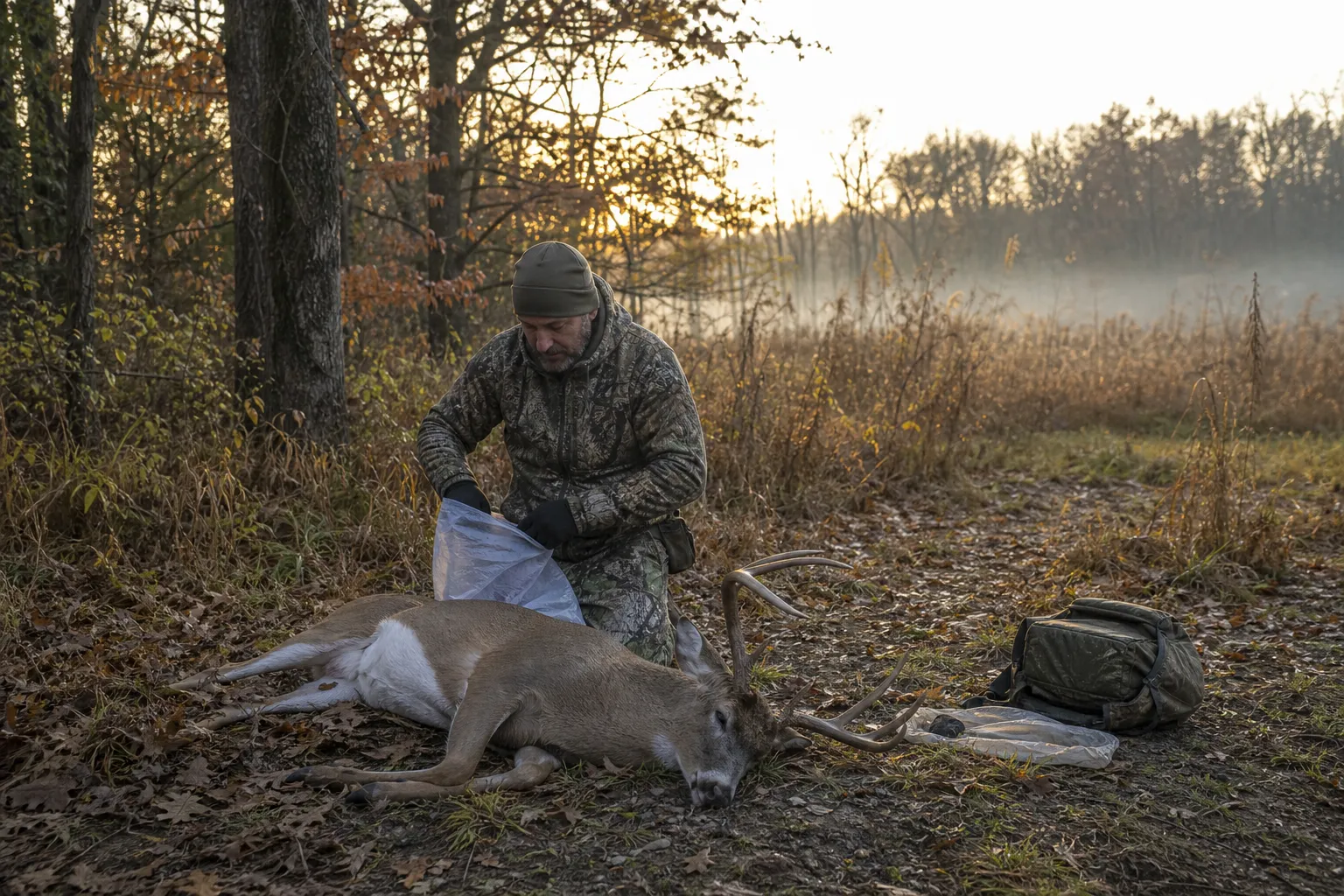
Field dressing a deer means opening the body cavity, removing the internal organs, and preparing the carcass for lawful transport or processing after harvest. The safe, beginner friendly order is: complete any required tag or reporting step before moving it, put on gloves, work carefully, avoid puncturing organs, remove the organs, then follow CWD and carcass transport rules for the place you hunted and any place you travel through.
Before you cut
Use a safe approach before you work around any harvested deer.
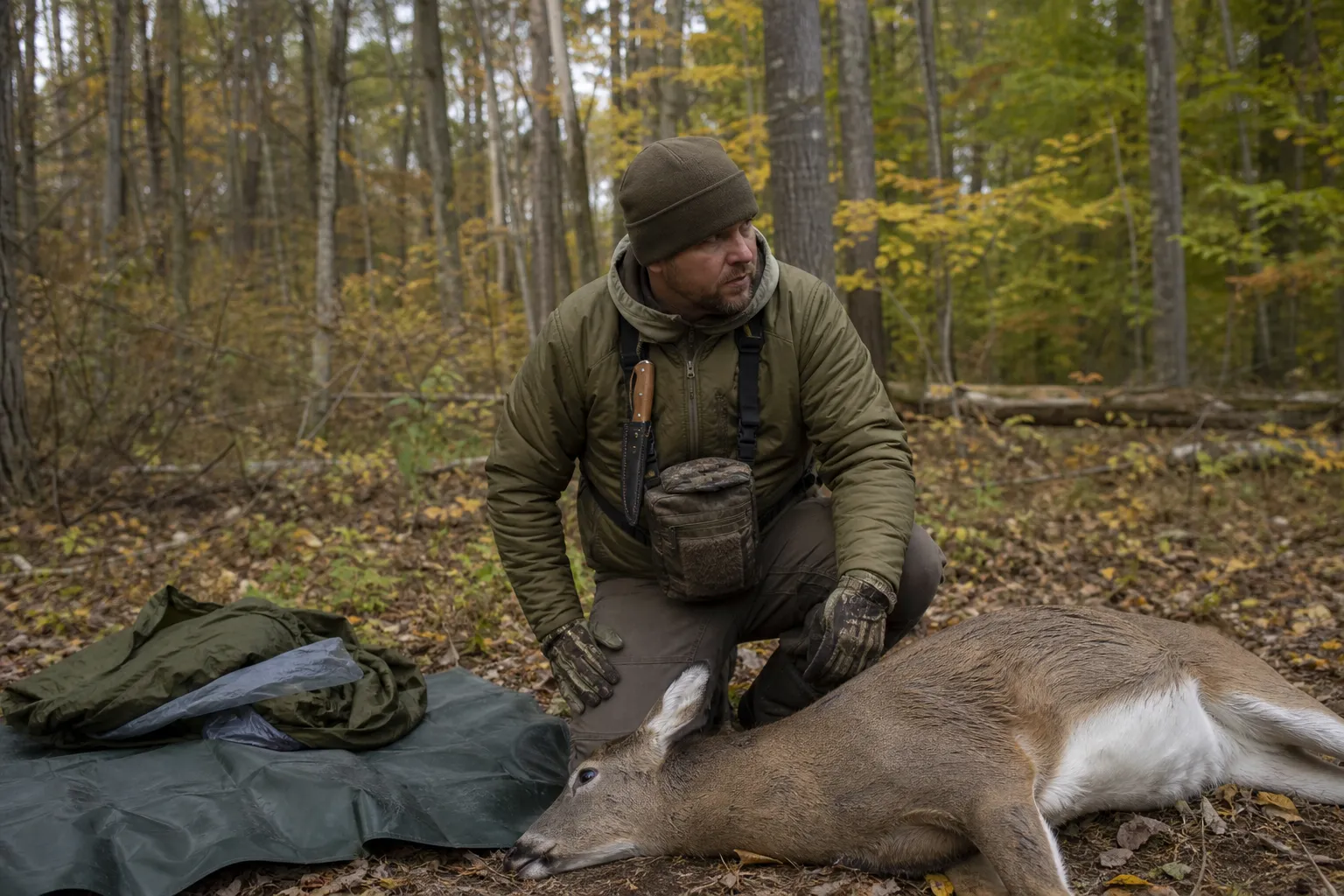
Next, follow the tag, reporting, registration, or notching rule for the place you hunted. These rules are location specific. For example, New York DEC says electronic tag users who harvest a deer or bear must immediately report the harvest through the HuntFishNY app, and paper tag users must attach the carcass tag when they arrive at camp, home, or transportation. Ontario’s hunting tag page says hunters must invalidate a tag by notching immediately after the kill, at the kill site, and before moving the animal. New York DEC, Ontario hunting regulations summary
Put on gloves before field dressing. CDC advises wearing latex or rubber gloves when field dressing a deer or handling meat. Saskatchewan also recommends rubber or latex gloves during field dressing and butchering. CDC, Government of Saskatchewan
If possible, set up in a way that keeps the carcass and work area clean and manageable.
Tools and hygiene
Keep this part simple: use clean field tools and gloves, and work in a way that keeps dirt and digestive contents away from meat. The hygiene goal is not speed alone.
Useful field dressing habits from the official sources are:
- Wear rubber or latex gloves when field dressing or handling meat. CDC
- In CWD areas, minimize contact with the brain, spinal cord, spleen, and lymph nodes. Government of Saskatchewan
Step by step: traditional field dressing sequence
The following sequence is a general field dressing outline. It is not a substitute for your state or provincial hunting rules, CWD instructions, or tag requirements.
1. Open the hide and belly with shallow cuts
Open the hide and body cavity with care. The important point is to open the hide and body cavity without cutting into the stomach, intestines, bladder, or paunch.
2. Stop lower if you want a shoulder mount
If you want to preserve the cape for a head or shoulder mount, follow taxidermist or agency instructions before making long chest cuts. If you are not preserving the cape, follow the method described by your wildlife agency, hunter education material, or processor guidance.
3. Open the chest cavity when appropriate
When you are not saving the cape for mounting, follow the chest cavity method described by your wildlife agency, hunter education material, or processor guidance.
4. Sever the windpipe
Follow the method described by your wildlife agency, hunter education material, or processor guidance. Work carefully and keep the priority the same: avoid puncturing digestive organs and keep the meat clean.
5. Free connective tissue and remove the organs toward the pelvis
After the chest and body cavity are open, free and remove the organs according to your wildlife agency, hunter education material, or processor guidance. This is the main evisceration step.
6. Deal with the lower intestine and pelvis as your source describes
Official instructions may describe this part differently. Use the method described by your wildlife agency, hunter education material, or processor guidance, and keep the carcass clean while you work.
Keep the meat clean, cool, and dry
After field dressing, protect the carcass from heat, dirt, insects, and unnecessary handling. Use the cooling and storage directions from your wildlife agency, hunter education material, or processor.
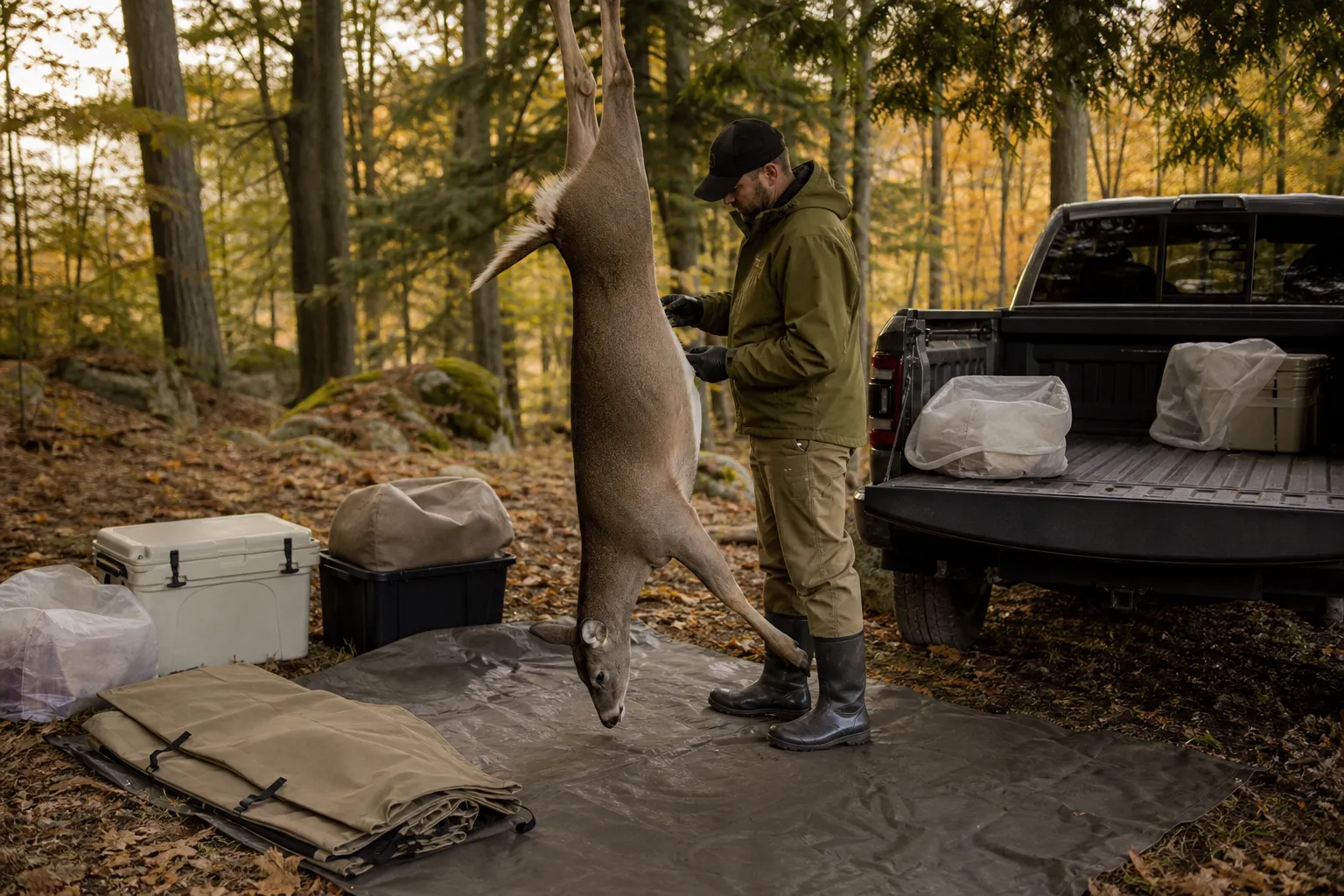
If temperatures, travel time, or local rules create uncertainty, ask your wildlife agency or processor for instructions before transporting or processing the carcass.
CWD precautions while field dressing
Chronic wasting disease, or CWD, affects deer, elk, moose, and similar animals, according to CDC. CDC says CWD has not been shown to infect people, while research continues. CDC
CDC advises hunters in CWD areas not to shoot, handle, or eat animals that look sick or act strangely. CDC also advises hunters to check state wildlife and health department recommendations because CWD testing guidance varies by state, and says not to eat meat from an animal that tests positive for CWD. CDC
Some provincial rules or programs are location specific. Alberta says deer head submission for CWD testing may be mandatory or voluntary depending on hunting location. Saskatchewan recommends minimizing contact with brain, spinal cord, spleen, and lymph nodes, and avoiding long distance movements with deer carcasses to help prevent CWD spread. Alberta, Government of Saskatchewan
Carcass transport and import rules
Do not assume carcass movement rules are the same everywhere. The details vary. New York DEC says hunters bringing deer into New York from outside the state may only import specified low risk parts such as deboned venison and cleaned skull caps. Alberta advises hunters to debone meat when possible while keeping required evidence of sex and species, and says that if a carcass is transported elsewhere, hunters should remove usable meat and dispose of remains by burning, burying, or landfill. New York DEC CWD page, Alberta
Quick field dressing checklist
Use this as a memory aid, then confirm the details with your wildlife agency:
- Complete any required tag, reporting, registration, or notching step before moving the deer where required. New York DEC, Ontario hunting regulations summary
- Put on rubber or latex gloves. CDC
- Keep dirt and digestive contents away from meat.
- Avoid puncturing digestive organs while opening the body cavity.
- Follow agency, hunter education, or processor instructions for chest, pelvis, and lower intestine steps.
- Check CWD testing guidance before handling or eating meat from a deer taken in a CWD area. CDC
- Check carcass movement and import rules before leaving the field or crossing borders. New York DEC CWD page, Alberta
What to check before your hunt
Before each hunt, check your state or provincial wildlife agency for current tag rules, harvest reporting rules, CWD testing guidance, evidence of sex or species requirements, quartering rules, and carcass transport or import limits.
Frequently asked questions
Do I tag a deer before or after field dressing?
Check the rule where you hunted. Ontario says hunters must invalidate a tag immediately after the kill, at the kill site, and before moving the animal. New York DEC gives different instructions for electronic tag and paper tag users.
Should I wear gloves when field dressing a deer?
Yes. CDC advises wearing latex or rubber gloves when field dressing a deer or handling meat.
What should I do about CWD?
CDC says to check state wildlife and health department recommendations because CWD testing guidance varies by state. CDC also says not to shoot, handle, or eat animals that look sick or act strangely, and not to eat meat from an animal that tests positive for CWD.
Can I drive a whole deer carcass across state or provincial lines?
Do not assume you can. Carcass transport and import rules vary. Check the rules for the place you hunted, the place you are going, and any place you will pass through.
Sources
- Field Dressing Your Deer, Missouri Department of ConservationOfficial source. Accessed October 20, 2026.
- Field Dressing Your Harvest, Missouri Department of ConservationOfficial source. Accessed October 20, 2026.
- Venison Processing & Preservation, West Virginia University Extension. Accessed October 20, 2026.
- About Chronic Wasting Disease (CWD), Centers for Disease Control and PreventionOfficial source. Accessed October 20, 2026.
- Deer Carcass Transportation Regulations, Wisconsin Department of Natural ResourcesOfficial source. Accessed October 20, 2026.
- Deer and Bear Hunting Regulations, New York State Department of Environmental ConservationOfficial source. Accessed October 20, 2026.
- Chronic Wasting Disease, New York State Department of Environmental ConservationOfficial source. Accessed October 20, 2026.
- Hunting Best Practices, Government of SaskatchewanOfficial source. Accessed October 20, 2026.
- Hunting in Saskatchewan, Government of SaskatchewanOfficial source. Accessed October 20, 2026.
- Chronic Wasting Disease: Information for hunters, Government of AlbertaOfficial source. Accessed October 20, 2026.
- Tags, Ontario Hunting Regulations Summary, Government of OntarioOfficial source. Accessed October 20, 2026.