Deer Droppings: How to Identify Deer Scat in the Field
Deer scat is usually a pile of dark oval, cylindrical or bullet shaped pellets, but it can clump when deer are eating moist, succulent foods. Use pellet size, shape, freshness, contents and nearby sign to separate deer droppings from rabbit, elk, moose, bear, canid and raccoon scat.
By RaiS. Reviewed by RaiS. Published . 8 min read.
Research and drafting were assisted by AI. RaiS checked the facts against the sources below and approved this page.
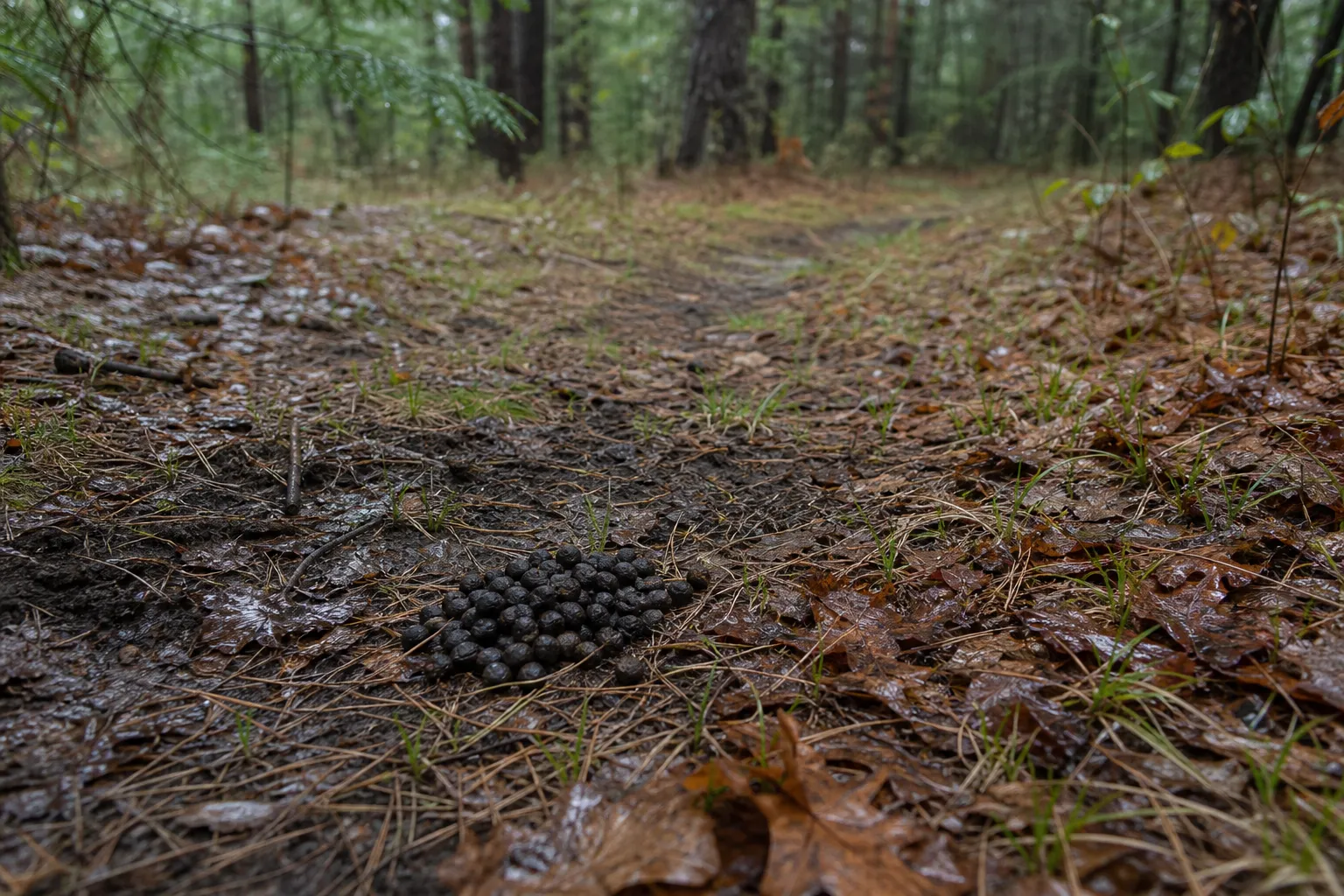
Deer droppings are most often piles of dark, oval, cylindrical or bullet shaped pellets. Illinois Wildlife describes white tailed deer scat as dark cylindrical pellets about one half to 1 inch long, and Indiana DNR describes deer scat as multiple bullet shaped pellets. Deer scat can also appear clumped, especially when deer are eating moist or succulent foods, so the best field clue is not just whether it is loose or clumped, but whether you can still see deer like pellet shapes in the mass.
Quick identification basics
A typical white tailed deer scat pile contains many small pellets. Maryland DNR lists white tailed deer scat as oval, 0.2 to 0.5 inch in diameter and 0.5 to 1 inch long. Indiana DNR notes that each pellet usually has a small dimple on one side.
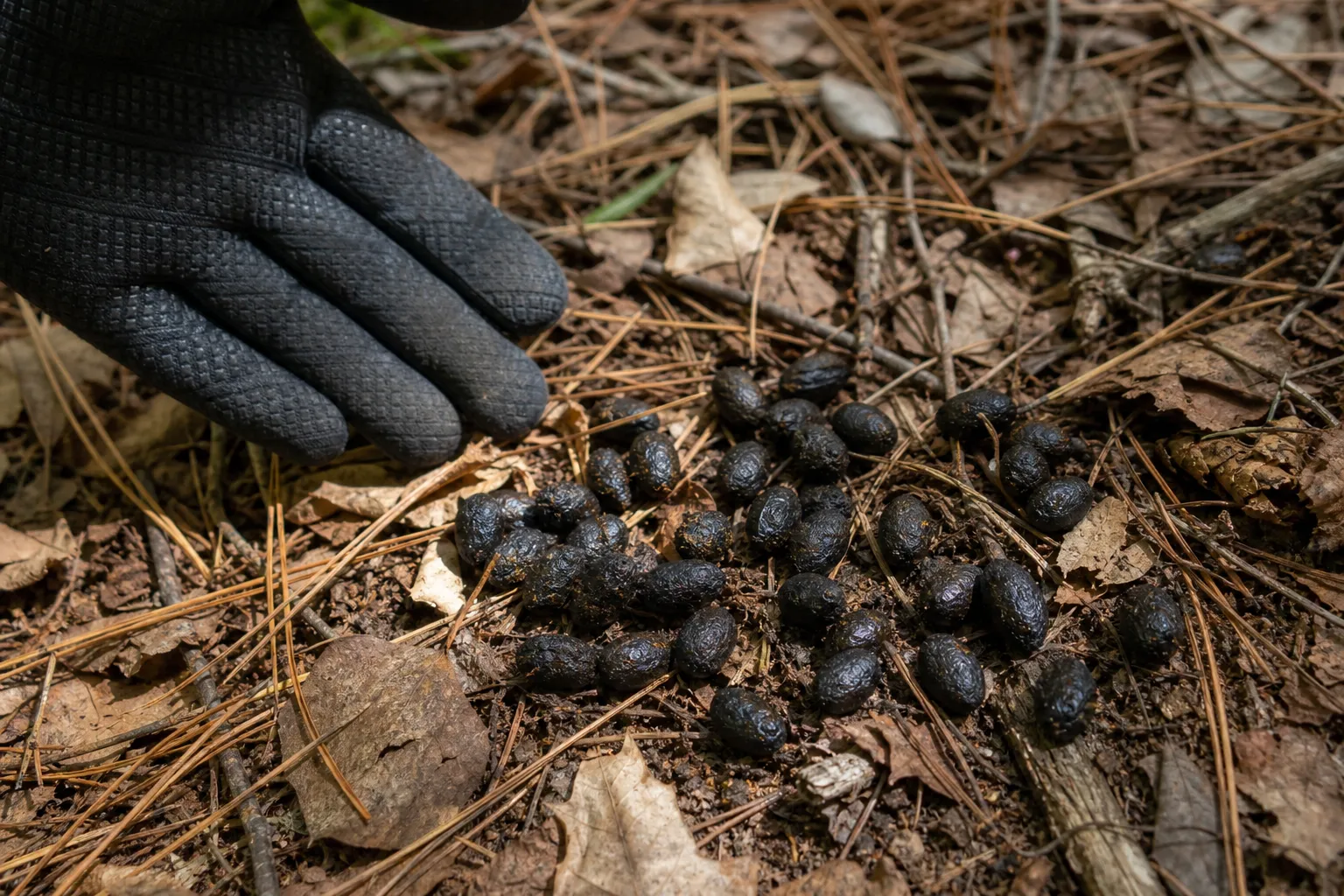
In the field, look for these deer clues:
- Shape: oval, cylindrical or bullet shaped pellets.
- Size: commonly about one half to 1 inch long for white tailed deer.
- Color when fresh: usually dark, often shiny.
- Arrangement: often in a pile, but sometimes scattered or clumped.
- Texture: smoother than many rabbit pellets.
Maryland DNR says high moisture foods such as berries and apples can cause deer scat to clump. In those cases, look for pellet shapes within the mass rather than assuming it is not deer.
Mule deer scat can look similar. New Mexico State University describes mule deer scat as dark brown and usually found in clumps, with each pellet about one half inch long and tapered on one end. New Mexico State University also notes that fibrous material from the deer’s diet can often be seen in the scat.
Pellet groups versus clumped scat
Loose pellets and clumped scat are mainly a diet clue, not a buck versus doe clue. The Pennsylvania Game Commission says deer pellet shape is not determined by the sex of the animal, but by diet.
When deer are eating more fibrous browse, pellets tend to be more separate. The Pennsylvania Game Commission says deer feeding mostly on browse or other fibrous material produce piles of loose, individual pellets. Illinois Learn to Hunt says fibrous foods such as leaves, twigs and bark are linked with small, round, pellet like droppings.
When deer are eating greener, moister foods, scat may soften or clump. The Pennsylvania Game Commission says green and succulent vegetation can cause individual pellets to form into a single clump. Illinois Learn to Hunt says lush green vegetation, including grasses, forbs and agricultural crops during spring and summer, tends to make deer scat softer and more clumped.
That means both forms can be deer scat:
| What you see | What it may mean |
|---|---|
| Loose oval or bullet shaped pellets | Common deer form, often associated with fibrous browse |
| Small pellets stuck together | Can still be deer scat if pellet shapes are visible |
| Softer clumped scat | Often linked with moist, green or succulent foods |
| Dry pellet piles | Often linked with fibrous or woody foods |
Why deer scat changes by season
Deer scat changes because deer diets change. University of Missouri Extension says white tailed deer eat a variety of plant materials, and food selection depends on palatability, availability and season.
For a broader look at seasonal feeding, see our guide to What Do Deer Eat.
Illinois Learn to Hunt gives a similar field pattern. Pellet form is common in fall and winter when deer primarily consume woody browse because softer vegetation is scarce. In spring and summer, access to lush green vegetation tends to make scat softer and more clumped.
This is why a summer deer dropping may not look like the dry pellet pile many people picture. It can be softer or stuck together and still be deer sign.
What fresh deer scat tells you
Fresh scat helps confirm recent deer use of an area, but it should not be treated like a clock. Illinois Wildlife says deer pellets are one way to confirm that deer are in the area. Fresh looking scat strengthens that clue, especially when it appears with other deer sign.
University of Florida IFAS says fresh feces are usually moist and shiny, while older feces tend to be dry, dull and grayish. Maryland DNR describes fresh white tailed deer scat as shiny and dark. Michigan State University Extension says older scat is usually drier and may crumble when broken apart.
Use freshness in broad categories:
- Fresh looking: dark, moist or shiny.
- Older looking: dull, dry, lighter or grayish.
- Very old looking: crumbly, weathered or breaking apart.
Scat of mixed ages in the same area can suggest repeated use, because some piles are newer and others are older. Still, age estimates are rough. Weather, moisture, sun exposure, diet and ground conditions can all affect appearance. The University of Arizona Cooperative Extension notes that scat appearance may vary with environmental settings, nutrition and animal size.
For hunters, fresh scat can help narrow where deer are feeding, bedding or traveling when combined with other sign. For hikers, it is a simple clue that deer have been using the area.
Deer scat lookalikes
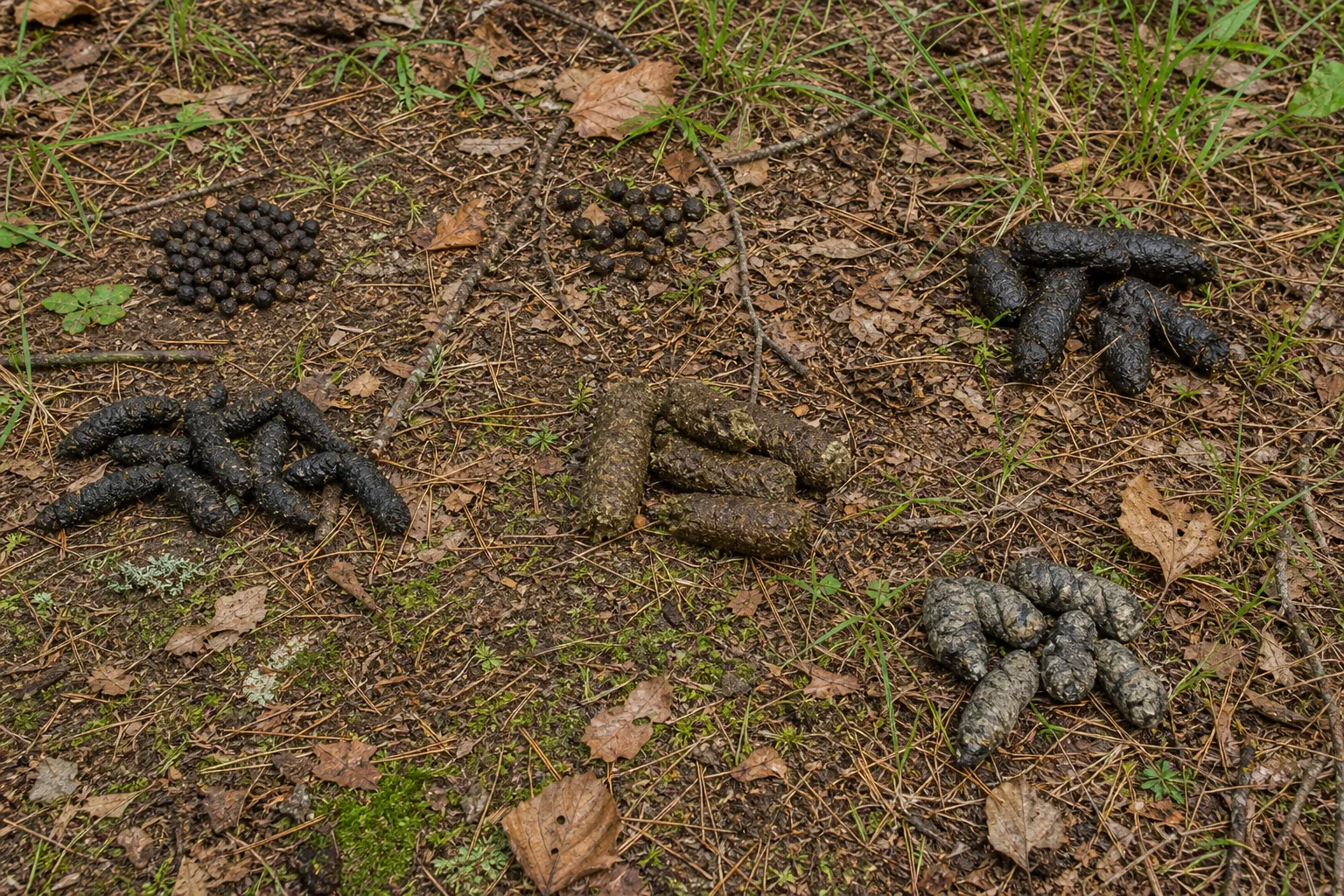
Scat identification can be difficult. The Internet Center for Wildlife Damage Management notes that feces change with an animal’s diet, and the University of Arizona Cooperative Extension says appearance varies with environment, nutrition and animal size. Use more than one clue: size, shape, texture, contents, pile size and nearby tracks or feeding sign.
Rabbit versus deer
Rabbit pellets are usually smaller and rounder. Michigan State University Extension says rabbits tend to have round pellets, while deer pellets are more bullet shaped. University of Florida IFAS says rounded, pea sized pellets with rough texture are likely from rabbits, while slightly larger, smoother oval droppings are likely from white tailed deer.
Maryland DNR lists eastern cottontail droppings as rounded balls 0.15 to 0.4 inch in diameter that often contain bits of grass and other material. Illinois Wildlife notes that deer droppings are similar to rabbit pellets, but deer pellets are larger.
Elk versus deer
Elk and deer scat can overlap in appearance. Washington Department of Fish and Wildlife says deer and elk pellets can have the same general shape and texture when the animals are eating similar diets.
Size and volume help. Washington Department of Fish and Wildlife says elk droppings are slightly larger, and while an adult deer may leave 20 to 30 pellets at a time, elk may deposit about twice that many. It also says clumped elk droppings average 4 to 6 inches across, compared with about 2 inches for deer.
Moose versus deer
Moose scat also changes with diet and season. Alaska Department of Fish and Game says moose scat depends on season and food source. It says pellet shape is directly related to the food’s moisture content, and winter pellets are hard and dry.
That seasonal pattern can resemble deer in a general way, because both animals can produce drier pellets when foods are drier and more fibrous. Use animal size, track size, pellet size and location together rather than relying on one dropping.
Bear versus deer
Bear scat is usually much larger and less pellet like than deer scat. Maryland DNR describes black bear scat as 1.2 to 2.5 inches in diameter and 5 to 12 inches long. It varies with a bear’s omnivorous diet, often contains seeds and can be amorphous.
If the scat is large, loose, amorphous or packed with visible food remains, compare it with our Bear Scat Identification guide rather than treating it as deer sign.
Canids and raccoon versus deer
Fox and coyote scat is usually more tubular or segmented than deer scat. University of Florida IFAS says fox and coyote scat is typically segmented with tapered ends and usually contains hair and often bits of bone.
Raccoon scat is also not a deer like pellet pile. University of Florida IFAS says raccoon scat has blunt ends and is uniform in thickness, about 1 inch in diameter.
Field checklist for hunters and hikers
When you find possible deer droppings, run through a simple checklist:
- Look at shape. Oval, cylindrical or bullet shaped pellets point toward deer.
- Check size. White tailed deer pellets are commonly about one half to 1 inch long.
- Look for clumping. Clumped scat can still be deer if pellet shapes remain visible.
- Estimate freshness broadly. Fresh scat is usually darker, moist or shiny. Older scat is drier, duller, grayish or crumbly.
- Compare lookalikes. Rabbit pellets are smaller and rounder. Elk deposits are larger. Bear scat is much larger and often amorphous or full of seeds. Canid scat is usually segmented and may contain hair or bone.
- Read the whole scene. Nearby tracks, feeding sign and repeated scat of different ages can add context.
Hygiene and safety around scat
Do not handle scat with bare hands. The University of Arizona Cooperative Extension advises observing feces carefully without touching it unless it is being removed from the field. If it must be touched, the same guidance says to use a tool or properly gloved hands.
The CDC says animals can carry harmful germs that make people sick even when the animal looks healthy and clean. CDC guidance also says running water and soap are best for handwashing after handling animals or items that contact them.
For practical field use, photograph scat, compare it in place and leave it alone. If you move it, use a stick, tool or gloves, then wash your hands with soap and running water when you can.
Bottom line
Deer droppings are usually piles of dark oval, cylindrical or bullet shaped pellets, about one half to 1 inch long in white tailed deer. They may be loose, scattered or clumped depending on diet, especially seasonal shifts between green, moist vegetation and drier fibrous browse.
Use scat as one piece of sign, not as a stand alone answer. If you are scouting for a hunt, also check the current rules and guidance from your state or provincial wildlife agency before making hunting decisions in that area.
Frequently asked questions
What do deer droppings look like?
Deer droppings are usually piles of dark oval, cylindrical or bullet shaped pellets. Illinois Wildlife describes white tailed deer scat as dark cylindrical pellets about one half to 1 inch long, and Maryland DNR lists white tailed deer scat as oval and 0.5 to 1 inch long.
Can deer scat be clumped instead of pellets?
Yes. Indiana DNR says deer scat can appear scattered or clumped depending on diet. Maryland DNR says high moisture foods can cause clumping, and the Pennsylvania Game Commission says green, succulent vegetation can make individual pellets form into a single clump.
Does pellet shape tell you whether the deer was a buck or doe?
No. The Pennsylvania Game Commission says deer pellet shape is determined by diet, not by the sex of the animal.
How can I tell deer scat from rabbit scat?
Rabbit pellets are generally smaller, rounder and rougher. University of Florida IFAS says rounded, pea sized rough pellets are likely from rabbits, while slightly larger, smoother oval droppings are likely from white tailed deer.
What does fresh deer scat mean?
Fresh scat helps confirm recent deer use of an area, especially when it appears with other deer sign. Fresh feces are usually moist and shiny, while older feces tend to be dry, dull, grayish or crumbly, according to University of Florida IFAS and Michigan State University Extension.
Should I touch deer droppings to identify them?
No. Observe and photograph scat without bare hand contact. The University of Arizona Cooperative Extension advises using a tool or properly gloved hands if feces must be touched, and CDC guidance says soap and running water are best for handwashing afterward.
Sources
- White-tailed Deer Scat, Wildlife Illinois, Illinois Department of Natural Resources and University of Illinois ExtensionOfficial source. Accessed October 26, 2026.
- Deer Scouting Basics, Indiana Department of Natural Resources, Fish and WildlifeOfficial source. Accessed October 26, 2026.
- Common White-tailed Deer Sign, Maryland Department of Natural ResourcesOfficial source. Accessed October 26, 2026.
- The Scat Detective, Missouri Department of ConservationOfficial source. Accessed October 26, 2026.
- Ask a Deer Question, Pennsylvania Game CommissionOfficial source. Accessed October 26, 2026.
- White-Tailed Deer Ecology, Illinois Learn to Hunt, Illinois Natural History SurveyOfficial source. Accessed October 26, 2026.
- Nutritional Requirements of White-tailed Deer in Missouri, University of Missouri Extension and Missouri Department of ConservationOfficial source. Accessed October 26, 2026.
- Habitat in the backyard, Part 6: Poop!, Michigan State University ExtensionOfficial source. Accessed October 26, 2026.
- How to Identify the Wildlife Species Responsible for Damage in Your Yard, University of Florida IFAS ExtensionOfficial source. Accessed October 26, 2026.
- Mule Deer in New Mexico, New Mexico State University Cooperative Extension ServiceOfficial source. Accessed October 26, 2026.
- Elk, Washington Department of Fish and WildlifeOfficial source. Accessed October 26, 2026.
- Moose Sign, Alaska Department of Fish and GameOfficial source. Accessed October 26, 2026.
- Identifying animal sign can increase your odds when hunting, Idaho Department of Fish and GameOfficial source. Accessed October 26, 2026.
- Scat and Droppings Identification Key, Internet Center for Wildlife Damage Management. Accessed October 26, 2026.
- Southwest Arizona Track and Scat Guide, University of Arizona Cooperative ExtensionOfficial source. Accessed October 26, 2026.
- Hygiene Practices Around Animals, Centers for Disease Control and PreventionOfficial source. Accessed October 26, 2026.
- Nutritional Requirements of White-tailed Deer in Missouri | MU Extension. Accessed October 26, 2026.
- Nutritional Requirements of White-tailed Deer in Missouri | MU Extension. Accessed October 26, 2026.