What Do Deer Eat? Seasonal Diet of North American Deer
North American deer are selective herbivores that shift among browse, forbs, mast, crops and other foods as seasons change. Winter diets usually rely more on buds, evergreen leaves and exposed woody browse, with important differences among white-tailed deer, mule deer and black-tailed deer.
By RaiS. Reviewed by RaiS. Published . 7 min read.
Research and drafting were assisted by AI. RaiS checked the facts against the sources below and approved this page.
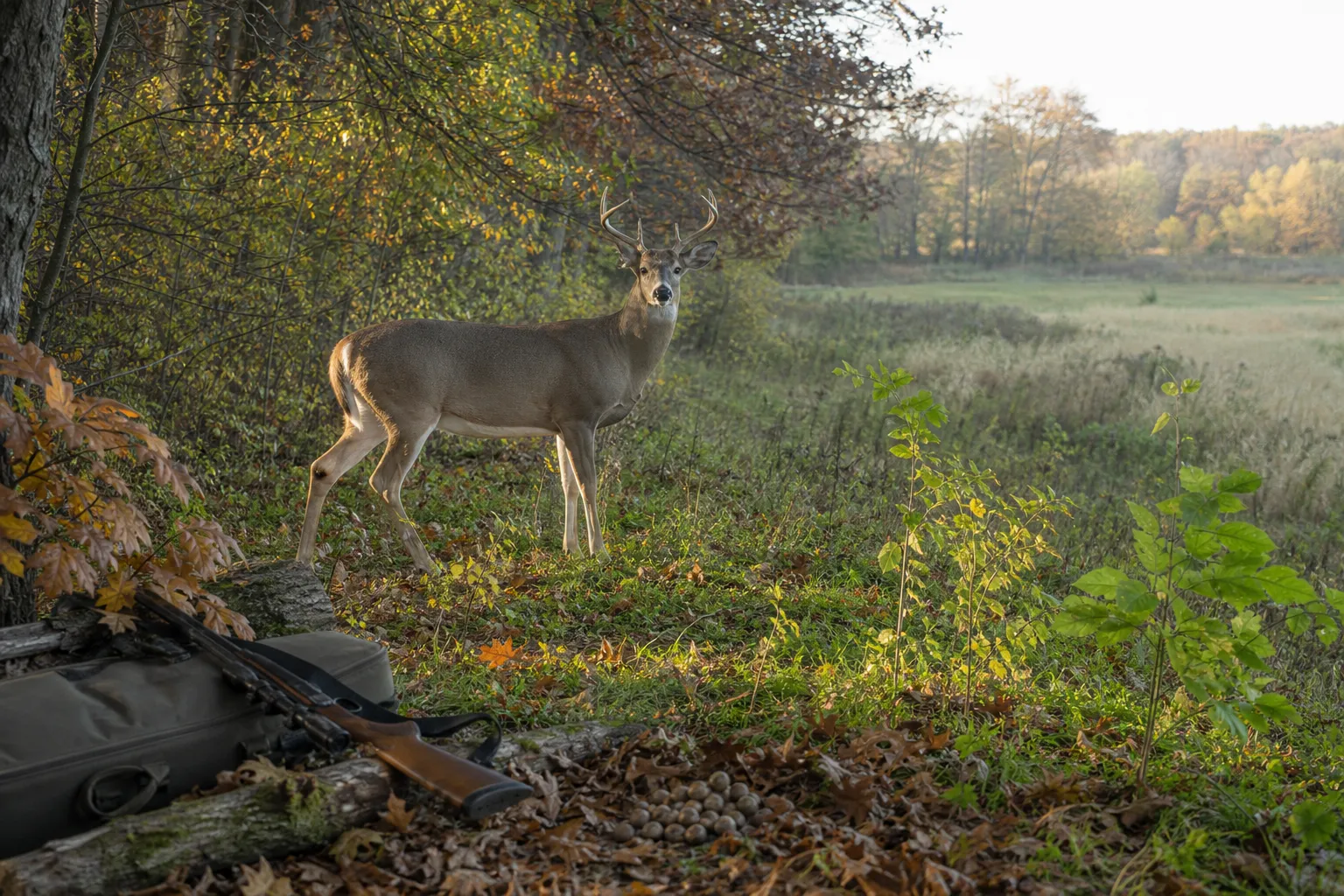
Deer eat a changing mix of woody browse, forbs, mast, agricultural crops, grasses, fungi and lichens. The short answer is that North American deer are selective feeders, not simple grass grazers. Their diet changes with season, local plant availability, forage quality and the animal’s nutritional needs, as Mississippi State University’s Deer Lab explains for white-tailed deer.
The main deer food groups
The words used in deer habitat guides can sound technical, but the basic categories are simple.
| Food group | Plain meaning | Examples from wildlife agencies and universities |
|---|---|---|
| Browse | Leafy parts and growing tips of woody plants | Shrubs, vines, trees, saplings, evergreen leaves and leaf buds |
| Forbs | Herbaceous broad-leaved plants | Annual and perennial forbs, leafy flowering plants and some agricultural crops |
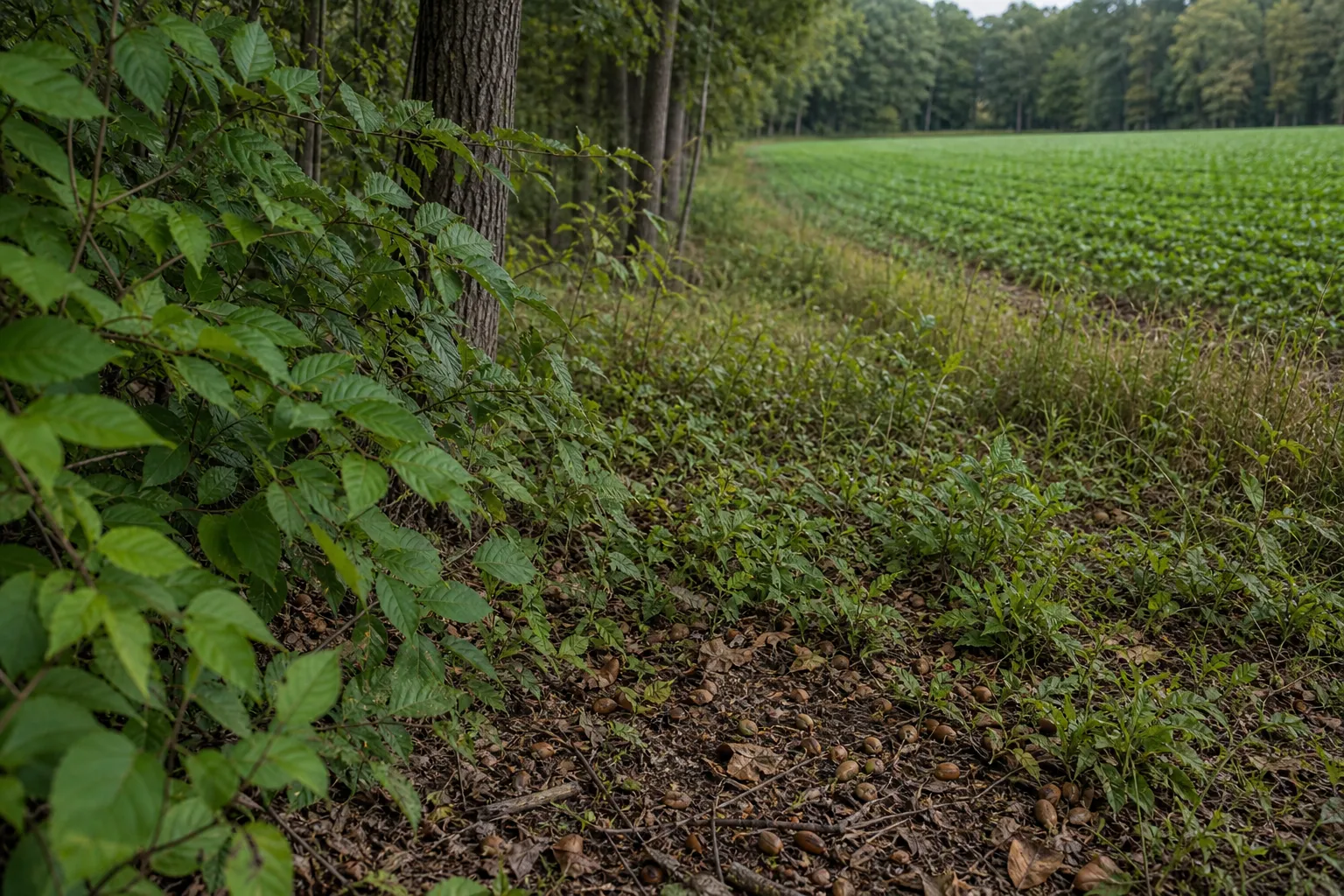
| Mast | Seeds, fruits and nuts | Berries as soft mast, acorns as hard mast, fruit and nuts |
| Agricultural crops | Farm crops deer use when available | Corn, wheat, lespedeza, planted grain and forage crops |
| Grasses | Grass plants, especially when green and tender | Early spring grasses are important for mule deer in Utah |
| Fungi and lichens | Non-plant foods grouped with natural forage in deer diet references | Mushrooms, fungi and lichens |
Mississippi State University’s Deer Lab lists browse, forbs, hard and soft mast, grasses, mushrooms and lichens among foods eaten by white-tailed deer. Across the white-tailed deer range, the same program says browse, forbs and mast make up more than 85 percent of the overall diet.
That is why deer should not be thought of mainly as grass eaters. Grasses can matter, especially when young, green and available, and agricultural grain or forage crops may be used where present. But for white-tailed deer, Mississippi State says browse and forbs provide more than 80 percent of the diet in all seasons except autumn.
Browse: the backbone of many deer diets
Browse means the leafy parts and growing tips of woody plants.
Browse becomes especially important when other foods are scarce or covered. In Utah, the Division of Wildlife Resources says mule deer survive in winter by feeding on exposed browse when most other vegetation is covered by snow.
A Texas Parks and Wildlife study in the Cross Timbers and Prairies region shows how important browse can be in a specific place. In that study, the average annual white-tailed deer diet was 36 percent browse, 20 percent forbs, 20 percent mast, 12 percent grasses, 7 percent planted agricultural forage and grain crops, and 5 percent commercial feed. In winter, 14 browse species made up 62 percent to 68 percent of the winter diet.
Forbs: high value green forage
Forbs are broad-leaved herbaceous plants. They are not woody like shrubs, and they are not grasses. Mississippi State University defines forbs as herbaceous broad-leaved plants, including agricultural crops.
Forbs are often highly selected when available. In the Texas Parks and Wildlife Cross Timbers and Prairies study, wetter spring conditions increased forb use. The study states that forbs were more highly preferred as a forage class, although less dependable than browse.
Season matters. Utah Division of Wildlife Resources says grasses and forbs make up the bulk of a mule deer’s early spring diet, and mule deer continue eating grasses and forbs in summer before shifting toward shrubs in late summer as grasses and flowering plants dry out.
Mast: acorns, berries, fruit and nuts
Mast is a major reason deer feeding patterns can change quickly in fall. Mississippi State University says mast consumption by white-tailed deer increases from 11 percent in summer, mainly soft mast such as berries, to 28 percent in autumn, mainly hard mast such as acorns.
Washington Department of Fish and Wildlife lists fruit, nuts and acorns among foods deer eat when available. It also lists fungi, lichens, and farm and garden crops.
Agricultural crops and gardens
White-tailed deer use agricultural crops readily where those crops are available. Mississippi State University says crops tend to be nutritious, palatable and digestible.
The Texas Parks and Wildlife Cross Timbers and Prairies study found that fall diets included substantial browse, and that use of corn from deer feeders plus planted agricultural grain and forage crops was relatively high when those items were available.
For hunters and landowners, the practical point is simple: crop fields, farm edges and nearby cover can influence where deer feed, but crop use is still part of a broader seasonal diet. Deer may shift heavily toward mast, green forbs, shrubs or exposed winter browse depending on what is available and digestible at that time.
Seasonal deer diet pattern
Spring
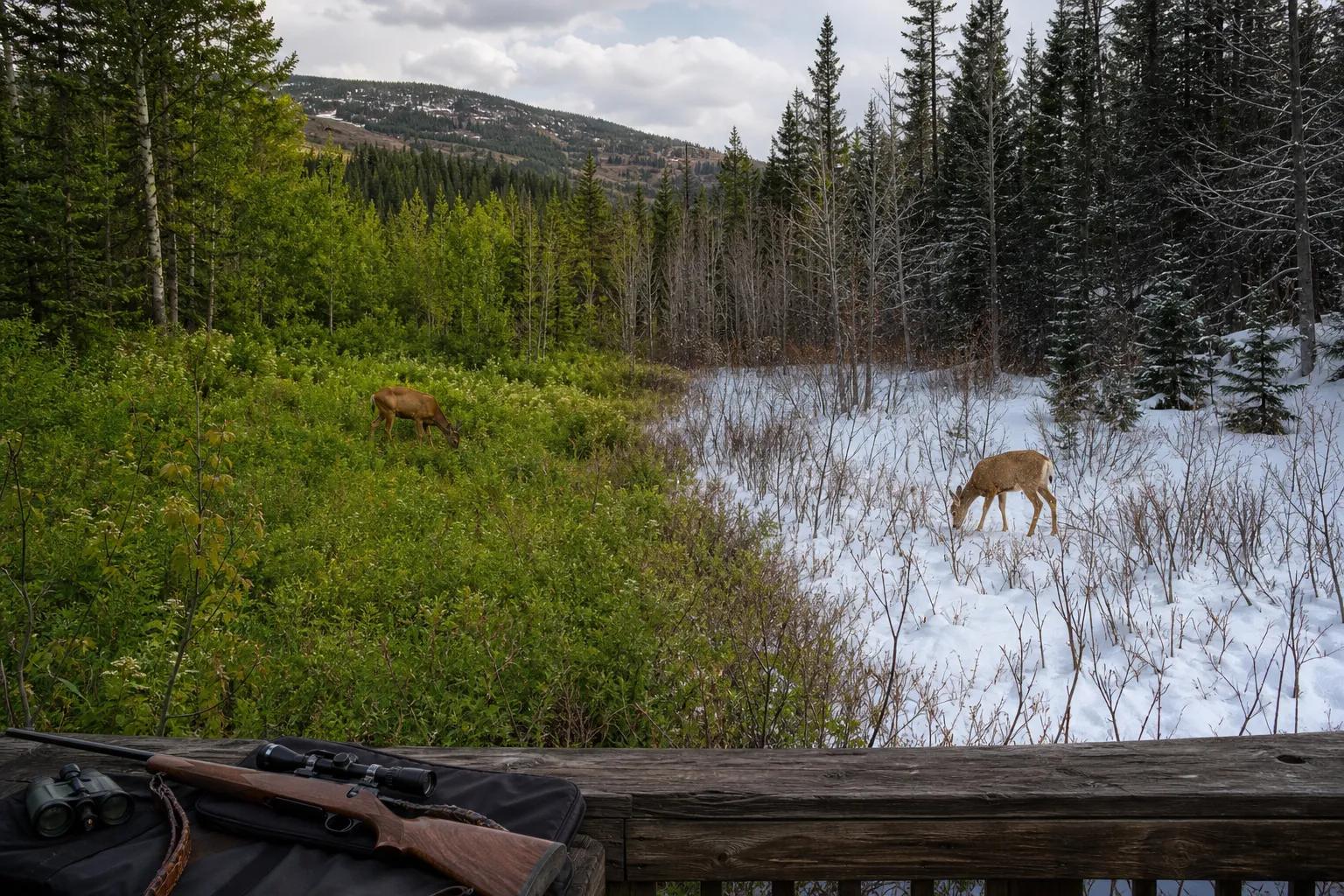
Spring diets often center on new green growth. For mule deer in Utah, the Division of Wildlife Resources says grasses and forbs make up the bulk of the early spring diet.
In the Texas Parks and Wildlife study, wetter spring conditions increased forb use by white-tailed deer. That supports a useful field observation: when broad-leaved green plants are abundant, deer often select them strongly.
Summer
Summer diets commonly include forbs and tender browse. Mississippi State University says white-tailed deer diet selection changes with seasonal changes in forage abundance, quality and metabolic needs. During summer, soft mast such as berries also contributes to the diet.
Utah Division of Wildlife Resources says mule deer continue eating grasses and forbs in summer. As late summer dries those plants, mule deer shift toward shrubs.
Fall
Fall is mast season where mast is available. Mississippi State University says white-tailed deer mast consumption rises in autumn, mainly from hard mast such as acorns.
Agricultural crops may also be important in fall where present. The Texas Parks and Wildlife study reported relatively high use of corn from deer feeders and planted agricultural grain and forage crops when available, while browse still remained a substantial part of fall diets.
Winter
Winter diets are often built around what remains accessible and digestible. Mississippi State University says leaf buds and evergreen leaves are especially important winter foods for white-tailed deer in northern areas.
For mule deer, Utah Division of Wildlife Resources describes winter survival as dependent on exposed browse when other vegetation is covered by snow. The Texas Parks and Wildlife Cross Timbers and Prairies study also notes that winter months often result in periods of nutritional stress for white-tailed deer in that region, and winter diets there were dominated by browse species.
This is also why a full stomach is not the same as good nutrition. Mississippi State University notes that on severely overpopulated and depleted ranges, white-tailed deer have starved with stomachs full of low quality forage.
White-tailed deer, mule deer and black-tailed deer
White-tailed deer
White-tailed deer have a broad diet. Mississippi State University lists browse, forbs, hard and soft mast, grasses, mushrooms and lichens, and says browse, forbs and mast make up most of the overall diet across the species’ range.
In agricultural areas, white-tailed deer readily use crops when available, according to Mississippi State University.
Mule deer
Mule deer show strong seasonal shifts. Utah Division of Wildlife Resources says early spring diets are mostly grasses and forbs, that mule deer continue using grasses and forbs in summer, and that they shift toward shrubs in late summer as those plants dry out.
The U.S. Forest Service describes mule deer as intermediate or mixed feeders. That means they can switch from diets composed mainly of grasses and forbs to diets composed mainly of browse.
Black-tailed deer
Black-tailed deer diets are closely tied to coastal, forest and edge habitats. Alaska Department of Fish and Game describes Sitka black-tailed deer as herbivores that feed on vegetation, green shrub leaves, evergreen forbs and woody browse.
Washington Department of Fish and Wildlife says deer eat fruit, nuts, acorns, fungi, lichens, and farm and garden crops when available.
A caution about feeding, baiting and minerals
This guide is about natural diet, not a feeding or baiting plan. Feeding rules vary by state or province, and they can change with chronic wasting disease management concerns. Before feeding deer, baiting, or placing minerals, check the current rule from your state or provincial wildlife agency.
Disease is a major reason agencies restrict feeding. Virginia Department of Wildlife Resources warns that attracting deer to feeding sites has been linked to the spread of tuberculosis and chronic wasting disease in some states. The same agency warns that a rapid diet change can leave deer unable to digest the new food and can cause deadly rumen acidosis or bloat.
New York State Department of Environmental Conservation states that intentional feeding of wild deer and moose is illegal in New York, and explains that artificial feeding concentrates animals in one location for extended periods, increasing the likelihood of disease spread.
What to check before you act
If you are hunting, managing land, or trying to understand deer movement, start with the local season. Look for green forbs and tender browse in spring and summer, mast and crop use in fall, and exposed browse, buds and evergreen leaves in winter.
Then check your state or provincial wildlife agency for current hunting regulations, baiting rules, feeding rules, mineral placement rules and CWD management zones. Deer diets are local, and wildlife rules are local too.
Frequently asked questions
Do deer eat grass?
Yes, but grasses are not the whole story. Mississippi State University lists grass among white-tailed deer foods, while Utah Division of Wildlife Resources says grasses and forbs make up much of a mule deer’s early spring diet. Across the white-tailed deer range, browse, forbs and mast make up most of the overall diet.
What do deer eat in winter?
Winter diets often rely on accessible woody foods. Mississippi State University says leaf buds and evergreen leaves are especially important for white-tailed deer in northern areas. Utah Division of Wildlife Resources says mule deer survive on exposed browse when snow covers other vegetation.
Do deer eat acorns?
Yes. Mississippi State University says white-tailed deer mast use rises in autumn, mainly from hard mast such as acorns.
Are white-tailed deer and mule deer diets the same?
They overlap, but they are not identical. White-tailed deer diets are broadly built around browse, forbs and mast. Utah Division of Wildlife Resources describes mule deer shifting from spring grasses and forbs to shrubs in late summer and exposed browse in winter.
Should I feed deer in winter?
Check your wildlife agency before feeding deer. Virginia Department of Wildlife Resources warns that feeding sites can spread disease and that rapid diet changes can cause rumen acidosis or bloat. New York State Department of Environmental Conservation states that intentional feeding of wild deer and moose is illegal in New York.
Sources
- Should I Feed the Deer?, Virginia Department of Wildlife ResourcesOfficial source. Accessed October 22, 2026.
- What Do Deer Eat?, Mississippi State University Deer Ecology and Management LabOfficial source. Accessed October 22, 2026.
- Deer: Food and Water Needs, Missouri Department of ConservationOfficial source. Accessed October 22, 2026.
- White-tailed Deer Food Habits and Preferences in the Cross Timbers and Prairies Region of Texas, Texas Parks and Wildlife DepartmentOfficial source. Accessed October 22, 2026.
- Learn about mule deer habitat, Utah Division of Wildlife ResourcesOfficial source. Accessed October 22, 2026.
- Odocoileus hemionus, mule deer, U.S. Forest Service Research and Development, Fire Effects Information SystemOfficial source. Accessed October 22, 2026.
- Living with wildlife: Deer, Washington Department of Fish and WildlifeOfficial source. Accessed October 22, 2026.
- Sitka Black-tailed Deer Species Profile, Alaska Department of Fish and GameOfficial source. Accessed October 22, 2026.
- Black-tailed deer Hunting, Oregon Department of Fish and WildlifeOfficial source. Accessed October 22, 2026.
- Chronic Wasting Disease, New York State Department of Environmental ConservationOfficial source. Accessed October 22, 2026.