When Do Deer Have Babies? Fawns Explained
Many white-tailed deer fawns are born in late spring to early summer, but the timing changes by region. A quiet, uninjured fawn found alone is not automatically abandoned because the doe returns periodically to nurse it.
By RaiS. Reviewed by RaiS. Published . 5 min read.
Research and drafting were assisted by AI. RaiS checked the facts against the sources below and approved this page.
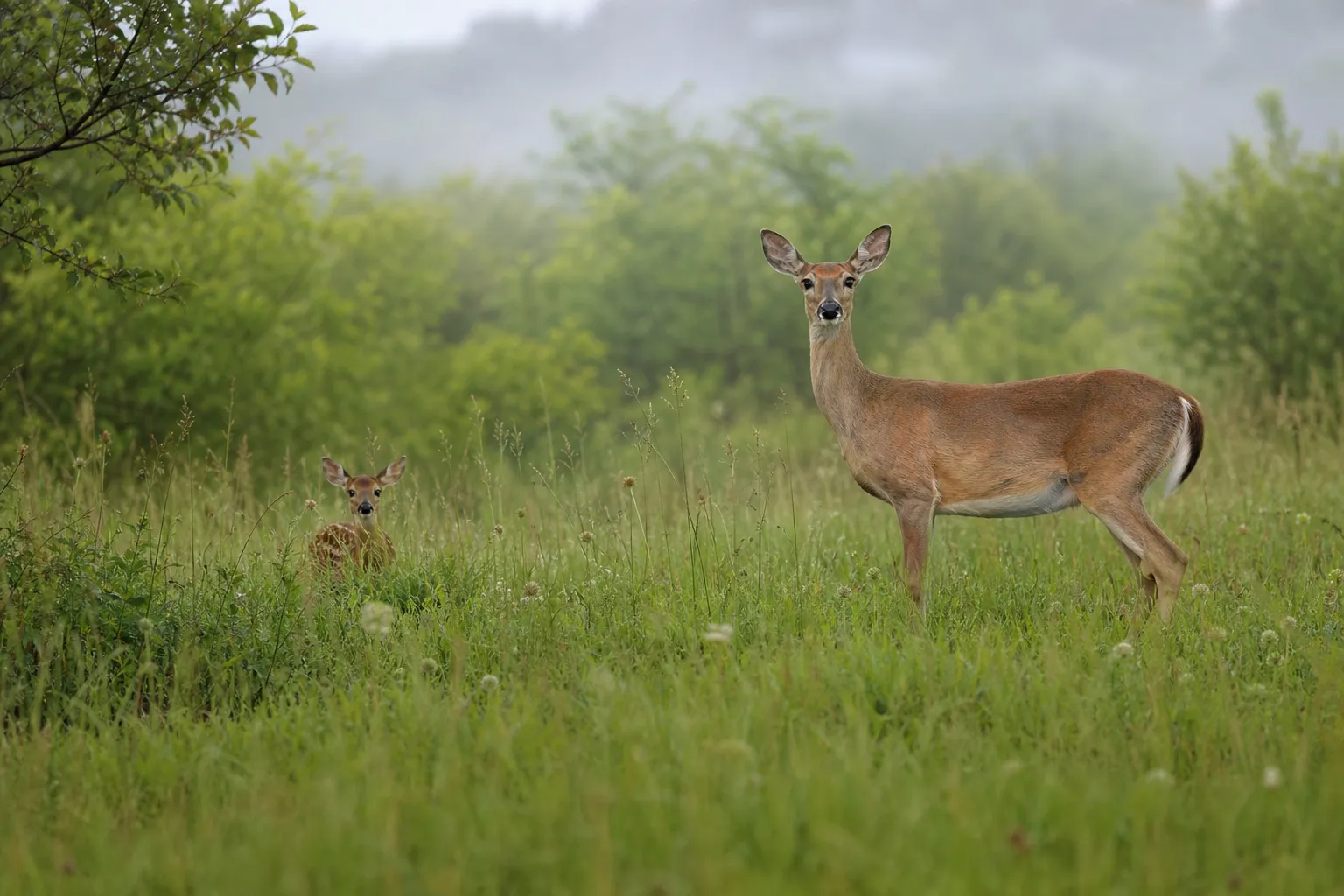
Many deer have their babies in late spring to early summer. For white-tailed deer, several wildlife agencies and extension programs place common fawning dates in May and June, but the exact timing depends on the region. Alabama has a later fawning season, and Florida wildlife officials note that deer breeding activity varies widely within that state.
This guide focuses mainly on white-tailed deer, with one note on mule deer where agency and extension information is available.
Quick answer: when do deer have babies?
In many northern, Midwestern and eastern areas, white-tailed deer fawns are born from late May into June. University of Missouri Extension says Missouri fawning normally runs from May through July and peaks in late May through June. Indiana DNR says Indiana fawns are born in late May or early June after a 200-day gestation period.
British Columbia says deer fawning season occurs from mid-May until the end of June. North Dakota Game and Fish says more than 90 percent of Northern Great Plains white-tailed deer fawns are born between May 9 and July 4.
Southern timing can be different. Alabama Cooperative Extension says Alabama’s fawning season extends from mid-July until early September. Florida Fish and Wildlife Conservation Commission says deer breeding activity is more variable in the Southeast than in the northern United States, and that Florida breeding varies from July in southern Florida to February in northwest Florida.
| Area | Agency or extension timing |
|---|---|
| Missouri | May through July, peaking in late May through June, according to University of Missouri Extension |
| Indiana | Late May or early June, according to Indiana DNR |
| British Columbia | Mid-May until the end of June, according to British Columbia |
| Northern Great Plains | More than 90 percent of white-tailed deer fawns born between May 9 and July 4, according to North Dakota Game and Fish |
| Alabama | Mid-July until early September, according to Alabama Cooperative Extension |
| Florida | Breeding varies from July in southern Florida to February in northwest Florida, according to Florida Fish and Wildlife Conservation Commission |
Deer gestation period
The deer gestation period is about 200 days for white-tailed deer. University of Missouri Extension lists white-tailed deer gestation as generally 190 to 210 days. Indiana DNR describes a 200-day gestation period for Indiana white-tailed deer. British Columbia’s white-tailed deer fact sheet lists gestation as 195 to 210 days.
Mule deer are similar. Montana State University Extension says mule deer fawns are born in late May and June after about 203 days of gestation.
That gestation period is why fawning dates are tied to local breeding dates. Where breeding happens earlier or later, fawning dates also shift.
What is a fawn?
A fawn is a baby deer.
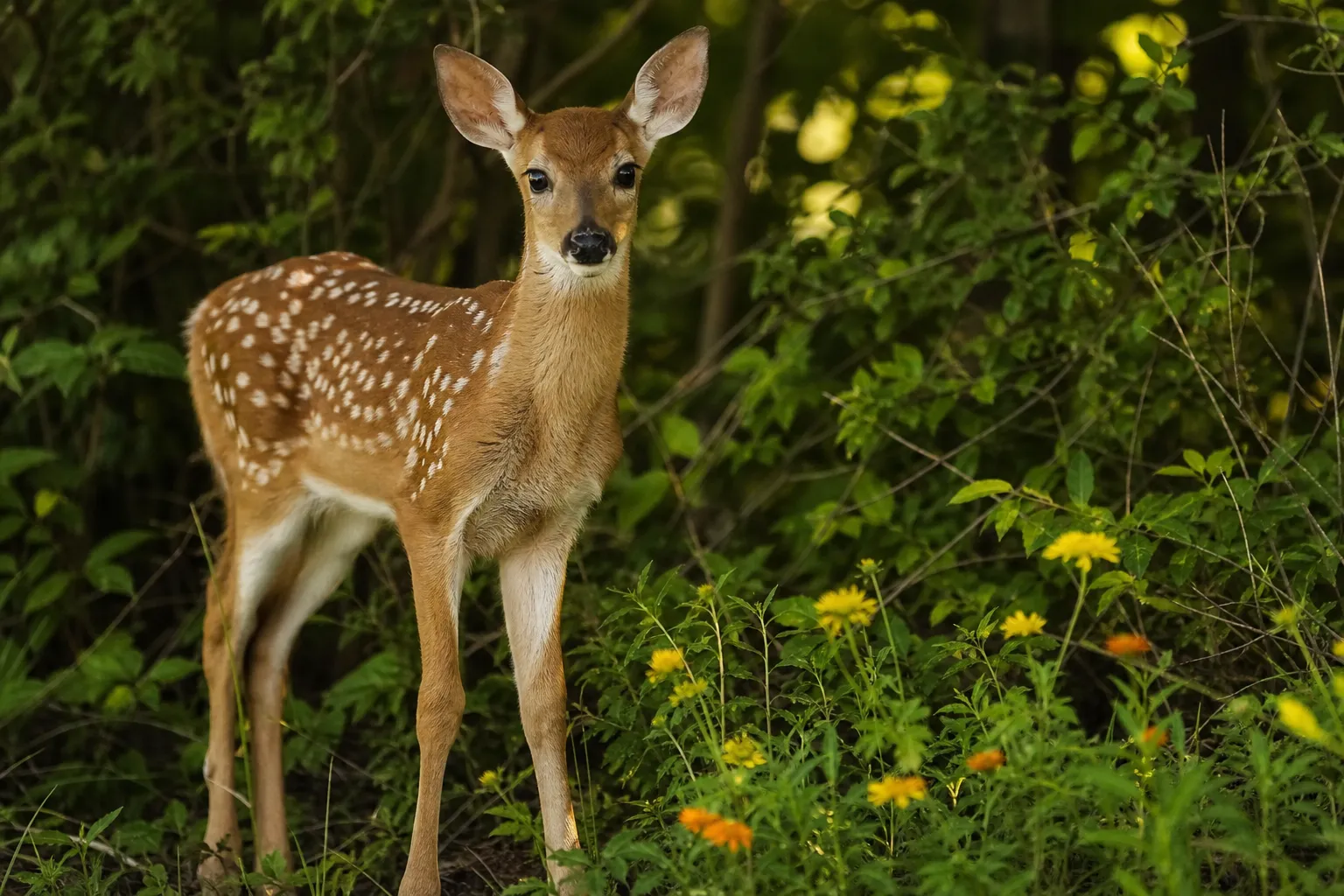
The spots are part of the fawn’s early survival strategy. Iowa DNR says a newborn fawn’s spots work as cryptic camouflage. Maryland DNR says a fawn is well camouflaged and has very little odor. Iowa DNR also says lack of movement during the first two weeks helps reduce scent patterns.
That is why a fawn may lie still, even when a person walks nearby. A hidden fawn is not automatically abandoned. Maryland DNR says the doe returns periodically to nurse fawns and move them to secluded habitat.
Fawns are mobile early, but they do not behave like adult deer.
Indiana DNR says newborn fawns weigh 4 to 8 pounds. Indiana DNR also says fawns grow rapidly and double their weight in about two weeks.
Do deer have twins?
Many adult does have twins, but litter size varies.
Maryland DNR says a doe gives birth to one or two fawns. Maine Department of Inland Fisheries and Wildlife says well-nourished adult does may give birth to twins, triplets and rarely quadruplets.
Twin fawns may not be lying side by side. Maryland DNR says twin fawns may be separated by up to 200 feet. Maryland DNR also says a buck plays no role in raising fawns.
Why fawns hide instead of following the doe
A bedded fawn is doing what young fawns are adapted to do. The doe returns periodically to nurse, but the fawn’s camouflage, low odor and stillness help it stay hidden between nursing visits.
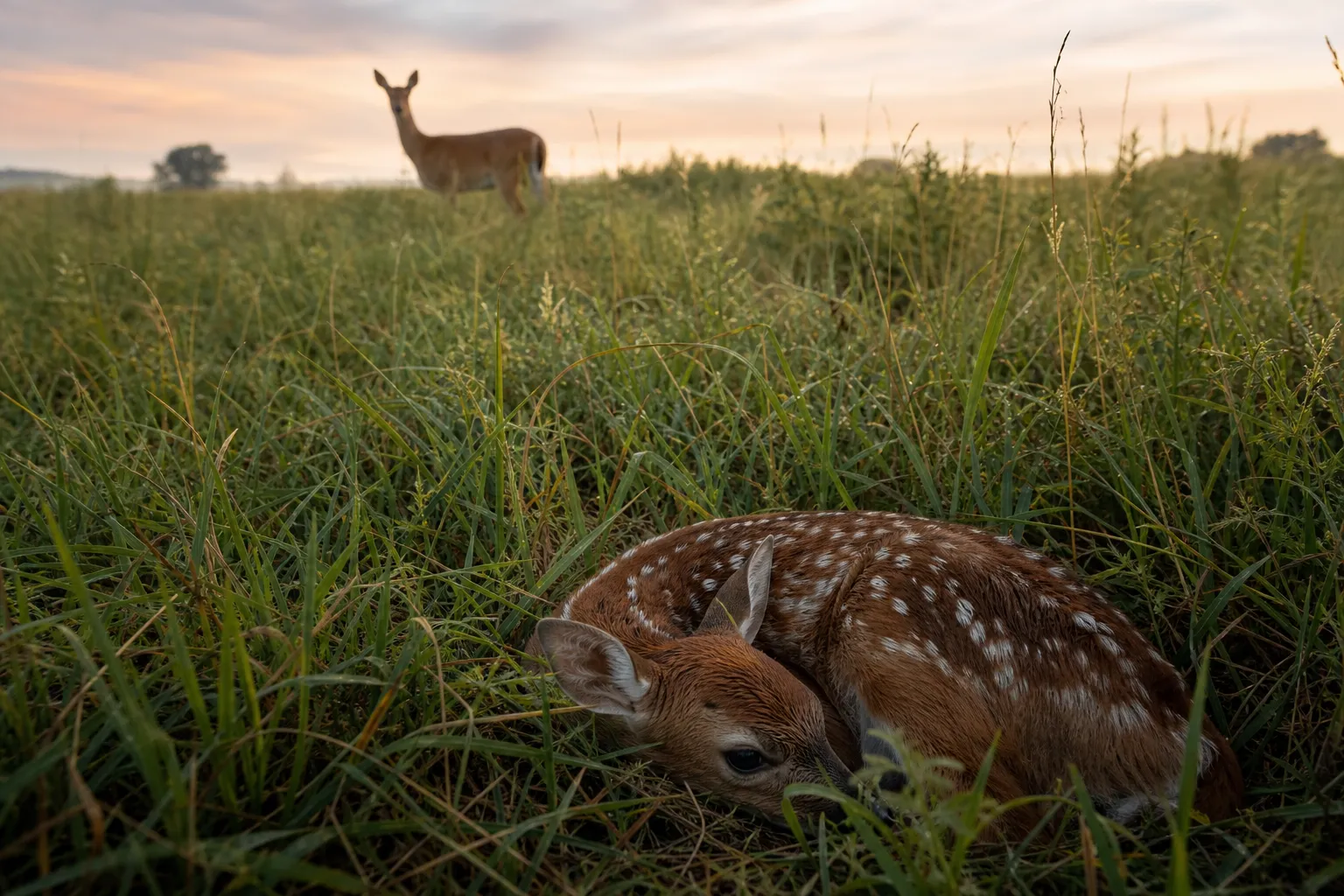
This hiding behavior matters for hunters, landowners and wildlife watchers because a lone fawn can look helpless even when normal care is happening. A fawn that is quiet, still and uninjured should not be treated as orphaned only because the doe is not visible.
The doe may also place fawns in cover that people do not expect. The important point is that absence of the doe during the day is not proof that the fawn has been abandoned.
What to do if you find a fawn
If you find a seemingly healthy fawn lying quietly by itself, remember that it may not be abandoned.
Do not feed it. Maryland DNR says people should never feed anything to a fawn.
Keep people and pets away so the doe can return. If the fawn is truly in trouble, contact the appropriate wildlife agency or a licensed wildlife rehabilitator for your area.
Washington Department of Fish and Wildlife says to contact a wildlife rehabilitator when the mother is certainly dead. Washington also says to contact a wildlife rehabilitator when a fawn appears weak, ill or injured, or when the mother does not return the following day.
Maryland DNR says injured fawns should receive care only from a licensed Maryland wildlife rehabilitator authorized to handle fawns. If you are outside Maryland, use your own state or provincial wildlife agency’s current instructions.
Landowner notes during fawning season
Landowners should assume that fawns may be hidden in cover during the local fawning window. North Dakota Game and Fish says newborn fawns cannot outrun a combine or brush hog.
North Carolina State Extension says mowing or burning fields used as fawning cover should be delayed until August to avoid killing fawns. Before mowing, burning or doing field work during fawning season, check current guidance from your state or provincial wildlife agency or extension service.
What hunters and wildlife watchers should take away
For many white-tailed deer areas, expect fawns in late May and June. In some places the window is wider or later, such as Missouri’s May through July fawning period and Alabama’s mid-July to early September fawning season.
A fawn alone is not automatically abandoned. The safest general response to a quiet, uninjured fawn is to avoid feeding it and contact the wildlife agency or a licensed rehabilitator only when the fawn appears injured, ill, weak, truly orphaned or the mother does not return within the time described by the local agency.
Before making hunting, land management or wildlife handling decisions, check your current state or provincial wildlife agency guidance, local extension recommendations and current hunting regulations.
Frequently asked questions
When do deer have babies?
Many white-tailed deer fawns are born in late May and June, but timing varies by region. Missouri fawning peaks in late May through June, Indiana fawns are born in late May or early June, and Alabama fawning extends from mid-July until early September.
How long is the deer gestation period?
For white-tailed deer, the gestation period is about 200 days. University of Missouri Extension lists 190 to 210 days, Indiana DNR describes 200 days, and British Columbia lists 195 to 210 days.
What is a fawn?
A fawn is a baby deer. Young fawns may have spots that help them blend into cover.
Do deer usually have twins?
Many adult does have twins, but litter size varies. Maryland DNR says a doe gives birth to one or two fawns, and Maine Department of Inland Fisheries and Wildlife says well-nourished adult does may give birth to twins, triplets and rarely quadruplets.
What should I do if I find a fawn alone?
If the fawn is quiet, uninjured and lying by itself, remember that it may not be abandoned. Do not feed it. Contact your wildlife agency or a licensed rehabilitator if it appears weak, ill or injured, or if the mother is certainly dead.
Sources
- Ecology and Management of White-Tailed Deer in Missouri, University of Missouri ExtensionOfficial source. Accessed October 23, 2026.
- White-tailed Deer Biology, Indiana Department of Natural ResourcesOfficial source. Accessed October 23, 2026.
- White-tailed Deer, Maine Department of Inland Fisheries and WildlifeOfficial source. Accessed October 23, 2026.
- Managing White-tailed Deer: Camera Surveys, Alabama Cooperative Extension SystemOfficial source. Accessed October 23, 2026.
- White-tailed Deer in Florida, Florida Fish and Wildlife Conservation CommissionOfficial source. Accessed October 23, 2026.
- People advised to help prevent human-deer conflicts in urban areas, Government of British ColumbiaOfficial source. Accessed October 23, 2026.
- White-tailed Deer, Province of British ColumbiaOfficial source. Accessed October 23, 2026.
- Mule Deer Management for Montana Landowners, Montana State University ExtensionOfficial source. Accessed October 23, 2026.
- White-Tailed Deer, Missouri Department of ConservationOfficial source. Accessed October 23, 2026.
- Deer Fawn Facts, Maryland Department of Natural ResourcesOfficial source. Accessed October 23, 2026.
- Fawning season is here, deer are on the move, Iowa Department of Natural ResourcesOfficial source. Accessed October 23, 2026.
- Keep Wildlife Wild: A Fawn’s Best Chance Of Survival Is With Its Mother, Wisconsin Department of Natural ResourcesOfficial source. Accessed October 23, 2026.
- What to do if you find a deer fawn, Washington Department of Fish and WildlifeOfficial source. Accessed October 23, 2026.
- Habitat Needs of White-Tailed Deer, North Dakota Game and Fish DepartmentOfficial source. Accessed October 23, 2026.
- White-Tailed Deer, NC State Extension PublicationsOfficial source. Accessed October 23, 2026.
- Ecology and Management of White-Tailed Deer in Missouri | MU Extension. Accessed October 23, 2026.
- Ecology and Management of White-Tailed Deer in Missouri | MU Extension. Accessed October 23, 2026.
- Ecology and Management of White-Tailed Deer in Missouri | MU Extension. Accessed October 23, 2026.