Deer Shot Placement: Where the Vital Organs Are
Ethical deer shot placement centers on the chest cavity, where the heart, lungs, and major arteries are located. The best supported guidance favors broadside and quartering away angles, waiting when the angle is poor, and treating recovery as part of the shot decision.
By RaiS. Reviewed by RaiS. Published . 6 min read.
Research and drafting were assisted by AI. RaiS checked the facts against the sources below and approved this page.
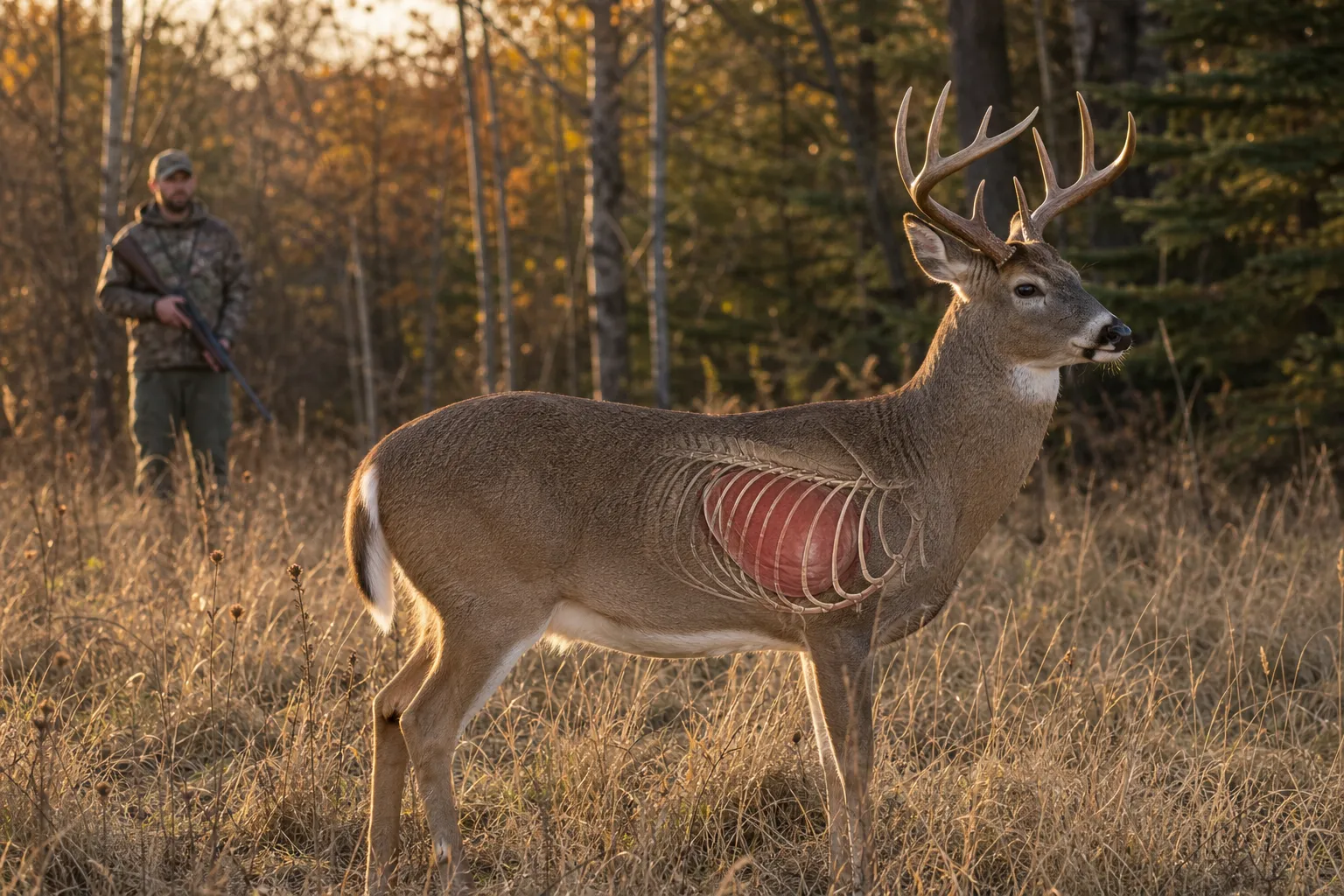
Deer shot placement should be aimed at the chest vital area, not just at the outline of the deer. Hunter education guidance from Texas Parks and Wildlife describes the goal as a well placed shot to the vital organs, and IHEA bowhunter standards identify the chest-cavity vital organs as the heart, lungs, and major arteries. If the deer does not give you a clear angle to that area, the ethical choice is to wait for the shot angle to improve. Texas Parks and Wildlife, IHEA, 2016 Bowhunter Education Standards
The ethical goal: a quick kill and recovery
The purpose of shot placement is a quick, humane kill and a likely recovery. Texas Parks and Wildlife hunter education frames good shot placement as a shot to the vital organs. Texas Parks and Wildlife
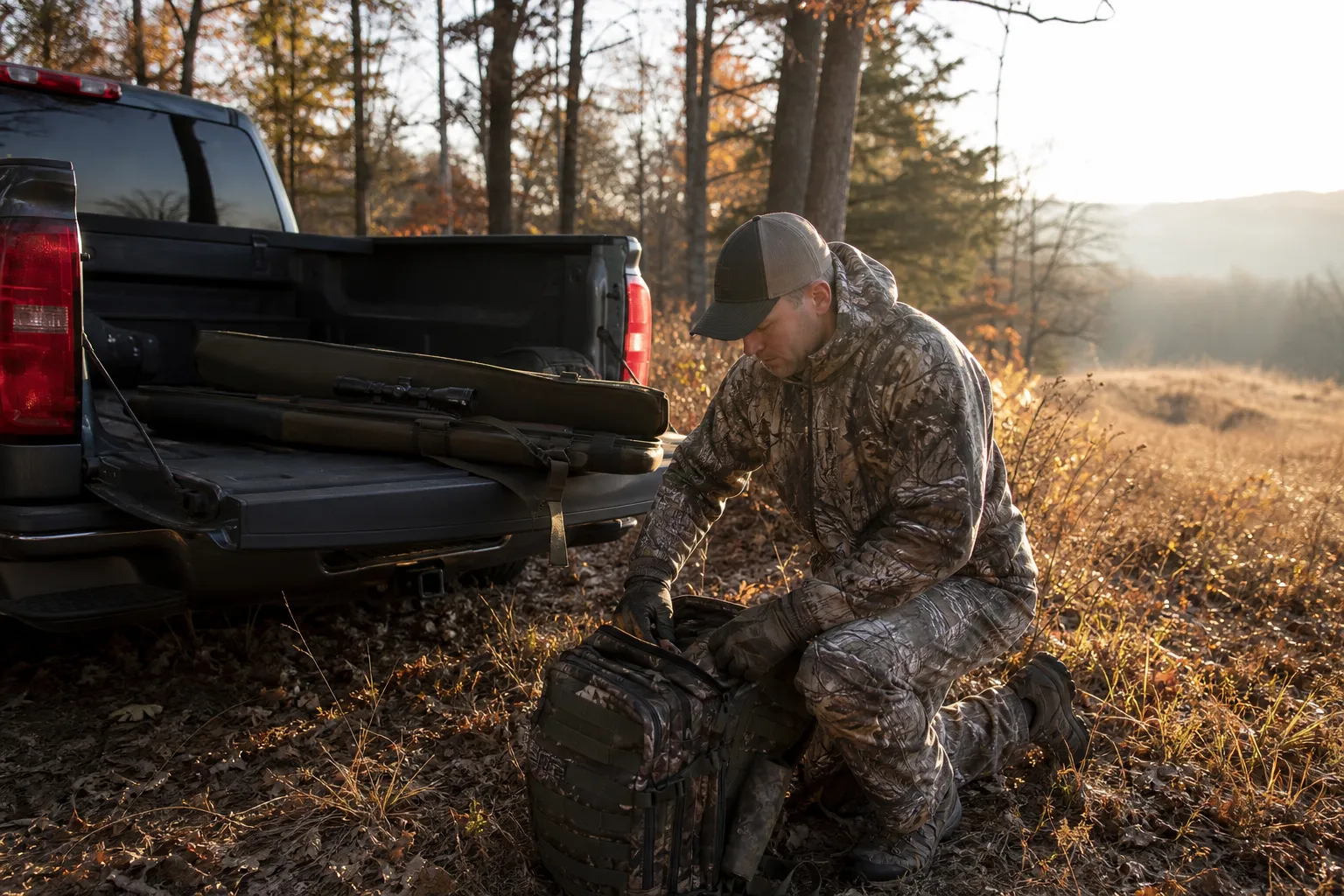
That means the shot decision starts before the trigger is pressed or the arrow is released. If the angle is not good, Texas Parks and Wildlife says to wait for the shot angle to improve. Texas Parks and Wildlife
Where the vital organs are on a deer
Think of the vital zone as the chest cavity behind the front shoulder area. IHEA bowhunter standards list the chest-cavity vital organs as the heart, lungs, and major arteries. IHEA, 2016 Bowhunter Education Standards
For a simple side view, picture the front leg, the shoulder area, and the chest behind it. Hunter education guidance for a broadside big-game bow shot places the aim point behind the shoulder and about one-third of the way up from the bottom of the chest. Hunter-ed California
Simple side-view placement guide
| Deer position | What the sources support | |, -|, -| | Broadside | This angle gives the largest target area to strike the heart and lungs. For a broadside archery shot, hunter education guidance says to wait until the near front leg is forward and aim behind the shoulder, about one-third up from the bottom of the chest. Texas Parks and Wildlife, Hunter-ed California | | Quartering away | Missouri hunter education guidance says a firearm hit should be focused in the chest above the opposite front leg. For deer-sized game, it describes the quartering-away bow shot as a good opportunity for a clean kill. Hunter-ed Missouri | | Elevated stand | As the shot angle steepens from an elevated position, hunter education guidance says the vital area becomes a smaller target. IHEA standards also say severe angles reduce the clear path to the vital area. Hunter-ed Nebraska, IHEA, 2016 Bowhunter Education Standards |
Best shot angles
Broadside
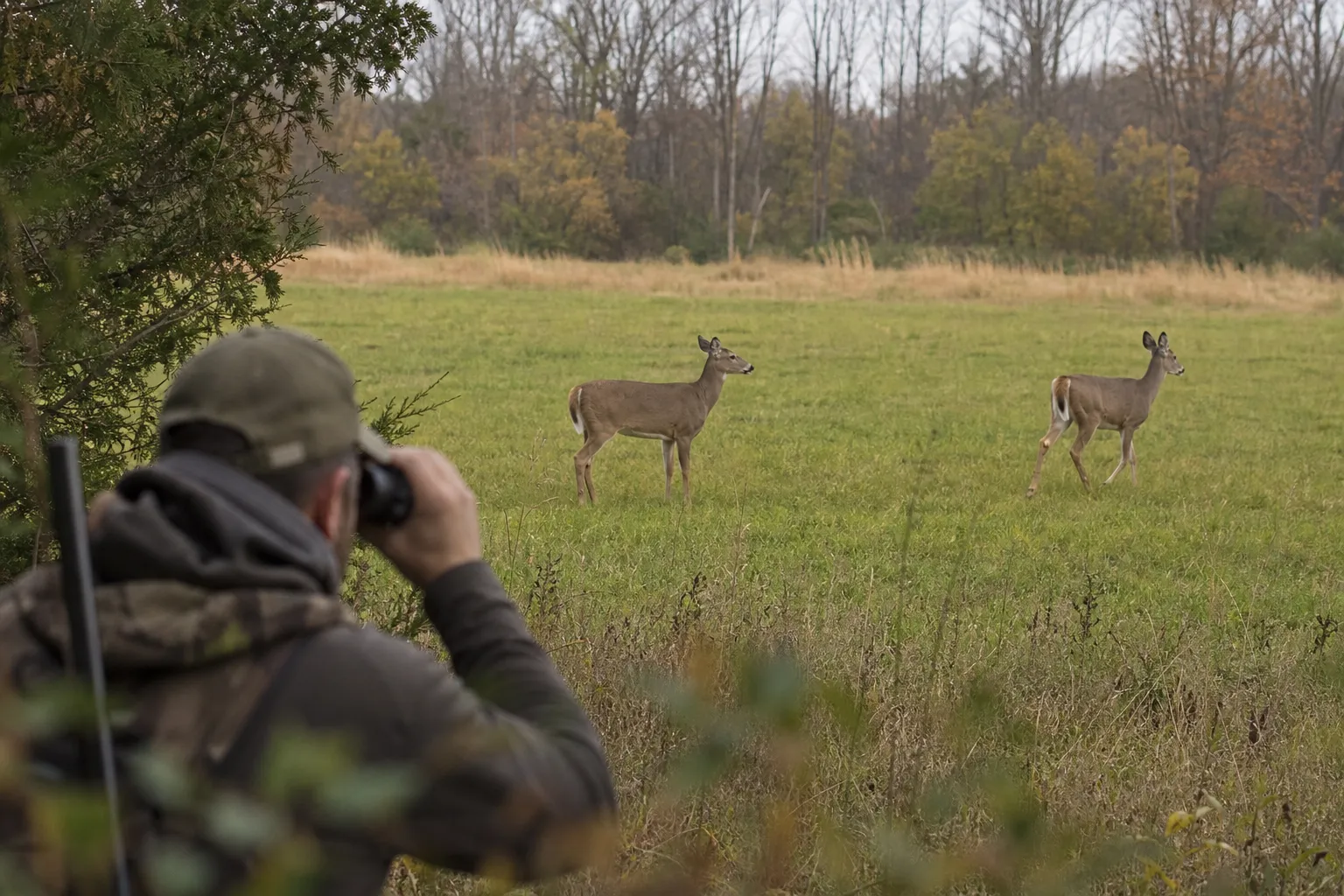
Broadside is the clearest beginner-friendly angle in the cited hunter education material. Texas Parks and Wildlife says the broadside shot gives the largest target area to strike the heart and lungs. Texas Parks and Wildlife
For archery on a broadside deer, hunter education guidance says to wait until the near front leg is forward and aim behind the shoulder. The same guidance places the aim point about one-third of the way up from the bottom of the chest. Hunter-ed California
Quartering away
Quartering away can also give access to the chest vitals when the path of the projectile or arrow crosses the chest. Missouri hunter education guidance for a quartering-away firearm shot says to focus the chest hit above the opposite front leg. The same source describes the quartering-away bow shot on deer-sized game as a good opportunity for a clean kill. Hunter-ed Missouri
A useful way to think about this angle is not only where the entrance point is, but where the path needs to go. The cited Missouri guidance describes the chest hit in relation to the opposite front leg, which keeps the focus on the vital area inside the chest. Hunter-ed Missouri
Elevated stands
Treestand and elevated-position shots can change what looks like a good angle. Nebraska hunter education guidance says that from elevated positions, the vital area becomes a smaller target as the angle steepens. IHEA bowhunter standards use similar language, saying the clear path to the vital area becomes smaller at severe angles. Hunter-ed Nebraska, IHEA, 2016 Bowhunter Education Standards
Shots to avoid or pass
Rear-end shots should be avoided. Washington hunter education guidance says rear-end shots should not be taken by hunters using firearms or bows. Hunter-ed Washington
Head shots are also not recommended in ordinary deer hunting. New York DEC tracking-dog guidance says a head shot is not recommended with firearm or bow. New York DEC
Bowhunters should avoid quartering-toward shots. Nebraska hunter education guidance calls the quartering-toward angle a poor shot opportunity for bowhunters and says it should not be taken, because shoulder bones shield the majority of vital organs. Hunter-ed Nebraska
Bowhunters should also avoid frontal shots at an oncoming deer. New York DEC tracking-dog guidance says frontal shots at an oncoming deer should never be taken with a bow. New York DEC
If the animal does not give a clear vital-area shot, wait. Texas Parks and Wildlife says to wait for the shot angle to improve. Texas Parks and Wildlife
Rifle, shotgun slug, muzzleloader, and archery notes
For firearms, Texas Parks and Wildlife says the broadside shot gives the largest target area to strike the heart and lungs. Texas Parks and Wildlife
For shotgun slug and muzzleloader hunters, use the same ethical filter from the firearm guidance in the supplied sources: favor a clear vital-area shot, and avoid rear-end shots. The supplied source set does not include an official slug-specific or muzzleloader-specific technical rule for deer shot placement beyond the firearm angle guidance cited here. Texas Parks and Wildlife, Hunter-ed Washington
For archery, the clearest supported guidance is broadside or quartering away. On a broadside shot, wait until the near front leg is forward, then aim behind the shoulder about one-third up from the bottom of the chest. On quartering-away deer-sized game, Missouri hunter education describes the angle as a good opportunity for a clean kill. Hunter-ed California, Hunter-ed Missouri
Archers should be especially cautious with steep treestand angles. IHEA says severe angles reduce the clear path to the vital area. IHEA, 2016 Bowhunter Education Standards
What to do after the shot
After the shot, recovery is part of the ethical decision. Texas Parks and Wildlife hunter education recommends waiting before tracking a deer that runs off, saying to wait at least 30 minutes to an hour. New York DEC notes that deer shot through the lungs or heart may still run 50 to 100 yards. Texas Parks and Wildlife, New York DEC
When you begin tracking, Texas Parks and Wildlife says to go to the exact spot where the animal stood when shot. Start there, then look for sign and follow it carefully. Texas Parks and Wildlife
If the hit looks uncertain or far back, be patient. New York DEC tracking guidance says that for stomach-hit deer or bear, waiting at least four hours before tracking is generally appropriate. New York DEC
Approach a downed deer cautiously. Texas Parks and Wildlife says to approach from behind and watch the chest for breathing. Texas Parks and Wildlife
Field care, lead, and regulations
Field care matters after recovery. Penn State Extension advises hunters to field dress deer as soon as possible for meat quality and cooling. Penn State Extension
If using lead ammunition, consult current agency meat care guidance for the area where you hunt.
Always check current regulations before hunting. U.S. Fish and Wildlife Service says every state has its own hunting regulations. In Canada, Ontario tells hunters that its hunting regulation summary is neither a legal document nor a complete collection of the rules. Confirm season dates, license requirements, equipment rules, tagging, reporting, transport, and any carcass or chronic wasting disease requirements with the current state, provincial, territorial, or tribal authority before you hunt. U.S. Fish and Wildlife Service, Ontario hunting regulations summary
Frequently asked questions
Where are the vital organs on a deer?
The cited hunter education standards identify the chest cavity vital organs as the heart, lungs, and major arteries.
What is the best deer shot placement for a broadside shot?
Texas Parks and Wildlife says the broadside shot gives the largest target area to strike the heart and lungs. For a broadside archery shot, hunter education guidance says to wait until the near front leg is forward and aim behind the shoulder, about one-third up from the bottom of the chest.
Is a quartering-away shot good on deer?
Yes, the cited Missouri hunter education material describes a quartering-away bow shot on deer-sized game as a good opportunity for a clean kill. For a firearm shot, it says to focus the chest hit above the opposite front leg.
Should hunters take head shots on deer?
New York DEC tracking-dog guidance says a head shot is not recommended with firearm or bow.
How long should you wait before tracking a deer?
Texas Parks and Wildlife hunter education recommends waiting at least 30 minutes to an hour after a deer runs off. New York DEC tracking guidance says a stomach-hit deer generally calls for a longer wait of at least four hours.
Do heart or lung-hit deer always drop immediately?
No. New York DEC states that deer shot through the lungs or heart may still run 50 to 100 yards.
Sources
- Shots to the Vital Areas, Texas Parks and Wildlife DepartmentOfficial source. Accessed October 20, 2026.
- After the Shot, Texas Parks and Wildlife DepartmentOfficial source. Accessed October 20, 2026.
- Deer Hunting Basics, Missouri Department of ConservationOfficial source. Accessed October 20, 2026.
- Shot Angles: Broadside, Hunter-ed.com, California Hunter Safety Course. Accessed October 20, 2026.
- Shot Angles: Quartering-Away, Hunter-ed.com, Missouri Hunter Safety Course. Accessed October 20, 2026.
- Shot Angles: Quartering-Toward, Hunter-ed.com, Nebraska Hunter Safety Course. Accessed October 20, 2026.
- Shot Angles: Rear-End, Hunter-ed.com, Washington Hunter Safety Course. Accessed October 20, 2026.
- Consider Your Location, Hunter-ed.com, Nebraska Hunter Safety Course. Accessed October 20, 2026.
- Bowhunter Education Standards, International Hunter Education Association USAOfficial source. Accessed October 20, 2026.
- Deer Management Handbook for Communities in New York, New York State Department of Environmental ConservationOfficial source. Accessed October 20, 2026.
- New York State Leashed Tracking Dog License Guide, New York State Department of Environmental ConservationOfficial source. Accessed October 20, 2026.
- Proper Field Dressing, Penn State ExtensionOfficial source. Accessed October 20, 2026.
- Field Dressing Deer Pocket Guide, Penn State ExtensionOfficial source. Accessed October 20, 2026.
- Preparing Wild Game, Montana State University ExtensionOfficial source. Accessed October 20, 2026.
- 2026 Deer Hunting Regulations Summary, Michigan Department of Natural ResourcesOfficial source. Accessed October 20, 2026.
- Deer Hunting Tips, Massachusetts Division of Fisheries and WildlifeOfficial source. Accessed October 20, 2026.
- Purchase a Hunting License, U.S. Fish and Wildlife ServiceOfficial source. Accessed October 20, 2026.
- How to Use This Summary, Government of OntarioOfficial source. Accessed October 20, 2026.