Deer Tracks: How to Identify Whitetail and Mule Deer Tracks
Deer tracks are usually recognized by two pointed hoof impressions, a center split and an often heart shaped outline. Whitetail and mule deer tracks overlap, so use size, gait, trail pattern and substrate rather than relying on one print.
By RaiS. Reviewed by RaiS. Published . 5 min read.
Research and drafting were assisted by AI. RaiS checked the facts against the sources below and approved this page.
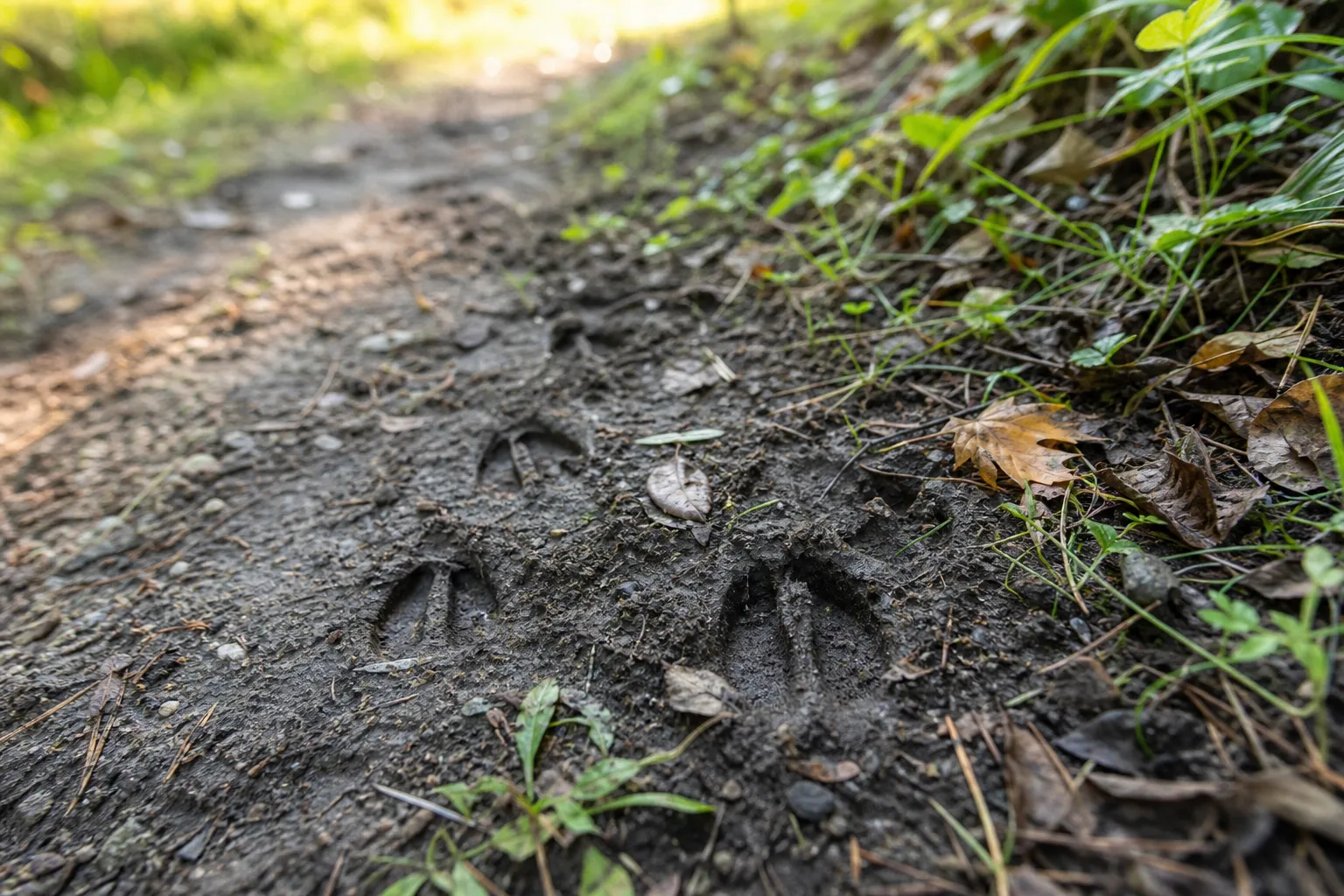
Deer tracks are best identified first as deer, then studied for clues that may suggest whitetail deer or mule deer. A typical deer track has two pointed hoof impressions, a split down the middle and an overall heart shaped outline. But whitetail and mule deer tracks overlap in size and shape, and the two species cannot always be differentiated by tracks. If all you have is one partial print, call it a deer track and keep looking for more evidence.
What a deer track looks like
A deer track is made by two main toe impressions. A deer hoof print usually shows two pointed toe impressions, with dewclaw impressions appearing occasionally.
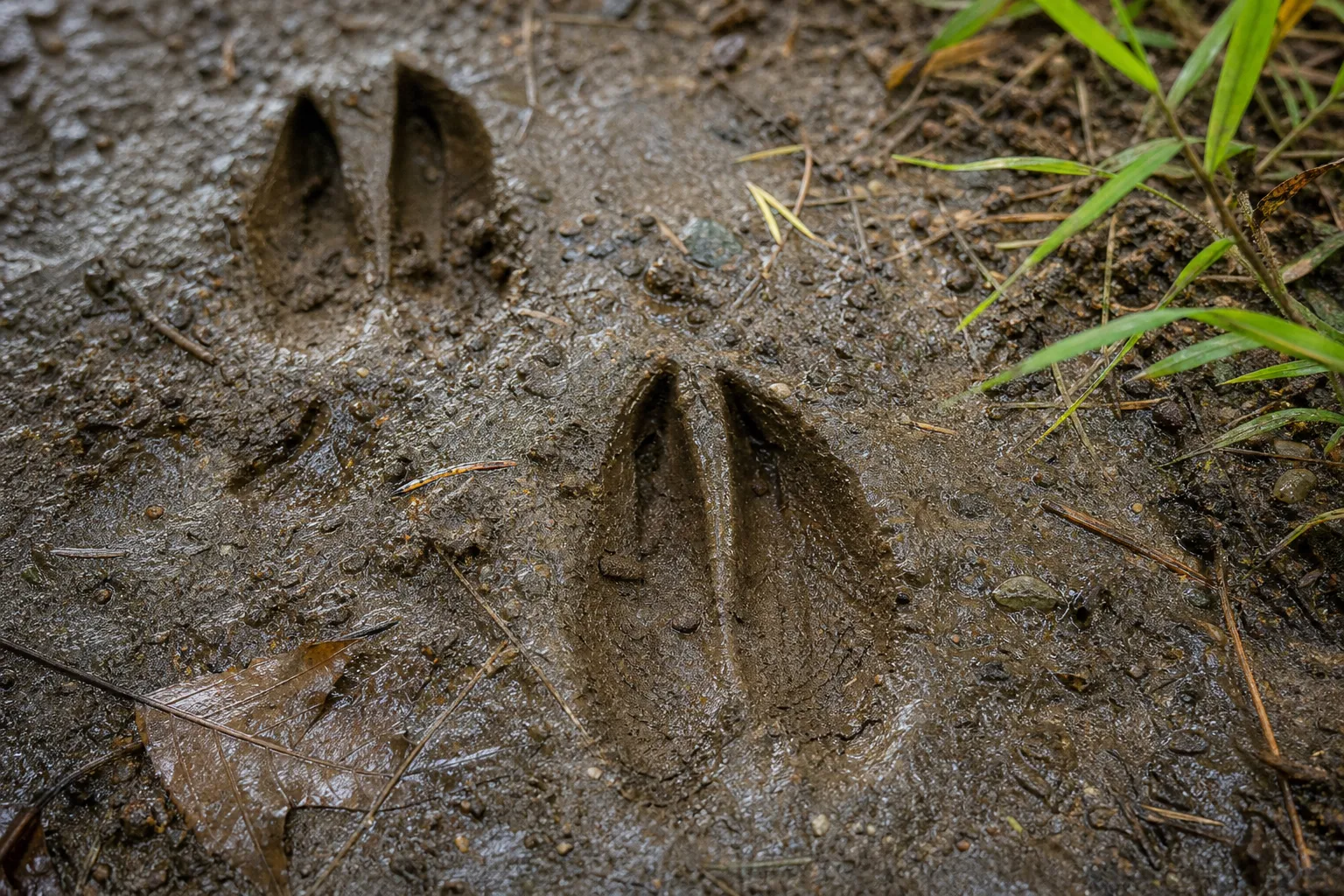
Adult deer track length can vary by guide and region. A general adult deer track length is 2 3/8 to 3 1/4 inches, with fawn tracks generally around 1 3/8 inches long.
Mule deer measurements overlap whitetail numbers. That overlap is the main lesson. Size helps confirm that a track is likely deer, but it does not always settle the species.
Whitetail and mule deer tracks overlap
Whitetail deer and mule deer tracks cannot always be differentiated by tracks.
Use tracks as one clue, not the whole answer. Look at the track and the substrate that holds it, along with width, length, shape and other details. Track illustrations should be used as guides rather than rigid keys because perfect tracks are not always found.
When species identification matters, use additional clues:
- Confirm which deer species occur in the area.
- Look for a repeated trail pattern rather than one isolated print.
- Measure more than one clear track.
- Measure stride and direction of travel.
- Watch for a deer and identify it visually if hunting.
Mule deer and whitetail deer can also differ in movement and tail carriage. Mule deer may show a stiff legged bounce with the tail held down, while whitetail deer may move with a graceful lope and a flag like tail often held up.
Size ranges at a glance
Measurements are useful for field notes, but they should not be treated as exact species rules. Measure the clearest prints you can find, record length and width, and compare several tracks from the same trail when possible.
A tape measure helps, but it cannot do everything. A large whitetail track and a small mule deer track can fall in the same range.
Gait and trail pattern
Stride and spacing matter because a track is only one part of a trail. The distance between tracks is part of the animal’s gait, and deer often use a diagonal cross walking gait, placing front and hind legs on opposite sides of the body at the same time.
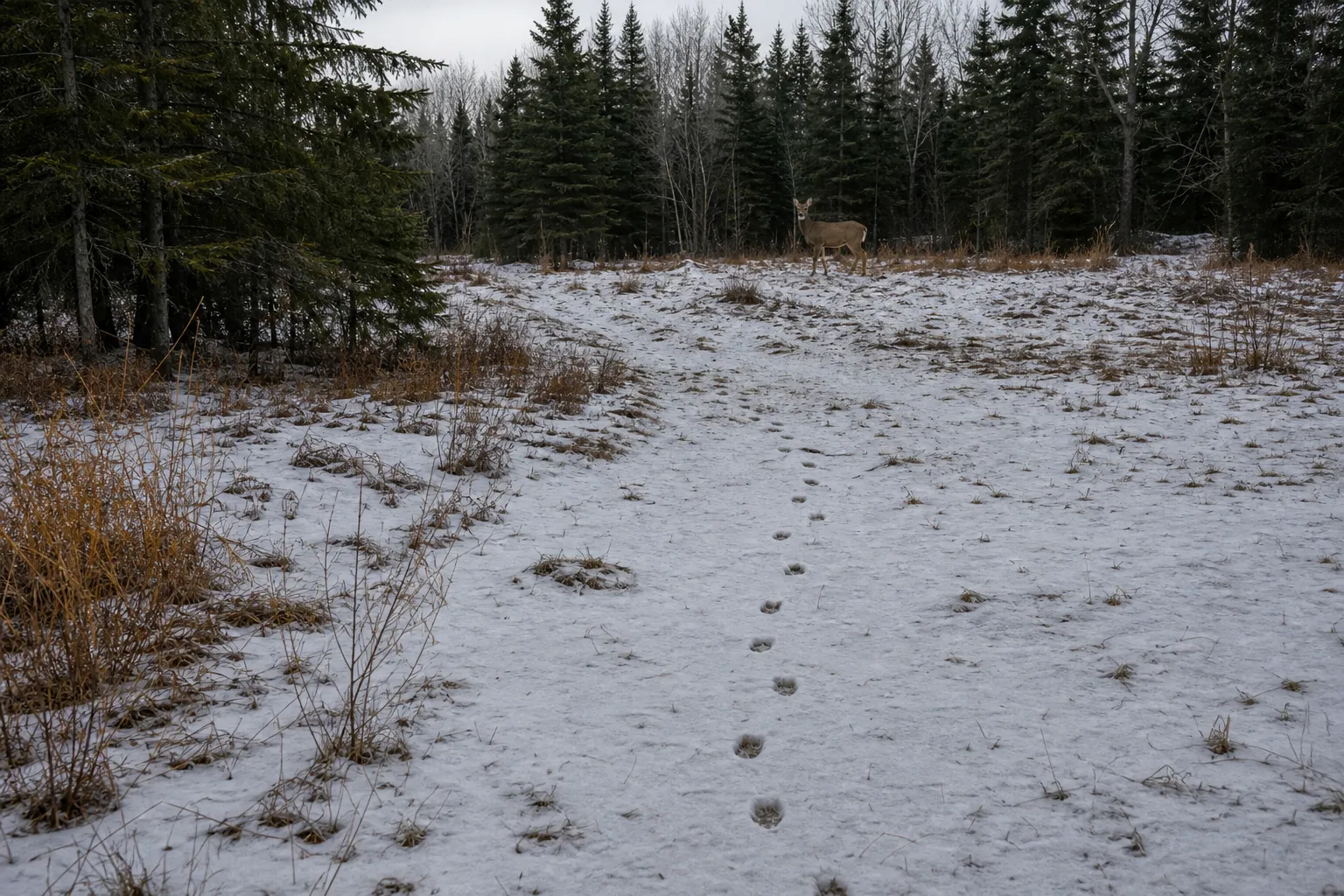
Running or bounding changes the trail. Big game hoof prints may splay when the animal needs traction, runs, moves downhill or travels through loose soil.
Mule deer have one trail pattern that can be especially noticeable. Mule deer sometimes use a hopping movement called stotting, and their gait can look like a stiff legged bounce. If you see long gaps between groups of hoof marks, consider gait before assuming the deer was much larger than the print suggests.
Substrate can change the print
The ground can change the apparent size and shape of the same deer’s tracks. A track in mud may look different from one in dust or snow, even if made by the same individual animal.
Soft soil can record detail. Toes are likely to look more pointed on soft soil, while hard, rocky ground can wear hooves enough to produce blunt tips. Deer family tracks, except pronghorn, may show dewclaw impressions in soft substrate.
Mud can exaggerate a print. Deer can slide when walking in mud, making tracks appear larger than they would in drier soil. Speed and soil conditions, including dampness and softness, can make tracks look as if they came from a larger deer.
Snow can be just as tricky. Warm sun can enlarge and distort a track in snow. A fresh snow print and an older snow print softened by sun from the same trail may look like different animals.
Hard ground may hide the best clues. Ground softness affects how clearly a deer track can be seen. On rocky or packed ground, you may see only partial hoof tips, scuffs or a broken edge in soil.
Track age clues
Track age is not an exact clock. Rain, wind, melting snow, warm sun, drying mud and foot traffic can all change a print. Sun can enlarge and distort snow tracks, and erosion can make older tracks look larger.
Use timing clues together:
- Has there been rain, snow, melting or strong sun since the track was made?
- Is the print in mud, dust, snow, hard soil or loose soil?
- Do several tracks show the same direction and stride?
- Is the track on a worn trail with fresh prints?
Deer trails are frequent routes of travel where repeated footfalls have worn down soil and vegetation. A well worn trail with fresh tracks is a sign of an active travel route.
A simple field method
Start with the best print, but do not stop there. Perfect tracks are rarely found in the field, so the goal is to build a careful picture from several clues.
Use this sequence:
- Confirm the basic shape. Look for two pointed hoof impressions, a center split and a heart shaped outline.
- Check for dewclaws. Dewclaw dots can appear in soft substrate.
- Measure length and width. Record the clearest front and rear prints you can find.
- Measure stride. Step back and measure spacing between tracks in the trail.
- Read the substrate. Mud, dust, snow and hard ground can all change the track.
- Consider freshness. Think about rain, snow, sun, melting, drying mud and foot traffic.
- Look for the whole trail. Follow the pattern, direction and repeated use instead of trusting one print.
- Treat uncertain species as uncertain. If the evidence is limited, identify it as deer sign rather than certain whitetail or mule deer sign.
For new hunters, that last point is especially important. A track can help you learn how deer are using an area, but visual identification and current wildlife rules matter before any hunting decision. Check the current regulations, season dates, species definitions and identification guidance for the state or province where you hunt.
Frequently asked questions
Can you tell a whitetail track from a mule deer track by one print?
Not always. Whitetail and mule deer tracks overlap, so one print may not be enough. Use the whole trail, location, gait, substrate and visual identification when possible.
What shape is a deer track?
A deer track usually has two pointed toe impressions with a split between them. Clear prints often have an overall heart shaped outline.
How big are deer tracks?
A general adult deer track length is 2 3/8 to 3 1/4 inches, with fawn tracks generally around 1 3/8 inches. Size can vary with age, sex, substrate and how clear the print is.
Why do some deer tracks look spread apart?
Hooves can spread when a deer needs traction, runs, moves downhill or travels through loose soil. Soft mud or snow can make that spreading easier to see.
How can you tell if a deer track is fresh?
Freshness is easiest to judge with recent weather in mind. Compare several tracks, look for effects from rain, snow, sun, melting, drying mud and foot traffic, and check whether the trail has other fresh sign.
Sources
- Tracks, Internet Center for Wildlife Damage Management. Accessed October 29, 2026.
- Identifying and Preserving Wildlife Tracks, New Mexico State University Cooperative Extension Service. Accessed October 29, 2026.
- White-Tailed Deer, Missouri Department of ConservationOfficial source. Accessed October 29, 2026.
- Tracks and Signs of North Dakota Wildlife, North Dakota Game and Fish DepartmentOfficial source. Accessed October 29, 2026.
- Searching for animal tracks in seasonal changes, University of Illinois Extension. Accessed October 29, 2026.
- White-Tailed Deer Ecology, Illinois Learn to Hunt, Illinois Natural History Survey, Prairie Research Institute. Accessed October 29, 2026.
- My Wetland Walk Field Journal, U.S. Fish and Wildlife Service, Sacramento National Wildlife RefugeOfficial source. Accessed October 29, 2026.
- Deer, In the Field, Colorado Parks and WildlifeOfficial source. Accessed October 29, 2026.
- Arizona Deer Identification, Arizona Game and Fish DepartmentOfficial source. Accessed October 29, 2026.
- Identifying animal sign can increase your odds when hunting, Idaho Fish and GameOfficial source. Accessed October 29, 2026.
- Deer Scouting Basics, Indiana Department of Natural Resources, Fish and WildlifeOfficial source. Accessed October 29, 2026.