How to Process a Deer: How to Butcher a Deer After Field Dressing
A practical guide to processing a deer after field dressing, with the focus on cooling, cleanliness, aging conditions, skinning, quartering, packaging and freezing venison safely.
By RaiS. Reviewed by RaiS. Published . 7 min read.
Research and drafting were assisted by AI. RaiS checked the facts against the sources below and approved this page.
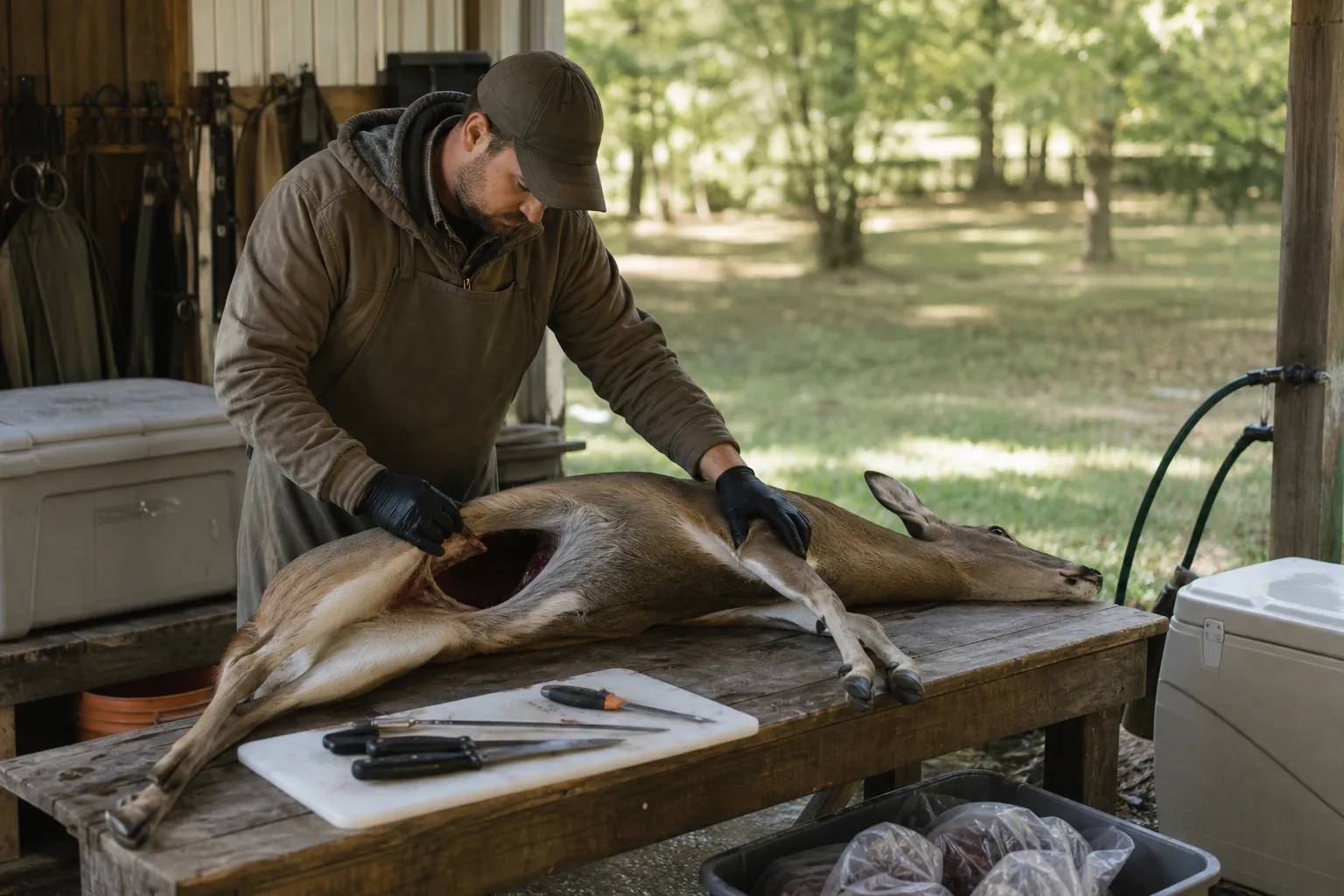
Processing a deer starts after field dressing. If you are learning how to butcher a deer at home, the main job is to keep the carcass cold and clean, then separate it into usable cuts, trim it, package it airtight and freeze it for storage. If you still need the step before this one, start with our guide to how to field dress a deer.
University extension guidance is consistent on the most important point: after the internal organs are removed, cooling becomes the priority. From there, the process is straightforward: cool, decide whether to age, skin, quarter, separate cuts, trim, package and freeze.
Before cutting: cool the deer and keep it clean
University of Wisconsin Extension says that once the internal organs are removed, hunters should focus on cooling the carcass as soon as possible, and that cooling should begin within a couple of hours of harvest.
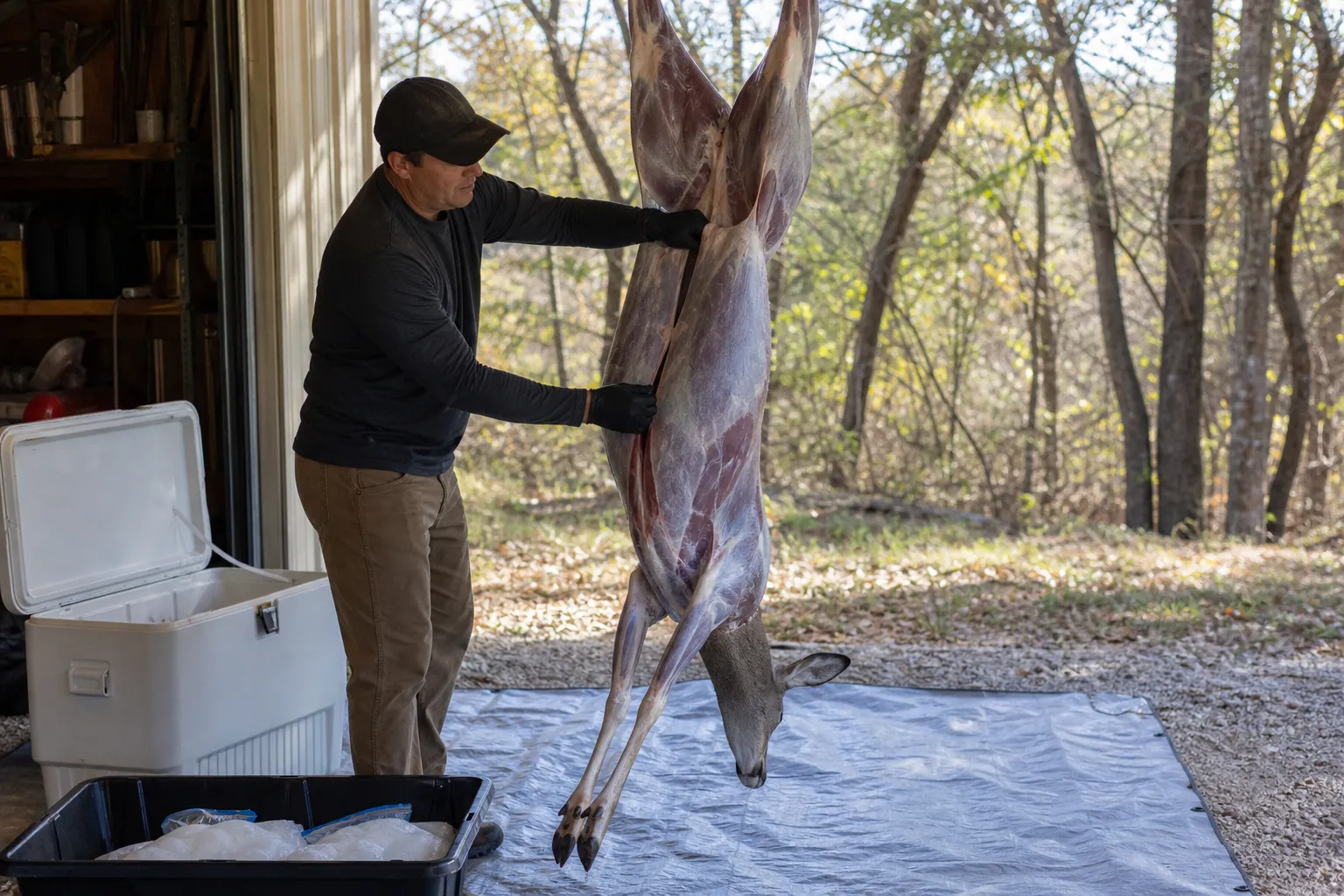
University of Wisconsin Extension lists several ways to improve cooling: prop open the body cavity, keep the carcass in the shade and expose it to air movement. It also says suspending the deer from an overhead object can greatly speed cooling by exposing the carcass to moving air. The same guidance cautions against letting the carcass freeze within the first six hours after harvest.
Utah State University Extension says a skinned carcass should be refrigerated as soon as possible for best quality, usually within 3 to 4 hours if air temperature is above 45°F.
Cleanliness matters all the way through processing. Utah State University Extension says all surfaces and utensils that touch the meat should be clean. It gives a sanitizing solution of 1 teaspoon household chlorine bleach per quart of water, or a commercial kitchen disinfectant. Indiana DNR lists a clean workspace, a sharp boning or fillet knife and rubber gloves among quartering tools.
Utah State University Extension also says to keep venison cold while it is being cut and wrapped, and that wrapped venison cuts should be kept chilled at 40°F or lower to prevent spoilage.
Aging venison is optional
University of Wisconsin Extension describes aging as holding carcasses at 35 to 45°F so natural enzymes can tenderize the meat, and says it can take 7 to 10 days before there is a noticeable eating difference in venison steaks.
Utah State University Extension recommends aging a carcass by hanging it in a clean, cool, dry place with a near constant temperature, preferably 34 to 36°F. Because these extension recommendations are not identical, treat aging as an optional quality step, not a universal rule.
Do not age venison in warm weather. University of Wisconsin Extension advises against aging venison in warm weather because bacteria can grow quickly and to dangerous levels.
How to butcher a deer step 1: skinning
Indiana DNR says hanging the deer helps keep the animal clean and lets the processor use gravity. That makes hanging useful during skinning when you have a safe, clean place to do it.
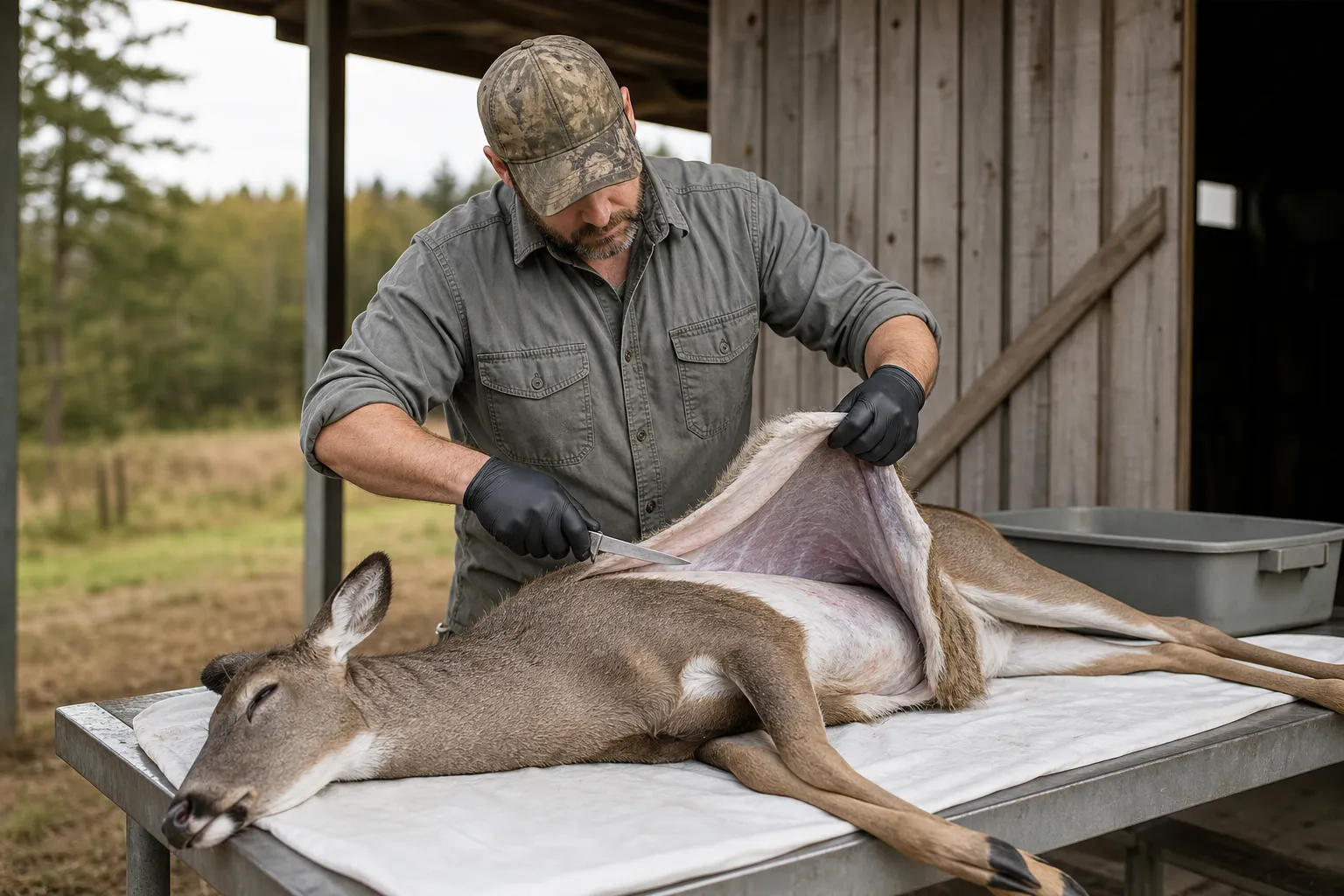
Keep the focus on cleanliness. Indiana DNR advises removing the pelt, then washing the carcass with clean, cold water to remove viscera or dirt. Use water only as needed for that purpose, then keep the meat cold while you continue.
The goal during skinning is simple: keep hair, dirt and other contamination off the meat. Work from a clean setup, use clean tools and keep the carcass chilled as described by Utah State University Extension.
How to butcher a deer step 2: quartering and primary cuts
Indiana DNR describes quartering as the next step toward freezer ready food.
A practical order, based on Indiana DNR’s deer processing guidance, is to remove the front shoulders, tenderloins, backstraps, neck meat, ribs and flank, then the hindquarters.
Front shoulders
Indiana DNR says the front shoulders are removed by finding the line where the shoulder muscles attach to the torso. Front shoulder meat can be used according to the type of cut you want, and trimmings from processing can be used for grind.
Tenderloins
Indiana DNR describes tenderloins as football shaped muscles inside the ribcage, under the ribcage from the middle of the ribcage back to the pelvis. Indiana DNR calls them the most tender pieces of the deer.
Backstraps
Indiana DNR describes backstraps as the large slabs of meat that run along the spine from the neck to the hips. It says backstraps can be kept as larger roasts or cut into smaller steaks after trimming off fat or silver skin.
Neck, ribs, flank and trim
Indiana DNR says neck meat can be cut into roasts or used for hamburger or sausage after trimming. Indiana DNR also says any meat trimmings from processing can be used for grind.
That makes the neck, flank, shanks and other trimmings useful for roasts, stew, sausage or ground venison when you are sorting cuts.
Hindquarters
Indiana DNR says hindquarter muscle groups can be separated by following the membranes that connect the groups and cutting them apart. It names the hindquarter groups as the sirloin, bottom round, top round and eye of round.
Indiana DNR says these hindquarter pieces can be kept as roasts or cut into steaks of the size you want.
How to butcher a deer step 3: trim for roasts, steaks and grind
Utah State University Extension recommends preparing venison cuts for freezing by removing all bone and excess fat. Indiana DNR says to trim fat or silver skin from backstrap before keeping it as roasts or cutting it into steaks.
Trimmed whole muscles can become roasts or steaks. Indiana DNR says hindquarter pieces can be kept as roasts or cut into steaks, and backstrap can be kept as larger roasts or cut into smaller steaks.
Use clean trimmings for grind. Indiana DNR says meat trimmings from processing can be used for grind, and that trimmed neck meat can be used for hamburger or sausage.
Keep the meat cold throughout this step. Utah State University Extension says venison should be kept cold while it is being cut and wrapped.
Packaging venison for the freezer
Indiana DNR recommends preparing meat for the freezer in airtight bags or containers.
Label packages before freezing. At a minimum, a clear label helps you identify the cut later and choose packages in the order you want to use them.
Freezing and storage
Utah State University Extension says well packaged frozen venison roasts, steaks, chops and stew meat may be stored for 1 year for quality. It says frozen ground venison retains quality for 6 to 9 months.
CWD safe handling note
CDC says chronic wasting disease affects deer, elk, moose and similar animals in the United States and a few other countries. CDC says CWD infections in people have never been reported, and that it is not known if people could get infected with CWD.
CDC advises hunters in areas with CWD activity not to shoot, handle or eat animals that look sick or act strangely. CDC also advises wearing latex or rubber gloves when field dressing a deer or handling meat, and avoiding internal organs, especially the brain or spine.
CDC says hunters should strongly consider having deer or elk tested for CWD before eating the meat in relevant areas. CDC also says that if an animal tests positive for CWD, do not eat meat from that animal.
Before processing or eating deer from an area where CWD is a concern, check current recommendations from the state wildlife agency and health department for the place you hunted.
Quick checklist for processing a deer
Use this as a simple planning list after field dressing:
- Start cooling promptly. University of Wisconsin Extension says cooling should begin within a couple of hours of harvest.
- Use shade, airflow and hanging where appropriate. University of Wisconsin Extension says those steps improve cooling.
- Keep tools and work areas clean. Utah State University Extension says surfaces and utensils that touch meat should be clean.
- Decide whether to age. Wisconsin and Utah State extension guidance describe controlled cold aging ranges.
- Skin cleanly. Indiana DNR says hanging helps keep the deer clean and lets you use gravity.
- Quarter and separate the main cuts. Indiana DNR identifies tenderloins, backstraps, neck meat and hindquarter muscle groups.
- Trim and sort. Utah State University Extension recommends removing bone and excess fat for freezing, and Indiana DNR says trimmings can be used for grind.
- Package airtight. Indiana DNR recommends airtight bags or containers for freezer storage.
- Freeze packaged cuts. Utah State University Extension gives quality storage times for frozen venison roasts, steaks, chops, stew meat and ground venison.
What to check before you start
Check current food safety advice from your state wildlife agency, state health department or university extension office, especially for CWD testing recommendations in the area you hunt. If you are still at the field dressing stage, use the field dressing guide first, then return to this processing sequence once the deer is cooled and ready to cut.
Frequently asked questions
Do you have to age venison before butchering it?
University of Wisconsin Extension and Utah State University Extension describe aging as a cold, controlled process for tenderness. Treat it as a quality step only when you can keep the carcass in the recommended cold range.
What temperature should venison be kept at while processing?
Utah State University Extension says to keep venison cold while cutting and wrapping, and to keep wrapped cuts chilled at 40°F or lower to prevent spoilage.
What are the main cuts when butchering a deer?
Indiana DNR identifies tenderloins inside the ribcage, backstraps along the spine, neck meat, front shoulders and hindquarter groups including sirloin, top round, bottom round and eye of round.
What packaging should I use for venison?
Indiana DNR recommends airtight bags or containers for freezer storage.
How long does frozen venison keep its quality?
Utah State University Extension says well packaged frozen roasts, steaks, chops and stew meat may be stored for 1 year for quality, while frozen ground venison retains quality for 6 to 9 months.
What should hunters know about CWD when handling venison?
CDC advises wearing latex or rubber gloves, avoiding internal organs, especially brain or spine, strongly considering CWD testing in relevant areas and not eating meat from an animal that tests positive for CWD.
Sources
- How to Preserve Venison, Utah State University ExtensionOfficial source. Accessed October 23, 2026.
- Handling Venison Safely, University of Wisconsin ExtensionOfficial source. Accessed October 23, 2026.
- Venison Processing & Preservation, West Virginia University ExtensionOfficial source. Accessed October 23, 2026.
- Deer Processing, Indiana Department of Natural ResourcesOfficial source. Accessed October 23, 2026.
- Deer Processing Instructions, Indiana Department of Natural ResourcesOfficial source. Accessed October 23, 2026.
- Freezing and Food Safety, USDA Food Safety and Inspection ServiceOfficial source. Accessed October 23, 2026.
- About Chronic Wasting Disease (CWD), Centers for Disease Control and PreventionOfficial source. Accessed October 23, 2026.