Single-Shot Rifles Explained: Falling Blocks, Break Actions and Rolling Blocks
A single-shot rifle holds one cartridge in the chamber and must be loaded manually for each shot. The main types differ in how they open the breech: break actions hinge open, falling blocks move a breechblock down and up, and rolling blocks rotate a breechblock to expose the chamber.
By RaiS. Reviewed by RaiS. Published . 7 min read.
Research and drafting were assisted by AI. RaiS checked the facts against the sources below and approved this page.
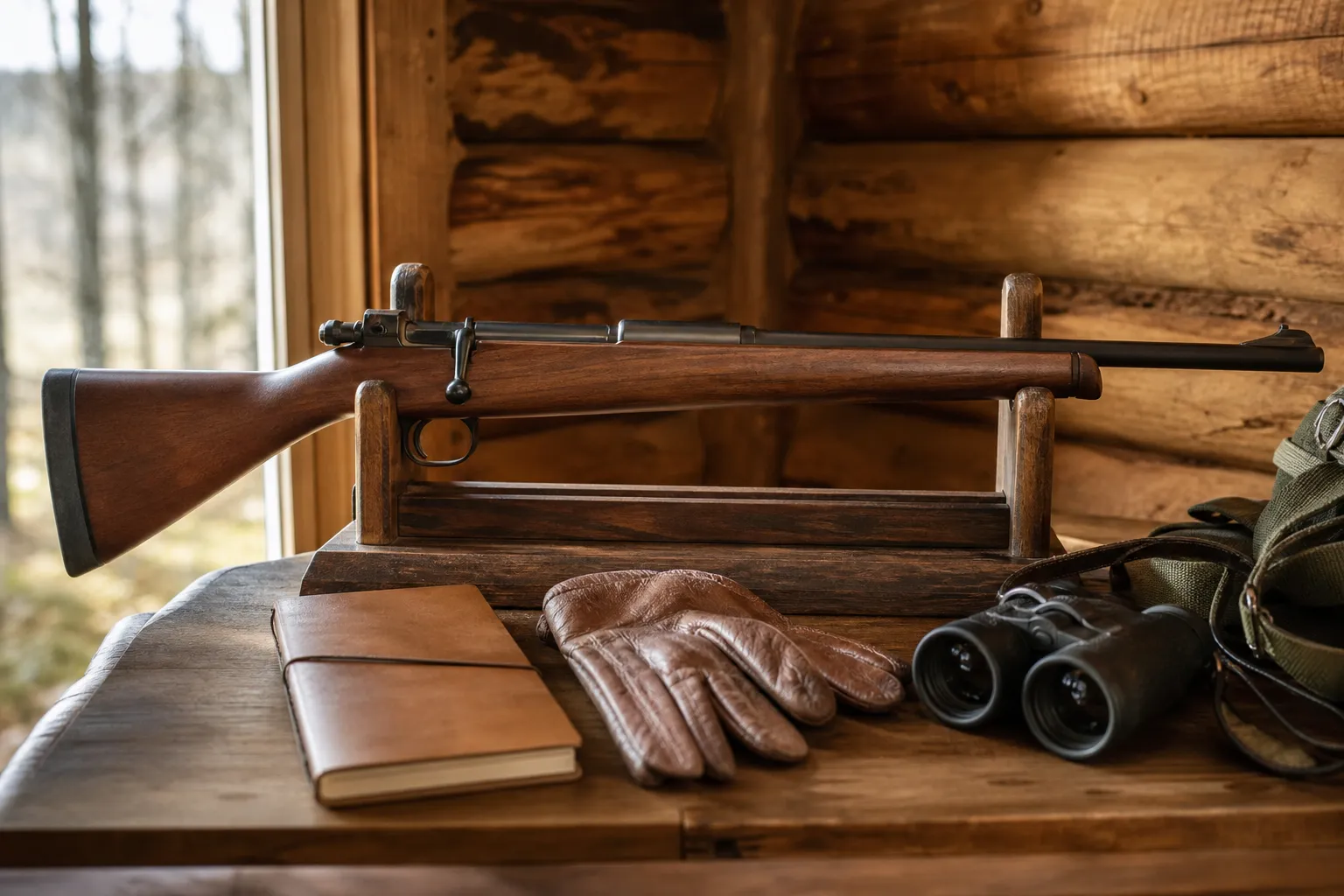
A single-shot rifle accepts one cartridge at a time, with that cartridge manually loaded into the chamber before each shot. SAAMI defines a single-shot action as one that accepts only one cartridge and requires manual chamber loading each time it is fired. The main single-shot rifle mechanisms are break actions, falling blocks and rolling blocks, and each solves the same basic problem: how to open, close and support the breech safely around one chambered round.
What makes a rifle single-shot?
SAAMI describes a single-shot firearm as one with no mechanism for storing or loading more than one cartridge housed in the chamber of the barrel.
That is the key distinction. A single-shot rifle is not defined by its caliber, age or stock shape. It is defined by its action and capacity. There is one chambered cartridge, and after firing, the shooter opens the action, removes or extracts the case, and loads another cartridge manually.
The Oklahoma Department of Wildlife Conservation hunter education manual gives a simple beginner definition of what an action does: it loads, fires and ejects the cartridge or shell. In a single-shot rifle, those jobs are still present, but there is no magazine feeding the next round.
It is also worth separating two similar terms. SAAMI defines single action as a firing mechanism in which the trigger only releases the hammer or striker. That is different from single-shot, which is about how many cartridges the firearm’s mechanism stores and loads. A firearm can be single-shot without the phrase single action being the best way to describe its capacity.
For a broader look at barrels, actions, stocks and sights, see parts of a rifle.
The three common single-shot mechanisms
Break-action, falling-block and rolling-block rifles all give the shooter direct access to the chamber, but they do it in different ways. NIJ firearms examiner training and current manufacturer manuals describe the differences in the breech mechanism.
| Mechanism | How it opens | Common examples | Basic character |
|---|---|---|---|
| Break action | The barrel is hinged to the frame and tips open to expose the breech | Henry H015 single-shot rifles | Direct chamber access and simple loading and unloading |
| Falling block | A breechblock slides down for loading and up for firing | Sharps rifles, Ruger No. 1, Browning Model 1885 | Strong breech support with a block that moves vertically |
| Rolling block | A breechblock rotates on a pin below the bore axis to expose the chamber | Remington rolling-block rifles | Simple operation, with a rotating block design |
Break-action single-shot rifles
NIJ describes a top-break action as a design where the barrel is hinged to a separate frame, and tipping the barrel gives access to the breech. The Oklahoma hunter education manual lists single-shot as one form of break action, alongside double-barrel side-by-side and over-under firearms.
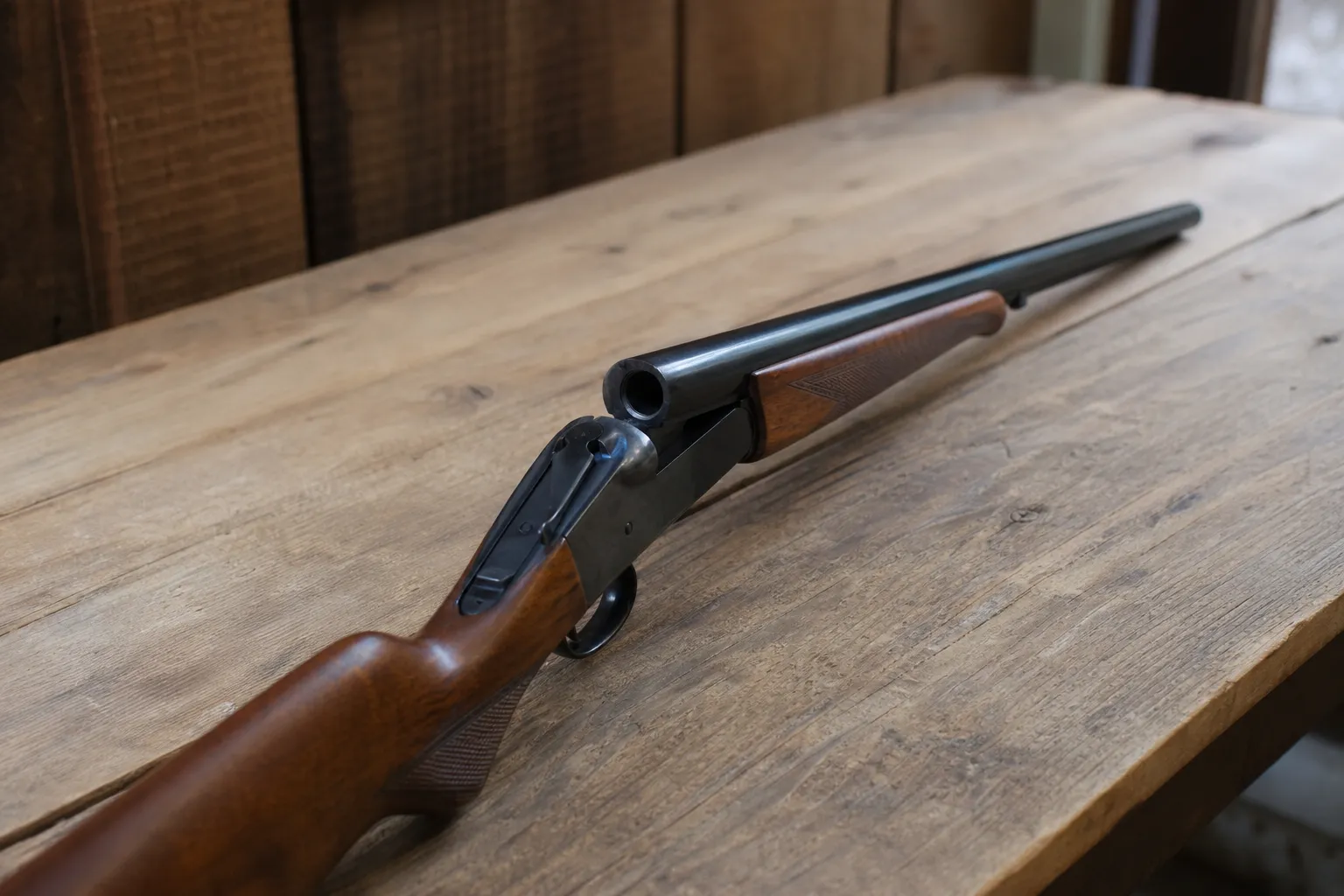
In plain terms, the barrel moves away from the standing breech so the chamber can be reached directly. That makes the system easy to understand for new shooters because the chamber is visible when the action is open.
Henry’s H015 manual describes that company’s single-shot rifle as a break-action firearm that uses a release lever on top of the frame, behind the external hammer spur, to open for loading and unloading. The same manual says the extractor pushes spent brass partially out of the chamber so it can be removed manually.
Henry lists H015 centerfire rifle chamberings including .223 Remington/5.56 NATO.243 Winchester.308 Winchester.44 Magnum/.44 Special.45-70.30-30.357 Magnum/.38 Special.350 Legend and .450 Bushmaster. ProjectGuns has separate cartridge guides for several of those, including .45-70 Government, .30-30 Winchester and .350 Legend.
A break-action rifle should not be assumed to have the same controls as another break-action model. Henry’s H015 manual states that model has no external manual safety and instead uses a rebounding hammer and an interlock system. The owner’s manual for the exact firearm is the controlling reference.
For readers comparing this mechanism to shotgun actions, see break-action shotguns.
Falling-block rifles
NIJ describes a falling-block action as a design where a sturdy breechblock slides down for loading and up for firing. Many falling-block rifles use an under-lever to move the block, although the exact controls depend on the model.
The Browning Model 1885 manual describes loading conceptually as lowering the breech block with the lever, inserting a cartridge into the chamber, and closing the lever.
Falling-block rifles have an important place in firearms history. NIJ identifies the Sharps rifle as the most common U.S. military use of the falling-block design, first with percussion caps and later with true cartridges.
The design also continued into later sporting and target rifles. Browning says its Model 1885 is patterned after John M. Browning’s original 1878 single-shot falling-block rifle. Browning also describes the Model 1885 BPCR as a special version intended for BPCR metallic silhouette competition.
Modern falling-block rifles are still documented in manufacturer manuals and museum references. NRA Museums describes the Ruger No. 1 as a single-shot lever-action falling-block rifle and says it has been produced in chamberings ranging from .218 Bee to .458 Winchester Magnum.
Rolling-block rifles
NIJ says the rolling-block action was a single-shot design originated by Remington Arms. It describes the system as using a breechblock pinned below the axis of the bore, rotating about one hundred degrees to expose the chamber for loading.
The rolling block is different from a falling block because the breechblock rotates instead of sliding vertically. NIJ describes the rolling block as simple and easy to operate, but not as strong as the falling block.
For a beginner, the useful takeaway is not how to disassemble one or tune one. It is enough to recognize the visual and mechanical idea: a rotating breechblock opens the chamber, then closes behind the cartridge for firing.
Historical uses
Single-shot rifles were not one narrow category. The examples in museum and official records include military rifles, sporting rifles and target rifles.
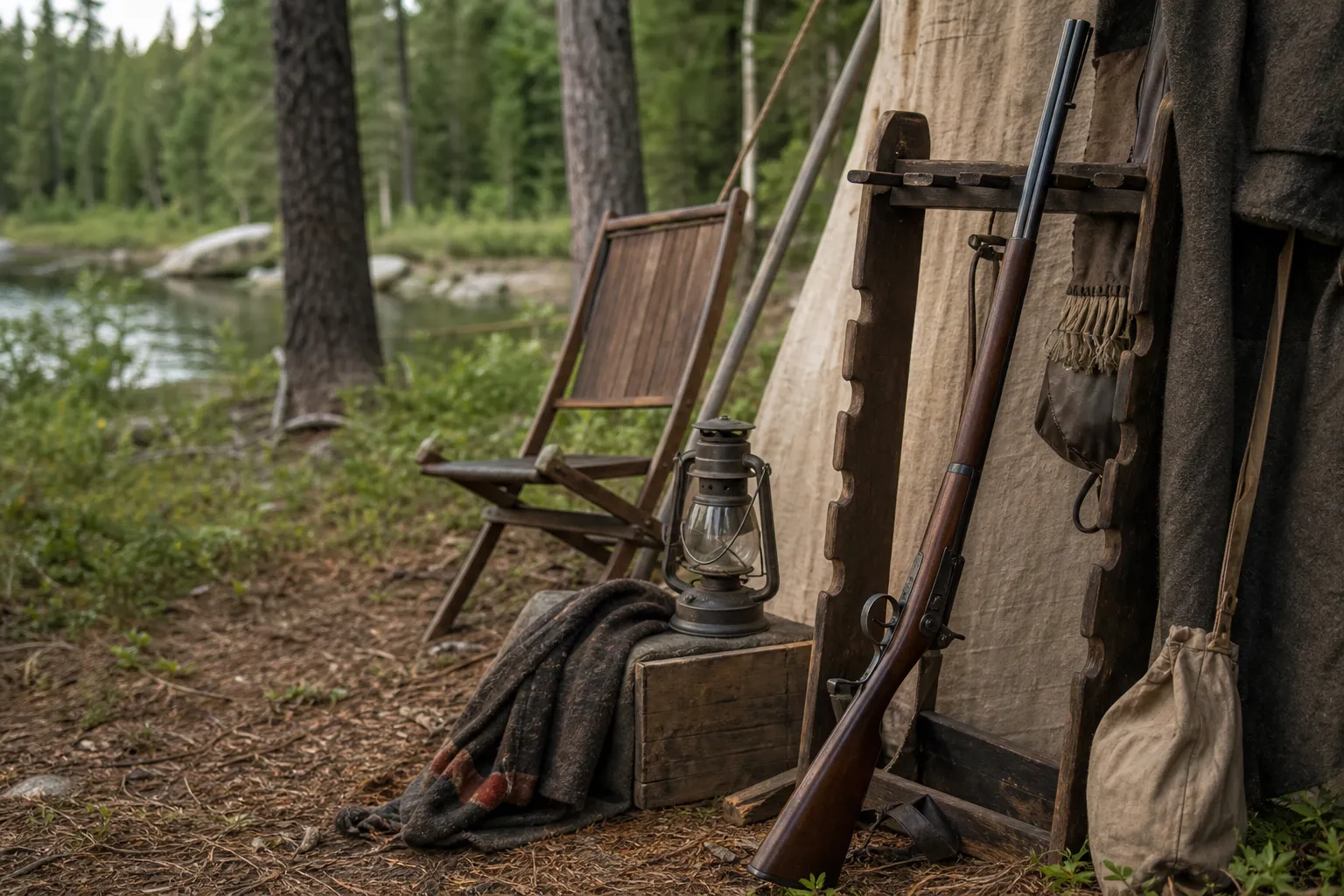
The Sharps rifle is tied to U.S. military falling-block use in NIJ training material.
The Browning 1885 story connects the nineteenth-century single-shot rifle to modern production. Browning states that the Model 1885 is patterned after John M. Browning’s original 1878 single-shot falling-block rifle. Its BPCR version also shows how the single-shot format remains connected to metallic silhouette target competition.
Modern hunting and target roles
Modern single-shot rifles still appear in manufacturer catalogs and manuals. Henry documents the H015 break-action rifle in multiple centerfire chamberings. Browning documents the Model 1885 as a modern rifle patterned after Browning’s original falling-block design.
For hunting, rules must be checked by the exact agency, season and date. One example is Illinois. The Illinois Department of Natural Resources FAQ says that, effective January 1, 2023, single-shot rifles may be used to hunt deer in a caliber meeting the law’s criteria. The same FAQ says centerfire handgun and centerfire rifle capacity restrictions change from single round to 3-round capacity on January 1, 2027. Hunters should confirm the current rule directly with IDNR before relying on any summary.
For target use, Browning’s manual gives a specific example: the Model 1885 BPCR is designed for BPCR metallic silhouette competition. Beyond that, the safe conclusion is that single-shot rifles are used where deliberate loading, direct chamber access and a one-shot-at-a-time format fit the discipline.
Loading and unloading concepts
The safe loading concept is simple, but the exact procedure belongs to the firearm’s manual. A single-shot rifle has one chamber, and the cartridge is placed directly into that chamber rather than fed from a magazine.
The details vary by mechanism. In a break action, the barrel tips open to expose the breech. In a falling block, the block moves down to open the chamber and up to close it. In a rolling block, the breechblock rotates to expose the chamber.
Unloading also depends on the design. Henry’s H015 manual says its extractor pushes spent brass partially out of the chamber for manual removal. This is a model-specific statement, not a universal rule for every single-shot rifle.
Basic safety considerations
Treat a single-shot rifle with the same seriousness as any other firearm. The format may hold only one chambered cartridge, but one cartridge is still enough to cause a serious or fatal injury.
Use the correct ammunition named by the manufacturer for the exact firearm. Keep the muzzle in a safe direction. Keep your finger off the trigger until you are ready to fire. Open the action and inspect the chamber when checking whether the rifle is loaded. For more on the general safety framework, see the basic rules of firearm safety.
Do not assume that a safety device works the same way across models. Henry’s H015 manual says that rifle has no external manual safety. Browning’s Model 1885 manual describes the half-cock notch as a safety feature for handling and storage when the rifle is not being fired.
Do not modify or disassemble beyond the manufacturer’s directions. Browning warns not to take the Model 1885 apart further than explained in the manual.
What to check before buying or using one
Start with the exact make and model manual. Confirm the action type, chambering, safety system, loading and unloading method, and ammunition markings.
If the rifle will be used for hunting, confirm the rules with the state or provincial wildlife agency for the exact location, season, species, caliber rule and date. If the rifle is older or unfamiliar, have its condition evaluated through proper professional channels rather than guessing from appearance or history alone.
Frequently asked questions
What is a single-shot rifle?
SAAMI defines a single-shot action as one that accepts only one cartridge, which must be manually loaded into the chamber each time the firearm is fired.
Is single-shot the same as single action?
No. SAAMI treats single action as a firing mechanism term, where the trigger releases the hammer or striker. Single-shot describes a firearm with no mechanism for storing or loading more than one cartridge in the chamber.
How does a break-action single-shot rifle work?
NIJ describes a top-break action as a hinged-barrel design that opens to give access to the breech. Henry’s H015 manual describes its single-shot rifle as a break-action firearm that opens with a top release lever for loading and unloading.
What is a falling-block rifle?
NIJ describes a falling-block action as one where a sturdy breechblock slides down for loading and up for firing. Examples include the Sharps rifle, Ruger No. 1 and Browning Model 1885.
What is a rolling-block rifle?
NIJ says the rolling-block action was a Remington-originated single-shot design. Its breechblock is pinned below the bore axis and rotates to expose the chamber for loading.
Can single-shot rifles be used for deer hunting?
Rules depend on the state or province, season and date. The Illinois Department of Natural Resources FAQ says that, effective January 1, 2023, single-shot rifles may be used to hunt deer in a caliber meeting the law’s criteria, but hunters should confirm the current rule directly with IDNR.
Sources
- SAAMI Glossary, S terms, Sporting Arms and Ammunition Manufacturers’ InstituteOfficial source. Accessed November 3, 2026.
- Properly Identify a Firearm for the Purpose of Tracing, Bureau of Alcohol, Tobacco, Firearms and ExplosivesOfficial source. Accessed November 3, 2026.
- Firearms Examiner Training, Frame Design, National Institute of JusticeOfficial source. Accessed November 3, 2026.
- Oklahoma Hunter Education Manual, Oklahoma Department of Wildlife ConservationOfficial source. Accessed November 3, 2026.
- Henry H015 Rifle Series User Manual, Henry Repeating Arms. Accessed November 3, 2026.
- Model 1885 Rifle, Browning Version, Owner’s Manual, Browning. Accessed November 3, 2026.
- Instruction Manual for Ruger No. 1 Single Shot Rifles, Sturm, Ruger & Co.. Accessed November 3, 2026.
- Remington Rolling Block Military Rifle, Smithsonian Institution, National Museum of American HistoryOfficial source. Accessed November 3, 2026.
- Sharps Model 1874 Falling Block Centerfire Sporting Rifle, Smithsonian Institution, National Museum of American HistoryOfficial source. Accessed November 3, 2026.
- Martini-Enfield Rifle, Naval History and Heritage CommandOfficial source. Accessed November 3, 2026.
- Ruger and Co No 1 H Tropical Falling Block Rifle, NRA MuseumsOfficial source. Accessed November 3, 2026.
- Browning Firearms Collection, American Society of Mechanical Engineers and Browning Firearms Museum, via Utah State Library. Accessed November 3, 2026.
- Single-shot rifles and deer hunting in Illinois, Frequently asked questions, Illinois Department of Natural ResourcesOfficial source. Accessed November 3, 2026.