Break-Action Shotguns Explained: Single-Shot, Over-Under and Side-by-Side Actions
A break-action shotgun opens at the breech so the chambers are directly exposed for loading and unloading. The main forms are single-shot, over-under and side-by-side designs, which differ mainly in barrel count, barrel arrangement, triggers and extractor or ejector systems.
By RaiS. Reviewed by RaiS. Published . 8 min read.
Research and drafting were assisted by AI. RaiS checked the facts against the sources below and approved this page.
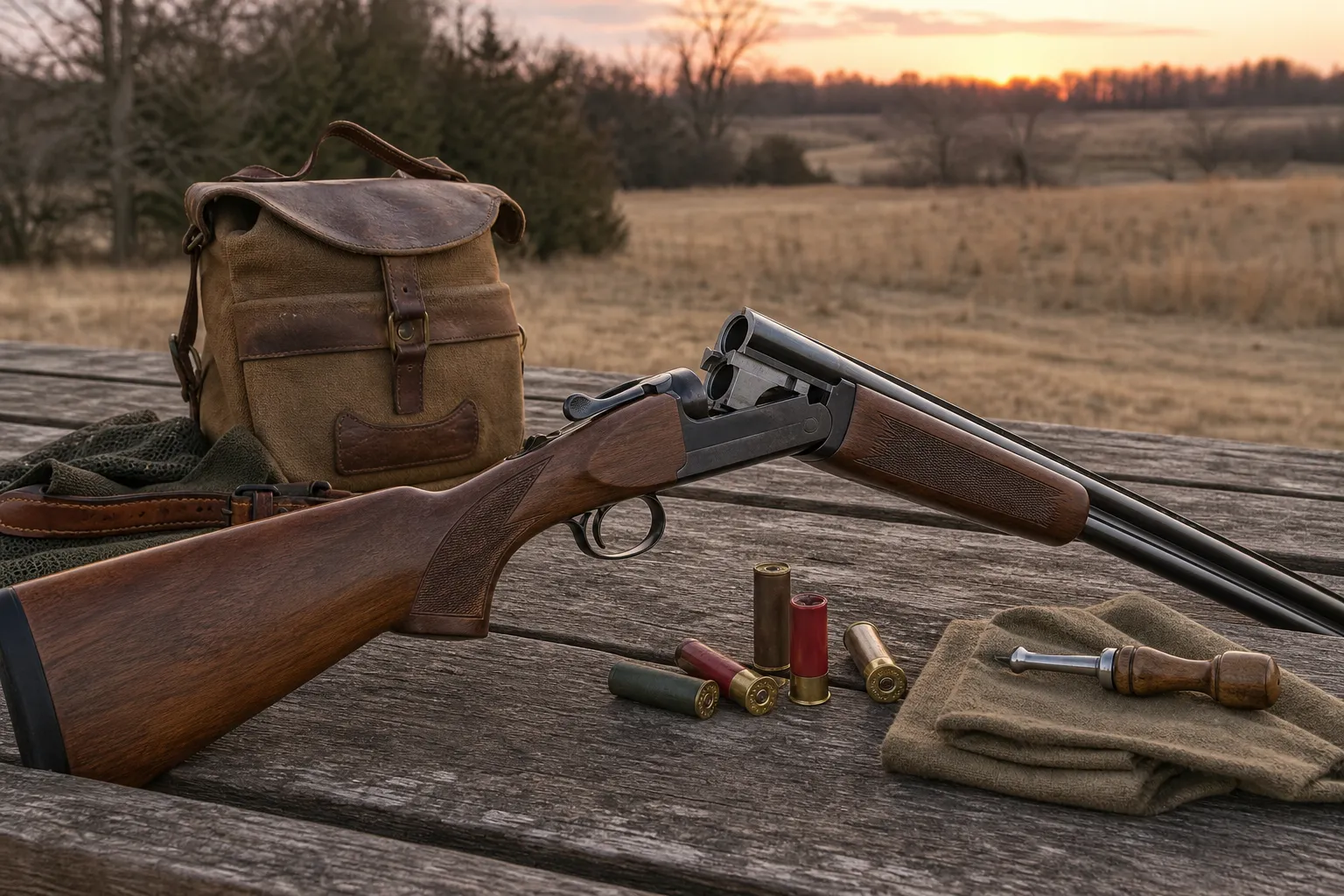
A break-action shotgun opens by unlocking the barrel assembly and pivoting it downward, exposing the chamber or chambers for direct loading and unloading. The three common forms covered here are the single-shot, the over-under and the side-by-side. They differ in capacity and barrel layout, but they share the same basic idea: open the gun, place shells directly into the chamber or chambers, close and lock the action, fire, then open the action to extract or eject the shell or hull.
What “break action” means
In a break-action shotgun, the barrel or barrels hinge downward away from the receiver when the action is opened. Henry describes its H015 as a break-action single-shot shotgun, and its manual says the barrel breaks open to expose the breech for loading and unloading.
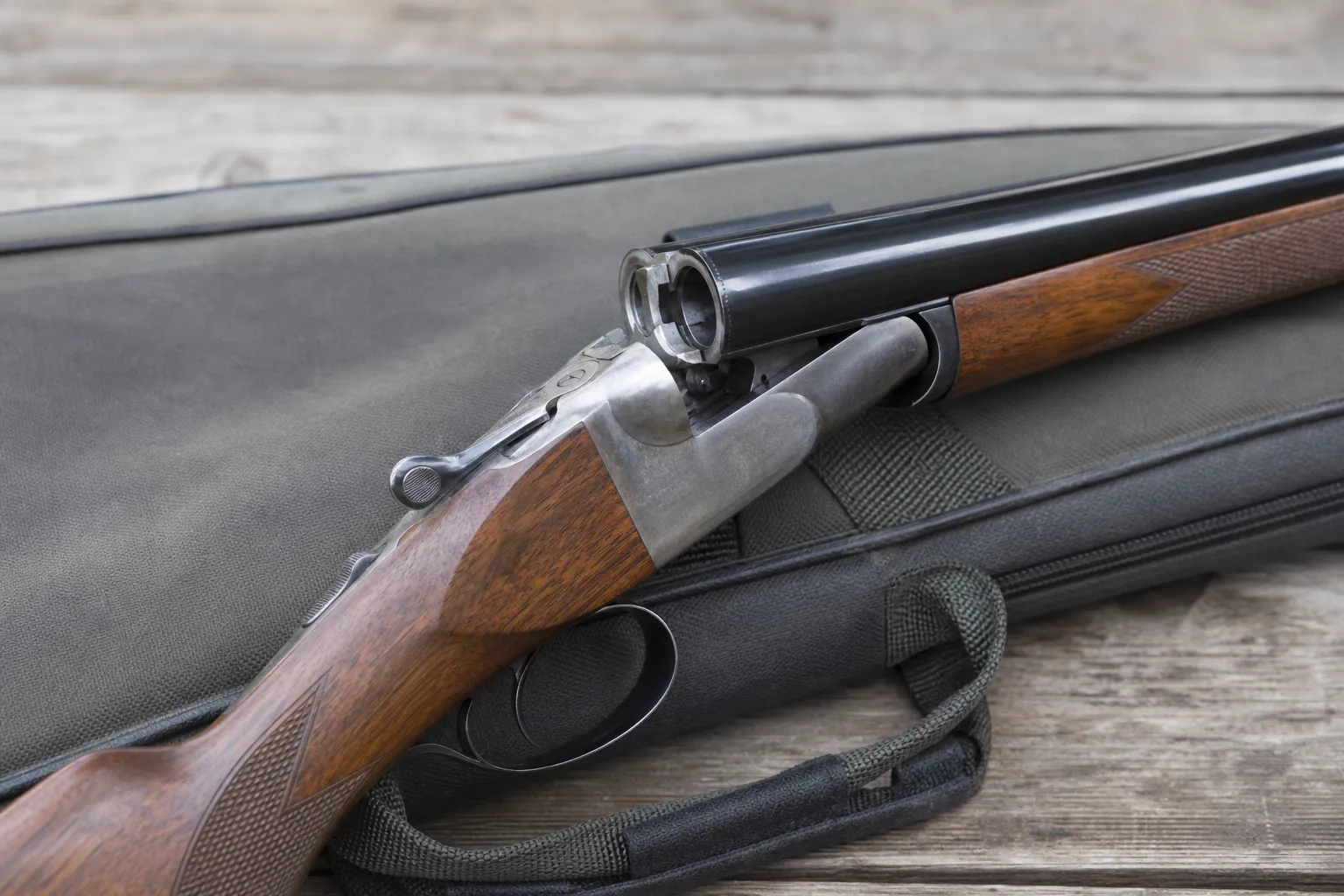
That exposed breech is the defining feature for a new user. Unlike a repeating shotgun that feeds from a magazine, a break-action shotgun gives direct access to the chamber or chambers. On a single-shot, there is one chamber. On an over-under or side-by-side, there are two chambers, one for each barrel.
Break-action shotguns are also easy to understand visually. When the action is open, a person can see whether the chamber or chambers are loaded. That does not replace safe handling, but it explains why the open action is such an important part of the design.
For a broader overview of shotgun categories, see types of shotguns. This guide stays focused on how break-actions open, lock, fire and remove shells.
How a break-action opens, closes and locks
Many break-action shotguns use a top lever or release lever. Browning instructs Citori users to move the top lever to the right and open the breech before placing shells in the chambers. Browning gives the same basic loading sequence for the BSS side-by-side: move the top lever right, break open the shotgun and insert a shell in each chamber.
Once unlocked, the barrels pivot downward around a hinge or pin. The chamber mouths are then exposed. The shooter loads by placing shells directly into the chamber or chambers, rather than feeding them through a magazine.
Closing the action brings the barrels back into the receiver. Browning states that the BSS top lever operates the locking bolt, which is hand-fitted to the barrel lugs. In plain terms, the locking system secures the breech so the gun can be fired as designed.
Some break-actions also use the opening movement to prepare the firing mechanism. Browning says the Citori action must be opened completely to reset the firing mechanism.
Not every model has the same safety arrangement. CZ cautions that its over-under shotgun is not equipped with an automatic safety. Stoeger, by contrast, says that on Coach Gun models with automatic safety, opening the gun for loading or unloading automatically moves the safety button to the “S” position. A new user should read the exact manual for the exact shotgun, because this is not universal across all break-actions.
Single-shot break-action shotguns
A single-shot break-action shotgun has one barrel and one chamber. Henry’s H015 shotgun manual lists the capacity as one round and describes the gun as a break-action Henry single-shot shotgun.
Henry’s manual says the H015 uses an external hammer and a locking lever setup. It opens with a locking release lever on top of the frame, and opening the barrel exposes the breech. After firing, Henry states that the H015 fully ejects the shotgun shell or hull.
Henry also describes an interlock system on the H015 that does not allow the action to open if the hammer is cocked. That detail matters because it shows why users should not assume every break-action opens the same way in every condition.
The basic single-shot sequence is simple:
- Operate the release lever.
- Open the barrel and expose the breech.
- Place one shell in the chamber.
- Close the action so it locks.
- Fire the single shot.
- Open the action to remove or eject the shell or hull, depending on the design.
A single-shot is the simplest of the three layouts discussed here because there is no barrel selection and no second shot from a second barrel.
Over-under shotguns
An over-under shotgun has two barrels stacked vertically. Browning describes the Citori as an over-under shotgun with two barrels aligned one over the other.
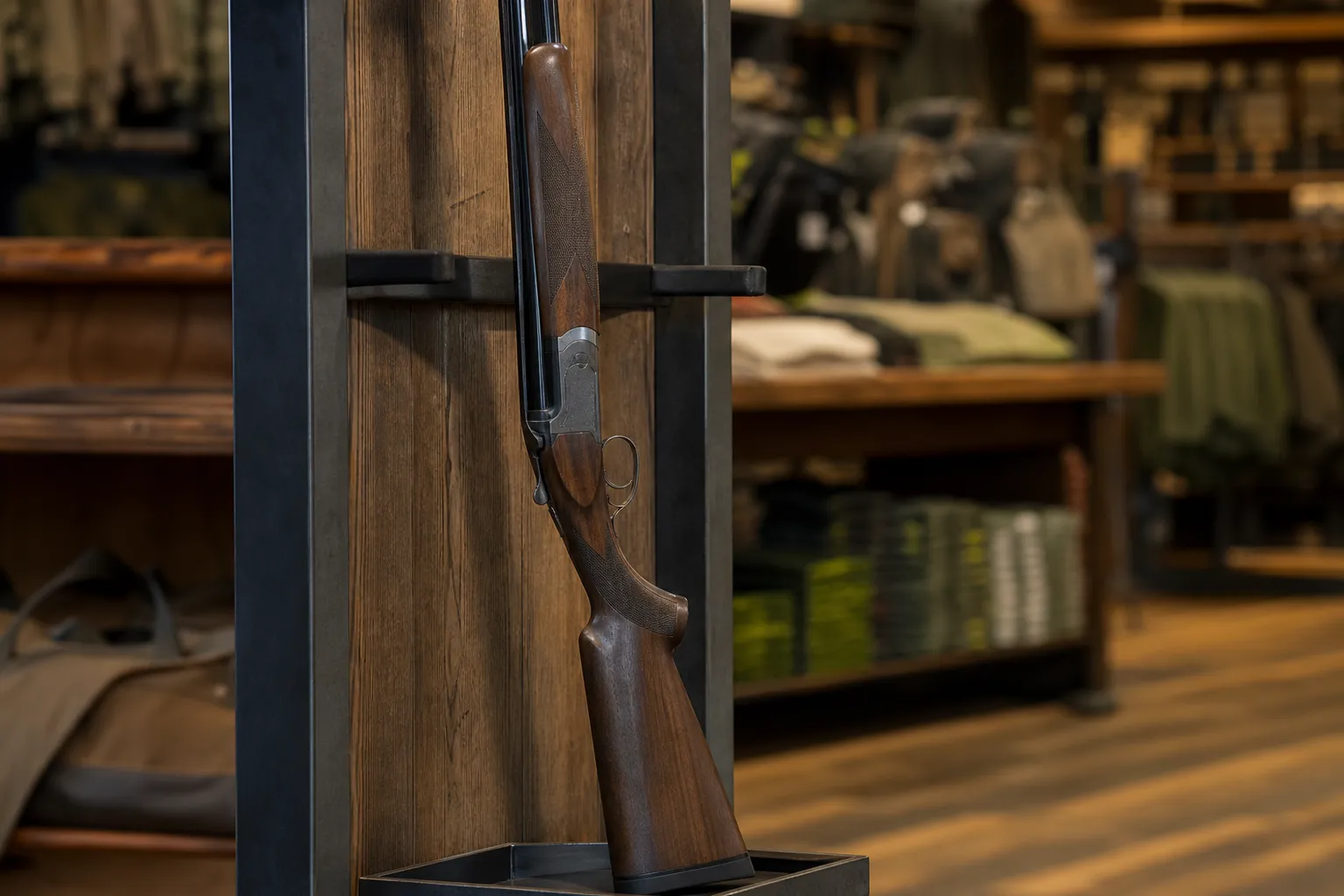
Because there are two barrels, there are two chambers. Browning instructs that the Citori is loaded by moving the top lever right, opening the breech and placing shells in the chambers. CZ gives a similar action-opening description for its over-under shotguns, stating that the gun opens by pushing the top lever with the thumb while pushing the barrel down.
Many over-under shotguns use a single selective trigger. Browning says the Citori uses a single selective trigger and fires only one barrel with each trigger pull. Browning also says barrel selection is made with the safety selector, where “O” indicates the top barrel and “U” indicates the bottom barrel. CZ similarly states that selected over-under models can select which barrel fires first.
That means a two-barrel over-under does not fire both barrels at once in the Citori system described by Browning. One pull fires one barrel. A second pull fires the other barrel, if the gun is loaded and functioning as described in its manual.
Extractors and ejectors on over-unders
Over-under shotguns may use extractors or ejectors, depending on the model. CZ distinguishes the two clearly: ejectors eject empty cases, while extractors partially extract spent shells for manual removal.
Browning says the Citori’s automatic ejectors throw fired shells completely out while lifting unfired shells for unloading. That is a common distinction in break-action manuals: a fired shell may be ejected, while an unfired shell may simply be raised or lifted so it can be removed by hand.
Side-by-side shotguns
A side-by-side shotgun has two barrels arranged horizontally. Browning’s BSS manual describes loading by moving the top lever right, breaking open the shotgun and inserting a shell in each chamber. The side-by-side action is still a break action, but the two barrels sit next to each other rather than one over the other.
Stoeger identifies the Coach Gun in the cited manual as a side-by-side shotgun with a single-trigger extractor configuration. That is a useful example because it separates two features that new users sometimes mix together: trigger type and shell-removal type. A side-by-side can be discussed by barrel layout, trigger arrangement and extractor or ejector system.
Extractors and ejectors on side-by-sides
Browning says BSS automatic ejectors throw fired shells out and elevate unfired shells above chamber level. Stoeger’s Coach Gun manual, by contrast, identifies the model covered as an extractor configuration.
So, “side-by-side” tells you how the barrels are arranged. It does not, by itself, tell you whether fired shells will be ejected or merely raised for manual removal. The manual for the exact shotgun is the controlling reference for that detail.
Break action versus pump action and semi-automatic operation
Break-action shotguns are loaded directly at the chamber or chambers. Pump-action and semi-automatic shotguns use a different operating pattern, because they are repeating designs that feed from the gun’s system after the first shell is chambered.
CZ describes pump-action operation as pulling the bolt rearward to extract and eject the shell, then moving it forward to feed a new shell. Browning describes the BPS pump-action cycle as using the forearm to eject the empty hull and load a new shell from the magazine.
Semi-automatic shotguns use the gun’s operating system to eject and feed. CZ describes self-loading shotguns by saying that spent shells are automatically ejected and another shell is fed into the chamber. Browning describes the A-500 semi-automatic as short recoil operated and says its breechblock returns forward, picking up and chambering a new shell automatically.
That is the core difference. A break-action user opens the gun to access the chamber or chambers. A pump user cycles the action manually after firing. A semi-automatic uses its operating system to eject and chamber automatically. For a closer comparison of those repeating actions, see pump-action vs semi-automatic shotguns.
Comparing the three break-action layouts
| Layout | Barrel arrangement | Typical loading access | Trigger examples | Shell removal examples |
|---|---|---|---|---|
| Single-shot | One barrel | Breech exposed when opened | Henry H015 uses an external hammer | Henry states the H015 fully ejects the shell or hull after firing |
| Over-under | Two barrels, one over the other | Breech opens for shells in both chambers | Browning Citori uses a single selective trigger | CZ distinguishes ejectors from extractors, and Browning says Citori ejectors throw fired shells out |
| Side-by-side | Two barrels next to each other | Breech opens for one shell in each chamber | Stoeger identifies a Coach Gun single-trigger extractor configuration | Browning BSS uses automatic ejectors, while Stoeger identifies a Coach Gun extractor configuration |
This table is not a model recommendation. It shows how the action types are described in manufacturer manuals.
Proof marks, chamber markings and ammunition fit
Break-action shotguns, especially older or imported guns, may carry proof marks and chamber markings that help identify how the firearm was proved and what chamber length it was marked for. London Proof House defines gun proofing as inspection, measurement and firing overpressure cartridges to stress-test pressure-bearing components.
London Proof House states that shotgun proof marks are engraved on the flats of shotgun barrels and on the action. Birmingham Proof House says it was established by Act of Parliament in 1813 for compulsory statutory proof of small arms.
The British proof rules list smooth-bore shotgun chamber length proof marks in millimeters, including 65 mm, 70 mm and 76 mm. The same rules describe nominal smooth-bore size marks using the nominal number of lead balls to the imperial pound, such as 12, 16 or 20.
For new users, the practical lesson is simple: read the firearm’s manual, look at the barrel and action markings, and do not guess about chamber length or gauge. For background on gauge markings, see shotgun gauges explained. For choke and pattern questions, see shotgun chokes explained and how to pattern a shotgun.
What to check before using a break-action shotgun
Before using any break-action shotgun, confirm the exact operating steps in the manufacturer’s manual for that model. In particular, check how the action opens, how the locking system is described, whether the gun has an automatic safety, how the trigger or triggers work, and whether the gun uses extractors or ejectors.
Also confirm the markings on the barrel and action, including gauge and chamber length markings where present. If anything is unclear on an older, imported or unfamiliar shotgun, consult the manufacturer, a qualified gunsmith or the relevant proof authority before choosing ammunition or firing the gun.
Frequently asked questions
What is a break-action shotgun?
A break-action shotgun opens by unlocking the barrel assembly and pivoting it downward so the breech and chamber or chambers are exposed for loading and unloading.
How is an over-under different from a side-by-side?
An over-under has two barrels aligned one over the other, as Browning describes for the Citori. A side-by-side has two barrels arranged next to each other, as shown by the side-by-side manuals from Browning and Stoeger.
Does a break-action shotgun eject shells automatically?
It depends on the model. CZ says ejectors eject empty cases, while extractors partially extract spent shells for manual removal. Browning says Citori automatic ejectors throw fired shells out, while the Stoeger Coach Gun manual identifies an extractor configuration.
How does a break-action differ from a pump-action shotgun?
A break-action opens at the breech for direct loading and unloading. CZ describes pump-action operation as pulling the bolt rearward to extract and eject, then moving it forward to feed a new shell, and Browning describes the BPS as using the forearm to cycle the action.
Do all break-action shotguns have the same safety system?
No. CZ cautions that its over-under shotgun is not equipped with an automatic safety, while Stoeger says some Coach Gun models with automatic safety move the safety button to the “S” position when opened for loading or unloading.
Where are proof marks found on a shotgun?
London Proof House states that shotgun proof marks are engraved on the flats of shotgun barrels and on the action. Chamber length proof marks may be shown in millimeters under British proof rules.
Sources
- Birmingham Proof House, Birmingham Proof HouseOfficial source. Accessed October 30, 2026.
- Henry H015 Shotgun Series User Manual, Henry Repeating ArmsOfficial source. Accessed October 30, 2026.
- Citori Shotgun Owner's Manual, BrowningOfficial source. Accessed October 30, 2026.
- BSS Shotgun Owner's Manual, BrowningOfficial source. Accessed October 30, 2026.
- BPS Shotgun Owner's Manual, BrowningOfficial source. Accessed October 30, 2026.
- Browning A-500 Semi-Automatic Shotgun Owner's Manual, BrowningOfficial source. Accessed October 30, 2026.
- CZ Shotguns Manual EN, ES, CZOfficial source. Accessed October 30, 2026.
- Model SPR 210 and 220 Owner's Manual, RemArmsOfficial source. Accessed October 30, 2026.
- Stevens Shotguns Manual, Savage Arms, hosted copyOfficial source. Accessed October 30, 2026.
- Stoeger Coach Gun Side by Side Shotgun Owner's Manual, Stoeger IndustriesOfficial source. Accessed October 30, 2026.
- London Proof House, London Proof HouseOfficial source. Accessed October 30, 2026.
- Rules, Regulations and Scales Applicable to the Proof of Small Arms, Birmingham Proof House. Accessed October 30, 2026.