Shotgun Chokes Explained
A shotgun choke is the constriction at the muzzle that controls how widely pellets spread. Choke choice depends mainly on distance, but actual patterns vary by gun, load, shot material and choke system, so use manufacturer guidance and pattern your shotgun.
By RaiS. Reviewed by RaiS. Published . 6 min read.
Research and drafting were assisted by AI. RaiS checked the facts against the sources below and approved this page.
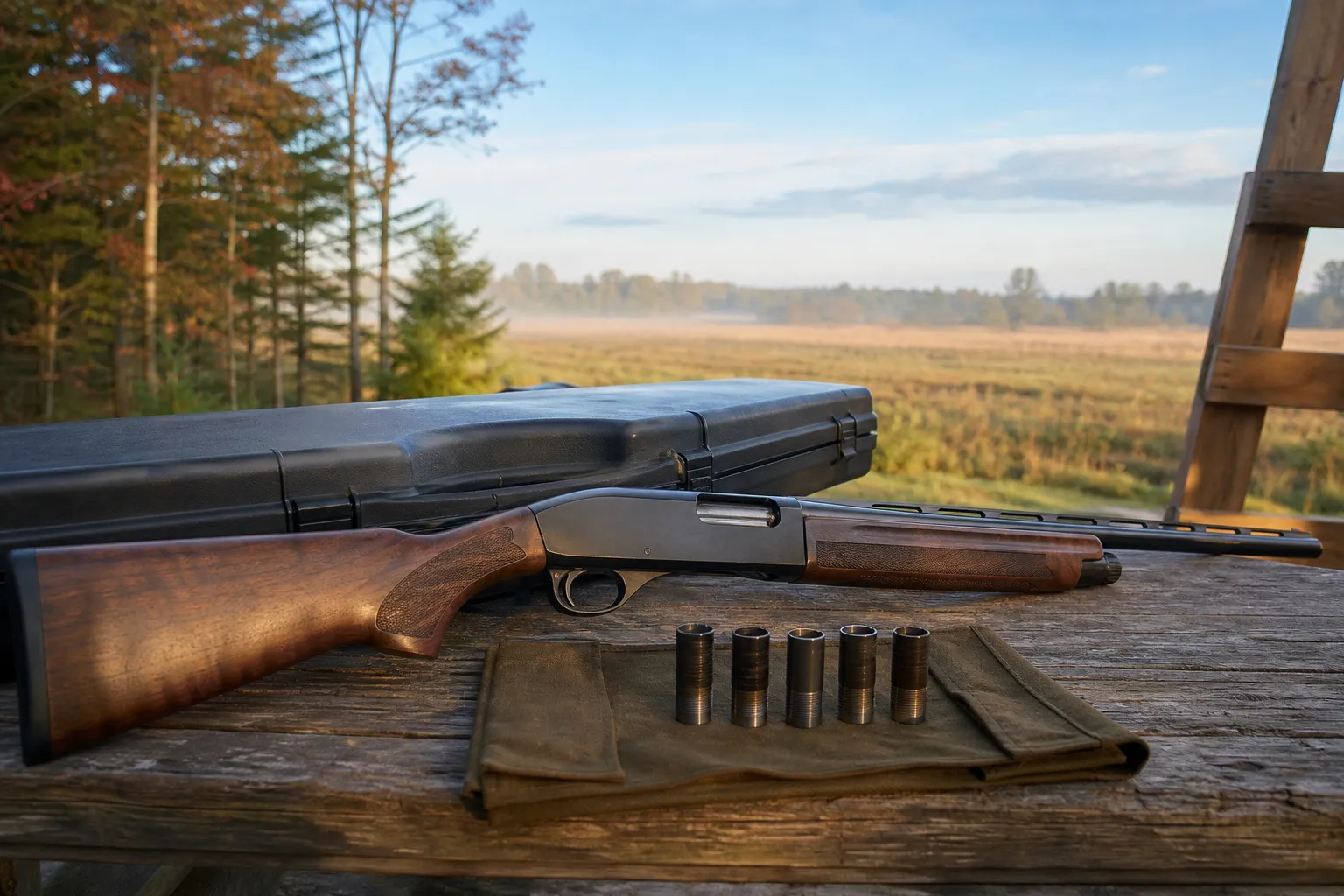
A shotgun choke is the constriction at the muzzle end of a shotgun bore. Its job is to control how widely the shot pellets spread at a given distance. In simple terms, open shotgun choke types such as cylinder and improved cylinder spread pellets sooner, while tighter chokes such as modified, improved modified and full hold the pattern together longer. Trulock defines choke as a “tapered constriction of the gun’s bore,” and Winchester describes choke as a way of “controlling how widely those pellets spread.” Trulock, Winchester
What is a choke on a shotgun?
A choke is part of the shotgun’s muzzle end, either built into the barrel or installed as a removable choke tube. Winchester says a cylinder choke has no constriction. From there, common names move toward tighter patterns: improved cylinder, modified, improved modified and full. Winchester also explains that full produces a tighter pattern than modified, and modified is tighter than improved cylinder. Winchester
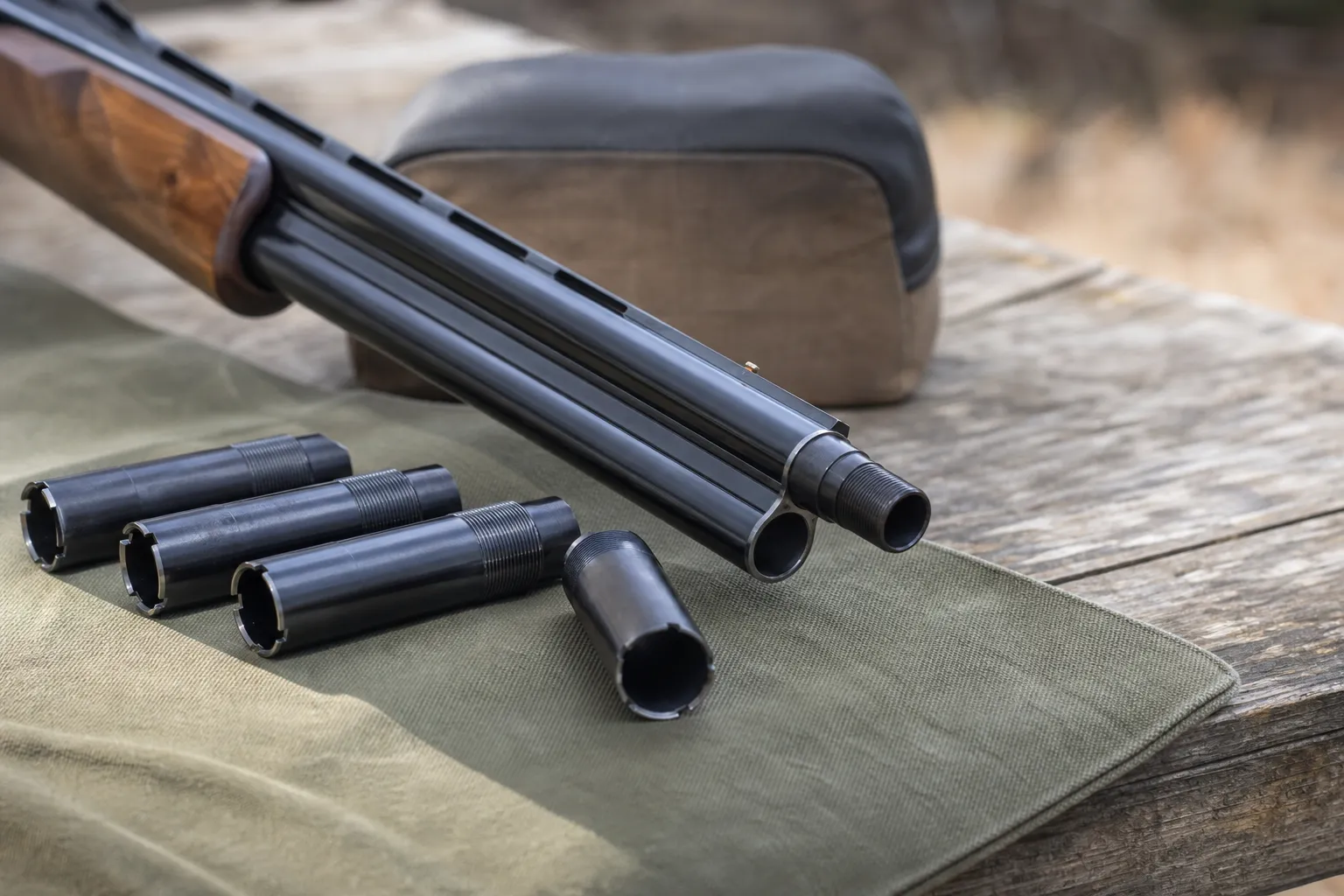
The basic idea is simple. Shot leaves the barrel as a cluster of pellets. The choke changes how quickly that cluster opens up. A more open choke is generally used for closer targets. A tighter choke is generally used when the target is farther away. Browning says choke choice should be based mainly on target distance. Browning
Manufacturers warn that pattern results are not universal. Mossberg’s SA-20 manual says lead, steel and other non-toxic shot patterns vary by shell length, shot size, brand and barrel, and says shooters should conduct pattern tests before field use. Winchester also presents its range suggestions as general, depending on load and gauge. Mossberg SA-20 manual, Winchester
Common shotgun choke types, from open to tight
A useful way to remember shotgun choke types is as a ladder. Open chokes spread pellets faster. Tight chokes keep pellets together longer. The common order is cylinder, skeet, improved cylinder, modified, improved modified, full and extra full or turkey.
Here are manufacturer examples for 12 gauge chokes. Treat these as examples, not promises for every gun or load. Trulock says shotgun patterns are normally measured at 40 yards, except for cylinder bore, skeet 1 and .410 bore cases noted on its page. Trulock
| Choke type | Winchester 12 gauge constriction example from .729 SAAMI bore | Browning 12 gauge Invector-DS target load pattern example | General use idea | |, -|, -:|, -:|, -| | Cylinder | .000 | Not listed in the ledger | Most open common pattern | | Improved cylinder | .010 | 40 to 45 percent | Closer shots than modified | | Modified | .020 | 55 to 65 percent | General middle distance | | Improved modified | .025 | 65 to 75 percent | Longer targets than modified | | Full | .035 | 75 to 80 percent | Tightest of these common field chokes |
Sources: Winchester PatternBoard lists the constriction examples from a .729 SAAMI bore, and Browning lists the Invector-DS percentages for 12 gauge target loads. Winchester PatternBoard, Browning
Winchester gives these general range suggestions: skeet for 15 to 25 yards, improved cylinder for 20 to 30 yards, modified for about 30 to 40 yards, improved modified for 45 to 55 yards and full for 55 to 65 yards, depending on load and gauge. Winchester
Browning gives another distance based explanation. It recommends improved modified or full for game generally shot at 40 yards or more. It says modified gives about the same density at 35 to 40 yards that tighter chokes give farther out, while improved cylinder is for about 30 to 35 yards. Browning
Choosing a choke for hunting
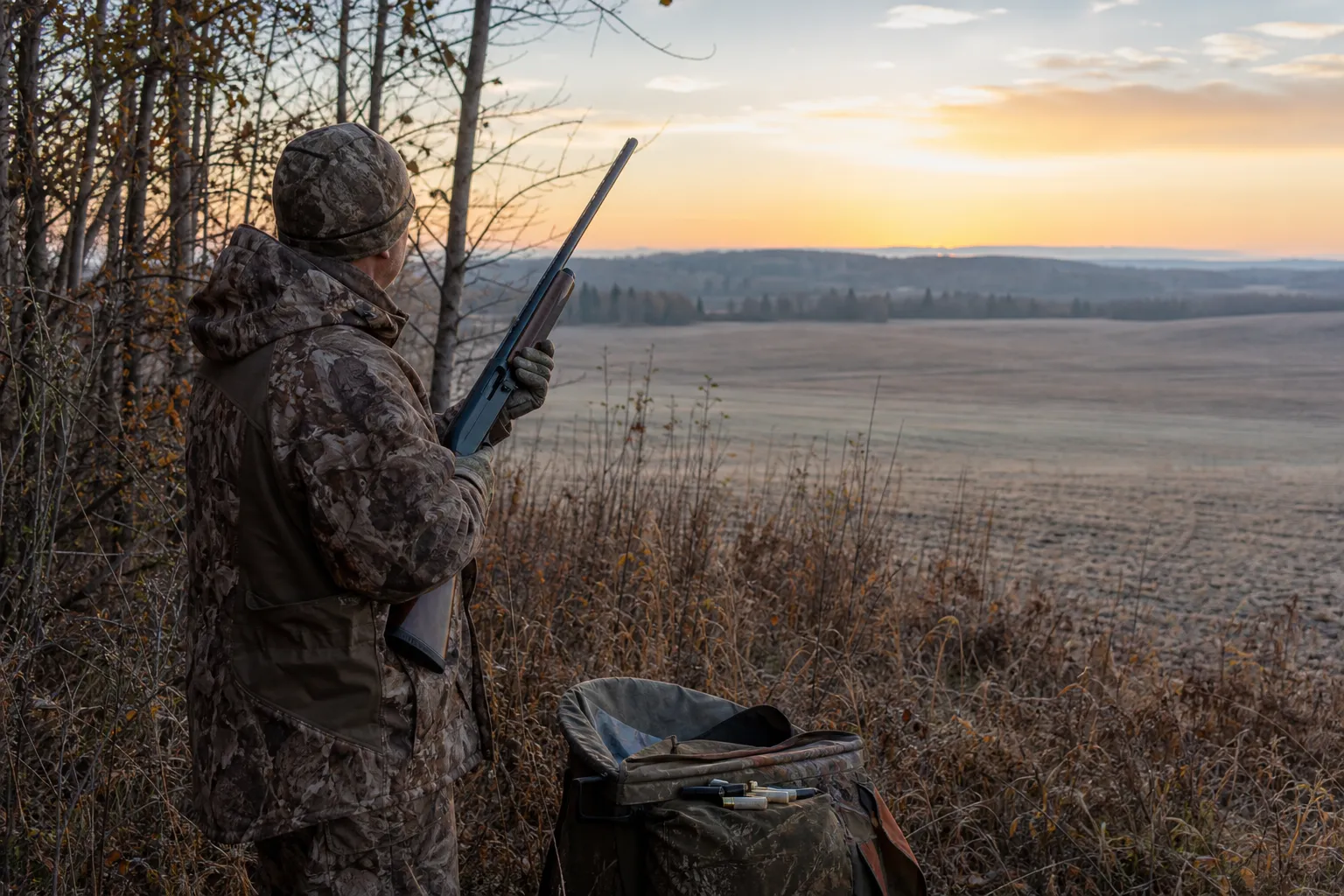
Distance is the starting point. Browning’s guidance is built around distance, and its game chart gives practical examples by quarry. These are Browning’s recommendations, not a universal rule for every shotgun, load or jurisdiction.
| Hunting use in Browning’s chart | Choke listed by Browning | |, -|, -| | Turkey, geese, fox | Modified or full | | Pass shooting ducks and ducks over decoys | Modified or improved cylinder |
Source: Browning shotgun ammunition and game selection chart
This table does not replace patterning your own shotgun. Mossberg’s manual specifically notes that patterns vary by shell length, shot size, brand and barrel, and advises pattern testing before field use. Mossberg SA-20 manual
Choosing a choke for clay targets
Clay sports use choke the same basic way: open for closer targets, tighter for longer targets. Browning lists trap with full, improved modified or modified, and skeet with skeet choke. Browning
Sporting clays are less fixed because the target presentations vary. Browning describes sporting clays choke choices as more varied, including skeet, improved cylinder and modified. Browning
If you are new, start by matching the choke to the expected distance, then confirm on a pattern board and follow the shotgun maker’s manual. Manufacturer tables are helpful, but they cannot predict every shell, barrel and choke combination.
Steel shot and non-toxic shot considerations
Steel shot can change the practical meaning of a choke marking. Trulock advises using one full degree less constriction than lead as a general rule for steel shot. Trulock also warns not to use steel shot with any choke tighter than modified unless the choke is specifically marked for steel. Trulock
Browning’s Cynergy manual gives a specific example of why maker guidance matters. Its chart says a lead full choke is not for steel shot. In that same chart, lead modified and improved modified can pattern as full with steel. The manual also says to use the more open choke when a steel pattern has more than one listed lead choke, for high velocity, larger steel loads. Browning Cynergy manual
Choke markings also vary by maker. Use the markings and manual for your own shotgun and choke tubes.
Official hunting rules may also require non-toxic shot. The U.S. Fish and Wildlife Service says the lead shot ban for hunting waterfowl became nationwide in 1991, and its April 2022 page lists iron, steel, as an approved non-toxic shot type for waterfowl hunting in the United States. U.S. Fish and Wildlife Service
In Canada, the Migratory Birds Regulations, 2022, on the Justice Laws page, current to September 21, 2026 and last amended June 12, 2026, say a person must not hunt a migratory game bird while possessing or using shot other than non-toxic shot, with listed exceptions. Confirm the current rule with the responsible agency before hunting. Justice Laws, Canada
Interchangeable choke tubes
Interchangeable choke tubes let a shooter change the pattern for the target and distance. The important limit is compatibility. Winchester warns not to mix choke tube systems or gauges, and says to consult the owner’s manual or a dealer if unsure. Winchester
Mossberg’s SA-20 manual also warns not to fire without a properly installed choke tube. That matters because many modern shotguns are designed to be fired with the correct tube installed, not with the choke tube area empty. Mossberg SA-20 manual
The safe rule is to treat your shotgun manual and choke tube maker’s instructions as the authority. That is especially important with steel shot, high velocity loads, larger steel sizes and any tube marked for a different system or gauge.
Key takeaways
Shotgun chokes are about pattern control. Cylinder has no constriction and gives the most open common pattern. Improved cylinder, modified, improved modified and full get progressively tighter. Manufacturer charts are useful, but the same choke name can behave differently with different loads, shot materials, shell lengths, barrels and choke systems.
Before hunting or shooting clays, check three things with official sources or your manufacturer’s manual: the correct choke tube system for your shotgun, the maker’s steel shot guidance for that exact choke and barrel, and the current non-toxic shot rules for the place and species you plan to hunt.
Frequently asked questions
What is a choke on a shotgun?
A shotgun choke is constriction at the muzzle end of the bore. It controls how widely shot pellets spread at a given distance, according to Trulock and Winchester.
Which shotgun choke is the most open?
Winchester says cylinder choke has no constriction. It gives the most open common pattern.
Is modified tighter than improved cylinder?
Yes. Winchester explains that full is tighter than modified, and modified is tighter than improved cylinder.
What choke should I use for ducks?
Browning’s game chart lists modified or improved cylinder for pass shooting ducks and ducks over decoys. Follow your shotgun manual, pattern your gun and confirm current hunting rules before the hunt.
Can I shoot steel shot through a full choke?
Do not assume so. Trulock warns not to use steel shot with any choke tighter than modified unless the choke is specifically marked for steel. Browning’s Cynergy manual chart says a lead full choke is not for steel shot.
Are choke tubes interchangeable between shotguns?
Not automatically. Winchester warns not to mix choke tube systems or gauges, and says to consult the owner’s manual or a dealer if unsure.
Sources
- Which choke tube do I use for my shotgun?, BrowningOfficial source. Accessed October 20, 2026.
- What type of shotgun and ammo do I use for a particular game?, BrowningOfficial source. Accessed October 20, 2026.
- Cynergy Owner’s Manual, BrowningOfficial source. Accessed October 20, 2026.
- What is the Difference Between a Trap Gun and a Sporting Clays Gun?, BrowningOfficial source. Accessed October 20, 2026.
- Tips for First-Time Shotgun Buyers, Winchester Repeating ArmsOfficial source. Accessed October 20, 2026.
- Winchester PatternBoard, WinchesterOfficial source. Accessed October 20, 2026.
- Select Shotgun Owner’s Manual, Winchester Repeating ArmsOfficial source. Accessed October 20, 2026.
- The A,B,C’s of Shotgun Chokes, MossbergOfficial source. Accessed October 20, 2026.
- 20 Gauge Autoloading Shotgun Owner’s Manual, Mossberg InternationalOfficial source. Accessed October 20, 2026.
- Guide To Choke Tubes: How To Select The Right Choke, BerettaOfficial source. Accessed October 20, 2026.
- Choke Tube Patterns, Trulock ChokesOfficial source. Accessed October 20, 2026.
- Nontoxic Shot Regulations For Hunting Waterfowl and Coots in the U.S., U.S. Fish and Wildlife ServiceOfficial source. Accessed October 20, 2026.
- Migratory Birds Regulations, 2022, Section 38, Justice Laws Website, Government of CanadaOfficial source. Accessed October 20, 2026.