Shotgun Bead Sights and Vent Ribs Explained
Shotgun beads and ribs are alignment aids, not rifle type sights that guarantee point of impact. For clay and wing shooting, coaching material emphasizes pointing the shotgun, keeping visual focus on the target, and confirming results on a patterning board.
By RaiS. Reviewed by RaiS. Published . 7 min read.
Research and drafting were assisted by AI. RaiS checked the facts against the sources below and approved this page.
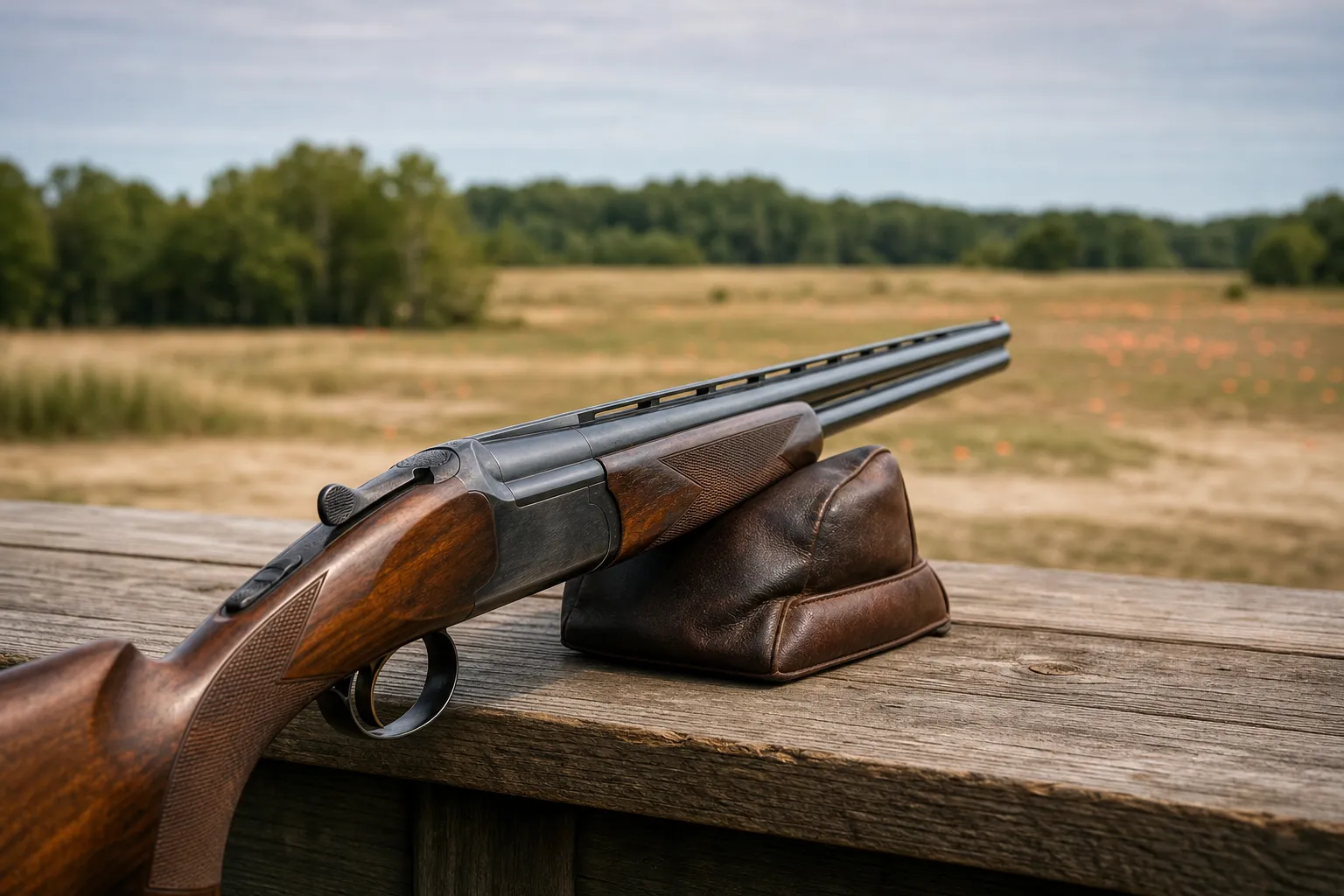
Shotgun bead sights and vent ribs help you mount, align and point a shotgun, but they do not guarantee where the pattern will land. For clay and wing shooting, Scouting America and Clay Target Australia both teach that a shotgun is pointed rather than aimed like a rifle, with the shooter’s eyes focused on the target instead of locked onto the bead or rib.
SAAMI defines a shotgun as a shoulder fired smoothbore firearm designed to fire cartridges containing many pellets or a single slug. SAAMI also defines a sight broadly as a device that assists in aiming a firearm, and defines a sight bead as the small cylindrical top portion found on some front sights. On a shotgun, that bead is often used as a visual aid rather than as a rifle type sight picture.
What a shotgun bead does
A shotgun bead is a simple visual aid near the muzzle.
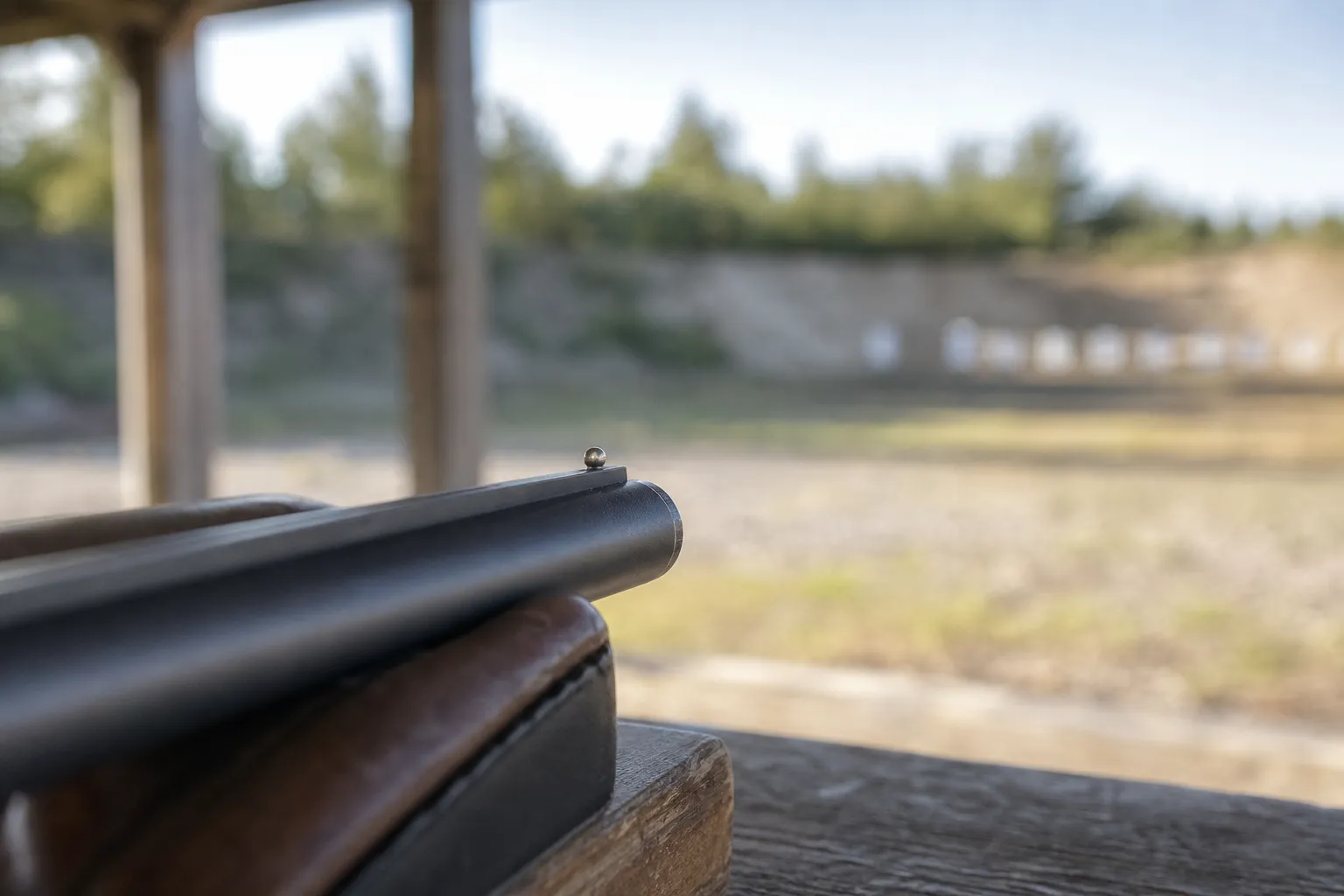
Scouting America’s Shotgun Shooting pamphlet says one or sometimes two beads are positioned on top of the barrel to help the shooter point at the target.
That difference matters. A rifle shooter may spend a great deal of attention on aligning a front sight, rear sight or optic with a target. A clay target or flying bird shooter is usually working with a moving target and a shot pattern. Scouting America teaches that the shooter’s eyes must remain focused on the target, never on the shotgun barrel or beads. Clay Target Australia’s Basic Coaching Manual says the novice has to learn to focus on the target because a shotgun is pointed and not aimed like a rifle.
Front beads and mid beads
The front bead is the bead near the muzzle. Some shotguns also have a smaller mid bead partway back along the rib.
The mid bead gives the shooter another aid for how the gun is mounted and how the eye is positioned over the rib. It is not a separate rear sight in the rifle sense. Clay Target Australia describes the shotgun sight as being there to assist correct gun mounting and the development of a sight picture.
Manufacturer manuals use beads as alignment aids. Browning’s Citori 825 owner’s manual says correct cast adjustment places the shooter looking directly down the center of the rib with the front and middle beads in exact alignment. The same manual says the adjustable comb helps align the shooter’s dominant eye with the sight plane along the barrel rib.
Plain barrels, solid ribs and ventilated ribs
Some shotguns present a plain barrel view, while others present a rib above the barrel.
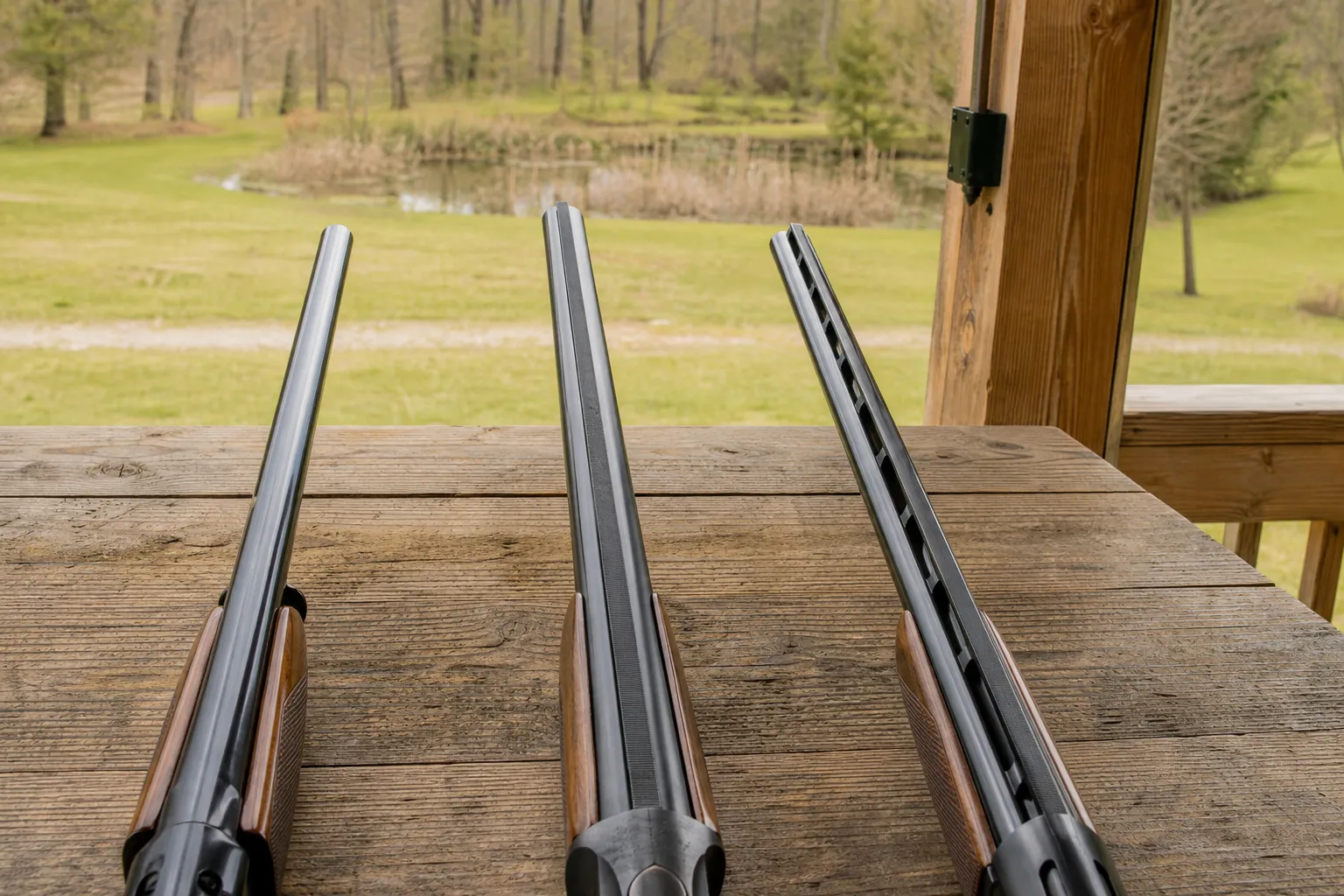
A rib is a raised lengthwise surface on top of the barrel that gives the shooter a visual tracking aid. Scouting America says some shotguns have a rib running the length of the barrel, and that this gives the shooter an added tracking aid. It also says the ribbed surface helps keep the barrel cooler during heavy fire.
A rib can help the shooter see a consistent sighting plane, but it still does not turn the shotgun into a rifle. The coaching emphasis remains target focus, consistent mount and confirmation on targets or a patterning board.
Pointing a shotgun versus aiming a rifle
For moving targets, the key beginner concept is that the shotgun is pointed. Scouting America states this directly: shotguns are pointed, not aimed. Clay Target Australia likewise says a shotgun is pointed and not aimed like a rifle, and that the novice must learn to focus on the target.
This does not mean the bead and rib are useless. Clay Target Australia says the shotgun sight assists correct gun mounting and sight picture development. The bead and rib can tell you whether the gun is coming to the same place on your face and shoulder, and whether your eye is aligned with the rib in the way the gun and shooter require.
It does mean that staring at the bead is the wrong habit for clay and wing shooting as described by these coaching materials. Scouting America says the shooter’s eyes should stay on the target rather than on the barrel or beads. The National Skeet Shooting Association and National Sporting Clays Association make a related point in their point of aim article: in the shotgun world, point of aim often means the point of visual focus, and a shotgun that shoots to the point of aim places the point of impact on that visual focus.
For a broader look at clay games and how targets differ, see Trap vs Skeet vs Sporting Clays.
Common sight picture ideas
Sight picture language can be confusing because it changes with the discipline, the shotgun and the shooter. Browning’s Citori 825 manual gives two clear examples from one manufacturer.
For trap, Browning describes a sight picture where the shooter looks down the rib with the bottom of the front bead resting on top of the middle bead. Browning calls this a “figure eight” or “stacked” configuration.
For skeet and sporting clays, Browning says the correct sight picture has the two beads in alignment, and emphasizes that lining up the beads correctly each time is what matters.
NSSA/NSCA gives another common sporting clays fit reference. In its gun fit discussion, NSSA/NSCA says that when the shooter’s eye is positioned in that reference, the shooter sees a slight amount of rib and the beads appear in a “snowman” configuration, with the muzzle bead stacked immediately on top of the mid rib bead.
These descriptions are references, not universal promises. Browning says point of impact focuses on the center of the shot pattern relative to point of aim, and that the specific shotgun model, bead alignment and shooting discipline determine the correct aiming reference. NSSA/NSCA also cautions that conscious sight alignment is not the proper way to evaluate shotgun fit on a patterning board.
Gun fit and what you see down the rib
What you see down the rib is affected by how the shotgun fits and how consistently it is mounted. Browning’s Citori 825 manual says adjustable comb settings help align the shooter’s dominant eye with the sight plane along the rib. It also says correct cast adjustment places the shooter looking down the center of the rib with the front and middle beads aligned.
This is why two shooters may not see the same rib picture with the same shotgun. The manufacturer language ties the view down the rib to eye alignment, comb adjustment and cast adjustment. NSSA/NSCA states the practical test simply: the real test of gun fit is whether the shotgun shoots where the shooter is looking, confirmed on a patterning board and by observing point of impact on actual targets.
That is also why a bead setting should not be treated as a guarantee. A stacked bead picture, a flat rib picture or an aligned two bead picture may be a useful aid, but the real question is where the pattern centers when that shooter mounts and fires that shotgun.
Rib height, adjustable ribs and point of impact
Some target shotguns have adjustable ribs. SAAMI defines sight adjustment as movement of a sight to change point of impact, and manufacturer manuals show how this concept can apply to certain rib systems.
Browning’s Max Adjustable Rib supplement says the system adjusts the angle of the rib to reach different pattern percentages and to customize point of impact and sight picture. Browning describes ranges of 50/50 to 90/10 for trap style shotguns and 50/50 to 70/30 for sporting style shotguns in that specific supplement.
Beretta’s 2026 semiauto shotgun manual describes a B Fast front mechanism with an adjustment dial that regulates impact point by raising or lowering the front of the rib. The same Beretta manual says a rear mechanism on certain models changes rib height between 25 mm and 30 mm positions.
Those are model specific manual statements, not general rules for all shotguns. The safe beginner takeaway is that rib height and rib adjustment can affect sight picture and point of impact on shotguns designed for that adjustment, but the result still has to be confirmed with that shotgun, shooter and load.
Pattern confirmation: the reality check
Patterning is how you check where the shotgun actually places its pattern. Browning says point of impact is determined by patterning a shotgun and comparing where the shooter was aiming with the actual center of the pattern.
Browning also says factory shotguns vary significantly in point of impact, giving examples such as 50/50 and 60/40 patterns.
A single shot on paper is not enough to draw a confident conclusion. Browning says shotgun patterns should be averaged because patterns do not perform identically from shot to shot. Browning also warns that the shooter must keep the rib level when checking point of impact, and that canting the shotgun can affect the pattern position on the target.
For a step by step beginner guide to the board work, see How to Pattern a Shotgun. If you are also trying to understand how constriction affects the pattern, see Shotgun Chokes Explained.
What beginners should remember
A bead is a visual aid. A mid bead is another aid for alignment and mount. A rib is a tracking and sighting surface.
For clay and wing shooting, the coaching materials in this guide point in the same direction: keep visual focus on the target, not on the bead. Use the bead and rib to build a repeatable mount and sight picture, then confirm the result by patterning and by watching where the shotgun breaks targets.
Check the manufacturer manual for your exact shotgun before changing any adjustable comb, cast or rib setting. Confirm point of impact with the load, choke and shooting setup you actually use, and remember Browning’s caution that patterns vary from shot to shot and should be averaged.
Frequently asked questions
Is a shotgun bead the same as a rifle sight?
No. SAAMI defines a sight bead as the small cylindrical top portion on some front sights. Scouting America and Clay Target Australia teach that shotguns for clay and wing shooting are pointed, not aimed like rifles.
What is a mid bead for?
A mid bead gives another alignment aid for mount and eye position over the rib. Browning uses front and middle bead alignment as a reference for cast adjustment and sight picture in its Citori 825 manual.
What does a vent rib do on a shotgun?
A rib gives the shooter a visual tracking aid. Scouting America also says the ribbed surface helps keep the barrel cooler during heavy fire.
Should I focus on the bead or the target?
Scouting America says the shooter’s eyes must remain focused on the target, never on the shotgun barrel or beads. Clay Target Australia likewise says the novice must learn to focus on the target because the shotgun is pointed, not aimed like a rifle.
Does a figure eight bead picture guarantee point of impact?
No. Browning describes a figure eight or stacked bead picture for trap in one manual, but Browning also says point of impact is determined by patterning the shotgun and comparing the aiming point with the actual center of the pattern.
How do I know where my shotgun actually shoots?
Pattern the shotgun and compare the aiming point with the actual center of the pattern. Browning also says patterns should be averaged because shotgun patterns vary from shot to shot.
Sources
- SAAMI Glossary, S terms, Sporting Arms and Ammunition Manufacturers' InstituteOfficial source. Accessed November 4, 2026.
- Shotgun Narratives Study Guide, revised April 2018, Michigan State University Extension 4-H Shooting Sports. Accessed November 4, 2026.
- Shotgun Shooting merit badge pamphlet, Scouting America. Accessed November 4, 2026.
- Basic Coaching Manual, Australian Clay Target Association. Accessed November 4, 2026.
- Browning Citori 825 Over and Under Shotgun Owner's Manual, BrowningOfficial source. Accessed November 4, 2026.
- Ask the Instructor: Gun Fit, NSSA/NSCA. Accessed November 4, 2026.
- Point of Aim, NSSA/NSCA. Accessed November 4, 2026.
- NSCA Level II Instructor Certification Manual, May 2020, National Sporting Clays Association. Accessed November 4, 2026.
- Point of Impact, Rifle and Shotgun, BrowningOfficial source. Accessed November 4, 2026.
- Max Adjustable Rib Instructions Owner's Manual Supplement, BrowningOfficial source. Accessed November 4, 2026.
- Semiauto Shotgun User Manual, 2026, BerettaOfficial source. Accessed November 4, 2026.
- How do I check for POI and pattern my shotgun?, BrowningOfficial source. Accessed November 4, 2026.