The .410 Shotgun Explained
The .410 is a shotgun bore size, not a gauge. It uses small shot charges, commonly in 2½ inch and 3 inch shells, so patterning and careful load choice matter more than with larger gauges.
By RaiS. Reviewed by RaiS. Published . 7 min read.
Research and drafting were assisted by AI. RaiS checked the facts against the sources below and approved this page.
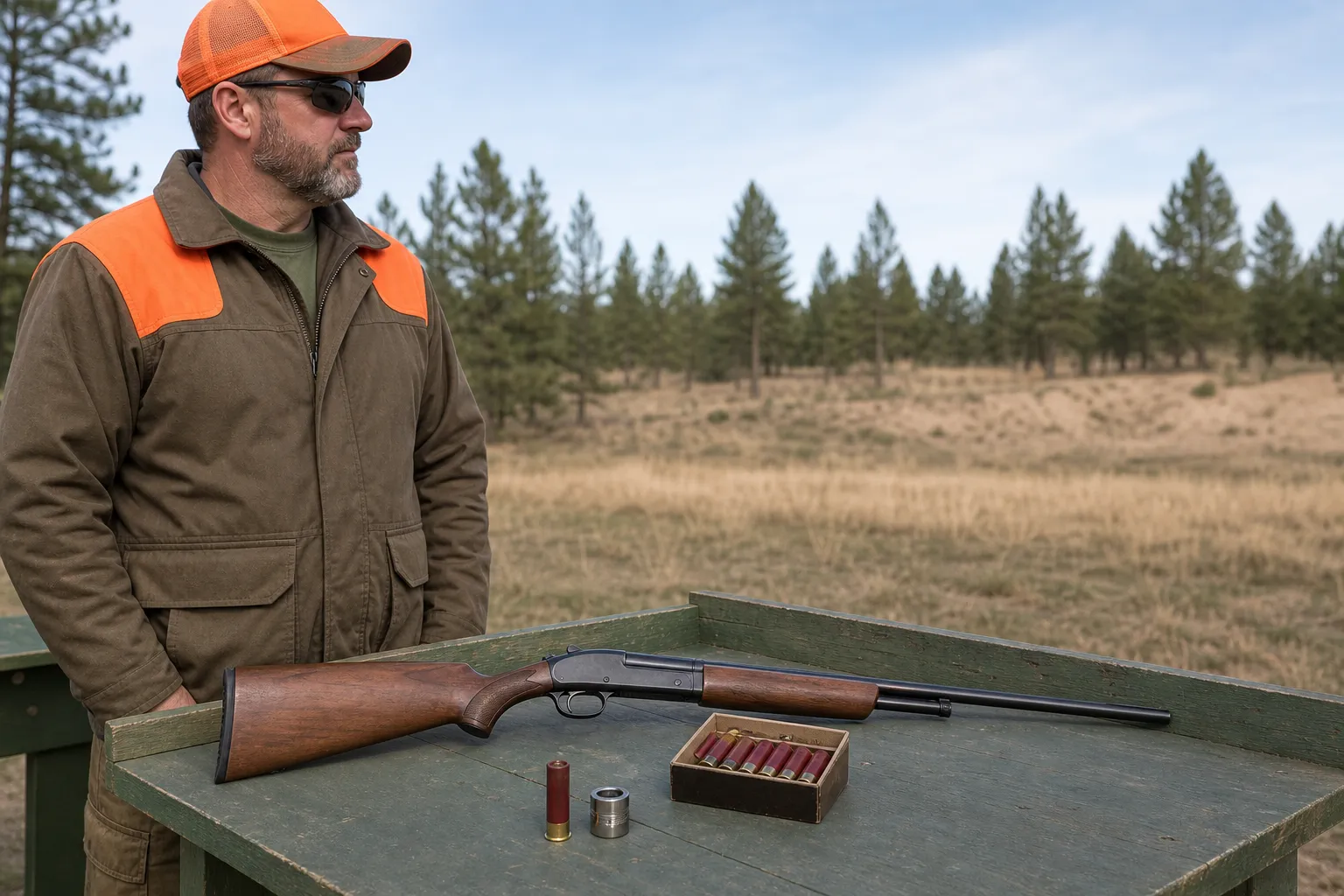
The .410 is the smallest shotgun size in common discussion, but its name is different from 12 gauge or 20 gauge. SAAMI says .410 bore is an exception to the gauge naming system, and North Dakota Game and Fish describes it as a shotgun with a diameter of 410/1000 inch. In practical terms, the .410 fires smaller shot charges than larger shotguns, so it can be useful for close range targets and some hunting situations, but it gives the shooter less pattern density to work with.
.410 is a bore diameter, not a gauge
Most shotgun sizes are named by gauge. SAAMI defines gauge as a term used for most shotgun bores, related to the number of bore diameter lead balls that weigh one pound. SAAMI also states that .410 bore is an exception.
That is why the name is written as .410 bore, not 410 gauge. North Dakota Game and Fish explains the beginner version plainly: .410 is not measured by the gauge system, and its diameter is 410/1000 of an inch.
SAAMI’s .410 smooth bore barrel drawings list a .410 inch bore diameter with a plus .020 inch tolerance for both 2½ inch and 3 inch .410 bore entries. That makes .410 a bore designation based on diameter, while 20 gauge and 12 gauge are gauge designations.
This naming difference matters because new shooters often assume a higher shotgun number means a larger shotgun. With gauges, the opposite is generally how the naming system works. With .410, the number is simply the bore diameter in thousandths of an inch.
.410 shell lengths: 2½ inch and 3 inch
SAAMI recognizes .410 bore shotshell names in 2½ inch, 65 mm, and 3 inch, 76 mm.
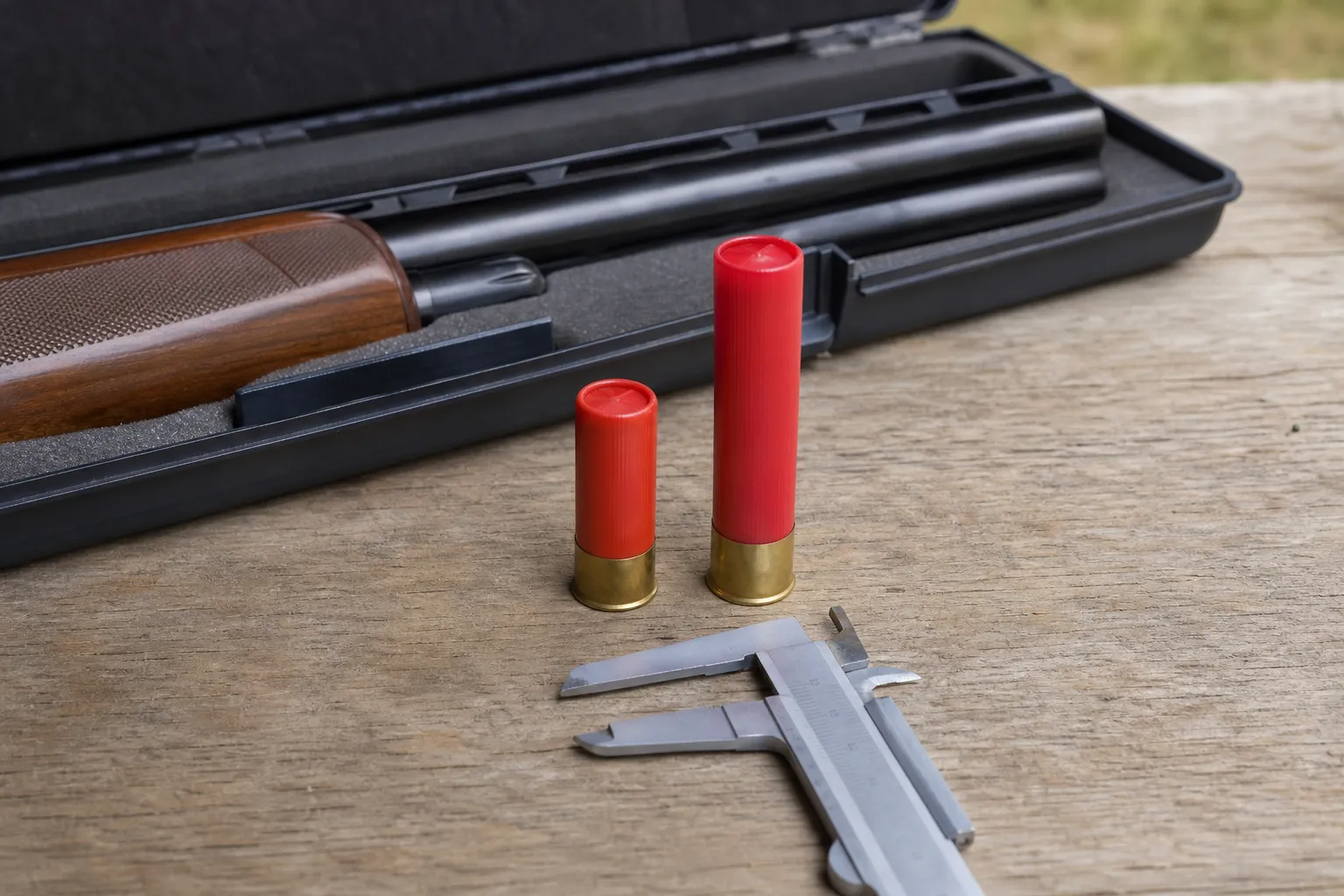
Hunter Ed states that shotgun shell length is the length after firing, and that shotshells must match exactly the gauge and shell length specified by the manufacturer, usually marked on the barrel. For .410, that means checking the barrel marking and using only the shell length the firearm is marked to accept.
Browning’s shotgun manual gives the key safety warning in direct terms: do not use shells longer than the barrel chamber marking, including 3 inch shells in a 2½ inch chamber.
A 2½ inch .410 shell and a 3 inch .410 shell may look similar to a new shooter, but the chamber marking is not optional. If the shotgun is marked for 2½ inch shells, use 2½ inch shells. If there is any doubt about the marking or the condition of the firearm, stop and have the firearm checked by the manufacturer or a qualified professional.
Typical .410 shot, slug and buckshot loads
The .410 carries a small payload compared with larger shotgun gauges. SAAMI’s lead shot load table includes .410 bore 2½ inch lead shot loads at ½ ounce and .410 bore 3 inch lead shot loads at 11/16 ounce. Federal’s catalog gives examples in the same range, including a 2½ inch, ½ ounce .410 Game Shok upland game load at 1200 fps and a 3 inch, 11/16 ounce .410 Game Shok upland game load at 1135 fps.
| .410 load type | Published examples |
|---|---|
| 2½ inch lead shot | SAAMI lists ½ ounce loads. Federal lists a 2½ inch, ½ ounce Game Shok load at 1200 fps in shot sizes 6 and 7.5. |
| 3 inch lead shot | SAAMI lists 11/16 ounce loads. Federal lists a 3 inch, 11/16 ounce Game Shok load at 1135 fps in shot sizes 4, 5, 6, 7.5 and 8. |
| 3 inch non lead shot | SAAMI lists a 3 inch, 3/8 ounce non lead load at 1400 fps. |
| 2½ inch rifled slug | SAAMI lists 1/5 ounce and ¼ ounce .410 bore 2½ inch rifled slug loads. SAAMI states its rifled slug data is for loads intended to be fired from smooth bore firearms. |
| Buckshot | SAAMI lists .410 bore 2½ inch 000 buckshot as 3 pellets at 1300 fps and .410 bore 3 inch 000 buckshot as 5 pellets at 1080 fps. |
SAAMI lists the maximum diameter for a .410 bore hollow base, rifled, soft lead slug as .403 inch. For buckshot, SAAMI lists No. 000 buck as .360 inch, 9.14 mm, with about 100 pellets per pound for 0.5 percent antimony soft shot.
For birdshot and target type loads, pellet size has a large effect on pellet count. SAAMI’s table also shows that smaller pellets have more pellets per ounce than larger pellets. It notes that actual pellet counts per ounce vary because of antimony content and shot diameter tolerances.
That matters in a .410 because the payload is small. If a shooter chooses larger pellets, the shell contains fewer pellets in the same shot charge. Fewer pellets can make it harder to keep an even pattern on a small or moving target.
Patterns, chokes and the .410’s limits
A choke changes how the shot cloud spreads. SAAMI defines a shotgun choke as a constriction at or near the muzzle that controls shot dispersion. Texas Parks and Wildlife explains the practical point: chokes do not make shot go farther, they deliver effective shot density at a particular distance.
For more background on choke names and how they affect patterns, see our shotgun chokes guide.
The .410 makes patterning especially important because the shot charge is small. With less shot in the shell, there is less margin for thin spots in the pattern. A load that looks good on paper still needs to be checked in the shotgun and choke actually being used.
Texas Parks and Wildlife advises patterning a shotgun with different loads and chokes at the distance where the shooter expects to hunt. It gives examples of 20 to 25 yards for quail and 40 yards for turkey.
Texas Parks and Wildlife also warns that most shots must not be taken beyond 40 yards because the pattern can spread too far and develop holes. That statement is not a special .410 maximum range. It is general hunter education guidance about shotgun patterns, and it is especially relevant to a small payload shotgun because pattern density is limited from the start.
SAAMI also notes that choke names have historically related to pattern density and that there are no standards for choke dimensions. In other words, the name stamped on a choke tube is not a substitute for patterning that shotgun with that load.
Common uses for a .410
North Dakota Game and Fish describes shotguns as firearms that shoot shells filled with multiple pellets called shot, forming a pattern for hunting small game and moving targets at relatively close distances. It also notes that shotguns can shoot single projectiles called slugs for big game hunting.
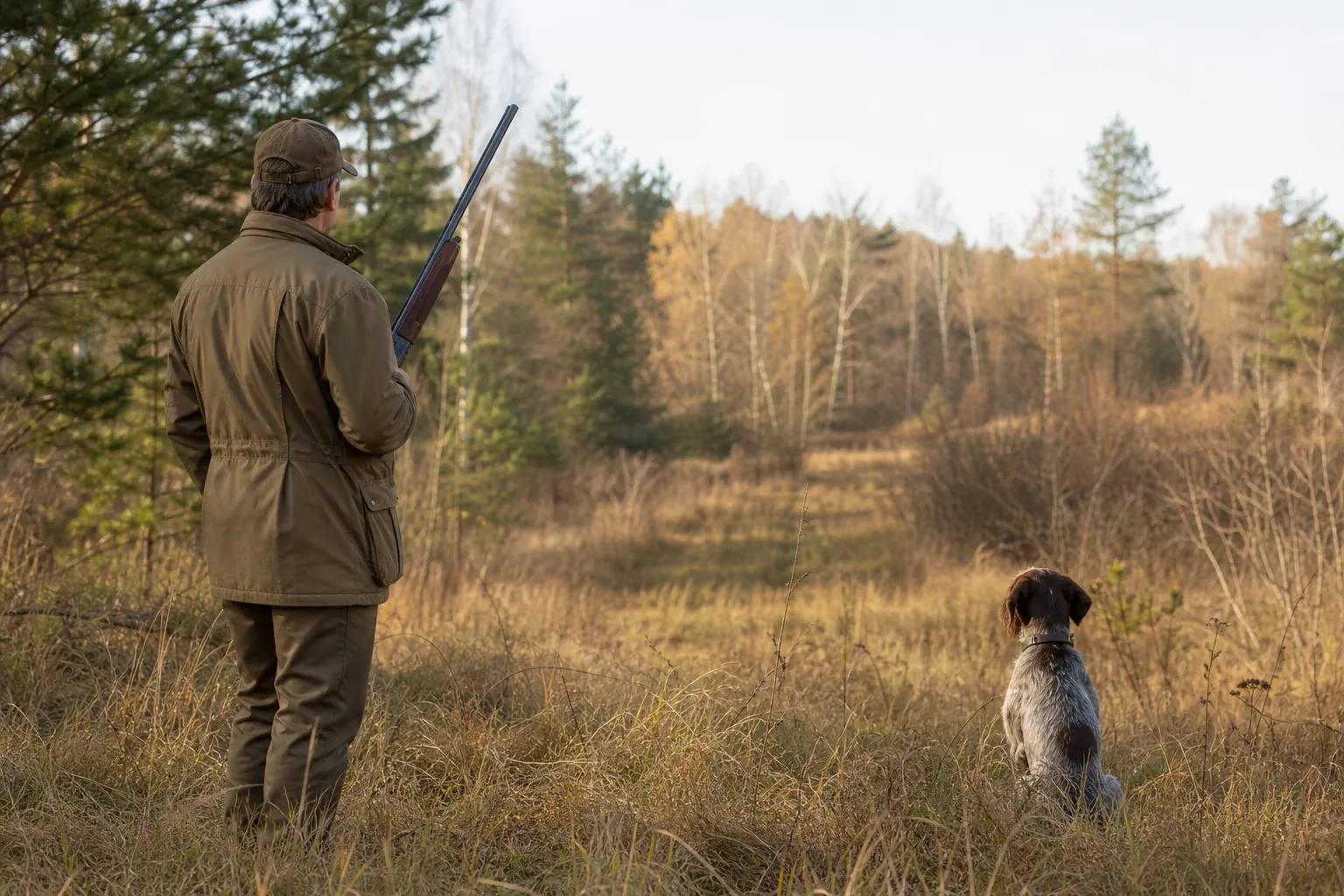
For .410 shot loads, Federal’s catalog examples include shot sizes 6, 7.5 and, in 3 inch loads, 4, 5, 6, 7.5 and 8.
Those examples do not mean every .410 load is suitable for every use. The actual choice depends on the firearm, load, choke, pattern and current hunting rules.
Slugs and buckshot are also published .410 load categories in SAAMI data. Whether those are appropriate or lawful for any hunting use depends on the jurisdiction, season, species and firearm rules. Always check the current wildlife agency regulations before hunting.
.410 compared with 20 gauge
The biggest practical difference between .410 and 20 gauge is payload. The .410 uses smaller shot charges than larger shotgun gauges, while the examples above show .410 shot payloads of ½ ounce and 11/16 ounce.
When a 20 gauge load carries more shot, the extra pellets can make a pattern more forgiving because there are more pellets available to fill the pattern. The .410’s smaller charge can reward careful shooting, but it gives less pattern density to cover aiming error, target movement or a less than ideal pattern.
For new shooters and parents comparing common beginner options, see our 12 gauge vs 20 gauge guide. That comparison is useful because many beginners look at smaller shotguns first, but the .410 is not automatically easier to hit with simply because it is small.
The .410 can still be a useful shotgun size when matched to the task. Its limits are mostly about pattern density, payload and distance, not the name on the shell box.
What to check before using a .410
Before shooting or hunting with a .410, check the barrel marking for the correct shell length, then use only matching ammunition. Hunter Ed says shotshells must match the gauge and shell length specified by the manufacturer, and Browning warns not to use shells longer than the chamber marking.
For performance, pattern the shotgun with the actual load and choke at the distance where it will be used. Texas Parks and Wildlife recommends this approach because choke, load and distance all affect whether the pattern is effective.
For hunting, confirm the current rules with the state, provincial or territorial wildlife agency. Check the species, season, legal ammunition, legal shotgun or bore requirements, slug rules where relevant and any non lead shot requirements that apply in that place and time.
Frequently asked questions
Is .410 a gauge?
No. SAAMI says .410 bore is an exception to the gauge system. North Dakota Game and Fish describes it as a shotgun diameter of 410/1000 inch.
What .410 shell lengths are recognized?
SAAMI recognizes .410 bore shotshell names in 2½ inch, 65 mm, and 3 inch, 76 mm. Use only the shell length marked for the shotgun’s chamber.
Can I shoot 3 inch .410 shells in a 2½ inch .410 chamber?
No. Browning warns not to use shells longer than the barrel chamber marking, including 3 inch shells in a 2½ inch chamber.
What are common .410 shot payloads?
SAAMI lists .410 bore 2½ inch lead shot loads at ½ ounce and .410 bore 3 inch lead shot loads at 11/16 ounce. Federal catalog examples list the same payloads for Game Shok upland loads.
Do chokes make a .410 shoot farther?
No. Texas Parks and Wildlife states that chokes do not make shot go farther. Their purpose is to deliver effective shot density at a particular distance.
Why is 20 gauge often more forgiving than .410?
A .410 uses smaller shot charges than larger shotgun gauges, which means fewer pellets are available to form the pattern. A 20 gauge load with more shot can give the shooter more pattern density to work with.
Sources
- GAUGE, Sporting Arms and Ammunition Manufacturers' InstituteOfficial source. Accessed October 22, 2026.
- SAAMI Standards, Sporting Arms and Ammunition Manufacturers' InstituteOfficial source. Accessed October 22, 2026.
- SAAMI Z299.2, Voluntary Industry Performance Standards for Pressure and Velocity of Shotshell Ammunition, Sporting Arms and Ammunition Manufacturers' Institute. Accessed October 22, 2026.
- FAQs, Sporting Arms and Ammunition Manufacturers' InstituteOfficial source. Accessed October 22, 2026.
- Shotshells, National Hunter Safety Course, Hunter Ed. Accessed October 22, 2026.
- BPS Shotgun Owners Manual, BrowningOfficial source. Accessed October 22, 2026.
- Chokes and Patterns, Texas Parks and Wildlife DepartmentOfficial source. Accessed October 22, 2026.
- Shooting Shotguns, Texas Parks and Wildlife DepartmentOfficial source. Accessed October 22, 2026.
- Firearms, General Information, North Dakota Game and Fish DepartmentOfficial source. Accessed October 22, 2026.
- Federal 2019 Catalog, Federal Premium AmmunitionOfficial source. Accessed October 22, 2026.