Shotgun Gauges Explained: 10, 12, 16, 20, 28 and .410
Shotgun gauge is tied to how many bore diameter lead balls make one pound, so smaller gauge numbers usually mean larger bores. The .410 is the exception: it is named by bore diameter in inches, not by gauge.
By RaiS. Reviewed by RaiS. Published . 5 min read.
Research and drafting were assisted by AI. RaiS checked the facts against the sources below and approved this page.
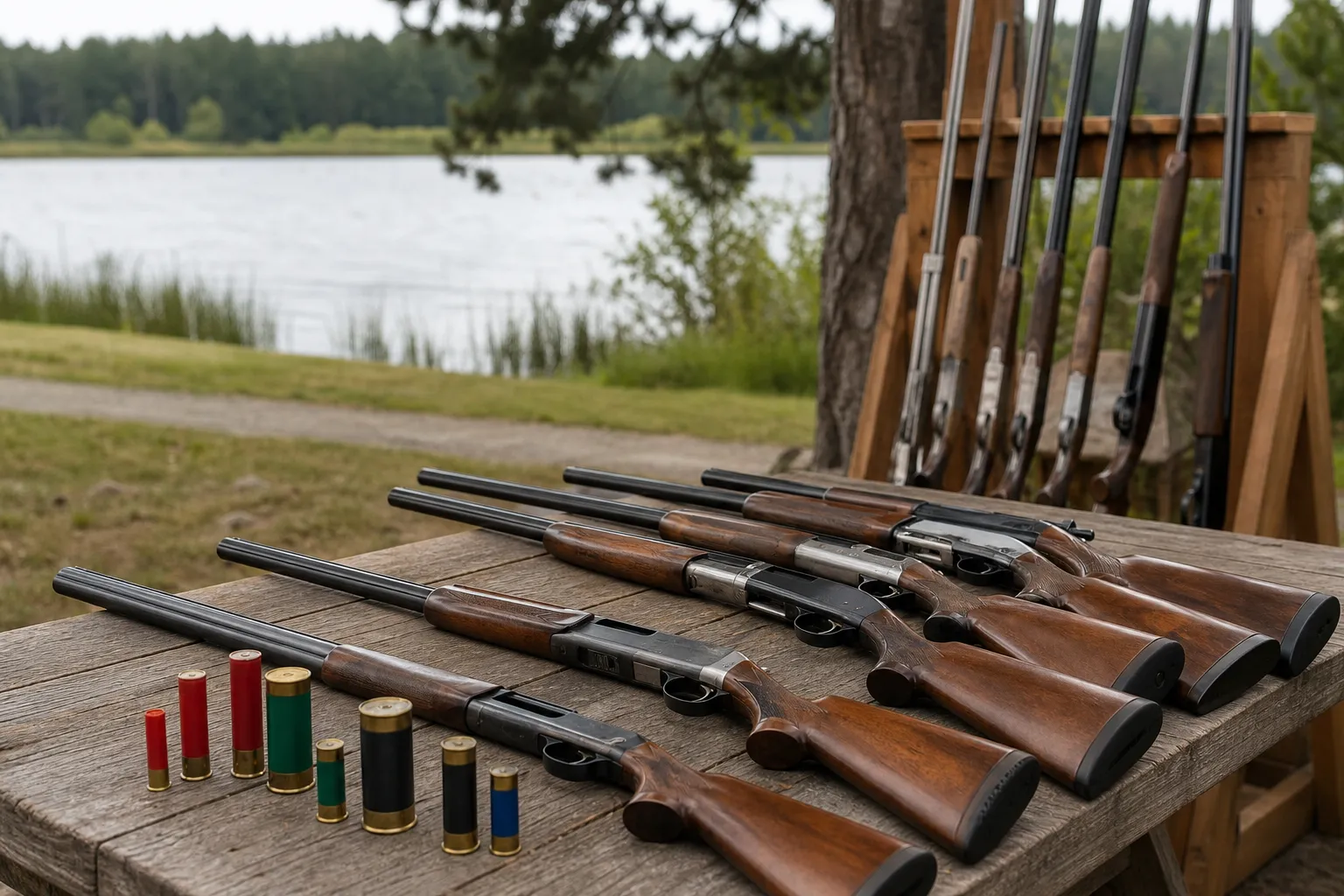
Shotgun gauge is a bore naming system. SAAMI defines gauge as a term used for most shotgun bores, related to the number of bore diameter lead balls that weigh one pound. That is why a smaller gauge number generally means a larger bore. The .410 is the main exception: it is a bore size in inches, not a gauge.
What gauge means
SAAMI describes gauge as a term used to identify most shotgun bores and says it is related to the number of bore diameter lead balls weighing one pound. In plain English, 12 gauge is not a decimal bore measurement. It is part of an older weight based naming system.
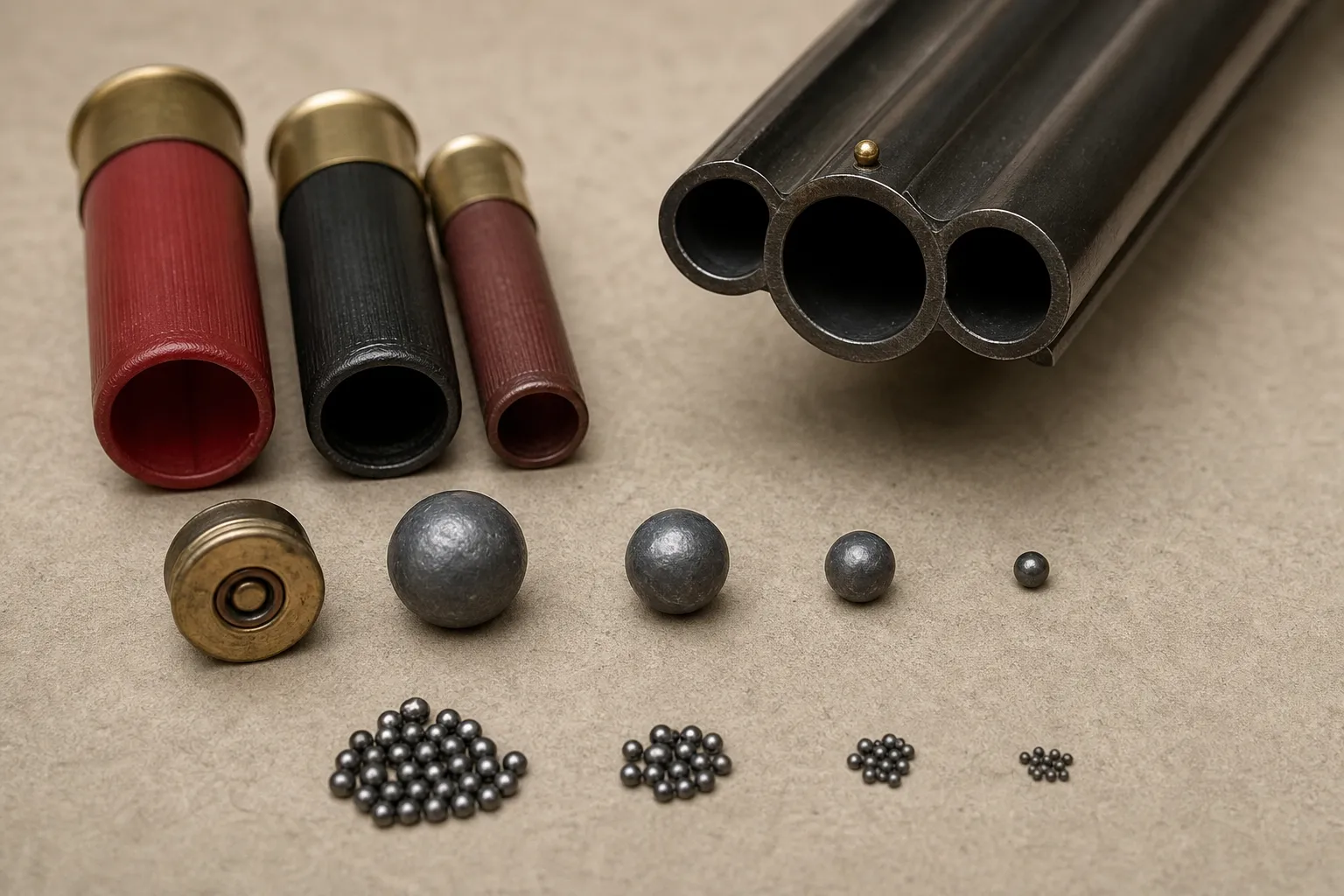
This is also why the numbers feel backwards at first. In the gauges covered here, 10 gauge has the largest SAAMI bore diameter dimension, followed by 12, 16, 20 and 28 gauge. The .410 bore is smaller than those gauges in the SAAMI dimensions listed below, but it is not named as a gauge.
SAAMI explicitly calls .410 bore an exception to shotgun gauge terminology. SAAMI’s .410 bore smooth bore drawings give a .410 inch bore diameter plus tolerance, which is why the name reads like a bore measurement rather than a gauge number.
Bore diameter comparison
SAAMI Z299.2 is the voluntary industry performance standard for shotshell ammunition, including dimensional and performance data. SAAMI states that its standards provide safety, reliability and interchangeability standards for commercial firearms, ammunition and components manufacturers.
The table below uses SAAMI smooth bore barrel drawing dimensions. Treat these as SAAMI minimum bore diameter plus tolerance, not as a single universal measurement for every shotgun barrel.
| Gauge or bore | SAAMI bore diameter dimension |
|---|---|
| 10 gauge | .775 inch plus .020 inch, 19.69 mm plus 0.51 mm |
| 12 gauge | .725 inch plus .020 inch, 18.42 mm plus 0.51 mm |
| 16 gauge | .665 inch plus .020 inch, 16.89 mm plus 0.51 mm |
| 20 gauge | .615 inch plus .020 inch, 15.62 mm plus 0.51 mm |
| 28 gauge | .545 inch plus .020 inch, 13.84 mm plus 0.51 mm |
| .410 bore | .410 inch plus .020 inch, 10.41 mm plus 0.51 mm |
This table shows the basic size order. Among the named gauges here, 10 gauge is larger than 12 gauge, 12 is larger than 16, 16 is larger than 20, and 20 is larger than 28. The .410 bore is listed by its bore diameter rather than by the lead ball gauge system.
Common shell lengths
Gauge tells you the bore family. Shell length is a separate part of shotshell identification.
A gauge name by itself is not enough. Shells in the same gauge can be made in different lengths. The .410 bore can also be encountered in more than one shell length.
Chamber fit and safety
SAAMI’s interchangeability guidance says using shorter shells in a longer chamber is acceptable, using 12 gauge 1¾ or 2¾ inch shells in 3 or 3½ inch chambers as examples. SAAMI also says the reverse is not true, because using a longer shell in a shorter chamber can produce higher than expected pressure.
Different gauges are never interchangeable under SAAMI guidance. SAAMI also identifies 12 over 20 mixups as a known catastrophic hazard and says that occurrence has its own name, the “12/20 burst.”
The practical takeaway is simple: gauge or bore and shell length both matter. A shell must match the firearm’s gauge or bore, and the shell length must be appropriate for the chamber under the manufacturer’s information and current SAAMI guidance.
Payload, in general terms
Payload depends on the load, shot material and manufacturer, so gauge alone does not tell you exactly how much shot is in a shell. Still, published ammunition examples show the general pattern: larger gauges commonly have heavier payload options.
Federal’s published target load data gives a modern example in the same direction. Federal’s High Over All target load page lists 12 gauge 2¾ inch target loads with 1 ounce and 1⅛ ounce payloads, 20 gauge 2¾ inch loads with ⅞ ounce payloads, 28 gauge 2¾ inch loads with ¾ ounce payloads, and .410 2½ inch loads with ½ ounce payloads.
Those examples are not product recommendations. They are useful because they show why shooters often talk about larger gauges as offering more payload capacity, while smaller bores are often associated with lighter shot charges.
Recoil is not just gauge
SAAMI describes recoil through conservation of momentum. Its recoil material says free recoil depends on the momentum of the shot charge or slug and wad column plus propellant gases.
SAAMI’s recoil variables include ejecta weight, ejecta velocity, propellant gas weight, propellant gas velocity and firearm weight. That means two shells in the same gauge can feel different, and two shotguns firing similar shells can also feel different.
SAAMI also notes that felt or perceived recoil can vary with recoil pads, damping devices and action type. For a beginner, this is the key point: do not judge recoil by gauge number alone. The load and the firearm are part of the recoil picture.
For a deeper comparison of the two most common choices in this group, read ProjectGuns’ 12 Gauge vs 20 Gauge Shotguns. For the small bore exception, see the ProjectGuns .410 Shotgun guide.
Quick takeaways
A lower gauge number generally means a larger bore among true shotgun gauges. SAAMI dimensions show 10 gauge larger than 12, 12 larger than 16, 16 larger than 20, and 20 larger than 28.
The .410 is different. It is a bore size, and SAAMI lists .410 bore drawings with a .410 inch bore diameter plus tolerance.
Shell length is separate from gauge. Shells in the same gauge or bore can be made in different lengths.
Payload and recoil both depend on the specific load and firearm. Published target load examples show the broad pattern, but the exact shell matters.
Before using any shotshell, confirm the gauge or bore and shell length with current manufacturer information and SAAMI guidance. Never interchange different gauges, and do not assume that a longer shell belongs in a shorter chamber.
Frequently asked questions
Why is 12 gauge bigger than 20 gauge?
SAAMI says gauge is related to the number of bore diameter lead balls that weigh one pound. In the SAAMI dimensions listed here, 12 gauge has a .725 inch bore diameter plus tolerance, while 20 gauge has a .615 inch bore diameter plus tolerance.
Is .410 a gauge?
No. SAAMI explicitly names .410 bore as an exception to shotgun gauge terminology. SAAMI’s .410 bore drawings list a .410 inch bore diameter plus tolerance.
Can a shorter shotshell be used in a longer chamber?
SAAMI says using shorter shells in a longer chamber is acceptable, using 12 gauge 1¾ or 2¾ inch shells in 3 or 3½ inch chambers as examples. SAAMI also says the reverse is not true because a longer shell in a shorter chamber can produce higher than expected pressure.
Are different shotgun gauges interchangeable?
No. SAAMI says different gauges are never interchangeable and identifies 12 over 20 mixups as a known catastrophic hazard called the “12/20 burst.”
Does a larger gauge always mean more recoil?
Not by itself. SAAMI describes recoil through conservation of momentum and lists variables including ejecta weight, ejecta velocity, propellant gas weight, propellant gas velocity and firearm weight. SAAMI also notes that felt recoil can vary with recoil pads, damping devices and action type.
Sources
- GAUGE, Sporting Arms and Ammunition Manufacturers' InstituteOfficial source. Accessed October 26, 2026.
- SAAMI Standards, Sporting Arms and Ammunition Manufacturers' InstituteOfficial source. Accessed October 26, 2026.
- SAAMI Z299.2, Voluntary Industry Performance Standards for Pressure and Velocity of Shotshell Ammunition, Sporting Arms and Ammunition Manufacturers' InstituteOfficial source. Accessed October 26, 2026.
- Generally Accepted Firearms and Ammunition Interchangeability, Sporting Arms and Ammunition Manufacturers' InstituteOfficial source. Accessed October 26, 2026.
- Gun Recoil, Technical, Free Recoil Energy, Sporting Arms and Ammunition Manufacturers' InstituteOfficial source. Accessed October 26, 2026.
- High Over All, Federal Premium AmmunitionOfficial source. Accessed October 26, 2026.
- 2026 Federal Catalog, Shotshell Load Data, Federal Premium AmmunitionOfficial source. Accessed October 26, 2026.