12 Gauge vs 20 Gauge Shotguns: Which Should You Choose?
12 gauge has the larger bore and offers heavier buckshot and slug options in the listed SAAMI data. 20 gauge has a smaller bore and has listed lighter 2¾ inch lead shot charges, which can make it attractive when lighter loads matter.
By RaiS. Reviewed by RaiS. Published . 7 min read.
Research and drafting were assisted by AI. RaiS checked the facts against the sources below and approved this page.
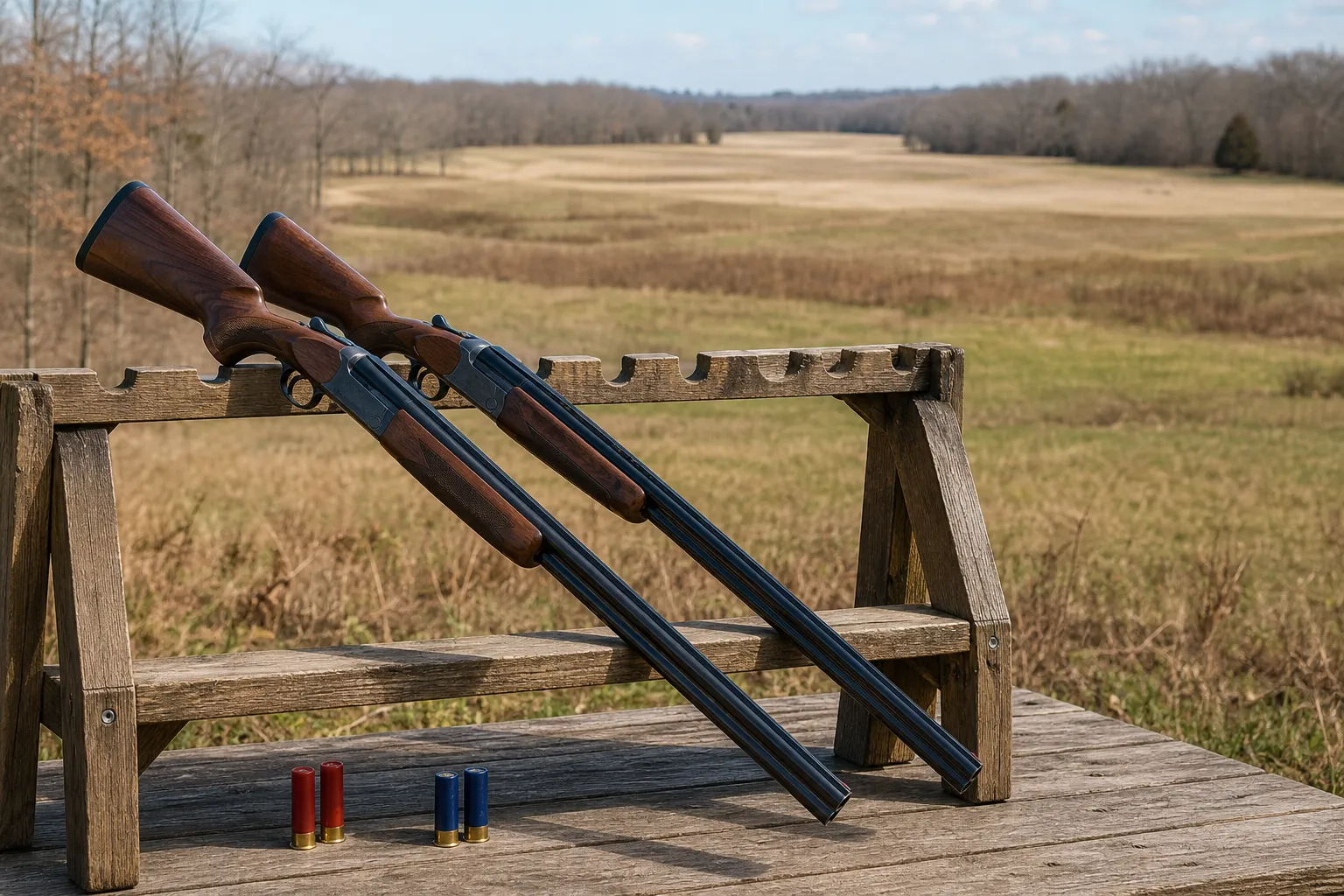
12 gauge vs 20 gauge comes down to bore size, payload, recoil and the job you want the shotgun to do. A 12 gauge has a larger SAAMI bore diameter callout than a 20 gauge, and the listed SAAMI slug and buckshot data shows heavier options in 12 gauge. A 20 gauge is smaller and has listed lighter 2¾ inch lead shot charges, so it is often attractive when lighter shot charges are the priority.
What gauge means
SAAMI defines gauge as the common shotgun bore identification system, related to the “number of bore diameter lead balls weighing one pound.” In this system, the smaller gauge number means the larger bore. That is why 12 gauge is larger than 20 gauge.
SAAMI’s smooth bore chamber drawings list the 12 gauge bore diameter callout as .725 inch plus .020 inch, or 18.42 mm plus 0.51 mm. The 20 gauge drawing lists .615 inch plus .020 inch, or 15.62 mm plus 0.51 mm.
| Comparison point | 12 gauge | 20 gauge | |, -|, -:|, -:| | SAAMI bore diameter callout | .725 inch plus .020 inch | .615 inch plus .020 inch | | SAAMI metric callout | 18.42 mm plus 0.51 mm | 15.62 mm plus 0.51 mm | | SAAMI listed nominal shell lengths | 2¾ inch, 3 inch, 3½ inch | 2¾ inch, 3 inch | | SAAMI metric shell names | 70 mm, 76 mm, 89 mm | 70 mm, 76 mm |
SAAMI also reserves yellow hull or body tube color for 20 gauge ammunition and says yellow is not to be used for other shotshell gauges or bores. That color convention is useful to know, but it is not a substitute for reading the barrel marking and the ammunition box.
Shell length and safety
Browning warns shotgun users to use only shells of the correct gauge and length, and not to use ammunition other than what is inscribed on the barrel. That matters with both 12 and 20 gauge because SAAMI lists multiple shell lengths for each gauge.
Browning also specifically warns against putting a 20 gauge shell in a 12 gauge shotgun. For a beginner, this is one of the most important safety differences to remember: never mix shells by gauge, and never rely on color or appearance alone.
Before using any load, match three things:
- The gauge on the shell to the gauge marked on the shotgun.
- The shell length to the length marked for that shotgun.
- The load type to the manufacturer’s instructions for that firearm and choke system.
Payloads: where 12 gauge usually has the advantage
The clearest technical difference is payload capacity. SAAMI includes 12 gauge 3 inch and 3½ inch entries with heavier payloads than the listed 20 gauge lead shot entries, including a 3½ inch 12 gauge entry at 2¼ ounces.
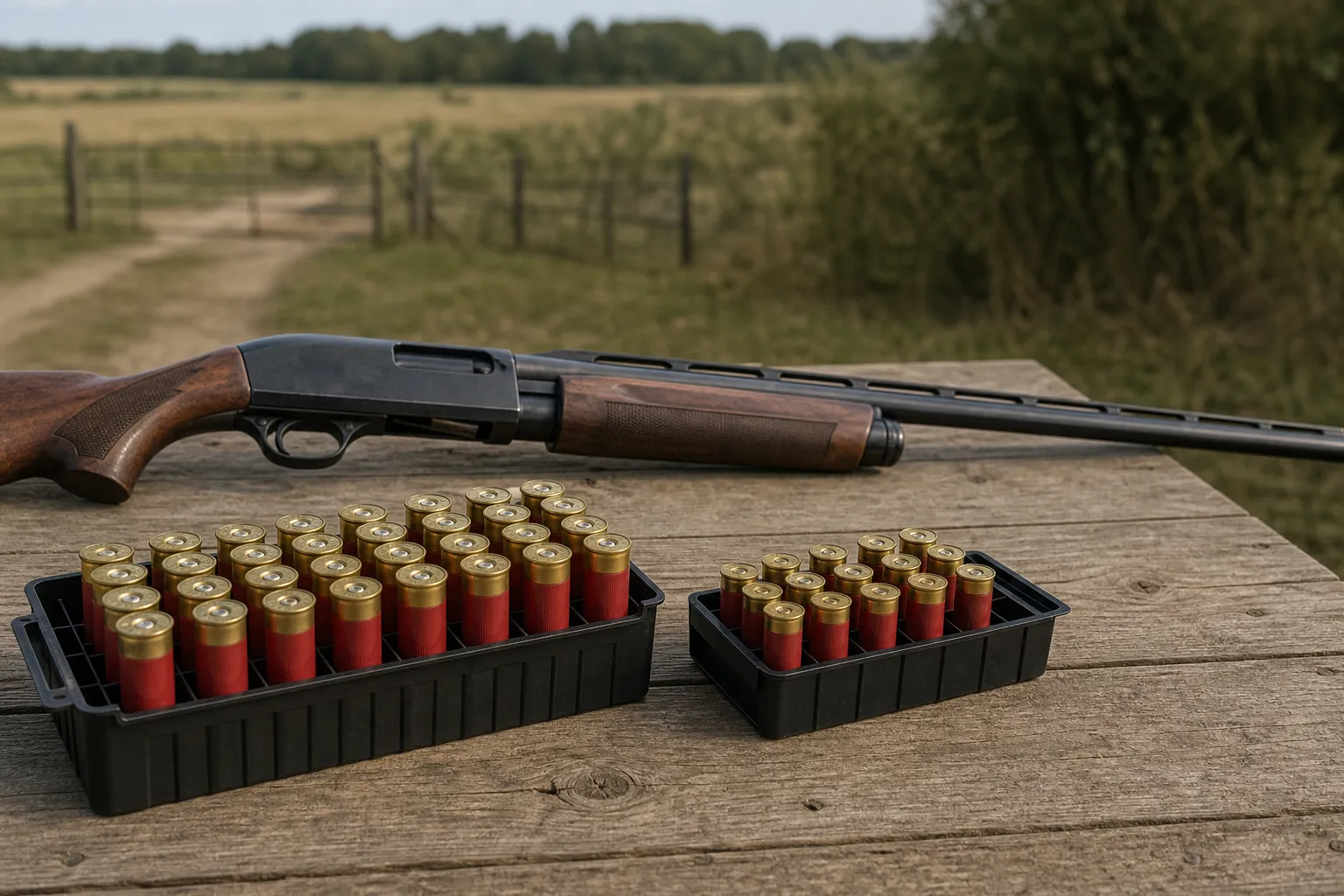
For 20 gauge, SAAMI lists 2¾ inch lead shot entries including 22 gram, ¾ ounce, ⅞ ounce, 1 ounce and 1⅛ ounce loads.
Federal’s 2026 Black Cloud table includes a 12 gauge 3½ inch waterfowl load at 1500 fps with a 1½ ounce payload.
The practical takeaway is simple: 12 gauge is the stronger choice when maximum payload and the broadest heavy load options matter. 20 gauge is the more obvious comparison point when lighter shot charges are enough for the use.
Recoil is not determined by gauge alone
It is tempting to say 20 gauge always recoils less than 12 gauge, but SAAMI’s recoil data does not support gauge alone as the answer. SAAMI describes free recoil by conservation of momentum, and its formula uses firearm weight, ejecta weight, ejecta velocity, propellant gas weight and propellant gas velocity.
SAAMI also says felt or perceived recoil can vary with recoil pads, damping devices and action type. In plain English, a light gun with a fast or heavy load can feel sharp, while another shotgun in the same gauge may feel different because the firearm, load and recoil system are different.
For choosing between 12 and 20 gauge, compare the actual load and the actual shotgun, not just the gauge name. The payload listed on the ammunition box affects the recoil calculation, but firearm weight and design also matter.
Chokes, shot size and patterning
SAAMI defines choke as a muzzle end constriction used for controlling shot dispersion. SAAMI defines shot size as a pellet diameter designation and gives a formula for numerical shot sizes. These details matter because a 12 or 20 gauge shotgun is not judged only by shell size. It is judged by the pattern it puts on target with a specific shell and choke.
Browning also notes that 12 and 20 gauge Citori shotguns use an interchangeable choke tube system as part of its Total Barrel Dynamics package.
The practical rule is to pattern the shotgun with the exact ammunition and choke you plan to use. Do not assume that two shotguns, or two gauges, will print the same pattern just because the shell box lists the same shot size.
Waterfowl
For waterfowl, payload, pattern, shot material and regulations matter. Federal’s 2026 Black Cloud data includes a 12 gauge 3½ inch 1½ ounce steel load.

Regulations are also central. The U.S. Fish and Wildlife Service, in its December 2021 information for waterfowl hunters, states that waterfowl hunters may not possess shot other than approved non-toxic shot while hunting waterfowl.
For either gauge, confirm current rules with the responsible wildlife agency, then match the gauge, shell length, shot material and choke to the shotgun and the regulation.
Upland birds
The ledger supports a simple comparison for upland use: 20 gauge has many listed lighter lead shot options, while 12 gauge reaches into heavier payloads. SAAMI lists 20 gauge 2¾ inch lead shot entries such as ¾ ounce, ⅞ ounce, 1 ounce and 1⅛ ounce.
A hunter who wants lighter shot charges may find 20 gauge attractive. A hunter who wants the heavier payload options shown in the SAAMI data may lean toward 12 gauge. The best choice still depends on the bird, the range, the choke, the pattern and the rules where you hunt.
Turkey
Turkey hunters should not assume every turkey load is right for every shotgun. Pattern the exact shell and choke combination before relying on it in the field.
Deer slugs and buckshot
SAAMI’s rifled slug data includes 12 gauge 2¾ inch smooth bore slug loads with 1 ounce and heavier slug weight entries. For 20 gauge, SAAMI’s rifled slug data includes 2¾ inch smooth bore slug loads with ½, ⅝, ¾ and ⅞ ounce entries, plus a 3 inch ¾ ounce entry.
SAAMI’s buckshot table also shows broader heavy buckshot representation in 12 gauge, including 000, 00, 0, 1 and 4 buckshot in 2¾ inch or 3 inch shells. SAAMI includes 20 gauge buckshot entries too, including 20 gauge 2¾ inch No. 3 buckshot with 20 pellets and 20 gauge 3 inch No. 2 buckshot with 18 pellets.
For deer hunting, do not assume a gauge or load is allowed in your area. Confirm the current hunting regulation for the state, province or specific hunting unit, and sight in or pattern the exact slug or buckshot load in the shotgun you will use.
Clay sports and target shooting
For a new clay shooter, compare the actual payload and velocity on the ammunition box rather than relying on gauge alone. Recoil still depends on the complete firearm and load system, as SAAMI’s recoil formula makes clear.
How to choose between 12 gauge and 20 gauge
Choose 12 gauge if your priority is the largest set of heavier payload options shown in SAAMI data. It is the stronger fit in this comparison for maximum payload and broader SAAMI listed buckshot and slug entries.
Choose 20 gauge if your priority is a smaller bore with many lighter listed shot charges. SAAMI lists 20 gauge 2¾ inch lead shot entries down to 22 gram and ¾ ounce.
Use this checklist before buying ammunition or choosing a shotgun:
- Read the gauge and shell length marked on the shotgun barrel.
- Use only the correct gauge and shell length, as Browning warns.
- Never put a 20 gauge shell in a 12 gauge shotgun.
- Compare the actual payload and velocity on the ammunition box.
- Pattern shotshell loads with the choke you plan to use.
- Sight in slug loads in the exact shotgun.
- For waterfowl and migratory birds, confirm current non-toxic shot rules with the official agency.
Open questions to check before deciding
The fact ledger does not include manufacturer weight data for specific 12 and 20 gauge shotgun models. Since SAAMI’s recoil formula includes firearm weight, compare the actual listed weights from the shotgun maker when you narrow your choice.
The ledger also does not include current state, provincial or unit specific hunting rules for deer, turkey, upland birds or waterfowl. Confirm season rules, allowed methods, ammunition restrictions and non-toxic shot requirements with the responsible agency before hunting.
Frequently asked questions
Is 12 gauge bigger than 20 gauge?
Yes. SAAMI’s chamber drawings list the 12 gauge bore diameter callout as .725 inch plus .020 inch, while 20 gauge is .615 inch plus .020 inch. In the gauge system, the smaller number means the larger bore.
Does 12 gauge always recoil more than 20 gauge?
Not by gauge alone. SAAMI’s recoil formula uses firearm weight, ejecta weight, ejecta velocity, propellant gas weight and propellant gas velocity. SAAMI also notes that felt recoil can vary with recoil pads, damping devices and action type.
What shell lengths are listed for 12 and 20 gauge?
SAAMI lists 12 gauge shotshell full names in 2¾ inch, 3 inch and 3½ inch nominal lengths. SAAMI lists 20 gauge in 2¾ inch and 3 inch nominal lengths.
Can I use 20 gauge shells in a 12 gauge shotgun?
No. Browning specifically warns against putting a 20 gauge shell in a 12 gauge shotgun, and also warns users to use only shells of the correct gauge and length.
Do both 12 and 20 gauge work with chokes?
Yes, choke systems exist for both. Browning states that 12 and 20 gauge Citori shotguns use an interchangeable choke tube system, and SAAMI defines choke as a muzzle end constriction used to control shot dispersion.
Sources
- GAUGE, SAAMIOfficial source. Accessed October 20, 2026.
- SHOT SIZE, SAAMIOfficial source. Accessed October 20, 2026.
- CHOKE, SAAMIOfficial source. Accessed October 20, 2026.
- SAAMI Z299.2: Voluntary Industry Performance Standards for Pressure and Velocity of Shotshell Ammunition, SAAMIOfficial source. Accessed October 20, 2026.
- Gun Recoil, Technical, Free Recoil Energy, SAAMIOfficial source. Accessed October 20, 2026.
- Federal 2026 Catalog, Shotshell Load Data, Federal PremiumOfficial source. Accessed October 20, 2026.
- Federal 2023 Catalog, Shotshell Load Data, Federal PremiumOfficial source. Accessed October 20, 2026.
- Shotgun Choke Tube Identification, BrowningOfficial source. Accessed October 20, 2026.
- BPS Shotgun Owner’s Manual, BrowningOfficial source. Accessed October 20, 2026.
- BPS Shotgun Owner’s Manual PDF, BrowningOfficial source. Accessed October 20, 2026.
- Information for Waterfowl Hunters, U.S. Fish and Wildlife ServiceOfficial source. Accessed October 20, 2026.
- Migratory Birds Regulations, 2022, Section 38, Government of Canada, Justice Laws WebsiteOfficial source. Accessed October 20, 2026.
- Winchester Announces Long Beard TSS Ammunition, Winchester AmmunitionOfficial source. Accessed October 20, 2026.
- Citori Over & Under Shotgun Overview, BrowningOfficial source. Accessed October 20, 2026.