Pump-Action Rifles Explained: How Slide-Action Rifles Work
Pump-action rifles, also called slide-action or trombone-action rifles, use a movable fore-end to operate the bolt. They exist in both rimfire and centerfire forms, but major references describe the action as much more common in shotguns than in rifles.
By RaiS. Reviewed by RaiS. Published . 6 min read.
Research and drafting were assisted by AI. RaiS checked the facts against the sources below and approved this page.
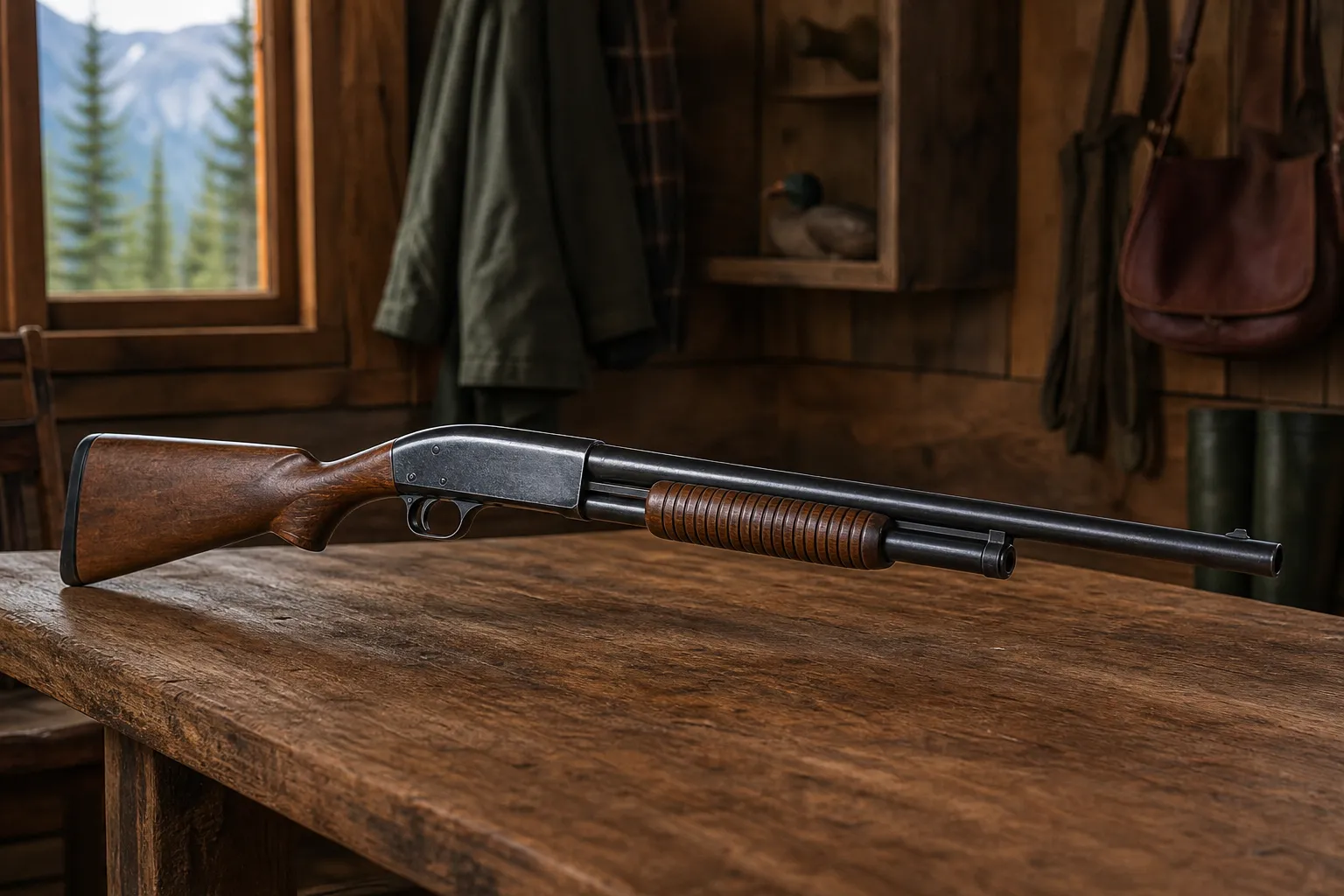
A pump-action rifle, also called a slide-action or trombone-action rifle, is a rifle operated by moving the fore-end back and forward in line with the barrel. SAAMI defines pump action as a manually actuated movable fore-end that transmits motion to the breech bolt assembly for loading and extracting. If you already understand a pump shotgun, the hand motion will feel familiar, but rifle examples include both rimfire and centerfire designs, with tube magazines on some models and detachable magazines on others.
Pump action, slide action, and trombone action mean the same basic thing
SAAMI lists “slide action,” “trombone action,” and “pump gun” as alternate names for pump action. The common feature is the movable fore-end. Instead of lifting and turning a bolt handle, as on many bolt-action rifles, the shooter moves the fore-end generally parallel to the barrel.
That fore-end movement is connected to the breech bolt assembly. SAAMI describes the system as one that transmits motion to the breech bolt assembly for loading and extracting. In plain terms, the pump handle is not just a handhold. It is the manual control that opens and closes the action.
The Congressional Research Service describes pump operation as sliding the handguard rearward to eject a used cartridge, then pushing it forward to load a new cartridge into the chamber. Texas Parks and Wildlife gives a similar hunter education description: pulling the forend rearward opens the action after firing, ejects the spent cartridge, and cocks the hammer, while sliding the forend forward to the locked position loads the next round into the chamber.
The pump-action rifle cycle, step by step
The National Institute of Justice lists the full cycle of fire as feeding, chambering, locking, firing, obturation, unlocking, extraction, ejection, and cocking. A pump rifle uses the shooter’s fore-end movement to perform the manual parts of that cycle.
A useful way to picture it is to start with the action closed and locked. NIJ defines locking as the breech bolt mechanism securing the cartridge in the barrel before firing.
After firing, the rearward pump stroke opens the action. Texas Parks and Wildlife states that pulling the forend back after firing opens the action, ejects the spent cartridge from the chamber, and cocks the hammer. NIJ describes unlocking as the reverse of locking and notes that it is frequently performed together with extraction.
As the action continues rearward, the fired case is ejected. NIJ describes ejection as the case rotating on the extractor while the case base is contacted by the ejector, which flips the case out of the mechanism.
The forward pump stroke loads the next cartridge. NIJ defines feeding as inserting cartridges into the chamber, with the breech bolt pushing the cartridge into final position.
The cycle ends with the bolt closed or locked for the next shot. Texas Parks and Wildlife describes the forward movement as sliding the forend forward to its locked position.
A pump rifle is still manually operated because the shooter moves the fore-end to cycle the action. That distinguishes pump rifle operation from a semi-automatic firing cycle.
What carries over from pump shotguns
The basic motion carries over from pump shotguns: rearward to open the action after firing, forward to load and close. The Congressional Research Service describes that handguard motion for pump action, and Texas Parks and Wildlife describes the same rearward and forward forend movement in hunter education material.
The main difference for rifle readers is not the hand motion. It is the variety of rifle examples. Some historic slide-action rifles used tube magazines. The NRA Museums entry for the Colt Lightning describes it as a slide-action rifle with a 15-round tube magazine.
Rimfire pump-action rifle examples
Pump rifles have a long rimfire history. Winchester’s historical timeline says the Model 1890 pump-action .22 rimfire rifle was introduced in 1890 with the .22 Winchester Rim Fire cartridge. Browning’s historical timeline says a patent for a .22 pump-action repeating rifle was filed on December 13, 1887, and that it was first marketed as the Winchester Model 1890.
| Rifle | What the official or museum record says |
|---|---|
| Winchester Model 1890 | Winchester says the Model 1890 pump-action .22 rimfire rifle was introduced in 1890. |
This example shows why the terms overlap. Winchester uses “pump-action” in the cited materials. SAAMI treats “slide action” and “trombone action” as alternate names for the same action type.
Centerfire pump-action rifle examples
Pump rifles also exist in centerfire form.
| Rifle | What the official, museum, or reference record says |
|---|---|
| Colt Lightning | The NRA Museums entry says Colt introduced its slide-action Lightning design in 1884 and describes it as having a 15-round tube magazine. |
| Remington Model 760 | American Rifleman reports that the Model 760 appeared in Remington’s 1952 consumer catalog in .30-06 Springfield.300 Savage, and .35 Remington. |
| Remington Model 7600 | American Rifleman reports that the Model 760 was discontinued on December 31, 1980, with the introduction of the Models Six and 7600. |
American Rifleman describes one change from the Model 760 to the 7600 as a simpler bolt with four lugs instead of nineteen. That is a model-specific design note, not a rule for all pump rifles.
Why pump rifles are less common than other rifle actions
SAAMI states that pump action is prevalent in shotguns and found to a lesser extent in rifles. The Congressional Research Service similarly states that pump action is traditionally used for shotguns, while bolt action is traditionally used for rifles.
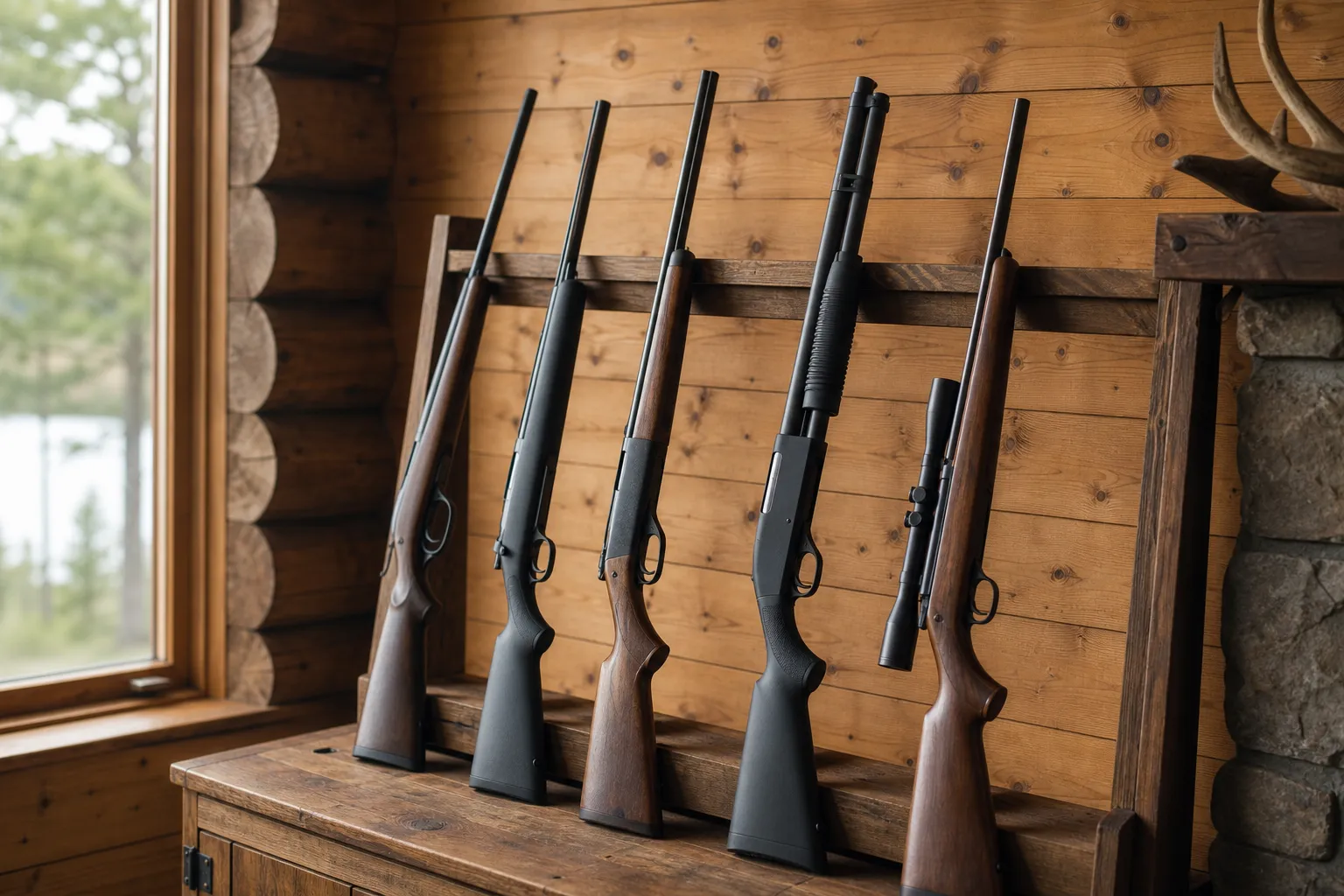
Oklahoma’s 2025 hunter education manual gives the same broad pattern in beginner terms. It says pump action is more commonly seen in shotguns than in any other type of firearm. The same manual says bolt action is most often seen in rifles and that semi-automatic action is very popular in both rifles and shotguns.
So the short answer is that pump rifles are real, established designs, but basic firearms references place pump action mainly in the shotgun category, while bolt action is identified as the traditional rifle action and semi-automatic action is described as very popular in both rifles and shotguns. Pump rifles sit between those familiar categories: manually operated like a bolt rifle, but cycled by the fore-end motion many readers associate with pump shotguns.
Pump rifle terms to know
A few terms make the action easier to follow.
- Fore-end or forend: the movable front handpiece. SAAMI’s definition centers on the movable fore-end.
- Feeding: NIJ defines feeding as inserting cartridges into the chamber, with the breech bolt pushing the cartridge into final position.
- Chambering: NIJ lists chambering as part of the cycle of fire.
- Locking: NIJ defines locking as the breech bolt mechanism securing the cartridge in the barrel before firing.
- Unlocking: NIJ describes unlocking as the reverse of locking and says it is frequently performed with extraction.
- Ejection: NIJ describes the case being flipped out by contact with the ejector while rotating on the extractor.
For ammunition terminology, pump rifles can be rimfire or centerfire depending on the model. Winchester’s Model 1890 is a rimfire example in the materials above, while American Rifleman’s Model 760 discussion lists centerfire chamberings such as .30-06 Springfield.300 Savage, and .35 Remington. For the basic cartridge difference, see rimfire vs centerfire ammunition.
What to check on a specific pump rifle
Check the manufacturer’s manual for the exact model, because model-specific documents give the operating language for their own rifles.
For hunting or transport, confirm current rules with the wildlife agency or legal authority for the place and date involved. For use and maintenance, follow the current manufacturer’s manual for that exact firearm and ammunition marking.
Frequently asked questions
Is a pump-action rifle the same thing as a slide-action rifle?
Yes. SAAMI lists slide action, trombone action, and pump gun as alternate names for pump action.
How does a pump-action rifle cycle?
The rearward fore-end stroke opens the action after firing, ejects the spent cartridge, and cocks the action in the hunter education description. The forward stroke feeds and chambers the next cartridge and returns the action to the closed or locked position.
Are pump rifles only rimfire rifles?
No. Winchester’s Model 1890 is a .22 rimfire example, and American Rifleman’s Model 760 discussion lists centerfire chamberings such as .30-06 Springfield.300 Savage, and .35 Remington.
Why are pump rifles less common than pump shotguns?
SAAMI states that pump action is prevalent in shotguns and found to a lesser extent in rifles. The Congressional Research Service says pump action is traditionally used for shotguns, while bolt action is traditionally used for rifles.
What is a well-known early pump-action .22 rifle?
Winchester’s historical timeline says the Model 1890 pump-action .22 rimfire rifle was introduced in 1890.
Sources
- SAAMI Glossary, Pump Action, Sporting Arms and Ammunition Manufacturers’ InstituteOfficial source. Accessed November 5, 2026.
- Firearms Examiner Training, Cycle of Fire Steps, National Institute of JusticeOfficial source. Accessed November 5, 2026.
- Firearms: Frequently Asked Questions, Congressional Research ServiceOfficial source. Accessed November 5, 2026.
- Common Firearms, Texas Parks and Wildlife DepartmentOfficial source. Accessed November 5, 2026.
- 2025 Hunter Education Manual, Oklahoma Department of Wildlife ConservationOfficial source. Accessed November 5, 2026.
- Model 7600 Pump Action Centerfire Rifle Owner’s Manual, RemingtonOfficial source. Accessed November 5, 2026.
- Model 760 Repeating Rifle Historical Owner’s Manual, RemingtonOfficial source. Accessed November 5, 2026.
- Models 552 and 572 Owner’s Manual, RemingtonOfficial source. Accessed November 5, 2026.
- Henry H003 Series User Manual, Henry Repeating ArmsOfficial source. Accessed November 5, 2026.
- Pump Action .22 Instruction Manual, Henry Repeating ArmsOfficial source. Accessed November 5, 2026.
- Historical Timeline 1860-1899, Winchester Repeating ArmsOfficial source. Accessed November 5, 2026.
- Winchester Model 1890 Slide Action Rimfire Rifle, National Museum of American History, Smithsonian InstitutionOfficial source. Accessed November 5, 2026.
- Colt Lightning Slide Action Rifle Medium Frame, NRA Museums. Accessed November 5, 2026.
- Colt Lightning Slide Action Rifle, Small Frame, National Museum of American History, Smithsonian InstitutionOfficial source. Accessed November 5, 2026.
- Model 14, RemingtonOfficial source. Accessed November 5, 2026.
- Remington’s Pump Rifles: Models 760 & 7600, American Rifleman. Accessed November 5, 2026.
- Historic Timeline, BrowningOfficial source. Accessed November 5, 2026.
- FN Browning Trombone Slide Action Rimfire Rifle, National Museum of American History, Smithsonian InstitutionOfficial source. Accessed November 5, 2026.