What Is a Prism Scope? How It Differs from a Red Dot
A prism scope is a compact fixed power optic that commonly uses an etched reticle. It differs from a red dot mainly in reticle design, eye relief and, in many models, magnification.
By RaiS. Reviewed by RaiS. Published . 6 min read.
Research and drafting were assisted by AI. RaiS checked the facts against the sources below and approved this page.
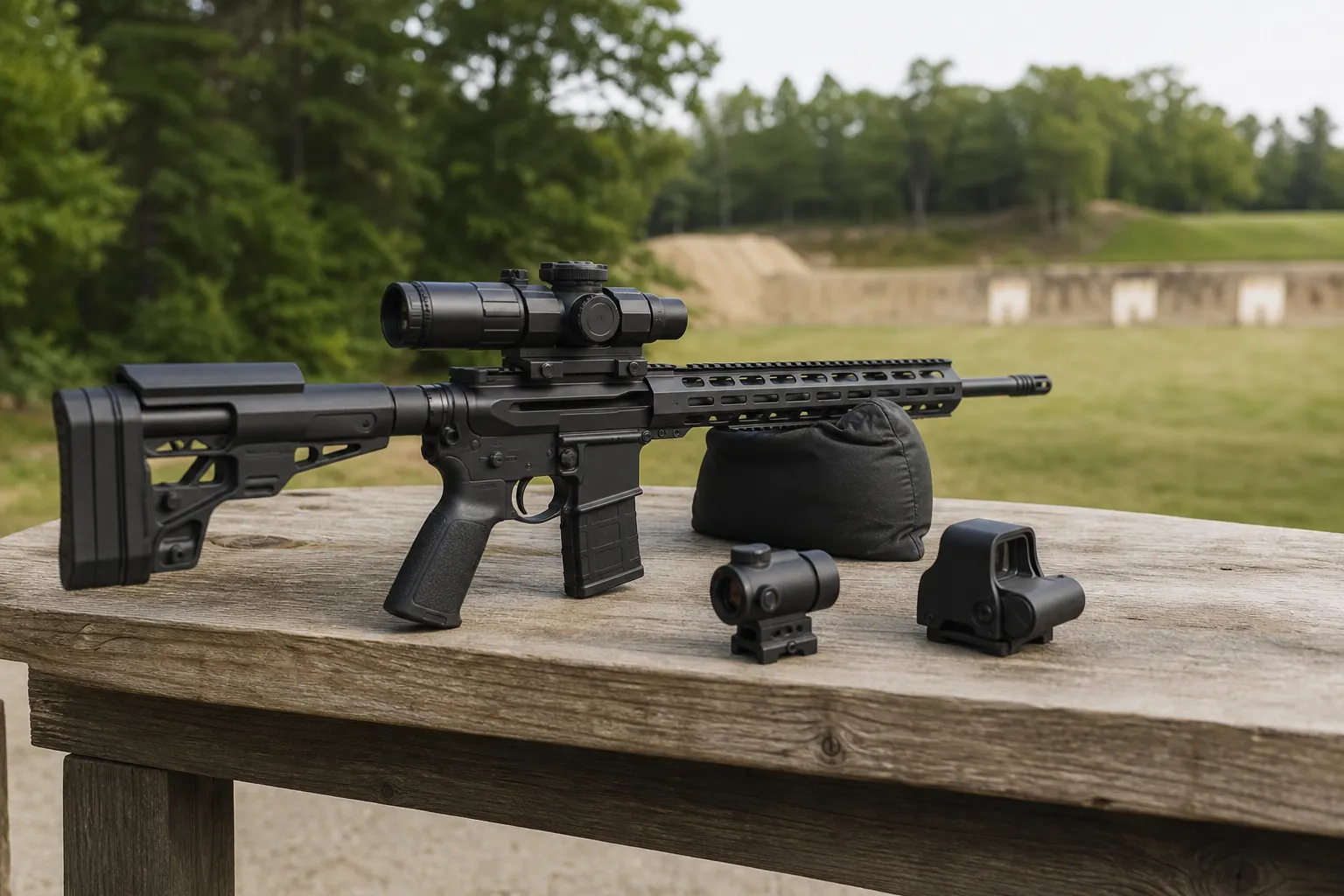
A prism scope is a compact sighting optic commonly offered as a fixed power sight. The big difference from a red dot is the aiming system: a prism scope commonly uses an etched reticle that can remain visible without illumination, while a red dot sight uses an LED dot seen inside the sight.
For many shooters comparing compact optics, the choice comes down to speed, eye relief, reticle clarity and whether they want fixed magnification. Red dots are widely valued for unlimited eye relief and fast target acquisition, according to Vortex. Prism scopes trade some of that red-dot simplicity for an etched reticle and fixed-power options such as 1x and 5x.
What a prism scope is
Vortex describes prism scopes as fixed-power optics, meaning the magnification is not variable.
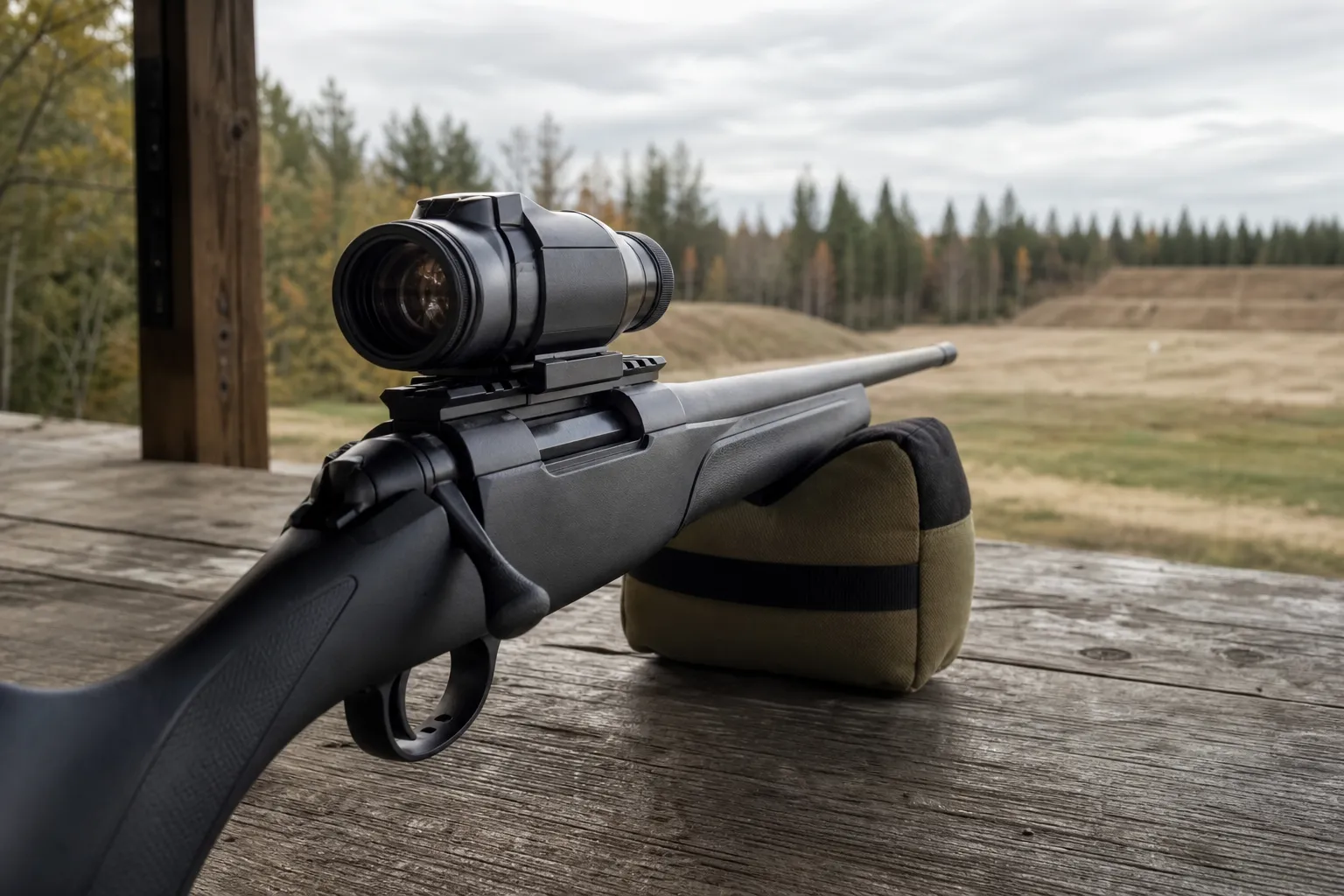
That fixed-power point is important. Prism scopes are not low-power variable optics. They are compact fixed-magnification sights, with examples in the fact sheets and manuals from optics makers including 1x and 5x models.
Here are examples from manufacturer documentation:
| Example magnification | Manufacturer fact |
|---|---|
| 1x | Vortex lists a 1x prism scope with 1x magnification and an etched reticle. |
| 5x | Vortex lists a 5x prism scope with 5x magnification. |
The other defining feature is the etched reticle. In a prism scope, the aiming pattern can be etched into glass. Vortex says prism scopes with etched reticles provide a point of aim even if the battery fails, and also says an etched-reticle prism scope provides a point of aim without power.
Illumination is still useful. Primary Arms says illumination adds contrast and can make the aiming point easier to see against a dark background. The key distinction is that illumination is not the same thing as the reticle itself. On an etched-reticle prism scope, the reticle can still be there when illumination is off.
How the sight picture works
A prism scope is not usually viewed the same way as a red dot. It has a sight picture that depends more on head position and eye relief.
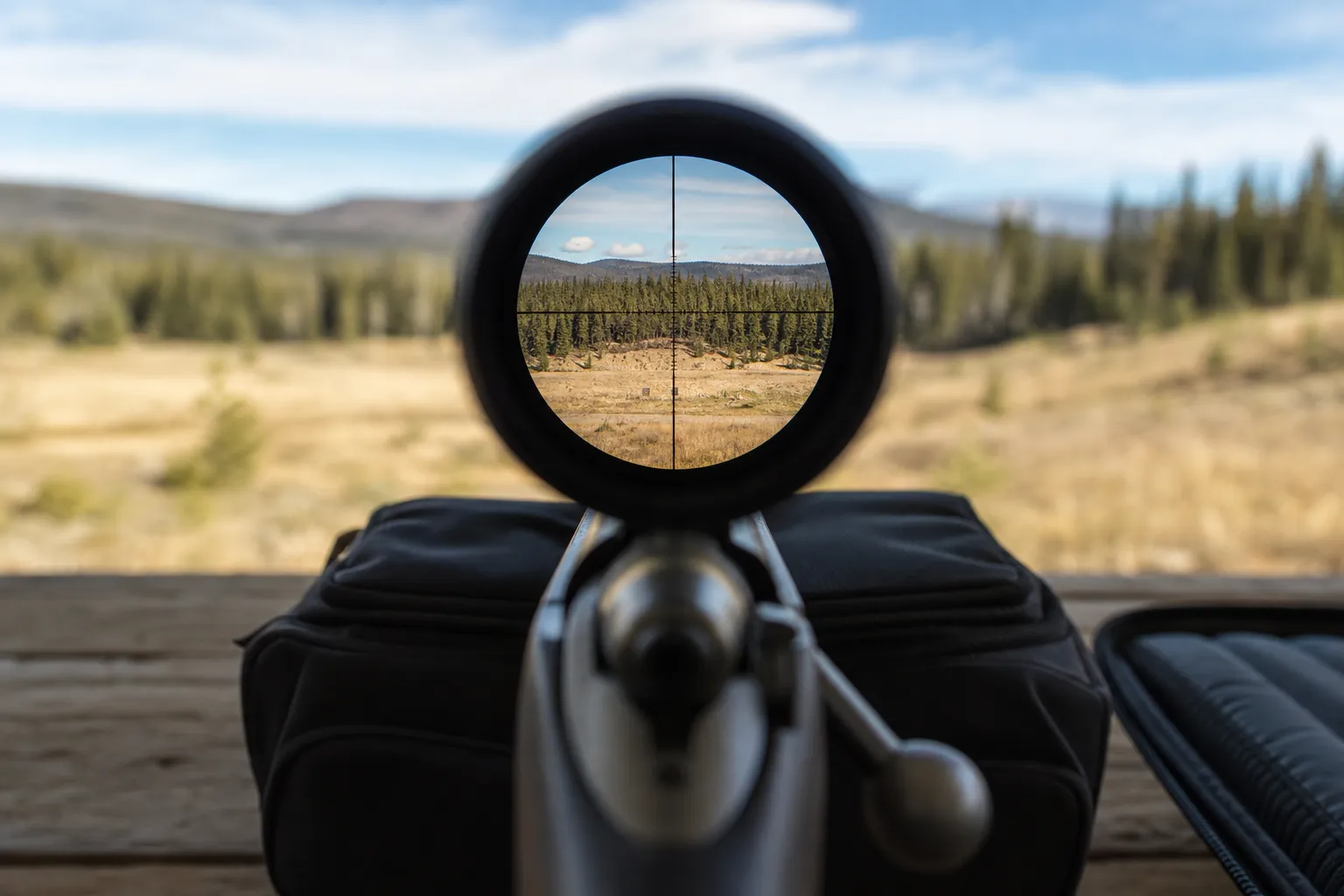
Eye relief is the distance from the optic to the shooter’s eye where the sight picture is usable. Manufacturer specs show that many prism scopes have a listed eye relief distance rather than the unlimited eye relief commonly associated with red dots. Vortex lists a 1x prism scope with 3.8 inches of eye relief. Vortex lists a 5x prism scope with 2.7 inches of eye relief.
That is why the best way to compare prism scopes is to read the actual manual or specification sheet for the model you are considering, rather than assuming all prism optics behave the same.
A prism scope may also have a diopter.
That diopter is one of the main practical differences between prism scopes and many red dot sights. Instead of only seeing an electronic dot, the shooter has an added adjustment on some prism optics, within the adjustment range and design of that optic.
Prism scope vs red dot
A red dot sight is a 1x electronic reflex sight. Aimpoint says a red dot sight uses an LED, and that the dot is not projected onto the target. It is seen inside the sight by the shooter.
Vortex contrasts red dots with prism scopes by saying red dots offer unlimited eye relief, fast target acquisition and a wide field of view. That is the main appeal of a red dot: it gives a simple illuminated aiming point and is commonly chosen when speed and head-position forgiveness matter most.
A prism scope is different because the aiming pattern is etched. Vortex says prism scopes with etched reticles always provide a point of aim, even if the battery fails.
That does not mean a prism scope is automatically better. It means it solves a different problem. A red dot gives a simple LED aiming point and, according to Vortex, unlimited eye relief. A prism scope gives an etched reticle, often a diopter and, depending on the model, fixed magnification.
| Feature | Prism scope | Red dot sight |
|---|---|---|
| Magnification | Fixed power, with examples including 1x and 5x | 1x electronic sight category |
| Reticle or aiming point | Etched reticle on many models | LED dot seen inside the sight, according to Aimpoint |
| Battery effect | Vortex says etched prism reticles provide a point of aim without power | Vortex says co-witnessed iron sights can be used if a red dot battery fails |
| Eye relief | Often listed in inches, depending on model | Vortex says red dots offer unlimited eye relief |
For a broader comparison of the two main 1x electronic sight types, see ProjectGuns’ Red Dot vs Holographic Sight comparison.
Prism scope vs holographic sight
A holographic sight is not a prism scope. EOTECH describes its HWS optics as using advanced holography, not LED projection, to deliver the sight picture.
EOTECH also says HWS holographic optics let the user view the reticle and target simultaneously for quicker, more intuitive target acquisition. In one EOTECH example, the company describes a 68 MOA speed ring with a 1 MOA dot as a reticle intended for fast target acquisition and multiple aiming points.
The important distinction is how the sight generates the aiming image. Aimpoint says a red dot sight uses an LED and the dot is seen inside the sight. EOTECH says its HWS uses holography rather than LED projection. A prism scope, by contrast, commonly uses an etched reticle.
EOTECH also cautions against a common oversimplification about parallax. It says red dot sights and holographic sights are not truly parallax free, and that every optic will have some degree of parallax. EOTECH says most red dots and holographic sights are focused where parallax is minimized, and that parallax is typically more pronounced at close range.
Why prism scopes can help some shooters with astigmatism
The National Eye Institute defines astigmatism as a common eye problem that can make vision blurry or distorted when the cornea or lens has a different shape than normal.
That matters in optics discussions because several manufacturers specifically discuss prism scopes in relation to astigmatism. Vortex says prism scopes are a great solution for shooters with astigmatism.
The careful way to say this is: a prism scope is not medical correction, and it does not diagnose an eye condition. What it can offer is an etched reticle and, on some models, a diopter. That is why optics makers such as Vortex discuss prism scopes as helpful for shooters who have astigmatism.
If you see a red dot as a smear, starburst or distorted shape, do not assume you know the cause. The National Eye Institute says the only way to find out if you have astigmatism is to get an eye exam.
Which compact optic should you choose?
Choose a prism scope when you want a compact fixed-power optic with an etched reticle. It makes the most sense when you want the aiming pattern to remain visible without illumination and when a fixed magnification such as 1x or 5x fits your use.
Choose a red dot when you want the simplest 1x electronic aiming point. Vortex says red dots offer unlimited eye relief, fast target acquisition and a wide field of view. Aimpoint says the dot in a red dot sight is seen inside the sight and is not projected onto the target.
Choose a holographic sight when you want a 1x electronic sight based on holographic sight generation rather than LED projection. EOTECH says its HWS optics use holography, and it describes HWS reticles such as a 68 MOA ring with a 1 MOA dot for fast target acquisition and multiple aiming points.
The quick comparison is simple:
| If you want... | Look first at... |
|---|---|
| An etched reticle visible without illumination | Prism scope |
| Fixed magnification in a compact optic | Prism scope |
| Unlimited eye relief and a simple 1x electronic dot | Red dot |
| A holographically generated 1x reticle system | Holographic sight |
Before buying any optic, check the manufacturer’s current manual and specification sheet for that exact model. Confirm magnification, eye relief, reticle type, illumination behavior, diopter adjustment and mounting details. If your comparison is driven by blurry or distorted vision, the National Eye Institute says an eye exam is the only way to find out if you have astigmatism.
Frequently asked questions
What is a prism scope?
A prism scope is a compact fixed power optic. Many prism scopes use an etched reticle, which Vortex says can provide a point of aim even without power.
How is a prism scope different from a red dot?
A red dot sight uses an LED dot seen inside the sight, according to Aimpoint. A prism scope commonly uses an etched reticle and may have fixed magnification such as 1x or 5x.
Does a prism scope work without a battery?
The etched reticle on many prism scopes can remain visible without illumination. Vortex says etched-reticle prism scopes provide a point of aim even if the battery fails.
Are prism scopes better for astigmatism?
Vortex describes prism scopes as a solution for shooters with astigmatism. A prism scope is not medical correction, and the National Eye Institute says an eye exam is the only way to find out if you have astigmatism.
Is a holographic sight the same as a prism scope?
No. EOTECH describes its HWS optics as using holography rather than LED projection. A prism scope commonly uses an etched reticle.
Do prism scopes have unlimited eye relief?
Some manufacturer examples list specific eye relief distances, such as 3.8 inches or 2.7 inches. The exact answer depends on the model.
Sources
- GLx 2x Prism Scope Manual, Primary Arms OpticsOfficial source. Accessed October 25, 2026.
- GLx 1x MicroPrism Optic Manual, Primary Arms OpticsOfficial source. Accessed October 25, 2026.
- SLx 3x MicroPrism Scope Manual, Primary Arms OpticsOfficial source. Accessed October 25, 2026.
- SLx 5x MicroPrism Scope Manual, Primary Arms OpticsOfficial source. Accessed October 25, 2026.
- How To Pick the Perfect Optic for Your AR, Vortex OpticsOfficial source. Accessed October 25, 2026.
- Spitfire AR Prism Scope, Vortex OpticsOfficial source. Accessed October 25, 2026.
- Spitfire HD Gen II 5x Prism Scope, Vortex OpticsOfficial source. Accessed October 25, 2026.
- FAQ, AimpointOfficial source. Accessed October 25, 2026.
- Learn about Holographic Weapon Sights, EOTECHOfficial source. Accessed October 25, 2026.
- EOTECH HWS 558, EOTECHOfficial source. Accessed October 25, 2026.
- EOTECH Help Center, EOTECHOfficial source. Accessed October 25, 2026.
- Astigmatism, National Eye InstituteOfficial source. Accessed October 25, 2026.