How Fast Does a Bullet Travel? Muzzle Velocity Explained
Bullets do not have one speed. Published examples range from slow .22 LR loads below many common handgun examples to a .30-06 Springfield rifle load listed at 2,910 feet per second at the muzzle.
By RaiS. Reviewed by RaiS. Published . 5 min read.
Research and drafting were assisted by AI. RaiS checked the facts against the sources below and approved this page.
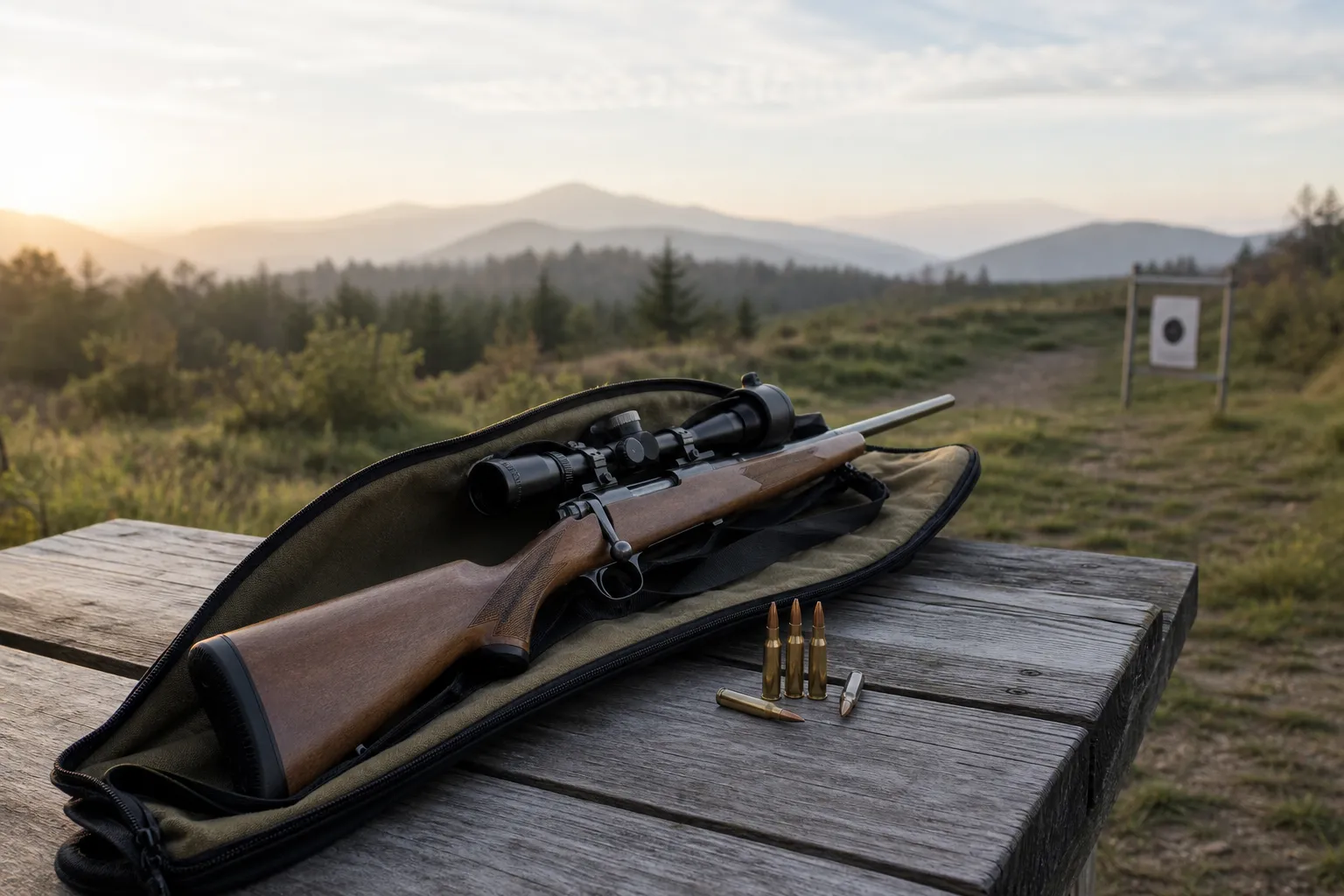
Bullets do not all travel at the same speed. In the published examples below, CCI lists a .22 LR Quiet-22 load at 710 feet per second (fps), while PPU lists a .30-06 Springfield 150 grain soft point rifle load at 2,910 fps at the muzzle. SAAMI defines muzzle velocity as the speed of a projectile as it exits the muzzle, and the actual number depends on the cartridge, bullet weight, barrel, chamber and test setup.
What muzzle velocity means
SAAMI defines muzzle velocity as the velocity of a projectile as it exits the muzzle of a firearm. SAAMI also defines the muzzle as the end of the barrel from which the bullet or shot emerges.
That sounds simple, but published velocity numbers need context. SAAMI also defines instrumental velocity as velocity recorded by instrumentation located a predetermined distance from the muzzle. In other words, a chronograph may be measuring the bullet a short distance in front of the firearm, not literally at the muzzle face.
Hornady says its published ammunition data comes from testing with SAAMI specification test barrels. Hornady also notes that individual firearm barrels and chambers can produce faster or slower velocities than the number printed on the box or listed in a table. Hornady states that most rifle test barrels are 24 inches long.
So the best beginner answer is this: muzzle velocity is a standardized way to compare ammunition, not a guarantee that every firearm will produce the exact same speed.
How bullet speed is measured
The National Institute of Justice describes a chronograph as a kind of electronic stopwatch for timing the speed of a bullet in flight, usually in feet per second.
Many chronographs use two sensors separated by a known distance. NIJ says that distance is typically two to four feet. The device records how long the bullet takes to pass from the first sensor to the second, then reports the bullet’s speed.
NIJ says the first sensor is normally placed eight to fifteen feet from the muzzle, depending on the manufacturer’s recommendation, to reduce the effects of muzzle blast and residue. SAAMI describes photoelectric screens as devices that detect bullets in flight and trigger a chronograph for time of flight or average velocity.
SAAMI’s public standards list separate pressure and velocity standards for rimfire ammunition, centerfire pistol and revolver ammunition, and centerfire rifle ammunition. SAAMI Z299.3-2022 is the centerfire pistol and revolver pressure and velocity standard, and SAAMI Z299.4-2025 is the centerfire rifle pressure and velocity standard.
For centerfire pistol and revolver procedures, SAAMI uses instrumental velocity at 15 feet from the muzzle unless direct reading equipment is used. SAAMI’s centerfire rifle procedures also state instrumental velocity at 15 feet from the muzzle unless direct reading equipment is used.
How fast common bullets travel
The table below uses published ammunition examples, not averages for every load in a cartridge family. A different bullet weight, product line, barrel or test method can change the listed speed.
| Cartridge and published load | Publisher | Muzzle velocity | Downrange velocity listed | Notes |
|---|---|---|---|---|
| .22 LR Quiet-22, 40 grain LRN | CCI 2021 catalog | 710 fps | A slow .22 LR example | |
| .22 LR Mini-Mag, 40 grain CPRN | CCI 2021 catalog | 1,235 fps | A higher speed .22 LR example | |
| .22 LR Stinger, 32 grain CPHP | CCI 2021 catalog | 1,640 fps | A fast .22 LR example | |
| 9mm Luger HST, 124 grain | Federal 2019 ballistics table | 1,150 fps | 977 fps at 100 yards | Federal lists a 4 inch test barrel |
| .40 S&W HST, 180 grain | Federal 2019 ballistics table | 1,010 fps | Federal lists a 4 inch test barrel | |
| .45 Auto HST, 230 grain | Federal 2019 ballistics table | 890 fps | Federal lists a 5 inch test barrel | |
| .30-06 Springfield SP, 150 grain | PPU | 2,910 fps | 2,145 fps at 300 yards | PPU published example |
These examples show why “how fast is a bullet?” has no single answer. A .22 LR load in the CCI examples can be listed at 710 fps, 1,235 fps or 1,640 fps depending on the product. The PPU .30-06 Springfield soft point example is listed at 2,910 fps at the muzzle.
Handgun examples in Federal’s 2019 table are generally lower than the faster rifle examples above. Federal lists a 124 grain 9mm Luger HST at 1,150 fps from a 4 inch test barrel, a 180 grain .40 S&W HST at 1,010 fps from a 4 inch test barrel, and a 230 grain .45 Auto HST at 890 fps from a 5 inch test barrel.
Why velocity drops downrange
Published ballistics tables show that bullets slow down as they travel. Federal’s 2019 table lists the 124 grain 9mm Luger HST at 1,150 fps at the muzzle and 977 fps at 100 yards.
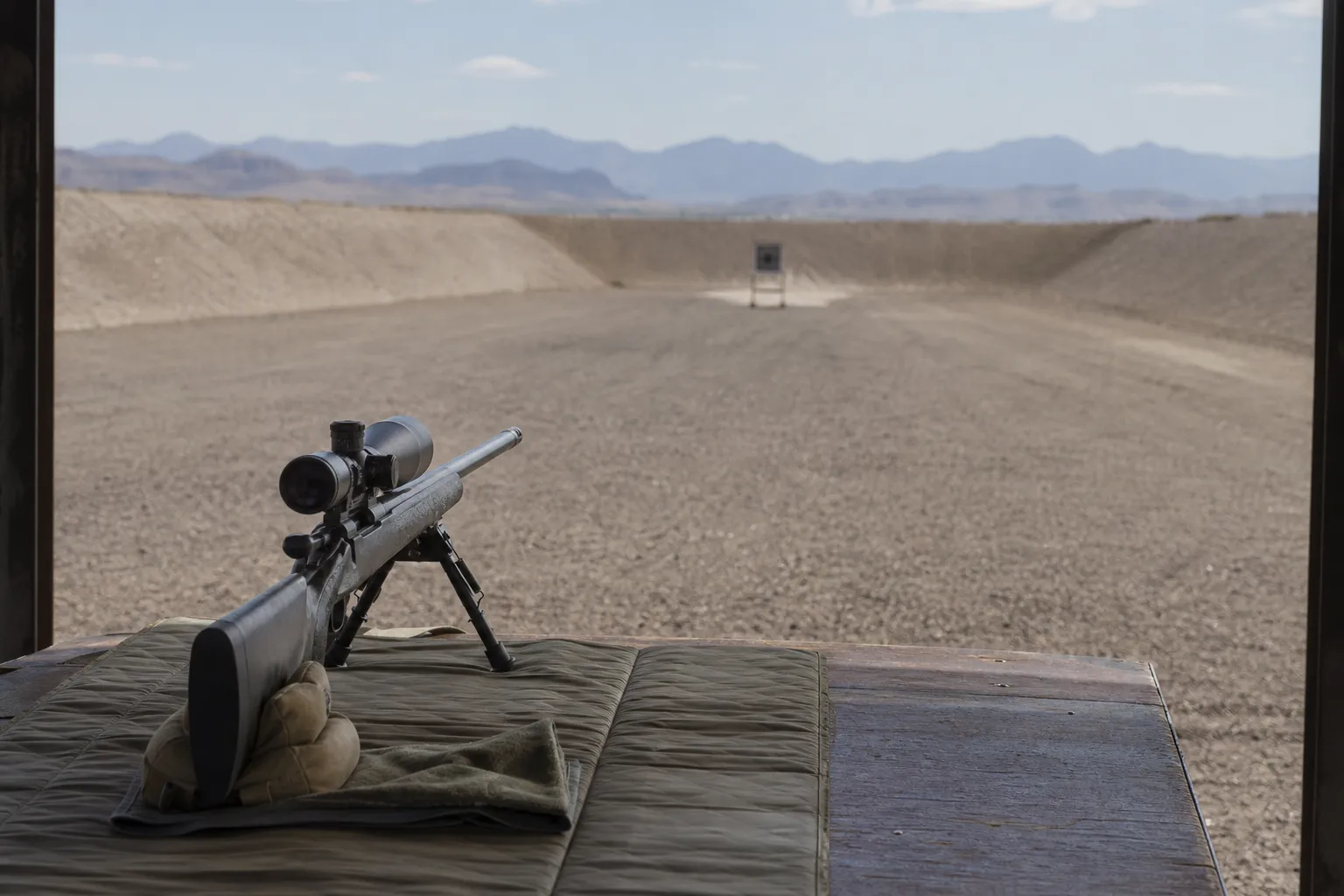
The same pattern appears in a larger rifle example. PPU lists a .30-06 Springfield 150 grain soft point at 2,910 fps at the muzzle and 2,145 fps at 300 yards.
For a deeper look at why some bullets keep speed better than others, see our Ballistic Coefficient guide. If your question is about maximum distance rather than speed at a listed range, see our How Far Can a Bullet Travel guide.
Supersonic versus subsonic bullets
“Supersonic” means faster than the speed of sound, while “subsonic” means below the speed of sound.
NOAA’s National Weather Service says air temperature is the key independent variable needed to calculate the speed of sound in air. That matters because a load near the speed of sound may compare differently depending on the air temperature used for the reference.
Hornady describes its Subsonic Ammunition as designed to perform below the speed of sound. Hornady’s 2025 International Catalog also warns that subsonic ammunition is reduced velocity ammunition and does not produce the same muzzle energy as conventional cartridges.
The published examples show the range involved. CCI lists .22 LR Quiet-22 at 710 fps. Federal’s 124 grain 9mm Luger HST example is listed at 1,150 fps, while CCI’s .22 LR Stinger is listed at 1,640 fps.
Subsonic does not mean silent. It describes the projectile’s speed compared with the speed of sound, not everything that happens when a firearm is fired.
What to check before comparing velocity numbers
When you compare ammunition, check the exact load, bullet weight and publisher’s test conditions. Hornady says SAAMI specification test barrels are used for its published data, and that individual firearm barrels and chambers can produce faster or slower velocities.
Also check whether a number is muzzle velocity or instrumental velocity. SAAMI distinguishes muzzle velocity from velocity recorded by instrumentation at a predetermined distance from the muzzle, and SAAMI centerfire pistol and rifle procedures use instrumental velocity at 15 feet unless direct reading equipment is used.
For the most current velocity figure, use the ammunition maker’s current ballistics table for the exact product. If your question involves hunting rules, firearm use, suppressors or transport, confirm the current rule with the responsible agency for your location.
Frequently asked questions
What is muzzle velocity?
SAAMI defines muzzle velocity as the speed of a projectile as it exits the muzzle of a firearm. SAAMI defines the muzzle as the end of the barrel from which the bullet or shot emerges.
How fast does a 9mm bullet travel?
Federal’s 2019 ballistics table lists one 124 grain 9mm Luger HST load at 1,150 fps at the muzzle from a 4 inch test barrel, dropping to 977 fps at 100 yards.
How fast does a .22 LR bullet travel?
CCI’s 2021 catalog lists different .22 LR loads at different speeds, including Quiet-22 at 710 fps, Mini-Mag 40 grain CPRN at 1,235 fps and Stinger at 1,640 fps.
How is bullet velocity measured?
NIJ describes a chronograph as an electronic stopwatch for timing bullet speed in flight. Many chronographs use two sensors separated by a known distance, commonly two to four feet, and report speed in feet per second.
Does bullet velocity stay the same downrange?
No. Published tables show velocity dropping with distance. Federal’s 2019 table lists the 124 grain 9mm Luger HST at 1,150 fps at the muzzle and 977 fps at 100 yards.
What counts as subsonic ammunition?
Hornady describes subsonic ammunition as designed to perform below the speed of sound. NOAA’s National Weather Service says air temperature is the key independent variable needed to calculate the speed of sound in air.
Sources
- SAAMI Glossary, Letter M, Sporting Arms and Ammunition Manufacturers' Institute. Accessed October 27, 2026.
- Instrumental Velocity, Sporting Arms and Ammunition Manufacturers' Institute. Accessed October 27, 2026.
- ANSI and SAAMI Standards, Sporting Arms and Ammunition Manufacturers' Institute. Accessed October 27, 2026.
- SAAMI Z299.3-2022, Centerfire Pistol and Revolver Ammunition, Sporting Arms and Ammunition Manufacturers' Institute. Accessed October 27, 2026.
- SAAMI Z299.4-2025, Centerfire Rifle Ammunition, Sporting Arms and Ammunition Manufacturers' Institute. Accessed October 27, 2026.
- Muzzle Velocity of Bullets, National Institute of JusticeOfficial source. Accessed October 27, 2026.
- Why does velocity differ from what’s listed on the ammo box?, Hornady ManufacturingOfficial source. Accessed October 27, 2026.
- 2021 CCI Catalog, CCI AmmunitionOfficial source. Accessed October 27, 2026.
- Federal 2019 Ballistics, Federal Premium AmmunitionOfficial source. Accessed October 27, 2026.
- 2026 Federal Catalog, Federal Premium AmmunitionOfficial source. Accessed October 27, 2026.
- 2024 Federal Catalog, Federal Premium AmmunitionOfficial source. Accessed October 27, 2026.
- .30-06 Springfield Standard Rifle Ammunition, PPU USA AmmunitionOfficial source. Accessed October 27, 2026.
- Subsonic Ammunition, Hornady ManufacturingOfficial source. Accessed October 27, 2026.
- 2025 Hornady International Catalog, English Version, Hornady ManufacturingOfficial source. Accessed October 27, 2026.
- Speed of Sound Calculator, National Weather ServiceOfficial source. Accessed October 27, 2026.
- How far does sound travel in the ocean?, NOAA National Ocean ServiceOfficial source. Accessed October 27, 2026.
- Standard Altitude Table for Speed of Sound, Hill Aerospace MuseumOfficial source. Accessed October 27, 2026.
- Subsonic, Hornady Manufacturing, Inc. Accessed October 27, 2026.