How Far Can a Bullet Travel?
Bullets and shot can travel far beyond normal aiming or hunting distances. Treat maximum range as a danger zone, use a safe backstop, and always know what is beyond the target.
By RaiS. Reviewed by RaiS. Published . 5 min read.
Research and drafting were assisted by AI. RaiS checked the facts against the sources below and approved this page.
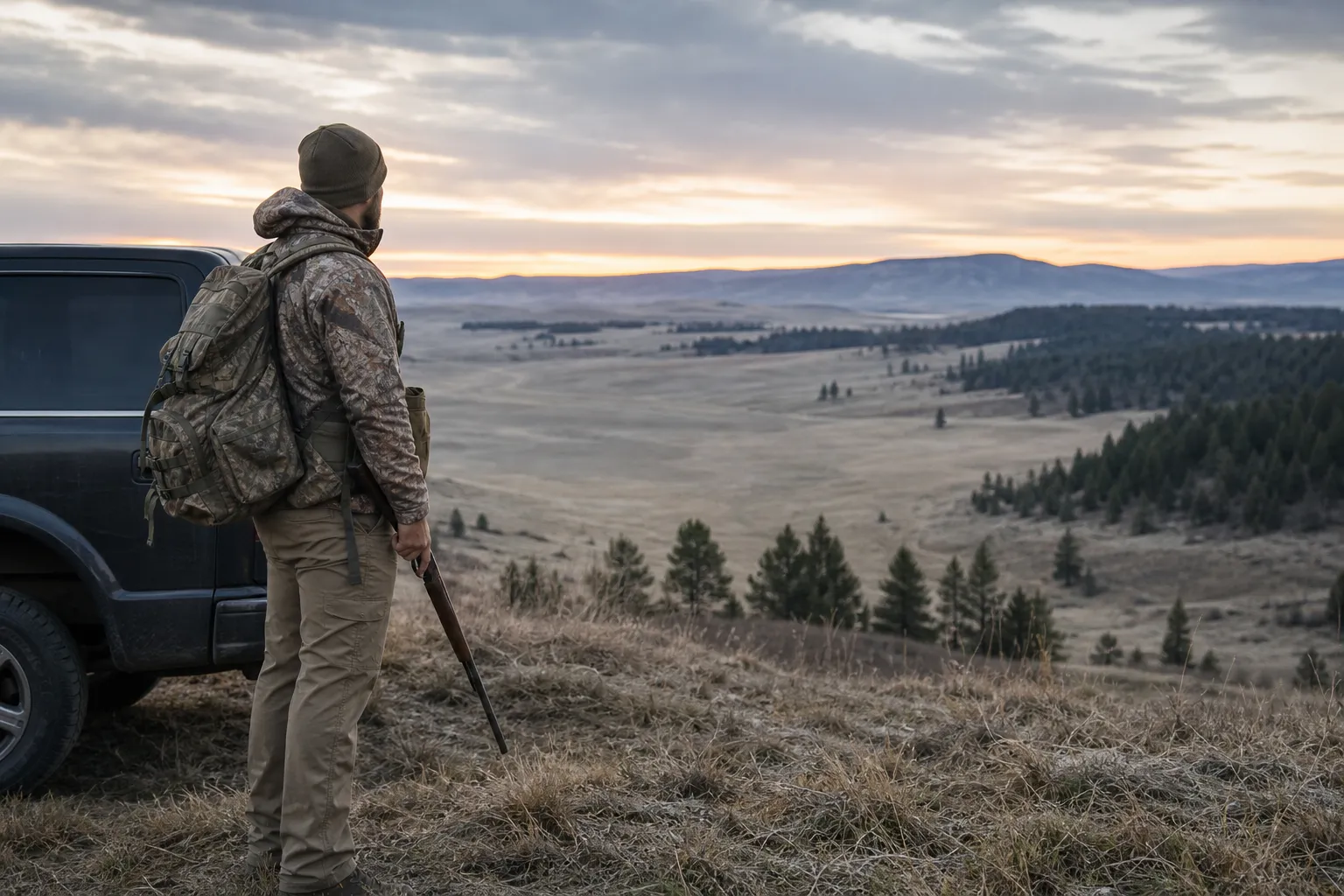
How far can a bullet travel? Farther than most people can aim accurately or use ethically in hunting. Hunter education sources describe maximum projectile range as the distance at which a projectile “could cause injury or damage,” and they stress that effective killing range “will always be less” than maximum range. In practical safety terms, centerfire bullets can travel several miles, shotgun pellets may travel hundreds of yards, and shotgun slugs may travel over 800 yards. Those figures are danger zones, not recommended shooting distances.
Maximum range is not effective range
The key safety distinction is maximum range versus effective range.
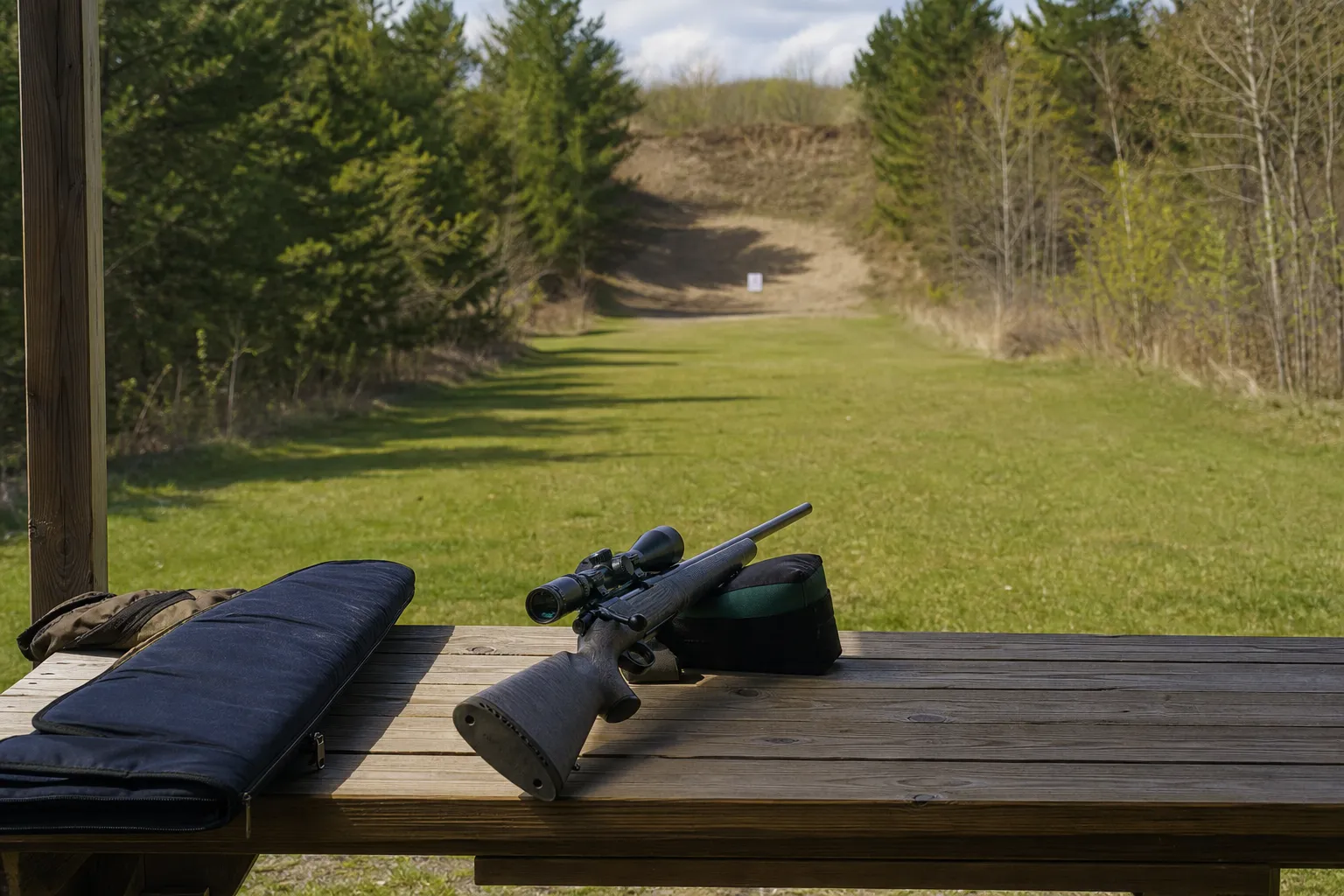
Hunter education materials define maximum projectile range as the distance at which a projectile could still cause injury or damage. That is the outer safety concern, not a promise that a shooter can hit a target, identify a target, or take game at that distance. Hunter Ed, Alaska study guide states that effective killing range is always shorter than maximum projectile range.
For a beginner, the important lesson is simple: a projectile can remain dangerous after it is no longer useful for hunting or target shooting.
Published danger zone distances
The figures below are broad safety references from hunter education and safety standards sources. They are not performance promises. They do not replace the ammunition box, firearm manual, local range rules, or state or provincial hunter education materials.
| Projectile or firearm category | Published safety distance | Source | |, -|, -:|, -| | Centerfire bullet | Several miles | IHEA USA Hunter Education Standards, 2021 | | Small shot | 200 to 350 yards | Iowa DNR hunter education material | | Shotgun slug | Over 800 yards | Virginia Hunter Ed |
These distances explain why “know your target and what is beyond it” is not just a slogan. SAAMI firearm safety rules include being sure of the target and what is beyond.
Why .22 rimfire still deserves full respect
Many new shooters start with .22 rimfire firearms, but “small” does not mean “harmless.”
Federal rimfire ammunition safety data sheet material warns that a fired bullet has “extremely long range” and can cause serious injury or death. Source: Federal Rimfire Small Arms Ammunition SDS, Rev. 7/1/20.
Winchester rimfire education material also notes that gravity, wind, and precipitation affect a bullet as it travels downrange, and that gravity causes bullet drop farther downrange. Source: Winchester Ammunition Academy, Rimfire Ammo 101.
Those facts matter because a bullet that misses the target does not simply disappear. It continues downrange until something stops it.
Centerfire rifle and handgun bullets can travel several miles
IHEA USA hunter education standards state that a centerfire bullet can travel several miles. That is a broad danger zone statement, not an exact distance for every cartridge, bullet, firearm, elevation, or weather condition.
Federal centerfire rifle and pistol ammunition safety data sheet material tells shooters to maintain muzzle control and to “Always be sure of the backstop.” Source: Federal Centerfire Rifle and Pistol Ammunition SDS.
For safety planning, the exact number is less important than the rule: never shoot unless the projectile has a safe place to stop.
Shotguns also need a safe impact area
Shotgun pellets usually spread and lose usefulness for hunting before they stop being a possible hazard.
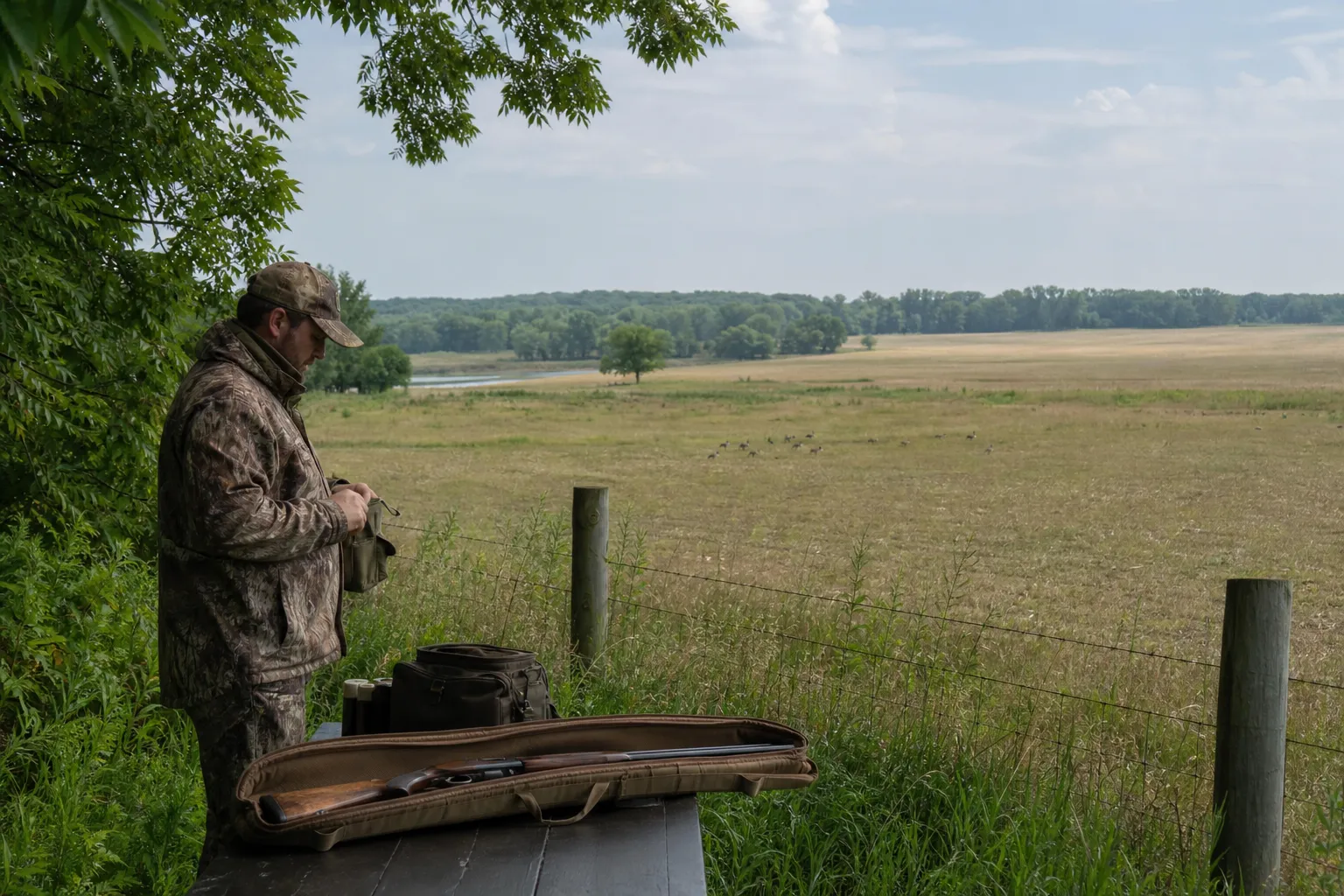
Other hunter education sources give broad distance references. Iowa DNR hunter education material lists small shot at 200 to 350 yards. Virginia Hunter Ed lists shotgun slugs at over 800 yards.
This is why shotgun safety is not limited to what is immediately in front of the muzzle. A missed bird, a low shot, or a shot without a safe background can still send pellets or a slug beyond the intended target area.
Backstops matter because you cannot call a shot back
A safe backstop is one of the most important parts of shooting safely. Wisconsin hunter education material says a safe backstop should be solid enough to capture fired bullets and reduce ricochet risk. Source: Hunter Ed, Wisconsin.
A safe backstop is not just “something behind the target.” It must be able to capture the projectile. If the projectile can pass through, skip away, or continue into an unknown area, the shooter has not solved the safety problem.
Ricochets can change the danger area
A missed shot is not the only concern. Ricochets can send a projectile away from the intended line of fire.
CCI rimfire safety data sheet material specifically warns against firing at surfaces that could cause ricochets, including “water, rocks, or any other hard, flat surface.” Source: CCI 22 Rimfire Non Lead Bullet SDS.
For hunters and range shooters, that means the visible target is only part of the safety check. The surface behind and around the target matters too.
Never shoot into the air
Shooting into the air is dangerous because the bullet can return with enough force to injure or kill people. The CDC states that bullets fired into the air can return with “sufficient force to cause injury and death.” In a CDC MMWR report, bullets fired into the air are described as capable of returning at speeds greater than 200 ft/sec, enough to penetrate the human skull. Sources: CDC MMWR web article and CDC MMWR PDF.
This is one of the clearest examples of maximum range as a danger zone. The shooter may have no visible target and no controlled backstop, but the projectile still comes down somewhere.
Practical safety takeaways
Use these points as a beginner friendly checklist, then confirm the official rules for your firearm, ammunition, range, and hunting area.
- Treat maximum range as a danger zone. It is not an effective hunting or target distance.
- Know your target and what is beyond it. SAAMI includes this in its firearm safety rules.
- Do not shoot without a safe backstop that can capture the projectile and reduce ricochet risk.
- Remember that .22 rimfire ammunition safety material warns of extremely long range, and centerfire bullets can travel several miles.
- Remember that shotgun shot and slugs can also travel far beyond normal effective use.
- Avoid surfaces identified in ammunition safety materials as ricochet risks, including water, rocks, and hard flat surfaces.
- Never shoot into the air.
- Check the ammunition box, firearm manual, official hunter education material, and range rules before shooting.
What to check with official sources
Before hunting, target shooting, or using a new firearm or load, check current official information from the relevant state or provincial wildlife agency, hunter education program, range operator, firearm manual, and ammunition maker. The distances in this guide are published safety references from the cited sources. They are not a substitute for current local rules or for a safe backstop on every shot.
Frequently asked questions
How far can a centerfire bullet travel?
IHEA USA hunter education standards state that a centerfire bullet can travel several miles.
How far can shotgun shot travel?
Iowa DNR hunter education material lists small shot at 200 to 350 yards.
How far can a shotgun slug travel?
Virginia Hunter Ed lists shotgun slug travel distance as over 800 yards. Treat that as a danger zone distance, not an effective range.
Why is maximum range different from effective range?
Hunter education materials describe maximum projectile range as the distance at which a projectile could cause injury or damage. Effective killing range is always shorter.
Why is shooting into the air dangerous?
The CDC states that bullets fired into the air can return with enough force to injure or kill people. A CDC MMWR report states that falling bullets can return at speeds greater than 200 ft/sec, enough to penetrate the human skull.
Sources
- Know Your Firearm's Range, Alaska Hunter Safety Course, Hunter Ed, produced with Alaska Department of Fish and GameOfficial source. Accessed October 20, 2026.
- Importance of Safe Backstops, Wisconsin Hunter Safety Course, Hunter Ed, produced with Wisconsin Department of Natural ResourcesOfficial source. Accessed October 20, 2026.
- Importance of Safe Backstops, Massachusetts Hunter Safety Course, Hunter EdOfficial source. Accessed October 20, 2026.
- IHEA USA Hunter Education Standards, International Hunter Education Association USAOfficial source. Accessed October 20, 2026.
- Iowa DNR Hunter Education Program Policies and Procedures, Iowa Department of Natural ResourcesOfficial source. Accessed October 20, 2026.
- IHEA USA Hunter Education Standards, Utah-hosted copy, Utah Division of Wildlife ResourcesOfficial source. Accessed October 20, 2026.
- Importance of Safe Backstops, Virginia Hunter Safety Course, Hunter EdOfficial source. Accessed October 20, 2026.
- Canadian Firearms Safety Course, Student Handbook, 2008, Royal Canadian Mounted Police, Canada Firearms CentreOfficial source. Accessed October 20, 2026.
- Ontario Hunter Education Manual, 2020, Ontario Hunter Education Program copy hosted by Ottawa Firearms SafetyOfficial source. Accessed October 20, 2026.
- Ontario Hunter Education Manual, 2020, Ontario Hunter Education Program copy hosted by BC Firearms AcademyOfficial source. Accessed October 20, 2026.
- Rimfire Ammunition Safety Data Sheet, Federal Premium Ammunition. Accessed October 20, 2026.
- Centerfire Rifle and Pistol Ammunition Safety Data Sheet, Federal Premium Ammunition. Accessed October 20, 2026.
- .22 Rimfire Non Lead Bullet Safety Data Sheet, CCI Ammunition. Accessed October 20, 2026.
- New Year's Eve Injuries Caused by Celebratory Gunfire, Puerto Rico, 2003, Centers for Disease Control and Prevention, MMWROfficial source. Accessed October 20, 2026.
- MMWR Weekly PDF, Celebratory Gunfire, Centers for Disease Control and PreventionOfficial source. Accessed October 20, 2026.
- Ten Commandments of Firearm Safety, Remington Firearms. Accessed October 20, 2026.
- Firearm Safety Rules, Sporting Arms and Ammunition Manufacturers' InstituteOfficial source. Accessed October 20, 2026.
- Ammo 101, Rimfire, Winchester Ammunition. Accessed October 20, 2026.