.300 Blackout: History, Specs and Ballistics
.300 AAC Blackout, also called 300 BLK or 7.62x35mm, is a .30 caliber AR platform cartridge. Its main appeal is the mix of higher velocity and subsonic factory loads, while using standard magazines and a standard 5.56mm bolt.
By RaiS. Reviewed by RaiS. Published . 5 min read.
Research and drafting were assisted by AI. RaiS checked the facts against the sources below and approved this page.
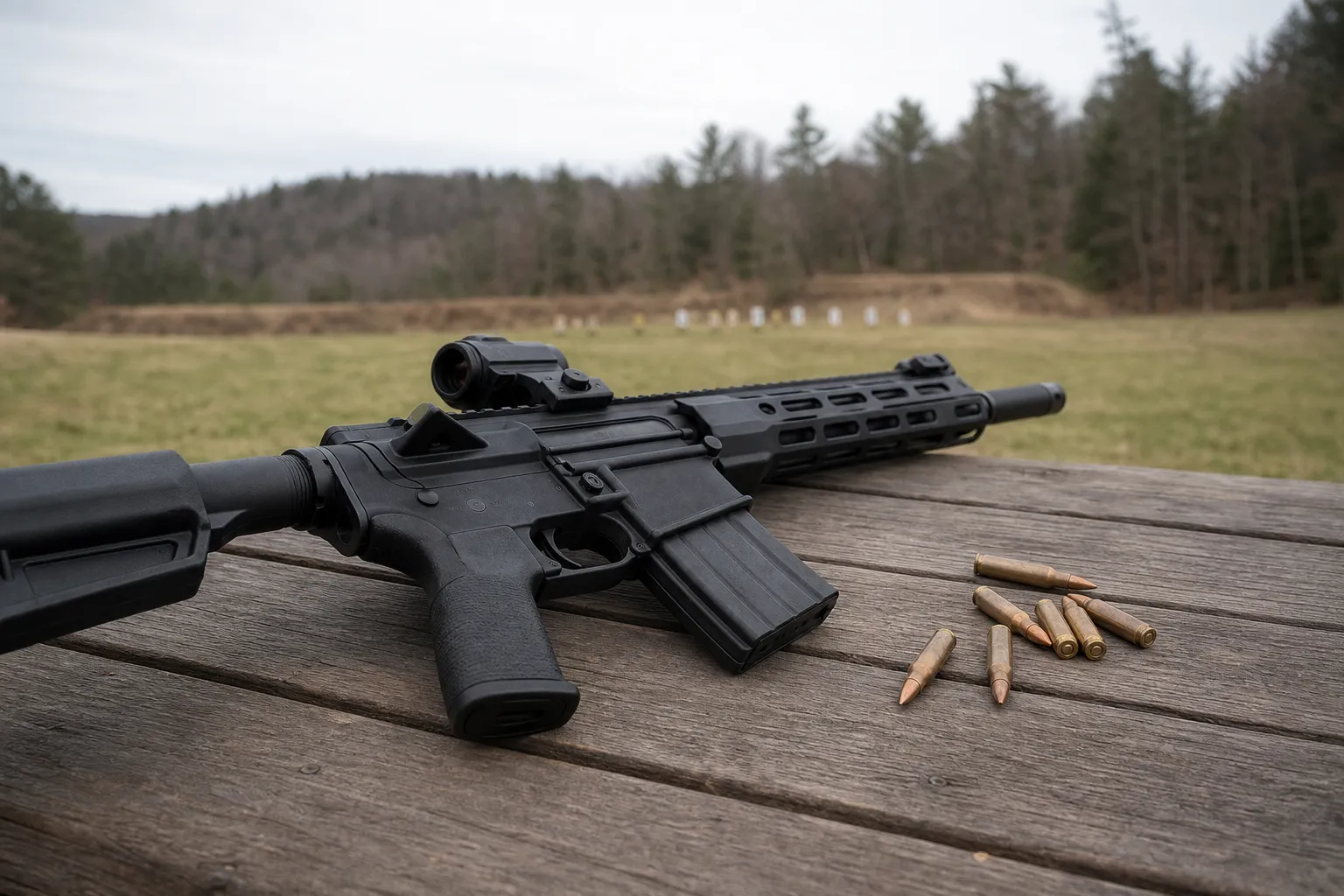
.300 AAC Blackout, commonly written as .300 Blackout or 300 BLK, is a .30 caliber cartridge for the AR platform. AAC described it as a cartridge developed to launch .30 caliber projectiles from the AR platform without reducing magazine capacity, and AAC also stated that it is compatible with the standard 5.56mm bolt. AAC material gives the metric designation as 7.62x35mm.
What .300 Blackout is
The simple idea behind .300 BLK is a .30 caliber bullet in a cartridge sized around AR platform use. AAC catalog material says the system uses standard 30 round magazines and is compatible with the standard 5.56mm bolt.
SAAMI lists the cartridge’s maximum average pressure as 55,000 psi.
One reason the cartridge fits its AR role is bolt compatibility. AAC described this in practical terms by saying .300 AAC Blackout is compatible with the standard 5.56mm bolt.
Key SAAMI dimensions
- Maximum average pressure: 55,000 psi.
Development history
AAC and Remington are the key names in the cartridge’s early history. An AAC presentation states that Remington introduced the new cartridge to SAAMI in June 2010 and that it was approved in January 2011.
AAC described the goal as launching .30 caliber projectiles from the AR platform without reducing magazine capacity. AAC material also says the cartridge uses standard 30 round magazines and is compatible with the standard 5.56mm bolt.
For a new shooter, the important takeaway is not a conversion recipe. It is that .300 BLK was designed around AR platform packaging: .30 caliber bullets, standard magazine capacity as described by AAC, a 5.56 size bolt face, and both higher velocity and subsonic factory ammunition.
Factory ballistics: higher velocity and subsonic loads
Factory .300 BLK ammunition varies a lot. Manufacturer tables show light .30 caliber bullets at higher velocity, heavier subsonic loads at much lower velocity, and big differences in muzzle energy and downrange energy.
Hornady BLACK 110 gr V MAX: 2,375 fps and 1,378 ft lb at the muzzle from a 16 inch test barrel. Hornady lists 1,834 fps and 821 ft lb at 200 yards.
Federal Fusion MSR 150 gr Fusion Soft Point: 1,900 fps and 1,202 ft lb at the muzzle. Federal lists 739 ft lb at 200 yards and labels usage as Big Game.
Remington UMC 150 gr Full Metal Jacket: 1,905 fps and 1,209 ft lb at the muzzle. Remington lists 802 ft lb at 200 yards.
Hornady 190 gr Sub X Subsonic: 1,050 fps and 465 ft lb at the muzzle from a 16 inch test barrel. Hornady lists 918 fps and 355 ft lb at 300 yards and says it is designed for performance below the speed of sound.
Remington UMC 220 gr Open Tip Flat Base: 940 fps and 432 ft lb at the muzzle. Remington lists 392 ft lb at 200 yards.
The contrast is clear in Hornady’s own numbers. Hornady’s 110 grain V MAX load is listed at 2,375 fps and 1,378 ft lb at the muzzle. Hornady’s 190 grain Sub X Subsonic load is listed at 1,050 fps and 465 ft lb at the muzzle.
The same pattern appears in other factory data. Remington lists its 150 grain UMC Full Metal Jacket load at 1,905 fps and 1,209 ft lb at the muzzle, while its 220 grain Open Tip Flat Base load is listed at 940 fps and 432 ft lb.
Hornady describes its 190 grain Sub X Subsonic load as designed for accuracy and performance below the speed of sound. That lower velocity is the defining feature of subsonic ammunition, and the factory tables show the tradeoff in energy.
Hunting suitability
Some .300 BLK factory loads are specifically presented by manufacturers as hunting ammunition, but not every .300 BLK load should be treated the same way. The safest way to read the category is by looking at the bullet and the manufacturer’s usage label.

Federal lists its 300 Blackout 150 grain Fusion MSR load with a Fusion Soft Point bullet, 1,900 fps muzzle velocity, and usage as Big Game. Federal’s table lists 1,202 ft lb at the muzzle and 739 ft lb at 200 yards for that load.
Hornady warns that subsonic ammunition has reduced velocity and will not produce the same muzzle energy as conventionally loaded cartridges. Hornady also tells hunters to check applicable regulations for energy and velocity requirements. That matters because hunting rules can depend on cartridge type, bullet type, muzzle energy, velocity, species, season, and location.
For hunters, the practical checklist is simple: use the manufacturer’s intended use information for the specific load, read the ammunition box, read the firearm manual, and confirm current hunting rules with the wildlife agency for the exact place and season.
Safety warning: .300 BLK and .223 or 5.56 rifles
Never use .300 BLK ammunition in a firearm unless that firearm is specified for 300 AAC Blackout. This warning is especially important around AR platform rifles, because .300 BLK and .223 Remington or 5.56 NATO rifles can look similar from the outside.
SAAMI’s unsafe combination guidance says that firing ammunition in a firearm not designed for it can be dangerous and can result in serious injury, death, and firearm damage. SAAMI also warns that just because a round can fit into a firearm’s chamber, barrel, or action does not mean it is safe.
SAAMI’s unsafe combination table specifically lists 300 AAC Blackout under cartridges not to use in firearms chambered for .223 Remington.
Smith & Wesson’s M&P15 manual gives the same kind of warning in firearm manual language: a round of ammunition not specified on the firearm may fit into the chamber, and firing it may cause a rupture, firearm damage, injury, or death.
Before loading any ammunition, match all four things:
- The barrel marking.
- The firearm manual.
- The ammunition box.
- The cartridge headstamp.
If any of those do not match, stop and contact the firearm or ammunition manufacturer. Do not rely on appearance, magazine fit, or the fact that a cartridge can enter a chamber.
Bottom line
.300 AAC Blackout is a .30 caliber AR platform cartridge. AAC described its purpose as launching .30 caliber projectiles from the AR platform without reducing magazine capacity, while using standard magazines and a standard 5.56mm bolt.
Factory ammunition ranges from 110 grain loads with muzzle velocities above 2,300 fps in manufacturer tables to 190 and 220 grain subsonic loads near 1,000 fps or lower. For hunting, rely on the exact manufacturer load description and the current rules from the state, provincial, or territorial wildlife agency. For safety, use .300 BLK only in a firearm specified for 300 AAC Blackout, and verify the barrel marking, manual, ammunition box, and headstamp every time.
Frequently asked questions
What is .300 Blackout?
.300 Blackout is 300 AAC Blackout, commonly abbreviated 300 BLK. AAC material also gives its metric designation as 7.62x35mm.
Who developed .300 Blackout?
AAC and Remington were involved in the cartridge’s development. An AAC presentation says Remington introduced the cartridge to SAAMI in June 2010 and that it was approved in January 2011.
Why does .300 BLK work with a 5.56 size bolt face?
AAC described .300 AAC Blackout as compatible with the standard 5.56mm bolt.
Is .300 Blackout good for hunting?
Some factory loads are marketed for hunting. Federal labels its 150 grain Fusion MSR load as Big Game. Always check the exact load and current hunting regulations.
What is the difference between regular and subsonic .300 BLK loads?
Manufacturer tables show a large velocity and energy difference. Hornady lists its 110 grain V MAX load at 2,375 fps and 1,378 ft lb, while its 190 grain Sub X Subsonic load is listed at 1,050 fps and 465 ft lb.
Can I fire .300 BLK in a .223 Remington or 5.56 NATO rifle?
Do not use .300 BLK in any firearm unless that firearm is specified for 300 AAC Blackout. SAAMI lists 300 AAC Blackout as a cartridge not to use in firearms chambered for .223 Remington, and firearm manuals warn that ammunition may fit but still be dangerous.
Sources
- SAAMI Z299.4-2025 Centerfire Rifle Standard, SAAMIOfficial source. Accessed October 22, 2026.
- SAAMI Z299.4-2025 Centerfire Rifle Standard, 2026 posting, SAAMIOfficial source. Accessed October 22, 2026.
- SAAMI Z299.4-2025 Centerfire Rifle Standard, V&P test barrel pages, SAAMIOfficial source. Accessed October 22, 2026.
- SAAMI Revised Cartridge and Chamber Notice, 300 AAC Blackout, SAAMI, mirrored by third party. Accessed October 22, 2026.
- AAC 2012 Catalog, Advanced Armament Corp.Official source. Accessed October 22, 2026.
- 300 AAC Blackout presentation, Remington and AAC, mirrored by third party. Accessed October 22, 2026.
- 300 Blackout 110 gr V-MAX Hornady BLACK, HornadyOfficial source. Accessed October 22, 2026.
- 300 Blackout 190 gr Sub-X Subsonic, HornadyOfficial source. Accessed October 22, 2026.
- Hornady 2025 Product Catalog, HornadyOfficial source. Accessed October 22, 2026.
- Fusion MSR 300 Blackout 150 Grain Fusion Soft Point, Federal PremiumOfficial source. Accessed October 22, 2026.
- Federal 2026 Catalog, Federal PremiumOfficial source. Accessed October 22, 2026.
- UMC Centerfire Rifle 300 Blackout 150 Grain Full Metal Jacket, Remington AmmunitionOfficial source. Accessed October 22, 2026.
- UMC Centerfire Rifle 300 Blackout 220 Grain Open Tip Flat Base, Remington AmmunitionOfficial source. Accessed October 22, 2026.
- Remington 2026 Catalog, Remington AmmunitionOfficial source. Accessed October 22, 2026.
- Remington 2024 Catalog, Remington AmmunitionOfficial source. Accessed October 22, 2026.
- Barnes Centerfire Rifle Ballistics, VOR-TX 2023, Barnes BulletsOfficial source. Accessed October 22, 2026.
- SAAMI Technical Data Sheet, Unsafe Firearm-Ammunition Combinations, revised 8/24/2020, SAAMI, mirrored by Big Pine Gun Club. Accessed October 22, 2026.
- M&P15 Centerfire Rifle Manual, Smith & WessonOfficial source. Accessed October 22, 2026.
- Subsonic, Hornady Manufacturing, Inc. Accessed October 22, 2026.