10mm Auto vs .45 ACP
10mm Auto is a newer, high pressure large bore pistol cartridge, while .45 ACP is the older 1911 era cartridge. Published manufacturer data for selected 10mm Auto loads shows high muzzle velocity and energy, but the right choice depends on the handgun, load, and use.
By RaiS. Reviewed by RaiS. Published . 6 min read.
Research and drafting were assisted by AI. RaiS checked the facts against the sources below and approved this page.
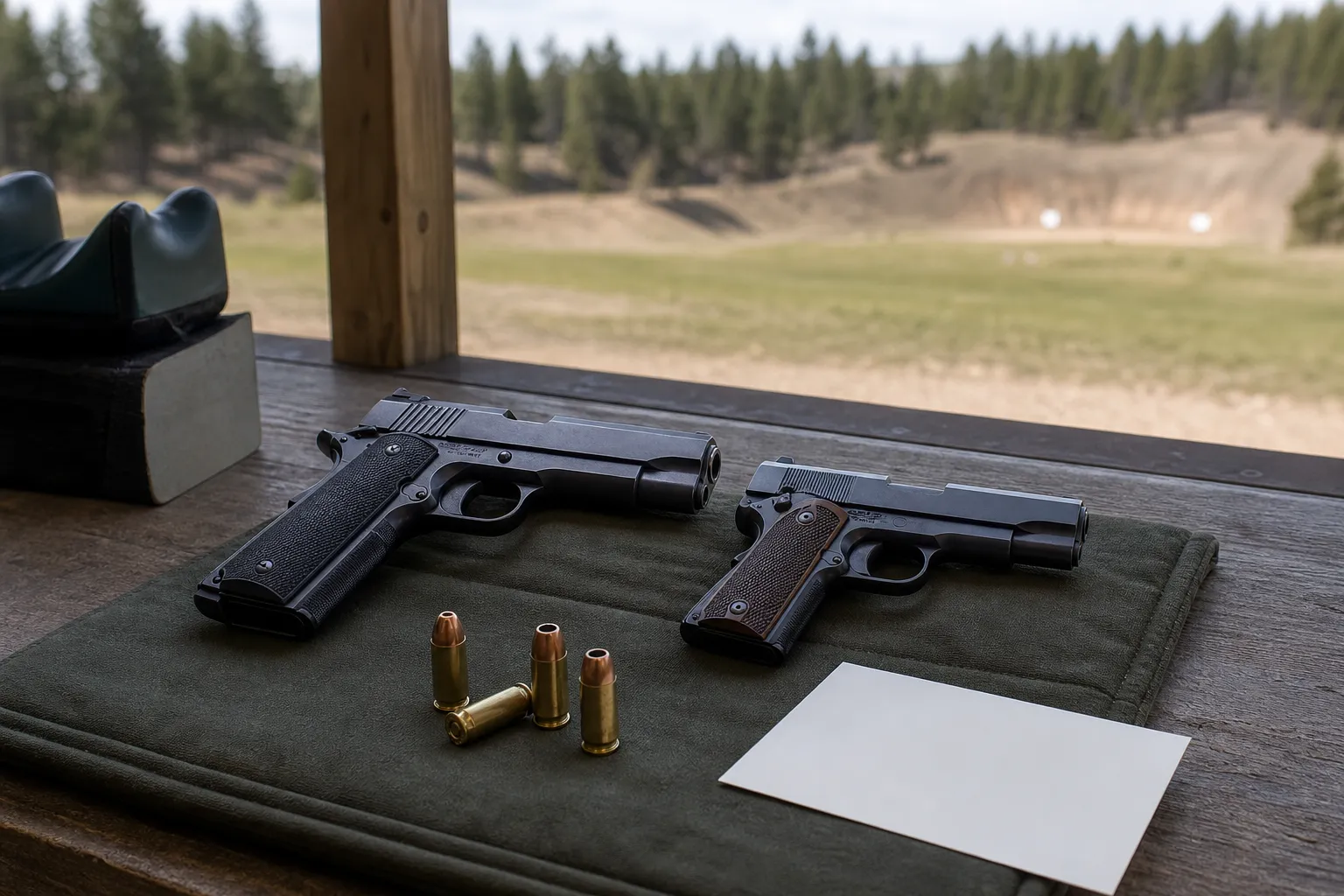
10mm Auto and .45 ACP are both large bore semi automatic pistol cartridges, but they are not the same kind of cartridge. The practical split is simple: 10mm Auto is a high pressure cartridge, while .45 ACP, formally 45 Auto in SAAMI naming, is an older cartridge tied closely to the Model 1911. Published load data varies by bullet weight, barrel length, and manufacturer, so avoid broad claims about stopping power.
If you are comparing service pistol cartridges more broadly, see our 9mm vs .45 ACP comparison as a companion guide.
Names and standards
SAAMI lists the 10mm cartridge as 10mm Automatic, abbreviated 10mm Auto. SAAMI lists .45 ACP under the recognized name 45 Automatic, abbreviated 45 Auto. The name .45 ACP remains the common historical name because Browning identifies the original military cartridge designation as .45 Automatic Colt Pistol, or .45 ACP.
SAAMI publishes centerfire pistol and revolver dimensional and performance standards in SAAMI Z299.3. SAAMI states that these standards contain cartridge and chamber dimensional information along with performance characteristics for centerfire pistol and revolver cartridges.
For this article, the two names mean the following:
| Common name | SAAMI style name | Typical shorthand |
|---|---|---|
| 10mm Auto | 10mm Automatic | 10mm Auto |
| .45 ACP | 45 Automatic | 45 Auto |
Pressure is one of the clearest technical distinctions. Published SAAMI based references list 10mm Auto maximum average pressure at 37,500 psi. A SAAMI based comparison also lists 45 Auto +P at 23,000 psi.
That does not mean every 10mm Auto load is faster than every .45 ACP load, or that pressure alone tells the whole story. Bullet weight, bullet construction, barrel length, and the manufacturer’s loading all matter.
Origins: Bren Ten and FBI adoption vs the 1911 era
The 10mm Auto is the newer cartridge. American Rifleman says Norma was selected to manufacture the 10mm cartridge during the Bren Ten project, and that the Bren Ten was introduced in 1983.
The FBI connection came later. The Office of Justice Programs abstract for the 1989 FBI Law Enforcement Bulletin article says the FBI Firearms Training Unit began an effort in 1987 to identify the best possible handgun for FBI agents. The same abstract states that the FBI was replacing .38 caliber revolvers with a semiautomatic pistol chambered for a new 10mm cartridge, and that the 10mm round was approved for the new pistols after initial tests used standard test barrels.
The .45 ACP story is older and tied to the U.S. military’s early twentieth century handgun trials. Browning says the U.S. military began evaluating pistol designs in 1906 along with a new cartridge designated .45 Automatic Colt Pistol, or .45 ACP. Browning also says John M. Browning designed the Colt pistol submitted for those tests, and that the design was formally adopted by the U.S. Army on March 29, 1911 as the Model 1911.
In plain terms, 10mm Auto grew out of a 1980s high performance semi automatic pistol project and later FBI interest. .45 ACP grew out of the handgun and cartridge work that led to the Model 1911.
Basic dimensions and pressure
The table compares the SAAMI names and the 45 Auto +P pressure figure.
| Specification | 10mm Auto | .45 ACP, 45 Auto |
|---|---|---|
| SAAMI formal name | 10mm Automatic | 45 Automatic |
| SAAMI abbreviation | 10mm Auto | 45 Auto |
| +P pressure listed in published SAAMI based references | 23,000 psi |
Published SAAMI based references list 10mm Auto maximum average pressure at 37,500 psi. That is higher than the 45 Auto +P figure in the table. That helps explain why 10mm Auto is often discussed as a high pressure semi automatic pistol cartridge.
Published velocity and energy examples
Factory ballistics are product specific. A 10mm Auto hunting load, a 10mm Auto defensive load, a .45 Auto HST load, and a .45 Auto Defender load are not identical tests. Barrel length also matters, and some manufacturers list it while others publish summary comparison figures.
The table below uses representative published data from Federal and Hornady.
| Manufacturer and load | Cartridge | Bullet weight | Muzzle velocity | Muzzle energy | Test barrel when listed |
|---|---|---|---|---|---|
| Hornady Custom XTP | 10mm Auto | 180 gr | 1,275 fps | 650 ft lb | 5 in |
| Hornady Critical Duty FlexLock | 10mm Auto | 175 gr | 1,150 fps | 523 ft lb | 5 in |
| Federal Fusion handgun hunting load | 10mm Auto | 200 gr | 1,200 fps | ||
| Hornady Backcountry Defense DGH | 10mm Auto | 200 gr | 1,160 fps | 598 ft lb | 5 in |
Those numbers are useful for comparison, but they are not a substitute for checking the exact ammunition box or manufacturer data for the load you plan to use.
Typical uses described by manufacturers and references
For .45 ACP, the verified history is military and 1911 centered. Browning ties the cartridge to the U.S. military trials that began in 1906 and to John M. Browning’s pistol design that became the Model 1911 when the U.S. Army adopted it on March 29, 1911. Winchester also publishes Defender 45 Auto data, and Federal publishes 45 Auto HST data, which shows that major manufacturers continue to catalog .45 Auto handgun loads.
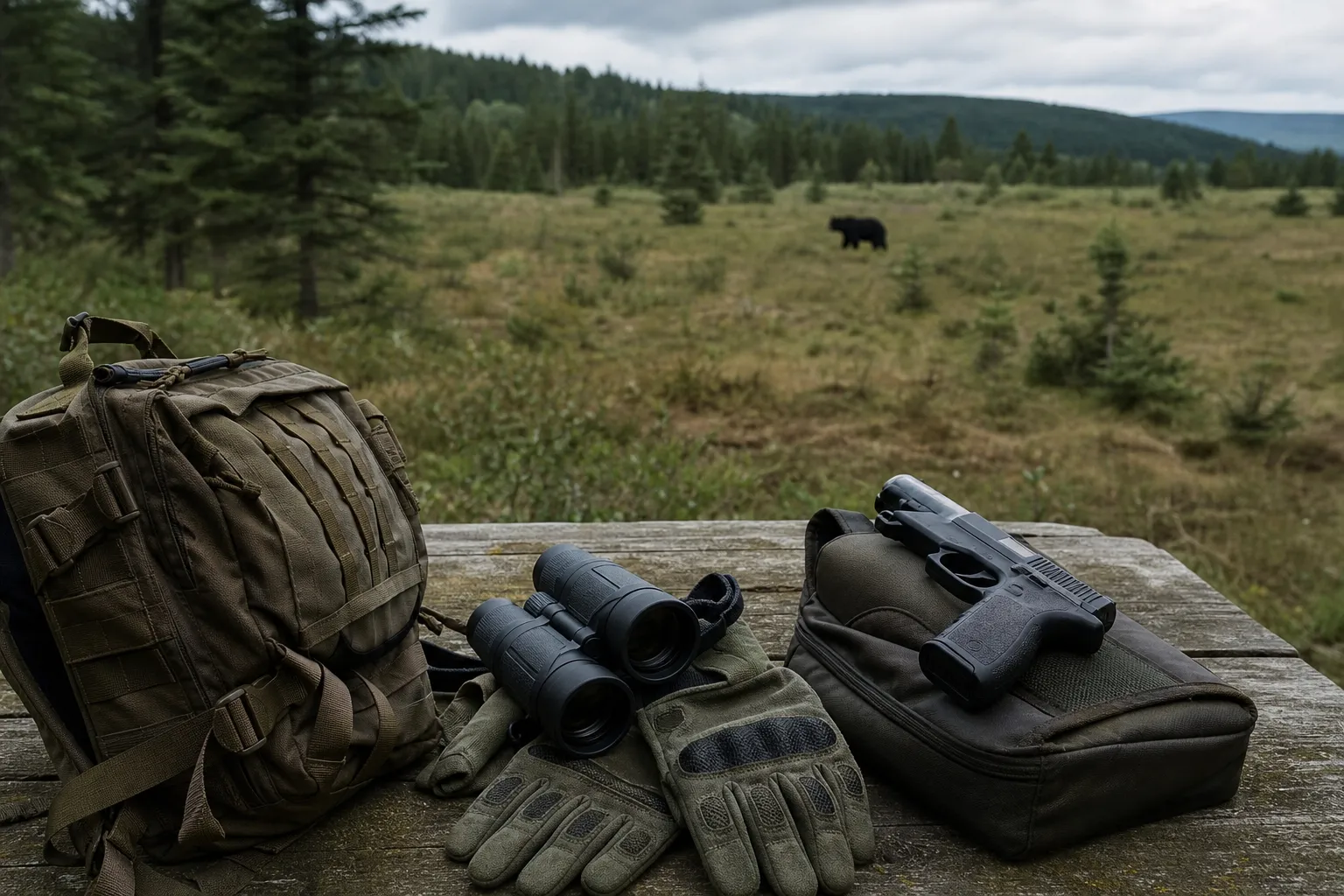
For 10mm Auto, the published manufacturer material supports a broader discussion that includes defensive, hunting, and backcountry sidearm roles. Winchester states that 10mm pistols are sidearms for bear or big boar country and for home defense where concealment is not required. Federal introduced a Fusion 10mm Auto load as part of its handgun hunting ammunition lineup, using a 200 grain bullet at 1,200 fps. Hornady sells a 10mm Auto 200 grain DGH Backcountry Defense load and describes Backcountry Defense as handgun ammunition for backcountry encounters.
Those are manufacturer descriptions, not a universal safety recommendation. Backcountry carry, hunting, and animal defense questions depend on the animal, local regulations, the exact firearm and load, and the person using them.
Recoil, handgun size, and shootability
The fact set for this comparison does not include measured recoil data, handgun weight data, or controlled shootability testing. For that reason, this page does not rank one cartridge as easier to shoot than the other.
What can be said from the published specifications is narrower: 10mm Auto has a listed maximum average pressure of 37,500 psi, and the representative 10mm Auto loads above are published at high velocities and energies. How that feels in a specific pistol depends on the pistol and load.
If you are comparing two actual handguns, use the manufacturer’s manual and ammunition recommendations for each firearm. Match the ammunition to the chamber marking, and check whether the firearm maker has any restrictions on +P ammunition.
Which one should you choose?
Choose 10mm Auto if your comparison is focused on high published velocity and energy in a semi automatic pistol cartridge, or if you are looking at loads marketed for handgun hunting or backcountry sidearm roles. Federal, Hornady, and Winchester all publish 10mm Auto loads that support that kind of comparison.
Choose .45 ACP if your comparison is centered on the 1911 lineage and the older U.S. military cartridge history. Browning’s historical account ties the cartridge directly to the military trials that led to the Model 1911, and SAAMI recognizes the formal name as 45 Automatic.
Neither choice should be reduced to a simple claim that one has better stopping power. The differences discussed here are history, pressure listings for 10mm Auto and 45 Auto +P, published 10mm Auto velocity, published 10mm Auto energy, and the ways manufacturers describe specific loads.
Before buying ammunition or carrying either cartridge for hunting or backcountry use, check the firearm manufacturer’s manual, the ammunition manufacturer’s current data, and the current wildlife or hunting agency rules for the place where you will use it.
Frequently asked questions
Is 10mm Auto more powerful than .45 ACP?
The examples shown here do not support a single universal answer. Published SAAMI based references list 10mm Auto maximum average pressure at 37,500 psi, and the listed 10mm Auto factory loads in this article show high muzzle velocity and energy. Actual comparison depends on the exact loads.
Are .45 ACP and 45 Auto the same name?
SAAMI lists the formal name as 45 Automatic and the abbreviation as 45 Auto. Browning identifies the historical cartridge designation as .45 Automatic Colt Pistol, or .45 ACP.
Did the FBI adopt a 10mm pistol?
The Office of Justice Programs abstract for the 1989 FBI Law Enforcement Bulletin states that the FBI was replacing .38 caliber revolvers with a semiautomatic pistol chambered for a new 10mm cartridge, and that the 10mm round was approved for the new pistols.
Is 10mm Auto a backcountry cartridge?
Some manufacturers market specific 10mm Auto loads for that role. Winchester states that 10mm pistols are sidearms for bear or big boar country, Federal introduced a Fusion 10mm Auto handgun hunting load, and Hornady sells a 10mm Auto Backcountry Defense load.
Sources
- SAAMI Standards, Sporting Arms and Ammunition Manufacturers' InstituteOfficial source. Accessed October 22, 2026.
- SAAMI FAQs, Sporting Arms and Ammunition Manufacturers' InstituteOfficial source. Accessed October 22, 2026.
- SAAMI Z299.3 2022 Centerfire Pistol and Revolver, Sporting Arms and Ammunition Manufacturers' InstituteOfficial source. Accessed October 22, 2026.
- FBI's 10mm Pistol, Office of Justice Programs, NCJRS Virtual LibraryOfficial source. Accessed October 22, 2026.
- The History of the 1911 Pistol, BrowningOfficial source. Accessed October 22, 2026.
- Federal 2026 Catalog, Handgun Ballistics, Federal AmmunitionOfficial source. Accessed October 22, 2026.
- Federal 2020 Handgun Ballistics, Federal AmmunitionOfficial source. Accessed October 22, 2026.
- Federal Ammunition Introduces New Fusion 10mm Auto Hunting Loads, Federal AmmunitionOfficial source. Accessed October 22, 2026.
- Hornady 2022 Standard Ballistics Chart, HornadyOfficial source. Accessed October 22, 2026.
- Hornady 2024 Law Enforcement and Military Catalog, HornadyOfficial source. Accessed October 22, 2026.
- 10mm Auto 200 gr DGH Backcountry Defense, HornadyOfficial source. Accessed October 22, 2026.
- Don't Forget the Mighty 10milly, Winchester AmmunitionOfficial source. Accessed October 22, 2026.
- The 10 mm Auto: History and Performance, American Rifleman. Accessed October 22, 2026.
- All About the 10 mm Auto Round, Shooting Illustrated. Accessed October 22, 2026.
- 10mm Auto Load Data, Sierra BulletsOfficial source. Accessed October 22, 2026.
- 10mm vs 45 ACP: 37,500 psi Against 21,000, Popular Ammo. Accessed October 22, 2026.
- Winchester Ammunition Contract Attachment, Fort Bend CountyOfficial source. Accessed October 22, 2026.
- Hornady® Announces New Ammunition for 2016, Hornady Manufacturing, Inc.. Accessed October 22, 2026.