The 10mm Auto: History, Specs, Loads and Uses
The 10mm Auto is a .40 caliber semiautomatic pistol cartridge with a wide performance range, from reduced FBI style loads to full power hunting and backcountry ammunition. Its history runs from Jeff Cooper’s early concept and the Bren Ten to FBI adoption, the rise of .40 S&W and today’s renewed interest in powerful 10mm pistols.
By RaiS. Reviewed by RaiS. Published . 7 min read.
Research and drafting were assisted by AI. RaiS checked the facts against the sources below and approved this page.
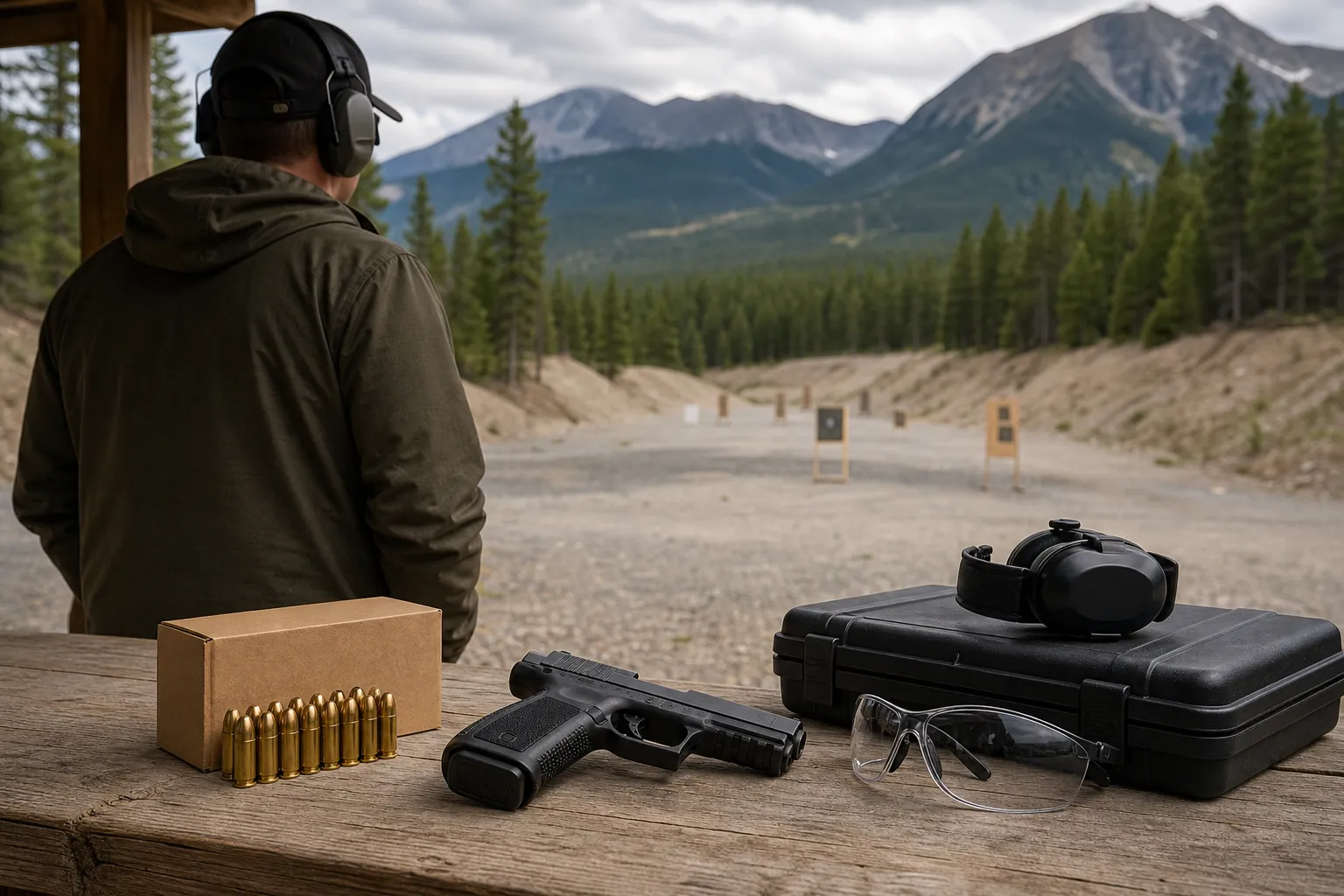
The 10mm Auto is a rimless semiautomatic pistol cartridge that uses approximately .400 inch bullets and, in modern factory ammunition, spans a very wide performance range. That is the key point for new buyers: “10mm” on the box does not always mean full-power 10mm. Some loads are mild or FBI style, while others are published as hunting, bonded or hard-cast loads with much higher velocity and energy.
What the 10mm Auto is
SAAMI names the cartridge “10mm Automatic,” abbreviated “10mm Auto,” in its cartridge and chamber drawings. SAAMI also describes its standards as supporting safety, reliability and interchangeability for commercial firearms and ammunition.
For practical purposes, the 10mm Auto sits in the .40 caliber handgun family. SAAMI lists the bullet diameter as .4005 inch with a minus .0030 inch tolerance, and Handloader describes 10mm bullets as measuring .400 inch. Handloader also states that the cartridge headspaces on the case mouth, like many rimless autoloading pistol cartridges.
| Specification | Published figure |
|---|---|
| SAAMI cartridge name | 10mm Automatic, 10mm Auto |
| Bullet diameter | .4005 inch, minus .0030 inch tolerance, per SAAMI |
| Common bullet diameter description | .400 inch, per Handloader |
| Case length | .992 inch, minus .010 inch tolerance, per SAAMI |
| Maximum case length | .992 inch, per Handloader |
| Industry maximum overall length | 1.260 inch, per Handloader |
| SAAMI maximum average pressure | 37,500 psi, as stated by Handloader |
Those specifications describe the cartridge, not the performance of every load. Modern 10mm ammunition can be loaded for training, personal defense, law enforcement, hunting or deep penetration. The difference between those loads matters more than the name alone.
How the 10mm Auto began
American Rifleman describes Jeff Cooper as one of the writers who promoted a .40 caliber cartridge with more power than 9mm and more capacity than .45 ACP. The commercial path ran through Tom Dornaus and Michael Dixon of Dornaus & Dixon Enterprises, who brought Cooper into the handgun project as a consultant.
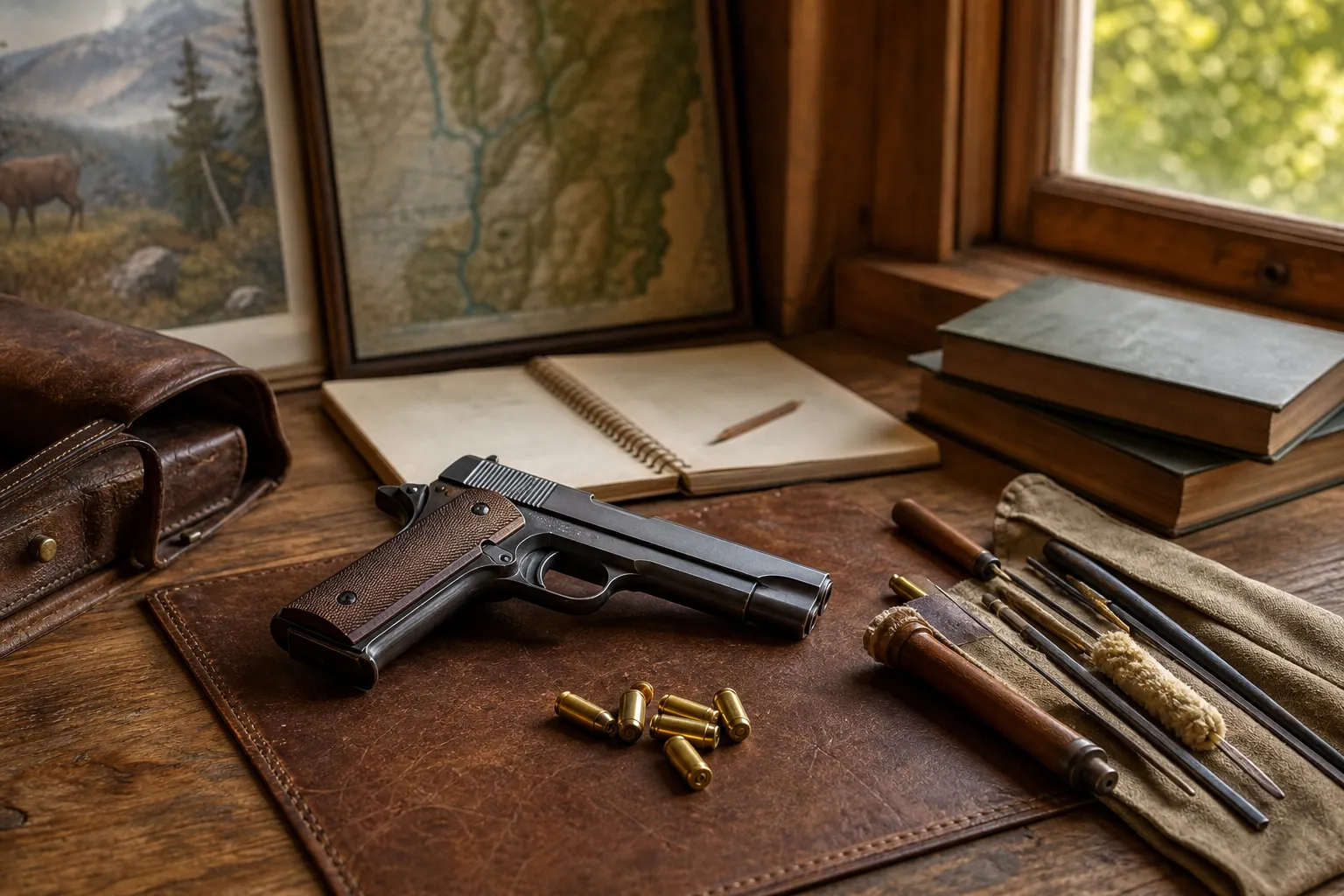
American Rifleman says Norma performed final testing and development on the new cartridge. It also reports that the original Norma load used a 200 grain jacketed truncated cone bullet at 1,200 fps from a 5 inch barrel. Dixon added “Auto” to Cooper’s preferred “10 mm” name.
The first famous pistol for the cartridge was the Bren Ten. American Rifleman says the Bren Ten came to market in 1984 as a 10 shot double-action/single-action pistol weighing 38 ounces. Production was short lived: about 1,500 Bren Ten pistols were produced before manufacturing stopped in 1986.
The cartridge did not disappear. American Rifleman says Colt released the Delta Elite, a 10mm version of the M1911 design, one year after Dornaus & Dixon closed. That gave the cartridge a major second life before the FBI story pushed it into a much larger public conversation.
The FBI, reduced 10mm and the .40 S&W connection
The Office of Justice Programs abstract of J.C. Hall’s FBI Law Enforcement Bulletin article says the FBI Firearms Training Unit began a handgun evaluation effort in 1987. The abstract says the analysis focused on bullet caliber, penetration and wound size, and that the 10mm round produced the best results in the FBI tests and was approved for the new pistols.
The FBI connection is also where reduced 10mm loads enter the story. American Rifleman says the FBI’s reduced load used a 180 grain bullet at 950 fps. Handloader describes these reduced 10mm loads as often being called “FBI lite,” “FBI load” or “subsonic.”
That reduced performance level helped lead to the .40 S&W. Handloader says Smith & Wesson recognized that the 10mm FBI load could be contained in a shorter case for lighter, more compact 9mm size pistols. Handloader says the .40 S&W was introduced in 1990 after cutting the 10mm case to .850 inch and changing to a small pistol primer.
That history is one reason 10mm comparisons can get confusing. A reduced 10mm load is not the same thing as a full-power 10mm load. For a broader cartridge comparison, see our guides to 10mm vs .45 ACP and 10mm vs 9mm.
Full-power vs reduced loads
American Rifleman says modern 10mm ammunition ranges from “FBI Lite” velocity to original full-house Norma specification. That is the central issue when reading a box of ammunition or a ballistic chart.
A reduced 10mm load may be close to the FBI style pattern described above, such as a 180 grain bullet around 950 fps. A stronger modern hunting or woods load may publish much higher velocity and energy. Both can be labeled 10mm Auto, but they are meant for different roles.
Winchester describes 10mm recoil as stout compared with less powerful cartridges. That statement fits the broader buying question: the advantage of the cartridge is its ability to support powerful loads, but the shooter also has to manage the pistol and load combination.
Typical 10mm bullet weights and published examples
Factory 10mm ammunition commonly appears with bullets in the 175 to 200 grain range in the published examples below. These are not rankings, and they are not promises for a specific pistol. They are manufacturer published examples that show the spread from defensive loads to hunting and deep penetration loads.
| Manufacturer and load type | Bullet | Published velocity | Published energy | Test barrel or note |
|---|---|---|---|---|
| Federal Fusion hunting load | 200 grain | 1,200 fps | Federal announcement | |
| Hornady Custom XTP | 180 grain | 1,275 fps | 650 ft-lbs | 5 inch barrel, Hornady chart |
| Hornady Critical Duty FlexLock | 175 grain | 1,150 fps | 523 ft-lbs | 5 inch barrel, Hornady law-enforcement catalog |
| Winchester Defender bonded hollow point | 180 grain | 1,240 fps | 614 ft-lbs | Winchester published figure |
These examples show why the words on the ammunition box matter. Jacketed hollow point, bonded hollow point, controlled expansion and hard-cast loads are built around different bullet behavior. Hornady lists XTP and FlexLock examples. Winchester lists a bonded hollow point Defender load. Underwood says its 200 grain and 220 grain 10mm hard-cast loads are designed for deep penetration and says its ammunition is loaded within applicable SAAMI pressure specifications.
A new 10mm owner should separate three questions. First, what is the cartridge’s SAAMI specification? Second, what does the ammunition maker publish for this exact load? Third, does that load function reliably and safely in the shooter’s own firearm, according to the firearm and ammunition manufacturers’ guidance?
Hunting and backcountry use
The 10mm Auto is strongly supported by modern factory loads aimed at hunting and woods use, including hunting and hard-cast styles in the published examples above. Federal has listed a Fusion 10mm hunting load. Underwood describes its 200 grain and 220 grain hard-cast 10mm loads as designed for deep penetration.
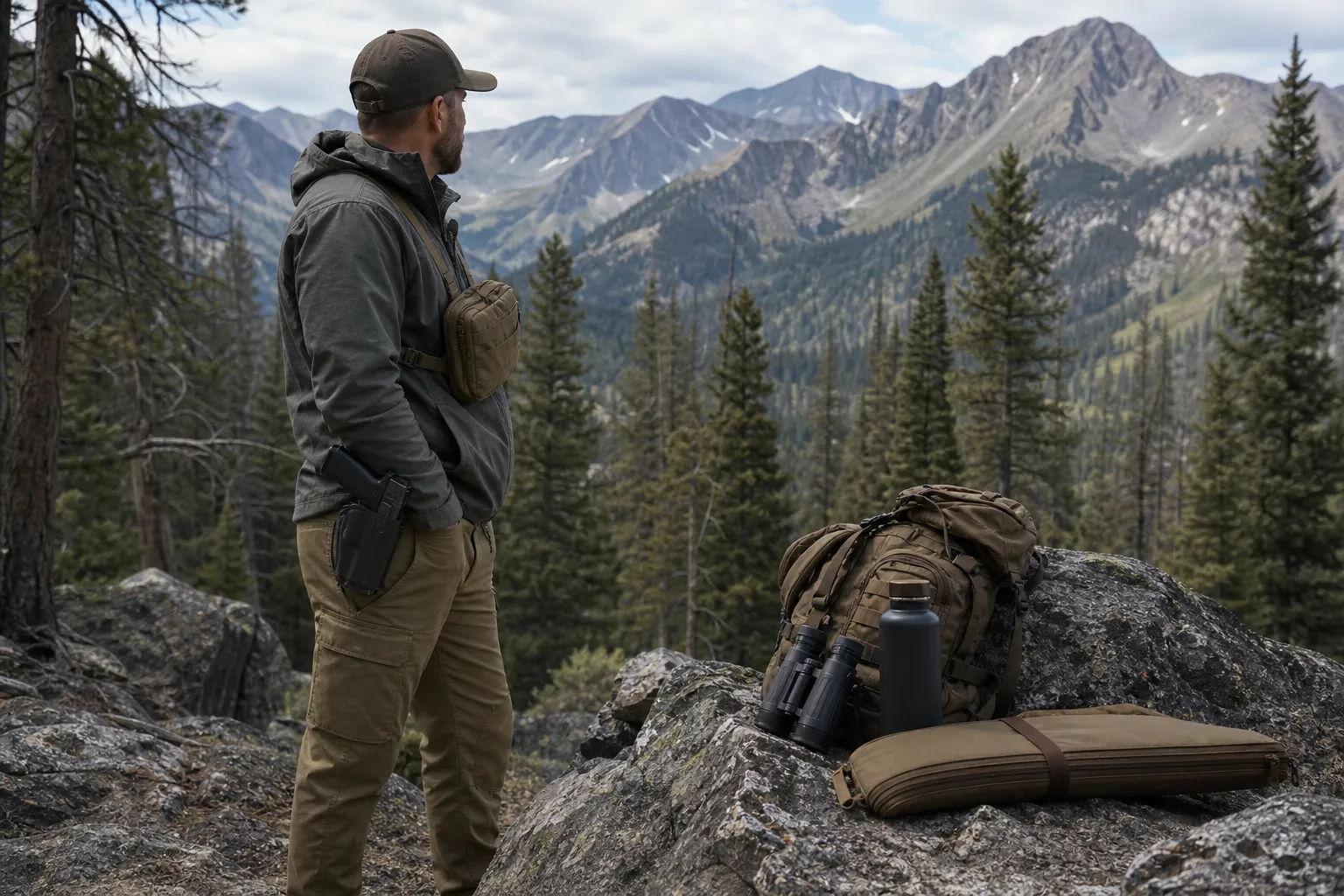
That support does not make one 10mm load suitable for every animal, place or regulation. Alaska Department of Fish and Game advises hunters to select larger calibers for larger game. For bear country, Alaska Department of Fish and Game also cautions that even heavy handguns such as .44 Magnum may be inadequate in emergency bear situations, especially with untrained users. The same agency says bear spray is designed to propel mist for 15 to 30 feet.
For backcountry readers, the cautious takeaway is simple. The 10mm Auto gives handgun owners access to factory loads with more power than reduced 10mm ammunition, and some manufacturers publish loads specifically oriented toward hunting or deep penetration. But official wildlife agencies do not treat a handgun as a substitute for training, judgment, avoidance and appropriate safety tools.
How it compares with 9mm and .45 ACP
The short version is that 10mm Auto is usually discussed as a more powerful semiautomatic pistol cartridge than 9mm, while still using .40 caliber bullets rather than .45 caliber bullets. American Rifleman’s history of Jeff Cooper’s concept frames the original idea as more power than 9mm and more capacity than .45 ACP.
The longer version depends on the exact ammunition. A reduced 10mm load is a different comparison than a full-power 10mm hunting load. Pistol size, magazine capacity, recoil and ammunition type all change the answer. For readers choosing between service pistol cartridges, see 10mm vs 9mm. For readers comparing big semiautomatic pistol cartridges, see 10mm vs .45 ACP.
Buying and use considerations
Start with the load’s published purpose. Range loads, defensive hollow points, bonded hunting loads and hard-cast loads are not interchangeable just because the case head says 10mm Auto.
Then look at published velocity and energy, especially the test barrel length when it is provided. Hornady lists 10mm examples from 5 inch barrels, which makes those figures easier to compare within their own data. Other ammunition makers may publish different test conditions.
Finally, confirm the firearm maker’s ammunition guidance and test function with the exact load you intend to use. The 10mm Auto’s wide performance range is part of its appeal, but that range is also why assumptions are a bad idea.
What to check before relying on 10mm Auto
Check SAAMI specifications for the cartridge, the firearm manufacturer’s manual and the ammunition maker’s current data for the exact load. For hunting, confirm current state or provincial rules with the responsible wildlife agency, including handgun hunting rules, minimum caliber, barrel length, energy requirements and allowed ammunition types. For backcountry animal safety, confirm current guidance from the wildlife agency for the place you will actually be traveling.
Frequently asked questions
Is 10mm Auto the same as 10mm Automatic?
Yes. SAAMI names the cartridge “10mm Automatic” and abbreviates it as “10mm Auto.”
What bullet diameter does the 10mm Auto use?
SAAMI lists a .4005 inch bullet diameter with a minus .0030 inch tolerance. Handloader describes 10mm Auto bullets as .400 inch bullets.
Are all 10mm Auto loads full power?
No. American Rifleman says modern 10mm ammunition ranges from FBI Lite velocity to original full-house Norma specification. Load data should be read for the exact ammunition, not assumed from the cartridge name.
What was the FBI 10mm load?
American Rifleman says the FBI’s reduced 10mm load used a 180 grain bullet at 950 fps. Handloader says reduced 10mm loads are often called FBI lite, FBI load or subsonic.
How did 10mm Auto lead to .40 S&W?
Handloader says Smith & Wesson recognized that the 10mm FBI load could fit in a shorter case for lighter, more compact 9mm size pistols. Handloader says .40 S&W was introduced in 1990 after cutting the 10mm case to .850 inch and changing to a small pistol primer.
Is 10mm Auto used for hunting and backcountry carry?
Modern factory 10mm includes hunting and woods oriented loads, including Federal Fusion hunting loads and Underwood hard-cast loads described as designed for deep penetration. Hunting legality and suitability depend on the place, animal and current agency rules.
Sources
- SAAMI Standards, Sporting Arms and Ammunition Manufacturers’ InstituteOfficial source. Accessed October 22, 2026.
- SAAMI Releases Update of Ammunition Standards for Centerfire Pistol and Revolver, Sporting Arms and Ammunition Manufacturers’ InstituteOfficial source. Accessed October 22, 2026.
- SAAMI Z299.3-2022 Centerfire Pistol and Revolver, Sporting Arms and Ammunition Manufacturers’ InstituteOfficial source. Accessed October 22, 2026.
- FBI’s 10mm Pistol, Office of Justice Programs, NCJRS Virtual LibraryOfficial source. Accessed October 22, 2026.
- Federal 2026 Catalog, Federal Premium AmmunitionOfficial source. Accessed October 22, 2026.
- Federal Catalog 2023, Federal Premium AmmunitionOfficial source. Accessed October 22, 2026.
- Federal Ammunition Introduces New Fusion 10mm Auto Hunting Loads, Federal Premium AmmunitionOfficial source. Accessed October 22, 2026.
- 2022 Standard Ballistics Chart, Hornady ManufacturingOfficial source. Accessed October 22, 2026.
- 2023 Law Enforcement Catalog, Hornady ManufacturingOfficial source. Accessed October 22, 2026.
- Don’t Forget the Mighty 10mm, Winchester AmmunitionOfficial source. Accessed October 22, 2026.
- FAQ, Underwood AmmunitionOfficial source. Accessed October 22, 2026.
- The Essentials for Traveling in Bear Country, Alaska Department of Fish and GameOfficial source. Accessed October 22, 2026.
- Firearms and Ammunition for Hunting in Alaska, Alaska Department of Fish and GameOfficial source. Accessed October 22, 2026.
- Nine Lives of the 10 mm Auto, American Rifleman. Accessed October 22, 2026.
- 10MM Auto (Pet Loads), Handloader Magazine, Wolfe Publishing. Accessed October 22, 2026.
- Firearms and Ammunition for Hunting in Alaska, Alaska Department of Fish and Game. Accessed October 23, 2026.