.38 Super: History, Specs and Uses
The .38 Super Automatic +P is a higher pressure development of the older .38 Automatic cartridge, tied to Colt automatic pistols and later to Open division action pistol competition. Its SAAMI +P naming and pressure difference from .38 Automatic are key points shooters and collectors should understand.
By RaiS. Reviewed by RaiS. Published . 4 min read.
Research and drafting were assisted by AI. RaiS checked the facts against the sources below and approved this page.
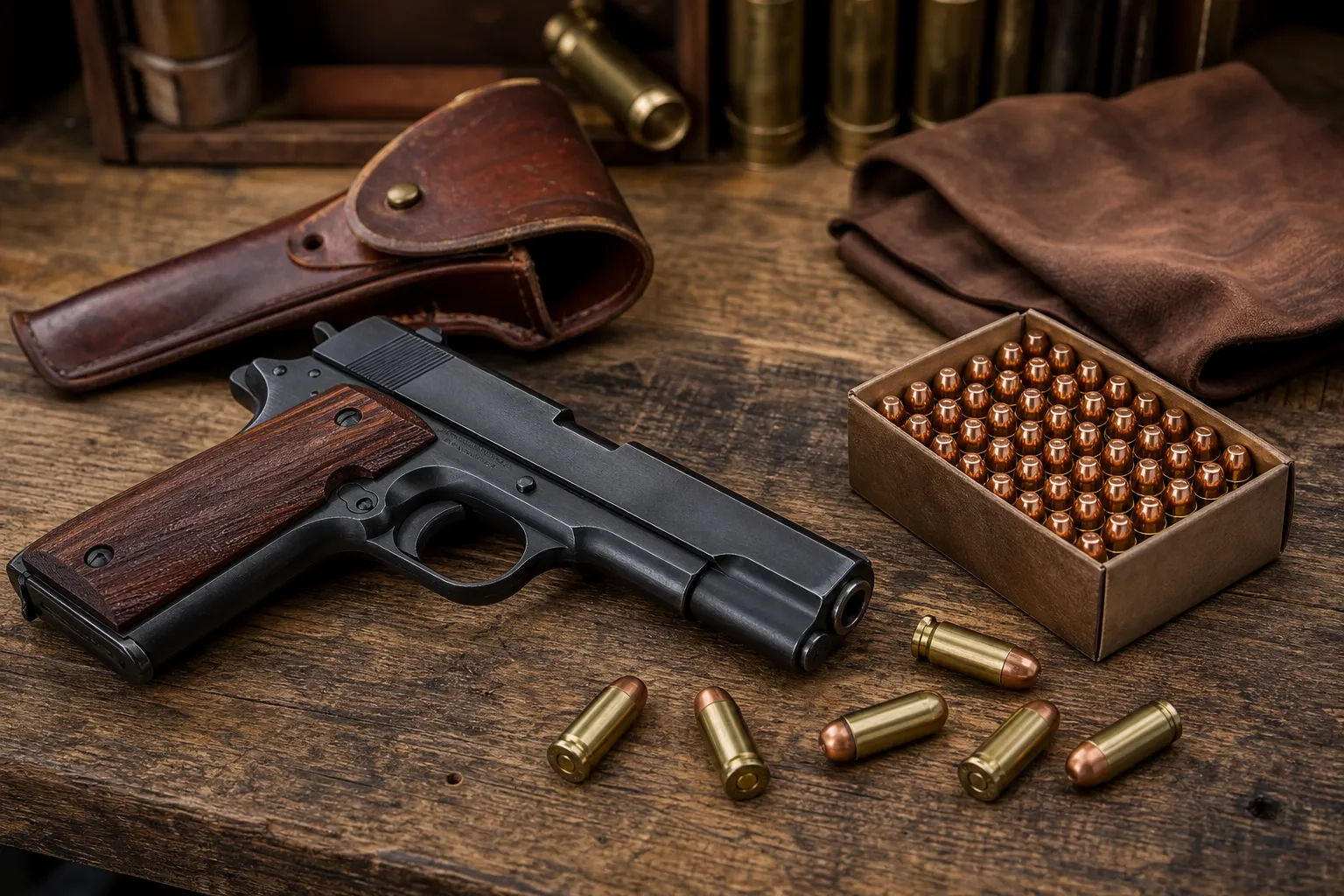
The .38 Super is a centerfire pistol cartridge that SAAMI currently names .38 Super Automatic +P, abbreviated .38 Super Auto +P. It began as a higher-pressure development of the older .38 Automatic cartridge, was tied to Colt automatic pistols and the 1911 platform, and remains notable in Open division action-pistol competition.
What the .38 Super Auto is
SAAMI lists the cartridge’s current full name as .38 Super Automatic +P and its abbreviation as .38 Super Auto +P. Shooters also commonly shorten the name to .38 Super or group it under “38 super auto,” but the SAAMI name matters because it includes +P.
The +P marking is not just branding. SAAMI explains that +P ammunition is loaded to higher pressure to achieve higher velocity, and says it should be used only in firearms especially designed for that cartridge and recommended for it by the firearm manufacturer.
SAAMI places .38 Super Automatic +P and .38 Automatic on the same cartridge and chamber drawing page. That does not make them the same load. SAAMI lists different pressure and velocity performance for .38 Automatic and .38 Super Automatic +P, which is why the distinction is important for older pistols.
Colt origins and early appeal
Colt’s own timeline states that the company introduced its first production automatic pistol, the Colt Model 1900, in 1900, and identifies that pistol as .38 ACP caliber in the image caption.
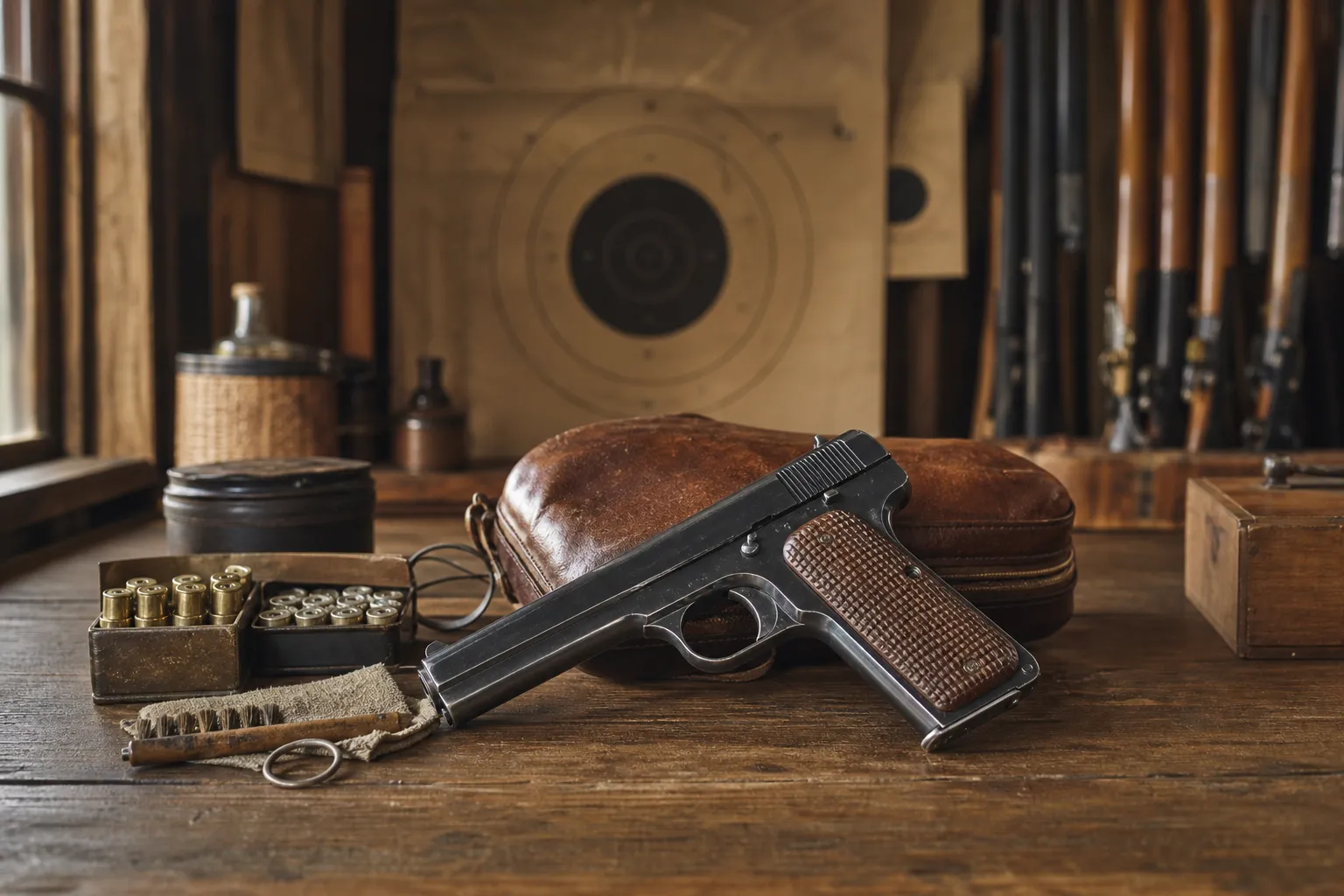
Colt’s timeline states that the Colt Model 1911, designed by John Browning, was adopted as the standard sidearm of the United States Armed Forces in 1911. The later Super .38 story is connected to that Government Model style pistol, not just to the earlier .38 automatic pistols.
The Texas Ranger Hall of Fame and Museum says that after the Model 1902 .38-caliber automatic pistol was discontinued in 1928, Colt increased the velocity and power of that popular caliber and named the result the Super .38 Auto Pistol Cartridge. The same museum article says Colt used the Government Model .45 1911 Automatic frame, bored and chambered the barrel for the new cartridge, and designated the pistol as the Super .38 Automatic Pistol.
Early marketing leaned into law-and-order appeal. The Texas Ranger Hall of Fame and Museum documents early Colt .38 Super advertising language that said the pistol guaranteed the interest of the “Arm of Law and Order.” That is evidence of the sales pitch and appeal, not a blanket statement of official law-enforcement adoption.
SAAMI specifications
SAAMI Z299.3-2022 is the centerfire pistol and revolver ammunition performance standard used here for .38 Super Auto specifications. These figures describe the industry standard cartridge, chamber, pressure and velocity references, not a recommendation for any specific firearm.
| Item | SAAMI listing for .38 Super Auto +P |
|---|---|
| Full SAAMI name | .38 Super Automatic +P |
| SAAMI abbreviation | .38 Super Auto +P |
SAAMI’s test barrel page for .38 Super Auto +P lists a .346-inch bore diameter.355-inch groove diameter, six grooves and a 16-inch left-hand twist.
For comparison, SAAMI lists .38 Automatic with a 130-grain bullet at 1,035 fps and a transducer MAP entry of 265 psi/100, meaning 26,500 psi. That is one of the clearest standards-based ways to see why .38 Automatic and .38 Super Automatic +P should not be treated as interchangeable pressure levels.
Factory ammunition examples
Current ammunition makers still publish .38 Super Auto +P loads. These examples are included to show how the cartridge appears in current catalogs, not as product recommendations.
| Maker | Published .38 Super Auto +P example |
|---|---|
| Magtech | 130-grain FMJ +P at 1,215 fps and 426 foot-pounds from a 5-inch test barrel in its 2026 catalog |
This example shows a current factory listing using 130 grains.
The semi-rimmed case
The .38 Super is commonly described as semi-rimmed.
For a collector or shooter, the practical takeaway is simple: the case design is part of the cartridge’s identity, and .38 Super is not just a rimless 9 mm cartridge under another name.
.38 Super vs 9mm Luger
The .38 Super Auto +P and 9mm Luger are both in the 9 mm class, but SAAMI lists them as different cartridges with different dimensions and names. See our 9mm Luger guide for a fuller look at the 9mm side of the comparison.
The cartridges remain distinct because their case dimensions, overall length range and firearm chambering are different.
Competition use in USPSA and IPSC Open division
The .38 Super remains associated with USPSA and IPSC Open division competition. Open division rules are one reason the cartridge has maintained a role in action-pistol competition.
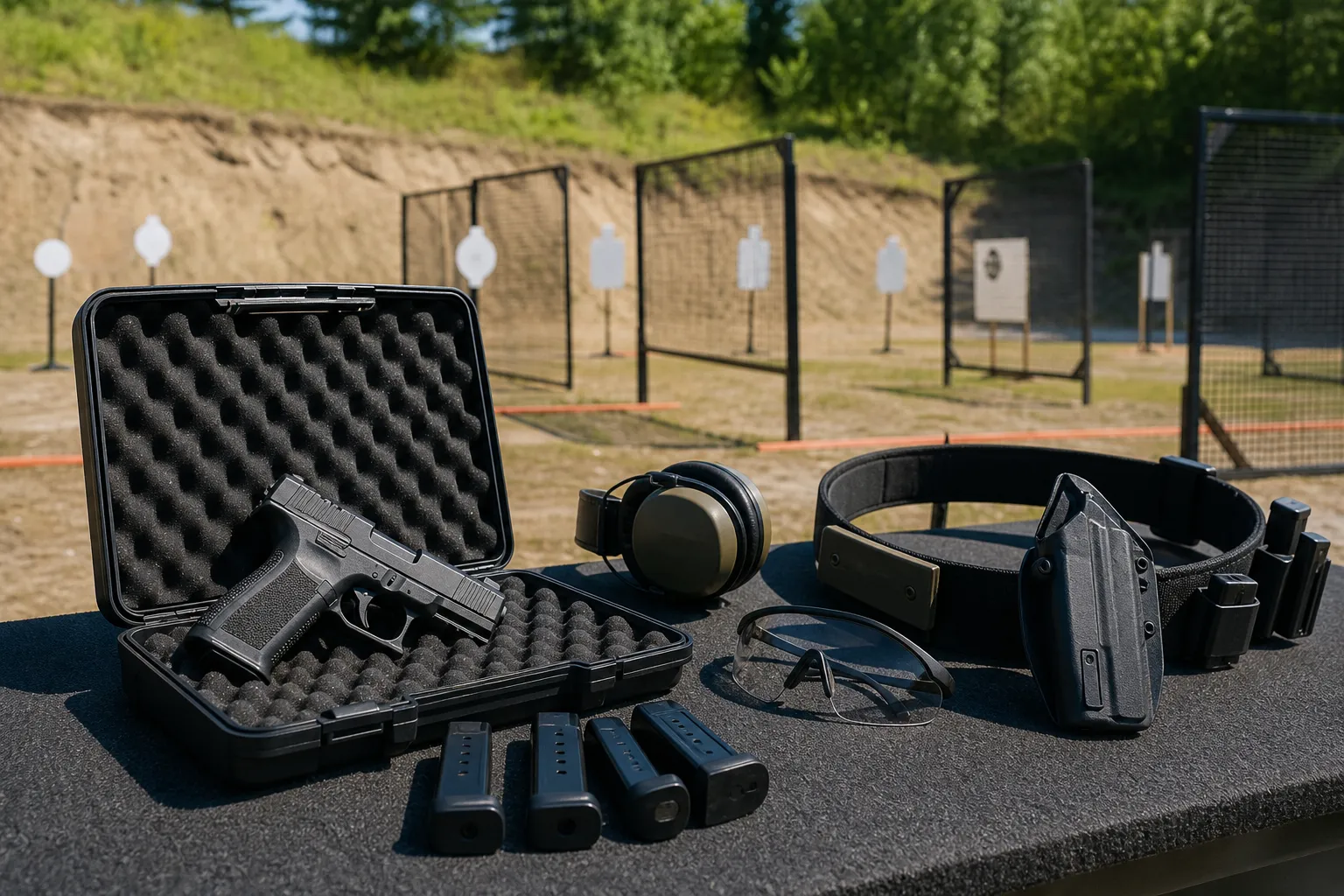
IPSC’s Open Division page lists Major power factor as 160, Minor as 125 and minimum bullet weight as 120 grains for Major. IPSC’s Open Division page lists minimum bullet caliber and cartridge case length as 9 mm / 19 mm, and allows optical or electronic sights and compensators or ports.
Open division rules explain the cartridge’s continuing competition relevance without getting into handloading practices. Always use the current rulebook for the match you plan to shoot, because power factor, equipment and division rules are set by the sanctioning body.
Safety and compatibility
The most important safety point is that .38 Super Automatic +P is a higher-pressure cartridge than .38 Automatic. SAAMI says +P ammunition should be used only in firearms especially designed for that cartridge and recommended for it by the manufacturer.
If a pistol is marked or described in a way that leaves any doubt between .38 Automatic.38 ACP, Super .38 or .38 Super Auto +P, check the firearm maker’s information before firing it. For competition, also confirm the current USPSA or IPSC rulebook before relying on any division or power factor requirement.
Frequently asked questions
Is .38 Super the same as .38 ACP?
No. SAAMI places .38 Super Automatic +P and .38 Automatic on the same cartridge and chamber drawing page, but lists different pressure and velocity performance for them.
Why is .38 Super marked +P?
SAAMI’s current name is .38 Super Automatic +P. SAAMI explains that +P ammunition is loaded to higher pressure to achieve higher velocity and should be used only in firearms designed and recommended for that cartridge by the manufacturer.
What are common .38 Super bullet weights?
A 130-grain FMJ loading is a current factory example for .38 Super Auto +P.
Why is .38 Super used in Open division competition?
Open division competition can reward cartridges that meet the applicable power factor rules in guns using optical sights or compensators where the rulebook permits. Always check the current rulebook for the match you plan to shoot.
Sources
- SAAMI Z299.3-2022, Voluntary Industry Performance Standards for Pressure and Velocity of Centerfire Pistol and Revolver Ammunition, Sporting Arms and Ammunition Manufacturers’ InstituteOfficial source. Accessed October 23, 2026.
- Timeline, Colt’s Manufacturing Company LLCOfficial source. Accessed October 23, 2026.
- Colt Automatic Pistol, Pocket Model, Calibre .38, Colt Manufacturing CompanyOfficial source. Accessed October 23, 2026.
- The Colt .38 Super, Guns of the Texas Rangers, Texas Ranger Hall of Fame and Museum / Texas Ranger Dispatch. Accessed October 23, 2026.
- Sierra Reloading Manual, Sixth Edition, 38 Super Auto +P, Sierra Bullets. Accessed October 23, 2026.
- Magtech 2026 Product Catalog, Magtech AmmunitionOfficial source. Accessed October 23, 2026.
- .38 Super Auto +P, PPU USA AmmunitionOfficial source. Accessed October 23, 2026.
- Winchester Announces Super Match Line of Premium Competition Ammunition, Winchester AmmunitionOfficial source. Accessed October 23, 2026.
- USPSA Competition Rules, September 2026, United States Practical Shooting AssociationOfficial source. Accessed October 23, 2026.
- Handgun, Open Division, International Practical Shooting ConfederationOfficial source. Accessed October 23, 2026.