9mm Luger: The 9x19mm Parabellum Cartridge Explained
9mm Luger, 9x19mm and 9mm Parabellum are names used for the same pistol cartridge. This guide explains the names, history, dimensions, pressure standards and NATO terminology with examples from standards and ammunition terminology.
By RaiS. Reviewed by RaiS. Published . 4 min read.
Research and drafting were assisted by AI. RaiS checked the facts against the sources below and approved this page.
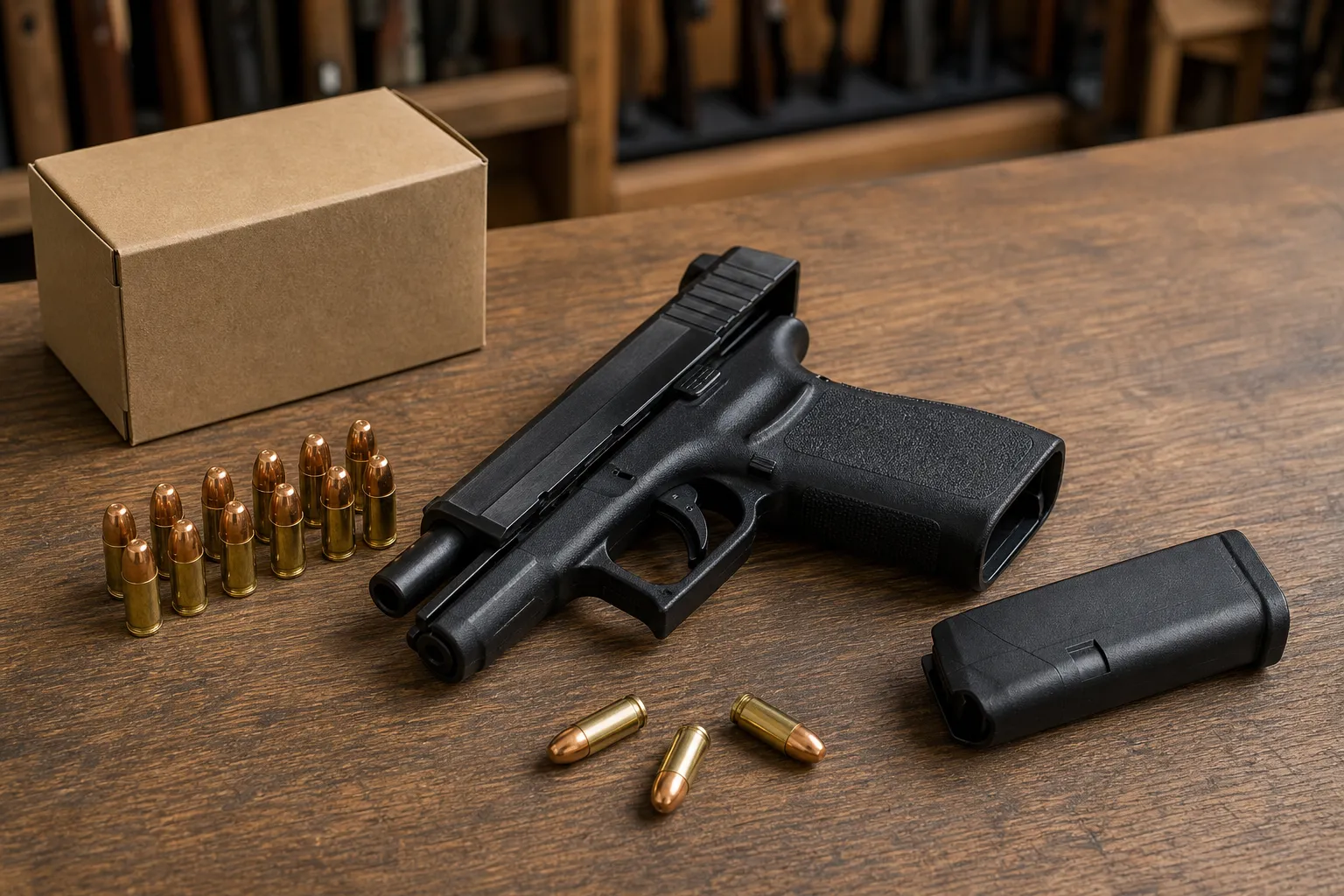
9mm Luger, 9x19mm and 9mm Parabellum are names for the same cartridge. C.I.P. names it “9 mm Luger” and lists “9 mm Para(bellum)” and “9 x 19 (mm)” as alternative names.
The names: 9mm Luger, 9x19mm and 9mm Parabellum
The standards names are the simplest place to start. C.I.P. uses 9 mm Luger as the cartridge name and identifies Germany as the country of origin. On the same C.I.P. data sheet, 9 mm Para(bellum) and 9 x 19 mm appear as alternative names.
The historical names come from the pistol and its designer. Royal Armouries says the self-loading pistol became known as the Luger after designer Georg J. Luger. Royal Armouries also says the pistol was originally named Parabellum, derived from the Latin phrase “Si Vis Pacem Para Bellum,” and connects that name to the DWM company motto.
The “9x19mm” name is dimensional shorthand. C.I.P. lists the case length as 19.15 mm with a minus tolerance of 0.25 mm, and its alternative-name line includes 9 x 19 mm. The “9mm” part is also reflected in the standards projectile dimensions, with C.I.P. listing projectile dimension G1 as 9.03 mm.
Short history
The 9x19mm Parabellum cartridge is closely tied to the Luger pistol.
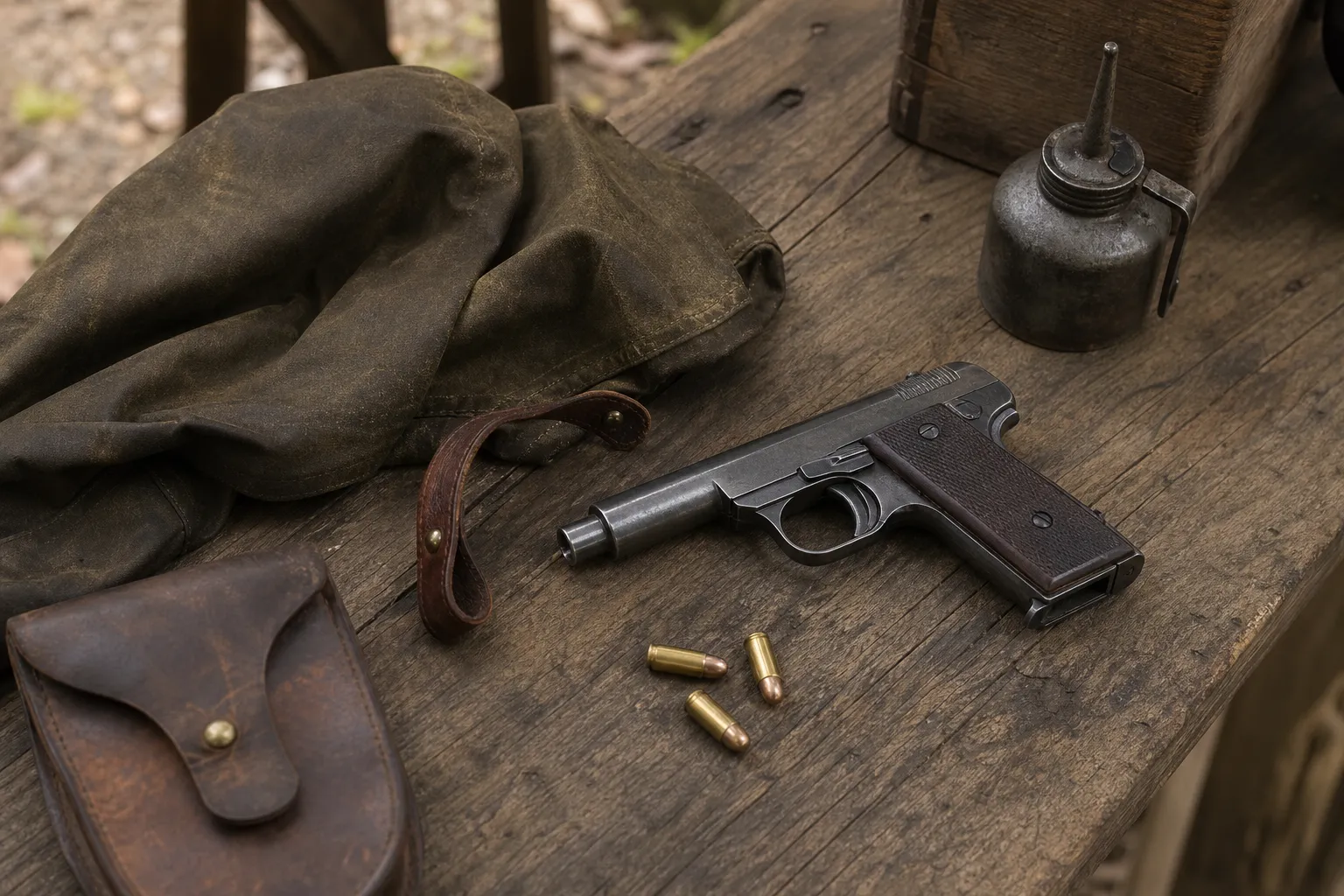
For development timing, American Rifleman states that the 9x19mm Parabellum or 9mm Luger was developed in 1901. Royal Armouries supplies the naming context: the pistol was originally called Parabellum, and later became known as the Luger after Georg J. Luger.
Federal describes 9mm Luger as a common semi-automatic handgun caliber. Federal also describes semi-automatic handgun cartridges as generally rimless, and includes 9mm Luger among common semi-automatic calibers.
Dimensions in the major standards
C.I.P. and SAAMI are both standards organizations, but their drawings and pressure systems are not the same document. When comparing specifications, keep each number with the standard that published it.
| Item | Published value |
|---|---|
| C.I.P. cartridge name | 9 mm Luger |
| C.I.P. alternative names | 9 mm Para(bellum), 9 x 19 mm |
| C.I.P. country of origin | Germany |
| C.I.P. case length L3 | 19.15 mm, minus 0.25 mm tolerance |
| C.I.P. projectile G1 | 9.03 mm |
| C.I.P. headspace note | Headspace on case mouth |
C.I.P. notes that 9 mm Luger headspaces on the case mouth. That is an official dimensional note from the C.I.P. cartridge drawing, not a loading instruction.
Pressure standards and +P
C.I.P. lists 9 mm Luger transducer Pmax as 2350 bar. That is a C.I.P. value in a C.I.P. standard.
Do not treat SAAMI psi and C.I.P. bar values as interchangeable unless a standards organization directly says how to compare them. They come from different standards systems.
This guide does not provide load recipes, powder charges or handloading instructions. Use only ammunition that matches the firearm maker’s instructions and the ammunition maker’s labeling.
What “9mm NATO” means, and what it does not mean
NATO terminology needs careful handling because it is not the same thing as a commercial SAAMI +P label.
ASSIST lists STANAG 4090 as a NATO standardization agreement titled for a technical performance specification providing for the interchangeability of 9 mm x 19 ammunition. STANAG 4090 states that its interoperability requirement is to standardize essential characteristics of 9 mm x 19 ammunition for NATO Armed Forces to ensure battlefield interchangeability.
ASSIST lists AOP-4090 as active, with a promulgation date and U.S. ratification date of June 30, 2020. ASSIST also lists MIL-DTL-70508 as the detail specification for “Cartridge, 9 Millimeter, NATO, Ball M882,” and says it is for use in 9mm weapons.
That does not make every ammunition box marked “NATO” the same as a commercial +P label. NATO documents cited here address NATO 9 mm x 19 ammunition interoperability and specific military cartridges such as M882.
Bullet weights and factory bullet types
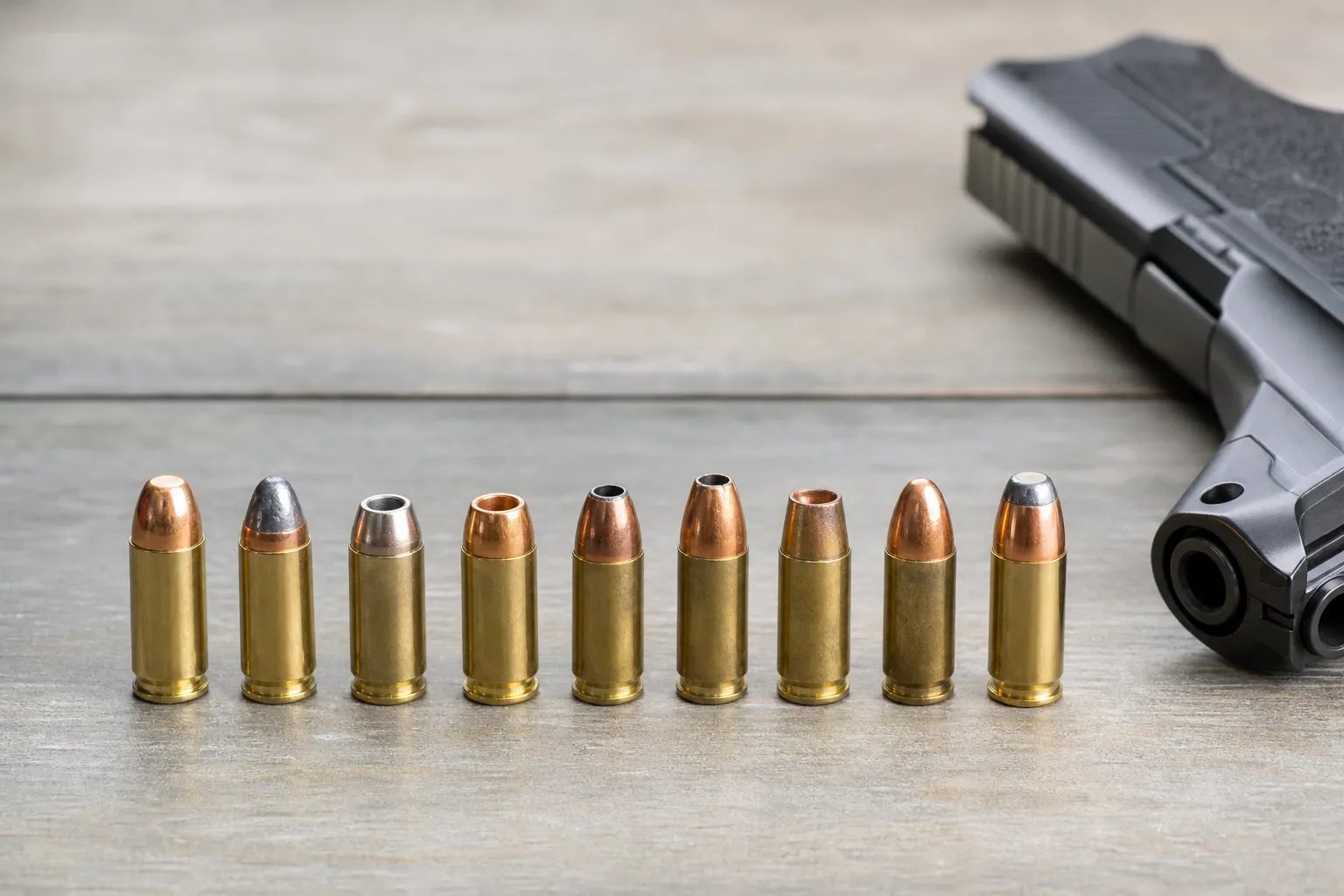
Federal states that target ammunition loaded with full metal jacket bullets is often referred to as ball ammunition. If you are sorting out bullet-style terms, see FMJ vs Hollow Point Bullets.
Practical reading tips for ammunition labels
When you see “9mm Luger,” “9x19mm” or “9mm Parabellum,” the major standards references connect those names to the same cartridge identity. C.I.P. explicitly lists the Parabellum and 9 x 19 names as alternatives for 9 mm Luger.
When you see “+P,” follow the firearm maker’s instructions and the ammunition maker’s labeling.
When you see “NATO,” read the exact product label and supporting specification carefully. STANAG 4090 and AOP-4090 are about NATO 9 mm x 19 ammunition interchangeability, while MIL-DTL-70508 addresses Cartridge, 9 Millimeter, NATO, Ball M882.
Before using ammunition, check the firearm manufacturer’s manual, the ammunition box, and the current applicable standards or military specification if you are comparing technical data. For pressure comparisons, keep SAAMI values with SAAMI and C.I.P. values with C.I.P.
Frequently asked questions
Are 9mm Luger, 9x19mm and 9mm Parabellum the same cartridge?
C.I.P. names the cartridge 9 mm Luger and lists 9 mm Para(bellum) and 9 x 19 mm as alternative names.
What does Parabellum mean in 9mm Parabellum?
Royal Armouries says the pistol was originally named Parabellum, derived from the Latin phrase “Si Vis Pacem Para Bellum,” and connects that name to the DWM company motto.
What is the C.I.P. pressure for 9 mm Luger?
C.I.P. lists 9 mm Luger transducer Pmax as 2350 bar. SAAMI and C.I.P. pressure values come from different standards and should not be treated as interchangeable without a standards-based comparison.
Is 9mm NATO the same as 9mm +P?
Do not treat NATO terminology as the same thing as a commercial +P label. STANAG 4090 addresses NATO 9 mm x 19 ammunition characteristics for battlefield interchangeability.
Sources
- SAAMI Z299.3-2022, Voluntary Industry Performance Standards for Pressure and Velocity of Centerfire Pistol and Revolver Ammunition, Sporting Arms and Ammunition Manufacturers' InstituteOfficial source. Accessed November 11, 2026.
- C.I.P. TDCC, 9 mm Luger, Commission Internationale Permanente pour l'Epreuve des Armes à Feu PortativesOfficial source. Accessed November 11, 2026.
- ASSIST Document Details, STANAG-4090, Defense Logistics Agency ASSIST Quick SearchOfficial source. Accessed November 11, 2026.
- STANAG 4090 Edition 3, Technical Performance Specification Providing for the Interchangeability of 9 mm x 19 Ammunition, NATO, mirrored PDF. Accessed November 11, 2026.
- ASSIST Document Details, MIL-DTL-70508, Defense Logistics Agency ASSIST Quick SearchOfficial source. Accessed November 11, 2026.
- CPE Ammunition Enterprise 2026 Portfolio Book, U.S. Army CPE Ammunition EnterpriseOfficial source. Accessed November 11, 2026.
- 1914 DWM Artillery Luger Pistol, Smithsonian InstitutionOfficial source. Accessed November 11, 2026.
- Arms of the First World War, Royal ArmouriesOfficial source. Accessed November 11, 2026.
- The 9mm Luger Cartridge: History and Performance, American Rifleman. Accessed November 11, 2026.
- Ammo Basics, Handgun, Federal Premium. Accessed November 11, 2026.
- Speer 2020 Catalog, Speer. Accessed November 11, 2026.
- Hornady TAP Application Guide, Hornady. Accessed November 11, 2026.