.357 Magnum: The Revolver Cartridge Explained
.357 Magnum is a higher pressure revolver cartridge that began in 1935 through Western’s collaboration with Smith & Wesson. It is closely tied to .38 Special, but the safe interchangeability rule runs one way: .38 Special can generally be used in .357 Magnum firearms, not the reverse.
By RaiS. Reviewed by RaiS. Published . 5 min read.
Research and drafting were assisted by AI. RaiS checked the facts against the sources below and approved this page.
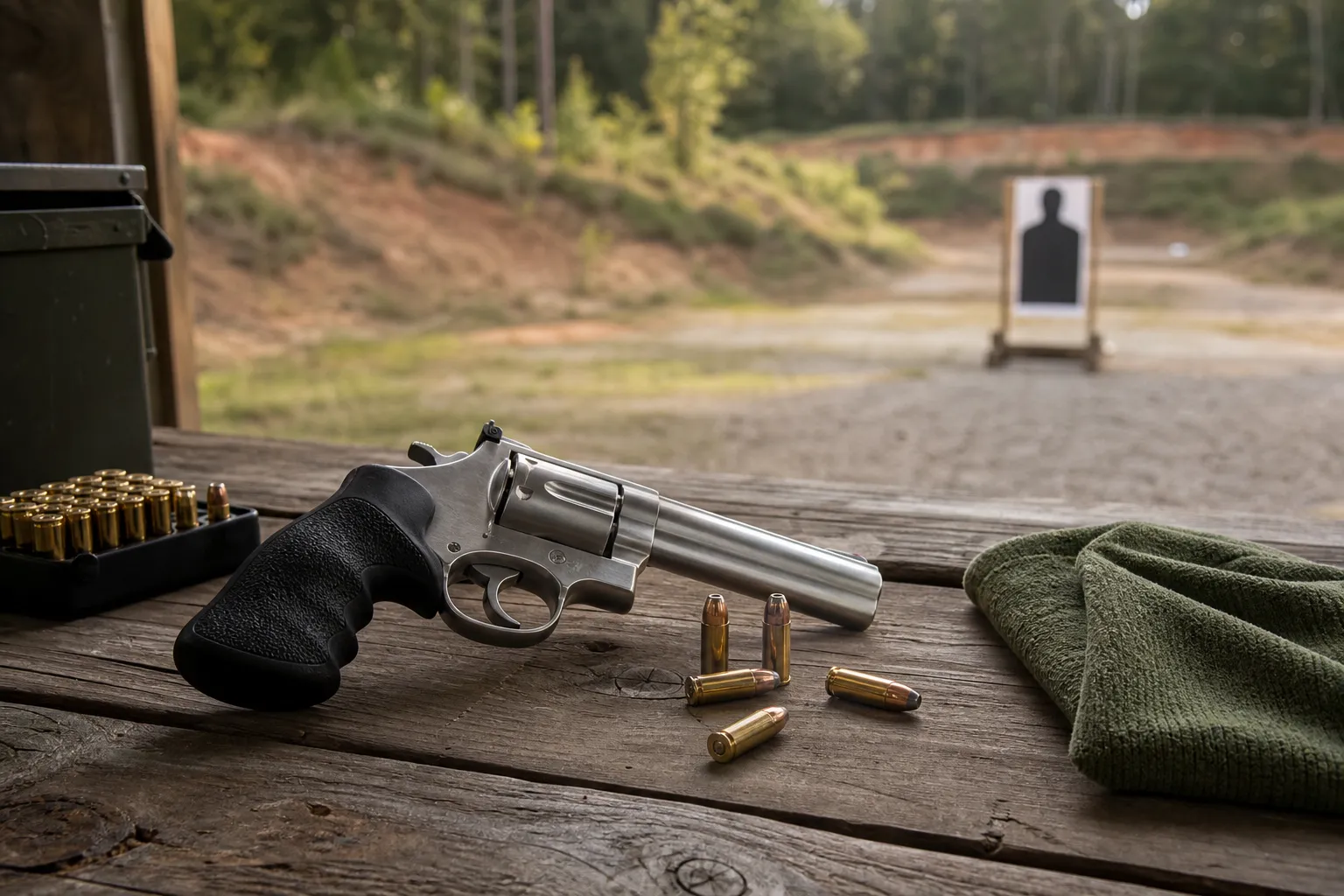
.357 Magnum is a rimmed centerfire revolver cartridge that SAAMI standardizes under the name 357 Magnum, abbreviated 357 Mag. For a new revolver shooter, the most important points are simple: it grew out of a lengthened .38 Special case, it runs at a higher standard pressure than .38 Special, and .38 Special can generally be fired in .357 Magnum chambers, but .357 Magnum should not be fired in .38 Special firearms.
What .357 Magnum is
SAAMI lists the cartridge’s formal name as 357 Magnum and its abbreviation as 357 Mag in its centerfire pistol and revolver standard. In everyday writing, shooters usually include the decimal point and call it .357 Magnum.
Winchester describes the cartridge as based on a lengthened .38 Special case. That connection is why .357 Magnum and .38 Special are often discussed together. They belong to the same general bullet diameter family, but the .357 Magnum case is longer and the cartridge is loaded to a higher pressure standard.
SAAMI’s .357 Magnum drawing lists a bore diameter of .346 inch and a groove diameter of .355 inch.
The cartridge is strongly associated with revolvers, but it also appears in rifles. Manufacturer materials from Marlin list .357 Magnum rifles that also use .38 Special ammunition, within the limits stated by the manufacturer.
The 1935 origin
Winchester Repeating Arms says that in 1935, Western collaborated with Smith & Wesson to produce the 357 Magnum cartridge. Winchester also describes it as based on a lengthened .38 Special case.
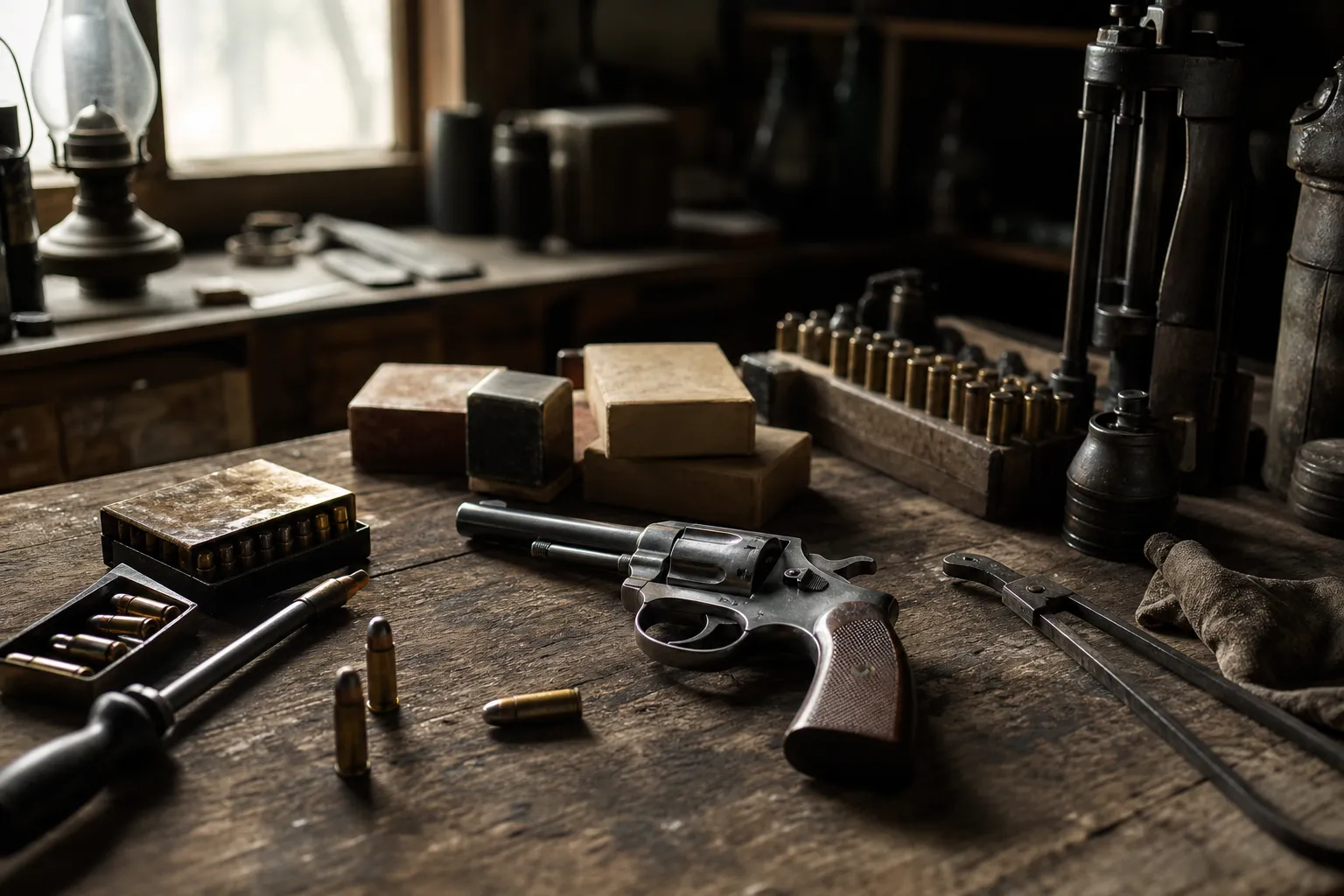
Smith & Wesson’s company history places the .357 Magnum revolver in 1935 and says it was initially conceived in 1934 as a custom built, heavy load, deluxe handgun. Smith & Wesson says the revolver quickly drew the interest of law enforcement agencies.
Smith & Wesson also gives the historical reason for that early interest: the company says handgun cartridges of the day could not penetrate bulletproof glass and armor plated vehicles, while the .357 Magnum cartridge could. That is historical context, not a recommendation about use today.
SAAMI dimensions and pressure
SAAMI’s .357 Magnum cartridge and chamber drawing in the 2022 centerfire pistol and revolver standard shows an original issue date of May 29, 1979, and a revision date of July 6, 2021.
Here are several key SAAMI dimensions from that drawing:
| SAAMI item | .357 Magnum figure |
|---|---|
| Bore diameter | .346 inch |
| Groove diameter | .355 inch |
| Rifling note | 6 grooves, optional 1:18.75 inch right hand twist |
SAAMI’s pressure table needs a little explanation because the table headings use scaled numbers. SAAMI states that crusher pressure is shown in CUP/100 and transducer pressure is shown in psi/100. So a transducer pressure entry of 350 means 35,000 psi.
For .357 Magnum, SAAMI lists maximum average pressure as 350 in psi/100, which equals 35,000 psi. The same table lists crusher maximum average pressure as 450 in CUP/100, which equals 45,000 CUP.
These are standards and test values. They are not instructions for loading ammunition, and they do not mean every firearm or every barrel will produce the same velocity.
Published ballistics
Published .357 Magnum ballistics vary by load and test setup. SAAMI velocity figures are especially useful because they are tied to standard test barrels, not to a specific commercial handgun or rifle.
SAAMI’s standard velocity and pressure test barrel drawing lists a 10.000 inch solid test barrel and a 5.643 inch vented barrel. SAAMI’s .357 Magnum velocity table includes 125 grain entries such as 1,220 fps from a vented barrel and 1,500 fps from a test barrel, with other 125 grain rows listed as high as 1,875 fps in the test barrel. SAAMI also lists a 158 grain entry at 1,220 fps from a vented barrel and 1,545 fps from a test barrel.
Manufacturer catalogs give examples of specific factory loads. Winchester Ammunition gives one .357 Magnum example, its 145 grain Silvertip at 1,290 fps and 536 foot pounds of muzzle energy.
| Publisher | Bullet weight and type | Published velocity | Published muzzle energy |
|---|---|---|---|
| Winchester Ammunition | 145 grain Silvertip | 1,290 fps | 536 foot pounds |
Use these numbers as published examples, not as promises. Actual velocity depends on the firearm, barrel, ammunition lot, and the test method used by the publisher.
The .38 Special compatibility rule
The common compatibility rule is one way. SAAMI’s ammunition interchangeability document says firearms chambered in 357 Magnum may generally safely shoot 38 Special, 38 Short Colt, and 38 Long Colt.
Winchester Ammunition states the same everyday rule: .38 Special can be safely fired in guns marked .357 Magnum, but not vice versa. Winchester also explains why the .357 Magnum case was made longer, saying it was redesigned 1/8 inch longer to prevent it from being loaded into a .38 Special revolver.
For a beginner, the safest habit is to read the chamber marking on the firearm, read the ammunition box, and follow the firearm maker’s manual. Do not assume compatibility from appearance alone.
Handgun uses
The .357 Magnum began as a revolver cartridge, and modern revolver makers still list .357 Magnum handguns. Ruger’s GP100 product history lists GP100 revolver calibers including 357 Mag, along with 22 LR, 38 Spl, 10mm Auto, and 44 Spl.
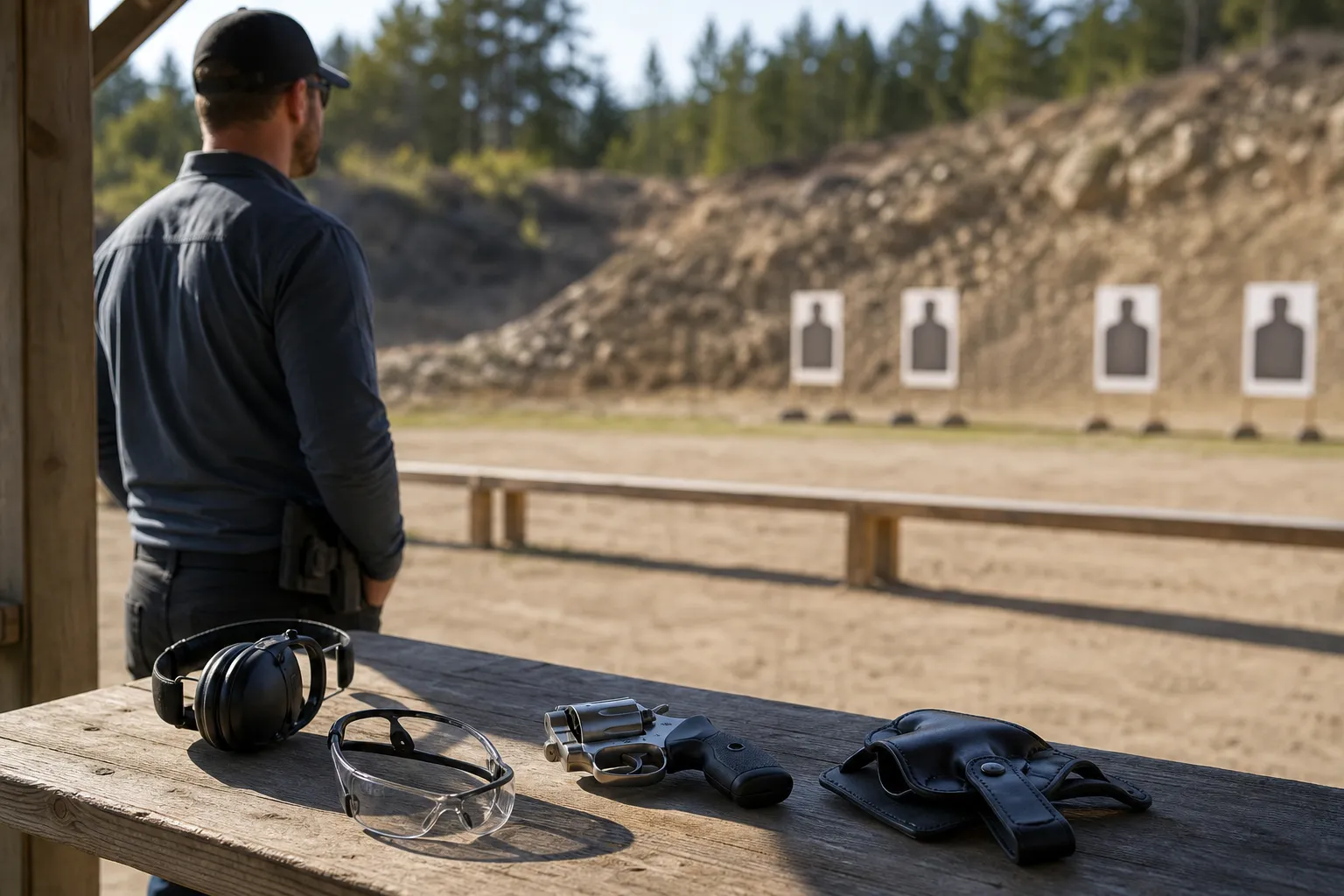
Smith & Wesson’s historical materials connect the company to the original .357 Magnum revolver in 1935. The company also gives historical context for early law enforcement interest in the cartridge.
For new revolver shooters, the practical appeal of a .357 Magnum revolver is often its ammunition flexibility. When the firearm maker allows it.38 Special can be used in a .357 Magnum revolver. That can let a shooter practice with ammunition that is different from full power .357 Magnum, while still using the same revolver. The reverse is not true: .357 Magnum should not be fired in .38 Special firearms.
Rifle uses
.357 Magnum is not limited to handguns.
Marlin states that Model 1894 firearms chambered in .357 Magnum are compatible with .38 Special and .38 Special +P ammunition. Marlin also gives a cleaning warning for .357 Magnum rifles after .38 Special use: because .38 Special cartridges are shorter than .357 Magnum, their use can cause lead buildup in the forward part of the chamber, and Marlin says the chamber should be thoroughly cleaned after using .38 Specials.
Hunters should treat rifle and handgun use as two separate questions. A cartridge may be chambered in a hunting firearm, but hunting rules depend on the place, species, season, and current agency regulations.
What to check before you shoot or hunt
Before using any .357 Magnum firearm, check the firearm’s chamber marking, the owner’s manual, and the exact ammunition box. Follow the firearm maker’s compatibility list, especially when using .38 Special in a .357 Magnum firearm.
For hunting, check the current rules from the state or provincial wildlife agency for the exact season, species, firearm type, and ammunition requirements. Regulations change, and manufacturer chambering information is not the same thing as hunting permission.
Frequently asked questions
What is .357 Magnum?
SAAMI standardizes it as 357 Magnum, abbreviated 357 Mag. It is a rimmed centerfire revolver cartridge that Winchester describes as based on a lengthened .38 Special case.
When did .357 Magnum originate?
Winchester Repeating Arms says Western collaborated with Smith & Wesson to produce the 357 Magnum cartridge in 1935. Smith & Wesson’s company history also places the .357 Magnum revolver in 1935.
Can .38 Special be fired in a .357 Magnum revolver?
SAAMI says firearms chambered in 357 Magnum may generally safely shoot 38 Special, 38 Short Colt, and 38 Long Colt. Always follow the manual for your firearm.
Can .357 Magnum be fired in a .38 Special revolver?
No. Winchester Ammunition states that .38 Special can be fired in guns marked .357 Magnum, but not vice versa.
What pressure does SAAMI list for .357 Magnum?
SAAMI lists .357 Magnum maximum average pressure as 350 in psi/100, which equals 35,000 psi. SAAMI also lists crusher maximum average pressure as 450 in CUP/100, which equals 45,000 CUP.
Is .357 Magnum used in rifles?
Yes. Marlin states that Model 1894 firearms chambered in .357 Magnum are compatible with .38 Special and .38 Special +P ammunition.
Sources
- SAAMI Z299.3-2022, Voluntary Industry Performance Standards for Pressure and Velocity of Centerfire Pistol and Revolver Ammunition, Sporting Arms and Ammunition Manufacturers’ InstituteOfficial source. Accessed October 22, 2026.
- SAAMI Generally Accepted Firearms and Ammunition Interchangeability, Sporting Arms and Ammunition Manufacturers’ InstituteOfficial source. Accessed October 22, 2026.
- Historical Timeline 1900-1949, Winchester Repeating ArmsOfficial source. Accessed October 22, 2026.
- Company, The History of Smith & Wesson, Smith & WessonOfficial source. Accessed October 22, 2026.
- The 38 Special Vs. the .357 Mag, Winchester AmmunitionOfficial source. Accessed October 22, 2026.
- Taurus Revolvers Instruction Manual, Taurus USAOfficial source. Accessed October 22, 2026.
- Remington 2021 Digital Catalog, Remington AmmunitionOfficial source. Accessed October 22, 2026.
- GP100 Revolver Serial Number History, Sturm, Ruger & Co.Official source. Accessed October 22, 2026.
- Henry Lever Action Side Gate Instruction Manual, Henry Repeating ArmsOfficial source. Accessed October 22, 2026.
- Marlin Model 1894 Instruction Manual, Marlin FirearmsOfficial source. Accessed October 22, 2026.
- Marlin Model 1894 Manual, Marlin FirearmsOfficial source. Accessed October 22, 2026.