Revolver Cylinder Gap Explained
A revolver cylinder gap is a normal clearance between the cylinder and barrel. Hot gas and particles can exit there during firing, so hand placement matters.
By RaiS. Reviewed by RaiS. Published . 7 min read.
Research and drafting were assisted by AI. RaiS checked the facts against the sources below and approved this page.
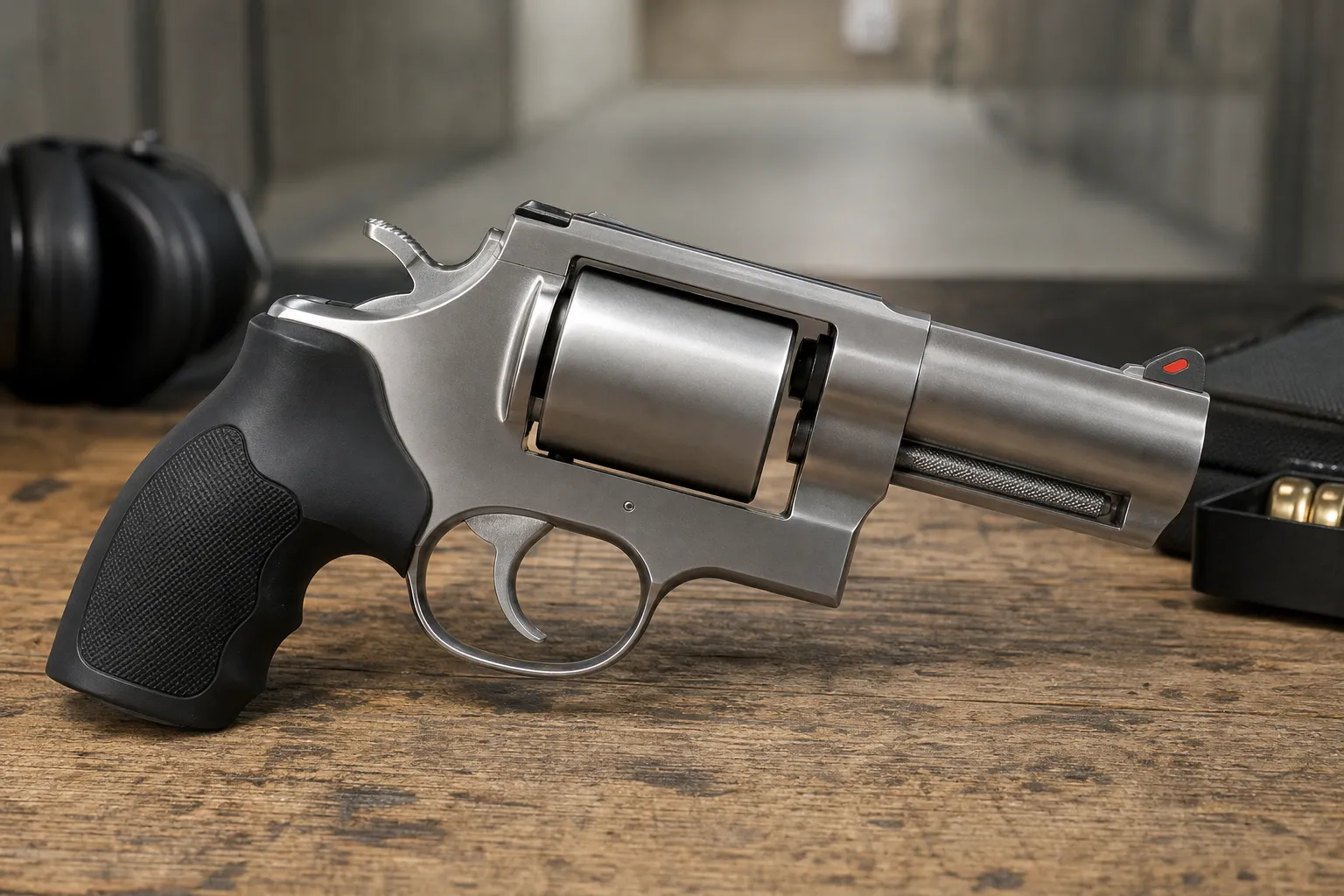
A revolver cylinder gap is normal. SAAMI defines cylinder gap as the space between a revolver cylinder and barrel, measured with the cylinder in the rearmost position, and also lists barrel-cylinder gap and cylinder-barrel gap as alternate names. That small clearance is part of normal revolver design, and it is also where hot gas and particles can escape when the revolver fires.
What the cylinder gap is
On a revolver, the cylinder is the rotating part that contains the cartridge chambers, according to SAAMI. SAAMI defines those chambers as the holes in the cylinder formed to accept cartridges. As the revolver operates, the cylinder indexes, meaning it rotates to bring the next chamber into alignment with the bore.
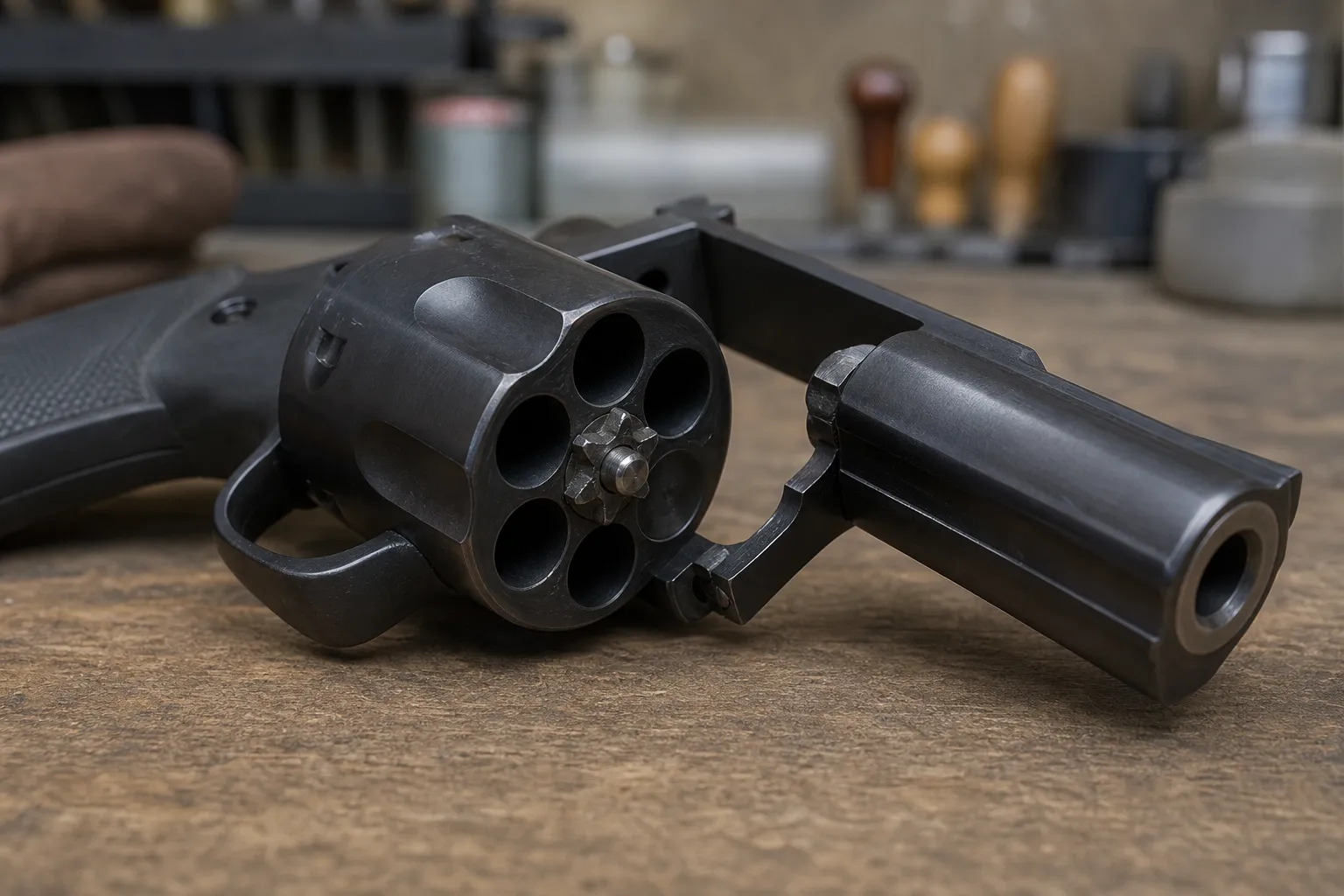
The cylinder gap is the space at the front of that rotating cylinder, between the cylinder face and the rear of the barrel.
That location is close to the forcing cone. Shooting Sports USA describes the forcing cone in plain terms as the rear entrance of the barrel where the bullet transitions from the cylinder to the barrel.
If you are new to revolvers, this visible gap can look like a defect. In normal revolver design, it is not. It is part of the normal relationship between the cylinder and barrel as each chamber lines up with the barrel. For a broader comparison of revolver operation with semiautomatic pistols, see Revolver vs Pistol.
Why revolvers need a gap
The gap has to be considered together with cylinder movement and alignment.
SAAMI also defines cylinder alignment as the relationship of the chamber axis in the cylinder to the bore axis. That matters because each chamber must line up with the barrel as the cylinder indexes. SAAMI separately defines cylinder end-play as the free longitudinal movement of the cylinder in the frame, which is one reason measurement position matters when professionals evaluate the gap.
There is no single gap number that applies to every revolver. The National Institute of Justice standard for .38 and .357 caliber revolvers specified a barrel-cylinder gap of not less than .004 inch and not more than .008 inch for revolvers covered by that standard. The same NIJ standard required that the gap meet its dimensional requirements at each extreme of cylinder longitudinal travel.
That NIJ figure is useful context, not a universal service limit for every revolver. Model-specific limits should come from the manufacturer or from a qualified gunsmith. This is especially important with older revolvers, heavily used revolvers, or models chambered for cartridges such as .357 Magnum, where the correct answer depends on the specific firearm.
What comes out of the cylinder gap
When a revolver fires, the cylinder gap is not sealed in the same way as a closed breech. Manufacturer manuals warn that hot gas and particles can exit there during normal use.
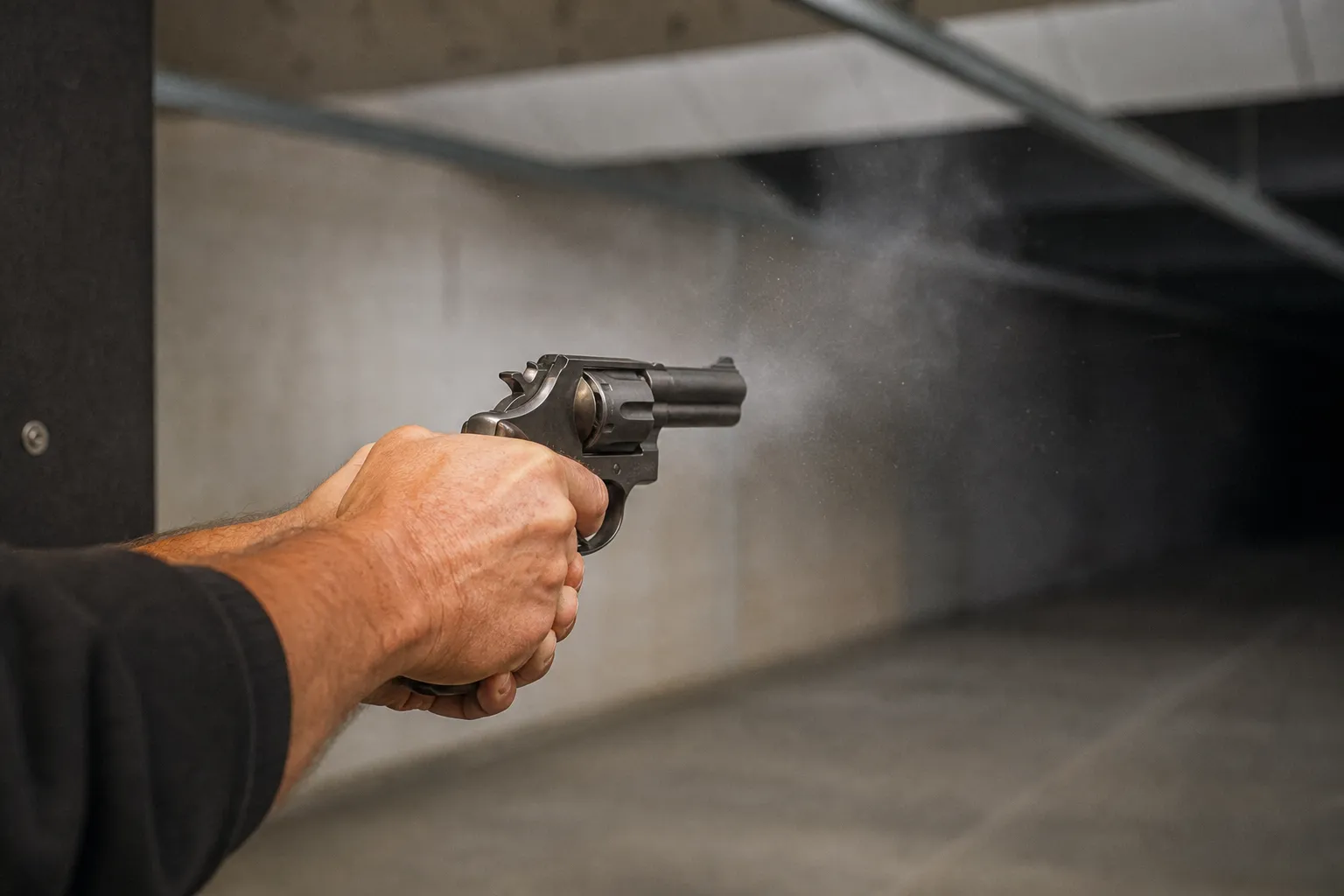
Ruger’s GP100 manual says all revolvers discharge hot gas and particles of lead, powder grains, or lubricant through the clearance gap between the cylinder and the rear of the barrel at high speed. The same manual labels the area with the warning that hot gases exit the barrel-cylinder gap.
Smith & Wesson’s revolver manual says particles and hot gas will be forced out from between the barrel and cylinder in any revolver during normal use. Colt’s Cobra manual warns that the gap between the cylinder and barrel can release hot gases and debris when firing a cartridge. Taurus’s revolver manual also describes the release of excess gases and hot particles from that point as part of normal revolver operation when the revolver is held in a normal grip and fired at arm’s length.
This escaping gas explains several things a shooter may notice:
- Blast at the sides and front of the cylinder
- Flash near the cylinder gap
- Powder or lubricant residue around the front of the cylinder
- A sharper warning about hand placement than many new shooters expect
AFTE describes the cylinder gap as a source of high-energy gunshot residues. Shooting Sports USA notes that gas pressure at the barrel-cylinder gap is high and that gas pressure blasts out from the gap when the gun fires.
Cylinder gap and velocity loss
The cylinder gap can also affect the bullet’s velocity.
American Rifleman likewise states that gas escape at the cylinder-barrel joint can lessen bullet velocity. This does not mean a normal revolver gap is automatically a problem. It means that some gas energy goes out through the gap instead of staying fully behind the bullet.
There are historical exceptions. American Rifleman describes the Nagant as a gas-seal revolver in which the trigger both cocks the pistol and closes the cylinder-barrel gap. That example is useful because it shows the gap is a known design issue, but most common revolvers are not gas-seal designs.
Safe hand placement around the gap
The main safety lesson is simple: keep hands, fingers, face, and other body parts away from the cylinder gap. The gas and particles that exit the gap are part of normal firing, but they are not harmless if body parts are in the wrong place.
Ruger’s GP100 manual tells shooters to be certain that nothing, including hands and fingers, is in the path of hot gas and particles discharged from the front and sides of the cylinder. Colt’s Cobra manual gives the same warning for the gap between the cylinder and barrel.
A practical rule from manufacturer manuals is to keep the hands behind the front of the cylinder. Colt’s Cobra manual also says never to extend fingers beyond the front of the cylinder when firing a revolver.
The exact grip should follow the manual for the revolver being used, but the safety principle is consistent: do not place any part of the support hand beside or forward of the cylinder gap.
Ruger’s GP100 manual pairs its cylinder gap warning with eye and hearing protection, saying shooters and bystanders must wear shooting glasses and that hearing protection must also be worn. For general range safety habits, see The Basic Rules of Firearm Safety and Shooting Glasses and Eye Protection Standards.
Normal clearance versus a revolver that needs inspection
A visible gap and some gas release are normal for revolvers. Smith & Wesson says particles and hot gas are forced out from between the barrel and cylinder in any revolver during normal use, and Ruger says all revolvers discharge hot gas and particles through that clearance gap.
What is not normal is a change in how the revolver works, feels, or sounds. Smith & Wesson’s revolver manual says that if a handgun indicates it is not performing properly, or if operation has changed in the way it feels or sounds, the shooter should stop firing, unload the firearm, and have it inspected and test-fired by a qualified gunsmith for Smith & Wesson firearms.
Binding is another warning sign. Ruger’s GP100 manual says the cylinder should spin freely without binding during a function check. It also says that when cocked during a function check, the cylinder should rotate without unusual drag or requiring more force than normal. If checks fail or the user is uncertain, Ruger says to consult a competent gunsmith or contact Ruger Customer Service before using the firearm.
Taurus’s revolver manual says to stop shooting immediately if a firearm develops any mechanical malfunction or binding, spits powder or gas, or sounds wrong, and to take the firearm and ammunition to a gunsmith for examination.
Condition also matters. Ruger’s GP100 manual says that if excessive wear is observed, the user should stop using the revolver and contact customer service or a trained, certified gunsmith to evaluate its condition. Shooting Sports USA says a used revolver should be inspected for forcing cone cracks and gas erosion.
Colt’s Cobra manual says that if a revolver requires adjustment or repair, it should be made not loaded and sent to Colt Manufacturing Company LLC. Colt also says to have a qualified gunsmith work on the revolver, and that suspect work should be checked by a competent gunsmith or returned to Colt for inspection.
What not to do
Do not try to diagnose the gap by appearance alone. SAAMI’s definition refers to measurement with the cylinder in the rearmost position, AFTE says cylinder gap is typically measured with the cylinder in the rearmost position, and the NIJ standard for covered .38 and .357 revolvers involved measurement at the extremes of cylinder longitudinal travel.
Do not try to adjust the revolver based on a number found online. The correct service limits depend on the manufacturer, model, and condition of the revolver. Manufacturer manuals direct users to customer service or qualified gunsmiths when inspection, repair, or uncertainty is involved.
Do not ignore abnormal gas or powder spitting, binding, unusual drag, excessive wear, cracks, looseness, or a changed feel or sound. Stop shooting, unload safely, and have the revolver checked by the manufacturer or a qualified gunsmith.
Bottom line
The cylinder gap is a normal revolver clearance between the cylinder and barrel. It is part of normal revolver design as each chamber indexes into alignment with the bore.
The tradeoff is that hot gas, particles, flash, blast, and residue can come out of that gap. Keep hands and fingers behind the front of the cylinder, wear eye and hearing protection, and follow the manual for the exact revolver. If the revolver binds, feels different, sounds different, shows excessive wear, or seems to spit gas or powder abnormally, stop using it and check with the manufacturer or a qualified gunsmith.
Frequently asked questions
Is a gap between a revolver cylinder and barrel normal?
Yes. SAAMI defines cylinder gap as the space between a revolver cylinder and barrel.
Why does gas come out of the cylinder gap?
Manufacturer manuals from Ruger, Smith & Wesson, Colt, and Taurus state that hot gas and particles can exit the gap during normal revolver firing. The gap is an opening between the front of the cylinder and the rear of the barrel.
Does the cylinder gap reduce velocity?
It can. American Rifleman states that gas escape at the cylinder and barrel joint can lessen bullet velocity.
Where should my support hand be on a revolver?
Keep hands and fingers behind the front of the cylinder and away from the cylinder gap. Manufacturer manuals warn not to let fingers extend beyond the front of the cylinder when firing.
What cylinder gap measurement is correct?
There is no universal number for every revolver. The NIJ standard for covered .38 and .357 caliber revolvers specified .004 inch to .008 inch, but model-specific limits should come from the manufacturer or a qualified gunsmith.
When should a revolver be checked by a gunsmith?
Have it checked if it binds, develops unusual drag, changes feel or sound, shows excessive wear, has suspected cracks or erosion, or spits gas or powder abnormally. Manufacturer manuals advise stopping, unloading, and contacting the manufacturer or a qualified gunsmith in these situations.
Sources
- SAAMI Glossary, Letter C, Sporting Arms and Ammunition Manufacturers’ InstituteOfficial source. Accessed October 30, 2026.
- AFTE Glossary, 6th Edition, Section 1, Firearms Identification, Association of Firearm and Tool Mark Examiners. Accessed October 30, 2026.
- US Patent 7,254,913, Revolver for firing high velocity ammunition, USPTO record via uspto.report. Accessed October 30, 2026.
- Ruger GP100 Instruction Manual, Sturm, Ruger & Co.Official source. Accessed October 30, 2026.
- Smith & Wesson J, K, L, N Frame Revolver Manual, Smith & WessonOfficial source. Accessed October 30, 2026.
- Operator’s Manual for Colt Cobra Revolver, Colt Manufacturing Company LLCOfficial source. Accessed October 30, 2026.
- Taurus Revolver Manual, Taurus, mirrored by Academy product documents. Accessed October 30, 2026.
- NIJ Standard for 38/357 Caliber Revolvers, National Institute of JusticeOfficial source. Accessed October 30, 2026.
- Rifleman Q&A: Gas-Seal Revolvers, American Rifleman. Accessed October 30, 2026.
- How To Avoid Revolver Forcing Cone Failure, Shooting Sports USA. Accessed October 30, 2026.